

Key Takeaways
Turn hardship into growth, rather than expecting life to return you to who you were.
Resilience means moving through. Greitens defines resilience as the capacity to pass through hardship and emerge with greater strength, wisdom, or purpose. It is not a rubber band snapping back to its original shape. Loss changes people; the task is to integrate that change and keep moving in a better direction.
Zach’s new frontline. The book opens with the author’s friend Zach, a former SEAL whose return from war brought grief, drinking, and a criminal charge. Sophocles’ wounded archer Philoctetes offers a parallel: abandoned for years, he is still needed by his community. But hardship alone does not improve anyone. Growth depends on what a person does with pain, and on whether support and purpose are available.
The shift from recovery to adaptation is powerful because it makes room for permanent change without treating it as defeat. It also fits how people often rebuild after major loss: the old life cannot simply be restored, so a new one must be constructed around what remains. The important qualification is that adversity is not inherently educational. Without safety, care, and practical support, hardship can narrow a person’s options rather than expand them. Resilience is better understood as a process involving both personal effort and a livable environment.
Take responsibility for your response without claiming responsibility for every wound.
Agency is not blame. Greitens distinguishes between causing an event and deciding how to meet it. Zach did not choose his brother’s death or the pain of returning from war, but he was accountable for drinking and for the harm his actions could cause. That distinction preserves agency without pretending that life is fair.
Hope must face facts. The Stockdale Paradox describes a prisoner’s need to hold faith in eventual survival while looking directly at the brutal conditions of the present. Admiral James Stockdale endured seven and a half years of captivity in Vietnam and maintained discipline among fellow prisoners. The lesson is neither blind optimism nor surrender: name reality accurately, then take responsibility for what remains within reach.
This is a useful corrective to both helplessness and simplistic self-help. People often have limited control over events, but some influence over their next action, their interpretation, or their request for help. That distinction can make a crisis feel less total. Still, responsibility should not be confused with total control. Trauma, illness, poverty, and discrimination can sharply constrain choices. A practical account of agency recognizes those constraints and asks what action is possible without implying that every outcome rests on individual will.
Build the character you need through habits, not a cinematic turning point.
Small actions set direction. At BUD/S, the SEAL trainees learned a rifle’s natural point of aim, the direction it tends to fire when held steadily. Greitens uses that image for life: recurring habits quietly aim a person toward a future. A dramatic decision may matter, but the ordinary actions repeated afterward do most of the shaping.
Action can lead identity. Rather than waiting to feel brave, a person can choose a courageous action, then repeat it until it becomes more familiar. Habits also free attention: practiced basics no longer consume every thought, leaving room for more demanding work. Discipline, in this account, is not just restraint. It is a way to gain the freedom to do what matters.
The focus on repetition counters the appealing myth of the single transformative moment. It also connects character to skill acquisition: reliable performance grows from practiced responses, not from intentions alone. Habits can make difficult actions easier to initiate, but repetition is not automatically virtuous. A destructive routine can become just as automatic as a constructive one. The useful question is not simply whether an action is consistent, but whether it is moving someone toward a life and responsibilities they actually endorse.
Aim for a flourishing life, not a permanent good mood.
Happiness has several forms. Greitens uses the Greek idea of eudaimonia, or human flourishing, for a life in which a person develops and exercises their capacities well. He describes three sources of happiness: bodily pleasure, gratitude for what is received, and the satisfaction of pursuing excellence. A good meal matters, but it cannot replace meaningful work or deep engagement.
Joy can live in effort. As a boy, Zach repeatedly dived for abalone, pushing himself into cold water and returning to the surface with aching muscles. The pleasure was not merely in the catch. It came from testing and extending his abilities. Yet flourishing also depends on circumstances. People facing injustice or deprivation may have fewer chances to exercise their strengths.
This account usefully separates a good life from a cheerful mood. It recognizes pleasure without making consumption the whole of happiness, and it treats effort as potentially rewarding rather than merely dutiful. The framework also guards against judging a life by brief emotional snapshots. Its limitation is that flourishing can sound like a personal achievement when access to education, health, safety, or meaningful work is uneven. The book acknowledges bad fortune, and that qualification matters: character can support flourishing, but cannot guarantee the conditions for it.
Forge a vocation by working where your joy meets a real need.
Purpose is built through action. Greitens argues that people do not simply discover a ready-made calling. They try work, learn from failure, improve their abilities, and gradually find what feels both meaningful and useful. He describes vocation as the meeting point between personal joy and a need in the world.
Work changes the worker. After visiting wounded service members in a hospital, Greitens recognized that many needed a challenge and a mission, not only sympathy. He used his combat pay to begin The Mission Continues, an organization connecting veterans with service in their communities. A vocation may be paid employment, parenting, or another sustained commitment. Its value lies less in status than in the quality and purpose of the work.
The account avoids the fantasy that purpose arrives as a perfectly clear revelation. Work can generate knowledge about what someone values, what they can do, and where they are useful. That is a more forgiving model for people who cannot immediately name a calling. It also resists the assumption that meaningful work must be prestigious or salaried. One caution: joy and social need do not always align neatly, and people may have to choose among financial security, family obligations, and public contribution. Purpose is often negotiated, not simply found.
Study admirable lives, then copy their discipline rather than their identity.
Models make excellence visible. Greitens learned boxing by watching his trainer Earl Blair and skilled partner Derrick. Instead of receiving only abstract instructions, he observed how an experienced fighter moved and practiced those actions himself. The point is not to become a replica. Imitation provides a starting structure from which a person can develop an individual style.
Choose with judgment. Models can come from books, history, work, or personal relationships. A person may admire one quality in someone while rejecting other parts of that person’s character. Mentors add something books cannot: practical knowledge gained through experience, and advice adapted to the learner and the particular challenge.
Learning by example is especially valuable when the skill involves timing, judgment, or interpersonal nuance that is difficult to reduce to rules. Models also make possible futures more imaginable: another person’s example can turn a vague hope into a plausible path. The risk is confusing admiration with uncritical loyalty. The book’s emphasis on selective emulation is therefore important. A useful model is not a complete moral authority, and a good mentor should help a learner become more capable of judgment, not more dependent on approval.
Name the pain, separate it from fear, and take the next step.
Pain is not one thing. Greitens distinguishes pain chosen in pursuit of a goal, such as training, from pain imposed by loss or bad fortune. The second kind cannot always be prevented or explained. He argues that pain itself does not teach; reflection and a useful response can turn experience into understanding.
Make the next action manageable. The technique called segmenting breaks an overwhelming task into smaller steps. During SEAL training, candidates who fixated on the many hours ahead often quit while standing on the beach. Focusing only on the next task, such as getting to a designated training spot, made action possible. Naming fears, breathing slowly, and mentally rehearsing difficulties can also help someone respond rather than freeze.
The section offers a practical bridge between emotional awareness and action. Describing distress can make it more specific, while breaking a large task into manageable pieces can reduce the burden of anticipating everything at once. These tools are not a demand to endure every condition. Some pain signals injury, danger, or a need for professional care, and those signals deserve attention. The stronger principle is discernment: distinguish discomfort that accompanies worthwhile effort from harm that calls for protection, treatment, or a change of course.
Choose friends who strengthen your judgment, not just your comfort.
Good friends enlarge perspective. Aristotle’s account distinguishes friendships based on usefulness, enjoyment, and mutual commitment to living well. The deepest friendships can include the first two, but do not depend on them. Such friends challenge excuses, identify blind spots, and remain present through difficulty.
Shared purpose binds teams. During BUD/S log training, a heavy log became easier to carry when the trainees coordinated their effort and trusted one another. The same principle appears in Greitens’ work with veterans: fellowship means deliberately sharing work and service, not merely occupying the same space. A meaningful common mission can help people manage differences without requiring them to like one another constantly.
The book treats connection as a source of practical knowledge, not simply emotional comfort. Trusted friends can notice patterns an individual cannot see alone, and shared work gives relationships a concrete basis. This is a useful counterweight to the idea that resilience is purely private willpower. Yet challenge is only helpful when paired with care and trust. A person who criticizes without understanding can deepen shame, while a group united by a mission can also silence dissent. Good fellowship supports honesty as well as loyalty.
Lead beside people, and judge good intentions by their actual effects.
Example carries authority. In Shakespeare’s version of Henry V, the king inspires soldiers by sharing their danger; Greitens emphasizes the leader’s willingness to bear the same burdens as those being led. A leader can encourage and support, but cannot make another person choose resilience. The example must be matched by respect for others’ agency.
Results matter to those served. Greitens contrasts good intentions with effective action through aid efforts that separated some children from their families despite seeking to help them. Responsible service asks whether an intervention improves people’s lives, not merely whether the helper meant well. When a community is struggling, leaders may also strengthen what is already working instead of assuming they must repair everything themselves.
This approach joins role modeling with accountability. Sharing hardship can make leadership credible, while attention to outcomes keeps moral concern from becoming self-congratulation. It also raises a difficult question: who defines a successful result, and over what time frame? Immediate metrics may miss dignity, trust, or unintended effects. Effective leaders need feedback from the people affected, not only confidence in their own intentions. The book’s emphasis on humility is essential here, because sincere service can still cause harm when it is insulated from correction.
Treat your life as a story whose next chapter requires action.
Events need interpretation. Greitens draws on the idea that people make meaning by shaping experiences into stories. The events themselves cannot be changed, but a person can understand them in more than one way. A failure might become evidence of permanent inadequacy, or a reason to prepare differently and try again.
History makes hardship less lonely. A young Rwandan survivor told Greitens that reading Elie Wiesel’s memoir before the genocide gave him an example of someone who had survived horror and borne witness. Family stories can play a similar role by showing younger generations that struggle is part of a longer human history. But a new story matters only when the next actions make it credible.
Narrative is a powerful way to connect memory, identity, and future intention. It can prevent one painful episode from defining an entire life, while inherited stories offer examples beyond a person’s immediate community. But stories are selective. A reassuring interpretation can hide responsibility, and a heroic interpretation can turn suffering into a badge that prevents change. The most useful narrative is neither self-condemning nor self-excusing. It preserves the facts, admits uncertainty, and remains open to revision as a person acts.
Remember death to make today vivid, not to live in fear.
Mortality clarifies urgency. Greitens draws on the ancient practice of reflecting on death, not to encourage despair but to interrupt procrastination. If life is limited, postponed work, affection, and service have a real cost. The Stoic writer Seneca used the end of each day to consider whether he had lived it fully.
Keep death in perspective. After a serious riding accident, Michel de Montaigne became less frightened by the thought of dying. He later wrote that being familiar with mortality could make a person less enslaved by fear. Greitens also presents remembrance as action: the dead remain present in the values and conduct that survivors carry forward.
Mortality can sharpen priorities because it makes tradeoffs visible. The reminder that time is finite may move a person from abstract intention to a specific conversation or task today. But constant attention to death can also narrow life into anxious monitoring. The book’s more balanced image is to keep death in view without staring at it. That distinction matters: reflection should support engagement with the present, not replace living it with endless preparation for an unknowable end.
Protect time for joy that does not have to earn its keep.
Rest is not a tool. In the book’s closing letter, Greitens turns to the Sabbath, a recurring day set apart from work. He describes it as time devoted not to producing, owning, or controlling, but to being with what matters. Jewish and Christian rituals, as well as other forms of reflection and stillness, can mark that boundary.
Let enjoyment stand alone. A walk, a slow meal, reading, daydreaming, or time with loved ones does not need to be justified as preparation for the next workday. The Sabbath is presented as a counterweight to constant striving, not a productivity technique. Resilience helps people meet difficulty, but a complete life also needs periods when nothing has to be overcome.
This ending prevents the book’s demanding ethic from collapsing into permanent self-optimization. Rest has value not only because it may restore energy, but because a person’s worth is not exhausted by output. That is a meaningful correction to cultures that convert every practice into performance. A weekly religious Sabbath will not fit every reader, and the underlying insight does not require one specific tradition: a deliberate boundary around unproductive time can protect attention, relationships, and simple enjoyment.
Analysis
Greitens builds a practical philosophy of resilience through letters to Zach, a former SEAL whose return home has brought grief, alcohol misuse, and a loss of direction. The personal frame gives abstract ideas consequences: responsibility is not a slogan when a friend’s family and future are at stake. The book’s governing claim is that hardship does not automatically create wisdom. Repeated choices, purposeful work, reflection, and relationships determine whether suffering is integrated into a fuller life.
Its strongest move is replacing the image of bouncing back with movement through change. The book then supplies a coherent set of practices: act before waiting for the right feeling, build habits rather than rely on dramatic resolve, learn from models, divide overwhelming tasks into smaller ones, and review experience so that it can guide the next attempt. Happiness is similarly broadened from pleasant feeling to flourishing, including pleasure, gratitude, and excellence. Purpose is not treated as a hidden object to discover, but as something shaped by sustained work that meets real needs.
The voice is humane when it remembers that resilience is social. Friends, mentors, teams, and communities expand what an individual can see and do. The closing Sabbath also gives the argument a needed limit: life is not only effort, and rest is not merely fuel for more effort.
The book’s main tension is between agency and constraint. Its insistence that people answer for their actions can restore dignity, especially when others offer pity in place of challenge. But forceful rhetoric about excuses, responsibility, and service can become harsh if separated from the book’s acknowledgment that illness, trauma, injustice, and bad fortune limit what people can do. Resilience should not become a test of moral worth or a substitute for treatment and material support. At its best, the book offers agency without promising control, and challenge without denying the need for care.
Review Summary
Resilience receives mostly positive reviews, with readers praising its practical wisdom, philosophical insights, and motivational impact. Many find it helpful for overcoming challenges and developing resilience. The book's format of letters from a Navy SEAL to a struggling veteran resonates with many readers. Some criticize its masculine focus and occasional oversimplification of complex issues. Overall, reviewers appreciate the blend of ancient philosophy, personal experience, and practical advice for building mental toughness and living a purposeful life.
People Also Read










Glossary
Resilience
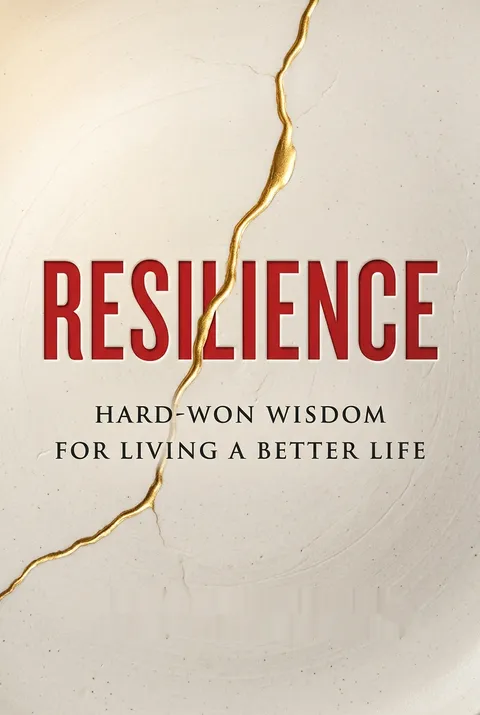
Growth through hardshipGreitens defines resilience as the capacity to move through pain, fear, or hardship and become stronger, wiser, or more purposeful. It is not simply returning to an earlier state. Experiences become part of a person’s life, and resilience involves integrating them in a way that supports continued growth and service.
Eudaimonia
A flourishing human lifeA Greek term Greitens uses for a life of flourishing, rather than a passing feeling of happiness. It involves exercising one’s abilities well through worthy activity, with enough scope and opportunity to develop. The idea includes action and character, while recognizing that circumstances such as deprivation or injustice can restrict a person’s ability to flourish.
arête
Excellence in livingAn ancient Greek term often translated as virtue, but used by Greitens to emphasize excellence. It can describe excellence in a craft or skill as well as in moral judgment. It is developed through practice rather than simply possessed, and includes the capacities needed to make good decisions and live well.
Stockdale Paradox
Hope with clear-eyed realismA principle associated with Admiral James Stockdale’s account of surviving years as a prisoner of war in Vietnam. It combines unwavering belief that one can ultimately endure with an honest appraisal of present conditions. It rejects both denial and despair, asking people to face immediate facts without abandoning hope.
Premeditation of evils
Rehearsing possible hardshipA Stoic practice of calmly imagining difficulties that might occur, then considering how to respond. It is not meant to become uncontrolled worry. By rehearsing plausible setbacks and responses, a person can reduce surprise, distinguish fear from fact, and prepare to act when adversity arrives.
Natural point of aim
A habit-shaped life directionIn rifle practice, the direction a weapon naturally points when the shooter and rifle are steady. Greitens applies the idea to habits: repeated actions tend to direct a life toward particular outcomes. To change direction, a person must alter the underlying patterns, not merely make a temporary adjustment.
Segmenting
Breaking hardship into stepsA technique for making an overwhelming task manageable by dividing it into smaller actions. Instead of confronting the entire challenge at once, a person focuses on the next doable step. Greitens illustrates it with SEAL candidates concentrating on the immediate task rather than imagining the many hours of training ahead.
Flow
Absorbed, challenging engagementA state of deep involvement in a task that stretches a person’s abilities and holds attention. Greitens draws on psychologist Mihaly Csikszentmihalyi’s account of flow to explain why meaningful challenge can feel joyful while it is happening, not only after success. The task is demanding, chosen, and absorbing.
phronesis
Practical wisdomAn ancient Greek term Greitens uses for the judgment involved in knowing what to do in particular circumstances and what is worth doing. It develops through action and reflection, whether the task is operating machinery, leading a team, or caring for a family. It connects practical skill with sound judgment.
Internal goods and external goods
Inherent rewards and outside rewardsA distinction Greitens draws from philosopher Alasdair MacIntyre. External goods are rewards attached to an activity, such as money, status, or promotion. Internal goods are satisfactions available through doing the activity well, such as mastering a craft or understanding a strategy. A vocation often grows as attention shifts toward these deeper rewards.
Vocation
Work joined to purposeGreitens uses vocation for meaningful work that connects a person’s joy and developing abilities with a need in the world. It may be paid employment, but it can also be parenting or service. A vocation is not necessarily revealed in a single moment; it is often shaped through repeated effort, learning, and commitment.
FAQ
What's Resilience: Hard-Won Wisdom for Living a Better Life about?
- Focus on Resilience: The book explores resilience as the virtue that helps individuals transform hardship into strength and wisdom.
- Letters to a Friend: Structured as letters from Eric Greitens to a friend dealing with PTSD, it offers insights and advice on building resilience.
- Universal Themes: It addresses themes of loss, purpose, and human endurance, making it relatable to a broad audience.
Why should I read Resilience: Hard-Won Wisdom for Living a Better Life?
- Practical Wisdom: Offers actionable advice for anyone facing life's challenges, drawn from personal, historical, and philosophical sources.
- Inspiration for Growth: Encourages readers to thrive through adversity, not just survive, by finding strength in struggles.
- Support for Veterans: Provides compassionate strategies for healing and rebuilding life, especially for veterans and trauma survivors.
What are the key takeaways of Resilience: Hard-Won Wisdom for Living a Better Life?
- Resilience is a Practice: It's a skill developed through deliberate practice and intentional action, not an innate trait.
- Identity Shapes Action: Defining who you want to be helps align actions with that identity, fostering personal growth.
- Community and Support: Relationships and community support are essential for building resilience and overcoming challenges.
What is the definition of resilience according to Resilience: Hard-Won Wisdom for Living a Better Life?
- Virtue of Resilience: Defined as the ability to move through hardship and become better, highlighting its transformative power.
- Integration of Experiences: Involves integrating painful experiences into life rather than just bouncing back.
- Universal Application: Applicable to everyone, as all face hardship at some point in their lives.
What are some practical strategies for building resilience from Resilience: Hard-Won Wisdom for Living a Better Life?
- Take Responsibility: Emphasizes taking control of one's life and actions to empower personal circumstances.
- Practice Gratitude: Suggests cultivating gratitude to enhance emotional resilience and maintain a positive mindset.
- Engage in Meaningful Work: Finding purpose through work and service to others is crucial for developing resilience.
What are the best quotes from Resilience: Hard-Won Wisdom for Living a Better Life and what do they mean?
- "Resilience is the virtue...": Highlights resilience as a transformative force in overcoming challenges.
- "You must never confuse faith...": Emphasizes balancing hope with confronting harsh realities to build resilience.
- "What you work on, works on you.": Reflects the idea that meaningful work shapes one's character and identity.
How does Resilience: Hard-Won Wisdom for Living a Better Life address the concept of identity?
- Identity Shapes Actions: Argues that identity influences actions and feelings, aligning actions with desired identity fosters resilience.
- Identity and Responsibility: Stresses taking responsibility for one's identity as crucial for personal growth.
- Models of Identity: Encourages finding role models to emulate qualities one aspires to develop.
What role do relationships play in building resilience according to Resilience: Hard-Won Wisdom for Living a Better Life?
- Support Systems: Highlights the importance of friends, mentors, and community in providing essential support.
- Learning from Others: Sharing experiences with others offers valuable insights and encouragement.
- Collective Resilience: Strengthened through collective efforts and shared experiences, uplifting each other through support.
How does Resilience: Hard-Won Wisdom for Living a Better Life address the concept of pain?
- Two Types of Pain: Distinguishes between pain we seek and pain that seeks us, encouraging embracing the former for growth.
- Pain as a Teacher: Argues that pain provides valuable lessons contributing to resilience and character.
- Practice and Acceptance: Advocates for accepting pain and using it to build strength and resilience.
How does Resilience: Hard-Won Wisdom for Living a Better Life suggest we practice resilience?
- Deliberate Practice: Advocates for intentional practice in facing challenges, building resilience through consistent effort.
- Mental Rehearsal: Encourages visualizing overcoming obstacles to prepare for real-life challenges.
- Embracing Discomfort: Suggests stepping outside comfort zones to build resilience through embracing discomfort.
How does Resilience: Hard-Won Wisdom for Living a Better Life relate to the concept of vocation?
- Creating Purpose: Emphasizes that purpose is created through action and engagement, not just found.
- Vocation as Service: Defines vocation as the intersection of personal joy and the world's needs.
- Continuous Development: Highlights that developing a vocation is an ongoing process of learning and growth.
What is the relationship between freedom and resilience in Resilience: Hard-Won Wisdom for Living a Better Life?
- Freedom to vs. Freedom from: Discusses the distinction between freedom from constraints and the freedom to pursue goals.
- Discipline as Freedom: Argues that discipline and commitment to values enable fulfilling lives.
- Resilience Through Commitment: Suggests that meaningful commitments enhance resilience, navigating challenges with purpose.
About the Author
Other books by Eric Greitens
Download PDF
Download EPUB
.epub digital book format is ideal for reading ebooks on phones, tablets, and e-readers.








