

Key Takeaways
Pair compassion with the courage and capacity to protect people
Two kinds of strength. A chlorine-packed truck bomb tears through the barracks in Fallujah, injuring Greitens and badly wounding his friend Joel. Fellow soldiers move from the wreckage into the fight. On the roof, Greitens sees armed men, but holds fire when he recognizes Iraqi police. Courage here means both acting under threat and refusing to mistake uncertainty for a target.
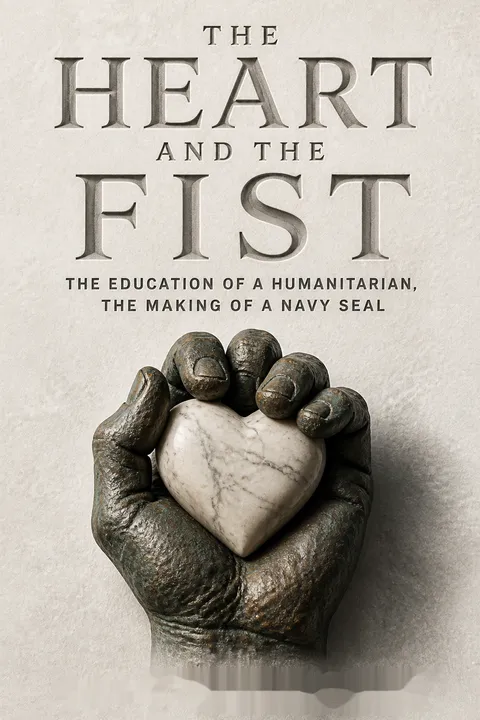
Care needs direction. The book’s central claim is that compassion without courage can leave people exposed, while courage without compassion can become mere force. Humanitarian volunteers and combat troops teach Greitens that a worthwhile life asks people to care for others and develop the strength to serve that care. The image of heart and fist names this pairing, not a choice between kindness and toughness.
The pairing is more demanding than the familiar call to be kind: it asks whether care can survive contact with danger, and whether strength can be governed by care. This resembles virtue ethics, where a good action depends not only on intention but on judgment about what a situation requires. The Fallujah patrol makes that judgment concrete: restraint is part of courage. Still, a moral ideal is not a complete policy. Good intentions and personal bravery cannot by themselves resolve institutional failures or determine when force is justified.
Stop waiting for history’s heroes; ordinary people are already making it
History has faces. As a teenager in China, Greitens meets students who had taken part in the 1989 Tiananmen demonstrations. They are not symbols to him anymore, but young people with ordinary tastes, ambitions, and fears. One entrusts him with undeveloped photographs of the protests, asking him to carry them out of China. The encounter turns history from a distant parade of famous names into choices made by people nearby.
Choose a path yourself. Greitens had worried that every meaningful adventure belonged to the past, and that college was simply a ticket to success. China changes his sense of both: the world still holds difficult work, and a purpose must be chosen rather than handed over. His youthful experience is not a template for every reader, but it makes a useful point: meaningful action often starts before anyone feels qualified.
The change from seeing historical figures as distant icons to meeting the people who made events is a shift in moral imagination. In social psychology, perspective-taking can make abstract groups feel less interchangeable, although it does not guarantee agreement or action. The entrusted film gives that shift real stakes: listening creates a responsibility to carry someone else’s account carefully. The story also complicates the romance of adventure. A young visitor can leave; the people he meets cannot simply step out of their political conditions.
Treat strength as a duty to serve, not permission to dominate
Boxing becomes formation. At a Durham gym, Greitens first gets soundly beaten, then trains for years under Earl Blair and boxer Derrick Humphrey. Earl teaches by insisting on repetition, humility, punctuality, prayer, and care for equipment. Greitens pays him every week, including holidays, and learns that commitment is expressed in mundane acts as much as in the ring.
Power needs a moral rule. Earl’s standard is clear: develop the abilities a person has, then use them to serve God and other people. Fighting skill is not a license to bully the vulnerable. Earl’s grief over Beaver, a young student shot after ignoring his warnings, shows how little discipline can control every outcome. The lesson is not that training prevents tragedy, but that it can attach strength to responsibility.
Earl’s teaching treats habits as moral practice: care for gloves becomes evidence of care for the work, and care for the work becomes respect for others. That connection echoes craft traditions in which standards are built into repeated actions, not merely declared as ideals. It is a powerful way to teach responsibility because it gives abstract values visible forms. Yet Earl’s strict chain of judgment can also become overly severe. The story of Beaver shows the limits of control, and warns against confusing obedience with a guarantee of safety or goodness.
Relief can ease suffering, but it cannot always stop the violence causing it
A safe zone needs safety. In Bosnia, Greitens meets refugees whose homes and families have been destroyed. At Gasinci camp, aid workers debate how to respond when Croatian soldiers shoot two puppies. Later, Serbian forces enter Srebrenica, a town designated a UN safe zone. The peacekeepers cannot protect the refugees from a much stronger force; more than eight thousand men and boys are killed.
Goodwill has limits. Greitens sees that food, shelter, schooling, and medical care matter deeply, but they do not stop armed groups from killing or expelling people. In Rwanda, the book recounts that more than eight hundred thousand people were murdered in a hundred days while international action came too late. This is not an argument that force solves every humanitarian crisis. It is a warning that compassion without credible protection may arrive only after the harm.
This insight confronts a real gap between humanitarian relief and civilian protection. Aid can reduce immediate deprivation, while security depends on political decisions, capable institutions, and willingness to accept risk. Treating the two as substitutes leaves people dangerously exposed. The harder question is how protection can be provided without creating further harm or claiming powers it cannot responsibly exercise. The memoir makes the cost of inaction vivid, but individual witness cannot settle the strategic questions that policymakers must answer.
Represent people in crisis as whole human beings, not charity props
Dignity changes the picture. In a Bosnian refugee camp, an aid director asks Greitens to photograph a donor tossing gum to children. He refuses, suggesting the donor sit with them and see what they have made. The children need help, but they should not be staged as helpless objects for a fundraising image. His photographs instead show families and children living ordinary moments inside extraordinary circumstances.
Let people consent. In Rwanda, Greitens hesitates before photographing women who survived the genocide. He worries that a camera can feel like taking something from them. One woman welcomes him to photograph her child, and the women smile toward the lens. Their invitation changes the meaning of the image. The photographer is not entitled to another person’s story simply because sharing it might move an audience.
The book’s photography episodes raise a central question in humanitarian communication: who controls the story of suffering? Images can mobilize attention, but they can also flatten people into evidence of need. Consent and context do not erase the unequal power between visitor and subject, yet they make that imbalance visible and contestable. The standard is not simply whether an image is moving or accurate. It is whether the person pictured has any meaningful say in how the image is made and what it is asked to prove.
Build recovery around people’s abilities, and give it time to take root
People are participants. In Bolivia, Mano Amiga gives street children a stable home, routines, schooling, and art. The children have lived with abuse and neglect, so even a light touch can trigger terror, as it does for Adolpho when Greitens tries to lead him to a shower. Recovery means learning a new sense of safety, not merely supplying a bed. Art matters because it lets children experience themselves as creators of something worthwhile.
Support what people do. Greitens’s humanitarian research leads him to argue that lasting recovery depends less on what people receive than on what they can do with support. That principle also applies to a good life: at Oxford, he discovers that love, beauty, rest, and intellectual pleasure are worth protecting, not distractions from service. Communities and character cannot be rebuilt overnight; outside help works best when it strengthens local effort rather than replacing it.
This approach aligns with strengths-based practice, which starts from people’s capabilities and relationships instead of defining them by deficits. It also recognizes that trauma can alter what feels safe, so predictable routines and patience are not cosmetic extras. The challenge is practical: institutions often need fast, countable results, while trust and development take time and may resist easy measurement. Agency should not become an excuse to withhold material support. The strongest version of the argument joins essential resources with meaningful participation.
Use hard tests to build teamwork, but never confuse endurance with virtue
Pressure reveals habits. Officer Candidate School initially frustrates Greitens with inspections and uniform rules. Its value becomes clearer when he is assigned to help Wong, a classmate who struggles with pushups. They train together, and Wong eventually exceeds the required score. At SEAL training, the test grows far harsher: of more than two hundred original candidates, only twenty-one from Greitens’s class graduate with their original group.
A test is not a moral certificate. During Hell Week, sleep deprivation and cold make teamwork essential. Greitens finds that leading others occupies his attention and leaves less space for self-pity. But he is explicit that completing Hell Week does not make someone a good person. Training can test composure and commitment; it cannot guarantee integrity, kindness, or sound judgment.
High-pressure training can make cooperation and attention observable, while a demanding shared goal gives teams a reason to depend on one another. Greitens’s account of helping Wong offers a quieter model of leadership than the theatrical shouting that opens OCS. The distinction between endurance and virtue is crucial: selection identifies some capacities, not a complete character. Extreme tests also carry costs and can reward concealment of injury. Their value depends on what they teach, what they damage, and whether standards are connected to the real responsibilities people will face.
Use force with restraint, because every encounter can create enemies or allies
Respect can produce information. In Afghanistan, Greitens’s team detains a man they suspect of being a terrorist, then learns he is likely a farmer caught in error. A professional interrogator treats him respectfully, explains the mistake, and offers money for his return trip. That man may tell his village what happened. In a conflict where local knowledge matters, humane treatment is both an ethical obligation and a practical source of trust.
Discipline distinguishes a warrior from a thug. The team’s work involves lethal force, but it also involves identifying targets carefully and treating captives lawfully. In Iraq, the book describes anger and confusion around detention, including prisoners held in degrading conditions by local police. The lesson is not that kindness guarantees cooperation. It is that cruelty can injure innocent people, destroy credibility, and corrupt the people who wield power.
This account connects moral restraint to operational effectiveness without reducing ethics to a tactic. Trust can open channels of information, while abuse can make cooperation less likely and damage the legitimacy of a mission. But respectful treatment should not depend on whether it yields intelligence; its ethical force remains even when a detainee says nothing. The memoir also shows how difficult that standard becomes when systems for detention and accountability are fragmented. Individual professionalism matters, yet it cannot compensate for institutional arrangements that repeatedly produce degrading treatment.
Build local partners and useful relationships instead of exporting grand plans
Partnership is operational. In Afghanistan and the Philippines, Greitens sees that local allies know the people, terrain, and language in ways visiting forces cannot. In Kenya, he drives his team to a village they had previously sped through with windows shut and rifles visible. They buy fruit, meet residents, and begin conversations. The small gesture does not transform the region, but it changes how the team is encountered.
Invest in people, not appearances. Greitens prefers training local forces and supporting local relationships to projects that produce a visible building but little lasting connection. He also confronts bureaucracy over a forklift marooned in a Kenyan harbor, a small absurdity that undermines trust. He calls progress in such conflicts persistent strategic progress: improving position through practical gains, rather than expecting a single decisive victory.
The argument favors network-building over spectacle. Local partners can provide knowledge, legitimacy, and continuity that an outside force lacks, while practical cooperation gives relationships a shared purpose. The fruit-buying visit captures how security practices can themselves communicate hostility or openness. Still, partnerships are not automatically equitable: money, weapons, and institutional authority remain unevenly distributed. Durable cooperation requires asking who sets priorities, who bears the risks, and whether local partners gain real capacity rather than becoming instruments of an outsider’s mission.
Give wounded veterans meaningful work, not only thanks and assistance
Service can restore purpose. After visiting wounded service members, Greitens sees that gratitude and practical support are not the whole answer. Many want to serve again, even if they cannot return to their units. He starts The Mission Continues to offer fellowships in community organizations, pairing a stipend and mentorship with a real role in public service.
Ask for contribution. Mathew Trotter, medically discharged after severe injuries to both legs, becomes a mentor to children receiving horse-assisted therapy. He then encourages wounded veterans to volunteer with those children after their own therapy. The organization grows from this premise: veterans are not only recipients of care, but people with experience and capacity to offer. The book reports more than one hundred fellowships and over twelve thousand volunteers contributing more than seventy-five thousand service hours.
The program reframes recovery from a problem of aid alone into a question of identity, belonging, and contribution. That shift can be powerful: a person may need support and still want to be regarded as capable of giving something back. The design wisely links opportunity with mentorship and a stipend, rather than treating purpose as a substitute for resources. At the same time, service should remain an invitation, not a new test veterans must pass to deserve care. People need room to recover in different ways.
Analysis
The book is built as a journey from witness to responsibility. Greitens first encounters hardship as a young volunteer and photographer, then concludes that service without the capacity to protect can fail the people it intends to help. Boxing and SEAL training give him a language for discipline and force; deployments test whether those capacities can be governed by respect, restraint, and partnership. The final move is domestic: wounded veterans are offered service as a route to renewed purpose. The architecture turns the title into an ethical proposition. The heart gives strength its direction, while the fist gives care the means to act.
Its strongest moments are specific encounters that resist abstraction: the Tiananmen photographs, Adolpho’s fear of a light touch, the wrongly detained Afghan farmer, and the elderly man in Fallujah who needs medicine. These scenes complicate easy categories such as victim, ally, enemy, and hero. They also expose the limits of the narrator’s position. He often arrives with the ability to leave, while the people he meets remain inside the conditions he describes. His self-criticism, especially about failing to help his grandfather and about the risks of photographing survivors, makes that asymmetry part of the story rather than hiding it.
The memoir is not a neutral evaluation of military intervention. It is a first-person case for integrating humanitarian concern with disciplined force, and its selection of episodes supports that argument. The history of Bosnia, Rwanda, Afghanistan, and Iraq involves political causes and consequences beyond what individual witness can establish. Its claims about protection and strategy should therefore be read as argued judgments, not as settled proof that military action will succeed. The book is most persuasive when it shows concrete duties: protect civilians, treat captives humanely, learn from local partners, and preserve the dignity of those receiving aid. Its lasting challenge is not to admire toughness, but to ask what toughness serves, and who gets to decide.
Review Summary
The Heart and the Fist received mostly positive reviews, with readers praising Greitens' unique perspective as both a humanitarian and Navy SEAL. Many found his journey inspiring and appreciated his insights on service, leadership, and the balance between compassion and strength. Some critics felt the book lacked nuance or came across as self-aggrandizing. Reviewers highlighted Greitens' impressive accomplishments and his ability to combine academic excellence with physical prowess. The book resonated with many as a thought-provoking exploration of how to make a positive impact in the world.
People Also Read


Glossary
heart and fist
compassion joined to strengthThe book’s central pairing of compassion with courage and capability. The heart gives strength a moral purpose, while the fist represents the capacity to act, including the use of force when protection requires it. Neither quality is sufficient alone: strength without compassion can become brutality, and compassion without strength can leave people undefended.
eudaimonia
human flourishingAn ancient Greek idea that Greitens encounters in his university studies. It refers to living a good and complete human life, rather than merely avoiding hardship or achieving success. In the book, the term helps frame a life of purpose as including service, relationships, beauty, and the conditions that allow people to flourish.
arête
excellence of characterA Greek term commonly translated as virtue, which Greitens explains as carrying the sense of excellence. It suggests developing one’s capacities and performing well, not simply obeying rules or appearing good. The book connects this idea to the question of how ability, discipline, and character should be put to use.
phronesis
practical moral judgmentA Greek concept translated roughly as practical wisdom. It means being able to judge both what action a situation calls for and what is worth pursuing. Greitens emphasizes that this judgment is shaped through experience. In the context of war, it helps explain why decisions about force, protection, and risk cannot be resolved by abstract rules alone.
BUD/S
SEAL selection and trainingBasic Underwater Demolition/SEAL training, the initial six-month training course for prospective Navy SEALs described in the memoir. It combines demanding physical tests with instruction in swimming, diving, weapons, demolitions, patrols, and teamwork. Candidates may quit or be removed for injury or failure to meet standards; passing BUD/S is followed by additional training.
Hell Week
extreme team endurance testA notorious period within BUD/S in which candidates face days of intense physical exertion, cold, sleep deprivation, and instructor-imposed confusion. Greitens describes it as a test of teamwork and persistence, not proof of moral goodness. Its experience can give graduates a personal reference point for facing later hardship.
Stockdale paradox
face facts while sustaining hopeA leadership principle Greitens attributes to Admiral James Stockdale, a Vietnam-era prisoner of war. It combines an unflinching recognition of present hardship with continued hope. In the memoir, the principle informs how to speak with wounded Marines: acknowledge real limits while helping them identify meaningful work and a future direction.
persistent strategic progress
steady gains in relative positionGreitens’s description of progress in conflicts where a single decisive victory is unrealistic. The aim is to improve position over time by increasing one’s options and reducing an adversary’s, through such measures as training local forces, improving access, gathering information, and building relationships. The book contrasts this approach with expecting a clean, final victory.
The Mission Continues
veteran service fellowshipThe veterans’ organization Greitens starts to help wounded and disabled veterans continue serving in their communities. Its fellowships place participants in nonprofit, charitable, or public-benefit organizations and provide a stipend and mentorship. The program’s premise is that veterans need practical support and meaningful opportunities to contribute, not only gratitude or charity.
FAQ
What's The Heart and the Fist about?
- Duality of Service: The book explores the balance between humanitarian work and military service, emphasizing the need for both courage and compassion in addressing human suffering.
- Personal Journey: Eric Greitens shares his experiences from being a humanitarian in war-torn regions to becoming a Navy SEAL, illustrating how these roles intersect.
- Themes of Leadership: It delves into the importance of service, leadership, and the moral responsibilities that come with power, reflecting on how these manifest in both military and civilian contexts.
Why should I read The Heart and the Fist?
- Inspiring Stories: The book is filled with powerful narratives from Greitens' experiences in Iraq, Rwanda, and Bolivia, showcasing the strength of the human spirit.
- Thought-Provoking Themes: It challenges readers to consider their own roles in service and the complexities of courage and compassion in a world filled with conflict.
- Personal Growth: Greitens' journey encourages readers to reflect on their values and the impact they can have on others, making it a compelling read for anyone interested in personal development.
What are the key takeaways of The Heart and the Fist?
- Courage and Compassion: Greitens emphasizes that true strength lies in the ability to be both courageous and compassionate, stating, "Without courage, compassion falters, and without compassion, courage has no direction."
- Value of Service: The book underscores the importance of serving others, whether through military service or humanitarian efforts, as a path to personal growth and fulfillment.
- Resilience in Adversity: Greitens shares stories of individuals who have faced tremendous challenges and emerged stronger, highlighting the human capacity for resilience.
What are the best quotes from The Heart and the Fist and what do they mean?
- "It pays to be a winner.": Reflects the competitive nature of military training and the importance of striving for excellence in all endeavors.
- "The only easy day was yesterday.": Emphasizes that challenges are a constant part of growth, serving as a reminder to embrace difficulties as opportunities for improvement.
- "If not me, then who?": Encourages individuals to take responsibility for their actions and to step up in times of need, inspiring readers to contribute to their communities.
How does Eric Greitens define courage in The Heart and the Fist?
- Courage as Action: Greitens defines courage not just as bravery in the face of danger, but as the willingness to act for the benefit of others, even when it is difficult.
- Moral Responsibility: He argues that true courage involves standing up for what is right and protecting those who cannot protect themselves.
- Everyday Courage: Greitens illustrates that courage can be found in everyday actions, not just in grand gestures, encouraging readers to find ways to be courageous in their own lives.
How does Greitens' military experience influence his humanitarian work in The Heart and the Fist?
- Strength and Discipline: His military training instilled a sense of discipline and resilience that he applied to his humanitarian efforts, allowing him to face challenges head-on.
- Leadership Skills: Greitens learned valuable leadership skills in the military that he later used to inspire and organize others in humanitarian missions.
- Understanding of Conflict: His experiences in combat provided him with a unique perspective on the complexities of war and peace, informing his approach to humanitarian work.
What role does personal responsibility play in The Heart and the Fist?
- Active Participation: Greitens stresses that individuals have a responsibility to engage with the world and take action to help those in need, rather than remaining passive observers.
- Empowerment: He believes that by taking responsibility for our actions and choices, we can empower ourselves and others to create positive change.
- Community Impact: The book highlights how personal responsibility can lead to collective action, fostering a sense of community and shared purpose in addressing global issues.
What challenges does Greitens face in The Heart and the Fist?
- Balancing Roles: Greitens grapples with the duality of being a warrior and a humanitarian, often feeling the tension between the two identities.
- Moral Dilemmas: He faces difficult moral questions about when to use force and how to protect the vulnerable without perpetuating cycles of violence.
- Personal Sacrifice: Greitens reflects on the personal sacrifices he made in pursuit of his goals, including the toll on his relationships and personal life.
How does The Heart and the Fist address the concept of hope?
- Resilience of the Human Spirit: Greitens shares stories of individuals who have endured unimaginable suffering yet continue to find hope and strength in their lives.
- Community Support: The book emphasizes the importance of community and connection in fostering hope, illustrating how people can uplift one another in times of crisis.
- Call to Action: Greitens encourages readers to be sources of hope for others by taking action and making a difference in their communities and the world.
What is the significance of the title The Heart and the Fist?
- Symbol of Duality: The title represents the balance between compassion (the heart) and strength (the fist), highlighting the need for both in addressing human suffering.
- Call to Action: It serves as a reminder that to truly make a difference, one must be willing to fight for what is right while also caring for those in need.
- Personal Journey: The title encapsulates Greitens' own journey from humanitarian work to military service, illustrating how both aspects have shaped his understanding of service and leadership.
How does The Heart and the Fist explore the concept of resilience?
- Human Capacity for Resilience: Greitens shares stories of individuals who have faced tremendous adversity and emerged stronger, highlighting the human spirit's ability to endure and overcome challenges.
- Lessons from Training: The rigorous training Greitens undergoes as a Navy SEAL teaches him valuable lessons about resilience, pushing through pain and fear.
- Building Resilience in Others: Greitens emphasizes the importance of fostering resilience in those he serves, believing that by empowering others, we can help them build their own resilience.
How does The Heart and the Fist address the concept of leadership?
- Leading by Example: Greitens stresses that true leaders set the standard through their actions, enduring the same challenges as their teams to earn respect and trust.
- Character and Integrity: The book highlights the importance of character in leadership, emphasizing that leaders must act with integrity and take responsibility for their actions.
- Empathy and Compassion: Greitens argues that effective leaders must also be compassionate and empathetic, understanding the needs and struggles of others to enhance leadership effectiveness.
About the Author
Other books by Eric Greitens
Download PDF
Download EPUB
.epub digital book format is ideal for reading ebooks on phones, tablets, and e-readers.








