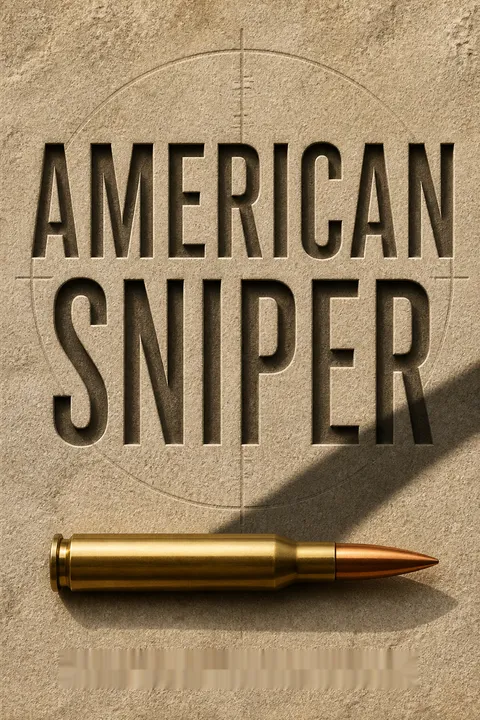


Key Takeaways
Measure a sniper’s work by whom it protects, not by the bodies counted.
Protection over prestige. The book opens with Kyle watching a woman approach American Marines with a grenade. He shoots to stop the attack, describing the moment as a duty to protect the people in his unit. His account makes the central tension plain: the work is lethal, but he understands its purpose as shielding others, not collecting a score. He refuses to supply a personal kill total, even as official estimates change and public attention fixes on the number.
A shared achievement. Kyle credits instructors, fellow SEALs, Marines, soldiers, and the opportunities created by repeated deployments. His self-image is not simply the lone marksman, but one member of a team whose skill can keep others alive.
The opening incident gives the memoir its moral frame: a decision made under immediate threat, viewed from the position of someone responsible for protecting a unit. That perspective is powerful because it reveals the pressure and uncertainty of combat. It is also necessarily partial. A participant’s conviction about a specific shot cannot settle every wider claim about a war or its enemies. The distinction matters: recognizing the protective logic of a soldier’s action need not require accepting every political judgment attached to it.
Turn patience into a practiced skill, not a trait you either have or lack.
Lessons from the ranch. Kyle says that working with horses forced him to slow down. A horse learns through small, repeated steps, and losing patience can undo the training. He came to watch for signs that the animal was learning, stop on a good note, and continue another day. That practice changed how he approached difficult work.
Lessons from the hide. Sniper training demanded prolonged observation and careful movement, not just accurate shooting. Kyle describes waiting for days when necessary and adjusting camouflage to match the terrain. He admits impatience nearly cost him his place in the stalking portion of the course. The cowboy who once expected to master a horse by staying on had to learn that endurance sometimes means moving slowly.
This connection between horsemanship and military observation is more than a colorful origin story. Both activities reward attention to signals that are easy to miss when someone rushes toward a result. In learning theory, feedback works best when learners can notice small changes and adjust their next attempt. The analogy has limits: an animal-training lesson and a combat decision carry very different stakes. Still, the underlying discipline transfers well to any task where speed can create costly errors.
Break impossible endurance into the next task you can finish.
A shorter horizon. BUD/S, the introductory course for Navy SEAL candidates, tests physical and mental endurance. Kyle says his class began with more than two hundred candidates and graduated about two dozen. Its best-known ordeal, Hell Week, lasted 132 hours of near-continuous activity, with little sleep and regular meals. Candidates could quit, but doing so meant leaving the program.
One meal at a time. Rather than dwell on the whole ordeal, Kyle focused on reaching the next meal, which arrived every six hours. He had a fractured foot and several moments when quitting felt tempting, but breaking the experience into small intervals gave him a manageable target. He later understood the test as preparation for continuing a mission while exhausted, not a contest in push-ups alone.
Shortening the time horizon is a practical response to overload. Attention can manage the next task more reliably than an imagined stretch of suffering with no visible end. That principle appears in endurance sports, emergency medicine, and other settings where people work in repeated intervals. Yet toughness is not a universal answer: training can distinguish persistence from readiness only if injuries are treated responsibly and standards are sound. Kyle’s fractured foot shows the danger of treating every warning from the body as something to overcome.
Separate shooting skill from opportunity, teamwork, and luck.
Skill is only one factor. Kyle says he was not the top shooter in sniper school, and he does not claim every long shot was a demonstration of mastery. During the Fallujah fighting, most of his urban shots were much shorter than the dramatic distances associated with snipers. A sniper’s work also involved observation, identifying threats, and sharing information with the unit being protected.
Exposure changes the count. Kyle credits his unusually high number of confirmed kills largely to spending more time in combat and having more opportunities. He describes a 2,100-yard shot in Iraq as extraordinarily lucky, not a repeatable achievement. Another sniper in his class, he notes, had fewer kills partly because that man spent time deployed elsewhere. A tally records events, not skill in isolation.
This is a useful corrective to the way people turn performance into a simple ranking. Outcomes depend on ability, assignment, exposure, teammates, and chance. The same pattern appears in sports and business: a high score may reflect talent, but also the number and quality of opportunities available. Kyle’s account makes that distinction unusually explicit. It also cautions against treating confirmed kills as a complete measure of military value, since scouting, deterrence, and protection may matter without adding anything to a count.
Winning a firefight is not the same as winning a war.
Force and restraint. Kyle resented commanders who, in his view, demanded complete success with no casualties and therefore avoided useful risks. He also describes strict rules of engagement, or ROEs, governing when troops could fire, and extensive reports to justify each kill. He says he withheld shots when he could not clearly establish a threat, even when he suspected a person was an insurgent.
The larger objective. In Ramadi, he supported a strategy of establishing strongholds and expanding control gradually. He later argued that force made local leaders take the threat seriously and helped bring them toward cooperation. That is his interpretation of the campaign, not a full account of every political cause. The distinction between tactical success and durable peace remains central to his story.
The memoir captures a real tension between operational freedom and accountability. Clear rules can protect civilians, discipline forces, and preserve the legitimacy a mission needs. Confusing or poorly calibrated rules can also create danger for troops. Political analysis adds another distinction: coercive power may change what armed groups believe they can do, but it does not automatically build trusted institutions. Kyle’s view illuminates the battlefield logic behind his argument, while his position as a combatant limits what his account alone can establish about the war’s overall results.
Earn trust by making teammates safer, not by claiming elite status.
Belonging is tested. New SEALs faced hazing, low-status tasks, and repeated tests before older members accepted them. Kyle’s account of Ryan Job shows how a newcomer earned respect through persistence, hard work, and humor, rather than by looking the part. The platoon’s rough rituals were meant to test commitment, though they could also become dangerous and humiliating.
Skill becomes useful through cooperation. In Fallujah, Kyle left sniper overwatch to help Marines clear houses, sharing techniques he had learned through specialized training. He worked with Army units, Polish GROM operators, and Marines, adapting to each group. Respect grew when people saw that he was prepared to contribute, not merely invoke his SEAL identity. The most important test was whether others could rely on him under pressure.
The strongest form of credibility in the book is demonstrated competence directed toward a shared task. That principle applies to teams well beyond the military: status helps only when it improves coordination and responsibility. The account also invites caution about hazing. Shared hardship can create group identity, but humiliation is neither the only nor a necessary route to trust, and it can silence people who need help. High standards and mutual accountability are more defensible foundations for cohesion than abuse presented as tradition.
Treat survival as contingency, not proof of invulnerability.
The illusion breaks. During the Ramadi deployment, Kyle’s close friend Marc Lee was killed, and Ryan Job was gravely wounded and blinded. Kyle’s earlier confidence that he could survive almost anything gave way to grief and guilt. He blamed himself for Ryan’s injury, even though he could not control what happened. The losses left the platoon shaken, and its members temporarily stood down before choosing to return to combat.
Danger follows him home. In Sadr City, a bullet struck Kyle’s helmet and another hit his body armor. He escaped with his life, but the incident made his mortality immediate. Later, when the fighting slowed, he struggled to sleep and relived the fear. His body could function calmly in combat while distress surfaced during quiet moments.
A person can perform well during acute danger and still experience its costs afterward. Stress responses are shaped by context; focused action may temporarily narrow attention, while safety gives the mind room to process what happened. That pattern is not, by itself, a diagnosis. Kyle’s guilt also shows how people can confuse responsibility with control, especially after a teammate is hurt. A more humane account of resilience allows both competence and vulnerability without turning suffering into either shame or proof of heroism.
Coming home means rebuilding family rhythms, not merely unpacking gear.
Two worlds collide. After deployments, Kyle often stayed home and avoided visitors for a week. Ordinary sounds could trigger a sudden return to the battlefield: a household alarm once sent him scrambling for cover. Driving, crowded roads, and unfamiliar routines also felt different after combat. These reactions affected the family as well as the returning servicemember.
The family has changed, too. Taya had raised their young children alone for months, developing routines and bonds that Kyle could not simply step into. They disagreed about parenting and struggled to reconnect after living in separate worlds. Taya describes feeling relieved he was alive while also angry, anxious, and unsure how to rely on him. Homecoming was not a clean reset. It required time, adjustment, and difficult conversations.
Reintegration is relational, not just individual. The returning person is changed, but so are the people who managed the household, parenting, and fear during the absence. Treating reunion as an instant return to normal can make both sides feel misunderstood. The book’s alternating perspectives are valuable because they show that a deployment’s costs are distributed unevenly. A fuller support plan therefore includes partners and children, not only the person in uniform, and allows each family member’s adjustment to take its own course.
Let family obligations reshape identity, even when leaving feels like failure.
Service became selfhood. Kyle loved combat and felt that his training made him responsible for protecting fellow Americans. Taya, meanwhile, felt that the repeated deployments left her and the children without a dependable partner at home. Their conflict was not about whether they loved one another, but about how they ranked country and family when both made urgent claims.
A difficult choice. The marriage reached a crisis, and the couple sought counseling and made a deliberate effort to rebuild trust. Kyle eventually decided not to reenlist, even though leaving felt like abandoning his teammates and the role that had defined him. He never describes that decision as effortless or free of regret. His account presents family life not as an easy alternative to service, but as a responsibility that required him to become someone beyond the SEAL identity.
Identity can supply purpose while making change feel like betrayal. When a role is tied to belonging, competence, and moral worth, leaving it can produce grief even when the decision is right for a family. Kyle and Taya’s disagreement also shows why private affection cannot substitute for shared decisions about time and responsibility. Their story resists a neat lesson that one priority always wins. A more useful question is whether a cherished role’s demands are compatible with the obligations and relationships the person also claims to value.
Help veterans with useful companionship, dignity, and concrete opportunities.
A new kind of service. After leaving the Navy, Kyle helped create Craft International, a training company for military and law-enforcement personnel. He also organized ranch retreats where wounded veterans could hunt, practice shooting, or spend time with peers. His stated preference was to treat veterans as capable people with continuing value, not as objects of pity.
Support can be ordinary and practical. The book also describes Kyle’s own difficult transition. He felt guilty about leaving the SEALs, began drinking heavily, and says a serious truck crash forced him to reconsider his direction. His later work with veterans grew from that unsettled period. The memorial section reinforces the contrast between public legend and private service: friends remember a father, teammate, and neighbor who showed up to help.
The account’s strongest model of support is not heroic rescue but useful presence: shared activity, peer understanding, and practical chances to contribute. Those elements protect dignity by recognizing what veterans can still do, rather than defining them by injury. They should complement, not replace, professional mental-health care when it is needed. The book is most persuasive when it shows service continuing in ordinary relationships and work, rather than implying that camaraderie or determination alone can resolve every consequence of combat.
Analysis
American Sniper is a combat memoir, but its deepest subject is the collision between a vocation built around protection and the relationships that vocation strains. The narrative moves from a Texas childhood shaped by ranch work, faith, and self-reliance, through severe SEAL training and repeated deployments, then into the difficult work of becoming a husband and father outside the military. The chronology gives the book momentum; its recurring tension is the gap between Kyle’s sense of duty and the costs borne by Taya and their children.
The book’s firsthand detail is valuable but should not be mistaken for a complete history of Iraq. Kyle’s author’s note acknowledges that dialogue is reconstructed from memory. Military review for security does not certify every interpretation, and the text offers little access to Iraqi civilians or the political forces he describes. His explanations of why violence worked in Ramadi are therefore testimony from one participant, not a sufficient causal account of the campaign. The strongest reading separates what he witnessed, what he felt, and what he concluded.
That separation also makes the book’s contradictions more illuminating. Kyle insists on moral clarity and confidence in his use of force, yet describes declining shots when evidence was uncertain and documenting his actions under rules he disliked. He presents combat as exciting and meaningful, while recounting losses, fear, anger, disrupted family life, and a painful transition out of service. These are not inconsistencies to smooth away. They show how a person can feel competent in a role that exacts lasting costs.
Taya’s sections provide an essential counterweight. They make visible the labor and emotional uncertainty of waiting, parenting alone, and trying to reunite with someone whose life has been organized around deployment. The book’s final measure of Kyle is consequently wider than his military reputation: it includes the choice to leave, the work of rebuilding family ties, and efforts to help veterans. Its most enduring insight is that service is not only what a person does in danger. It is also what that person owes to those who live with the danger at home.
Review Summary
American Sniper received mixed reviews. Many praised Kyle's honesty and insight into military life, finding it a compelling and patriotic account. Others criticized the writing style as simplistic and Kyle's attitude as overly black-and-white. Some readers appreciated the raw depiction of war, while others found Kyle's lack of introspection and cavalier attitude towards killing disturbing. The book was seen as an interesting look into the mindset of a Navy SEAL sniper, even if readers disagreed with Kyle's worldview. His wife's perspective added depth for many.
People Also Read




Glossary
BUD/S
SEAL candidate trainingBasic Underwater Demolition/SEAL, the introductory course candidates must pass before becoming Navy SEALs. Kyle describes indoctrination followed by physical training, diving, and land-warfare phases. The course tests candidates through demanding physical and mental work, and many leave before completion.
Hell Week
Continuous endurance testA demanding period within BUD/S that Kyle describes as roughly 132 hours of near-continuous exercise and activity, with very little sleep. Candidates are repeatedly tested while cold, exhausted, and under stress. Kyle says its purpose is to reveal whether they can continue functioning when discomfort and fatigue are severe.
overwatch
Position protecting a unitA position from which a sniper or other observer watches an area and helps protect troops moving nearby. In Kyle’s account, overwatch involves scanning for threats, communicating observations, and engaging a clearly identified enemy when required. It is a protective role, not simply a place from which to shoot.
rules of engagement
Limits on using forceOrders specifying the circumstances in which military personnel may use force. Kyle describes them as governing when he could shoot, including cases where a person’s weapon or suspected hostility alone did not necessarily justify firing. He both resented rules he considered restrictive and describes withholding shots when he could not establish a clear threat.
direct action
Short, targeted military strikeA brief operation aimed at a specific, important target, such as raiding a suspected insurgent’s home to capture him. Kyle describes these missions as planned strikes that seek to act quickly and decisively. In Iraq, his teams used them to seize suspected bomb-makers, financiers, and other resistance figures.
COP
Command and observation postA Command Observation Post, a secured position used to establish a military presence and observe or control an area. In Ramadi, American forces built a series of these strongholds. The posts supported patrols and searches, and provided bases from which forces could gradually extend their control.
inkblot strategy
Gradual expansion of controlA strategy described in the book for establishing secured positions in parts of a city and expanding control outward over time. The image is of isolated areas of influence spreading across a larger map. In Ramadi, Kyle connects the approach to building COPs and extending security block by block, while acknowledging that progress could reverse.
FAQ
What's American Sniper about?
- Autobiography of Chris Kyle: The book is a firsthand account of Chris Kyle's life as a Navy SEAL sniper, detailing his experiences during four combat tours in Iraq.
- Combat and Personal Life: It covers his journey from training to becoming the most lethal sniper in U.S. military history, including the emotional and psychological toll of combat.
- Themes of Duty and Sacrifice: The narrative explores the complexities of being a soldier, the bond between service members, and the impact of war on his family life.
Why should I read American Sniper?
- Insight into Military Life: The book provides a unique perspective on the life of a Navy SEAL and the realities of modern warfare.
- Emotional and Personal Story: It delves into Kyle's personal life, including his relationships with his wife and children, adding emotional depth.
- Inspiration and Reflection: Kyle's story serves as an inspiration and encourages reflection on heroism and the cost of war.
What are the key takeaways of American Sniper?
- Understanding the Warrior Ethos: The book emphasizes the commitment to protect one’s comrades and country, driving soldiers to perform under pressure.
- The Cost of War: Kyle discusses the psychological and emotional toll of combat, including PTSD and reintegration challenges.
- Importance of Brotherhood: The bond between service members is vital for survival, showcasing camaraderie and loyalty.
What are the best quotes from American Sniper and what do they mean?
- “I will bleed for their deaths the rest of my life.”: Reflects Kyle’s loyalty and grief for fallen comrades, highlighting the emotional burden of soldiers.
- “The body will do whatever the mind tells it to.”: Emphasizes mental toughness required in combat, underscoring the power of mindset.
- “You’re a package deal, babe. I love you. All of you.”: Highlights unconditional love and acceptance in Kyle’s relationship with his wife, Taya.
How does Chris Kyle describe his experiences in combat?
- Vivid and Graphic Descriptions: Kyle uses detailed accounts to convey the intensity and chaos of battle.
- Emotional Struggles: He shares his fears, guilt, and the burden of taking lives, offering insight into the psychological impact of war.
- Moments of Humor and Humanity: Despite the seriousness, Kyle includes humor and camaraderie, humanizing the narrative.
What challenges did Chris Kyle face during his deployments?
- Physical and Mental Toll: Kyle faced injuries and the constant threat of death, along with PTSD and emotional strain.
- Strain on Family Relationships: His deployments created tension and fear within his family, affecting his relationship with Taya and their children.
- Navigating Military Politics: Balancing duty with family responsibilities was a recurring challenge.
How does American Sniper address the topic of PTSD?
- Personal Accounts of Trauma: Kyle shares his experiences with PTSD, illustrating the lasting scars of combat.
- Impact on Family Life: The book highlights how PTSD affects both the individual and their family, particularly Taya’s struggles.
- Call for Understanding and Support: Kyle advocates for greater support for veterans dealing with PTSD, emphasizing open conversations about mental health.
What role did Chris Kyle’s family play in his life and career?
- Support System: Taya and their children provided crucial support, helping Kyle cope with combat stresses.
- Struggles with Separation: The emotional struggles during deployments affected their relationship dynamics.
- Legacy of Love: Kyle’s commitment to his family influenced his decision to leave the Navy.
How does Chris Kyle view his role as a sniper?
- Pride in Service: Kyle sees his role as vital for protecting fellow soldiers and achieving mission objectives.
- Moral Justification: He emphasizes targeting only those deemed evil, reconciling his actions with moral clarity.
- Focus on Teamwork: Success in sniping relies on collaboration and trust among team members.
What impact did American Sniper have on Chris Kyle’s life after the military?
- Rise to Fame: The book made Kyle a well-known figure, bringing both opportunities and challenges.
- Advocacy for Veterans: He used his platform to raise awareness and help fellow service members transition to civilian life.
- Personal Struggles with Fame: Kyle grappled with the pressures of being a public figure while maintaining family life.
How does American Sniper reflect on the nature of heroism?
- Complexity of Heroism: Kyle’s narrative challenges traditional notions, showing heroism involves difficult choices and sacrifices.
- Everyday Acts of Valor: The book highlights valor in combat and personal relationships, exemplifying a broader definition of heroism.
- Legacy of Service: Kyle’s story reminds readers of the sacrifices made by service members, encouraging appreciation for their contributions.
How does American Sniper portray the enemy?
- Complexity of the Insurgents: Kyle describes insurgents as a mix of fanatics and opportunists, motivated by various factors.
- Brutality and Cowardice: He emphasizes their savagery and lack of regard for human life, using civilians as shields.
- Psychological Warfare: The insurgents employed tactics to instill fear and confusion, complicating battlefield dynamics.
Download PDF
Download EPUB
.epub digital book format is ideal for reading ebooks on phones, tablets, and e-readers.








