

Key Takeaways
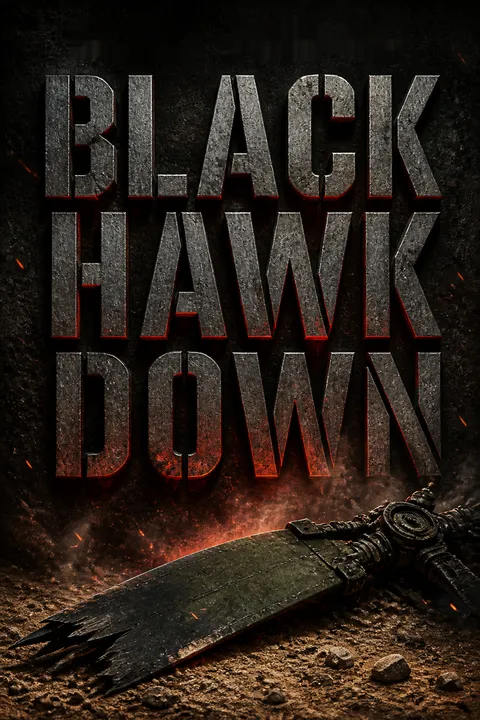
A capture raid became a citywide battle when two Black Hawks fell
A simple plan unraveled. On October 3, 1993, U.S. forces sent about 75 Rangers and 40 commandos in 17 helicopters to seize two lieutenants of Somali warlord Mohamed Farrah Aidid. A 12-vehicle convoy was meant to collect the prisoners and bring everyone back. The raid was expected to take about an hour. Instead, a Ranger fell from a fast-rope during insertion, the convoy quickly became separated, and Somali gunfire intensified across the neighborhood.
Then came the crashes. An RPG, a rocket-propelled grenade, brought down pilot Cliff Wolcott's Black Hawk. A second aircraft, flown by Mike Durant, crashed after its tail assembly failed. The rescue operation splintered into separate fights, while soldiers tried to reach the wrecks through crowded streets. What began as a targeted arrest became a desperate struggle to rescue the trapped and survive.
The opening reversal is more than dramatic setup. It shows how a plan can be locally coherent yet dangerously brittle: the capture team, perimeter, transport, and rescue capacity depended on one another working in sequence. Once the sequence broke, every component became a new demand on the others. This is a familiar problem in complex systems, where small disruptions can propagate through tightly coupled operations. The lesson is not that plans are useless, but that plans need room for failure, especially when the environment can change faster than command can respond.
Build a rescue plan for the second aircraft failure
One rescue team was not enough. After Wolcott's helicopter crashed, a trained search-and-rescue team fast-roped into the neighborhood to help its crew. When Durant's Black Hawk came down about a mile away, that team was already committed. The original operation had not treated a second aircraft loss as a serious possibility, leaving no equivalent rescue force ready for the second site.
Improvisation had a brutal limit. Pilot Mike Goffena sent commandos Gary Gordon and Randy Shughart to reinforce Durant's crew. The two men defended the crash site while waiting for help, but the ground convoy could not reach them in time. Gordon and Shughart were killed, and Durant was captured. The book's account makes contingency planning concrete: a backup is not an administrative luxury when the first response may consume the only available people and equipment.
This episode illustrates the difference between having a plan and having resilience. A plan describes the expected sequence; resilience preserves options when the sequence fails. In engineering, redundancy is sometimes criticized as expensive because it appears idle during normal operation. The Mogadishu mission reveals what that apparent inefficiency buys: the capacity to respond to simultaneous emergencies. Not every operation can afford a duplicate force, but leaders should explicitly identify which failure would leave people without any viable next move.
More surveillance did not help a convoy that could not communicate directly
Eyes above could not fix the road. Commanders watched the fight through helicopter and aircraft cameras, seeing roadblocks and armed groups that the convoy could not see. Yet the surveillance plane could not speak directly to the vehicles. Directions had to pass through the Joint Operations Center, introducing delays. In Mogadishu's twisting streets, a delayed instruction to turn could arrive after the convoy had passed the turn.
The screens hid the human cost. From above, the convoy appeared to move in an orderly way. On the ground, vehicles were taking fire, soldiers were wounded, and repeated stops exposed them to ambush. The convoy commander also failed to give every driver a clear route, leaving the column dependent on instructions from above. Information was plentiful, but its path to action was slow and incomplete.
The episode separates information from shared understanding. A camera can increase what a headquarters sees without improving what a driver can do. Communication systems are only useful when they deliver timely, trusted, actionable guidance to the people closest to the problem. There is a second caution here: remote observers may mistake visual order for operational control. The same distinction matters in disaster response, medicine, and logistics, where dashboards can make a system legible to managers while obscuring the experience of the people working inside it.
When civilians and gunmen share the same streets, certainty disappears
The rules met an impossible scene. Rangers were instructed to fire only at people who pointed weapons at them. But armed fighters moved among women, children, and other residents who gathered to watch the fighting. Some civilians helped direct gunmen toward American positions; others were frightened or simply trying to get home. Soldiers had seconds to interpret ambiguous movements while bullets and grenades arrived from nearby buildings.
Every choice carried risk. Shawn Nelson saw an armed man using women and children as cover, while other Rangers encountered children in a shed and tried to keep them safe. In the convoy, Eric Spalding first warned a driver not to shoot a woman carrying a baby, then fired when she raised a pistol. Such moments do not resolve neatly into clean categories. The battle shows how urban combat can make restraint, protection, and self-defense collide.
This is the ethical core of the street-level narrative. Rules of engagement cannot eliminate judgment; they structure it, often under conditions that deprive people of time, context, and reliable identification. The account is strongest when it lets hesitation and error coexist with disciplined action rather than treating every decision as obvious in retrospect. A necessary caution is that battlefield testimony is partial: people under fire cannot reliably see every consequence of their choices. That limitation makes careful civilian protection more important, not less.
Training steadies individuals, but shared command keeps units together
Skill could not solve coordination. The soldiers had rehearsed their roles, and their training helped them move under fire, treat wounds, and return to cover. But Rangers and commandos used different radios and procedures. As teams moved toward Wolcott's crash site, formations broke apart, people lost track of one another, and some soldiers did not know where they were supposed to go. At one point, a Ranger fired toward a rooftop without realizing commandos were there.
Leadership had to adapt. Captain Mike Steele wanted to preserve unit order, while experienced commando Paul Howe favored rapid movement and aggressive positioning. Their distrust and incompatible communications made the split worse. Steele also had to reconsider an order to move wounded men when a senior sergeant explained that the exposed crossing would be perilous. In this fight, competence depended not only on individual courage, but on whether people could coordinate across organizational boundaries.
The story distinguishes expertise from integration. A group can contain highly capable specialists and still perform poorly as a collective if its communication protocols, authority, and assumptions do not align. Organizational research often describes this as a boundary problem: information and trust weaken where teams or institutions meet. The account also resists an easy lesson that strict hierarchy always helps. A subordinate's challenge can improve a decision, but only when authority is open enough to hear credible local knowledge.
Treat Somali anger as part of the battlefield, not its backdrop
The resistance had a history. The book shows Somalis responding not only to the October raid, but to months of U.S. operations against Aidid's clan. Some had seen relatives or neighbors killed in earlier attacks; others viewed the arrests and helicopter raids as an assault on their community. When the aircraft came over the city, armed residents and militia members mobilized, erected barricades, and converged on the crash sites.
The streets held more than combatants. Ali Hassan Mohamed, a student whose 15-year-old brother was killed during the fighting, took up a hidden rifle and joined the resistance. Other residents tried to shelter family members or bury the dead under fire. These accounts complicate the American view of an extraction mission: the people confronting the convoy understood it as an invasion and a threat to their homes. Their perspective explains the depth of resistance without making every act of violence defensible.
Including Somali residents changes the scale of the story. The battle is not simply an American unit confronting an anonymous hostile crowd; it is an intervention experienced by residents through losses, fear, and political grievance. This is essential context for understanding why armed resistance spread so quickly. It also guards against a common narrative distortion in military history, where civilians appear only as obstacles or casualties. Explanation is not absolution: recognizing local motives can clarify the conflict while leaving responsibility for particular acts open to judgment.
Fear is part of courage, not proof that courage has failed
The soldiers were not fearless. After returning to base with a dead friend and a badly injured Ranger, Steve Anderson dreaded going back out. Dale Sizemore, who had a broken arm, removed his cast and volunteered. Another Ranger, Brad Thomas, said plainly that he could not face another trip into the city. Sergeant Jeff Struecker did not shame him; he acknowledged his own fear and spoke to him quietly. Thomas eventually joined the convoy.
Duty looked different to each man. Some acted from loyalty to their friends, others from obedience, pride, or sheer determination. During the convoy's retreat, wounded soldiers kept firing and helping one another, even when frightened and exhausted. The narrative makes bravery human by showing that it can coexist with panic, grief, and hesitation. It does not pretend that every person reacts the same way, or that fear can be argued away.
Struecker's response offers a more durable account of courage than the popular image of the unshaken warrior. Fear is a physiological response to danger, not a verdict on character. In moral psychology, the meaningful question is often how people act while experiencing fear, not whether they experience it at all. At the same time, the scene exposes the pressure of group identity: a soldier may proceed because refusal feels impossible. Duty can sustain action, but institutions should not confuse compliance with freely chosen confidence.
A tactical rescue can succeed while the political mission collapses
The trapped force got out, at enormous cost. An armored relief column assembled with Pakistani tanks, Malaysian personnel carriers, and American troops. It reached the first crash site after a long, dangerous delay. The rescued soldiers still had to withdraw through the city, and Wolcott's body had to be freed from the wreck. By the end, 18 Americans were dead and 73 wounded. The text reports more than 500 Somalis killed and at least 1,000 injured.
The strategic result ran against the raid's purpose. Durant survived captivity and was released after diplomatic pressure. The United States decided to end efforts to capture Aidid and withdraw its forces. The two Somali targets became little known, while many in Mogadishu remembered the battle as a victory. The extraction achieved a narrower military goal, but the wider campaign lost public and political support.
The distinction between tactical success and strategic success is central to military analysis. A force may display discipline, recover people, and complete an immediate task while producing political consequences that undermine the campaign. The figures in the account convey the scale of loss, but they cannot alone measure legitimacy, local memory, or whether the intervention's original humanitarian aims remained achievable. The ending therefore resists a simple scoreboard. It asks readers to judge military action against its political purpose, not only against what happened on the street.
Even in combat, individual enemies can interrupt the logic of hatred
Durant survived because a local commander intervened. When the crowd reached the second crash site, neighborhood militia leader Yousuf Dahir Mo'Alim stopped people from killing the wounded pilot. He recognized that Durant might be more valuable alive as a prisoner. Durant was later taken by freelance gunmen, then came under the protection of Aidid's representative, Abdullahi Hassan, known as Firimbi.
Captivity was not one unchanging relationship. Firimbi arranged care for Durant, helped tend his wounds, and sought assurances that the pilot would describe his treatment honestly. Durant, in turn, tried to build trust with his captor. His survival did not erase the violence, coercion, or political bargaining around him. But these encounters reveal people making choices beyond the identities assigned to them as enemy, captive, or propagandist.
These moments complicate the story without softening its violence. Humanitarian conduct can occur inside coercive relationships, and practical motives can coexist with empathy, reputation management, or political calculation. Mo'Alim's intervention preserves a distinction between a crowd seeking revenge and a leader who sees strategic value in restraint. Firimbi's care likewise serves his political interests while remaining materially important to Durant. Such mixed motives are not a flaw in the account. They are a reminder that moral action rarely arrives in a pure form.
Analysis
Mark Bowden's account is structured as a minute-by-minute descent from confidence into disorder. The opening mission appears manageable: seize two senior associates of Aidid, secure the surrounding block, and leave by convoy. Each breakdown then changes the task. A fall during insertion creates a medical evacuation; the first helicopter crash redirects troops; a second crash splits rescue capacity; and the convoy's navigational and command failures turn extraction into a prolonged fight. This escalating structure makes institutional fragility legible through individual experience.
The narrative's most valuable choice is its movement among viewpoints. Rangers and pilots describe fear, discipline, and confusion from inside the operation. Somali residents show how the same event looked from homes, shops, and streets, where family deaths and earlier U.S. raids shaped the meaning of the helicopters. The shift challenges the assumption that a military mission has one shared meaning. It also makes civilian harm part of the causal story: anger was not merely atmosphere but a force that mobilized resistance.
The book does not reduce the battle to a single preventable error. Its evidence points to interacting weaknesses: the operation lacked a second rescue team, the convoy was poorly oriented, communications were delayed or divided, and commanders struggled to coordinate units with different procedures. Technology supplied images but did not create common understanding. Training helped individuals act under pressure, yet did not make the larger system robust. A reader should distinguish the book's vivid reconstruction from a comprehensive account of the Somali conflict or U.S. policy. The focus is the battle and its human consequences, not a full evaluation of every political decision that preceded it. Still, the ending sharpens the central judgment: rescuing soldiers and fighting effectively did not secure the campaign's political objective. The mission's immediate measures of success were overwhelmed by casualties, public reaction, and the loss of support for continuing the intervention.
Review Summary
Black Hawk Down is widely praised as a gripping, intense account of the 1993 Battle of Mogadishu. Readers appreciate Bowden's meticulous research, vivid storytelling, and ability to capture the chaos and horror of modern warfare. The book is lauded for its balanced perspective, including both American and Somali viewpoints. Many find it superior to the film adaptation, offering deeper insights into the soldiers' experiences and the complex political situation. While some note the large cast of characters can be confusing, most consider it a powerful, unforgettable read that honors the soldiers involved.
People Also Read
Glossary
Chalk
An assigned assault squadA Chalk is a small, designated group of soldiers assigned to a specific part of an operation. In the Mogadishu raid, Ranger Chalks were inserted at different corners of the target block to establish positions and control movement. The term helps distinguish one squad's location and responsibilities from those of the larger force.
Fast-rope
A rapid helicopter descentFast-roping is a method of descending from a hovering helicopter along a thick rope without attaching a harness. Soldiers control their slide with their hands and legs, allowing a group to reach the ground quickly where landing is not practical. In the raid, Rangers fast-roped into city streets, and one soldier fell during the descent.
NODs
Night-vision devicesNODs are night optical devices that allow soldiers to see in darkness. The Rangers left them behind because the daylight raid was expected to end quickly. When the operation stretched into the night, their absence made movement and coordination more difficult for the soldiers trapped near the crash sites.
Quick Reaction Force
A force sent to reinforceA Quick Reaction Force, or QRF, is a unit held ready to respond rapidly to an emergency or reinforce troops in danger. In Mogadishu, a QRF had to be assembled from available American and international forces after the initial convoys failed to reach the trapped soldiers. Its delayed deployment left wounded men waiting for relief.
Rules of engagement
Limits on use of forceRules of engagement are instructions that define when and how military personnel may use force. The Rangers were told to shoot at people who pointed weapons at them. In the crowded streets, armed fighters moved among civilians, making it difficult to identify threats and apply the rules consistently under fire.
FAQ
What is Black Hawk Down: A Story of Modern War by Mark Bowden about?
- Minute-by-minute battle narrative: The book provides a detailed, real-time account of the Battle of Mogadishu on October 3, 1993, focusing on U.S. Rangers and commandos in a failed mission to capture Somali warlord Mohamed Farrah Aidid’s lieutenants.
- Human experience of combat: It follows individual soldiers, their ordeals, injuries, and acts of leadership, while also including Somali militia and civilian perspectives.
- Urban warfare challenges: The story highlights the chaos, unpredictability, and tragedy of modern urban combat, including helicopter crashes and desperate rescue attempts.
- Broader consequences: Bowden explores the political, military, and humanitarian aftermath, including the U.S. withdrawal from Somalia and the impact on military policy.
Why should I read Black Hawk Down by Mark Bowden?
- Immersive storytelling: Bowden’s narrative style places readers in the midst of the action, making the events vivid and gripping through factual reporting and firsthand interviews.
- Insight into modern warfare: The book offers a rare, comprehensive look at the realities of urban combat, leadership under fire, and the unpredictability of military operations.
- Humanizing all sides: Both American soldiers and Somali fighters are portrayed as complex individuals, fostering empathy and a deeper understanding of the costs of war.
- Historical significance: The battle’s outcome influenced U.S. military policy and international relations, making the book essential for understanding modern intervention and peacekeeping.
What are the key takeaways from Black Hawk Down by Mark Bowden?
- Chaos of modern war: Even well-planned missions can quickly unravel, revealing the limits of technology and preparation in the face of unpredictable combat.
- Brotherhood and sacrifice: The book emphasizes the deep bonds between soldiers and the acts of heroism and self-sacrifice that occur in battle.
- Complexity of intervention: It questions the effectiveness and consequences of foreign military involvement in unstable regions.
- Moral ambiguity: Both sides are shown as human, and the narrative explores the ethical dilemmas faced by soldiers and commanders.
Who are the main characters in Black Hawk Down by Mark Bowden and what roles do they play?
- Staff Sgt. Matt Eversmann: A young Ranger leader thrust into command, providing a ground-level view of the chaos and responsibility during the mission.
- Chief Warrant Officer Mike Durant: Pilot of a downed Blackhawk, whose capture and survival highlight the vulnerability of aircrews and the ordeal of captivity.
- Capt. Mike Steele: Ranger company commander, whose leadership is tested by mounting casualties and coordination challenges.
- Sgt. Randy Shughart and Master Sgt. Gary Gordon: Delta Force snipers who sacrificed their lives defending Durant’s crew, earning the Medal of Honor.
- Other key figures: Lt. Col. Danny McKnight (convoy commander), Staff Sgt. Jeff Struecker (convoy leader), and Somali leaders like Mohamed Farrah Aidid.
What were the key events and turning points in the Battle of Mogadishu according to Black Hawk Down by Mark Bowden?
- Helicopter assault and mishaps: The mission began with fast-roping into Mogadishu, but early accidents and off-target landings set the stage for chaos.
- Downing of two Blackhawks: The shooting down of Super 61 and Super 64 helicopters escalated the battle and forced desperate rescue attempts.
- Ground convoy struggles: The rescue convoy became lost in the city’s maze-like streets, suffering repeated ambushes and heavy casualties.
- Prolonged firefight and rescue: Soldiers were trapped overnight, low on supplies, until a multinational force finally evacuated the wounded.
- Aftermath: The mission’s heavy losses led to a reevaluation of U.S. involvement in Somalia and a somber withdrawal.
How does Mark Bowden portray the challenges of urban warfare and military coordination in Black Hawk Down?
- Complex urban terrain: Mogadishu’s narrow streets and dense population created confusion, ambushes, and difficulty distinguishing combatants from civilians.
- Communication breakdowns: Incompatible radio systems and damaged equipment led to coordination problems and even friendly fire incidents.
- Navigation difficulties: The ground convoy repeatedly got lost due to poor maps and delayed instructions, increasing exposure to enemy fire.
- Rules of engagement dilemmas: Soldiers struggled to identify legitimate targets among civilians, facing moral and tactical challenges.
What were the main challenges faced by U.S. forces during the Battle of Mogadishu in Black Hawk Down by Mark Bowden?
- Urban combat complexity: The city’s layout made movement, navigation, and coordination extremely difficult, leading to confusion and vulnerability.
- Hostile and mixed crowds: Somali fighters blended with civilians, complicating rules of engagement and increasing the risk of civilian casualties.
- Limited rescue resources: Only one search-and-rescue team was available, and the downing of two helicopters stretched resources thin.
- Psychological and physical toll: Soldiers endured exhaustion, fear, injuries, and trauma from prolonged combat and witnessing the loss of comrades.
How does Black Hawk Down by Mark Bowden depict the experiences and perspectives of Somali people during the battle?
- Militia and clan dynamics: Somali fighters are shown as a mix of clan loyalists, bandits, and young men, motivated by local grievances and resistance to U.S. intervention.
- Civilian suffering: Ordinary Somalis are caught in the crossfire, with many killed or wounded, and the city left devastated by the fighting.
- Anger and revenge: The book describes the deep resentment toward the U.S. presence and the brutal treatment of American casualties by mobs.
- Humanizing individuals: Bowden includes personal stories of Somali civilians, highlighting their fear, grief, and attempts to survive amid chaos.
What are some of the most memorable quotes from Black Hawk Down by Mark Bowden and what do they mean?
- "Sometimes you get the bear. Sometimes the bear gets you!" — Captures the unpredictable and brutal nature of combat, as written by Pfc. Clay Othic.
- "The difference between being a coward and a man is not whether you're scared, it's what you do while you're scared." — Emphasizes courage under fire, spoken by Staff Sgt. Jeff Struecker.
- "Rangers lead the way." — The Rangers’ motto, symbolizing their elite status and leadership in combat.
- "Mike Durant, we will not leave you." — Broadcast to the captured pilot, representing the commitment and hope among soldiers.
How does Black Hawk Down by Mark Bowden explore the moral and ethical dilemmas of modern warfare?
- Rules of engagement: Soldiers must decide when to fire in a crowded urban environment, risking civilian casualties or their own safety.
- Humanizing both sides: The book avoids simplistic good-versus-evil narratives, showing the fears and motivations of both Americans and Somalis.
- Emotional toll: The narrative delves into the psychological impact on soldiers, including guilt, trauma, and the burden of command decisions.
- Questioning intervention: Bowden raises questions about the efficacy and consequences of foreign military involvement in complex local conflicts.
What military tactics and strategies are highlighted in Black Hawk Down by Mark Bowden?
- Helicopter insertions: The use of Blackhawk and Little Bird helicopters for rapid deployment and extraction, and the vulnerabilities they faced.
- Convoy operations: The challenges of moving ground vehicles through hostile, unfamiliar urban terrain under fire.
- Adapting to ambushes: Soldiers had to improvise and adapt quickly to changing threats, including roadblocks and coordinated militia attacks.
- Coordination between units: The difficulties in synchronizing actions between Rangers, Delta Force, and multinational forces due to communication and planning issues.
What was the aftermath and broader impact of the Battle of Mogadishu as described in Black Hawk Down by Mark Bowden?
- Political fallout: The heavy casualties and public reaction led to a reevaluation of U.S. involvement in Somalia and a withdrawal by March 1994.
- Impact on military policy: The battle influenced future U.S. military operations, highlighting the risks of urban warfare and the need for better coordination and equipment.
- Personal consequences: The book details the lasting effects on soldiers, their families, and the Somali population, including trauma and loss.
- Legacy of the battle: The events in Mogadishu became a cautionary tale for future interventions and shaped American attitudes toward peacekeeping and nation-building.

Download PDF
Download EPUB
.epub digital book format is ideal for reading ebooks on phones, tablets, and e-readers.








