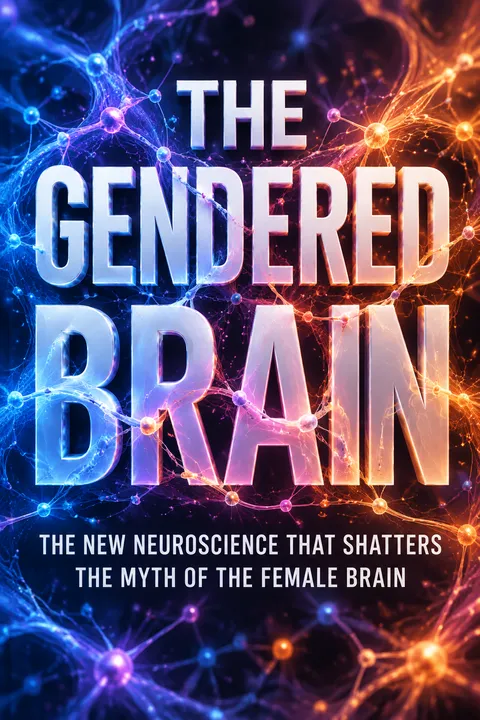


Key Takeaways
Audit who defines the difference before accepting a brain-based explanation
Old assumptions, new instruments. For centuries, researchers began with the belief that women were intellectually inferior, then searched for measurements to support it. Some weighed brains, filled skulls with seeds, or measured bumps. In the nineteenth century, Alice Lee measured the skulls of university anatomists and found that prominent male scholars ranked among the smallest. The result helped expose the weakness of treating skull size as a measure of intelligence. Much earlier, François Poullain de la Barre had argued that anatomy revealed no meaningful difference between women’s and men’s brains, and that unequal opportunity could explain unequal achievement.
Methods carry assumptions. The history is not a simple march from bad science to good science. Newer techniques can inherit old questions, preferred outcomes, and biased interpretations. Before accepting a claim about sex, ask how the groups were defined, what was measured, and whether alternative explanations were tested.
What's striking is that measurement is never merely a technical step. The choice of a proxy, such as head size for intelligence, can quietly preserve the conclusion a researcher expects to find. This is a broader lesson in the philosophy of science: operational definitions shape which facts become visible. Skepticism should not mean dismissing biological research. It means demanding designs that could genuinely disconfirm the favored story, including findings of similarity and null results.
Read brain scans as processed evidence, not portraits of thoughts
A scan is an inference. Functional magnetic resonance imaging, or fMRI, estimates changes in blood oxygen linked to brain activity. It does not photograph thoughts or directly record every neural signal. The colorful images are produced through statistical processing, often by comparing activity during one task with activity during another. A bright patch therefore represents a measured difference under specific analytical choices, not a brain area visibly lighting up with a single thought.
Interpretation can outrun data. Inferring a mental process from activity in a brain region is risky because many regions participate in several processes. A famous demonstration found that careless statistical analysis could make a dead salmon appear to respond to photographs of people. The point was not that brain imaging is useless, but that multiple comparisons require rigorous correction and restrained claims.
The distinction between a signal and its interpretation matters wherever technology turns complex data into persuasive images. A dashboard can make a model look like direct reality, even when every display depends on thresholds and assumptions. Brain images deserve the same scrutiny as economic forecasts or medical risk scores. Their vividness can encourage confidence beyond what the method supports, so good communication should explain both what the image shows and what it cannot establish.
Treat brain differences as lived histories, not biological destiny
Brains change with practice. Taxi drivers who learn thousands of London routes show changes in the hippocampus, a brain structure involved in spatial memory. When drivers retire, some of these changes recede. Training studies have also linked juggling, videogames, origami, and musical practice with altered brain structure or activity. Such findings make it difficult to interpret a measured difference as a fixed mark of sex alone.
Experience shapes prediction. Predictive coding is the brain’s use of learned patterns to anticipate what is likely to happen, then revise those expectations when events differ. A gendered environment supplies those patterns too. If a child repeatedly sees certain jobs, toys, or skills associated with one sex, those associations can guide attention, confidence, and choices. Biology matters, but it is continuously interacting with experience.
What's useful here is the replacement of a nature-versus-nurture contest with a feedback model. Practice changes the brain, while the brain’s current capacities influence what people practice. Social expectations can therefore become embodied without being genetically predetermined. Plasticity should not be mistaken for unlimited malleability, however. A changing brain is not a blank slate, and evidence that experience alters a brain does not by itself prove which experience caused a particular difference.
Watch what babies learn from gender cues before they can speak
Small humans are attentive. Newborns can distinguish familiar speech patterns, respond to emotional tones, and show preferences for faces and direct eye contact. By a few months, they are gathering clues about people and their surroundings. Studies find few reliable structural brain differences between newborn girls and boys once factors such as overall brain size are considered. The evidence does not support a simple picture of two fully formed, behaviorally distinct brain types at birth.
The world arrives early. Babies are surrounded by labels, colors, toys, and adults whose expectations can differ by the child’s assigned sex. These experiences may influence emerging interests and skills. That does not make infants passive or prove every difference is learned. It does show why claims of innate differences need to account for how quickly a baby’s social environment begins supplying information.
The developmental perspective helps avoid two tempting extremes: babies as empty vessels, or babies as finished products of biology. They arrive with perceptual capacities that make them ready to learn, while the content of that learning depends partly on exposure. This also raises a useful research question: when a difference appears in early childhood, what experiences preceded it, and how were those experiences distributed? The answer requires tracking development, not simply comparing children once.
Make stereotypes harder to encounter, especially where performance is judged
Expectations alter performance. Stereotype threat is the risk that awareness of a negative stereotype about one’s group will interfere with performance in a relevant situation. In experiments, women’s performance on spatial or mathematics tasks can change depending on how the task is introduced. Girls may also receive fewer construction toys or less encouragement to try them, while gender labels can steer children toward or away from particular toys.
Signals accumulate. Children quickly notice which activities adults associate with girls or boys, including when adults’ stated approval differs from their behavior. The resulting expectations can affect what children attempt, what practice they receive, and how they interpret mistakes. Changing cues in a classroom or family setting is not a cure-all, but it can reduce avoidable pressure and widen the range of experiences available.
This is a feedback-loop account of bias: expectations influence treatment, treatment shapes practice, and practice can later look like proof of the original expectation. The model connects social psychology to education, where participation and feedback are part of learning rather than neutral background conditions. Yet stereotype threat is not a universal explanation for every achievement gap. Its effects depend on context, task, and person, so interventions should be evaluated rather than assumed effective.
Ask how large a difference is, not just whether it exists
Significance is not separation. A statistically significant result does not necessarily mean that two groups differ enough to predict how an individual will perform. Rippon notes that many reported sex differences have effect sizes around 0.2 to 0.3, which can leave roughly 90 percent overlap between group distributions. Even a moderate average difference does not sort people neatly into two types.
Averages hide variation. Large reviews of psychological findings have found that most measured differences are small or close to zero. Mental rotation, often presented as a robust male advantage, varies with the test used and can improve with training. Readers should look for effect sizes, sample sizes, replication, and the spread of individual scores, not only a headline saying that a result is significant.
The practical distinction is between a group-level tendency and a useful individual prediction. Averages can matter for population research while being poor guides to judging a particular person. This is a basic statistical lesson with ethical consequences: turning a small mean difference into a rule for hiring or teaching commits an ecological error, treating a group pattern as an individual destiny. The caveat cuts both ways. Small averages do not mean that every outcome is identical or irrelevant.
Fix science's chilly climate before blaming girls' aptitude
Ability does not explain everything. Women remain underrepresented in science and engineering. The book cites a global estimate that women make up about 28.8 percent of science researchers. Yet studies of school performance often find very small differences between girls and boys in maths and science, while gaps in participation grow later. In one longitudinal study, teachers’ early assessments favored boys even when girls performed better on an external test, and those judgments predicted later course choices.
Belonging affects choice. Images of science as a male field, beliefs that success requires innate brilliance, biased evaluations, and an unwelcoming classroom can all influence who persists. These factors do not prove that every woman wants a science career. They do undermine the claim that unequal representation straightforwardly measures unequal ability.
The distinction between capability and participation is central to interpreting workforce statistics. Choices are made within institutions, not in a vacuum, and an apparent preference can reflect anticipated costs, social fit, or access to encouragement. The so-called Gender Equality Paradox, where some more gender-equal countries have larger STEM participation gaps, does not by itself demonstrate innate preference. It invites competing explanations and careful measurement of the conditions under which choices are made.
Treat rejection sensitivity as a social condition, not a character flaw
Belonging has a cost. The sociometer is a proposed monitoring system for how accepted or rejected a person feels. Research described in the book finds that social exclusion can activate some of the same brain regions involved in physical pain. Rejection sensitivity, the tendency to expect and react strongly to rejection, can lead people to withdraw or avoid situations where they might be evaluated.
Withdrawal can look like preference. Studies of women in competitive academic settings link anticipated gender-based rejection with self-silencing and reduced participation. This may help explain why a person who is capable of succeeding does not seek a promotion, ask a question, or pursue a demanding course. The response is not simply a private weakness. It can be shaped by repeated cues about whether someone belongs.
The insight shifts attention from individual confidence to the social conditions that make confidence consequential. If speaking up carries a greater perceived risk for some people, exhortations to be more assertive may leave the risk structure untouched. Institutions can examine whose mistakes are punished, whose contributions are credited, and who receives informal support. Neural overlap between social and physical pain is suggestive, not proof that the experiences are identical, so the metaphor should clarify rather than flatten.
Replace two brain boxes with a variable human mosaic
Brains do not sort neatly. The 3G model classifies sex by genes, gonads, and genitals, then assumes these categories produce two matching brain types. Research challenges that chain. In a study examining 116 brain features, fewer than 6 percent of participants showed a consistently male-typical or female-typical pattern across the measures. Most brains combined features found more often in either group, alongside intermediate traits.
Variation is not sameness. This mosaic view does not mean biological sex has no influence, or that every person is identical. It means that sex-linked traits may vary by measure, age, and context, with extensive overlap between people. The more useful question is often what factors shape a particular capacity, rather than whether a whole person belongs in a male-brain or female-brain category.
A mosaic model is a better fit for traits that vary independently than a binary classification that presumes they travel together. It also discourages the habit of using one measured feature to infer a person’s entire cognitive profile. The approach has limits: results depend on which features researchers select and how they define typicality, and other analysts have challenged the method used in the cited study. The durable point is not that categories are forbidden, but that they require evidence and careful boundaries.
Analysis
Rippon’s central contribution is not simply the claim that women and men are similar. It is a change in the unit of explanation. Instead of treating sex as a master switch that generates a complete package of abilities, the book asks how biological traits, learning histories, social expectations, and institutions combine to produce observed outcomes. This is a more demanding scientific model because it requires measurement of context, not merely a male-female comparison.
The strongest sections show how conclusions can exceed their evidence. Brain imaging measures indirect signals, group averages conceal overlap, and small or selectively published studies can acquire unwarranted authority through repetition. Historical examples make clear that research questions themselves can inherit political assumptions. This does not invalidate neuroscience. It raises the standard for what counts as an explanation: a correlation between a brain measure and a behavior is not a causal account, and a biological contribution is not proof of immutability.
The argument also needs its own restraint. Demonstrating plasticity does not establish that a specific social experience caused a specific neural pattern. Nor does extensive overlap erase every average sex difference, especially where biological factors matter to health. The most productive conclusion is therefore neither that biology dictates destiny nor that biology is irrelevant. Sex can be a variable among several, whose importance depends on the outcome being studied and the quality of the comparison.
The book’s public value lies in refusing a false choice between serious neuroscience and equality. Better research can identify when biology matters, when experience matters, and how each changes the effects of the other. That precision improves science and prevents uncertain findings from becoming confident rules about what individuals can do.
Review Summary
Reviews of The Gendered Brain are mixed, averaging 3.86/5. Supporters praise its thorough debunking of neurosexist myths, accessible writing, and important message about brain plasticity and social conditioning. Critics argue the book is one-sided, repetitive, and overly dismissive of legitimate sex-difference research. Several reviewers note Rippon cherry-picks supporting studies while discrediting opposing ones. Common complaints include insufficient coverage of transgender and non-binary experiences, binary gender framing, and a slow, circular structure. Most agree the core message—that gendered brains are largely socially constructed—is valuable, though execution divides readers.
People Also Read


Glossary
Whac-a-Mole myths
Recurring mistaken beliefsRippon’s label for misconceptions about sex differences that return in new forms after being challenged. A claim may disappear from one debate yet reappear in popular advice, media coverage, or policy arguments. The pattern matters because familiar repetition can make weak evidence seem settled.
neurosexism
Stereotype-shaped brain researchA term coined by psychologist Cordelia Fine for research practices that carry gender stereotypes into neuroscience. This can happen when studies begin by assuming differences, interpret ambiguous results through familiar stereotypes, or present small findings as proof of fixed male and female brain types.
neurotrash
Misleading brain claimsRippon’s term for inaccurate or exaggerated claims about the brain, especially those that turn limited neuroscience findings into simple explanations for complex behavior. Colorful brain images, unsupported causal claims, and popular self-help interpretations can make such claims persuasive even when the underlying evidence does not support them.
functional magnetic resonance imaging (fMRI)
Indirect brain activity measureA brain-imaging method that estimates activity by measuring changes in blood oxygenation. It does not directly photograph thoughts or record every neural event. Researchers compare measurements across tasks and use statistical analysis to identify patterns, which must be interpreted cautiously because brain regions can contribute to multiple processes.
predictive coding
Learning to anticipate inputA model in which the brain uses patterns learned from prior experience to anticipate incoming information. When an expectation does not match what happens, the mismatch can update the model. Because expectations are learned from the surrounding world, social stereotypes can influence how people interpret situations and themselves.
experience-dependent plasticity
Experience-driven brain changeThe brain’s capacity to change its structure or activity in response to experience. Training, work, hobbies, and other repeated activities can alter neural systems. This means a measured brain difference may reflect what a person has practiced or encountered, rather than serving as a fixed consequence of biological sex.
stereotype threat
Pressure from a negative stereotypeA performance effect that can occur when a person is aware of a negative stereotype about a group to which they belong. The pressure may divert attention, increase concern about mistakes, or affect confidence. Its effects depend on the setting and task, so it should be tested rather than presumed.
social brain
Networks for social understandingA set of interacting brain systems involved in recognizing other people, interpreting intentions and emotions, forming a sense of self, and navigating group relationships. It includes regions that process emotional signals and others involved in reflection and behavioral control. The network develops through interaction with a social environment.
sociometer
Monitor of social acceptanceA proposed psychological monitoring system that tracks a person’s sense of acceptance or rejection by others. Its readings are thought to influence self-esteem and behavior. In the book, the idea helps explain why anticipated exclusion can make people avoid evaluation or reduce their participation.
3G model
Genes, gonads, genitalsA model that sorts people into male or female categories using genetic, gonadal, and genital characteristics, then treats those categories as closely aligned. Rippon uses the term to question the assumption that these biological features necessarily produce two corresponding kinds of brain, behavior, or gender identity.
mosaic brain
Mixed brain characteristicsThe view that an individual brain can combine features that are statistically more common in females, features more common in males, and features found between those averages. It challenges the idea that brains fall into two consistent types. It does not claim that every trait is identical across people.
Gender Equality Paradox
Unequal STEM participation despite equalityThe reported pattern that some countries with higher measures of gender equality have larger gaps between women’s and men’s participation in STEM education. The pattern does not identify its own cause. It can reflect differences in opportunity, culture, preferences, or other factors, so it cannot alone establish biological explanations.
Download PDF
Download EPUB
.epub digital book format is ideal for reading ebooks on phones, tablets, and e-readers.








