

Plot Summary
The Chinaman Escapes
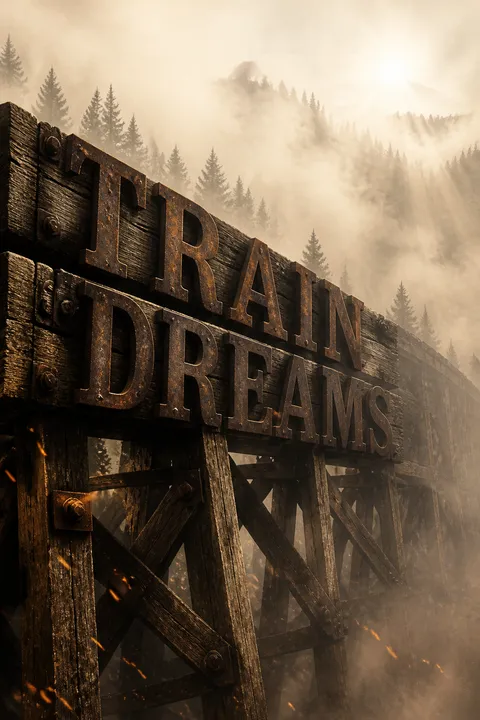
In 1917, Robert Grainier1 is building a trestle over the Moyea River when a company manager and several workers accuse a Chinese laborer of stealing. Grainier1 helps drag the struggling man toward the bridge, though the gang's purpose becomes a killing. The laborer breaks free, clambers down the unfinished structure, and disappears.
Grainier1 walks home carrying Hood's Sarsaparilla for his wife,2 Gladys,2 and their four-month-old daughter,3 Kate.3 With both sick, he wonders whether the prisoner's frantic words carried a curse. That night, a passing train wakes him; Gladys2 is tending the baby3 alone, and her reflections on what a child knows leave him frightened. He remembers the night for the rest of his life.
Grainier's guilt begins not with a clean decision to harm someone, but with his willingness to be swept into a group's violence. His hands help restrain the laborer even as his judgment lags behind his actions. The man's escape prevents the murder, yet cannot undo Grainier's participation. At home, the baby's vulnerability gives his unease a target, and the possibility of a curse becomes a way to imagine consequences that ordinary moral language cannot contain. The scene's lasting force comes from this gap: Grainier can remember what he did, but never make his responsibility feel finished.
A Boy Sent West
Grainier1 arrives in Idaho as a small child on a train, carrying no clear account of his parents or birthplace. His earliest memory is watching Chinese families forced from Fry. As a teenager, he meets a dying wanderer, William Coswell Haley,4 who admits that he abused his young niece and fled after her father beat her to death.
Grainier1 brings Haley4 a little water but never tells the sheriff, a silence that remains with him. He grows into a steady laborer, then, at thirty-one, hears Gladys Olding2 singing at a Methodist service. Their courtship unfolds on a pasture Grainier1 hopes to make his home. After a first kiss and a shared afternoon among the flowers, he asks her to marry him, and she agrees.
The fragments of Grainier's childhood establish a life shaped by missing explanations. He does not know where he came from, and the adults who might have told him are gone before he thinks to ask. Haley's confession gives that uncertainty a moral counterpart: Grainier is made a witness to another man's cruelty, then fails to carry the knowledge into public life. His silence is not presented as a grand betrayal, but as a frightened omission that hardens into regret. Gladys offers a different kind of beginning. Their courtship grows through ordinary plans for land and shelter, giving Grainier a future he can choose rather than inherit.
Trestles Above the Gorge
After the birth of Kate,3 Grainier1 returns to railway construction and celebrates with the crew when their bridge carries its first locomotive across the gorge. The achievement leaves him unexpectedly sad, but it also draws him toward larger projects.
In 1920, he travels to Washington to repair the immense Robinson Gorge Bridge, then joins a logging gang cutting spruce for the railway. Away from Gladys2 and Kate,3 he finds comfort in the strenuous work and the forest's scale.
Old sawyer Arn Peeples5 warns that even a carefully felled tree can turn deadly. A falling branch strikes Arn,5 who grows feverish and dies days later. When several men fall ill, the captain6 shuts the camp down. Grainier1 heads home with his wages, unaware of what awaits him.
The bridge is both an achievement and a measure of Grainier's divided attention. He helps build structures that connect distant places, while choosing work that separates him from his wife and child. His sadness at the locomotive's first crossing hints that progress does not arrive as simple triumph. In the forest, Arn's death turns the logging crew's confidence into a lesson in exposure: skill can reduce danger, not abolish it. Grainier's admiration for large projects and his longing for home coexist without resolution. The work sustains his family materially, yet its distance leaves him unable to protect them from the disaster that follows.
The Valley Burns Black
A wildfire races through the Moyea Valley while Grainier1 is returning from the logging job. In Bonners Ferry, he searches the displaced families and finds no word of Gladys2 or Kate.3 He walks back through smoke and ash, past the ruined settlement, until the heat and roar of the fire stop him short of home. Ten days later, a train carries him through the burned valley, but no survivors have appeared in Creston.
Grainier1 stays with relatives, alternately accepting his loss and imagining that his wife2 and daughter3 escaped. A month after the fire, he returns with supplies, intending to wait at their land, but the emptied landscape ends that hope. In spring, he finds only the collapsed stove and cinders where his home stood.
The fire destroys more than a house: it removes the evidence Grainier would need to know exactly what happened. The refugees' relief at surviving makes his search feel lonelier, while the absence of news keeps grief from becoming certainty. His return with supplies is an attempt to turn waiting into a plan, but the ash refuses to support that fiction. The ruined stove, an object tied to domestic life, offers a small physical point of contact without restoring the family it belonged to. The landscape's scale makes his private loss both visible and impossible to measure.
Gladys Comes Back
Grainier1 camps beside the river through the first months after the fire, seeing imagined chocolates and Gladys's2 bonnet in the air. He survives on trout and morel mushrooms, then returns to his land and builds a small log cabin as green shoots reclaim the burn. A red dog joins him and later bears four pups; Grainier1 tries to answer the distant wolves with his own howling, and the one pup that stays eventually disappears.
In a later winter, Gladys2 appears to him in the cabin. Her vision shows how she fell into the river while fleeing the flames and drowned, but also reveals that Kate3 crawled away from her. Grainier1 now knows his daughter3 survived the fire, yet has no idea where she went.
Grainier's rebuilding is practical labor performed inside an unresolved bereavement. He cannot restore the cabin he shared with Gladys, so he makes a smaller shelter in the same place and lets the regrowth become part of daily life. The dog, pups, and his howling create companionship without replacing the family he lost. Gladys's apparition offers knowledge, not comfort: it corrects Grainier's belief that Kate died, while making the child's fate more difficult to bear. The vision turns grief from a closed loss into an unfinished search, one that the landscape may hold but cannot explain.
A Wagon Makes a Living
By 1925, Grainier's1 joints are failing, and he decides not to return to the Washington woods. While helping the Pinkhams load cornmeal, he watches their young relative Hank8 collapse and die.
The grieving grandparents ask him to take the body to the cemetery; the errand leads to further hauling work, and Grainier1 leases the family horses and wagon. He finds satisfaction carrying goods between rail towns and remote settlements, where each trip exposes him to neighbors' troubles. One journey helps Eddie Sauer9 move the widowed Claire Thompson,10 whom Eddie9 hopes to marry.
Claire10 rejects Eddie's9 awkward proposal, then probes Grainier1 about whether he will marry again. He says no. Her blunt assessment leaves him wondering whether he has become a hermit, though he keeps working and returns to his cabin.
Hank's sudden death brings Grainier into a role he did not seek: he is the capable man asked to manage the practical work grief leaves behind. The wagon converts that usefulness into a livelihood. Unlike logging, hauling places him among scattered communities and their odd predicaments, giving him a form of connection that does not require intimacy. Claire's question exposes the cost of that arrangement. Grainier's refusal to remarry is not simply indifference; he still measures his life against Gladys and resists taking on obligations he cannot promise to fulfill. His chosen solitude is both self-protection and a life with real purpose.
The Sky and the Wolves
During a trip to Spokane, Grainier1 pays for a short biplane ride. As the plane dives and levels out, scattered memories of his wife,2 daughter,3 and hidden childhood surface with startling clarity.
Back in the Panhandle, a freight job brings him a wounded railway surveyor named Peterson,11 who tells how his own dog shot him while escaping an attempt to kill it. Peterson11 says Kootenai Bob7 had warned him about a wolf-girl,12 a humanlike creature traveling with wolves; local listeners turn the story into fearful speculation about monsters and evil.
In 1930, Grainier1 sees Bob7 drunk after Canadian ranch hands trick him into drinking beer. Bob7 wanders onto the tracks and is killed by trains. In the nights afterward, wolves and coyotes howl in unusual numbers around Grainier's1 valley.
The flight briefly gives Grainier a view beyond the forests that have defined his life, but what it reveals is not mastery. The memories arrive involuntarily, as if height has loosened the borders between past and present. On the roads, animal stories perform a different kind of work: they give the region's residents a language for fears they cannot verify. Peterson's account binds cruelty, fear, and animal intelligence together, while Bob's death makes the railway's indifference brutally concrete. The mass howling afterward can sound like communal mourning or a natural event. The novella leaves both readings alive.
The Child at the Door
One cold night, a rush of wolves passes Grainier's1 cabin, then falls silent. A small, injured figure remains in the clearing: a girl with wolfish eyes, a broken leg, and almost no sign of ordinary human behavior. Grainier1 feels certain she is Kate,3 though her appearance gives him no proof. He carries her inside, makes a splint from kindling, and binds it with strips of his clothing.
The girl12 stays until near dawn, then crawls through a window and heads toward the river. Grainier1 means to follow and bring her back, but does not. His long-held knowledge that Kate3 escaped has become a brief, physical reunion, yet he cannot persuade her to remain or learn what happened during her years alone.
Recognition here precedes evidence. Grainier identifies the child through an inward certainty, while the visible signs that might confirm kinship are nearly absent. His response is immediate and practical: he lifts her, tends her leg, and gives her shelter. Yet care cannot undo the conditions that have shaped her. When she leaves, Grainier's failure to pursue her repeats, in altered form, earlier moments when fear and hesitation kept him from acting. The scene resists a conventional reunion. Father and daughter touch, but their shared history has not made them mutually legible, and love cannot simply reverse time.
A Fever of Pulchritude
In the hot summer of 1935, loneliness and sexual desire seize Grainier1 with a force that frightens him. A theater advertisement for a sensational film and live performance becomes the focus of his fantasies; he counts the days until it opens, then cannot bring himself to travel into town. Instead, he walks for hours through the mountains, convinced that his desire has made him monstrous.
At sunset, he reaches a cliff above Spruce Lake, where the immense view steadies him. He sleeps beside the water and returns home without seeing the show. The episode passes, and he later acquires a large sled dog. The novella then carries his life toward its end, while returning in its final scene to the theater's performance.
The episode exposes a private shame that Grainier has no easy way to name. He interprets desire as evidence of moral danger, not as an ordinary human impulse, and punishes himself through isolation and exertion. The theater's lurid promises intensify that fear by turning sex into public spectacle. His walk does not resolve the conflict through confession or romance; the landscape simply expands his sense of proportion until the obsession loosens. Spruce Lake provides no moral verdict. It gives him a place to sleep, then lets him return to the ordinary work of living.
The Wolf Boy's Howl
After buying his sled dog, Grainier1 stays in Bonners Ferry and attends a show featuring Theodore the Wonder Horse. A masked boy in a wolf costume performs among the acts. The audience first treats him as a novelty, then falls silent when he stands rigid and produces a resonant howl that seems to gather the theater into one listening body.
Grainier1 lives on for decades, watching roads, trains, and technology change around him. He dies in his cabin in November 1968, more than eighty years old. No one notices through the winter; hikers find him the following spring and bury him in his yard. The novella ends by returning to that 1935 theater, where the wolf-boy's sound gives the unnoticed life a final, uncanny witness.
The theater scene gathers several of the novella's recurring uncertainties into one moment: performance and authenticity, human and animal, spectacle and genuine emotion. The crowd initially protects itself with laughter, then stops when the boy's voice exceeds the category it has assigned him. Grainier's own death is almost entirely unobserved, a stark contrast to the shared attention in the theater. The ending does not claim that the performance explains his life or restores what he lost. Instead, it offers a final act of listening, allowing a strange sound to stand where public recognition never came.
Analysis
Train Dreams follows a life that is large in duration but modest in outward achievement. Grainier1 does not become a celebrated builder or a settled patriarch; he works, marries, loses, rebuilds, and keeps going. The novella's form reflects that scale. It moves through episodes, remembered images, local rumors, and abrupt shifts in time, as if a person's life were less a smooth account than a collection of scenes that continue to exert pressure long after they end.
The railway and the forest are not merely settings. Both are systems of labor that alter the land and the people who depend on it. Bridges make routes more efficient, logging turns trees into cargo, and fire resets an entire valley without regard for ownership or intention. Grainier's1 work gives him belonging and income, but it also carries him away from the family he wants to protect. In this world, effort can build a home, yet cannot guarantee its survival.
The novella also resists the idea that grief produces a clear moral lesson. Grainier's1 omissions, especially his failure to act for Haley,4 remain with him, but they do not make him either a villain or a purified man. His fear that the Chinese laborer's curse caused the fire is less a solution than a mind trying to connect an earlier wrong to a later catastrophe. The narrative lets that belief coexist with ordinary causes, private guilt, and the possibility of the uncanny.
Animals offer an alternative vocabulary for isolation. Grainier's1 howling makes his loneliness audible; the wolf-girl12 confounds the stories people tell about her; the wolf-boy's final performance changes a theater audience from mockery to attention. Across these encounters, the line between civilization and wildness proves less secure than the characters assume. The book's deepest tenderness lies in its refusal to make survival triumphant. Grainier's1 life matters even when it leaves no heirs and goes unnoticed at its end.
Review Summary
Train Dreams by Denis Johnson is a highly acclaimed novella following Robert Grainier, a solitary laborer in the American Northwest from the 1880s to 1960s. Reviewers praise Johnson's lyrical, economical prose and ability to compress epic scope into brief, dreamlike fragments. The story explores themes of loss, American mythology, the collision of wilderness and modernization, and one man's endurance through tragedy. Most readers found it deeply moving and atmospheric, though some felt it was too short or lacked depth. The writing style, characterized as sparse yet beautiful, divides opinion—some found it profound and haunting, while others felt disconnected from the characters and narrative.
People Also Read










Characters
Robert Grainier
Steady forest laborerGrainier is a reserved Idaho laborer whose childhood gives him little certainty about his origins. He prefers physical work to explanation, and railway building and logging offer him a place in communities organized around shared effort. He is not naturally cruel, but he can be passive when another person's suffering demands a difficult choice; the failures that follow stay with him. His marriage to Gladys2 and the home they make give his life a shape he has rarely known. He is attentive to animals, weather, and the changing land, and often responds to fear by working, watching, or withdrawing rather than asking for help.
Gladys Olding
Grounded young believerGladys is a small, capable young woman with a serious religious life and a practical understanding of the work required to keep a household. She meets Grainier1 through their Methodist community and responds to his quiet courtship with directness and warmth. Her reflections often move beyond the immediate question, giving her a more imaginative view of childhood, faith, and the world than Grainier1 possesses. She does not function merely as the person he loves: her judgments and ordinary habits shape his sense of home. The land and family life Grainier1 hopes to build begin as plans he shares with her.
Kate Grainier
Grainier's infant daughterKate is the baby Robert1 and Gladys2 raise in their cabin. As an infant, she depends entirely on her parents, and her illness makes Grainier1 acutely aware of how little he understands about what a child can perceive. She represents the future he and Gladys2 are trying to create together, though neither parent can know what that future will demand. The story first presents her through concrete domestic details: nursing, sleeping, and being watched by her anxious father1. Her place in Grainier's1 thoughts remains tied to the question of what becomes of a life that begins before it can speak.
William Coswell Haley
Wounded wandererHaley is an itinerant man Grainier1 encounters as a teenager beside the Kootenai River. Injured and close to death, he carries a confession about the family tragedy that drove him onto the railway lines. His vulnerability and culpability sit uneasily together: he is both a dying stranger in need of help and a man whose past has harmed others. The encounter becomes important less because Haley can change Grainier's1 life directly than because it tests what the boy will do with knowledge and responsibility.
Arn Peeples
Veteran sawyerArn Peeples is an elderly logger with a restless tongue, a large store of stories, and decades of experience with dangerous work. He boasts about the Southwest and tells the younger men that even expert judgment cannot make a forest safe. His tales are partly entertainment, partly instruction, and his habits bring a human scale to the isolated logging camp. Beneath his comic self-presentation is a man shaped by years of hard labor and by the superstitions he uses to manage risk.
The Captain
Wary logging bossThe captain supervises Grainier's1 logging crew and tries to balance the company's demands against the men's physical limits. He is fair-minded and protective of his son, but his reserve hides a history of family loss. When illness spreads through camp, he acts quickly to close the operation rather than gamble with the crew's lives. His authority is practical rather than grand: he calculates wages, arranges work, and makes decisions in a world where a short delay may cost the company money.
Kootenai Bob
Sober community elderKootenai Bob is a familiar presence around Meadow Creek, known to Grainier1 as a reliable worker who refuses alcohol. He shares local beliefs about animals and wolves without treating them as curiosities for outsiders. His perspective complicates the white settlers' assumption that their own explanations are the only rational ones, though the story also shows how easily rumor can distort what he says. Bob's connection to Grainier1 is built from years of occasional meetings rather than intimate friendship.
Hank Pinkham
Young family helperHank is the Pinkhams' large, good-natured young relative. Grainier1 encounters him during a simple loading job, where Hank's sudden collapse changes the course of Grainier's1 work and brings him into the Pinkhams' grief.
Eddie Sauer
Boastful old suitorEddie is Grainier's1 boyhood acquaintance, worn by years of drinking, gambling, and bad decisions. He is capable of generosity, as when he helps move Claire10, but his desire for her makes him boastful and socially clumsy. His bravado is a shield against loneliness and physical decline. Grainier1 sees through it without becoming cruel, and their shared trips reveal the limits and small loyalties of male companionship on the frontier.
Claire Thompson
Widowed traveling nurseClaire is a capable widow who has worked as a nurse and is moving to a new town after selling her home. She is observant, self-possessed, and unafraid to test the men around her. Her conversation with Grainier1 makes him consider how his chosen solitude looks to someone outside it. She does not accept Eddie's9 presumption that his attention entitles him to her, and her independence gives her a clear presence even in a brief episode.
Mr. Peterson
Wary railway surveyorPeterson is a railway surveyor Grainier1 transports while he is recovering from a gunshot wound. He is wary, talkative when pressed, and inclined to interpret strange events through the frightening stories he has heard. His account of his dog and the wolf-girl12 carries local rumor into Grainier's1 working life.
The wolf-girl
Feared wild childThe wolf-girl appears first through reports passed among settlers and Kootenai residents, who describe a humanlike figure traveling with wolves. Those stories gather fear, religious suspicion, and fascination around a person no one seems able to understand. When Grainier1 encounters her, her physical vulnerability complicates the monstrous figure imagined by rumor. She remains difficult to read, and the gap between what observers claim and what she can communicate gives her presence its unsettling force.
Plot Devices
The railway
Measures a changing lifeTrains and trestles organize Grainier's1 world. They provide his work, carry him between logging camps and towns, and mark the passage of years through the valley. Their movement can signify connection, as when a new bridge opens a route, but it can also expose human vulnerability, as when trains pass through the burned landscape or kill Kootenai Bob7. Grainier's1 memories repeatedly gather around whistles, tracks, and journeys, making the railway both a material force and a structure for recalling a life that began with an unremembered train ride.
The Moyea wildfire
Erases the family homeThe fire transforms the novella's central place from a lived-in valley into an ash field. Its scale defeats ordinary explanations and leaves Grainier1 without reliable evidence about what happened to Gladys2 and Kate3. The returning vegetation does not restore the old forest or the life that stood there; it produces a changed ecology and a new cabin built from the remains. The wildfire therefore drives the plot while shaping Grainier's1 grief, his isolation, and his sense that nature can be both a source of renewal and an overwhelming destructive force.
Wolf lore
Blurs human and animalStories of wolves, wolfish dogs, and a humanlike girl12 circulate through the communities Grainier1 travels. At first, these tales appear as superstition or fearful gossip, but they prepare the reader for an encounter that Grainier1 experiences as real and personal. The animals also offer him a form of companionship: he howls with distant packs when words cannot relieve his loneliness. This device keeps the boundary between human identity and animal life unsettled, while showing how quickly a community's fear can turn an unknown creature into a moral or religious threat.
Dreams and visions
Make grief visibleGrainier's1 dreams and waking visions bring memories and feared possibilities into the same mental space. They do not simply solve mysteries; they alter what he believes he knows and give emotional shape to events he cannot witness or control. A visitation from Gladys2 supplies information about the fire, while other episodes leave him unsure whether his perceptions are supernatural, psychological, or both. The device suits a protagonist who rarely articulates his inner life directly. Images of trains, flames, and lost family become the means through which his mind approaches truths he cannot reach by deliberate reasoning.
About the Author
Other books by Denis Johnson

Download PDF
Download EPUB
.epub digital book format is ideal for reading ebooks on phones, tablets, and e-readers.








