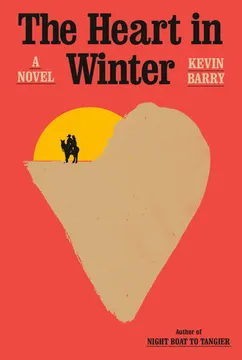


Plot Summary
The Name on the Portrait
In 1891 Butte, Irish drifter Tom Rourke survives on drink, opium, songs, and letters he writes for lonely men seeking wives. He works as an assistant to photographer Lon Crane, though his days feel aimless and his debts keep growing. One night he encounters a beautiful palomino and, in a drugged conviction that he can command it, makes it collapse.
The next day Captain Anthony Harrington arrives at the studio with his new bride for a wedding portrait. Tom notices how stiffly she stands beside her husband, then sees a different spark in her solo photograph. When he brings the prints to her, she tells him her real name is Polly Gillespie. The warning in her guarded look awakens Tom’s longing as sharply as the attraction does.
Tom’s first sight of Polly arrives through the camera, an instrument that both fixes appearances and fails to explain them. The wedding portrait records a lawful union, yet her resistance to Harrington and her private name expose the gap between public identity and lived truth. Tom, meanwhile, treats his own life as something already authored by failure, until desire gives his drifting attention a target. His belief that he can command the horse hints at a mind susceptible to signs and fantasies, but the emotional effect is practical: he begins to imagine that chance may still make demands of him.
A House Built on Prayer
Polly has crossed the continent from Chicago after answering Harrington’s offer of marriage, hoping a respectable home will free her from a troubled past. The clean new house initially seems promising.
Then she discovers Harrington’s private religious torment: he lashes himself while praying, and their wedding night leaves him weeping as she uses fake blood to conceal that she is not a virgin. He proves kind in ordinary ways, but their quiet marriage cannot answer Polly’s hunger for intimacy.
Tom brings her photographs, and their visits become flirtation, then an affair. They talk as if they can finish each other’s thoughts, and Polly trusts him with fragments of her history. When Harrington warns her not to choose the wrong path, she and Tom decide to flee together.
Polly’s marriage is not simply a mistake made for money or comfort. She chooses it as an escape route from earlier harm, only to find that Harrington’s goodness is constrained by a private system of punishment and belief. Her blood trick is self-protection, a performance designed to manage a man’s expectations rather than deceive for pleasure. Tom offers something more dangerous than rescue: recognition without respectability. Their sense of unspoken understanding can be read as genuine intimacy, but also as a shared readiness to turn desire into destiny before either has tested what ordinary life together might require.
The Zagreb Burns
Tom and Polly slip into the woods beyond Butte, where they meet Ding Dong, a former hotel bellhop who has abandoned sleep and claims to read messages in the sky. He urges them to follow the intimations stirring inside them.
Under the moon, the lovers take this as confirmation that they must leave, and Tom decides to finance their flight by robbing Mama Horvat, his boardinghouse landlady. He plans to use a fire as a diversion. Before they go, Harrington tells Polly that Tom once lasted only three hours in a mine, an unsettling reminder that her lover is no practiced survivor.
Tom nevertheless carves Polly’s initial over his heart. Within days he sets fire to the Zagreb, steals nearly six hundred dollars, packs supplies, and rides out with Polly on the palomino.
The decision to flee is made in a world where practical evidence and supernatural interpretation continually blur. Ding Dong gives the lovers a language for their impulse, but Tom converts that feeling into a very material crime: arson, theft, and flight on a stolen horse. The carved initial makes romance bodily and permanent, while Harrington’s warning about Tom’s inability to endure mine work quietly punctures the outlaw fantasy. Tom’s plan depends on the confidence that a dramatic gesture can substitute for preparation. Their escape therefore begins as both liberation and a wager against consequences they have not yet learned to calculate.
Vows Under the Pines
The stolen horse carries Tom and Polly into a winter forest where mist repeatedly scrambles their sense of direction. They share food with two Métis fiddle players, Janeaux and Morasse, and take hallucinogenic mushrooms that turn the trees, snow, and sky into a frightening, beautiful spectacle.
Moving on, they meet a wandering Reverend mourning his friend Tater Collins, whom he says he killed after believing the man had been possessed. The Reverend’s grief and fervent faith move the lovers to ask for a wedding, and he joins their hands beside Tater’s grave.
He gives them grain for the horse. Soon they find a well-stocked hunting cabin, settle there, and name it Providence. For two weeks, their hidden refuge lets them live as if the flight has become a home.
The wilderness makes the couple’s emotional state visible by stripping away the structures that usually organize identity: towns, work, law, and even reliable direction. Their meeting with the Reverend introduces a counterweight to their private mythology. His faith is extreme and his account of Tater’s death is disturbing, yet his mourning is unmistakably sincere. The marriage he performs gives the lovers a form of public commitment, however improvised. Naming the cabin Providence then reveals their central temptation: to treat shelter and good fortune as proof that fate endorses them. The quiet they find is real, but it cannot guarantee safety.
Jago Finds Providence
Their honeymoon ends when Jago Marrak, a huge Cornish gunslinger hired by Harrington, finds the cabin by following their trail. He has come to recover Polly and Tom, but first subjects them to a degrading demand that Tom prove his sexual claim to her. Before the threat can become an assault, Jago suffers a fatal stroke and falls beside the fire.
The lovers take his money, shotgun, knife, and fur coat, then saddle their palomino with Jago’s better equipment. They leave the roan behind and ride toward Pocatello, knowing the remaining hunters may be close. Tom’s confidence that their luck has changed gives way to practical fear: they have weapons now, but they have also confirmed that the pursuit is real and organized.
Jago’s arrival collapses the lovers’ private refuge into the public world of law, money, and male ownership. His demand turns intimacy into a spectacle he believes he can control, while Polly and Tom’s refusal to comply preserves their agency in a moment designed to strip it away. His sudden death is not a victory they engineer; it is an arbitrary bodily event that they interpret as luck. Taking his weapons makes them more capable, but it also binds them more firmly to violence. Providence has not protected them. It has only delayed the moment when they must confront the costs of being pursued.
Pocatello Takes Polly
The couple reaches Pocatello exhausted but hopeful, gives food and money to a starving migrant family, and checks into the Perpetual Hotel. They plan to stay inside until Tom can buy rail tickets west.
Polly notices two men watching their room from across the street, but Tom leaves to ask about the trains. The ticket office has just closed. When he returns, two hired Cornishmen have beaten Polly and left Tom with a knife wound in his abdomen and a shattered jaw. The men take Polly away in a covered wagon.
The hotel’s pale, solemn boy, who had watched the arrivals, brings Tom to an isolated Swedish household instead of summoning the law. The lovers’ attempt to leave together has become a rescue mission, with Polly captive and Tom badly injured.
Pocatello briefly offers the ordinary comforts the forest denied: a bath, a meal, a room, and the possibility of a train. The lovers’ generosity toward the hungry family shows that their outlaw life has not erased their capacity to notice other people’s need. Yet their choice to shelter indoors cannot make them invisible. Tom’s absence, caused by the practical errand that was meant to secure their escape, creates the opening for the attack. The boy’s decision to carry him to private care rather than involve the authorities reflects the town’s moral ambiguity: survival depends less on institutions than on uncertain acts of individual mercy.
Bergman’s Slow Cure
Tom wakes in the home of Bergman, an elderly Swedish man, with the hotel boy tending his wounds. Bergman gives him morphine sparingly and lets him recover through pain, food, and sleep. The boy explains that the attackers took Polly but that she was still able to walk when he last saw her; the palomino is safe.
Tom tells Bergman that he believes he must find her, not because he expects an easy future but because separation has made the choice unavoidable. Bergman treats this belief with skepticism, yet recognizes the force of Tom’s attachment. Once Tom can ride, he leaves Pocatello and follows the trail. A calm stranger he meets in the forest points him toward Driggs, where one of the wounded gunmen may be found.
Tom’s recovery is a passage from the dream of death into the demands of a damaged body. He has spent much of his life treating pain as evidence that he does not belong among the living; Bergman’s careful tapering of morphine forces him to remain present instead. The old man does not validate Tom’s theory that events are directed by fate, but neither does he dismiss the need to act. Tom’s resolve becomes less about a promised happy ending and more about accepting responsibility for a bond he helped create. The stranger’s practical information gives that resolve a route, even if not a guarantee.
Kitto’s Christmas Captive
While Tom heals, Polly is held in a remote shack by Kitto Pengelly, one of the surviving Cornishmen. He keeps her tied and gagged, but feeds her constantly, treating her as if nourishment could make captivity into care. Polly studies his moods and counts the weapons within reach. When Kitto leaves his Winchester beside the fire, she uses her foot to push its barrel into the embers and ruin it.
His rage follows quickly: he breaks her hip, leaving her in greater pain and unable to escape alone. Polly keeps listening for Tom, convinced he is alive, and makes herself endure one minute at a time. Her resistance is small and costly, but it prevents Kitto from turning her completely into a passive object.
Kitto’s distorted tenderness is a form of control. He feeds Polly lavishly and handles her gently at moments, yet ties her down and decides when she may speak or move. The contradiction resembles a familiar coercive pattern in which care is offered only on the captor’s terms. Polly responds by gathering information rather than wasting strength on futile resistance. Destroying the rifle is a tactical act, but the punishment that follows demonstrates how narrow her room for agency has become. Her belief that Tom is coming sustains her, while her refusal to mistake belief for safety keeps her attention fixed on opportunities.
Kathleen Teaches the Knife
The stranger’s directions bring Tom to a lonely bar in Driggs, where he meets Joe de Brugha and his sister Kathleen, a hard-drinking widow with a precise sense of danger. Kathleen recognizes Jago Marrak’s knife and demands to know what happened to him. Tom explains that Jago died, then shows the wound that nearly killed him.
Rather than send Tom away, Kathleen teaches him how to handle a knife: how to feint, control distance, and use an opponent’s fear. Joe tells him that Caden Spargo, the other surviving gunman, is dying nearby. Tom finds Caden and presses him for Kitto’s destination. Caden identifies a cabin outside Saint Anthony. Tom leaves him behind and rides there, carrying Kathleen’s instruction and a blade into the darkness.
Kathleen’s lesson replaces Tom’s usual reliance on impulse with a form of disciplined attention. She does not promise that skill will make him invulnerable; she teaches him to perceive timing, distance, and fear as material facts. The scene also complicates the familiar western idea of the lone gunman. Tom reaches the final confrontation through a chain of local knowledge and care, offered by people who neither owe him allegiance nor approve of his choices. Caden’s information narrows the search to one cabin, but leaves the moral outcome unresolved. Tom now has a direction and a method, not a guarantee that either will be enough.
Two Men in the Snow
Tom finds the cabin near Saint Anthony and waits in the trees until Kitto comes outside with a knife. The two men meet on the path between the woods and Polly’s captivity. The fight ends with Kitto dead and Tom mortally wounded. Polly remains bound inside until Tobe Delign, the mute storekeeper who has sheltered her, and others from town reach the cabin.
They find her injured beside the bodies and carry her back to safety. Tom’s body is sent to Butte, while Polly is left in Idaho to begin a recovery that will take months. The rescue succeeds in freeing her, but it cannot restore the future they had planned or undo what their flight has cost.
The novel’s rescue is deliberately inseparable from its loss. Tom reaches Polly, but the story refuses the conventional reward in which courage restores the couple to a shared life. His death does not make the earlier violence meaningful or just; it simply marks the limit of what his body can survive. Polly’s rescue depends on people beyond the romance, especially Delign, whose quiet help provides a counterpoint to the spectacle of the men’s fight. The ending of the pursuit therefore shifts attention from action to aftermath. Survival is not closure, but the condition from which Polly must begin again.
Polly Keeps the Fire
For nearly three months after the cabin, Polly barely speaks and struggles to walk on her damaged hip. She learns from a letter by Con Sullivan that Tom was buried in Butte after a crowded wake, held on the same day Patrick Holohan married Margaret, the wife Tom had helped him find through his matchmaking letters.
Polly never visits Tom’s grave; she believes their private way of communicating remains available without it. In 1892 she makes her way to San Francisco, where loneliness gradually becomes survivable. She later works at the Alhambra cinema, helping at the ticket booth and concessions while stories play on the screen. At seventy-one, she still remembers Tom, but chooses the present over being swallowed by the past.
Polly’s final movement is not a return to the innocence of Providence but the creation of a life that can contain grief without being governed by it. The letter from Con links Tom’s private talent for composing words to a small communal legacy: another couple’s marriage and the miners’ ritual of mourning. Polly does not need the grave as proof of attachment, because memory has become an inward meeting place. Her cinema work is more than an ironic echo of the photographer’s studio. She watches other people’s stories while learning that her own past shifts with each retelling, and that survival requires choosing what to revisit.
Analysis
The Heart in Winter places a romance inside a world where nearly every form of security is provisional. Butte’s mines offer wages but damage bodies; marriage promises shelter but may conceal incompatible needs; the open West offers distance while exposing travelers to cold, hunger, and armed pursuit. Tom and Polly do not flee because they have solved their histories. They flee because being together feels more truthful than remaining in the lives assigned to them. That conviction gives their love force, but it also encourages them to treat risk as proof of destiny.
The novel’s recurring supernatural signs are psychologically persuasive without being confirmed as supernatural. Moonlight, fire, visions, and the forest’s strange sounds give the characters a language for impulses that ordinary explanations cannot contain. Their belief in fate can comfort them, yet it also lets Tom evade planning and responsibility. The narrative’s shifting voices and competing rumors extend this uncertainty beyond the lovers: in Butte, facts become songs and gossip, and a life is remembered through contradictory stories.
The book also refuses to make suffering redemptive. Tom’s final effort to reach Polly matters because he acts from love, not because his death earns a moral reward. Polly’s later survival is similarly unromantic: it begins with pain, silence, work, and the decision to keep living through unremarkable days. Her memories do not remain fixed; they change as she changes, and she learns to visit the past without surrendering to it. The result is a romance that honors intensity while recognizing its cost. Love gives the fugitives a brief shared home and gives Polly a lasting inner bond, but it cannot abolish history, violence, or the body’s limits.
Review Summary
The Heart in Winter receives an overall rating of 3.8/5, with most readers praising Kevin Barry's lyrical, poetic prose and vivid characterization. Set in 1891 Butte, Montana, the story of star-crossed lovers Tom Rourke and Polly Gillespie captivates many with its humor, atmosphere, and emotional depth. Comparisons to Cormac McCarthy, Deadwood, and Irish literary tradition are frequent. Critics note issues with pacing, the lack of quotation marks, and an unsatisfying ending, while fans celebrate the writing as extraordinary and unforgettable.
People Also Read



Characters
Tom Rourke
The restless letter writerAn Irish drifter in Butte, Tom earns scraps by writing songs and matrimonial letters, assisting photographer Lon Crane, and selling opium. He is intelligent and verbally agile, but his wit often disguises self-loathing, addiction, and a long familiarity with death. Tom is drawn to omens and supernatural explanations because they turn chaos into a story he can inhabit. He longs for quiet, yet repeatedly pursues intense experience, from drugs to danger to love. His connection with Polly brings out tenderness and a sense of purpose that his drifting life has kept dormant. He is not a naturally practical hero; his charm, imagination, and courage coexist with impulsiveness and a habit of mistaking conviction for preparation.
Polly Gillespie
The clear-eyed runawayPolly is a resourceful woman who has survived an unsettled childhood, precarious work, and dangerous encounters before arriving in Butte. She accepts a marriage offer because respectability appears safer than the alternatives she knows, but she remains observant and unwilling to surrender her judgment. Her humor lets her face fear without pretending it is harmless. With Tom, she experiences a rare sense of mental and emotional recognition, though she sees his instability more clearly than he does. Polly wants intimacy and freedom, but her choices are never made from innocence: she knows that risk has consequences and still believes some risks are worth taking.
Anthony Harrington
The penitent mine captainA senior Anaconda mine captain, Harrington brings Polly west through a marriage arrangement and offers her a clean house and financial security. He is courteous in daily life, but his devoutness takes the form of private self-punishment, and his difficulty expressing affection leaves their marriage emotionally constricted. His loneliness and desire for a family are genuine, which makes his failure to understand Polly more painful than simple cruelty would be. He trusts the respectable structure of marriage to provide a bond that neither partner has learned how to build.
Jago Marrak
The giant hired gunA towering Cornish gunslinger, Jago is hired to bring Tom and Polly back after their flight. He lives by professional reputation and a rough code of male authority, yet carries a private interest in writing romantic stories. His imposing body contrasts with the inward, imaginative life he rarely admits to others. Jago can be grotesque, dangerous, and unexpectedly vulnerable, making him more than a simple instrument of Harrington’s vengeance.
Kitto Pengelly
The possessive captorA Cornish gunman travelling with Jago and Caden, Kitto is impulsive, volatile, and capable of confusing possession with affection. He fixates on Polly and expresses his desire through alternating attentiveness and coercion. His moods make him difficult to predict, while his attachment to his fellow gunmen complicates his place in the group. Kitto is shaped by a narrow world of masculine bravado, but his behavior reveals how badly that code distorts intimacy.
Caden Spargo
The wounded gunslingerThe third member of the Cornish party, Caden is sharp-tongued and increasingly wary of the loyalties holding his group together. He has spent years in the shadow of stronger personalities, but understands that professional violence can turn inward without warning. His practical knowledge makes him a consequential figure in Tom’s search, even as his own position grows precarious.
Ding Dong
The forest prophetA former Southern Hotel bellhop who lives alone in the woods, Ding Dong has abandoned sleep and developed a personal system for interpreting signs in the sky and fire. His eccentric certainty gives Tom and Polly a vocabulary for the impulses they already feel. He may be mad, perceptive, or both, and the story leaves that distinction unsettled.
The Reverend
The grieving preacherA wandering English preacher, the Reverend lives by an eccentric theology of bodily temptation and divine struggle. He travels with Tater Collins and mourns him with unguarded sincerity. His belief that he acted against the Devil’s influence is alarming, yet his capacity for grief and hospitality is real. He gives Tom and Polly a marriage ceremony at a moment when their life together has little formal protection.
Joe de Brugha
The wary barkeeperAn Irish barkeeper in Driggs, Joe watches strangers carefully and protects his sister Kathleen from disrespect. He is skeptical without being indifferent, and his rough hospitality makes the bar a temporary point of shelter for Tom. Joe’s knowledge of the local men gives Tom a lead when the search has narrowed to a handful of dangerous choices.
Kathleen de Brugha
The knife instructorJoe’s sister, known as the Widow Borges, is sharp, unsentimental, and experienced in reading danger. She responds to Tom’s predicament with practical instruction rather than consolation, teaching him to control distance and attention in a knife fight. Her humor and appetite for brandy coexist with a disciplined understanding of violence. Kathleen embodies a kind of hard-won competence that Tom has never developed on his own.
Bergman
The Swedish healerAn elderly Swedish man living outside Pocatello, Bergman gives Tom shelter and medical care after the attack. He limits Tom’s morphine and insists on the bodily realities that Tom’s death-haunted thinking tends to evade. Bergman distrusts easy promises of happiness, but recognizes that attachment can make a difficult act necessary. His quiet presence offers care without demanding gratitude or obedience.
The hotel boy
The quiet witnessA solemn, pale boy working at the Perpetual Hotel, he sees more of the violence around the runaways than his age should require. Rather than leave Tom without help, he takes him to Bergman and assists with his recovery. His quietness is not passivity; when faced with a choice, he acts with a courage that the town’s adult institutions fail to show.
Stephen Devane
The wary sheriffThe Irish-born sheriff of Butte, Devane investigates the fire and the couple’s disappearance while navigating a community whose loyalties are difficult to separate from its grudges. He is practical, observant, and privately amused by the city’s competing versions of events. His authority is limited by the vast territory beyond Butte and by the contradictions of the people he must question.
Lon Crane
The erratic photographerTom’s employer, Lon Crane is a drunken and eccentric photographer who envies the business of his rival Alrick Dusseau. His crude opinions and theatrical complaints make him comic, but he also recognizes Tom’s intelligence and understands the danger of the young man’s fantasies. Crane treats photographs as business while understanding that portraits can expose desires their subjects would rather conceal.
Con Sullivan
The counterman confidantThe generous cook at Butte’s M&M eating house, Con Sullivan feeds the miners and listens to their accounts of the city. His warmth makes the counter a rare place where Tom can be treated as more than a debtor or nuisance. Con’s later correspondence connects the scattered lives of Butte’s Irish community and preserves a version of Tom’s memory shaped by affection rather than rumor.
Tobe Delign
The mute storekeeperAn elderly shopkeeper in Saint Anthony, Tobe Delign communicates through gestures and looks rather than speech. He offers Polly work and shelter without pressing her for explanations. His practical kindness gives her a place to begin physical recovery, demonstrating how care can be offered without demands for confession or emotional performance.
Janeaux and Morasse
The forest fiddlersTwo Métis travellers, Janeaux and Morasse play rough, infectious fiddle music in the forest and share food, stories, and mushrooms with Tom and Polly. Their brief companionship opens the fugitives’ journey to other lives moving through the same wilderness. They understand the dangers of losing one’s direction in the mountains and offer warnings in their own indirect, playful manner.
Greta of Bavaria
Tom’s candid confidanteA sex worker in Butte, Greta knows Tom through his visits and repeated, half-serious marriage proposals. She sees his loneliness without confusing it for a promise she must accept. Her frankness helps establish that Tom’s longing for a new life predates Polly, even when he cannot yet make that longing real.
Tater Collins
The Reverend’s lost friendA working man who travelled with the Reverend, Tater is remembered through his appetite, labor, and inability to read or write. The Reverend’s grief over him reveals the loyalty beneath his strange theology. His grave becomes the setting for Tom and Polly’s improvised marriage.
Plot Devices
Portrait photography
Appearance against truthThe camera first brings Tom and Polly together, recording her formal marriage to Harrington while her expression resists the role. Her solo portrait captures a more elusive self, which Tom recognizes as a challenge and an invitation. Later, photographs help the authorities and gunmen identify the fugitives. The device links intimacy to surveillance: the same image can reveal a private spark to one viewer and make a person trackable to another.
Letters and songs
Words as borrowed selvesTom earns money and drink by composing marriage letters and songs for men who cannot express themselves. The letters help Patrick Holohan find a wife, while Tom’s songs turn the miners’ hardship into something communal and repeatable. This writing skill also defines Tom’s self-image: he can shape other people’s hopes in language more easily than he can organize his own life. The stories he invents about the West eventually become entangled with the life he is trying to live.
The palomino
A living road westTom first encounters the palomino in a state of intoxicated, uncanny confidence, then steals her as the means of escape from Butte. The horse carries Tom and Polly through the winter forest, becomes a companion they speak to and depend on, and marks their movement between refuge and pursuit. Her resistance and fatigue keep the journey grounded in physical limits. The horse is not simply transport; she is part of the fragile shared world the lovers try to build.
Moon signs and omens
Fate made visibleTom and Polly repeatedly interpret the moon, fires, dreams, and sudden intuitions as instructions about what to do next. Ding Dong strengthens this habit by teaching them to look for signs, while other characters challenge their belief that events have been directed for them. The omens provide emotional permission for dangerous choices, but the story never settles whether they are supernatural messages or meanings the lovers impose on uncertainty. Their force lies in how thoroughly the characters act on them.
Providence cabin
Shelter mistaken for safetyThe hidden hunting cabin offers food, warmth, and privacy after the runaways have endured cold and disorientation. Tom and Polly name it Providence and treat its stillness as the beginning of a durable home. Its position in the wilderness makes it both refuge and trap: safety depends on remaining unseen, and the lovers have little means of defending the life they create there. The cabin concentrates the novel’s tension between genuine tenderness and the mistaken belief that tenderness can suspend danger.
Download PDF
Download EPUB
.epub digital book format is ideal for reading ebooks on phones, tablets, and e-readers.








