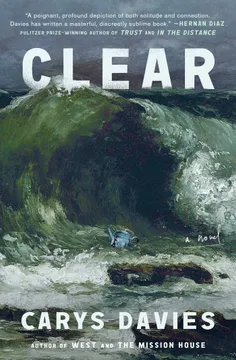


Plot Summary
A Paid Removal
After leaving the established Church over its system of patronage, Reverend John Ferguson struggles to support himself and his wife, Mary. He accepts paid work from Henry Lowrie’s factor, Strachan: survey a remote island and arrange the removal of its last resident so sheep can graze there.
Mary objects to helping a landlord dispossess someone, but John believes the money will help them and their new church. Strachan says the islander is harmless, provides a pistol, and admits no interpreter can accompany John.
The minister sets out with a summons and a few phrases prepared by an Orkney schoolteacher. After a punishing sea crossing, he reaches the island, finds the estate house bare and cold, and slips while trying to explore. His fall sends him down the cliff, leaving his papers scattered and his mission unfinished.
John’s errand begins as a compromise between conscience and material need. His church split has cost him security, yet he takes employment from a landowner whose power rests on the very hierarchy he has rejected. Mary sees that contradiction more clearly than he does, but neither of them can ignore the money. The pistol and unusable translation expose the gap between the factor’s tidy administrative plan and the human encounter it requires. Before John meets the islander, the story has already made clear that official authority travels poorly when stripped of language, familiarity, and accountability.
The Portrait in the Wreckage
Ivar, the island’s solitary keeper, finds John’s washed satchel on the shore. Inside it, Mary’s framed portrait catches his attention; the image feels more present to him than the memories of the family members who have left or died. He carries it close, reluctant to surrender the only person it seems to contain.
The next day, Ivar and his old horse, Pegi, discover John alive below the cliff, badly injured and almost naked. Ivar recognizes that the stranger must own the portrait and briefly wishes he were dead. Instead, he loads John onto Pegi, takes him home, cleans his wounds, binds his injured leg, and gives up his bed. John remains unconscious, while Ivar keeps Mary’s picture hidden against himself.
The portrait becomes a human presence before its subject can be known. Ivar’s attachment is not simple acquisitiveness: years of isolation have left him with few ways to encounter another person except through memory and objects. His decision to rescue John despite resenting him marks the first conflict between possessiveness and care. The island’s starkness makes that choice consequential. There is no community to absorb responsibility, no doctor to take over, and no authority nearby to compel compassion. Ivar acts because John is there, vulnerable and breathing.
A House Without Words
John wakes disoriented, unable at first to remember why he came or even fully connect his present to his life with Mary. The fall has ruined the summons, his survey notes, and his translation of the Gospels. Ivar tends him through days of pain, dressing him and feeding him until he can hobble with an iron spike.
When his memory returns, John recognizes the danger of revealing his mission and decides to pass himself off as an antiquarian. His gestures do not explain much, so he and Ivar begin naming the things around them, recording each other’s words on salvaged paper.
John learns the island’s vocabulary for weather, work, animals, and ground. Ivar, whose family has dwindled through deaths and departures, discovers that teaching his language makes his solitary world shareable.
Their first common project is neither religious instruction nor estate business, but naming. The glossary lets each man approach the other without mastering him; its errors and revisions make understanding a practice rather than a sudden revelation. John’s amnesia temporarily suspends his assigned identity, while his invented antiquarian role prolongs that suspension by choice. Ivar’s attention to the visitor gives his knowledge an audience, transforming practical words into a form of companionship. The ruined papers therefore do not merely destroy John’s plans. They create the conditions for a different, more reciprocal use of language.
Mary Boards the Northbound Smack
Back in Perth, Mary hears from Ellen Reid that Strachan was involved in a fatal confrontation with a tenant near Tummel Bridge who resisted removal. Andrew Armstrong, the relative who helped John secure the job, recalls the case but had not warned the couple.
Mary concludes that Strachan chose her idealistic, financially desperate husband because he expected the island eviction to turn ugly. She pawns her wedding ring, travels to Leith, and takes a steamer north.
In Kirkwall she finds a trading vessel, the Laura, whose skipper agrees to stop at John’s island. Mary tells herself she is going to bring her husband home before the factor’s men arrive. Her journey is cold, slow, and costly, but the news has made waiting feel more dangerous than the sea.
Mary responds to the threat with action rather than the consolations John would offer himself. Her decision to pawn the ring reverses its earlier meaning: a token of marriage becomes the means of reaching her husband. She is not simply rescuing John from physical danger. She recognizes that his decency and financial anxiety make him vulnerable to Strachan’s use of him. The earlier death also gives the planned eviction a history that official euphemism cannot erase. Mary’s journey is an attempt to interrupt that pattern before John becomes its next instrument.
The Secret Behind the Teapot
During a calm spell, John finds Mary’s portrait concealed behind Ivar’s treasured teapot and angrily confronts him for keeping it. He leaves the house, reaches an old hermit’s cell, and recognizes that his silence about the eviction has made the kindness between them dishonest. While John is away, Ivar searches the estate house, finds John’s provision box and pistol, and hides the weapon in the byre.
John returns and apologizes; their closeness resumes through a shared meal, a dance Ivar invents from an old memory, and sex. Ivar then explains that he knows John came from the estate. John tells him the rest: the sheep plan and the impending removal. Ivar admits he fears the water, and John admits he shares that fear.
The concealed portrait, the hidden pistol, and the delayed confession reveal how both men have tried to manage intimacy by controlling what the other can know. John’s anger is justified by the theft, but it also exposes the possessiveness he has been willing to overlook in himself. Ivar’s discovery of the gun turns the estate’s abstract threat into a material object inside his home. Their dance and sexual encounter do not dissolve the conflict; they make honesty more urgent. By naming his complicity, John stops treating providence as a substitute for responsibility.
Three Leave the Island
Mist hides the approaching boat, and Ivar mistakes it for the estate party he expects. Believing removal is beginning, he fires John’s pistol; the shot sends thousands of birds into the sky and alarms the Laura’s crew. The passengers are Mary and the sailors, not Strachan’s men.
John reaches Ivar, takes the gun, and leads him out of the water before wading to Mary. Inside Ivar’s house, Mary sees the glossary, the repaired clothes, and the life John has made there; she understands that his bond with Ivar is real, even as she feels its threat to her marriage.
After taking time alone, she returns and proposes that Ivar come with them. They arrange to take Pegi aboard, offering the teapot’s value toward the cost, while Ivar’s other animals remain behind.
The mistaken shot makes the story’s moral danger briefly physical: Ivar could have harmed the person coming to reach him, because the world has taught him to expect force. The birds transform the error into a signal that brings the separated parties together. Mary’s response is not effortless generosity; she recognizes a connection that unsettles her and chooses to make room for Ivar anyway. Their departure is therefore neither a simple rescue nor a clean escape. The sheep plan remains, and most of Ivar’s life must be left behind. What changes is who gets to decide what happens next.
Analysis
Clear places the Scottish Church’s break with patronage beside the forced conversion of inhabited land into sheep pasture. John has rejected one form of imposed authority, yet financial need leads him to serve another. His conflict is not solved by good intentions: surveying the island and carrying the summons would still make him an agent of dispossession. The story tests the moral comfort of providence against the consequences of human decisions, especially when the person invoking divine order is not the person being removed.
The island’s language gives this question a second life. Ivar’s precise words for weather, terrain, and ordinary labor represent knowledge accumulated through inhabiting a place, while the estate’s ledger reduces that place to usable grazing. John’s glossary cannot undo the power imbalance, but it changes what he can perceive. Learning Ivar’s distinctions makes the island harder to treat as empty or interchangeable. Translation becomes ethical attention, not mastery.
Mary’s arrival prevents the story from resolving into a private romance isolated from history. She sees both the intimacy John has formed with Ivar and the material danger awaiting him, then chooses a response that does not erase her own hurt. The ending offers companionship, not a repaired political order: they leave together, but the sheep plan and the island’s dispossession remain. Their choice matters precisely because it cannot restore what has been taken. The novel’s hope lies in making a new decision inside an unjust structure, while refusing to mistake that decision for justice itself.
Review Summary
Clear receives praise for its atmospheric writing, historical depth, and tender portrayal of human connection amid Scotland's 1843 Highland Clearances. Readers admire the lyrical prose, vivid island setting, and the poignant relationship between John, Ivar, and Mary, despite a language barrier. Many liken it to Claire Keegan's spare yet powerful style. Common criticisms include an abrupt, somewhat unearned ending, excessive nature descriptions, and underdeveloped emotional resonance. Overall, it's considered a quiet, moving novella that lingers long after reading.
People Also Read







Characters
John Ferguson
The principled ministerA newly married Scottish minister who has left the established Church and is struggling to support himself and Mary. John is earnest, intellectually curious, and anxious to reconcile religious conviction with practical responsibility. His work on a Scots translation of the Gospels reflects his wish to make belief accessible, though his own command of language is imperfect. He tends to explain hardship through providence and to see himself as a dutiful provider, habits that sometimes obscure his own choices. His curiosity and capacity for care make him receptive to unfamiliar people, but his fear of conflict can delay honesty.
Ivar
The island's last keeperA self-sufficient islander who tends a small holding with the help of Pegi, his elderly horse. Ivar speaks an old local language and knows the island through its specific weather, plants, water, and work. His family history has taught him both attachment and loss; after those closest to him depart or die, he builds a life around routine, animals, and making things by hand. He is observant but guarded, and his quietness should not be mistaken for passivity. Objects, gestures, and practical acts are his first means of communicating care.
Mary Ferguson
The clear-eyed wifeJohn’s wife, a thoughtful and independent woman whose life has included close female friendship, solitary study, and a marriage she did not expect to find. Mary is attentive to the difference between religious principle and the consequences of choices made in its name. She can be frank with John without ceasing to love him, and she sees how money and social power constrain their options. Her intelligence is practical as well as reflective: she reads danger in what others dismiss and is willing to act without certainty.
Strachan
The estate's factorHenry Lowrie’s factor, responsible for turning the estate’s sheep plans into action. Strachan speaks of clearance as efficient management and presents removal as a benefit to the person displaced. His confidence reflects the authority landlords and their agents hold over tenants. He recruits John because the minister needs money and can be sent where the factor does not wish to go.
Andrew Armstrong
John's helpful relativeMary’s brother-in-law and John’s connection to Henry Lowrie. Andrew helps John find paid work, believing the arrangement will ease the couple’s financial strain. He is kind in family life, but his distance from the realities of eviction leaves him less alert than Mary to the danger of the errand.
Ellen Reid
The warning messengerThe wife of a Lowrie ghillie, Ellen helps Mary pack and tells her about Strachan’s earlier confrontation with a tenant. Her willingness to pass along unsettling news gives Mary the evidence she needs to question the official account of John’s assignment.
Pegi
Ivar's faithful horseIvar’s elderly horse and constant working companion. Pegi carries supplies, grazes beside him, and helps him navigate the island’s daily tasks. Her steady presence reflects the life he has made through habit and care.
Jenny
Ivar's absent sister-in-lawThe wife of one of Ivar’s brothers, Jenny belongs to the family life that shaped him before he was left alone on the island. Her departure is part of the personal history behind his guardedness and his memories of home.
Plot Devices
Mary's calotype portrait
An image that travelsThe small framed photograph survives the sea when John’s papers do not. It lets Ivar imagine a person he has never met, while for John it is a portable link to his marriage and life beyond the island. Because each man understands the image differently, it becomes both a source of comfort and a cause of conflict. Its presence makes the distance between imagined intimacy and actual relationship visible.
The blue word book
A bridge between languagesAfter the fall ruins John’s documents, he and Ivar use the salvaged paper to record words from Ivar’s language alongside English. The list grows from concrete names for animals and tools to distinctions in weather, sound, and feeling. It gives the men a shared task and makes their mutual dependence audible on the page. Its value lies not in perfect translation but in the patience required to approach another person’s world.
The estate pistol
A threat carried forwardStrachan gives John a pistol ostensibly for protection and bird hunting, making the estate’s coercive power portable. John leaves it in the Baillie house, where Ivar later finds and hides it. Its uncertain operation and Ivar’s fear of the estate sharpen the tension around the expected arrival of the removal party. When Ivar eventually fires it in the fog, the weapon converts an imagined threat into a dangerous misunderstanding.
Download PDF
Download EPUB
.epub digital book format is ideal for reading ebooks on phones, tablets, and e-readers.








