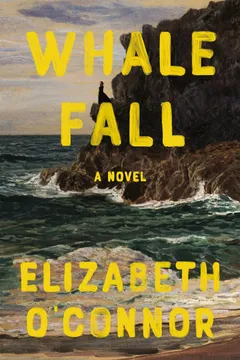


Plot Summary
Prologue
Before the story begins, the island moves through its familiar year: seabirds arrive, nest, and vanish; winter drives families close to the hearth; the sea supplies food and threatens to take it back.
The women repaint their houses with chalked limestone, while the men fish and tend animals. This rhythm is not picturesque to the people who live it. It is work, weather, and inherited knowledge, holding a small community in place even as younger islanders leave for the mainland.
The seasonal opening establishes a world governed by recurrence rather than progress. Birds, fish, paint, and even the remains of animals circulate through the island’s economy, making survival a practice of using what arrives and enduring what disappears. That cycle will later frame the whale as both an astonishing visitor and a resource outsiders want to harvest. The opening also corrects the temptation to treat the island as a timeless refuge: its customs are sustained by labor, scarcity, and adaptation, not by the romantic stillness imagined by visitors.
A Whale Comes Ashore
At eighteen, Manod has just left the island school and expects to remain responsible for her younger sister, Llinos, and their widowed father, Tad. Tad urges her to marry one of the local men, while Manod privately imagines teaching, sewing for a wealthy family, or living somewhere beyond the island. Then a whale appears in the shallows.
Islanders try to guide it back to sea, but its body drifts ashore again, lifeless and enormous. Manod studies it among the crowd, memorizing its dark skin and mouth. She knows the animal chiefly as a strange arrival, but its presence unsettles the community’s ordinary explanations of weather, luck, and loss. The whale becomes a new object in a life with few exits.
The whale interrupts not only the island’s routine but Manod’s belief that her future is already arranged. Her father’s marriage plans and her duty to Llinos make staying seem like the only responsible choice, while her daydreams offer escape without a practical route. The stranded animal mirrors this predicament: it has crossed into an unfamiliar place and cannot simply choose its way back. Yet the community responds through collective labor, not individual heroism. Manod’s act of looking closely is important too. She begins as a witness, storing images that later become a form of authorship.
The Researchers Arrive
Manod’s command of English comes from school and books, but no one on the island has given it a practical future. When a boat brings Oxford researchers Edward and Joan to study local life, she helps them settle and explains the family photographs on her cottage wall.
Joan notices her fluency and recruits her to translate interviews and gather material for their book. Manod is thrilled: the work gives her access to educated adults, a wage, and the possibility of leaving. Llinos distrusts the newcomers and resists being made to speak English.
Manod tries to manage her sister’s behavior while pleasing the visitors, already caught between two loyalties. The researchers’ questions make island customs seem newly valuable, though the islanders have never needed an outsider to tell them how to live.
The offer turns Manod’s education into a bridge, but the bridge is controlled by the people who have arrived with money, notebooks, and a plan. Joan recognizes Manod’s intelligence, giving her a rare experience of being taken seriously; at the same time, the work makes Manod responsible for translating a community that has not chosen how it will be represented. Llinos’s refusal is more than childish contrariness. She does not accept that English is the necessary measure of competence. The sisters embody competing forms of safety: adaptation to the mainland and belonging to the island as it is.
Voices Through the Machine
Edward’s recording equipment arrives, and Manod tests it by singing a song her mother taught her. She translates fishing songs and family stories, guides Joan around the cliffs, and watches the researchers turn ordinary practices into notes and photographs.
Joan tells her that women can study and work without marrying, a possibility Manod had barely imagined. Her own embroideries also attract the visitors’ attention, and Edward sketches the island for her. Yet the attention is mixed with distance: he tells her that Joan supports a fascist movement, then insists that politics are not his concern.
A letter from Llew, Manod’s island suitor, reports that mainland factory work has failed him and that he has enlisted. His compass points east, but offers no assurance that leaving means freedom.
The machine gives Manod’s voice permanence, but it also begins separating her words from the relationships and circumstances that produced them. The researchers can replay a song; Manod must live with the history inside it. Joan’s account of women’s choices enlarges Manod’s sense of possibility, while the revelation about Joan’s politics complicates her admiration. Llew’s letter provides a less glamorous counterexample to escape: the mainland is not a door that opens equally for everyone. The compass becomes a fitting object for Manod’s uncertainty, offering direction without telling her what kind of life lies at the destination.
The Camera Turns Cruel
Manod begins a secret sexual relationship with Edward, believing his attentiveness may carry her toward the mainland life she wants. Meanwhile, Edward and Joan stage photographs that distort island work.
They direct the fisherman John to pose in dangerous surf as if he were hauling a lobster cage, though that is not how the islanders fish. Manod pays John herself and objects to the risk and the false image. In private, Joan confronts her about the affair and the lipstick she gave her, then accuses her of wasting the opportunity to work.
Manod challenges Joan’s politics and rejects her sentimental picture of island life. Joan dismisses her. Manod has spoken against the people employing her, but the act also clarifies what their project asks her to help conceal.
Manod’s relationship with Edward is bound up with more than desire: she mistakes his attention for a possible passage out of the island, while he treats intimacy as something separate from responsibility. The staged photograph makes the researchers’ power visible in a concrete way. They can ask a fisherman to risk himself, then use an image that substitutes spectacle for local knowledge. Manod’s protest marks a shift from eager interpreter to critic. Joan’s rebuke exposes the unequal terms of the job, but Manod’s answer refuses the role of grateful informant. Her dismissal is both a loss of income and an assertion of judgment.
Winter Takes Its Due
As the weather worsens, fishermen keep working through dangerous seas. A storm takes sheep, boats go missing, and a young mainland fisherman’s body is brought ashore. During the search for a lost lamb, Manod also hears that Olwen’s newborn has died because no doctor could reach the island in time.
The whale, meanwhile, rots on the beach until the National Salvage Council arrives at Joan’s invitation. Its workers cut the body apart and carry away blubber, oil, skin, and organs for fuel, animal food, and fertilizer.
A ship carrying frightened children bound for Ireland stops for bread and water. Soon afterward, official forms arrive asking every household to register its residents in case of war. The island’s isolation is no longer a protection from events beyond it.
The winter losses expose the cost of distance without turning the island into a simple victim. Its people know how to read the sea, but expertise cannot prevent every death or summon a doctor across dangerous water. The whale’s removal repeats that vulnerability on a different scale: outsiders decide what its body is worth and take it away, while the islanders are left with the aftermath. The refugee children and the registration forms bring political history into domestic life, not as an abstract crisis but as a label on a beach and a blank space on a household document. Manod’s world is porous despite its remoteness.
The Work They Take
After Joan and Edward stop treating Manod as a colleague, she continues translating some of their material, hoping the work still means a place in their plans. Just before they leave, Edward tells her that she was never included in their departure.
He offers to feature the photograph Joan took of her, but cannot give her a clear answer about her embroideries. They sail before dawn. Manod searches their empty room and finds her work missing, along with Joan’s notes and Edward’s sketches.
His writing describes the islanders as simple people content without possessions, and reduces Manod to an unmarried assistant with no mother. The discrepancy between his polished pictures and his private account makes the project’s theft plain: they have taken not only her art, but authority over its meaning.
The betrayal is not merely that Edward abandons Manod. It is that both researchers have accepted her labor and trust while reserving the right to define what she is. Their records expose an extractive intimacy: Manod supplied songs, translation, images, and access to her home, yet the notes reduce her to a type. Her missing embroideries make the imbalance material. She had made them from scraps and memory; the visitors can remove them with a boat. Finding their records gives her a painful counter-archive, proof that the flattering language of preservation did not prevent condescension or appropriation.
A Sister's First Blood
With the visitors gone, Manod turns back to the work of caring for Llinos. When her sister wakes in pain and finds blood on her nightclothes, Manod bathes her and shows her how to clean herself, keeping the moment private from Tad. Llinos asks for a gift from England, and Manod promises one though she is no longer going. The request recalls the sisters’ mother, whose stories and touch shaped their childhood.
Manod remembers the journey to the mainland after their mother was found dead on a beach, and the cold body she and Tad saw in the morgue. She also cooks lobster for Mari Lwyd, while Llinos writes their names on the steamed window. Their household continues, but Manod’s care is no longer a substitute for a future she has not chosen.
This section shifts the scale of loss from public spectacle to intimate care. Manod cannot recover her mother or undo the researchers’ appropriation, but she can make Llinos’s frightening bodily change less lonely. Her lie about the English gift is a small act of protection, though it also postpones admitting her own disappointment. The remembered body of their mother complicates the island’s stories of women returned by the sea: grief cannot be made into a neat folktale. Llinos writing their names matters because it is an action of her own, not an exercise imposed by Manod or the visitors.
The Whale Wears Bells
On Mari Lwyd night, islanders carry decorated horse skulls from house to house, asking riddles and receiving food. Tad leads the procession, and the whale’s skull joins the horses, borne on the shoulders of six men.
Manod whispers a phrase her mother used to say; the skull nods, then shakes, and the crowd celebrates her answer. In that instant, she remembers her mother’s face with unusual clarity. At dawn Manod climbs the cliffs and watches a dark shape breach the water before disappearing.
She decides she will go to the mainland and take Llinos if her sister agrees. She will find work, make a home, and refuse marriage as the price of security. Then she resolves to answer Rosslyn’s old letter, turning an imagined escape into a plan she can begin herself.
The ceremony does not erase grief or supply a practical route off the island. Instead, it lets Manod participate in a communal form that can hold the whale, the dead, and the living together without pretending they are interchangeable. Her private words to the skull connect memory to a shared ritual, and the moment restores her mother not as an image owned by researchers but as someone remembered through family speech. The final decision is deliberately conditional on Llinos’s choice. Manod’s independence is not a rejection of care; it is an attempt to carry care into a life neither her father nor her employers can design for her.
Analysis
Whale Fall follows Manod through a struggle over who gets to interpret a place and the people who live there. The island is neither a sealed refuge nor a quaint remnant. It depends on exchange with the mainland, yet distance makes medical care, news, and employment uncertain. Its inhabitants possess detailed knowledge of tides, animals, weather, and custom, but that knowledge does not protect them from storms, dwindling livelihoods, or outside decisions.
The researchers arrive promising recognition. Their cameras and recordings preserve voices that might otherwise remain local, and their attention briefly gives Manod a future beyond domestic duty. But preservation is not neutral. Joan and Edward collect songs and embroideries while imposing a romantic image of island life, then stage a fisherman’s labor to fit it. Manod’s translation work exposes the contradiction: she is essential to their access, yet she has little authority over what they publish or take away. Her injury is not simply romantic disappointment. It is the discovery that being seen by outsiders can mean being reduced to a useful image.
The whale gives this conflict physical weight. Islanders read it through custom and necessity; the salvage workers convert it into fuel and fertilizer. Its remains pass through different systems of meaning, none fully possessing it. That movement echoes Manod’s own work, which others want to carry elsewhere, and her mother’s remembered stories, which refuse a single stable interpretation.
Manod’s final choice is not a clean escape. She remains responsible to Llinos, and the mainland offers no guarantee of safety or prosperity. Yet she stops waiting for a visitor to make departure possible. Her resolve joins ambition to care, rather than treating them as opposites. The book’s most consequential change is therefore not that Manod discovers a wider world, but that she claims the right to choose how she enters it.
Review Summary
Whale Fall receives an overall rating of 3.79/5, with readers frequently praising O'Connor's lyrical, atmospheric prose and vivid depiction of a remote Welsh island. Many are impressed that this is a debut novel. Reviewers appreciate protagonist Manod's compelling internal conflict between island loyalty and dreams of mainland life, and the thematic exploration of cultural exploitation by outside anthropologists. Common criticisms include a slow pace, lack of narrative resolution, and disjointed storytelling. The audio format receives particular praise for its haunting Welsh folk songs sung by narrators.
People Also Read






Characters
Manod
The island's young interpreterEighteen-year-old Manod is bright, observant, and newly finished with the small island school. She sews and embroiders, learns English through books, and notices details other people overlook, but her ability has few recognized uses at home. Her father expects her to marry and remain useful to the household, while her love for her younger sister makes leaving feel morally complicated. Manod wants education and a wider world, yet she is vulnerable to anyone who appears to offer access to them. Her sharpness can make her seem difficult, but it also protects her from accepting other people’s descriptions as truth. She is drawn to recording and making images, even as she begins to question who controls them.
Llinos
Manod's untamed younger sisterLlinos is six years younger than Manod and deeply attached to the island’s animals, bones, and shore life. She speaks Welsh more readily than English and sees little reason to change that for visitors. Adults often misread her unusual interests and bluntness as evidence that she is foolish; Manod both resents this judgment and tries to prove it wrong by teaching her. Llinos’s practical knowledge and directness unsettle Manod’s ambitions, because she does not share her sister’s longing for distant places. Their closeness is affectionate but not seamless. Llinos can resist Manod’s plans, and Manod must learn that protecting her does not give her the right to choose for her.
Tad
A father bound to the seaTad is Manod and Llinos’s father, a lobster fisherman whose working life is marked by scars, weather, and long silences. He talks more easily with his dog than with his daughters, yet his care appears in practical acts: teaching Manod to count a catch and insisting the household prepare for winter. He wants Manod to marry, partly because he cannot imagine keeping her at home forever, and expects Llinos to learn domestic work. Tad’s habits belong to an inherited island order, but they do not make him unfeeling. His difficulty is that he can offer his daughters forms of protection shaped by the same narrow world they may need to leave.
Joan
The persuasive field researcherJoan is an Oxford researcher who arrives with Edward to document island life. She is lively, educated, and unusually attentive to Manod’s intelligence, offering her paid work and glimpses of possibilities unavailable on the island. Her interest in women’s education comes from personal experience, but she also approaches the island with a ready-made idea of its cultural value. Joan can be generous and curious while still turning people into material for a book. Her confidence often hides uncertainty about how to relate to the islanders except through the project. The tension between her genuine warmth toward Manod and her authority as a visitor gives their relationship its complicated force.
Edward
The scholar behind the cameraEdward is Joan’s academic colleague, responsible for much of the project’s equipment, photography, and recorded material. He is learned and musically trained, and he recognizes Manod’s voice and embroidery as worth preserving. His attentiveness can feel intimate, especially to someone hungry for recognition and a way beyond the island. Yet Edward is also capable of detachment, treating local knowledge as material to arrange and his own desires as separate from their consequences. He is uncomfortable with politics and with the limits of his responsibility. His polished intellectual manner does not prevent him from misunderstanding the people whose lives he records.
Mam
The sisters' absent motherManod and Llinos’s mother survives in fragments of remembered stories, songs, gestures, and sensory details. She came from the mainland and struggled with the life she found on the island. Her stories often give the sea agency, making it a force that can take, transform, or return the people it claims. Manod’s memories of her are incomplete and sometimes unsettling, but they remain central to how she understands womanhood, family, and loss. Mam’s presence in the novel is felt through what her daughters remember differently and through the care they attempt to give each other.
Llew
The suitor who leavesLlew is an islander Manod’s age who hopes to marry her and believes mainland work could give them a better life. He is earnest but often assumes that Manod’s future should fit his own plans. His departure reveals how difficult it is for young people to build stable lives beyond the island, and his letters offer Manod a grounded counterpoint to her fantasies of escape.
Reverend Jones
The island's ministerReverend Jones is the island’s Baptist minister and a keeper of practical information as well as religious ritual. He reads newspapers, records population changes, hosts the researchers, and helps interpret the island to visitors. His position gives him influence, but he cannot command the sea or prevent the community from shrinking. He often mediates between local custom and outside authority.
Leah
Manod's working neighborLeah is a neighbor who raises goats and works wool into yarn, sharing the physical labor that sustains island households. She brings Manod sewing work and practical companionship, while the prospect of leaving the island reveals how fragile even long-established lives have become. Her hands and home bear the marks of work and weather.
Rosslyn
Manod's mainland correspondentRosslyn was Manod’s closest school friend before leaving the island to marry a mainland quarry worker. Her letters suggest a life beyond the island, but also reveal that departure does not guarantee ease or independence. Manod’s long silence toward her reflects her own uncertainty about what she can offer or ask for.
Olwen
A young island wifeOlwen is a young island woman whose marriage and motherhood make visible the future Manod is expected to accept. Her life is part of the community’s ordinary cycle of work, family, and exposure to the sea, rather than a distant symbol of an unfamiliar world.
Lukasz
The lighthouse keeperLukasz is a Polish man who works at the island’s lighthouse. His position connects the island to ships and messages from beyond it, though his outsider status leaves him vulnerable to suspicion when people seek explanations for misfortune.
John
The fisherman in the photographJohn is an island fisherman whom the researchers ask to pose in rough water for a picture of local work. His willingness to take the risk does not make the staged scene authentic, and Manod’s intervention reveals the difference between the image the visitors want and the work the islanders actually do.
Plot Devices
The stranded whale
A body claimed by manyThe whale enters the story as an inexplicable arrival, then becomes a focus for island superstition, observation, and communal attention. Its return to shore, slow decomposition, and eventual removal by the National Salvage Council expose competing ways of valuing a body: as an omen, an animal, a resource, or a spectacle. The skull’s later place in Mari Lwyd joins the whale to the island’s ritual life. It links Manod’s changing sense of possibility to the cycles of use and memory that structure her home.
The fieldwork apparatus
A voice made portableEdward’s phonograph, discs, notebooks, and camera let the researchers collect songs, stories, images, and household details. The equipment makes Manod’s translation work possible and offers her a new role, but it also gives the visitors power to select, label, and circulate what they record. Their staged photographs and private notes reveal how preservation can distort the people it claims to honor. The apparatus is not simply a tool: it determines which parts of island life can travel beyond the island and whose interpretation accompanies them.
Manod's embroideries
Memory stitched into clothManod’s needlework turns scenes, animals, and island life into objects she makes herself. The embroideries give her a visual language alongside the songs she translates, and they attract the researchers’ interest because they can be photographed and described. Made from careful attention and personal memory, the work differs from the researchers’ more detached records. Its movement into their possession dramatizes the unequal terms of the exchange: Manod creates the images, but others control where they go and how they are presented.
Island folktales and songs
A community's living archiveStories about transformed daughters, sea spirits, seals, and misplaced bones recur alongside work songs and family histories. They give the islanders ways to explain danger and loss without reducing either to a single answer. The researchers treat these accounts as records to collect, while Manod knows that a story changes with its teller and its audience. Their presence helps shape her understanding of her mother, the whale, and the island’s customs, culminating in a ritual where inherited language becomes personal memory.
Llew's compass
Direction without a destinationLlew sends Manod a spare compass with his letter from the mainland. Its needle points east, giving physical form to the direction she has long imagined traveling. But the letter also explains that Llew cannot find steady work and has enlisted, complicating the notion that leaving automatically brings security. The compass cannot choose for Manod or promise what waits beyond the water. It becomes a concise counterweight to her fantasies: departure is possible, but the life she wants will require her own decision and effort.
Download PDF
Download EPUB
.epub digital book format is ideal for reading ebooks on phones, tablets, and e-readers.








