

Plot Summary
The Pump at Dawn
Azouz, a boy growing up in a crowded Algerian shantytown outside Lyon, watches the women turn laundry at the shared pump into a clan feud. His mother, Emma, joins the fight, then returns to the family meal as if the quarrel belongs to the ordinary weather of the Chaâba. The settlement is a jumble of huts built around a concrete house, where Azouz’s father, Bouzid, has welcomed relatives fleeing poverty in Algeria.
A makeshift waste pit overflows; at night, Azouz’s uncle accidentally drenches him with a chamber pot while he uses the dark toilets. The household laughs, bathes him, and receives Berthier, the former owner of their house. Hospitality and scarcity shape even the most humiliating parts of childhood.
The opening makes material scarcity visible through repeated bodily inconveniences: one pump, overflowing sanitation, shared rooms, and a child’s fear of the dark. Yet the Chaâba is not simply a symbol of deprivation. Its residents quarrel, protect one another, and extend hospitality to former owners and newcomers. Azouz’s comic attention gives him a position both inside and slightly outside the community: he belongs to its routines, but observes them as performances. That double vision becomes the book’s central instrument, letting him register affection and indignity without reducing either to a lesson.
Coins in the Refuse
Azouz’s cousin Rabah earns money at the Villeurbanne market and brings home unsold produce, sharing it around the Chaâba despite his mother’s objections. Emma pushes her sons to earn as well, while Bouzid insists their labor belongs at school, not at a market stall. Moustaf wakes Azouz before dawn and takes him to seek work.
After several rejections, Azouz earns only fifty centimes helping an elderly salad seller, then refuses to return for the same pay. He escapes into the woods with Hacène, where their pretend hunting ends in an empty stomach and a failed bird trap. Later, when a rubbish truck unloads its cargo by the Rhône, Azouz claims a patch and hauls home discarded books, dishes, and toys.
Work enters childhood as an argument about what a family can afford and what a child is expected to become. Bouzid’s refusal to let his sons imitate him expresses both care and fear: he wants education to spare them a laborer’s life, but his authority cannot erase the household’s immediate needs. Azouz’s first wage is small enough to feel both humiliating and precious. His retreat to the forest and scramble through dumped goods reveal the ingenuity poverty demands, while the children’s games turn discarded objects into temporary wealth. Resourcefulness here is not romantic freedom. It is a practical response to having too little.
Louise Takes Command
Louise, the assertive neighbor who dispenses sweet snacks to selected children, decides that prostitutes working near the Chaâba threaten the families. When her first confrontation fails, she recruits the boys to attack the parked cars with stones. The assault scatters clients and breaks windows, but the prostitutes return.
Rabah and Moustaf then trap one client’s car by wiring its wheels and join another stone attack. A prostitute calms them by offering Rabah five francs in exchange for being left alone. He accepts, and the boys begin collecting money from the women in return for protection. Azouz watches the older boys manage the arrangement, uneasy with danger but fascinated by the authority and cash they have claimed.
Louise’s campaign begins as a defense of children’s space, but the boys’ escalation changes its moral shape. The first attack is collective and theatrical, aimed at driving away an unwanted presence; the later arrangement converts intimidation into routine income. Rabah’s fluency in opportunity makes him an effective leader, while Azouz occupies the familiar role of witness and uncertain participant. The episode does not offer a clean division between respectable residents and outsiders. The boys condemn one kind of commerce, then build another through coercion. Their actions expose how quickly adult moral authority can become a model for the very conduct it seeks to control.
Second Place, First Exile
At Léo-Lagrange, Azouz decides to outrank the French pupils and moves to the front of the class, copying their manners and answering eagerly. When the teacher announces a deliberately absurd ranking, Azouz places near the bottom, but later receives genuine praise for coming second. His cousin Hacène, near the bottom, faces a beating from his father, and Zohra cannot protect him by softening the report.
The result sharpens Azouz’s pride and shame at once. Moussaoui and other Algerian pupils accuse him of siding with the French because he studies, obeys the teacher, and sits beside Jean-Marc Laville. When the teacher uses Azouz’s success to argue that Arab pupils can excel, Azouz becomes an unwilling example in a dispute over racism.
School offers Azouz a route to recognition, but recognition is never socially neutral. The classroom ranks children as individuals, while his cousins read achievement as a choice about collective loyalty. The teacher’s defense of Azouz is sincere, yet it makes him a weapon in a broader argument and leaves him exposed to resentment. Hacène’s punishment shows the unequal conditions beneath the ranking: effort cannot flourish where study is interrupted and failure is answered with violence. Azouz learns that academic success can increase his options while narrowing his sense of belonging. He is not simply choosing between two communities; each community is watching how he chooses.
The Cut and the Bicycle
Azouz and Moustaf are prepared for a circumcision ceremony that the adults present as a passage into manhood. Relatives gather, women sing, and guests tuck money into the boys’ clothes. The circumciser’s operation terrifies Azouz; his parents cannot stop it once the men hold him in place.
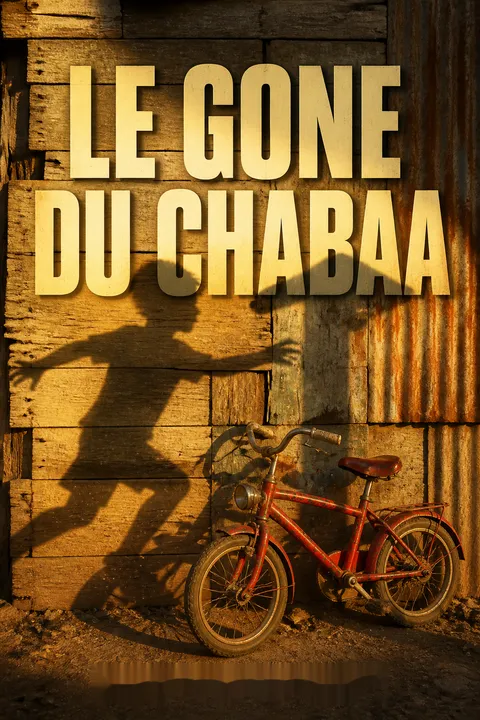
He later uses the money to press Bouzid for a bicycle. His father eventually brings home a red one, but restricts where Azouz can ride because of the dangerous boulevard.
Azouz waits until Emma is away, then joins Rabah and other boys on a long ride beyond the limits Bouzid set. When they return after dark, Bouzid gathers the bicycles and smashes them with a sledgehammer. Azouz’s new freedom ends with the destruction of the very object meant to secure it.
The ceremony links bodily belonging to pain, money, and public recognition. Azouz experiences the rite not as an abstract tradition but as a decision made by adults over his body, despite his fear. The bicycle seems to offer a counterweight: a possession earned through the ceremony that might let him choose his own distances. Bouzid’s gift is affectionate but tightly bounded by his knowledge of traffic and danger. The boys’ ride violates those boundaries, and the collective destruction that follows shows how quickly protection can become punishment. Neither father nor son is simply wrong; their conflict turns on who gets to define safety and independence.
The Inspector’s Trap
Police arrive at the Chaâba looking for an illegal slaughterhouse run by Saïd, Bouzid’s brother. An inspector flatters Azouz’s school progress and invites him to help uphold the law. Believing the inspector’s friendly attention, Azouz leads the officers to the place where Saïd slaughters sheep. The police photograph the site and summon Bouzid and Saïd to the station.
Bouzid blames his brother, destroys the meat, orders Saïd’s family to leave, and then attacks Zidouma when she challenges his authority. Neighbors pull them apart. A newspaper report names the brothers and publicizes the case, deepening the shame and mistrust. Saïd stops slaughtering at the Chaâba, but he and Bouzid cease to be brothers in any meaningful daily sense.
Azouz’s disclosure is neither calculated betrayal nor innocent accident alone. The inspector secures it by appealing to the boy’s pride in school and his wish to be treated as capable. That moment makes the child’s education useful to institutions whose rules his family does not fully understand. Bouzid’s response shifts blame outward, then turns the conflict into a test of household and communal authority. Zidouma’s resistance reveals that the old hierarchy is already weakening. The newspaper’s public naming of the family widens a private rupture into a stigma shared by the settlement. The scene shows how unequal access to language can make trust dangerously easy to exploit.
The Chaâba Goes Quiet
The scandal accelerates a decline that the Chaâba can no longer absorb. The Bouchaoui family leaves first for an apartment in Lyon, and other residents eventually follow, including Rabah, Hacène, and their parents. The garbage hunts lose their crowds; the communal bustle drains from the paths and courtyards.
Bouzid remains in the house, retreating from neighbors and treating the place as his own rather than as a shared settlement. Azouz longs for the people who have gone, but his repeated requests to move meet his father’s silence and, eventually, a beating.
Emma comforts him by promising a move, though she cannot make the decision for Bouzid. Louise visits the increasingly lonely household, while the empty huts and discarded building materials make the vanished community impossible to ignore.
The Chaâba’s collapse is measured less by a single eviction than by the disappearance of repeated social acts: children no longer race after rubbish trucks, neighbors stop gathering, and shared routines lose their audience. Bouzid’s refusal to leave is bound to pride and to the fact that he built a life there through work and hospitality. For Azouz, the same place has become a container for absent friends. His insistence on moving expresses not rejection of his origins but grief for a community that has already ceased to function. Emma’s promise offers emotional shelter without practical power, exposing the family’s unequal capacity to choose its future.
Bouchaoui Brings an Exit
After months away, Bouchaoui returns with his family for an evening visit. His arrival revives the household: Emma prepares a large meal, and Bouzid welcomes his old neighbor with uncommon warmth. Once the meal is over, Bouchaoui explains that he has found an apartment for the family near his own in Lyon.
Bouzid resists, insisting that the Chaâba is home and that he can improve it, but the lack of running water, electricity, and space weakens his case. Bouchaoui does not force an answer; he offers to show him the apartment. Bouzid agrees to look. In August 1966, the family loads its few belongings into a car and leaves. Emma cries as the Chaâba recedes, while Azouz studies the place he had once begged to escape.
Bouchaoui’s return matters because the offer comes from someone who knows both the Chaâba and the alternatives, not from an official demanding compliance. His hospitality toward Bouzid preserves the dignity of a decision Bouzid experiences as defeat. The departure does not erase the family’s attachment to the old home: Azouz wants time to look back, and Emma cries during the drive. The new apartment is not simply progress over squalor. Leaving means trading a shared world, however difficult, for privacy and comfort that may also bring isolation. The family’s movement is therefore both a material improvement and an emotional severing.
The Flat Without a Bath
The Lyon apartment has a kitchen, a living room, and small alcoves, but no bathroom. Azouz marvels at the indoor toilet and flush system, then discovers that the family must still bathe in the old green basin.
Emma cleans the new surfaces carefully and takes pleasure in the refrigerator and Formica furniture, while Bouzid counts the cost of rent, electricity, and household goods. He scolds the children for using lights and the television, and his temper turns their improved circumstances into another source of tension.
The children also struggle to settle. Azouz finds the neighborhood quiet and unfamiliar, and the family has few nearby companions. When Bouzid returns to the Chaâba for days at a time, his absences leave Emma and the children to manage the new home alone.
The apartment supplies infrastructure, but infrastructure does not automatically produce security. A flushing toilet changes a daily chore; it does not provide a bath, enough space, or a sense of belonging. Emma’s attention to the new objects suggests genuine pleasure in domestic comfort, while Bouzid sees each appliance through the arithmetic of wages and bills. Their different responses are not merely temperamental: the apartment gives Emma a home to shape, but gives Bouzid a new set of expenses and a visible reminder of what he has lost. The family’s mixed feelings resist a simple narrative of upward mobility. Improvement arrives, but it must be learned and paid for.
The School Gate Shame
At the nearby Sergent-Blandan school, Azouz arrives without the crowd that once accompanied him to Léo-Lagrange. He reconnects with his cousin Ali and meets Babar and Kamel, who help him enter the neighborhood’s circle of boys.
At first he tries to pass as French, then tells the Taboul brothers he is Jewish to avoid being isolated as Arab. When Emma comes to bring him a snack, the brothers mock her clothes and identify her as his mother. Azouz gestures for her to leave, then walks home with her and recognizes the hurt he caused.
His schoolwork also falters: Mme Valard drops his ranking and accuses him of copying Maupassant when he had relied on a story told by his former teacher. The old confidence in school gives way to embarrassment and suspicion.
Azouz’s attempt to conceal his origins is driven by a child’s precise reading of social risk. The lie about being Jewish is a tactical answer to a forced choice, not a settled identity. His treatment of Emma shows how the wish to avoid humiliation can redirect shame toward the person who offers care. Their exchange afterward restores tenderness without undoing the hurt. Mme Valard’s accusation deepens the problem: a story learned through oral memory is judged as dishonest imitation. Azouz is caught between unequal standards of credibility, and his declining marks make social exclusion feel confirmed by academic failure.
A Bicycle Stolen Again
After a disappointing school report, Azouz follows Kamel to steal a bicycle from a Lyon square. Kamel acts as lookout while Azouz breaks the lock and rides away, frightened and exhilarated by his first theft.
The stolen machine gives him a way to move through the city, but it also marks how far he has drifted from the studious child his family remembers. At home, Bouzid’s anger over money and the family’s changed circumstances grows more erratic.
He withholds the family allowance, threatens to return to the Chaâba, and eventually leaves for several days with a bag of provisions. When he comes back, he laughs with the family as if his departure had been a test, then damages the television’s electrical connection in a rage over what it shows.
The stolen bicycle echoes Azouz’s earlier longing for one, but the circumstances have changed. His first bicycle was a gift bound by his father’s rules; this one is acquired through a risk he cannot fully master. Mobility has become a way to claim independence from both school and home, though it brings no stable belonging. Bouzid’s short departures similarly turn escape into a recurring threat. His return restores the household’s daily structure without repairing the fear his absence caused. The television incident makes the new apartment’s modern comforts precarious: the family can possess them, yet Bouzid’s grief and financial anxiety can still shut them off.
Loubon Names the Inheritance
Azouz passes into sixth grade at Lycée Saint-Exupéry, where he arrives alone among unfamiliar pupils. He meets another new boy on the way to class and accepts the companionship, then encounters Émile Loubon, a French teacher who was born in Algeria.
Loubon recognizes the neighborhoods Azouz came from and asks him about his family’s language and history. Azouz learns that his father’s work in Algeria was as a farm laborer, not the prestigious occupation Azouz had misunderstood from the family’s wording.
Loubon gives him a novel by Algerian writer Jules Roy and makes room for his background in class. When a pupil calls Azouz’s account of family inheritance primitive, Loubon requires an apology and ends the discussion rather than letting the insult pass as debate.
Loubon offers a model of recognition different from the categories Azouz has encountered at school. He neither asks the boy to hide his origins nor treats them as a complete explanation of who he is. Their shared connection to Algeria opens a conversation, while the correction about Bouzid’s work exposes how family history can be carried in distorted or borrowed terms. The gifted novel links belonging to reading, not to a test of ethnic purity. Loubon’s response to the insult also matters: he protects Azouz without turning the boy into a demonstration of a political argument. For once, an adult authority makes room for complexity.
The Essay That Answered Back
Even with Loubon’s encouragement, Azouz’s school writing remains uneven. He remembers Mme Valard publicly accusing him of copying Maupassant, though the story had come from M. Grand, and he fears that anything original may again be treated as dishonest.
When Loubon assigns a free composition, Azouz writes about an Arab child arriving at a new school and finding everyone already connected. Zohra corrects his grammar, and he submits the piece. During a strike, he misses the class in which Loubon reads it aloud; a classmate later tells him it received seventeen out of twenty and the highest mark.
Azouz tells Bouzid, who takes pride in his achievement and credits divine guidance. His father’s approval lets Azouz enjoy success without surrendering his own account of how he earned it.
The essay converts a private wound into an authored account. Earlier, Azouz’s words were vulnerable to misrecognition: a remembered story became plagiarism, and his attempts to fit in made his experience harder to name. This time he writes from the very loneliness he has been trying to conceal. The strong mark does not solve the social tensions around race, but it confirms that his experience can become intelligible to readers when he controls its form. Bouzid interprets the achievement through faith, while Azouz claims the labor of writing. Their explanations coexist, revealing a family capable of sharing pride without sharing the same account of causation.
The Duchère Offer
As Azouz advances at school and begins to be treated at home as a promising student, the family’s housing remains insecure. A registered letter informs Bouzid that the apartment’s new owner intends to sell, leaving the family to buy it or find another place.
Bouzid first blames the move from the Chaâba, then visits the property manager and refuses a distant housing offer because it would take him too far from work. The manager returns with a final option: a larger, sunnier F4 apartment in La Duchère, close enough to reach in about fifteen minutes.
Faced with threatened eviction, Bouzid asks whether the area has shops and a school, then agrees to visit. The novel ends before the next move, with the family once again waiting on a home they have not yet seen.
The ending refuses to treat the first move as a final arrival. Bouzid has gained experience navigating landlords and paperwork, yet the family remains vulnerable to decisions made by property owners. His first response is to blame the original departure, as though returning to the Chaâba could restore control; his later questions about work, shops, and school show a more practical form of adaptation. Azouz’s education has expanded the family’s capacity to interpret official language, but it has not removed their dependence on it. The offered apartment promises space and light, while the unresolved visit keeps the future suspended. Home remains both shelter and negotiation.
Analysis
Le gone du Chaâba follows a child whose education changes not only what he knows, but how others interpret his place among them. At the Chaâba, poverty is experienced through practical routines: carrying water, sharing crowded rooms, scavenging, and depending on neighbors. These routines also create a social world dense enough to offer protection, humor, and collective memory. Leaving that world improves the family’s housing, but does not resolve its economic insecurity or give Azouz immediate belonging in the city.
School promises mobility while exposing the uneven terms on which children are judged. Azouz’s grades can open doors, yet his success becomes evidence in disputes about race, loyalty, and the fairness of teachers. His classmates’ suspicion is not simply envy; it reflects an environment where educational recognition seems scarce and where adult authority can humiliate as readily as encourage. M. Grand and Loubon matter because they recognize ability, but the book also shows the limits of recognition when a child’s circumstances remain misunderstood.
Family relationships carry the same tension between care and control. Bouzid works to spare his children the life he knows, but his fear of danger and loss often takes the form of commands. Emma supplies a steadier intimacy through daily care, though she has less power over the family’s direction. Azouz’s movement toward self-definition is therefore neither a clean escape from tradition nor a simple embrace of it. He learns to distinguish his own choices from the identities assigned by teachers, cousins, neighbors, and parents. The ending keeps that education unfinished: another move is proposed, and the family’s next home remains uncertain. Progress is real, but never guaranteed.
Review Summary
People Also Read


Characters
Azouz
The watching sonAzouz is the Lyon-born son of Algerian parents and the book’s observant center. His sharp eye turns household mishaps, market work, school rituals, and neighborhood quarrels into scenes he can examine from within. He wants academic success and the wider possibilities it seems to promise, yet he also fears that distinction will estrange him from his cousins and family. His humor often protects him from shame, but does not prevent him from causing hurt when he tries to pass unnoticed. Azouz’s deepest struggle is not simply between two cultures; it is learning to name his own experience when others keep assigning him an identity, a rank, or a story.
Bouzid
The stubborn providerBouzid is Azouz’s father, a Sétif-born laborer who has built a household through work, hospitality, and force of will. He wants his children to study so they can avoid his life as a worker, but his authority is shaped by economic insecurity and by the fear that the world beyond the family will endanger them. He shows affection through practical gestures, including gifts and the welcome he gives friends, while often struggling to express tenderness directly. His attachment to familiar places and habits makes change feel like a loss of command. Bouzid’s pride is real, but so is the cost it imposes on those who live under his decisions.
Emma
The household anchorEmma, Azouz’s mother, holds the household together through cooking, cleaning, care, and social generosity. She has little French and limited power over the major decisions affecting her family, but she is neither passive nor emotionally simple. She pushes her sons toward practical work when money is tight, comforts Azouz when he feels excluded, and takes pleasure in making a new apartment feel habitable. Her humor and temper are part of the family’s daily language; so are her exhaustion and grief. Emma’s affection is expressed through food, bathing, and attention, even when Azouz mistakes that care for an embarrassment he must hide.
Zohra
The family interpreterZohra is Azouz’s older sister and an important bridge between home and school. She helps with his lessons and translates teachers’ reports for parents who cannot easily read them. Her position gives her practical influence, but also exposes her to impossible requests, including protecting younger children from punishment without being able to change the circumstances that caused it. Zohra is affectionate and teasing, sometimes impatient with Azouz’s schemes. She has her own wish for freedom and a wider life, though household responsibilities repeatedly pull her back into a supporting role.
Moustaf
The demanding older brotherMoustaf, Azouz’s older brother, is energetic, practical, and more willing than Azouz to follow the demands of work and family. He wakes Azouz for market labor and pushes him to keep trying after early rejection. At other times he joins the boys’ adventures and takes part in the family’s conflicts. Moustaf’s mix of authority and companionship makes him a model Azouz resists and relies on in turn. He often acts before weighing what a choice will mean, which suits the improvisational world of the Chaâba.
Rabah
The resourceful cousinRabah is Azouz’s older cousin, a confident organizer whose market work brings money and food into the settlement. He is generous with surplus produce, but also skilled at spotting opportunities and converting them into influence. His rivalry with Louise and his leadership among the boys reveal a taste for command as well as a lively sense of humor. Rabah rarely waits for adults to define what is possible; he gathers allies, makes plans, and acts. His example attracts Azouz, even when its risks and moral compromises unsettle him.
Hacène
The struggling cousinHacène is Rabah’s younger brother and Azouz’s companion in games and misadventures. He is easily tired, sometimes fearful, and often less successful at school than Azouz, but he is not simply lazy or incapable. Noise and crowding at home make study difficult, while his father’s harshness turns academic results into a source of dread. Hacène’s friendship gives Azouz someone to share the woods and the settlement’s improvised adventures with. His circumstances reveal how unevenly children experience the same community.
Louise
The garden’s commanderLouise lives in the solid house beside the Chaâba with her quiet husband, M. Gu. She controls access to treats and attention, making her home a coveted refuge for the children. Her brusque authority masks loneliness and a need to remain central to community life. Louise can mobilize adults and children when she believes the neighborhood is under threat, yet her plans can take on an unruly life of their own. She is both comic force and social organizer, with a strong sense of ownership over the patch of world she has made.
M. Grand
The first school advocateM. Grand is Azouz’s teacher at Léo-Lagrange. He encourages the boy’s academic ambition and recognizes his ability, offering a school-based route to achievement that Azouz can imagine for himself. His lessons also expose differences between the classroom’s assumptions and the realities of the Chaâba. M. Grand’s influence is warm but not uncomplicated: his use of Azouz’s success to answer accusations of prejudice places the child inside a conflict larger than he can control.
Émile Loubon
The teacher across historiesÉmile Loubon teaches French at Lycée Saint-Exupéry and, like Azouz’s parents, has a personal history in Algeria. He treats Azouz’s background as a subject worth understanding rather than a defect to conceal. Loubon introduces him to Algerian literature and gives him space to speak in class, while challenging casual insults when they demean a pupil. His attention is encouraging, though Azouz remains conscious of being singled out. Loubon represents an adult authority capable of joining academic standards to curiosity and respect.
Mme Valard
The suspicious teacherMme Valard is Azouz’s teacher after his family moves to Lyon. Her interactions with him are marked by suspicion and sharp criticism, especially when she believes his writing resembles a published author’s work. She becomes a painful contrast to the teachers who recognize his effort. For Azouz, her judgments make school feel less like a neutral measure of ability and more like a place where a child’s credibility can be decided by someone else.
Saïd
Bouzid’s independent brotherSaïd is Bouzid’s brother, a butcher whose work and income give him a measure of independence. He lives with Zidouma and their children in the Chaâba and is involved in the community’s informal economy. His relationship with Bouzid is shaped by family obligation and an older brother’s authority. Saïd’s practical choices can put that bond under strain, while his household’s fortunes are closely tied to the settlement around them.
Zidouma
The fearless neighborZidouma is Saïd’s wife and a forceful presence among the women of the Chaâba. She is quick to confront rivals and does not readily accept Bouzid’s authority over her household. Her feuds with Emma begin in the daily competition for shared space and resources, but beneath the theatrics lies a fierce defense of dignity. Zidouma’s boldness unsettles established boundaries, especially when she speaks publicly against a man who expects obedience.
Bouchaoui
The neighbor who opens doorsBouchaoui is a longtime neighbor whom Bouzid once welcomed into the Chaâba and helped find work. He is warm, practical, and grateful for the help he has received. His own movement between the settlement and Lyon gives him knowledge of possibilities that Bouzid does not yet trust. Bouchaoui’s friendship with the family is grounded in shared history rather than abstract advice, making his perspective difficult for Bouzid to dismiss.
Ali Saadi
The cousin in the cityAli is Azouz’s cousin and one of his first connections in the new Lyon neighborhood. More socially confident than Azouz, he introduces him to local boys and helps him understand the streets around their apartment. Ali is quick with jokes and bold around girls, though his bravado can obscure uncertainty. For Azouz, Ali offers a bridge from the lost community of the Chaâba to a new circle of friends.
Babar
The welcoming classmateBabar is a friend of Ali’s who becomes part of Azouz’s new circle. He is more reserved than some of the other boys, but his easy acceptance helps Azouz feel less alone after the move. He accompanies the group through the neighborhood and school life, sharing their humor without always matching their bravado.
Kamel
The daring street friendKamel is one of the boys Azouz meets through Ali and Babar. He acts confidently, enjoys testing limits, and draws Azouz into risks he might not take alone. Their friendship offers excitement and belonging in a neighborhood where Azouz initially knows no one. Kamel’s influence is energetic but not always careful about consequences.
Ahmed Moussaoui
The defiant classmateMoussaoui is an Algerian pupil in Azouz’s early class, known for rejecting the teacher’s authority and for speaking forcefully on behalf of the boys at the back of the room. He resents being treated as a failure and interprets Azouz’s success as a sign that the younger boy has aligned himself with the French. His defiance is partly performance, partly protection against humiliation. Moussaoui gives voice to a real grievance even when he directs it unfairly at Azouz.
Nasser Bouaffia
The pressured classmateNasser is Azouz’s Algerian classmate, whose mother hopes Azouz will help him during examinations. He struggles academically and is caught between family hopes and his own limited preparation. His situation sharpens Azouz’s questions about loyalty, fairness, and what kind of help is owed between children.
Jean-Marc Laville
The celebrated pupilJean-Marc is a high-performing French pupil whom M. Grand uses as a model of classroom achievement. He is also vulnerable to bullying from other boys. His proximity to Azouz shows how school success can create alliances that remain fragile outside the teacher’s attention.
Plot Devices
The Chaâba
A home and social mapThe shantytown is the story’s central physical world: a cluster of huts, a shared pump, improvised toilets, a garden, and the paths children take toward school and the Rhône. Its cramped layout creates both conflict and mutual dependence. People overhear one another, share food, compete for scarce resources, and build informal systems of authority. As residents leave, its changing condition makes the loss of community visible before the family itself moves. The Chaâba therefore functions as more than a setting. It is the place against which Azouz measures belonging, hardship, memory, and the promise of a different home.
Language and translation
A gate to authorityThe family’s Sétif-inflected Arabic and Bouzid’s French-shaped speech mark the distance between home and institutions. Azouz and Zohra often interpret school reports, official notices, or conversations for adults who cannot comfortably manage them in French. This gives the children unusual responsibility, but also leaves them exposed to misunderstandings and manipulation. School vocabulary can make Azouz feel powerful, while also separating him from relatives and peers. Language is not merely comic texture. It determines who can act on information, who is believed, and who gets to explain what an event means.
School rankings
Achievement made publicComposition marks, class rankings, and teachers’ praise turn learning into a visible measure of a child’s worth. Azouz treats success as proof that he can move beyond the limits others assume for him, while his cousins sometimes read the same success as disloyalty. Rankings also conceal unequal conditions: some children have quiet space and books, while others try to study amid crowded rooms and family demands. The device makes school both a real avenue of possibility and a social sorting machine. Each result changes how adults and children treat one another.
The bicycle
Mobility under supervisionBicycles repeatedly give Azouz an image of freedom he cannot securely possess. A ceremonial gift comes with his father’s limits; a long ride beyond those limits ends with the boys’ bicycles destroyed. Later, a stolen bicycle offers a different, riskier form of movement. Across these episodes, the object carries more than transport. It stages the conflict between a child’s appetite for distance and a parent’s fear of danger, then links independence to rule-breaking when legitimate freedom is restricted.
Writing
Experience claimed in wordsSchool assignments give Azouz a way to convert memories into an account that others can read. At first, a story learned from M. Grand is mistaken for copied literature, and Azouz becomes wary of appearing original. Later, he writes about the isolation of a child arriving at a new school. His success does not erase prejudice, but it lets him shape the terms in which his experience is recognized. Writing becomes both an academic test and a struggle over who has the authority to tell his story.
Download PDF
Download EPUB
.epub digital book format is ideal for reading ebooks on phones, tablets, and e-readers.








