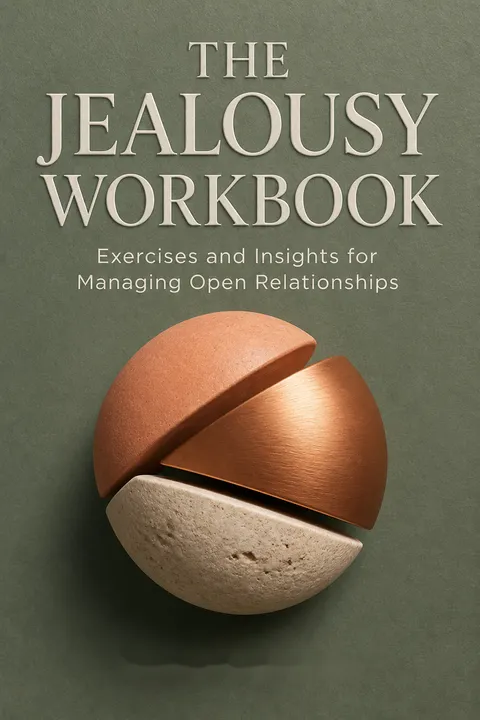


Key Takeaways
Choose a relationship structure that fits you, not your partner’s pressure.
Fit before effort. Before trying to manage jealousy, ask whether an open relationship suits you at all. Labriola suggests examining relationship models you have seen, what felt nourishing in past partnerships, and whether exclusivity has brought security or left you feeling constrained. Her questions can reveal a mixed relationship orientation: comfort with both monogamy and non-monogamy, depending on the partner, life circumstances, or stage of life. She presents this as a possibility, not a scientific diagnosis.
Treat mismatch seriously. If one person needs exclusivity and the other needs openness, years of trying to change each other can deepen hurt and erode trust. A partner’s appeal does not make that difference disappear. An open relationship should be a chosen arrangement, not a painful audition to prove one is flexible enough.
The workbook’s strongest opening move is to question the premise that jealousy is always a personal defect to overcome. That reframes compatibility as a legitimate issue, rather than treating persistence as proof of love. Relationship labels can help people name preferences, but the book appropriately presents orientation as potentially situational. A questionnaire can prompt reflection, not settle a life decision. The crucial test is not whether someone can endure discomfort once, but whether the arrangement can meet both partners’ needs without persistent coercion or resentment.
Treat jealousy as information to decode, not a verdict to obey.
Name the ingredients. Jealousy is not one emotion. It can combine fear, anger, sadness, envy, shame, intrusive thoughts, and physical distress. Labriola asks readers to identify the feelings, thoughts, and bodily sensations present during an episode, then notice which of three broad emotions, fear, anger, or sadness, is most prominent. One person might discover that a jealous reaction is mostly fear of being replaced, while another feels chiefly angry about being disregarded.
Use what you already know. The book also asks readers to recall jealousy outside romance, such as a sibling rivalry or a missed promotion. Those memories may reveal coping strategies that worked before, including asking for a conversation, building confidence, or seeking support. The point is not to suppress jealousy, but to make its components specific enough to address.
This is a practical form of emotional granularity: replacing a single, overwhelming label with more precise distinctions. In emotion research and clinical practice, naming an emotion can help separate the feeling from the action it seems to demand. Fear may call for reassurance; anger may point to a boundary violation; sadness may signal loss. These are different problems. The model should not be mistaken for a rigid taxonomy, however. Feelings overlap, and a person need not classify them perfectly before asking for care.
Check whether a rival is truly a rival before treating jealousy as evidence.
Run a reality check. Labriola’s Jealousy Filter asks whether four conditions are actually present: there is something valuable to lose, another person wants that same thing, the situation creates real competition, and there is reason to believe the reader will lose. If a stranger flirts with a partner at a party, the partner’s interest, the stranger’s intentions, and any threat to the existing relationship may all be unknown. The feeling is real, but the feared outcome may be speculation.
Respond to the facts. Contrast that with a partner who has voiced unhappiness and is planning an extended trip with another lover. There may be concrete signs of risk that call for a direct conversation or couples counseling. The filter helps distinguish self-soothing from problem-solving, without assuming jealousy is always irrational.
The filter resembles cognitive appraisal: an event becomes threatening through an interpretation of what is at stake and how likely loss seems. Its value lies in slowing the jump from discomfort to catastrophe. Its limitation is that relationships rarely offer courtroom-level evidence. A person can have good reason to worry before all four conditions are certain, and uncertainty itself may be distressing. The questions work best as prompts for inquiry, not as a test that invalidates a partner’s feelings when the answers are unclear.
Find the wound beneath jealousy before deciding what needs to change.
Trace the painful layer. Labriola draws on Freud’s account of jealousy as a mixture of grief over possible loss, distress about limited control, hostility toward a rival, and self-directed blame about being inadequate. These strands can point to different needs. A reader who mainly fears loss may need reassurance; someone who feels powerless may need a fairer agreement; someone consumed by self-criticism may need support for self-worth or help separating the present from past rejection.
Ask what is current. The book describes a partner whose distress eased after the couple negotiated limits on outside dates and time away. In another case, a person recognized that present jealousy had revived an old abandonment fear. Both possibilities matter: the partner’s behavior may need to change, or the emotional intensity may be amplified by earlier experiences, or both.
The useful distinction here is between the trigger and the vulnerability it touches. A new relationship can activate an old fear while also creating a genuine present-day loss. Treating the reaction as only historical can excuse neglect; treating it as only present can miss a chance to heal. The layered account is more humane than asking whether jealousy is rational or irrational in the abstract. It invites two questions at once: what is happening now, and why does this particular event carry such force?
Use boundaries for real risks, and gradual exposure for manageable fears.
Choose the right tool. The engineering model means reducing known triggers through explicit agreements, such as protecting time together or clarifying safer-sex practices. The phobia model means gradually encountering a tolerable trigger so its emotional charge may lessen. Labriola recommends starting with mild situations, planning support, and reviewing the agreement after a trial period. One couple began with activities that caused only mild jealousy, then considered more difficult situations as confidence grew.
Share the power. Agreements should not be imposed by one partner, and a person should not be pressured into a situation they cannot accept. Rules can reduce confusion while both partners are learning, but feelings cannot be promised or controlled. If a new relationship deepens, partners must decide whether to revise their arrangement or end that relationship. Neither choice is painless, and the right answer depends on the people involved.
The distinction between changing conditions and building tolerance is valuable across anxiety management. Exposure can help when the threat is exaggerated and the person consents to a gradual, supported experiment. It is not a cure for broken agreements, unequal power, or unmet needs. Calling a legitimate boundary a phobia can turn therapeutic language into pressure. The book’s emphasis on consent, shared decision-making, and revisiting trials is therefore essential: increased tolerance is useful only when it serves the person’s freely chosen relationship, not someone else’s convenience.
Prevent demotion, displacement, and intrusion from turning new romance into crisis.
Know the three pressures. Labriola calls three common difficulties “Poly Hell.” Demotion is losing the feeling of being a partner’s only romantic relationship. Displacement is losing too much time or attention to the new relationship. Intrusion is when calls, texts, scheduling problems, or other spillover interrupt time with the established partner. New Relationship Energy, or NRE, describes the intense excitement and preoccupation that can accompany a new romance, making it easy to neglect existing commitments.
Protect what matters. The book’s examples include reserving regular time for the established relationship, planning meaningful dates, and agreeing when contact with another partner is appropriate. One partner’s distress eased when the couple created more reliable time together. Some loss of exclusivity and occasional logistical friction may be unavoidable; persistent neglect is different. The aim is not to make relationships perfectly separate, but to prevent one from repeatedly crowding out another.
These categories separate emotional status from practical allocation. A partner can feel demoted even when dates are balanced, or feel displaced despite being called “primary.” The distinction helps couples discuss the actual injury rather than argue over labels. The framework also makes time visible as a scarce resource, unlike love, which the book treats as capable of expanding. That does not mean attention can be multiplied without limit. Calendar agreements are not romantic, but reliability often provides the conditions in which romance can survive.
Say whether you need comfort or a concrete change before starting the conversation.
Make the request legible. A person describing jealousy may want empathy, reassurance, or a change in behavior, and a partner may guess wrong. Labriola recommends stating the purpose of a conversation before launching into the details. She distinguishes connecting, seeking comfort, sharing information, making a decision, and solving a problem. For instance, someone may want their partner to acknowledge that a weekend apart was hard, while still wanting the weekend arrangement to continue.
Listen before arguing. When a partner is distressed, the book recommends listening without interruption, clarifying what they feel, validating the experience, and taking responsibility for any real mistake. A person can acknowledge pain without agreeing with every accusation. Once both partners are calmer, each should have room to explain their perspective. Avoid making a new promise simply to end an uncomfortable conversation if it cannot be kept.
This is a communication design problem as much as an emotional one. People often hear a story as a request for solutions, or hear a request for comfort as an attempt to change the rules. Naming the desired response reduces that mismatch. The advice also resists a common false choice: validation does not require surrendering one’s own account of events. Still, listening should not become one partner’s permanent unpaid therapy role. Mutual care includes returning to action, accountability, and a fair chance for both people to speak.
Negotiate disclosure around what affects you, not every detail you fear.
Privacy is not deception. Some people feel safer knowing a great deal about outside relationships; others cope better with minimal detail. The book calls the latter strategy compartmentalization: consciously limiting exposure to a partner’s other relationship while recognizing that it exists. Neither style is automatically healthier. Partners may need different disclosure agreements rather than assuming that identical information makes everyone feel equally safe.
Prioritize consequential facts. Labriola suggests agreeing on when to disclose sexual contact, whether a connection is ongoing, its changing status, and how it may affect time, sexual health, or the existing relationship. A demand for intimate details may really be a request for reassurance about being replaced. That underlying concern can be addressed directly. At the same time, a partner should not lie to avoid a difficult reaction, and relevant changes should not be hidden.
Disclosure is not a simple contest between honesty and secrecy. It is a negotiation among informed consent, personal privacy, and the privacy of third parties. More detail can help one person feel oriented while giving another vivid material for rumination. The book’s emphasis on underlying concerns is helpful, but reassurance cannot substitute for information that affects health or agreements. A sound disclosure practice makes important consequences visible while avoiding the assumption that a partner is entitled to every private exchange.
Turn envy into a clue about what you want in your own life.
Separate wanting from fearing. Labriola distinguishes jealousy, which centers on possible loss of a valued relationship or resource, from envy, which is longing for an experience or quality someone else has. Coveting goes further by wanting to take that specific thing away. A partner’s exciting new romance might stir fear of replacement, but it might also reveal a wish for more passion, social life, affection, or a satisfying outside relationship of one’s own.
Pursue the missing good. In one example, a man envied his partner’s infatuation and another person’s creative career. Rather than asking his partner to end the romance, he found a partner of his own and the envy eased. The book’s idea of compersion, positive feelings about a partner’s pleasure with someone else, is not a moral requirement. It is more plausible when a person’s own important needs are being met.
This reframing turns envy from a verdict on the rival into information about the observer’s unmet desires. It echoes a broader psychological distinction between threat monitoring and goal pursuit: the same painful comparison can either narrow attention toward control or direct it toward a valued activity. The approach should not imply that every desire can be met independently. Sometimes a partner’s choices do create unfair costs. Still, asking “What do I want more of?” can reveal options that restriction alone would never produce.
Challenge beliefs that make another attraction proof you are unloved or inadequate.
Notice the hidden rules. Labriola identifies three beliefs that can intensify jealousy: that genuine love rules out desire for anyone else, that a partner’s attraction proves one has failed to satisfy them, and that love is finite so a new bond must shrink the old one. Each belief turns a partner’s interest in someone else into a personal verdict. The book encourages readers to examine where these assumptions came from and how strongly they still believe them.
Test a more flexible view. A person may love a spouse and a child, or maintain several close friendships, without treating each bond as a fixed share of one emotional budget. Romantic relationships are not identical to family or friendship, but these experiences can challenge the idea that all love is zero-sum. A partner’s new attraction does not, by itself, prove that the established relationship is failing.
These beliefs function like interpretive shortcuts: they convert an ambiguous event into a conclusion about love, personal worth, or scarcity. Examining them can loosen that conclusion and create room for evidence. Yet positive reframing has limits. A partner may indeed be dissatisfied, emotionally unavailable, or behaving dishonestly. The goal is not to replace every fearful thought with an optimistic slogan, but to distinguish what is known from what is assumed and to investigate the relationship conditions that make the fear credible.
Calm your body, test the story, then choose one useful next action.
Lower the intensity first. In a jealousy crisis, complex analysis may be out of reach. Labriola offers simple practices: notice tension and breathing, relax the body, write down repetitive thoughts, and ask which are facts, predictions, or exaggerations. A person might recognize that a partner is probably enjoying a rare visit with another lover, while having no evidence that the lover is “better” or will replace them. That distinction can make the situation easier to bear.
Create an alternative. Rather than waiting passively or acting from panic, choose one helpful step: call a friend, go to an activity, ask for reassurance, or plan a conversation when both people are calmer. The book also offers guided imagery, mindfulness, tapping, and self-hypnosis exercises. These are options to test, not guaranteed cures. Severe distress, trauma, or unsafe behavior may require professional support.
The sequence matters: physiological settling can make reflection more possible, and a small chosen action can interrupt helplessness. This resembles emotion regulation approaches that pair attention to bodily arousal with cognitive reappraisal and behavioral coping. The workbook is broad enough to offer alternatives, which suits the fact that people respond differently. Its exercises should not be treated as equivalent in evidence or as substitutes for clinical care. Acute panic can be soothed; a harmful relationship pattern still needs to be addressed.
Analysis
The workbook’s central achievement is to move jealousy from the category of shameful personal failure into the category of a complicated signal. That signal may point to an imagined catastrophe, an old wound, a present breach of trust, a scarcity of attention, or a mismatch in relationship structure. The reader is asked not to obey the feeling automatically, but also not to dismiss it automatically. This double stance gives the book its practical force.
Its structure is deliberately usable under emotional pressure. It begins with choice and preparation, then offers ways to parse a reaction, negotiate agreements, and respond during a crisis. The recurring case stories show how a specific fear can change once its source is identified: a scheduling problem may need a calendar and protected time, while a fear of replacement may need evidence, reassurance, or deeper self-worth work. The workbook’s many exercises invite personal experimentation rather than a universal formula.
The most important tension is between autonomy and security. An open relationship can offer freedom, novelty, and additional intimacy, while also distributing time, attention, and risk among more people. No mindset technique erases those material tradeoffs. The book is strongest when it insists on negotiated agreements, honest disclosure, and meaningful attention to the established relationship. It is weaker if its optimism about adaptation is read as a duty to tolerate arrangements that feel fundamentally wrong.
The clinical examples are illustrative, not controlled evidence that a particular technique works for everyone. The book itself recognizes individual differences, and its best advice follows from that humility: test a method, observe its effects, and revise the agreement. The resulting model is neither “jealousy proves non-monogamy is impossible” nor “jealousy must be conquered.” It is a more useful question: what is this reaction telling the people involved, and what concrete change, if any, would make the relationship both consensual and sustainable?
Review Summary
The Jealousy Workbook receives generally positive reviews, with readers appreciating its practical exercises and insights into managing jealousy in open relationships. Many find it helpful for self-reflection and understanding complex emotions. However, some criticize its focus on hierarchical polyamory and primary partnerships, feeling it neglects other relationship structures. The book is praised for its inclusive language and humor, but some find certain exercises less useful. Despite its flaws, it's often recommended as a valuable resource for those struggling with jealousy in non-monogamous relationships.
People Also Read







Glossary
mixed relationship orientation
situational comfort with either structureLabriola’s term for someone who may be satisfied in either a monogamous or an open relationship, depending on partner, circumstances, and life stage. It describes a position between firm preferences for exclusivity and non-monogamy. The book presents it as a reflective concept, not an established scientific classification.
Jealousy Filter
reality check for jealousyA four-part set of questions for assessing whether jealousy reflects a plausible threat. It asks whether a valued resource is at risk, whether another person wants it, whether there is genuine competition for something scarce, and whether the jealous person has reason to expect losing. It helps distinguish concrete relationship concerns from fears that lack supporting evidence.
engineering model
agreements that reduce triggersAn approach to jealousy management that identifies specific triggering situations and negotiates behavioral guidelines to reduce exposure to them. Examples include clarifying time commitments, safer-sex practices, or contact during dates. The approach can create predictability, especially when partners are new to non-monogamy, but agreements require shared consent and may need revision.
phobia model
gradual practice with feared situationsAn approach that aims to reduce the emotional intensity of jealousy by encountering manageable triggers in gradual steps. Partners identify mild, moderate, and severe situations, begin with a tolerable one, arrange support, and review how the trial went. It is intended for fears that can be safely approached, not for coercion, broken agreements, or genuine danger.
New Relationship Energy
early romance’s intense excitementOften abbreviated NRE, this term describes the heightened excitement, attraction, fantasy, and preoccupation that can accompany a new romantic connection. Labriola notes that the novelty can absorb attention and encourage idealized impressions, making it easier for someone to neglect existing commitments unless time and care are deliberately protected.
Poly Hell
three common open-relationship strainsLabriola’s label for three sources of distress that can arise when a partner develops another relationship: demotion, the loss of exclusive romantic status; displacement, losing too much time or attention; and intrusion, spillover from the other relationship into shared time or space. The categories help partners name distinct problems and negotiate targeted responses.
compersion
positive feelings for a partner’s joyA term used in non-monogamous communities for pleasant feelings about a partner’s happiness or pleasure in another relationship. Labriola treats it as a possible experience, not an obligation or the opposite of jealousy. It is more accessible when someone feels secure and receives enough of the attention and care they value.
compartmentalization
limiting exposure to other relationshipsA coping style in which someone knows their partner has other relationships but prefers limited information and contact with them. The person may find that details or reminders increase distress, while a degree of separation makes it easier to remain present in their own relationship. It is distinct from lying or hiding information that affects agreements or health.
metacommunicate
state a conversation’s purposeTo communicate about the purpose of a conversation before discussing its subject. Labriola recommends clarifying whether the speaker wants connection, comfort, information-sharing, joint decision-making, or problem-solving. Stating the goal helps partners avoid responding with advice when support is wanted, or offering reassurance when a concrete decision is needed.
Emotional Choice
more options in emotional responseLabriola’s adapted term for techniques intended to help people feel less powerless during intense emotions. The exercises examine features such as time focus, intensity, comparison, and action, then encourage a person to adjust one element and choose a response that better serves their well-being. They do not guarantee that jealousy will disappear.
FAQ
1. What is "The Jealousy Workbook" by Kathy Labriola about?
- Focus on Jealousy in Open Relationships: The book is a practical guide and workbook designed to help people understand, manage, and reduce jealousy, especially in the context of open and polyamorous relationships.
- Exercises and Insights: It offers a wide range of exercises, self-assessments, and real-life examples to help readers identify their jealousy triggers and develop coping strategies.
- Inclusive Approach: While the primary focus is on non-monogamous relationships, many of the tools are also applicable to monogamous couples and anyone struggling with jealousy.
- Expert Guidance: Written by a counselor and nurse with decades of experience, the book combines psychological theory, practical advice, and compassionate support.
2. Why should I read "The Jealousy Workbook" by Kathy Labriola?
- Practical Tools for Real Problems: The workbook provides actionable exercises and techniques that can be used immediately during jealousy crises or practiced in advance for better resilience.
- Tailored for Open Relationships: It addresses the unique challenges of non-monogamy, such as managing multiple relationships, negotiating boundaries, and handling complex emotions.
- Self-Discovery and Growth: Readers are guided to explore their own relationship orientation, core beliefs, and emotional patterns, leading to greater self-awareness and healthier relationships.
- Support for Partners: The book also includes advice for supporting a jealous partner, making it valuable for anyone in a relationship where jealousy is present.
3. What are the key takeaways from "The Jealousy Workbook"?
- Jealousy is Normal and Manageable: Jealousy is a common, expected emotion in open relationships, but it can be understood and managed with the right tools.
- Self-Assessment is Crucial: Understanding your own relationship orientation, triggers, and core beliefs is the foundation for reducing jealousy.
- Multiple Strategies Work: The book presents both the "engineering model" (setting boundaries and agreements) and the "phobia model" (gradual exposure to triggers) for managing jealousy.
- Communication is Essential: Honest, clear, and compassionate communication with partners is vital for navigating jealousy and building trust.
4. How does Kathy Labriola define jealousy in "The Jealousy Workbook"?
- Complex Emotional Mix: Jealousy is described as a combination of feelings, thoughts, physical sensations, and reactions triggered by fear of loss or change in a valued relationship.
- Not Just Romantic: The book notes that jealousy can arise in many areas of life, not just romantic or sexual relationships.
- Freud’s Four Components: Labriola references Freud’s model, which includes grief, fear of loss, hostility toward a rival, and self-criticism.
- Jealousy vs. Envy and Coveting: The book distinguishes jealousy (fear of losing what you have) from envy (wanting what someone else has) and coveting (wanting to take what someone else has).
5. What are the main exercises and techniques in "The Jealousy Workbook" for managing jealousy?
- Self-Assessment Exercises: Tools to clarify your relationship orientation, identify role models, and perform cost-benefit analyses of open vs. monogamous relationships.
- Jealousy Pie Chart: A method to break down jealousy into its core emotions—fear, anger, and sadness—and understand their proportions.
- Guided Imagery and Visualization: Exercises to safely explore jealousy triggers and practice responses.
- Engineering and Phobia Models: Strategies for either setting clear agreements to avoid triggers or gradually exposing yourself to triggers to build tolerance.
- Communication and Support Skills: Techniques for listening, validating, and negotiating with partners during jealousy episodes.
6. How does "The Jealousy Workbook" help readers identify their relationship orientation?
- Monogamy vs. Polyamory Assessment: The book provides detailed questionnaires to help readers determine if they are more naturally monogamous, polyamorous, or somewhere in between.
- Role Model Reflection: Exercises prompt readers to examine the relationships they observed growing up and as adults, and what qualities they value.
- Cost-Benefit Analysis: Readers are guided to weigh the pros and cons of monogamous and open relationships based on their personal needs and values.
- Spectrum Approach: Labriola suggests that relationship orientation can be fluid and situational, not strictly binary.
7. What are the "engineering model" and "phobia model" for managing jealousy in "The Jealousy Workbook"?
- Engineering Model: Involves identifying specific jealousy triggers and creating agreements or boundaries to avoid or minimize them, providing predictability and safety.
- Phobia Model: Uses gradual, systematic exposure to jealousy triggers to desensitize and reduce emotional intensity, similar to treating a phobia.
- Combination Approach: Most people use a mix of both models, starting with more rules and gradually increasing flexibility as comfort grows.
- Trial and Error: The book emphasizes that finding the right balance requires experimentation, communication, and willingness to adjust agreements over time.
8. How does "The Jealousy Workbook" address core beliefs that generate jealousy?
- Three Core Beliefs: The book identifies three common beliefs that fuel jealousy: (1) If my partner loved me, they wouldn’t want anyone else; (2) If I were a good partner, my partner wouldn’t seek others; (3) It’s not possible to love more than one person at a time.
- Challenging and Replacing Beliefs: Exercises help readers assess how strongly they hold these beliefs and offer new, healthier beliefs to adopt.
- Origins of Beliefs: Readers are encouraged to explore how childhood experiences, cultural messages, and past relationships shape these beliefs.
- Self-Esteem and Security: Building self-esteem and a sense of abundance is presented as key to weakening these jealousy-generating beliefs.
9. What advice does "The Jealousy Workbook" give for supporting a jealous partner?
- Listen Without Defensiveness: The primary advice is to "shut up and listen," offering empathy and validation rather than arguments or solutions.
- Clarify Emotions: Encourage your partner to identify and express their specific feelings—fear, anger, sadness—and their intensity.
- Allow Feelings: Avoid minimizing or dismissing your partner’s emotions; let them have their feelings without judgment.
- Negotiate Agreements Carefully: Don’t rush into new promises just to appease; ensure any new agreements are realistic and sustainable for both partners.
10. How does "The Jealousy Workbook" approach communication and disclosure in open relationships?
- Simple, Direct Communication: The book stresses the importance of clear, honest, and simple communication, especially during emotional moments.
- Metacommunication: Readers are taught to clarify the goal of a conversation—whether it’s for support, information, decision-making, or problem-solving.
- Disclosure Preferences: The workbook helps partners negotiate how much information they want about each other’s other relationships, recognizing that needs may differ.
- Double Standards Allowed: It’s acceptable for each partner to have different disclosure needs, as long as both are respected and agreements are clear.
11. What is "compersion" and how does "The Jealousy Workbook" help readers cultivate it?
- Definition of Compersion: Compersion is the feeling of joy or pleasure when your partner experiences happiness or love with someone else.
- Barriers to Compersion: The book explains that scarcity, deprivation, and unmet needs often block compersion, making jealousy more likely.
- Moving from Constriction to Expansion: Exercises help readers shift from a constricted, defensive state to a more open, generous, and connected mindset.
- Practical Steps: Techniques include self-care, building abundance in your own life, empathy exercises, and reframing attachment as connection rather than possession.
12. What are some expert techniques and advanced methods for managing jealousy in "The Jealousy Workbook"?
- Expert Contributions: The book features advice and exercises from well-known polyamory educators like Janet Hardy, Wendy-O Matik, Dawn Davidson, Francesca Gentille, and Terry Brussel.
- Mindfulness and Self-Compassion: Techniques such as mindfulness meditation, self-hypnosis, and self-compassion practices are included to help process jealousy.
- NLP and Emotional Choice: Neuro-linguistic programming (NLP) exercises help readers dissect and modify the components of their emotional experience for greater control.
- Buddhist-Inspired Practices: The workbook incorporates Buddhist concepts like non-attachment and shifting from clinging to connection, offering both philosophical and practical tools for emotional resilience.
Download PDF
Download EPUB
.epub digital book format is ideal for reading ebooks on phones, tablets, and e-readers.








