


Plot Summary
The Tree Falls Before Dawn
Kate had stood beneath the apple tree in the night, awakened by a dream of her missing son Larry falling from the sky. The wind broke the tree as she watched, and its destruction feels to her like a message, not weather. Larry's birthday month has arrived, and his old room still holds his things.
Joe jokes with neighborhood boy Bert about a pretend jail, but Kate's alarm at the game hints that legal shame remains close. Frank Lubey is calculating Larry's horoscope at Kate's request, hoping the stars can establish that the reported date of Larry's death was fortunate. Chris tells Joe he intends to ask Ann, Larry's former fiancée, to marry him. Joe fears Kate will take the proposal as proof that Larry is gone.
The tree gives Kate's private grief a visible form, but her interpretation also shows how hope protects her from a more frightening possibility. She cannot accept the ordinary explanation of wind because ordinary explanations would leave her alone with Larry's absence. Joe's playful jail with Bert lands differently beside the family's history: a game about arrest becomes a small, unconscious rehearsal of the shame he has kept outside the house. Chris, meanwhile, wants to resume a life that has been suspended around Larry. The three responses to the tree establish the play's central conflict: whether love means preserving an illusion, protecting a family, or accepting obligations beyond it.
Ann Returns to Larry's Room
Ann, Larry's former fiancée and Chris's childhood friend, arrives from New York. Kate welcomes her warmly, then presses to learn whether she has kept waiting for Larry; Ann says she has not.
Chris and Ann admit their long-held love and agree they want to marry, but Chris explains that his wartime company died almost to a man, leaving him ashamed to enjoy the prosperity waiting at home. He believes the men who sacrificed themselves for one another made a moral claim on the living, and Ann urges him to stop treating love and money as things he has no right to receive.
Kate opposes the match because she still believes Larry will return. Before Chris can tell her their decision, Ann's brother George calls from Ohio, where he has gone to visit their imprisoned father, Steve Deever.
Ann's return turns the domestic yard into contested ground: her presence means both a possible marriage and a challenge to Kate's version of the past. Chris's hesitation is not simple modesty. He has brought the fellowship of soldiers home as an ethical standard, and civilian comfort seems to him like an unearned prize. Ann offers intimacy without dismissing that wound, yet her reassurance about Joe's business rests on incomplete knowledge. Kate's resistance likewise grows from love, but it makes Larry's absence a rule imposed on the living. George's unexpected journey shifts the play from private mourning toward the public and legal history the family has tried to contain.
George Brings Steve's Accusation
Ann's father, Steve Deever, was Joe's wartime business partner. After cracked cylinder heads left their factory, Steve repaired the faulty parts and shipped them to the military; the resulting crashes killed twenty-one pilots. Joe was acquitted, while Steve went to prison.
Ann explains that she once visited her father but stopped after Larry went missing, and she rejects Joe's efforts to excuse Steve as merely frightened. Sue Bayliss then tells Ann that many neighbors still believe Joe escaped blame through influence, despite their friendly visits to his home.
George arrives from seeing Steve and tells Ann that their father has given him a different account: Steve called Joe about the defective parts, and Joe ordered him to patch and ship them. George now believes his father was made the scapegoat and demands that Ann leave with him.
The scandal is initially filtered through competing loyalties rather than neutral evidence. Joe's acquittal provides a public answer, but the neighborhood's persistent suspicion shows that a verdict cannot restore trust. Ann's estrangement from Steve follows a moral judgment: she refuses to let family affection erase what he did. George's changed belief is more painful because he had trusted Chris's faith in Joe for years. That trust now becomes evidence against the Kellers, not protection for them. The scene reveals how a family can inherit a legal story as though it were settled fact, while the people harmed by that story continue to live with its consequences.
The Flu Story Breaks
Joe tries to keep George from leaving by offering Steve a job when he gets out of prison and reminding George of Steve's past mistakes. George begins to soften, until Joe recalls that he missed the factory crisis because he had the flu.
Kate had just claimed Joe had never been ill, and George recognizes the contradiction: Joe's illness falls on the very day Steve says he called for help. Frank arrives with Larry's horoscope, announcing that the date of Larry's reported death was supposedly a favorable day, which Kate seizes as proof that Larry may live.
George leaves despite the Kellers' efforts to keep him. Afterward, Kate tells Chris why she cannot accept Larry's death: if Larry died, she believes Joe's crime caused it. Chris turns to his father and demands the truth.
The contradiction is small in wording and enormous in consequence. Joe's flu has functioned as a convenient explanation for his absence, but Kate's earlier certainty removes its cover at the exact moment George is present to notice. Frank's horoscope offers Kate another way to defer knowledge, replacing evidence with a pattern that can be interpreted to preserve hope. Yet Kate's deeper defense is not astrology. She has fused Larry's survival with Joe's innocence, because accepting one death would implicate the other son in a betrayal of the dead. Her confession finally makes Chris confront the moral logic beneath the family's silence. The truth is no longer merely an accusation brought by an outsider.
Joe Confesses the Wartime Choice
Cornered by Chris, Joe admits that he knew the factory's cylinder heads were cracked and ordered Steve to cover the defects and ship them. He says he expected the military to discover the problem before the parts went into planes, then planned to repair the process and avoid losing the business he had built over decades.
When the crashes became public, he stayed silent rather than face the consequences. Joe insists he acted for Chris, hoping to leave his son a secure future.
Chris hears something different: Joe chose the plant over the pilots who would fly with faulty engines, then made another family bear the blame. He cannot reconcile the loving father he trusted with the man who knowingly endangered strangers, and he breaks down without finding a way to absolve him.
Joe's defense is built from a provider's arithmetic: decades of labor, a threatened company, a son who might inherit security. He cannot see that calling the choice a gift does not change who paid for it. Chris's horror comes from the collapse of two identities he had kept separate, father and responsible citizen. Joe expects kinship to settle the moral account, but Chris's wartime experience has taught him that one person's survival is bound to other people's lives. The confession also clarifies the difference between legal innocence and ethical responsibility. Joe's acquittal answered whether a court could convict him; it did not answer what his actions meant to the families of the dead.
Ann Opens Larry's Last Letter
Later that night, Ann tells Kate she will not take legal action against Joe, but asks Kate to acknowledge that Larry is dead so Chris can stop being held between his mother and his intended wife. Kate refuses, insisting that words cannot erase the future she has built around Larry's return.
Ann then gives her a letter Larry wrote shortly before his final mission. Kate reads it alone and understands that Larry learned of Joe and Steve's convictions, could not bear that his father continued doing business while airmen died, and expected not to return.
Chris comes back after driving through the night and says he is leaving town. He admits that he had suspected Joe and did nothing, and that he cannot bring himself to report his father now. Ann has made clear that the truth will not leave with her.
Ann's decision not to prosecute Joe is not forgiveness; it is an attempt to stop Kate's denial from governing Chris's future. The letter changes the question from whether Larry might still be alive to what he believed his family owed the dead. Kate has treated hope as loyalty, but the document makes that hope impossible to maintain without ignoring Larry's own judgment. Chris's intended departure exposes a second failure: he has recognized Joe's guilt, yet family attachment has left him unable to act. His shame is therefore not only inherited from Joe. It comes from discovering that his own ideals have not yet become choices.
Larry's Letter Enters the Yard
Chris says that leaving will not repair what happened, and Ann refuses to let him avoid the question of responsibility. When Joe returns, Chris asks what he should do, but Joe cannot name a course that would make the dead whole again. Ann puts Larry's letter into Chris's hands.
Larry wrote that learning of the convictions had made his father's business impossible to bear; before flying his final mission, he understood that he might not come back and did not want Ann to wait. Chris reads the letter aloud, making Larry's judgment unavoidable for Joe. Joe finally recognizes that his son had counted the dead pilots as his own responsibility. He goes into the house to dress, and a gunshot follows.
The letter is not simply new evidence about Larry's fate. It is a surviving act of moral witness, written before his disappearance and addressed to the person he loved. Joe has spent the night arguing that family should outweigh every other claim; Larry's account reverses that hierarchy by treating the pilots as kin beyond blood. Chris reads the letter because neither the court record nor his own accusation has broken through Joe's self-protection. The shot ends Joe's struggle with the truth, but it does not repair the harm or settle the ethical question. The play keeps that unresolved cost with the living, who must decide what responsibility means after punishment can no longer help the dead.
The Cost Reaches Home
Ann runs to find Jim Bayliss after the shot, while Chris goes into the house and returns to Kate. She is devastated, but she refuses to let him take responsibility for Joe's final act. The family has lost both sons, though in different ways: Larry died after learning what his father's choices meant, and Joe has now taken his own life.
Kate's earlier insistence that Larry must be alive has collapsed, leaving her with no story that can protect the household from what happened. She urges Chris to live rather than turn his guilt into another form of self-punishment. Then she goes toward the house in tears, while Chris remains with the consequences of the truth he has finally faced.
The ending grants no clean restoration. Kate's instruction that Chris live is a practical refusal to let guilt become another family inheritance, but it cannot return either son or absolve the choices that led here. Her earlier denial had kept the household organized around a possible homecoming; now she must face a home emptied by the consequences she tried to keep outside it. Chris has moved from believing goodness consists in private loyalty to seeing that responsibility reaches beyond the family. Yet the final image offers no proof that he knows what to do next. The play closes on grief, not certainty, leaving ethical recognition as a beginning rather than a cure.
Analysis
The play's central question is not whether private love matters, but whether it can excuse harm done to people outside the family. Joe understands fatherhood as provision: he protects the business so Chris can inherit security. Kate understands motherhood as keeping Larry alive in memory and expectation. Chris has learned a broader ethic from soldiers who depended on one another, but his affection for Joe initially keeps that ethic from becoming action. Each character's definition of loyalty therefore protects someone and endangers someone else.
The factory scandal gives this conflict material form. A cracked part is not an abstract moral flaw. It is a defect that was hidden, shipped, and borne by pilots and their families. Joe's acquittal resolves the courtroom's question but cannot resolve the community's distrust or Chris's moral judgment. The contrast between legal proof and ethical responsibility is sharpened by the family setting: the evidence emerges through a remembered illness, a visitor's accusation, and a letter saved by Ann, rather than through a second trial.
The play also examines how denial can pass for care. Kate believes that acknowledging Larry's death will destroy Joe, while Joe tells himself that his choice was made for his sons. Their protective stories keep the family intact only by making Chris and Ann carry the cost. The absent Larry finally disrupts those stories through his letter, which places the dead pilots within the circle of human obligation. Yet recognition arrives too late to repair what has happened. Chris is left with the harder task of living differently, and the ending refuses to make grief equivalent to justice. Its warning is precise: family love becomes morally dangerous when it is used to shrink the world of people to whom one is accountable.
Review Summary
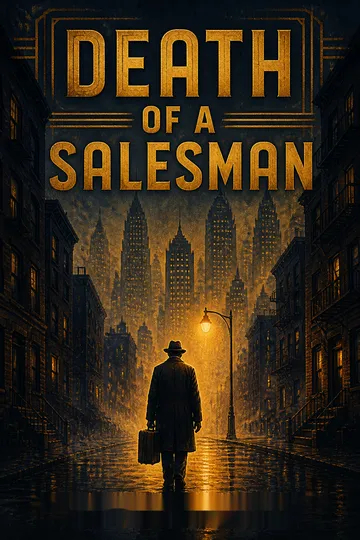
All My Sons receives generally positive reviews, with readers praising Miller's powerful storytelling, complex characters, and exploration of moral dilemmas. Many find the play emotionally impactful and relevant to contemporary issues. Some readers prefer it to "Death of a Salesman," while others note similarities between the two works. The play's themes of family, responsibility, and the American Dream resonate with audiences. Critics appreciate Miller's use of dramatic irony and his ability to create tension throughout the narrative.
Characters
Joe Keller
The self-made providerJoe is a machine-shop owner, husband to Kate, and father to Chris and Larry. He measures worth through work, money earned, and the security he can leave his children. Plainspoken and socially confident, he trusts practical explanations and expects loyalty to bind a family together. His wartime business dealings and public acquittal remain part of the neighborhood's memory, even as he tries to resume ordinary life. Joe's central psychological defense is to turn difficult choices into acts of provision: if he meant to help his family, he believes the act should be judged by that intention. His warmth is genuine, but his narrow definition of responsibility makes it hard for him to recognize claims beyond his household.
Kate Keller
The grieving gatekeeperKate is Joe's wife and the mother of Chris and Larry. She keeps Larry present through his untouched room, remembered belongings, and an unshakable belief that he may return. Her love is forceful and generous, but grief has narrowed her ability to imagine a future that does not include him. She reads ordinary events, including the fallen memorial tree, as signs because uncertainty is more bearable than final loss. Kate also senses that the family's past contains a truth Joe cannot safely face, though she tries to hold that truth at bay. Her struggle is not a lack of intelligence; it is the cost of making hope the condition on which the rest of the family must live.
Chris Keller
The idealist heirChris is Joe and Kate's surviving son, a veteran, and the man who hopes to marry Ann. He returned from war troubled by the deaths of the men under his command and by how quickly civilian life resumed. Their mutual sacrifice gave him a demanding idea of human obligation, yet he has not fully applied it to his own family. He loves his parents and has accepted the life Joe built for him, which makes his moral certainty difficult to act upon. Chris is affectionate, decisive in personal matters, and vulnerable to shame when his actions fall short of his ideals. His conflict is between the bonds that formed him and a responsibility he believes should extend to strangers.
Ann Deever
The clear-eyed belovedAnn is the daughter of Steve Deever, George's sister, and Larry's former fiancée. She grew up next door to the Kellers and returns from New York to pursue a future with Chris, whose steadiness has mattered to her for years. Ann has stopped organizing her life around Larry's disappearance, but she understands why Kate cannot do the same. Her loyalty does not prevent her from judging her father's actions or questioning the Kellers' version of events. She is gentle without being passive: when Chris and Kate avoid decisions, Ann insists that their choices have consequences for her life too. Her position between two families gives her unusual clarity, but it also makes every demand for truth personally costly.
George Deever
The returning accuserGeorge is Ann's brother, Steve's son, and a lawyer recently returned from the war. He comes to the Keller home after visiting his father in prison, carrying a new account of the factory scandal and a long history of affection for Kate and Joe. His belief in Chris once helped him accept Joe's acquittal; the visit to Steve breaks that trust. George's anger is sharpened by guilt over having stayed away from his father. He is not a detached investigator. He is trying to protect Ann from a choice he believes will bind her to the people who destroyed their family.
Jim Bayliss
The doctor who compromisedJim is the neighborhood doctor and Sue's husband. He once wanted to pursue medical research, but the demands of supporting a family drew him into conventional practice. His dry humor disguises a persistent dissatisfaction with the life he chose. Jim recognizes the strain beneath the Keller household's familiar routines and understands more about Joe's past than he says openly. He serves as a wary observer of Chris's idealism, aware that moral admiration can make ordinary compromises feel like failures. His own choices give that warning weight: he knows what it is to retreat from an aspiration and keep living with the knowledge.
Sue Bayliss
The uneasy neighborSue is Jim's wife and a former nurse. Practical, sharp, and frustrated by the strain of living beside the Kellers, she notices how Chris's high standards make Jim feel inadequate about abandoning research. She asks Ann to settle elsewhere, not from personal malice but from a need to protect her marriage from constant comparison. Sue also voices the neighborhood's suspicion that Joe's acquittal did not make him innocent. Her bluntness punctures the Kellers' assumption that friendly visits mean the past has been forgotten.
Frank Lubey
The hopeful astrologerFrank is Lydia's husband and a neighbor who spends his time on small projects, astrology, and community routines. At Kate's request, he calculates Larry's horoscope in the hope of finding a reason Larry could still be alive. His willingness to believe in the stars contrasts with Jim's skepticism and Chris's demand for evidence. Frank is kind, but his reassurance shows how easily good intentions can strengthen a comforting uncertainty. He also carries the ordinary domestic life George might have shared with Lydia, a reminder of the futures that continued for some people after the war.
Lydia Lubey
The life George missedLydia is Frank's wife and a neighbor who grew up alongside the Kellers and Deevers. Warm, lively, and now the mother of three, she represents the settled adulthood George might once have imagined with her. Her easy welcome for him exposes how much time has passed during his absence. Lydia is not simply a symbol of domestic happiness: her marriage and family are the result of choices made while other young people were at war, and she has made a real life within the limits available to her.
Larry Keller
The absent eldest sonLarry is Joe and Kate's elder son and Chris's brother, a pilot reported missing during the war. Though absent from the stage, he governs the family's habits: his room remains intact, Kate searches for signs of his return, and Ann's former engagement to him shapes her connection to Chris. Larry's disappearance allows each person to preserve a different understanding of what happened. He is remembered as a son, a brother, and a young man whose choices mattered to people beyond his family. The gap between those memories and the facts is one of the forces driving the play.
Steve Deever
The imprisoned partnerSteve is Ann and George's father and Joe's former business partner. He was imprisoned after defective aircraft parts from the factory were repaired and shipped during the war. He remains offstage, but his account of Joe's role changes George's understanding of the case and puts Ann's relationship with Chris under pressure. Steve is defined in the play by the collision between his responsibility for the defective parts and his claim that Joe directed the decision. His absence makes him both a father still loved by his children and a disputed witness whose story cannot be checked directly.
Bert
The child's pretend policemanBert is a neighborhood boy who plays at being a policeman under Joe's direction. His questions about Joe's imaginary jail turn the adult history of arrest and blame into a child's game, exposing how the past leaks into ordinary life.
Plot Devices
The fallen apple tree
A memorial turned omenThe apple tree was planted for Larry, so its collapse on the morning Ann returns makes Kate treat weather as a message about her missing son. The broken tree gives the family a shared object onto which they project opposing meanings: Kate sees a warning against accepting Larry's death, while Chris sees a physical event that cannot justify continued denial. Its removal later marks an effort to clear the yard of a memorial that has become part of the household's paralysis. The tree works as more than a symbol because Kate witnessed it break during a night disturbed by her dream, tying her private grief to the day's unfolding conflict.
Larry's horoscope
A horoscope prolongs hopeFrank calculates Larry's horoscope to determine whether the date he was reported missing was favorable. Kate believes a favorable date would make Larry's death unlikely, and Frank's conclusion briefly reinforces her refusal to accept his absence. The horoscope gives her a system of meaning when no body or grave has settled the question. Its dramatic function is not to prove anything, but to show how a sincere, neighborly attempt at comfort can keep a family from facing what it already suspects. The horoscope's weak evidence contrasts with the factual records and personal testimony that eventually challenge the Kellers' protective stories.
The defective cylinder heads
Parts expose culpabilityThe cracked cylinder heads are the physical center of the wartime case against Joe and Steve. Defective parts were repaired and shipped for use in military aircraft, and crashes killed pilots. Joe was acquitted while Steve was imprisoned, leaving the two families with sharply different versions of responsibility. The parts make the moral dispute concrete: a flaw in a manufactured object becomes a decision about production, risk, and who must bear the consequences. George's account of Steve's phone call and Joe's later inconsistency about being ill turn this industrial failure into evidence against the official family story.
Larry's final letter
The letter restores moral evidenceAnn has kept a letter Larry wrote shortly before the mission on which he disappeared. She initially holds it back, hoping Kate can accept that Larry is gone without being forced to read the document. When Kate's denial leaves Chris trapped between family loyalty and moral action, Ann uses the letter as evidence of Larry's final thoughts. It joins the missing pilot's fate to the conviction of Joe and Steve, and changes what the family can claim not to know. The letter functions as both private correspondence and a final judgment from someone whose absence has allowed others to speak for him.
Joe's imaginary jail
A child's game mirrors justiceJoe tells Bert that a jail exists in the Keller basement and treats the boy as a neighborhood policeman. The joke gives Joe a harmless role as the man who knows the law, but Kate reacts sharply because the case and its disputed blame remain alive beneath the family's easy routines. Bert's insistence that there are no bars makes the game especially pointed: the supposed jail is unseen, just as the Kellers try to keep the consequences of the past outside their visible home. The device links childhood play to adult evasion without making Bert understand the history he is repeating.
FAQ
Synopsis & Basic Details
What is All My Sons about?
- Family grapples with loss: The play centers on the Keller family, who are still dealing with the disappearance of their son Larry during World War II, while also navigating the return of Larry's former girlfriend, Ann.
- Secrets and moral conflict: The family's seemingly normal life is disrupted by the arrival of Ann's brother, George, who brings accusations about their father, Joe, and his role in a wartime scandal involving faulty airplane parts.
- Confronting the past: The play explores themes of guilt, responsibility, and the consequences of past actions as the family is forced to confront the truth about Larry's fate and Joe's involvement in the scandal.
Why should I read All My Sons?
- Moral complexity explored: The play delves into the gray areas of morality, showing how good intentions can lead to devastating consequences, prompting readers to question their own values.
- Intense family drama: The story is a gripping family drama with complex characters, emotional conflicts, and a tragic climax, making it a compelling and thought-provoking read.
- Timeless themes: The play's themes of war profiteering, personal responsibility, and the cost of denial remain relevant today, offering insights into human nature and societal issues.
What is the background of All My Sons?
- Post-WWII America: The play is set in post-World War II America, a time of both prosperity and moral reckoning, where the war's impact on individuals and families is still deeply felt.
- War profiteering scandal: The central conflict revolves around a scandal involving a factory that knowingly shipped faulty airplane parts during the war, highlighting the ethical compromises made in the name of profit.
- Social commentary: The play serves as a social commentary on the American Dream, questioning the values of success and material wealth when achieved at the expense of human lives.
What are the most memorable quotes in All My Sons?
- "I think to him they were all my sons.": This quote from Joe Keller reveals his belated understanding of his responsibility to all the pilots who died, not just his own son, highlighting the play's theme of universal responsibility.
- "You can be better! Once and for all you can know there's a universe of people outside and you're responsible to it...": Chris's impassioned plea to his mother encapsulates the play's central message about the need for a broader sense of responsibility beyond the family unit.
- "The compromise is always made.": Jim Bayliss's cynical observation reflects the play's exploration of how individuals often sacrifice their ideals for the sake of comfort and conformity, a key theme in the play.
What writing style, narrative choices, and literary techniques does Arthur Miller use?
- Realistic dialogue: Miller employs realistic dialogue that reveals character motivations and inner conflicts, making the characters feel authentic and relatable.
- Foreshadowing and symbolism: The play uses foreshadowing, such as the broken tree, and symbolism, like the recurring references to Larry, to create dramatic tension and deepen the thematic resonance.
- Tragic structure: The play follows a classic tragic structure, building tension through revelations and confrontations, leading to a devastating climax and a sense of catharsis.
Hidden Details & Subtle Connections
What are some minor details that add significant meaning?
- The broken tree's symbolism: The apple tree, broken by the wind, is not just a memorial to Larry but also a symbol of the family's shattered hopes and the fragility of their carefully constructed reality.
- Bert's "jail" game: The children's game about the jail in the basement, which Joe plays along with, foreshadows the real consequences of Joe's actions and the "prison" of guilt he ultimately faces.
- The recurring mention of "P-40s": The specific mention of P-40 airplanes, which Larry did not fly, highlights Joe's attempt to distance himself from the deaths of the pilots, revealing his self-deception.
What are some subtle foreshadowing and callbacks?
- Kate's dream of Larry falling: Kate's dream of Larry falling from the sky foreshadows the revelation of his death and the circumstances surrounding it, creating a sense of impending doom.
- Frank's horoscope: Frank's attempt to create a horoscope for Larry, trying to prove he could not have died on a "favorable" day, is a callback to Kate's denial and her desperate clinging to hope.
- Sue's warning to Ann: Sue's advice to Ann to move away from the neighborhood foreshadows the deep-seated resentment and knowledge of Joe's guilt that exists within the community.
What are some unexpected character connections?
- Jim's understanding of Joe: Jim's quiet understanding of Joe's guilt, despite not being directly involved, reveals a deeper awareness of the community's unspoken truths and the burden of secrets.
- Lydia and George's past: The brief interaction between Lydia and George highlights a past connection and a sense of what could have been, contrasting with the present tragedy and loss.
- Sue's resentment of Chris: Sue's resentment of Chris's idealism, which she sees as a threat to her husband's contentment, reveals a hidden tension and a contrasting perspective on the play's themes.
Who are the most significant supporting characters?
- Jim Bayliss: Jim serves as a voice of reason and a moral compass, offering insights into the characters' motivations and the play's broader themes, often acting as a detached observer.
- Sue Bayliss: Sue represents the pragmatic, self-interested perspective, highlighting the conflict between idealism and reality, and revealing the community's awareness of Joe's guilt.
- Frank Lubey: Frank's belief in astrology and his attempts to find meaning in Larry's death provide a contrasting perspective on the play's themes of fate and responsibility, while also serving as comic relief.
Psychological, Emotional, & Relational Analysis
What are some unspoken motivations of the characters?
- Joe's need for validation: Joe's actions are driven by a deep-seated need for validation and a desire to be seen as a successful provider, leading him to prioritize his business over morality.
- Kate's fear of truth: Kate's denial of Larry's death is motivated by a fear of confronting the truth about Joe's guilt and the devastating consequences it would have on her family.
- Chris's guilt and idealism: Chris's idealism is partly a response to his survivor's guilt, as he struggles to reconcile his experiences in the war with the materialism and moral compromises of his home life.
What psychological complexities do the characters exhibit?
- Joe's self-deception: Joe's ability to rationalize his actions and convince himself that he acted for his family's benefit reveals a complex psychological defense mechanism against his guilt.
- Kate's denial and fragility: Kate's unwavering denial of Larry's death and her emotional fragility highlight the psychological toll of grief and the lengths to which she will go to protect her family.
- Chris's internal conflict: Chris's struggle to reconcile his love for his father with his moral convictions reveals a deep internal conflict and a sense of disillusionment with the world around him.
What are the major emotional turning points?
- Chris's discovery of Joe's guilt: Chris's realization that his father knowingly shipped faulty parts is a major emotional turning point, shattering his idealized image of Joe and leading to a profound sense of betrayal.
- The revelation of Larry's letter: The reading of Larry's letter is a pivotal moment, forcing Kate to confront the reality of her son's death and the devastating impact of Joe's actions.
- Joe's suicide: Joe's suicide is the ultimate emotional climax, revealing the depth of his guilt and the tragic consequences of his choices, leaving the family in a state of grief and despair.
How do relationship dynamics evolve?
- Chris and Joe's relationship: The relationship between Chris and Joe evolves from one of admiration and love to one of disillusionment and anger, as Chris confronts the truth about his father's actions.
- Kate and Joe's relationship: Kate and Joe's relationship is strained by the weight of their shared secret, with Kate's denial and Joe's guilt creating a deep emotional chasm between them.
- Chris and Ann's relationship: Chris and Ann's relationship is tested by the revelations about Joe and Larry, forcing them to confront the past and the moral implications of their love for each other.
Interpretation & Debate
Which parts of the story remain ambiguous or open-ended?
- Joe's true intentions: While Joe admits to shipping the faulty parts, the extent of his awareness of their danger remains somewhat ambiguous, leaving room for debate about his level of culpability.
- Chris's future: The play ends with Chris's grief and disillusionment, leaving his future uncertain and open to interpretation, raising questions about his ability to move on from the tragedy.
- The possibility of forgiveness: The play does not offer a clear resolution regarding forgiveness, leaving the audience to ponder whether the characters can ever truly reconcile with each other and their past actions.
What are some debatable, controversial scenes or moments in All My Sons?
- Joe's motivations: Joe's claim that he acted for his family's benefit is a controversial point, raising questions about whether his actions were truly motivated by love or by self-interest and greed.
- Chris's moral stance: Chris's decision not to turn his father in, despite his moral outrage, is a debatable point, prompting discussions about the limits of personal responsibility and the complexities of family loyalty.
- Kate's role in the tragedy: Kate's denial and her attempts to protect Joe are controversial, raising questions about her complicity in the tragedy and the extent of her responsibility for the family's downfall.
All My Sons Ending Explained: How It Ends & What It Means
- Joe's suicide as atonement: Joe's suicide is a final act of atonement, driven by the overwhelming guilt and the realization of the harm he has caused, but it also leaves the family with unresolved grief and questions.
- The cycle of guilt and responsibility: The ending highlights the cyclical nature of guilt and responsibility, as Chris is left to grapple with the legacy of his father's actions and the moral implications for his own life.
- The enduring impact of choices: The play's ending underscores the enduring impact of choices, showing how past actions can have devastating consequences that ripple through generations, leaving a lasting legacy of pain and loss.
About the Author
Other books by Arthur Miller


Download PDF
Download EPUB
.epub digital book format is ideal for reading ebooks on phones, tablets, and e-readers.








