


Plot Summary
Prologue
Nearly thirteen, Aiden13 explores the forbidden ruin at the back of his family’s property and falls through the ground into a buried cellar. Rescuers lower supplies and a blanket while his parents and little sister wait above.
Aiden13 clings to an old wooden box he found among the rubble, imagining his forensic scientist father will help him open it. When a rescuer finally reaches him, Aiden13 hands over the box. The man notices faint lettering carved into its lid and reads it as a single word: FOREVER.
The prologue gives the novel a second clock, one that seems unrelated to Everly and Isaac until the closing pages. Aiden’s fall turns curiosity into physical peril, while the box makes family history feel less like a story than an object that can survive underground. The apparent inscription, FOREVER, plants the book’s central tension between permanence and change. Its meaning is deliberately incomplete here. Aiden’s confidence that his father can make sense of the find also frames forensic knowledge as a way to recover what time and violence have obscured.
The Night the Lights Broke
At a fashion launch, twenty-four-year-old Everly Cross1 hears that designer Casey Abner may make her a star. Her husband,3 Jasper,3 celebrates her success and talks about a family they might have later, while Everly1 keeps her career and independence in view. She has already refused an anonymous couple’s lucrative offer to use her eggs as a surrogate, a decision Jasper3 did not support.
After the party, she goes to the kitchen for cranberry juice, leaving Jasper3 in the foyer. A gunshot cracks through the house. Everly1 finds him facedown and bleeding, then a masked man drags her away before she can reach him. She fights, but a needle at her neck steals her strength, and she is carried into the night.
Everly’s abduction destroys a life that is not merely comfortable but newly self-authored. Modeling gives her a public identity, while her scientific ambitions and refusal to become a surrogate mark the limits she wants to set on other people’s claims over her body. Jasper’s enthusiasm for a future family is loving, yet their disagreement reveals how easily affection can coexist with unequal assumptions. The attack then converts a private decision into a trap: Everly has no way to know whether her refusal mattered. Her first loss is not only Jasper’s apparent death, but the sudden removal of choice from every part of her future.
A Case Closed Too Soon
Two years after Sara Carlisle4 disappeared, former detective Isaac Porter2 learns that the department has closed her case. A convicted serial killer has claimed Sara4 as one of his victims, but Isaac2 believes the confession is false and resents that investigators accepted it without finding her body. His old partner7 Tanner7 warns him that his grief and temper helped push him out of the department.
Isaac2 refuses to accept the official ending. To reach the people behind a string of disappearances, he lures a criminal informant named Weasel14 to a ravine and offers him to trafficker10 Dolph Larsson10 as bait. Dolph10 rejects Weasel14 as the wrong kind of captive, then has his men drug and beat Isaac.2 Isaac2 wakes chained in a guarded room.
Isaac’s investigation is driven by a dangerous fusion of professional instinct and personal guilt. He is right that the cases connect, but being right does not make him emotionally neutral, and the department uses that distinction to dismiss him. Rather than accept the limits of evidence, he tries to become evidence’s substitute, entering the criminal system without a reliable exit plan. His choice exposes both his competence and his self-destructive streak. He does not simply want Sara found; he wants the world to acknowledge that he failed to protect her. That need turns justice into a personal debt he is willing to pay with his own life.
A Wall Between Prisoners
Isaac2 wakes with broken ribs, a damaged shoulder, and a chain fixed to his ankle. An older man with mismatched eyes5 visits, confirms that Isaac2 is valuable to a wealthy client, and leaves a silent guard named Roger11 to watch him. Through the wall, Isaac2 hears another prisoner. She introduces herself as Everly,1 and he recognizes the name of the model1 who vanished after her husband3 was shot.
Everly1 says she has been held for two years and has lost count of the people brought into Isaac’s2 room before him. She has watched them disappear, but she does not know where they go. Isaac2 insists he will escape. Everly1 has heard that promise before and tells him that hope can become another way to be hurt.
The wall is at once a barrier, a communication channel, and the first structure that makes intimacy possible. Everly has learned to treat promises cautiously because each previous captive attached hope to survival and then vanished. Isaac’s insistence that he will escape is therefore not yet reassuring; it repeats a pattern she has seen fail. Their first connection is built from a conflict of knowledge: he trusts action and improvisation, while she has accumulated the grim data of a long imprisonment. Neither can see the other, so voice and inference become their only means of recognizing a person beyond the cell’s assigned role.
The Pick Remembers Sara
Everly1 explains that she survives by inventing lives for the belongings Roger11 leaves in her room. She imagines a braided bracelet belonged to a kind veterinarian, then describes a glittering blue guitar pick taken from a prisoner who loved music. Isaac2 reacts sharply when she says the missing woman’s invented name was Annie and describes her singing Coldplay’s The Scientist.
He tells Everly1 the story of a girl who learned guitar, forgave the boy who once mocked her singing, and disappeared. Everly1 recognizes Sara4 in the details and asks whether that was her name. Isaac2 will not confirm it, but the silence tells her enough. She says Sara4 sang for her too, giving Isaac2 a final human connection to his sister’s4 last days.
Everly’s invented biographies are not a denial of death so much as a refusal to let the traffickers own the victims’ identities. She turns confiscated objects into witnesses, restoring names, work, and affection where the captors leave only inventory. The guitar pick changes that private ritual: for Isaac, it is not an anonymous relic but the tangible remainder of Sara’s music. Everly’s story-making allows his grief to approach him indirectly, without demanding a confession he cannot yet give. The two prisoners begin to share not just information, but a form of mourning. Their bond grows through the careful handling of what the institution has tried to make disposable.
The Name Behind Nick
The captor5 returns with a small hourglass, the signal Everly1 associates with an imminent death, then explains that his buyer wants a trained challenger. During the visit, he calls Isaac2 by his real name and boasts that the musician Sara4 was taken from a coffeehouse after Isaac2 failed to collect her.
Isaac’s hidden identity collapses: the man he calls Nick is the detective who has spent two years pursuing Sara’s4 case. Vincent5 then turns on Everly,1 pulling her from her room and locking her in a dark basement cell. Isaac2 cannot reach her through the wall and, in the chaos, does not stop Vincent.5 Everly1 survives by counting seconds and rationing the bread and water Roger11 brings, while Isaac2 waits alone and furious.
Vincent weaponizes knowledge rather than simply withholding it. By naming Isaac, he strips away the protective fiction that let the detective pretend he was still in control of the investigation. He also reframes Sara’s disappearance as Isaac’s personal failure, a message aimed precisely at the shame that has kept Isaac isolated. Everly’s removal exposes the limits of their new intimacy: trust can form through a wall, but it cannot yet overcome the physical power of the captors. Her return to counting seconds is a survival technique, not surrender. Isaac’s fury is equally double-edged, giving him purpose while threatening to make him reckless.
A Wire Through the Wall
After Roger11 returns Everly1 to her room, she confronts Isaac2 for letting Vincent5 take her. He admits he could not break the wall or reach her, then tells her that the captor called him Isaac2 because it is his real name. The two share more of their pasts, including Isaac’s2 troubled childhood and the sister4 who gave him a reason to become a detective.
When another egg retrieval leaves Everly1 feverish and in severe pain, she notices a thin wire woven into a friendship bracelet Roger11 gave her. She hides it until he brings food, then slips it into his pocket while pretending to need his help. Isaac2 distracts Roger11 with a furious outburst, giving himself time to take the wire and begin working on his ankle cuff.
The escape plan changes Everly from the person Isaac hopes to rescue into an active partner whose observation makes escape possible. Her discovery depends on attention sharpened by confinement: she has studied the objects and routines that others dismiss. Yet the plan asks her to exploit Roger’s desire for her, making her body both a resource she is forced to surrender to the traffickers and an instrument she deliberately uses against them. Isaac’s noise supplies a distraction, but Everly takes the greater personal risk. Their cooperation offers a different model of agency from brute force: each contributes a skill the other lacks.
Freedom Costs a Second Capture
Isaac2 picks the double-locking cuff, knocks Roger11 unconscious, and takes his keycard. Rather than open Everly’s1 door, he heads for the stairwell, planning to reach the outside and get help. An alarm sounds before he can get clear, and Everly1 is left exposed. Vincent5 arrives with Dolph10 and Roger,11 discovers the wire, and shoots Roger11 in front of her.
He claims Isaac2 has been caught, then orders that Everly1 be kept alive. Isaac2 hides in a dumpster while guards search the compound. Hearing them speak about Everly1 as a commodity, he abandons his plan to flee and circles back. Everly1 waits in her room, sick and grieving, until Isaac’s2 voice reaches her from outside her door and he asks for the entry code.
Isaac’s first escape forces him to choose between the strategic logic of getting help and the immediate moral cost of leaving Everly behind. He chooses distance at first, then reverses course when he hears how the captors regard her. That return is an important change in his priorities, but it does not erase the danger his first decision creates. Roger’s murder also destroys Everly’s fragile strategy of managing a guard through apparent compliance. Vincent makes plain that kindness was never a protection, only a temporary opening. The scene binds the lovers through action, while insisting that care under coercion can be compromised, frightening, and far from clean.
The Door Code Changes
Isaac2 reaches Everly’s1 door, but the familiar sequence no longer opens it. He tries the numbers she has remembered, while she calls out alternatives from inside. Vincent5 and his men catch him before he can force the lock. Everly1 hears the struggle and understands that Isaac2 came back for her, but she cannot get through the door.
Isaac2 is taken to the basement and restrained in a cage, where Vincent5 uses electric shocks and a cattle prod to punish him. The captor5 reveals that the cameras record sound when prisoners shout, though he ignored their quieter conversations. He then forces Isaac2 to watch a recording of Sara’s4 final captivity, turning the footage into a tool of revenge and a demonstration of his control.
The changed code makes a technical obstacle carry the emotional weight of a failed promise. Isaac has returned, but physical proximity cannot overcome Vincent’s control of the facility. Everly’s helplessness is sharpened by hearing the attempt itself: she knows Isaac is there, and that knowledge cannot open the door. Vincent’s recording of Sara is not information for its own sake; it makes Isaac witness what he could not prevent. The revelation about the cameras further destabilizes the prisoners’ sense of privacy, turning their conversations into potential evidence against them. Their intimacy remains real, but the captor has been listening from the margins.
A Choice Made in Sand
Vincent5 brings Everly1 to the basement and presents two captive men: Isaac,2 bound in a chair, and a second man with a sack over his head. He tells Everly1 she may choose one to be released while the other becomes the hunter’s prey. When the second man is uncovered, Everly1 recognizes Jasper,3 alive despite the news she was given in captivity.
The revelation is Vincent’s5 trap: Everly1 must choose between the husband3 she believed dead and the man who returned for her.2 She chooses Jasper.3 Vincent5 places the hourglass before Isaac2 and sends Everly1 and Jasper3 to separate cages. Jasper3 tells Everly1 they can escape together, while she watches Isaac2 remain motionless, believing her choice has destroyed the person she came to trust.
Vincent turns moral choice into theater, designing a situation in which any decision can be used to injure the chooser. Everly’s selection of Jasper is not a simple preference between two men. She acts with the information and attachment available to her, choosing the husband she thought she had lost. Yet the choice has a devastating consequence for Isaac, whose return to save her has made him emotionally vulnerable. The hourglass gives the decision a visible deadline, converting deliberation into spectacle. Everly’s guilt begins before she knows what Vincent will do next, revealing how effectively coercion can make victims feel responsible for the violence arranged around them.
The Raid Burns Open
Isaac2 is bound and prepared for the wealthy buyer, while Everly1 and Jasper3 remain locked in cages. Tanner,7 Isaac’s former partner,7 arrives posing as the buyer’s son and signals the waiting law-enforcement team. During the raid, Isaac2 is freed, but Vincent5 triggers explosives across the abandoned laboratory and escapes into the dark. Isaac2 pursues him outside, where Dolph10 attacks and pins him down.
Isaac2 takes Dolph’s10 gun and shoots him, then orders Tanner7 to find Everly1 rather than follow him. Firefighters enter the burning building and cut Everly1 and Jasper3 out of their cages. Everly1 reaches daylight alive, but she cannot find Isaac.2 Tanner7 tells her the other prisoners were rescued, while Isaac2 disappears into the woods after Vincent.5
The raid breaks the facility’s structure, but it does not deliver a clean rescue. Tanner’s disguise makes use of the buyers’ own appetite for secrecy, turning their transaction into a route for law enforcement. Isaac’s escape is both physical and moral: he kills Dolph, then directs Tanner toward the captives instead of himself. That choice shows how far he has moved from solitary vengeance, even as he continues pursuing Vincent. For Everly, rescue is incomplete because Isaac is absent and the building is burning. The scene resists the fantasy that justice arrives as a single decisive intervention. It frees bodies while leaving grief and danger in motion.
The Rescue Has Another Wound
Everly1 is treated in hospital for ovarian hyperstimulation syndrome after the forced egg retrievals. Jasper3 survives the captivity too, but he has removed his wedding ring, and their reunion carries the awkwardness of two people who grieved separately. When Everly1 is discharged, she learns the truth: Jasper3 and her best friend6 Allison6 became romantically involved after believing Everly1 was dead.
She leaves for San Francisco rather than try to resume a marriage that no longer exists. Isaac2 is hospitalized under Tanner’s7 name and kept out of official records, while Tanner7 tells Everly1 that no evidence of him was found. She cannot tell whether Isaac2 escaped, died, or was only a voice she has lost, so her freedom begins with another absence.
Everly’s return exposes a second captivity, one made from the expectations she carried into survival. She had imagined recovery as a reunion with the life she left, but the people she loved have changed in response to her disappearance. Jasper’s ringless hand makes that change visible before anyone explains it. Her anger at him and Allison is inseparable from grief for the future she thought awaited her. Meanwhile, Isaac is alive but deliberately erased from the official account. The novel treats rescue not as a restoration of the past but as a rupture between past and present, leaving Everly to build an identity that can hold both.
A Life Built Elsewhere
About a year later, Everly1 has settled in San Francisco, where she is less recognizable and no longer works as a model. She visits Tanner7 monthly, bringing baked goods and pressing him for news about Isaac.2 He gives her no confirmation that the detective2 survived. To reclaim control over her body and visibility, Everly1 takes a topless dancing job at a club run by Queenie,9 an old friend of her mother.9
She chooses the stage name Bee and gradually learns the routines, the staff, and the rules of the room. Isaac,2 meanwhile, has crossed continents attacking Vincent’s5 trafficking sites and freeing captives. When Vincent5 sends a photograph that reveals Everly’s1 location, Isaac2 returns to San Francisco and begins watching her from the shadows.
The year apart gives each protagonist a different method of surviving the aftermath. Everly chooses visibility on terms she controls, a sharp reversal from the fashion industry and the captivity that once made her body an asset to others. Her work at the club is not presented as uncomplicated healing; it is an experiment in agency that leaves her vulnerable to scrutiny. Isaac chooses movement, dismantling Vincent’s network while avoiding emotional connection. Both remain shaped by the same crime, but their coping strategies pull in opposite directions. The photograph that draws Isaac back shows how Vincent can still manipulate their lives, even when the two survivors are thousands of miles apart.
A Ghost in the Club
Everly1 notices a dark-haired stranger2 watching her first performance, then finds him outside the club, where he refuses to introduce himself and walks away. He returns in later weeks, often leaving before she can approach. During another shift, she spots him again and follows the possibility that he is the missing Isaac.2
A customer interrupts her before she can reach him, and he vanishes into the crowd. Jasper3 also reappears, asking Everly1 to consider a modeling opportunity and saying he has important news. Isaac2 sees them together and grows jealous, but still will not explain who he is. Everly’s1 old life and her new desire collide in public, where every glance makes her wonder whether the man she trusted2 is truly back.
The club becomes a place where Everly can be looked at without being known, until Isaac’s repeated presence turns that separation into a source of pain. She has reclaimed performance as choice, yet his silence makes her feel watched rather than met. His evasions reproduce the central structure of their captivity: she senses a person on the other side of a boundary but cannot compel him to cross it. Jasper’s arrival complicates the encounter because he represents both the life she lost and the betrayal that followed. The scene’s tension comes from competing forms of recognition. Everly wants not just a familiar face, but an honest account of what survived.
The Pink Room Reunion
Everly1 accepts a prepaid private dance in the club’s pink room and discovers the client is the man who calls her Bee.2 Isaac2 confirms his identity through the characters they once invented across the wall, then their guarded argument turns physical and intimate. The encounter gives them the first contact they lacked in captivity, but Isaac2 still leaves without explaining his silence.
Later, he returns to her apartment hotel and they sleep together again. Everly1 confronts him about disappearing after the rescue, while Isaac2 admits that being close to her is harder than speaking through a wall. Their bond is unmistakable, but neither has agreed what it means, and Everly1 remains wary of being treated as a temporary refuge.
The first face-to-face intimacy fulfills a longing while exposing how little touch can repair by itself. Everly and Isaac know each other’s private histories, fantasies, and grief, yet they have not established the trust that ordinary relationships require. Sex briefly lets them inhabit the connection their voices built, but Isaac’s continued withdrawal makes it vulnerable to becoming another compartment. Everly’s insistence on being seen as a person, not merely desired, is especially important after years when others treated her as biological material. Their relationship is compelling precisely because intimacy does not solve the injury. It gives them a reason to confront it.
Truth Before the Runway
When Everly1 sees Tanner’s7 name on Isaac’s2 phone, she presses him until he admits he was a detective investigating the linked disappearances. Isaac2 explains that he knew who Everly1 was before she introduced herself, though he was not assigned to her case. He also tells her that Sara4 was his younger half sister4 and that his search for her drove him into Vincent’s5 network.
Tanner7 warns that Vincent5 has traced Everly1 to San Francisco, and Isaac2 promises to protect her. Everly1 decides to accept a runway invitation from designer Abner, believing the public event will help her reclaim a career she left behind. Isaac2 objects to the risk, but she leaves with Jasper3 before they can resolve the argument.
The revelation changes the meaning of the relationship’s beginning. Isaac was not simply a stranger who happened to wake in the next cell; he arrived with knowledge of Everly’s public identity and a private investigation already underway. His concealment protected his cover, but it also deprived Everly of informed trust. Her decision to walk the runway is therefore more than a career choice. It asserts her right to make a public life without asking Isaac’s permission. His protectiveness is understandable given Vincent’s threat, yet it repeats the control she has spent years escaping. Love must learn to distinguish care from authority.
The Runway Becomes a Trap
At the runway show, Everly’s1 former best friend6 Allison6 is being held elsewhere, and Vincent5 has coerced Jasper3 into bringing Everly1 to the venue. The event’s planned hydrogen sulfide attack is disrupted when Isaac2 evacuates the audience, but Vincent5 reaches the runway, kills Jasper,3 and drugs Everly.1 He takes her onto a yacht and threatens her with the broken handle of a prop umbrella.
Isaac2 follows in a stolen boat, kills the hired man who blocks him, and confronts Vincent5 on deck. Everly1 draws Vincent’s5 drained hourglass from his belt and throws it to Isaac.2 Isaac2 smashes it, then uses a glass shard to cut Vincent’s5 throat. Vincent5 dies at sea, but the umbrella has pierced Isaac’s2 shoulder, and he collapses beside Everly1 in the rain.
The climax gathers the novel’s competing forms of control into one public spectacle: fashion, violence, money, and the performance of rescue. Vincent turns a runway into a stage for mass murder, while Jasper’s coerced involvement makes the past return through a choice he cannot freely make. Everly is not merely rescued by Isaac; she supplies the opening that lets him kill Vincent. The hourglass, once Vincent’s instrument for making death theatrical, becomes the weapon that ends his power. Yet victory is costly and imperfect. Jasper dies, Isaac is gravely wounded, and Everly’s survival cannot restore what the captor has taken.
After the Sirens
Police and firefighters recover the remaining captives, and Tanner7 locates Allison6 alive, bound in a hotel room. Everly1 recovers from the egg retrieval complications while Isaac2 receives treatment for his shoulder, then hides from official scrutiny as Tanner7 protects his identity.
Jasper’s3 funeral leaves Everly1 and Allison6 grieving a man3 who had tried to save both of them. Everly1 eventually visits Allison6 and learns that she is packing up the house she shared with Jasper.3
They admit how grief and silence kept them apart, then agree to try rebuilding their friendship. Everly1 also begins studying forensic science and takes work at a wildlife sanctuary. Isaac2 stays beside her, though their relationship remains a gradual negotiation rather than a tidy cure for trauma.
The aftermath refuses to make justice synonymous with emotional repair. Vincent is gone, the captives are free, and Allison is safe, but none of those outcomes cancels Jasper’s death or the damage to Everly’s friendships. The funeral gives grief a public ritual, while the later conversation with Allison gives it a more difficult private form: accountability without pretending the past can be undone. Everly’s move toward forensic science converts her habits of close observation into a vocation that may help other families seek answers. Her future is neither a return to modeling nor an escape from memory. It is an attempt to make useful meaning from what remains.
A Future With Open Doors
Everly1 and Isaac2 move into an old house in the foothills, where she works at a wildlife sanctuary and studies forensic science. Their life together remains imperfect, shaped by his reluctance to name feelings and her need to reclaim decisions for herself.
Everly1 reconciles with Allison,6 shares coffee with her mother8 and Queenie,9 and begins imagining a family without treating it as an obligation. Isaac2 learns to offer tenderness in small, concrete ways, including bringing her wildflowers.
One day he blindfolds Everly,1 then reveals a sledgehammer beside a wall in their house. She attacks the plaster, and Isaac2 joins her until they break through into the next room. The opening becomes a physical answer to the walls that once kept them alive and apart.
The house gives the lovers a setting in which renovation can be chosen rather than imposed. Their destruction of a wall echoes the prison’s architecture, but the difference is consent: Everly controls the tool, Isaac joins only when she needs him, and the opening leads to a room they can inhabit together. The scene does not claim that trauma disappears once represented physically. Instead, the demolition lets Everly express anger and grief through an action that produces space rather than confinement. Isaac’s participation is a form of care that does not take the hammer from her. Their future depends on repeatedly making that distinction.
The Inscription Changes
The epilogue returns to Aiden13 after his cellar rescue. In his father’s forensic office, he watches the old hourglass examined and learns that it contains human ashes, not sand, and that the remains may belong to a criminal from a century earlier. His father’s DNA research connects the ashes to an unsolved historical case, giving Aiden’s13 curiosity a real investigative trail to follow.
The wooden box is cleaned, revealing that its inscription was not the single word FOREVER after all. It reads FOR EVERLY. Aiden13 carries the box home, still imagining a future in forensic science, while the hourglass remains evidence rather than a solved family keepsake.
The closing frame revises the prologue’s apparent word, changing an abstract claim of permanence into a dedication to Everly. That small space between FOR and EVERLY transforms the object from a prophecy into a link between generations. The ashes also place Vincent’s crimes within a longer history of violence and concealment, suggesting that evidence can outlive the institutions that failed to resolve it. Aiden’s excitement mirrors Everly’s own investigative curiosity, but the book leaves the historical case partly open. Its ending is therefore both a resolution and a handoff: the survivors build a life, while the next generation inherits questions worth pursuing.
Epilogue
In the epilogue, Aiden13 watches his father’s forensic colleague examine the recovered hourglass. The contents are human ashes, and DNA comparisons suggest they belong to a long-dead criminal whose body was never found.
Aiden’s father13 connects the remains to a century-old case. The cleaned wooden box reveals the inscription that the rescuer misread in the prologue: it says FOR EVERLY, not FOREVER. Aiden13 leaves with the box, eager to learn more, while the hourglass stays behind as evidence.
The epilogue changes a small reading error into the novel’s final act of reinterpretation. FOREVER promises permanence, while FOR EVERLY names a person and turns the inscription into an intimate dedication. The distinction suits a story in which love cannot undo loss but can change what survivors make from it. The old ashes also suggest that violence leaves material traces even when a body, a name, or a full account has been withheld. Aiden’s forensic curiosity gives that trace a future investigator, but the unresolved historical case remains open. The ending offers continuity without claiming that every wound or mystery has been closed.
Analysis
Irreversible builds its romance inside an argument about agency. Everly1 has already been told what her body is worth by a modeling industry, a husband3 eager for a family, and a trafficking operation that harvests her eggs. Her recovery therefore cannot mean simply choosing a new partner. It must include choosing how she works, whether she wants children, where she lives, and what kind of visibility she can tolerate. Isaac’s2 protective impulse is similarly double-edged. It grows from a real history of failing to reach Sara,4 but it can become another attempt to decide what danger Everly1 is allowed to face. Their connection deepens only when survival requires cooperation rather than possession.
The novel’s architecture makes communication both intimate and compromised. The wall lets Everly1 and Isaac2 build trust through voice, imagination, and carefully shared memories, but Vincent5 can still exploit the physical separation and monitor their attempts to survive. Everly’s1 stories about prisoners restore personhood to people reduced to evidence or merchandise. Isaac’s aliases, by contrast, show how a protective identity can harden into emotional evasion. The blue guitar pick links these strategies: it lets memory travel across the wall, then becomes a tangible gift after escape.
The book also refuses to present justice as a clean return to normal. Vincent’s5 death ends his immediate power, not the grief, medical consequences, betrayal, or uncertainty he leaves behind. Jasper’s3 death and the rupture with Allison6 prevent rescue from restoring Everly’s1 former life. Her move toward forensic science offers a grounded response to that loss: she wants to help the people whose voices have been erased by finding what can be proven. Finally, the broken wall in her home revises the prison’s central image. Everly1 does not erase what happened; she chooses when, where, and with whom a barrier comes down.
Review Summary
Irreversible by Jennifer Hartmann and Chelley St. Clair is a dark romance thriller that has received mixed reviews. Many readers praise its gripping plot, emotional depth, and memorable characters, while others criticize its pacing and character development. The story follows Everly and Isaac, who form a bond while held captive. Some readers found the book captivating and intense, while others felt it didn't live up to Hartmann's previous work. Despite mixed opinions, the book's unique premise and suspenseful elements have intrigued many readers.
People Also Read



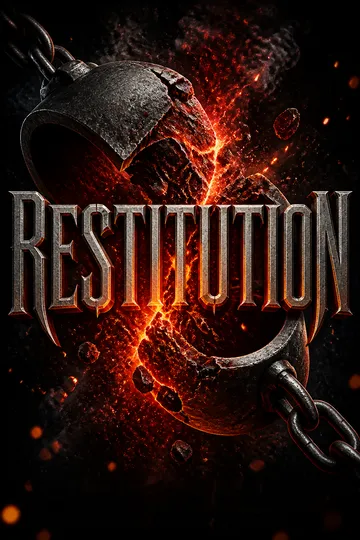






Characters
Everly Cross
The stubborn survivorEverly is a model with a scientist’s habits of observation and a strong desire to choose her own future. Before her captivity, she is drawn to entomology, values her friendship with Allison6, and loves her husband Jasper3, yet she is uneasy when other people decide what her body or career should mean. Imaginative and empathetic, she invents biographies for the possessions left by other prisoners, preserving their individuality when their captors treat them as merchandise. Her resilience is not simple fearlessness: she often survives by watching, waiting, and adapting. She wants connection, but also needs the freedom to define its terms.
Isaac Porter
The relentless detectiveIsaac is a former Los Angeles detective whose instincts connect a series of disappearances, including that of his younger half sister, Sara4. He is observant, skilled at undercover work, and volatile when institutions dismiss evidence he believes matters. His hard exterior protects a deeply rooted fear that he is inherently dangerous because of his origins and family history. He distrusts attachment partly because he expects loss and partly because he believes he is unworthy of care. Everly’s1 conversations force him to reveal the history beneath his aliases and sarcasm. His central struggle is not whether he can fight, but whether he can accept help without surrendering his independence.
Jasper Cross
Everly’s polished husbandJasper is Everly’s1 husband and a successful talent agent who helped open the door to her modeling career. Attentive, affectionate, and proud of her success, he represents the stable life she once imagined building. He also wants a family and has to negotiate that desire against Everly’s1 ambitions and timing. Jasper’s polished manners and confidence can make him seem secure, but he is not untouched by fear or grief. His relationship with Everly1 is shaped by love, expectation, and the uncertainty of how two people can continue after a life-changing rupture.
Sara Carlisle
Isaac’s musical sisterSara is Isaac’s2 younger half sister, a gifted singer and guitarist who works near a coffeehouse stage. She sees possibilities in Isaac2 that he cannot see in himself, encouraging his interest in protecting people and resisting his self-destructive habits. Music is her language of connection, especially the songs she plays for the people she loves. Sara’s capacity for forgiveness contrasts with Isaac’s2 harsh judgment of himself and the world. Though absent from much of the present action, her stories and the blue guitar pick help Everly1 and Isaac2 understand each other before either can speak openly about what they have lost.
Leonard Vincent
The calculating traffickerLeonard Vincent is an elegant, theatrical businessman who hides a criminal enterprise behind expensive clothes, polished manners, and claims of authority. He treats people as assets to be acquired for clients who want organs, eggs, or other illicit services. His meticulous control is paired with a taste for games, ceremony, and watching captives react under pressure. Vincent’s self-image as a superior strategist makes him especially dangerous: he interprets cruelty as proof of intelligence and uses other people’s bonds as leverage. He prefers to control not only what happens to his victims, but also the story they are forced to believe about it.
Allison James
Everly’s closest friendAllison is Everly’s1 closest friend, quick-witted, affectionate, and candid about romantic disappointments. Before Everly1 disappears, the two exchange jokes and confide in each other with an ease built over years. Allison’s warmth makes her a source of home beyond Everly’s1 marriage, but grief and uncertainty can make their bond difficult to navigate. She is not simply a cheerful confidante; she has her own needs, losses, and limits. The friendship matters because it represents a form of chosen family that must be actively rebuilt when life has changed both people.
Tanner
Isaac’s loyal former partnerTanner is Isaac’s2 former police partner and one of the few people willing to challenge him without abandoning him. He understands Isaac’s2 investigative instincts but also sees how grief and anger impair his judgment. Their friendship is strained by Isaac’s2 resentment over being pushed out of the department, yet Tanner continues to look for ways to help. He is practical, socially perceptive, and more patient than Isaac2 expects. His concern connects official investigation to personal loyalty, and his willingness to take risks makes him an important bridge between Isaac’s2 private pursuit and a coordinated rescue.
Jillian
Everly’s candid motherJillian raised Everly1 while working as an exotic dancer and remains a loving, outspoken presence in her life. She taught her daughter1 to think independently and never treated her own work as something shameful. After Everly’s1 disappearance, Jillian builds a bond with Allison6 and holds on to her belief that her daughter1 is alive. She offers comfort, but she is also honest enough to challenge Everly1 when isolation begins to resemble avoidance. Her mix of tenderness and bluntness helps Everly1 imagine a future that is not governed only by what she has lost.
Queenie
The club’s steady mentorQueenie is an experienced club manager and an old friend of Jillian8 who knew Everly1 when she was a child. She welcomes Everly1 into the club’s community and encourages her to treat performance as a choice rather than a source of shame. Warm but unsentimental, Queenie recognizes fear without mistaking it for weakness. She gives Everly1 both practical advice and a place to be seen without returning to the public identity that once defined her. Her support helps make the club a chosen workplace and a provisional refuge.
Dolph Larsson
Vincent’s brutal brokerKnown as the Viking, Dolph is a red-haired middleman who connects Vincent’s5 operation to clients seeking illicit human acquisitions. He is physically imposing and accustomed to using intimidation as a business tool. Isaac2 knows Dolph from earlier undercover work and recognizes him as a likely link between the disappearances and the people buying captives. Dolph’s practical brutality contrasts with Vincent’s5 cultivated theatricality, but both men rely on treating people as objects. His presence makes Isaac’s2 attempt to infiltrate the network dangerous from the moment it begins.
Roger Oxley
The silent prison guardRoger is the large, nearly mute guard assigned to Everly1 and the other prisoners. He brings food and occasionally gives Everly1 small gifts taken from people who have disappeared. Everly1 notices that he is responsive to her attention and tries to use that weakness as a route toward escape. His behavior is difficult to read, since small gestures of apparent kindness exist beside his participation in a brutal system. Roger embodies the danger of mistaking a limited act of softness for a guarantee of safety.
Mary
The captive nurseMary is a pediatric nurse held in a room near Everly’s1. She shares information about Everly’s1 public disappearance and becomes an important source of news about the world outside. Her careful manner contrasts with the violence surrounding them, and Everly1 listens to her because she has little else to rely on. Mary’s presence shows how quickly captives build trust from fragments of information when ordinary forms of verification have been taken away.
Aiden
The curious young discovererAiden is a boy approaching thirteen who explores a dangerous, abandoned cellar on his family’s property and finds an old box. Curious about forensic science because of his father’s work, he is more interested in uncovering evidence than in avoiding the forbidden ruins. His discovery frames the novel and returns in the closing pages, where a family artifact becomes the beginning of another investigation.
Weasel
The compromised informantWeasel is a street informant with a record of exploiting vulnerable people. Isaac2 uses him as bait when trying to reach Dolph10, calculating that the criminal’s capture will do more good than harm. Weasel’s role exposes the moral looseness Isaac2 adopts once he leaves the police force and begins operating by his own rules.
Plot Devices
The Hourglass
A threat with a timerVincent5 uses small hourglasses as a theatrical signal that a prisoner’s time is nearly finished. Their visible movement makes death feel scheduled and gives the captor a way to turn fear into spectacle. One hourglass is associated with the old box Aiden13 finds, connecting the framing mystery to the central story. During the final confrontation, Everly1 takes Vincent’s5 depleted hourglass and throws it to Isaac2, who breaks it and uses a shard against him. The object changes from a symbol of Vincent’s5 control into a weapon against that control.
The Blue Guitar Pick
A memory passed by handThe glittering blue pick belonged to Sara4, Isaac’s2 musical younger sister. Everly1 keeps it among the belongings Vincent’s5 staff brings after captives disappear, then invents a story about its owner before learning the connection to Isaac2. Through that object, the two prisoners share Sara’s4 memory without seeing each other. Everly1 holds on to the pick after her rescue and eventually gives it to Isaac2, making an object first treated as a keepsake of the dead into a chosen act of remembrance between the living.
The Shared Wall
A barrier that carries voicesThe reinforced partition between Everly’s1 room and Isaac’s2 keeps them physically separate while allowing their voices to pass through. Their conversations provide information, companionship, stories, and a way to plan an escape. The wall also embodies the limits of their connection: they can know one another intimately while remaining unable to touch or protect each other. Its later demolition in their home gives Everly1 a safe, deliberate way to act on the memory of captivity. This time, breaking a wall creates shared space instead of exposing them to danger.
Isaac’s Aliases
Cover and concealmentIsaac2 has used several identities during undercover investigations, including Nick Ford, the name he gives the people holding him. The aliases help him enter criminal circles, but they also let him keep his real history and emotional attachments at a distance. Vincent’s5 knowledge of Isaac’s2 identity breaks that cover and reveals that the kidnapping is connected to the detective’s pursuit of Sara4. Everly1 learns the truth only after the rescue, forcing her to reconsider what Isaac2 knew about her and why he withheld it.
The Egg Harvest
A body turned commodityEverly1 pieces together that Vincent’s5 operation is harvesting her eggs for an illegal surrogacy market. The procedures make her captivity distinct from the brief, fatal imprisonment of many other victims and explain why she is kept alive. Her symptoms after a retrieval become both a medical emergency and a complication for the escape plan. The device extends the story’s conflict beyond physical confinement: the traffickers treat Everly’s1 reproductive capacity as a saleable product, while she fights to retain authority over what her body means and what future it might hold.
About the Author
Other books by Jennifer Hartmann






Download PDF
Download EPUB
.epub digital book format is ideal for reading ebooks on phones, tablets, and e-readers.








