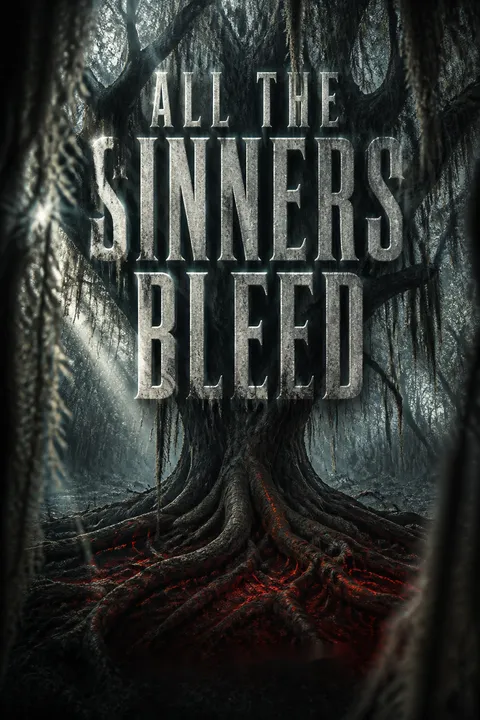


Plot Summary
Prologue
Before Titus Crown1 is called to the high school, Charon County is introduced as a place built on dispossession and kept comfortable by selective memory. Its history includes the massacre of an Indigenous village, racial intimidation, and public monuments that recast the Confederacy as honorable. Residents prefer to treat such violence as finished history.
Titus,1 newly elected as the county’s first Black sheriff,1 knows that old arrangements survive in present-day habits and institutions. The county’s past is not a separate story from the one beginning; it is the ground on which the coming crimes, and the community’s arguments about them, will unfold.
The opening makes historical memory an active force rather than a backdrop. Charon’s violence has been preserved in monuments and local stories, while its victims have been pushed out of public remembrance. That imbalance anticipates the investigation’s central problem: people trust appearances that protect the community’s self-image, even when evidence contradicts them. Titus’s position sharpens the conflict. He has authority in a place whose traditions have often denied authority to people like him, so every decision he makes is judged through both the badge and the history behind it. The prologue asks whether a community can change while continuing to misname what it has done.
Jeff Spearman’s Last Class
A year into his term, Titus1 is trying to balance county politics, racial suspicion, and the demands of his father2 and girlfriend4 when dispatcher Cam reports a shooter at Jefferson Davis High. Titus1 arrives to find students fleeing and his deputies struggling to control the crowd.
Former classmate Latrell Macdonald6 emerges carrying a rifle and a wolf mask, then speaks in fragments about teacher Jeff Spearman7 and an Angel of Death. Titus1 tries to calm him, but Latrell6 charges with the gun raised.
Deputy Roger Simmons and off-duty deputy Tom Sadler13 shoot him dead. Inside the school, Titus1 finds Spearman7 murdered at his desk. Latrell’s6 final warning to check the teacher’s phone stays with Titus,1 despite the apparent certainty of what happened.
The opening crisis forces Titus to inhabit the contradiction at the heart of his office: he must stop immediate danger while preserving the possibility that a frightened or impaired person can survive an encounter with police. Latrell’s death is not presented as an easy moral verdict. The rifle and the dead teacher make the deputies’ fear credible, while Titus’s attempt to slow the confrontation makes the lost alternative painfully visible. Latrell’s scattered reference to Spearman transforms the scene from a contained shooting into a question of motive. His request to inspect the phone gives Titus a fragile investigative lead, one that depends on taking a dead man’s last words seriously.
The Phone Behind the Teacher
Titus1 places deputies Roger and Tom13 on leave while investigator Trey12 reviews the shooting, a decision that angers Roger but protects the inquiry from appearing self-exonerating. At the funeral home, Titus1 unlocks Spearman’s phone with the dead teacher’s7 thumb.
Its private images show Spearman,7 Latrell,6 and a masked third person8 abusing children. A search of Spearman’s7 house uncovers hidden storage drives containing videos of torture and murder, along with a wolf mask and a painting of a solitary willow tree.
Titus1 sees enough to conclude that at least seven children were killed. He also finds that Latrell’s old phone received a threatening message about his younger brother,17 Lavon.17 The investigation now has a second crime and a living suspect.
Spearman’s double life exposes how reputation can become a shield. His years as a popular teacher did not merely conceal his crimes; they trained the community to treat suspicion as unthinkable. Titus’s decision to search the phone honors Latrell’s warning, but the discovery does not restore the young man to innocence. It reveals that he was implicated and possibly coerced, a distinction that does not erase the children’s suffering. The separate drives, hidden mask, and painted tree turn evidence into a map. Titus must look at material he would rather destroy because the victims cannot be identified or brought home unless someone is willing to witness what happened.
Seven Beneath the Willow
The tree in Spearman’s painting reminds Titus1 of a massive willow on Tank Billups’s hunting property. He leads his deputies and volunteer rescuers there, and they search the clearing despite doubts from people who remember Spearman7 as harmless.
Near the tree, they uncover seven bodies tangled in its roots. The victims are Black children and teenagers, matching the people shown in the videos. Titus1 brings in the state medical examiner, who finds wounds carved with religious language, synthetic wig fibers, and a strange metal object that the team cannot identify.
At a press conference, Titus1 tells Charon that Spearman7 and Latrell6 were involved in the killings and that a third person8 remains at large. The announcement shatters the county’s public image of its beloved teacher.7
The graveyard gives physical form to the community’s failure to see. The willow has stood in a familiar hunting ground, and the bodies beneath it have remained close to daily life without becoming part of public knowledge. Titus’s insistence on continuing the search, even when volunteers want to leave, reflects an ethical difference between comfort and duty: doubt is understandable, but it cannot outweigh evidence. The victims’ race also exposes unequal attention. Their families’ absence from local memory is not proof that nobody searched; it is evidence that the county and wider culture have not treated every missing child as equally visible. The press conference makes that buried history impossible to ignore.
Cole’s Face in a Box
A local man walking his dog discovers Cole Marshall’s14 mutilated body in the woods. Titus1 recognizes the voice of the anonymous caller who had tried to describe an isolated building decorated with angels, but he had failed to keep the caller talking. Soon afterward, Darnell Posey23 delivers a box left on his porch for a cash reward. Inside is a piece of Cole’s14 face.
Darnell23 insists he was only a courier, then tells Titus1 that Latrell6 once heard Watering Hole owner Jasper Sanderson boasting about having a deputy13 on his payroll. Darnell23 also recalls that Spearman7 once tried to exploit him when he was a student. The information gives Titus1 two lines to follow: the killer’s8 local network and possible corruption inside his own office.
Cole’s death changes the case from a historical investigation into an active contest with a killer who watches Titus’s progress. The mutilated face is meant to intimidate, but it also confirms that the anonymous caller was close to the hidden operation and tried, however briefly, to expose it. Darnell’s account is unreliable in the ordinary evidentiary sense, yet its details connect separate institutions: the fish house, a drug business, a school, and the sheriff’s office. Titus cannot accept testimony simply because it supports his suspicions. The episode tests whether he can distinguish a useful lead from a convenient story, especially when the allegation implicates the people he commands.
Holy Rock’s Missing Boy
The religious phrases carved into the victims point Titus1 toward Holy Rock of the Redeemer, where Pastor Elias Hillington15 has preached about divine suffering and angels. An island neighbor, Griselda Barry,19 remembers a mixed-race boy8 the Hillingtons raised as their own.
She says Elias15 and his brother Henry abused him, and that Henry died after being trapped with venomous snakes. The boy8 then vanished. Titus1 returns to question Elias,15 but soon finds the preacher’s15 body displayed in a cornfield, tortured and marked with another message.
The murder confirms that the killer8 is settling old accounts as well as concealing the children’s deaths. Griselda’s19 story makes the missing boy8 a possible link between the church, the killings, and the masked man.8
The church inquiry reveals how religious language can be used both to comfort and to authorize cruelty. Elias’s sermons offer a public vocabulary of holiness, while Griselda remembers a child denied protection inside the very household that claimed to save him. Her account is not conclusive evidence, but it changes the investigation’s shape by giving the killer a possible history rooted in Charon. Elias’s murder carries that inquiry into the present: someone is erasing witnesses and staging violence as a message. The story does not treat childhood abuse as a mechanical explanation for later crimes. Instead, it shows how neglect can create conditions for violence without absolving the person who chooses to inflict it.
The Son No One Claimed
Titus’s1 inquiry into the sheriff’s office confirms that Tom Sadler13 made unusually timed bank deposits after raids on Jasper’s bar. Titus1 confronts Tom,13 removes him from the department, and refuses to let the fatal shooting of Latrell6 erase his corruption.
Meanwhile, DNA from the victims produces a familial match through an online genealogy database. It connects the unknown man8 to Scott Cunningham,16 who learns that his mother, Polly Anne,18 gave birth to a son8 after her husband died and surrendered him to the Hillingtons.
Polly Anne18 names the boy Gabriel.8 She remembers seeing him as a child, isolated and cruel to a crab, but could not bring herself to take him away. Titus1 now has a likely identity and a painful family history, though Gabriel8 remains free.
The evidence converges through two different kinds of accountability. Tom’s betrayal demonstrates that institutional corruption can wear the familiar face of a colleague, while the DNA match reveals a family secret buried beneath the Cunningham name. Neither revelation offers a complete explanation. Polly Anne’s regret is genuine, but regret cannot reverse the childhood Gabriel endured or determine what he became. Titus must hold those facts together without confusing cause with excuse. The section also complicates his confidence in procedure: records and genetic databases help expose hidden relationships, yet the same official systems have historically protected powerful families and ignored vulnerable people. Evidence can uncover the truth, but it cannot repair the conditions that buried it.
Kellie’s Dangerous Return
Kellie Stoner,5 Titus’s1 former partner and now a journalist, arrives to report on the case. Her ease with him unsettles his current relationship with Darlene,4 while Darlene’s4 growing fear exposes how little emotional space Titus1 leaves for her. At the inn, a masked man8 breaks into Kellie’s5 cottage, kills her producer Hector, and traps Kellie5 in a closet.
Titus1 arrives and drives the attacker8 away, but cannot catch him. He tells Darlene4 about his past with Kellie,5 and Darlene4 decides to leave Charon for Atlanta, recognizing that Titus’s1 devotion to duty has left her feeling unchosen. Titus1 is pulled between old intimacy, present love, and the people he cannot reliably protect. The killer’s8 threat has become personal.
The attack does more than endanger Kellie; it exposes Titus’s habit of treating private relationships as matters he can postpone until after the next emergency. Kellie’s return awakens a version of him associated with appetite and risk, while Darlene wants mutual presence rather than protection offered at a distance. Her departure is therefore not a romantic plot twist but a decision about self-preservation and agency. The killer exploits what the town knows about Titus, turning gossip into a route of access. His professional vigilance cannot compensate for emotional evasions, and the attack makes that limitation literal: Titus can save Kellie from the closet only after Hector has already died.
Fall Fest Turns Bloody
Titus1 keeps Fall Fest open despite Jamal Addison’s9 warning that the Confederate parade and a counterprotest could ignite the crowd. When both groups converge, shouting becomes a fight. Denver Carlyle24 drives a Cunningham flag factory truck into the protesters.
Titus1 and Deputy Carla Ortiz10 shoot him before he can plow farther into the crowd, but Reverend Wilkes25 dies and Sandra James is badly injured. That night, Titus1 learns that Lavon Macdonald,17 Latrell’s younger brother,17 never came home. Search teams comb the county without finding him.
The attack has killed a man of faith, wounded Darlene’s4 friend, and brought the surviving Macdonald child into the killer’s8 reach. Titus’s1 earlier decision to proceed with the festival now weighs against the urgency of finding Lavon17 alive.
The festival turns symbolic conflict into bodily danger. The Confederate parade and its opposition are not abstract arguments once Denver uses a truck as a weapon; the county’s racial history becomes an immediate threat to people in the street. Titus’s choice to allow the event reflects the limits of his legal authority, but the consequences still belong to his leadership. The dead and injured prevent him from converting procedure into innocence. Lavon’s disappearance then changes the case’s emotional center. Titus is no longer searching only for justice for children already lost; he is racing to prevent a second family from suffering the same irreversible absence.
The Badge’s Hidden Cost
After the festival, Titus1 drinks with his estranged brother Marquis3 and finally explains why he came home. During a raid on white supremacist leader Red DeCrain, Red’s family detonated suicide vests, killing Titus’s1 colleague and others while leaving Titus1 scarred.
Titus1 then shot the wounded Red instead of taking him into custody. The FBI concealed the truth and pressured Titus1 to resign. He became sheriff partly to atone for using the badge as license to kill.
Marquis3 rejects the idea that Titus1 must repair everything alone, and their conversation restores a tenderness they had lost after their mother’s death. The next day, a metal shipping lock recovered from a victim points Titus1 toward the Cunningham flag factory and Denver’s24 delivery records.
Titus’s confession reframes his reform campaign as both public service and private penance. He did not return home with clean hands; he returned because the Bureau had protected him from the consequences he feared former sheriffs had escaped. His brother’s response challenges the logic of endless self-punishment. Responsibility matters, but it cannot become a substitute for grieving or a claim that one person can mend an entire county. The factory clue gives this emotional reckoning practical force: Titus can continue the investigation without pretending that action will erase his past. The scene links his private need for control to the institutional temptation to hide violence behind official narratives.
Royce’s Delivery Trail
Titus1 recognizes the unidentified metal object from the autopsy as a lock used to secure Cunningham flag factory shipments. He demands delivery records and finds that Royce Lazare,8 a school bus driver, covered routes tied to the victims’ disappearance dates.
The initials on those records connect Royce8 to the freight system and the children he could approach while traveling. Titus1 issues a warning and drives to Royce’s8 farmhouse with suspended deputy Tom,13 who has come to help. Inside, they find Dayane Carter20 alive but bound and badly wounded.
Royce8 ambushes them with a shotgun, killing Tom13 as he shoves Titus1 out of the blast. Titus1 is stabbed and loses the chance to stop Royce8 from escaping with Lavon.17 He follows a blood trail to a concealed bunker beneath a fake hedge.
The final identification depends on an object too ordinary to attract attention until Titus connects it to the county’s largest employer. The shipping lock turns the factory’s routine movement of goods into a mechanism for moving victims across state lines. Royce’s disguise is social rather than theatrical: a familiar bus driver can pass unnoticed precisely because the community has already decided what ordinary looks like. Tom’s intervention complicates his record without redeeming his betrayal; he dies protecting Titus, but that act does not undo the harm caused by taking bribes. The concealed bunker is the physical endpoint of the town’s secrecy, and Titus reaches it wounded, stripped of the safety his office once seemed to promise.
The Bunker of Angels
Bleeding from his injuries, Titus1 climbs into Royce’s8 underground room, where paintings and statues of angels surround the embalming table used in the murders. Royce8 holds Lavon17 at knifepoint and explains his rage at the God who did not save him from the Hillingtons.
Titus1 recognizes the boy’s8 trauma but refuses to accept Royce’s8 killings as rescue or justice. When Royce8 begins to cut Lavon,17 the boy17 drives a small knife into his forearm. Titus1 uses the opening to attack, and his brother’s3 unusual belt buckle releases a hidden blade that he drives into Royce’s8 throat.
Lavon17 calls for help, and Titus1 survives long enough to be taken to hospital. After waking days later, he breaks down with Marquis3 and allows himself to grieve their mother rather than turn grief into another punishment.
The confrontation tests whether understanding a person’s history can coexist with resisting the harm he chooses to do. Royce’s suffering is real, but his claim to act for the children collapses against the evidence of their deaths and Lavon’s captivity. Lavon is not merely a hostage waiting for rescue; his quick action helps create the opening Titus needs. The hidden blade, earlier associated with Marquis, becomes a tool of survival in a room devoted to ritualized violence. Titus’s breakdown afterward marks a different kind of survival. For the first time, he names guilt rather than disguising it as duty, allowing his brother’s presence to hold what the badge cannot.
The Statue Comes Down
A month and a half later, Titus1 has recovered but his voice remains damaged. He resigns as sheriff and appoints Carla10 to finish his term, urging her to run for the office herself. He is leaving for a criminology post in Louisiana, hoping to sleep without returning to the violence he has witnessed.
Before driving away, he stops at the courthouse, loops a tow strap around the Confederate monument, and pulls it from its pedestal. The statue’s arm breaks off as it crashes to the ground.
Titus1 drives out of Charon laughing. His departure does not undo the murders, restore his relationship with Darlene,4 or cleanse the county’s past. It does, however, refuse to leave the monument standing as the last word on whose history deserves a place in public.
The ending refuses a simple restoration. Titus has saved Lavon and helped expose the killer, but Charon remains marked by death, racial hierarchy, and the compromises of its institutions. His resignation acknowledges that service need not mean permanent self-sacrifice, while appointing Carla makes reform a responsibility that can pass to someone else. Pulling down the statue is both a personal release and a public act: Titus does not wait for a committee to decide whether the monument’s false account should endure. The laughter matters because it is not triumph over grief. It is a brief return of bodily freedom after a life spent converting pain into control.
Analysis
All the Sinners Bleed makes a small Virginia county feel less like an isolated setting than a machine built from overlapping forms of concealment. Charon’s racial history is public enough to be monumental, yet its daily consequences are routinely denied. The same habit governs the crimes: Spearman’s7 standing as a beloved teacher7 discourages suspicion, the victims’ marginalization makes their disappearance easier to overlook, and the killer’s8 ordinary role lets him move through familiar spaces without being truly known. Titus1 is well suited to expose these contradictions, but his own past shows the cost of believing that control can substitute for moral repair.
The novel’s hardest question is not whether suffering shapes people; it plainly does. It is whether suffering gives anyone the right to impose suffering on others. Royce8 turns his childhood abuse and religious disillusionment into a theology that casts murder as mercy. Titus1 recognizes the wound without accepting the argument. That distinction prevents sympathy from becoming exoneration, while also resisting the comforting fiction that evil belongs only to strangers or obvious monsters.
The badge carries a double meaning throughout. It grants Titus1 power to protect, but it also places him inside a system that can conceal misconduct, justify lethal force, and demand obedience without trust. His independent review of Latrell’s6 shooting and dismissal of Tom13 show his attempt to make accountability apply within his own office. Yet the case also limits what procedure can achieve: evidence arrives too late for some victims, and a lawful response cannot undo a town’s inherited habits.
Titus’s1 final departure is therefore neither escape nor cure. He gives the sheriff’s office to Carla,10 accepts that he cannot carry Charon alone, and removes the Confederate monument without waiting for permission. The act is small beside generations of violence, but it rejects the county’s preferred arrangement of memory. The book’s hard-won hope lies not in cleansing Charon, but in making denial more difficult and responsibility more shareable.
Review Summary
All the Sinners Bleed is a gripping, intense thriller that explores racism, violence, and justice in a small Southern town. Readers praise Cosby's powerful writing, compelling characters, and ability to tackle difficult themes. The story follows Titus Crowne, the first Black sheriff, as he investigates a school shooting that uncovers dark secrets. While some found the violence and subject matter disturbing, most reviewers were captivated by the suspenseful plot and thought-provoking social commentary. A few critics felt the writing was occasionally pretentious or relied on stereotypes, but overall reception was highly positive.
Characters
Titus Crown
The measured Black sheriffCharon County’s first Black sheriff, Titus is a former FBI agent who returns home to care for his father2 and unexpectedly wins office. He believes disciplined procedure can restrain the abuses he witnessed under earlier sheriffs, but his need for order is rooted in older grief and an undisclosed act of violence. Titus reads people closely and carries responsibility heavily, often confusing endurance with emotional honesty. His relationships with his father2, brother3, girlfriend4, and former partner5 expose different parts of him: the dutiful son, estranged sibling, guarded lover, and man still negotiating with his own past. He is driven by a sincere wish to protect his community, even when his methods and self-punishment threaten to narrow that purpose.
Albert Crown
The weathered, devout fatherTitus’s1 father is a retired crab fisherman whose body bears the cost of decades of labor. After his wife died, Albert withdrew into alcohol before finding steadier purpose through church life, gardening, and service to neighbors. His Christian faith offers him a language for grief and endurance, though it frequently clashes with Titus’s1 anger at a God who did not save his mother. Albert is proud of Titus1 but also wants a son, not only a sheriff, at his side. His affection often comes through food, practical help, and understated physical warmth. He embodies a form of care that does not require agreement, and his home remains a place where Titus1 and Marquis3 can begin to speak again.
Marquis Crown
The estranged, resourceful brotherTitus’s younger brother1 is a self-taught carpenter who keeps his distance from the family home and carries grief in a less orderly form than Titus1. He resists being managed or repaired, and his humor can conceal how closely he watches his brother1. Marquis understands that Titus’s1 sense of duty is partly an attempt to master the helplessness they both felt when their mother was ill. His own work and choices place him at the edges of the law, yet his loyalty to family is immediate and physical. He wants Titus1 to see that love does not require constant self-punishment. Their relationship is defined by old affection, long silences, and the possibility of renewed trust.
Darlene
The devoted local floristTitus’s girlfriend1 runs a flower shop and cares for her aging parents. She is affectionate, perceptive, and direct about the fear that comes with loving a lawman. Darlene wants partnership rather than a protected place on the edge of Titus’s1 life, but she does not demand that he abandon his work to soothe her anxiety. Her patience has limits, especially when Titus1 avoids difficult conversations or assumes that reassurance can substitute for presence. The contrast between her rootedness in Charon and Titus’s1 unresolved relationship with home shapes their bond. Darlene is neither a reward for his heroism nor a source of easy comfort; she has ambitions and boundaries of her own.
Kellie Stoner
The searching crime reporterKellie is a journalist and true-crime podcaster who once shared a life with Titus1 in Indiana. Curious, irreverent, and impatient with institutional evasions, she has long been drawn to victims whose stories receive little attention. Her professional instincts make her persistent, while her history with Titus1 gives their exchanges an intimacy neither can entirely dismiss. Kellie challenges his tendency to bury feeling beneath procedure, but she is not simply a temptation from his past. She has her own work, relationships, and reasons for following a story. Her return brings unresolved affection into collision with Titus’s1 current life and the danger surrounding the investigation.
Latrell Macdonald
The troubled former studentLatrell is the son of Titus’s1 former teammate Calvin and a young man struggling with addiction and instability. His history with teacher Jeff Spearman7 appears, at first, to make the school shooting incomprehensible. His final warnings suggest that he knew more about Spearman’s7 hidden life than he could explain. Latrell’s connection to the Macdonald family makes the consequences especially intimate for Titus1, who has known his parents for years. He is both responsible for terrible harm and a person whose vulnerability has been exploited by others.
Jeff Spearman
The beloved geography teacherFor decades, Spearman teaches geography at Jefferson Davis High and wins affection by supporting students when school authorities fail them. Former students remember his quirky clothes, tutoring, and willingness to stand up for young people. That trusted public identity becomes central to the investigation because it makes disbelief easier than suspicion. Spearman’s importance lies in the gulf between the teacher the county remembers and the private life that the evidence begins to reveal.
Royce Lazare
The familiar school bus driverRoyce is a local school bus driver whose ordinary position places him in the daily lives of Charon’s children. He is known around town and moves through familiar routines without attracting particular notice. The contrast between that public role and his private religious intensity makes him difficult for the community to imagine as dangerous. Royce’s presence connects the school, local employers, and the county’s network of acquaintances. His character reflects the unsettling distance between being recognized and being truly known.
Jamal Addison
The reform-minded ministerJamal leads New Wave Temple and previously encouraged Titus1 to run for sheriff. A forceful advocate for racial justice, he distrusts assurances from an institution with a long record of harming Black residents. His conflict with Titus1 is not simple opposition: Jamal wants reform to produce visible protection, while Titus1 believes he must work within the law’s limits. Jamal’s congregation gives public shape to grief, skepticism, and the demand for accountability.
Carla Ortiz
The tenacious deputyCarla is a sharp, disciplined deputy who hopes to pursue a larger law-enforcement career. She handles witnesses carefully, notices details others miss, and is willing to challenge Titus1 when he overlooks a practical risk. Her loyalty is balanced by a clear sense of procedure. Titus1 trusts her with difficult work and sees in her the possibility of a more accountable future for the sheriff’s office.
Davy Hildebrandt
The loyal local deputyDavy is a friendly, earnest deputy whose lifelong familiarity with Charon helps him understand its people and habits. He is loyal to Titus1 but sometimes speaks before considering how a rumor may affect an investigation. His reactions to violence reveal how deeply community tragedies affect the people expected to contain them. Davy’s decency is genuine, even when his instincts need the discipline Titus1 tries to teach.
Trey
The ambitious investigatorTrey is a young investigator with strong instincts, patience, and a hunger to learn. Titus1 gives him demanding responsibilities, including an independent review of the shooting and a financial inquiry into the department. Trey understands that loyalty to a supervisor must never replace scrutiny of evidence. His careful work makes him a promising investigator and a trusted member of Titus’s1 small team.
Tom Sadler
The compromised deputyTom is a veteran deputy, husband, and father whose easygoing manner makes him seem dependable. Financial pressure and family responsibilities complicate his choices, but they do not excuse his willingness to betray the department’s trust. He represents the danger of a colleague whose familiarity encourages others to stop asking questions. His relationship with Titus1 is shaped by both professional duty and the intimate expectations of a small county.
Cole Marshall
The double-shifted local workerCole works in delivery and land-clearing jobs, like many Charon residents who need more than one source of income. He moves among coworkers, friends, and local businesses, giving him access to several parts of the county’s social network. His apparent ease with different people makes it difficult to see what he knows or whom he trusts. Cole becomes a crucial link between the investigation’s scattered clues.
Elias Hillington
The fire-and-brimstone pastorElias leads Holy Rock of the Redeemer, a small, intensely religious congregation on Piney Island. His preaching centers on sin, purity, angels, and divine judgment. He is proud of his church’s separation from the broader community and resents outsiders who question its practices. His rigid certainty makes him a significant figure in the investigation’s search for the origins of the case’s religious imagery.
Scott Cunningham
The powerful board chairmanScott chairs the Board of Supervisors and belongs to one of Charon’s wealthiest families. He expects influence over public institutions and clashes with Titus1 when the sheriff refuses to act as his subordinate. Scott frames his interventions as concern for the county’s reputation and economy, though his need for control is never far from the surface. He embodies the old local power structure that Titus’s1 election has unsettled.
Lavon Macdonald
The younger Macdonald brotherLavon is Latrell’s twelve-year-old brother6, a lively boy who likes drawing and whose family has worked hard to protect him. His parents’ concern for his heart condition reflects the tenderness and worry that surround him. Lavon’s bond with his older brother6 is complicated by Latrell’s6 struggles, but it remains emotionally important to him. His presence gives Titus1 a personal connection to the family beyond the investigation.
Polly Anne Cunningham
The guarded family matriarchPolly Anne is Scott’s mother16, an aging woman living at the Cunningham family homeplace. She has spent decades managing the expectations of a wealthy family and carrying a private decision she was not free to make openly. Her mind remains sharp, and she speaks with a calmness that does not hide regret. Polly Anne’s account shows how family power can turn an intimate choice into a lifelong secret.
Griselda Barry
The island’s blunt witnessGriselda is a longtime Piney Island resident who never belonged comfortably to the island’s insular religious community. Sharp-tongued and observant, she remembers how a child in the Hillington15 household was treated when others preferred not to interfere. Her old resentment does not make her account neutral, but her willingness to speak gives Titus1 a lead that local respectability had buried.
Dayane Carter
The guarded fish-house workerDayane works at Cunningham Seafood and has a history of difficult nights and risky relationships. She is defensive with police and protective of her own survival, giving Titus1 little reason to assume that a formal interview will make her talk. Her connection to Cole14 places her close to people and places that matter to the investigation. Dayane’s guardedness is less a mystery than a strategy learned in a town where disclosure can carry a price.
Pip
The watchful senior deputyPip is Titus’s1 oldest deputy, a former Peace Corps volunteer and a man whose Mennonite upbringing gives him a distinct moral perspective. He remained in the sheriff’s office through earlier administrations because he believed a witness could limit abuses, even if he could not stop them. Pip offers Titus1 practical support and a quieter form of conscience, grounded in service rather than ambition.
Dr. Julie Kim
The careful medical examinerDr. Kim leads the medical examination of the children found beneath the willow. She combines precise forensic work with an evident concern for the victims and their families. Her findings give Titus1 physical evidence to pursue, while her questions about the state’s commitment to the case reflect an awareness that Black victims may not receive equal urgency.
Darnell Posey
The reluctant courierDarnell is a fish-house worker and Latrell’s6 occasional companion in drug use. He brings a disturbing package to the sheriff’s office after someone leaves it at his home. His account is hesitant and self-protective, but it gives Titus1 a lead about both Spearman7 and possible corruption around Jasper Sanderson.
Denver Carlyle
The resentful Confederate loyalistDenver is a local delivery driver with a commercial license and a place in Ricky Sours’s Confederate group. He is volatile when challenged and deeply invested in a version of Southern history that protects his sense of status. His grievances make him vulnerable to political agitation and personal desperation.
Reverend Calhoun Wilkes
The cautious Methodist ministerReverend Wilkes leads Second Corinthian Methodist Church and prefers measured conversation to spectacle. He offers Titus1 a contrasting example of religious leadership, one shaped by doubt, humility, and pastoral concern. His recollection of a church member’s old sign phrase gives Titus1 a useful lead.
Plot Devices
The willow painting
A map hidden in plain sightSpearman7 keeps a painting of a distinctive willow concealed with other private evidence. Titus1 recognizes the tree from hunting on Tank Billups’s land, directing the search party to the place where seven children are buried. The painting links a private fantasy to a physical crime scene and demonstrates how a killer’s8 attachment to a secret can preserve evidence as well as conceal it. Its importance comes from Titus’s1 local memory, not from an elaborate forensic breakthrough.
The wolf masks
An identity made into ritualThe leather masks first appear with Latrell6 at the school and later in evidence connected to Spearman7. They hide faces during the crimes, but they also turn the group’s violence into a private ceremony organized around angels, wolves, and divine judgment. For the killer8, the mask is more than practical concealment: it supports the religious role he has constructed for himself. Titus’s1 effort to identify the person behind it moves the story from spectacle toward ordinary human accountability.
Phones and storage drives
The dead leave evidenceLatrell’s6 warning sends Titus1 to Spearman’s7 phone, where the investigation finds images that contradict the teacher’s7 public identity. Hidden storage drives reveal the broader crimes and help establish that more than one person was involved. Later, call records and messages connect people who might otherwise appear unrelated. The devices create the case’s evidentiary spine, but they do not interpret themselves: Titus1 must weigh digital material against witness accounts, physical clues, and the biases of his own community.
The shipping lock
A workaday object points homeA metal object recovered from one victim initially resists identification. Titus1 later recognizes it as a lock used to secure shipments from the Cunningham flag factory. That connection prompts him to inspect delivery records, where a substitute driver’s routes align with the victims’ disappearances. The clue binds the crimes to Charon’s ordinary infrastructure, transforming factory paperwork and routine deliveries into evidence of how the killer8 could travel without attracting notice.
Religious inscriptions
A creed becomes a trailPhrases carved into victims connect the murders to the language used by churches across Charon, especially Holy Rock of the Redeemer. The wording directs Titus1 toward Elias Hillington15 and the story of a child raised in the church. It is not enough to identify the killer8, but it gives the team a route through the town’s religious network. The device also exposes the gap between faith as communal care and faith used to justify punishment, exclusion, or self-appointed divine authority.
FAQ
Synopsis & Basic Details
What is All the Sinners Bleed about?
- Rotten foundation, violent past: The novel explores the dark history of Charon County, a place built on violence and marred by racial tensions, where the past continues to haunt the present.
- Black sheriff confronts evil: Sheriff Titus Crown, the first Black sheriff of the county, grapples with his own demons while investigating a series of horrific crimes that expose the deep-seated corruption and depravity within his community.
- Unmasking hidden monsters: The story follows Titus as he uncovers a network of child abuse and murder, forcing him to confront the monsters hiding in plain sight and the systemic issues that allow such evil to thrive.
Why should I read All the Sinners Bleed?
- Gritty, unflinching narrative: S.A. Cosby delivers a raw and intense story that doesn't shy away from the harsh realities of violence, racism, and the complexities of human nature.
- Compelling characters: The novel features a cast of complex and flawed characters, each grappling with their own demons and motivations, making for a deeply engaging and emotionally resonant read.
- Exploration of timely themes: All the Sinners Bleed tackles relevant and thought-provoking themes such as justice, redemption, and the enduring impact of history, making it a powerful and timely story.
What is the background of All the Sinners Bleed?
- Southern Gothic setting: The novel is set in Charon County, a fictional location in the American South, which is steeped in a history of violence, racism, and deep-seated social issues.
- Racial tensions and history: The story is heavily influenced by the legacy of slavery and racial inequality in the South, exploring how these historical injustices continue to shape the present.
- Law enforcement and corruption: The novel delves into the complexities of law enforcement in a small town, highlighting the challenges of navigating corruption, prejudice, and the burden of responsibility.
What are the most memorable quotes in All the Sinners Bleed?
- "The South doesn't change. You can try to hide the past, but it comes back in ways worse than the way it was before. Terrible ways.": This quote encapsulates the novel's central theme of the cyclical nature of violence and the enduring impact of history.
- "Evidence makes convictions, your gut gets you to the heart of the case.": This quote highlights the internal conflict of Titus Crown, who must balance his training with his intuition in his pursuit of justice.
- "You pick up an axe, you're going to chop down a tree. You pick up a gun, whether you are wearing a star or not, eventually you're going to chop down a man.": This quote reflects the novel's exploration of the consequences of violence and the heavy burden of power.
What writing style, narrative choices, and literary techniques does S.A. Cosby use?
- Gritty and visceral prose: Cosby employs a raw and unflinching writing style that immerses the reader in the harsh realities of the story, using vivid imagery and visceral language to create a sense of unease and tension.
- Multiple perspectives and internal monologues: The narrative shifts between different characters' perspectives, offering insights into their motivations and inner struggles, while also using internal monologues to reveal their thoughts and feelings.
- Foreshadowing and symbolism: Cosby uses subtle foreshadowing and recurring symbols, such as the weeping willow tree and the angel imagery, to create a sense of dread and to connect seemingly disparate elements of the story.
Hidden Details & Subtle Connections
What are some minor details that add significant meaning?
- The "Smokey the Bear" hat: Darlene's nickname for Titus's hat, a seemingly minor detail, highlights her affection for him and his role as a protector, while also subtly referencing the "bear" nature of his character.
- The organization of Titus's closet: The meticulous order of Titus's clothes and shoes, color-coordinated and alphabetized, reveals his need for control and structure, a coping mechanism for the chaos he has experienced.
- The recurring mention of the Watering Hole: This local bar serves as a microcosm of Charon County, a place where people from different backgrounds gather, revealing the social dynamics and hidden tensions within the community.
What are some subtle foreshadowing and callbacks?
- The mention of the logging truck accident: The reference to Ward Bennings's death by a logging truck foreshadows the violent nature of the events to come and the unexpected ways in which power can shift.
- The description of the stairs in Titus's home: The "mournful cry of ancient wood" foreshadows the tragic events that will unfold and the weight of the past that Titus carries.
- The recurring image of the Confederate flag: The flag's presence throughout the story serves as a constant reminder of the county's racist history and the enduring legacy of hate that Titus must confront.
What are some unexpected character connections?
- The shared history of Titus and Calvin: The revelation that Titus and Calvin Macdonald were once teammates and friends adds a layer of tragedy to Latrell's death, highlighting the personal cost of violence and the loss of community.
- The connection between Gilby and Albert: The subtle hints of a past relationship between Gilby and Albert add depth to their characters and reveal the hidden connections within the small town.
- The link between Polly Anne and the victims: The revelation that Polly Anne Cunningham is the mother of the Last Wolf adds a layer of complexity to the story, highlighting the interconnectedness of the characters and the far-reaching consequences of past actions.
Who are the most significant supporting characters?
- Albert Crown: Titus's father, Albert, provides a grounding presence and a connection to the past, offering a counterpoint to Titus's more cynical worldview and highlighting the generational differences in their perspectives.
- Darlene: Titus's girlfriend, Darlene, serves as a source of emotional support and a reminder of the normalcy that Titus craves, while also revealing her own hidden depths and vulnerabilities.
- Jamal Addison: The local pastor, Jamal, challenges Titus's authority and forces him to confront the complexities of race and justice, highlighting the tensions within the Black community and the need for accountability.
Psychological, Emotional, & Relational Analysis
What are some unspoken motivations of the characters?
- Titus's need for control: Titus's meticulous organization and adherence to routine stem from a deep-seated need to control the chaos in his life, a response to the trauma he has experienced.
- Royce's desire for recognition: Royce's actions are driven by a desire to be seen and acknowledged, a twisted need for validation that manifests in his violent acts and his obsession with religious imagery.
- Albert's longing for connection: Albert's attempts to connect with his sons and his clinging to the past reveal a deep-seated loneliness and a yearning for the family he has lost.
What psychological complexities do the characters exhibit?
- Titus's internal conflict: Titus grapples with the weight of his past, his desire for justice, and his own capacity for violence, creating a complex and compelling character who is both a protector and a potential threat.
- Royce's distorted worldview: Royce's actions are driven by a warped sense of morality and a deep-seated hatred, revealing a mind consumed by rage and a twisted interpretation of religion.
- Darlene's hidden insecurities: Darlene's attempts to support Titus mask her own insecurities and fears, highlighting the challenges of maintaining a relationship with someone who is constantly facing danger and trauma.
What are the major emotional turning points?
- The discovery of Spearman's phone: The revelation of Jeff Spearman's crimes shatters the community's sense of security and forces Titus to confront the depths of human depravity.
- The discovery of the bodies in the Secret Garden: The unearthing of the victims' remains solidifies the horror of the crimes and intensifies Titus's determination to bring the killer to justice.
- The attack on Titus's home: The lamb nailed to his door is a personal attack that forces Titus to confront the reality of the danger he faces and the vulnerability of those he loves.
How do relationship dynamics evolve?
- Titus and Albert's strained bond: The relationship between Titus and his father, Albert, evolves from a place of unspoken grief and tension to one of mutual understanding and support, as they navigate their shared history and the challenges of the present.
- Titus and Darlene's growing distance: The relationship between Titus and Darlene is tested by the weight of his responsibilities and the trauma he experiences, leading to a growing distance and a sense of inevitability about their separation.
- Titus and Marquis's complex brotherhood: The relationship between Titus and his brother, Marquis, is marked by a mixture of love, resentment, and unspoken understanding, as they navigate their shared past and their different paths in life.
Interpretation & Debate
Which parts of the story remain ambiguous or open-ended?
- The full extent of the conspiracy: While the main perpetrators are identified, the novel leaves open the possibility that there are others involved in the network of abuse and murder, suggesting that the darkness may extend beyond what is revealed.
- The true nature of evil: The novel raises questions about the nature of evil and whether it is a product of individual depravity or a reflection of systemic issues, leaving the reader to grapple with the complexities of human behavior.
- The possibility of redemption: While some characters find a measure of peace or closure, the novel leaves open the question of whether true redemption is possible for those who have committed such heinous acts, or for those who have been touched by them.
What are some debatable, controversial scenes or moments in All the Sinners Bleed?
- The killing of Latrell Macdonald: The circumstances surrounding Latrell's death, particularly the question of whether he was surrendering, raise questions about police accountability and the use of force, sparking debate about the role of law enforcement in a community marked by racial tensions.
- Titus's decision to resign: Titus's decision to leave his position as sheriff is a controversial one, raising questions about the nature of leadership and the challenges of effecting change from within a flawed system.
- The portrayal of religion: The novel's depiction of religion, particularly the extreme views of characters like Elias Hillington, raises questions about the role of faith in justifying violence and the potential for religious institutions to be corrupted by power.
All the Sinners Bleed Ending Explained: How It Ends & What It Means
- Titus's departure: Titus's decision to leave Charon County and pursue a career in academia signifies a shift in his priorities, as he seeks to find a new path that allows him to use his experiences to educate and inspire others.
- The cycle of violence: The novel's ending suggests that the cycle of violence and hatred may continue, even as the immediate threat of the Last Wolf is removed, highlighting the enduring impact of history and the need for ongoing efforts to address systemic issues.
- The search for meaning: The ending leaves the reader with a sense of ambiguity, as the characters grapple with the complexities of their lives and the search for meaning in a world marked by darkness and uncertainty.
About the Author



Download PDF
Download EPUB
.epub digital book format is ideal for reading ebooks on phones, tablets, and e-readers.








