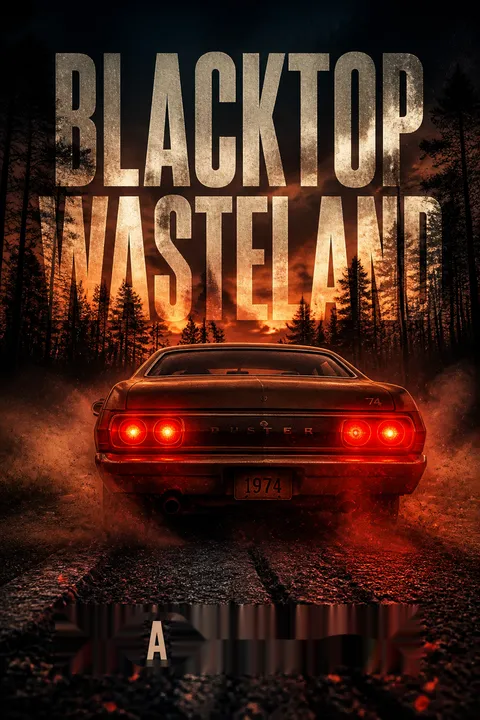


Plot Summary
The Duster Wins
Beauregard Montage, known as Bug, needs a thousand dollars to keep his struggling garage open and buy glasses for his youngest son. At an illegal race, he hears a faulty valve in Warren Crocker’s boastful Oldsmobile and beats it in his battered Plymouth Duster. Before the crowd can celebrate, two fake deputies arrive, threaten the racers, and confiscate their cash.
Bug realizes Warren helped set the trap and waits for him outside a bar. He beats Warren with a wrench until the racer gives back the money he still has, only $750. The win proves Bug can still read engines and men under pressure, but it leaves him short of rent and shows how little skill can protect him from a rigged system.
Bills Close In
At home, Bug and his wife, Kia, count the costs piling up: his garage is losing customers to Precision Auto, their son Javon may need braces, and their younger boy Darren needs glasses. Their older daughter, Ariel, lives with her mother and is struggling to get to college.
Then Lake Castor Convalescent Home tells Bug that his mother, Ella, concealed a life-insurance policy, disqualifying her from Medicaid and leaving a bill of nearly $48,000. Ella refuses to surrender the policy, preserving control even as her care is threatened.
Bug visits his uncle and surrogate father, Boonie, at the scrapyard, hoping for criminal work. Boonie has no jobs to offer. Soon after, Ronnie Sessions, an old partner Bug blames for a disastrous horse theft, sends word that he wants to meet.
Ronnie's Diamond Pitch
Ronnie arrives at Bug’s home with his brother Reggie and a proposal to rob Valenti Jewelers, where Ronnie’s employee girlfriend, Jenny, can provide access. Bug points a gun at Ronnie for bringing danger to his family, but agrees to hear the details.
The target is a shipment of diamonds worth far more than Ronnie first admits, and the deadline he wants is recklessly short. Bug insists on reconnaissance, clean weapons, sobriety, and strict secrecy. Kia begs him to sell the Duster instead of returning to crime; Bug refuses because the car is his last tangible link to his missing father.
At a gas station, Ariel explains that her mother will not co-sign her college loan. Bug watches his daughter’s future narrow, and that encounter makes him decide the robbery is worth the risk.
A Name From the Past
Bug studies Valenti’s shopping center, nearby roads, and police station, then stops when he sees a stranded couple whose young wife is in labor. He drives them to the hospital at speed and gives the father his own father’s name, Anthony.
The name brings back the last day he saw Anthony in 1991. At a Tastee Freez, Red Navely and two accomplices corner Anthony over a payroll robbery and accuse him of informing. Thirteen-year-old Bug climbs behind the wheel of the Duster and runs the men down to save his father.
Anthony tells police it was an accident, but Bug is sentenced to five years in juvenile detention. Anthony leaves for California and never returns. The robbery now touches a buried family pattern: Bug learned to drive in the instant he learned that violence could save someone.
The Store Turns Violent
Bug rebuilds a Buick Regal from a scrapyard shell, adding a fast engine, reinforced structure, and improvised protection. On the morning of the robbery, he drives Ronnie and Quan to Valenti and gives them four minutes to get in and out.
Jenny has not disabled the alarm because the manager, Lou Ellen, unexpectedly came to work. Ronnie forces Jenny into the back room, where she opens the safe, and takes diamonds along with cash. On the sales floor, Lou Ellen resists, and Ronnie shoots her. Quan, high despite Bug’s orders, fires at a young customer, Eric Gay, killing him.
The robbers escape as police arrive. Bug launches the Buick off an unfinished overpass and into a dirt mound, then abandons it in a flooded quarry. They survive the getaway, but the dead customer makes the crime far more than a clean theft.
The Robbery's Loose Ends
The injured Lou Ellen tells detectives that the robbers took only petty cash, concealing the diamonds’ connection to Lazarus Mothersbaugh, known as Lazy, a criminal boss who used Valenti to launder money. Lazy sends his enforcers Billy, called Burning Man, and Horace to question her.
They identify Jenny as the likely source, then suffocate Lou Ellen and set her apartment on fire. Jenny, already frightened by the robbery, kills a man sent to intimidate her and flees with the cash Ronnie gives her.
Meanwhile, Ronnie sells the diamonds through his prison contact and returns with money, but shortchanges Bug’s agreed share. Bug takes what he is given rather than risk an open fight. The men have escaped the store, yet the people around the robbery are being hunted, and Ronnie’s appetite for money is already corroding the crew.
Money Buys Time
Bug uses the robbery money to pay most of Ella’s nursing-home debt, keeping her from being expelled, and gives Ariel $24,000 for a year at college. Their meeting is awkward, but she accepts the money and calls him her father again.
On his way to buy dinner, Bug passes Precision Auto engulfed in flames. He has not set the fire, but the loss brings more customers to his garage. A television report identifies Eric Gay as the robbery victim and describes his wife, Caitlin, and their infant son, Anthony.
The child’s name and the sight of the grieving family turn Bug’s escape into a moral injury he cannot outrun. The money eases his family’s immediate needs, but it also attaches their relief to a stranger’s death and a chain of crimes still unfolding.
Javon Sets the Fire
Patrick Thompson and his father, Butch, confront Bug at the garage, accusing him of burning their competing repair shop. When Butch insults him, Bug strikes both men with a heavy impact wrench and sends them away injured. Later, Bug asks Javon whether he set the fire.
Javon admits he acted alone after overhearing that the family might lose the garage. He thought destroying Precision would protect his father from returning to crime, and feared Bug would die on a job.
Bug promises not to turn him in, but makes him promise never to use violence to solve another problem. He tells Kia what their son did and recognizes that Javon has absorbed the very logic Bug wants to escape. The family’s danger is no longer only something Bug brings home; his son has begun reproducing it.
Lazy Claims the Crew
At Danny’s bar, Bug notices three armed strangers watching him and gets Kia and Kelvin’s companion out before confronting them. Billy reveals that his men can reach Kelvin, then takes Bug to Lazy’s Virginia hideout, where Ronnie and Quan have already been beaten.
Lazy explains that Valenti belonged to him and demands that the crew steal a shipment of platinum from his rival, Shade. He has learned about Bug through Ronnie’s loose talk and kills Quan in front of the others to establish control. Lazy offers survival only if Bug and Ronnie deliver the truck, while threatening their families if they refuse.
Ronnie’s betrayal is not a single dramatic confession so much as the consequence of his habitual bragging and poor judgment. Bug is forced back into a life he had chosen for money, now under threat of losing everyone he meant to protect.
The Platinum Intercept
Bug recruits Kelvin despite the danger, and reluctantly includes Ronnie and Reggie. The target is a Ford van carrying platinum under armed escort through rural North Carolina. Bug blocks the road with a burning Lincoln while Kelvin distracts the guards, then slips into the van and handcuffs its driver.
He races the loaded van toward a box truck Ronnie is driving, whose specially built rear door lowers into a ramp. The first transfer attempt fails when Ronnie accelerates too soon. On the next stretch, Bug drives the van up the ramp and into the truck.
At their secluded meeting place, the driver slips his blindfold and escapes into the woods. Bug, Kelvin, Ronnie, and Reggie pursue him. The driver attacks Bug, and Kelvin and Ronnie shoot him. As Bug rises, another gunshot hits Kelvin, leaving Bug wounded and the stolen shipment in immediate jeopardy.
Ronnie Takes the Van
Bug wakes hours later on the hillside beside Kelvin’s body. Ronnie has slashed the tires on the box truck and taken the platinum van with Reggie. Bug borrows a battered Jeep and limps toward Red Hill, but the vehicle overheats before he reaches home.
While he is away, Lazy’s men arrive to seize Kia and the boys as leverage. Javon takes one of his father’s guns and shoots two attackers, but the third man wounds eight-year-old Darren before escaping. Kia rides with Darren to the hospital and blames Bug for bringing the gunmen to their door.
She sends him away while their son undergoes surgery. Bug’s attempt to provide for his family has now cost Kelvin his life and placed his children inside the violence he had spent years trying to keep separate from them.
The Last Family Goodbye
Bug finds refuge with Boonie and admits that he has been pretending his criminal self and his family self could remain separate. He asks Boonie to dispose of the Jeep and help him obtain another vehicle, then insists he must settle the danger himself.
At the nursing home, Ella recognizes that he is preparing to leave and warns him that he is repeating Anthony’s abandonment. Bug recalls a rare day when his parents acted like a family, then leaves without telling her where he is going.
He tells Boonie that his children need protection more than they need him nearby, a conviction shaped by guilt as much as love. Boonie agrees to help, though he urges Bug not to vanish like his father. With Darren still in critical condition and Kia refusing him, Bug begins his pursuit alone.
No More Sessions
Bug finds Reggie at Wonderland, drags him away from the drug den, and takes him to an abandoned factory clearing. When Reggie runs, Bug fires into the air, catches him, and crushes his hand in a truck door until he reveals that Ronnie is hiding at Amber Butler’s trailer with the van.
Bug shoots Reggie, then drives to Amber’s place and rams the trailer with a tow truck. Ronnie escapes through the back, but Bug pursues him through a cornfield and knocks him down with the truck. Ronnie admits he betrayed the crew because he could not bear returning to poverty.
Bug shoots him, first for Kelvin and then for Darren, and forces him to reveal where the platinum van is hidden. He returns to Boonie’s yard with the location and a body for disposal. Greed has turned every alliance into a trap, and Bug answers betrayal with the same violence he once claimed to control.
The Duster's Final Run
Bug retrieves the platinum, reserves ten rolls for Kia and Ariel, and arranges a meeting with Lazy. Before leaving, he visits Darren in intensive care and calls Ariel to tell her he loves her. He rigs the van with an explosive device, then detonates it when Lazy and Billy arrive, destroying the shipment they came to claim.
Lazy and Billy escape in a damaged Cadillac, so Bug pursues them in the Duster. He crashes the Cadillac into a pasture, killing Billy, then runs Lazy down when the injured boss emerges with a gun. Wounded himself, Bug drives away before police arrive.
At the hospital, he tells Kia he has ordered Boonie to crush the Duster, the last relic tying him to Anthony. Kia does not promise forgiveness, but asks him to stay until Javon arrives. Bug remains beside Darren, uncertain he can change, but no longer pretending the choice is simple.
Analysis
Blacktop Wasteland makes economic pressure tangible through specific bills: the garage loan, Darren’s glasses, Javon’s braces, Ariel’s tuition, and Ella’s nursing care. These costs do not excuse Bug’s crimes, but they explain why his rationalizations sound persuasive to him. He imagines that one exceptional job can convert unstable survival into lasting security. Each score instead expands the circle of people exposed to harm.
The novel’s deepest conflict is not between a criminal past and a respectable present, as though Bug could keep them in separate compartments. His expertise, family history, and emotional habits travel together. The Duster makes that fusion visible: it is both a beloved inheritance and a vehicle through which danger becomes pleasure. Bug’s memories of Anthony complicate blame. His father loved him, yet that love did not prevent abandonment or repair the damage of the life he chose. Bug initially preserves the love by idealizing the man; only after his own choices endanger his children does he recognize that affection cannot make violence harmless.
Fatherhood is measured here less by intention than by consequence. Bug provides for Ariel and wants to protect Javon and Darren, but money and protection become substitutes for presence. Javon’s arson shows how children learn not only from what parents say, but from the solutions they model. Bug’s final uncertainty matters: remaining beside his family is a choice, not proof that he has transformed. The ending refuses easy redemption. It leaves him with the harder task of being accountable over time, after the chase has stopped and the people he loves can see what his choices cost.
People Also Read









Characters
Beauregard Montage
The gifted wheelmanKnown as Bug, Beauregard is a gifted mechanic and driver who has tried to trade criminal work for the security of his own garage. He is observant, practical, and tender with his children, but he is also drawn to the speed and clarity of dangerous work. His childhood left him carrying both love for his absent father and anger at the choices that shaped their family. He wants to provide, yet repeatedly treats money and protection as problems he can solve through force. His central conflict is not ignorance of the damage he causes. He understands it, then persuades himself that one more job will make the damage worthwhile.
Kia
The family anchorKia is Beauregard’s wife and the mother of Javon and Darren. She works long hours while carrying much of the family’s daily care, and she has lived with the fear that Bug’s past will return through the front door. Her directness is not a lack of love; it is the language she uses when reassurance has repeatedly failed to keep him safe. She wants stability for their children and refuses to romanticize the Duster or the man who left it behind. Kia sees the cost of Bug’s choices clearly, even when she cannot decide whether love can survive them.
Kelvin
The loyal cousinKelvin is Bug’s cousin, closest friend, and partner at Montage Motors. He brings humor and easy warmth to their work, but his loyalty is practical as well as emotional: he knows Bug’s instincts, shares his history, and does not leave him alone when danger rises. Kelvin understands that the garage’s financial troubles threaten both men’s livelihoods, yet he is less consumed by the old criminal life. His bond with Bug carries the texture of family raised together, with affection often expressed through teasing and shared labor.
Kia
The family anchorKia is Beauregard’s wife and the mother of Javon and Darren. She works long hours while carrying much of the family’s daily care, and she has lived with the fear that Bug’s past will return through the front door. Her directness is not a lack of love; it is the language she uses when reassurance has repeatedly failed to keep him safe. She wants stability for their children and refuses to romanticize the Duster or the man who left it behind. Kia sees the cost of Bug’s choices clearly, even when she cannot decide whether love can survive them.
Javon
The watchful sonJavon is Beauregard and Kia’s older son, an artist who is more comfortable drawing than navigating school subjects that do not hold his interest. He notices the strain in his parents’ conversations and worries about his father’s safety, even when adults try to shield him from their problems. His sensitivity can make him seem quiet, but he is observant and determined to help the people he loves. Javon’s wish to protect his family is sincere, though he is still a child learning where responsibility should end.
Darren
The youngest childDarren is Beauregard and Kia’s youngest son, a playful child whose laughter often follows the family’s small rituals. He loves action figures, jokes, and the attention of his father. His presence keeps the stakes of Beauregard’s choices immediate and domestic: there is a little boy at home who expects his father to return.
Ariel
The daughter at the thresholdAriel is Beauregard’s older daughter from his teenage relationship with Janice. She lives with her mother and grandmother, and her relationship with Bug is marked by years of distance, awkward visits, and his attempts to provide from the margins. She is capable and ambitious, but household instability and financial barriers complicate her plans for college. Ariel does not simply wait for her father to repair her life; she has learned to manage disappointment. Their affection is real, though both struggle to say what it means.
Anthony Montage
The absent fatherAnthony is Bug’s father, a charismatic driver and criminal whose love for his son coexists with instability and a refusal to settle. Bug remembers his skill behind the wheel, his humor, and the advice he gave, but memory can soften the consequences Anthony left behind. To Bug, the Duster is more than a car: it is a surviving piece of the father he cannot fully mourn or fully condemn. Anthony’s legacy shapes how Bug understands manhood, loyalty, and escape.
Ella Montage
The formidable motherElla is Bug’s mother, a sharp-witted, fiercely controlling woman whose cancer and confinement have not erased her force of personality. She knows how to wound with a carefully chosen observation and how to keep people close by withholding what they need. Her conflict with Bug is tangled with her grief over Anthony and her insistence on remaining independent. Their history is affectionate, combative, and full of old grievances neither can quite set down.
Boonie
The surrogate fatherBoonie is Bug’s uncle, godfather in all but name, and owner of Red Hill Metals. He has offered practical care across generations, including helping Bug build the Duster and supporting his family when Anthony could not. Boonie understands criminal work from the inside, but he also knows the cost of remaining in it. His counsel carries weight because it comes from someone who loves Bug without mistaking him for a harmless man. He wants Bug alive and present, not merely successful.
Ronnie Sessions
The hungry old partnerRonnie is a former criminal partner whose charm and improvisational nerve conceal poor discipline. He is funny, persuasive, and skilled at turning a risky scheme into something that sounds inevitable. Money represents escape from the poverty and humiliation he fears, so he tends to treat caution as an obstacle and promises as negotiable. His history with Bug includes a failed horse theft that left serious resentment. Ronnie wants a big score, but he rarely thinks beyond what the score might buy him.
Reggie Sessions
Ronnie's dependent brotherReggie is Ronnie’s younger brother, physically vulnerable and dependent on him for direction. He uses drugs and struggles to manage danger, yet his loyalty to Ronnie is genuine. Reggie is not a planner or a hardened criminal; he often finds himself following choices he did not fully understand. His attachment to his brother makes him both a participant in Ronnie’s schemes and someone who fears what those schemes may cost.
Jenny
The uneasy insiderJenny works at Valenti Jewelers and has an on-and-off relationship with Ronnie stretching back to high school. She wants to leave Virginia and start over, but she is wary of the danger Ronnie’s plans invite. Her connection to the store gives the robbery its inside route, while her feelings for Ronnie complicate her judgment. Jenny is resourceful and more self-aware than he gives her credit for, though she is still tempted by the promise that one score can erase a lifetime of mistakes.
Quan
The volatile gunmanQuan is the third member Ronnie recruits for the jewelry-store robbery. He performs confidence through his weapon and swagger, but his bravado makes him difficult to trust in a carefully timed job. Bug recognizes that Quan’s appetite for intimidation is a liability, while Ronnie values his willingness to join the crew. Quan wants money and status, and he mistakes being armed for being in control.
Lazarus Mothersbaugh
The movie-loving crime bossKnown as Lazy, Lazarus Mothersbaugh runs a criminal operation built from legitimate-looking businesses and violent enforcement. He is theatrical, clever, and fond of turning movie references into a performance of power. Beneath the humor is a careful organizer who treats people as family only when that language helps secure obedience. Lazy values loyalty, leverage, and control of his territory. His polished charm makes his threats more unsettling, not less.
Billy
Lazy's scarred enforcerBilly, called Burning Man, is one of Lazy’s most trusted enforcers. A severe facial burn makes him memorable, but his calm, deliberate manner is more revealing than his appearance. He can present brutality as a regrettable necessity and uses personal familiarity to lower a victim’s guard. Billy understands that fear works best when it seems measured and inevitable.
Lou Ellen
The jewelry managerLou Ellen manages Valenti Jewelers and is involved with the store’s hidden financial arrangements. She is protective of the people she loves and attempts to keep the robbery’s true purpose from investigators. Her relationship with Jenny gives her loyalties outside the criminal operation, leaving her caught between affection and the danger of knowing too much.
Eric Gay
The young customerEric is a nineteen-year-old customer at Valenti Jewelers, a new husband and father trying to build a life despite financial hardship. He becomes a measure of the ordinary future that criminal plans can abruptly erase.
Shade
Lazy's rising rivalShade is a North Carolina crime boss whose expanding influence threatens Lazy’s territory. He is described through other people’s fear and through the heavily armed crews protecting his shipments. Though he does not appear directly, his rivalry shapes the platinum job and the balance of power around it.
Janice
Ariel's motherJanice is Ariel’s mother and Bug’s former partner. Her struggles with alcohol and drugs, along with a history of conflict over Ariel’s upbringing, contribute to the distance between father and daughter. She is a difficult presence in Bug’s life, but her choices do not erase the constraints and pain that shape the family around her.
Jean
Kia's steady sisterJean is Kia’s sister, a hairdresser who helps care for Javon and Darren while their parents work. She offers Kia practical support and becomes an important link between the family and the hospital during the crisis.
Patrick Thompson
The garage rivalPatrick owns Precision Auto with his father. He is a local competitor whose business success sharpens Bug’s financial anxiety. Patrick is accustomed to seeing the garage rivalry as personal, which makes suspicion easy when his shop is threatened.
Butch Thompson
Patrick's combative fatherButch is Patrick’s father and co-owner of Precision Auto. Blunt, proud, and openly racist, he interprets the competition through grievance and provocation. His confrontational manner helps turn business suspicion into a physical clash.
Plot Devices
The Plymouth Duster
A memory with horsepowerThe Duster is the car Anthony left behind and the machine Bug restores rather than sells. Its 8-ball gearshift carries a family history of driving, risk, and paternal advice. For Bug, its value exceeds its market price because it lets him feel close to a father he cannot recover. The car also gives him a physical arena in which skill can briefly feel like control. As the story progresses, the Duster connects memory to present action, showing how a cherished inheritance can preserve affection while also keeping a dangerous identity alive.
The Driver's Craft
Skill turns into escapeBug’s mechanical knowledge and driving ability govern the novel’s major action. He listens for engine faults, studies routes, anticipates police response, and modifies ordinary vehicles for extraordinary tasks. The first robbery getaway and the later platinum theft both depend on these skills, but the craft is not presented as pure mastery. Each successful maneuver pulls Bug farther into the life he says he has left. The cars reward attention and nerve, while their consequences expose the limits of technical control over human greed and violence.
The Stolen Platinum
Leverage against a crime bossLazy forces Bug and Ronnie to steal a shipment of platinum from Shade, expecting the cargo to settle the damage caused by the jewelry-store robbery. The shipment becomes the central bargaining object among rival crews, allowing Bug to turn Lazy’s own need into a possible route out. The elaborate transfer from a van into a modified box truck makes the cargo a technical challenge as well as a source of power. Its possession never guarantees safety, however. Every person who knows where it is can become a target, and the load magnifies the greed already dividing the crew.
The Burner Phone
A call becomes a triggerDisposable phones protect the criminals from easy tracking, but one burner also becomes part of Bug’s final plan. Lazy uses a phone to direct the forced platinum theft, and Bug later turns the expected handoff into a trap. The device’s role changes from routine criminal precaution to a mechanism for controlling the timing of a confrontation. It suits the book’s world, where ordinary objects become dangerous through the intentions attached to them. Its eventual use shows Bug applying the same inventive intelligence that once built his escape routes to a plan aimed at ending the immediate threat.



Download PDF
Download EPUB
.epub digital book format is ideal for reading ebooks on phones, tablets, and e-readers.








