


Plot Summary
Thirteen Cages, Three Giants
Sorsha, a burglar who frees captured shadowkind, slips into a collector’s mansion and cuts open thirteen small cages, using a heated blade that avoids triggering the lights’ alarms. Behind a curtain, three enormous captives wait in reinforced cages. A pressure sensor sounds before she can free them quietly, so she opens all three and ignites the room to cover her escape.
She swings from a shattered window to a utility pole and returns home believing the job is done. In the morning, she finds the three released beings in her kitchen: Thorn, a scarred warrior; Snap, a golden-haired innocent; and Ruse, a horned charmer. They explain that their leader, Omen, is missing, and that they cannot return to their realm without him.
Sorsha’s first rescue establishes a practical ethic rather than a spotless heroic identity: she steals from the collector as well as freeing prisoners, and she treats fire as a tool when ordinary restraint would leave captives behind. The spectacular escape appears to close the job, but the three visitors make its consequences intimate and ongoing. Her preferred distance from the supernatural world is already compromised. Their presence also reverses the expected rescue dynamic: Sorsha is not simply liberating creatures, she is being recruited into their unfinished emergency.
Three Debts at Breakfast
The trio insists that saving them obligates them to protect Sorsha, despite her clear refusal. Thorn frames the arrangement as duty, while Ruse proposes following her investigations because she knows the mortal world better than they do.
Snap, encountering ordinary food and household objects for the first time, treats Sorsha’s kitchen as a marvel. Ruse reveals that he is an incubus and asks to feed through intimacy; Sorsha sets strict limits, keeps her silver-and-iron badge on, and accepts a brief encounter after noticing his weakness.
At the Shadowkind Defense Fund, Sorsha hears about a separate facility where hunters have caged and butchered creatures. She keeps her own arsonist identity secret, while asking whether hunters have begun targeting powerful shadowkind.
The bargain between Sorsha and the trio is unequal in an interesting way. She has the practical knowledge they need, but they claim authority over her safety through a debt she never asked them to incur. Ruse’s feeding introduces a more negotiated intimacy: Sorsha sets boundaries, and his need does not erase her right to refuse. The Fund, meanwhile, shows the limits of her established community. It can gather information and aid victims, but Sorsha’s private, direct interventions exceed its comfort with risk.
A Star From Luna's Past
Sorsha takes the trio to the bridge where Omen was ambushed. Snap tastes impressions left on concrete and finds a scrap of a hunter’s shirt, then recalls the phrase Merry Den from a nearby man’s excitement. Thorn describes the attackers’ silver-and-iron armor, binding nets, and whips of light.
When he sketches their emblem, a star formed from crossed sword shapes, Sorsha recognizes the mark from the people who came for Luna. The attackers had used similar weapons when Sorsha was sixteen, forcing Luna to sacrifice herself so Sorsha could escape. The shared symbol turns Omen’s disappearance from an isolated crisis into a possible continuation of the violence that shaped Sorsha’s childhood.
The emblem gives Sorsha’s investigation a second source of urgency. She is not merely helping strangers repay a favor; the same organized violence may have reached into her family history. Snap’s unusual sensory talent makes the past materially legible through scraps and surfaces, while Sorsha’s recognition gives those impressions meaning. The bridge is therefore both crime scene and memory trigger. It also exposes the cost of her old survival strategy: she escaped Luna’s attackers, but never learned who they were or why they wanted her guardian.
Keepsakes Speak Softly
At home, Sorsha asks Snap to examine objects saved from Luna’s life. He senses the fae’s warmth in a purple hair tie and finds only fragments in her music and sneakers. The shoes carry a memory of Luna throwing them to Sorsha as they fled the night of the attack. Sorsha explains that her parents were killed by hunters when she was three, and that Luna raised her afterward.
At sixteen, Sorsha watched the hunters corner Luna, who used her magic to distract them and give Sorsha a chance to escape. Snap then examines a small box holding her parents’ letter. He cannot recover much, but tells her their feelings were marked by love and pride in the risks they took.
The objects make grief specific without turning it into a solved mystery. Snap can recover sensation and emotion, but not a complete account of Luna’s past or the attackers’ purpose. That limitation matters: memory offers Sorsha companionship, not certainty. The letter also complicates her inherited guilt. Her parents’ choices were dangerous, but Snap’s reading suggests they understood the danger and accepted it for reasons larger than recklessness. Sorsha’s promise to help the trio now grows from both affection for Luna and a desire to learn what her parents’ work cost them.
Merry Den Goes Nowhere
Sorsha and the trio search a flea market for signs of the sword-star group, but find nothing. Thorn suspects they are being watched, though the possible tail disappears. Sorsha later visits Jade’s Fountain, a bar run by shadowkind, and learns that an unknown buyer has quietly offered collectors large sums for especially powerful captives.
Jade has no lead on Merry Den, but the offer suggests the trio’s capture may be part of a larger operation. Sorsha conceals the investigation from her best friend, Vivi, who attends the bar with her. When four unfamiliar men begin questioning patrons, Sorsha slips toward the back exit rather than risk being identified. A man posing as drunk follows her into the alley with a knife.
The empty market prevents the first clue from becoming an easy answer, while Jade’s information broadens the danger from one missing leader to a market for powerful beings. Sorsha’s secrecy around Vivi is protective in intention but costly in practice: she withholds the very facts her friend would need to make an informed choice. The men at the bar are not yet confirmed as enemies, so Sorsha acts on uncertainty rather than proof. That caution proves sensible, but it also draws her into a crisis where her allies’ idea of protection will clash with her own.
A Knife, Then Gas
The apparent drunk grabs Sorsha and produces a knife. She strikes him, but Thorn emerges from the shadows and kills him with a brutal blow before she can finish the fight. Ruse senses the man intended to assault her, yet Sorsha objects to Thorn treating lethal force as an ordinary answer. Back at her apartment, the trio helps her recover from a gas attack pushed under the door.
Armed attackers break in, so Sorsha pours kerosene through her bedroom and lights it as they escape through the window and down the fire escape. She flees on a stolen bicycle with Pickle, her small, disabled dragon, and her gear. Thorn has also rescued the box containing her parents’ letter, preserving her last keepsake as the apartment burns.
Sorsha’s danger becomes concrete, and so does the mismatch between her moral expectations and shadowkind violence. Thorn’s intervention keeps her alive, but his willingness to kill leaves her confronting what protection means when the protector rejects mortal law. The fire is a familiar tactic turned against her own life: she escapes by destroying the home and possessions that made her feel settled. Thorn’s choice to save the letter is a quieter form of care, showing that his attention can extend beyond threats and debts, even when he cannot express it easily.
Pleasure, Then Betrayal
The trio hides with Sorsha in an empty apartment, where she mourns the home and keepsakes lost in the fire. Seeking comfort, she chooses to sleep with Ruse, who has already shown patience and skill. Afterward, he instinctively reads her emotions, breaking the boundary she had made explicit.
Sorsha sends him away, afraid that she cannot know whether his powers influenced their intimacy. The next day she returns to the Fund for a replacement protective badge and asks its contacts for help tracing the name behind Merry Den.
Ruse later explains that he read her feelings because he feared overstaying his welcome, not to manipulate her. Sorsha tells him that a shadowkind once controlled her actions as a child, helping him understand why mind-influence terrifies her.
The breach is not framed as harmless because Ruse did not intend harm. Sorsha’s past experience makes control over her mind a bodily memory, and her consent depends on the ability to distinguish desire from supernatural influence. Ruse’s confession matters because it replaces a seductive explanation with a vulnerable one, but it cannot erase the violation. The episode also connects intimacy to the novel’s larger concern with power: being physically close does not grant anyone access to another person’s interior life.
Meriden's Empty Laboratory
A Fund contact identifies John Meriden as a collector-facing alias, though his work address is a dead office building. Sorsha leads the trio inside, where Snap tastes traces of cages and painful experiments in emptied laboratory rooms. He also finds the sword-star emblem on an old folder. In the office section, Snap identifies a mug belonging to Meriden and reads impressions that point to the man’s home.
During the search, Ruse apologizes for violating Sorsha’s trust and explains his fear of misreading her wish for company. Her account of childhood mind control makes her boundary clear; she agrees to see how he handles it, without promising easy forgiveness. The mug turns a vanished workplace into a trail the group can follow.
The office yields no clean documents or direct confession, only traces of former use. Snap’s talent converts abandoned objects into evidence, but the evidence remains partial and requires Sorsha’s research skills to become actionable. Ruse’s apology parallels this investigative method: he must interpret what happened, acknowledge the harm, and accept that Sorsha controls what comes next. Neither the building nor the relationship is restored to its earlier state. Both are instead made usable through careful attention to what remains.
A Corpse Becomes a Map
The trio finds Meriden’s apartment but not the man, then returns to follow his morning routine. During the first stakeout, Sorsha and Snap grow close; his first experience of desire becomes an intimate encounter he chooses to pursue. On the next attempt, a van drops a mutilated body in the docklands. Vivi arrives in a borrowed car and admits she traced Sorsha and questioned Meriden’s neighbors, hoping to help.
Sorsha realizes that the attention may have exposed him, orders Vivi to hide with her grandmother, and argues with her over secrecy and risk. Snap examines Meriden’s body and recovers scattered memories, including repeated visits to a toy store and an unsettling connection to a building whose entrance involved iron.
Vivi’s interference is neither simple betrayal nor foolishness: she acts from genuine care after Sorsha excludes her, but the investigation’s danger makes that care consequential. Their conflict exposes the paternalism inside Sorsha’s protection. She wants to spare Vivi, yet withholds information that would let her choose her own risk. Snap’s use of Meriden’s remains turns an apparent dead end into a fragmentary route forward, though the new lead comes at a human cost that Sorsha cannot dismiss as merely useful.
The Toy Store Break-In
Snap’s impressions point to Fun Station Depot, an outlet toy store concealing part of the conspirators’ operation. Sorsha enters alone because its office is protected against shadowkind, while Thorn patrols outside and the others wait in a car. She uses the word iron as a keypad code to open the office, but the computer demands a password.
Carrying the computer and a box of discs, she triggers noisy toys and is spotted by two guards. Sorsha evades them through the store, improvising with a ball pit, a ride-on car, and a toy dart blaster. One guard shoots her with a silver bullet. Thorn crashes into her path, reveals a vast winged form, shields her, and kills both pursuers before carrying her back to the car with the stolen equipment.
The toy store’s bright merchandise disguises a system built to contain and exploit shadowkind. Sorsha’s improvisation turns children’s toys into survival tools, but her injury demonstrates that ingenuity cannot cancel physical vulnerability. Thorn’s hidden form arrives as a revelation through action, not exposition: he exposes it when Sorsha’s life is at stake. His rescue deepens their connection while making his protective instinct more troublingly absolute. The stolen computer finally gives the group a chance to move from inference toward evidence.
The Cell Door Opens
After Snap and Ruse take the computer to a Fund hacker, they return with blueprints locating a guarded facility hidden inside a construction site. Sorsha shares the plan with the recovering trio and calls Vivi, who is hiding safely with her grandmother.
The group diverts guards, enters through the main door, and uses Snap’s impressions to open Omen’s cell. The captive attacks Sorsha before recognizing his companions, and an alarm drops a silver-and-iron barrier across their route.
Sorsha cuts through it with her heated blade while Ruse tries to steady Omen. A guard blocks the stairwell, but Omen kills her and leads the group through the facility. Thorn breaks a window from outside, and the rescuers flee across the construction site under fire.
The rescue succeeds because the group’s different capacities finally operate together: Sorsha opens physical barriers, Snap reads the mechanisms, Ruse redirects human attention, and Thorn creates an exit. Yet freeing Omen does not produce immediate gratitude or safety. His frightened violence injures Sorsha, the alarm seals their retreat, and the facility remains full of other prisoners. The climax therefore offers a real victory without pretending that escape is the same as justice.
A Devil Joins the Hunt
The group reaches a derelict campsite outside the city and confirms that Omen is alive. He explains that his captors tortured him while pursuing an undisclosed project connected to shifting power between mortals and shadowkind.
He is hostile toward humans, dismisses the Defense Fund, and questions why Sorsha should continue with the mission. Sorsha answers that the same organization may have killed her parents and taken Luna from her, and that she is already committed to stopping them.
Thorn, Ruse, and Snap affirm that her courage and practical help made the rescue possible. Omen accepts her place in the group, though his manner remains wary. The immediate search has ended, but the conspiracy, its other captives, and Omen’s mistrust remain unresolved.
The ending closes the rescue plot while opening the larger conflict. Omen’s suspicion is understandable after torture, but it also threatens to repeat the human tendency to reduce people to categories rather than actions. Sorsha’s place in the group is earned through demonstrated competence, not through Omen’s approval or the trio’s romantic attachment. Her choice to stay marks a shift from private vengeance toward collective work, while the unresolved facility leaves that commitment facing a far larger structure than any single collector’s mansion.
Analysis
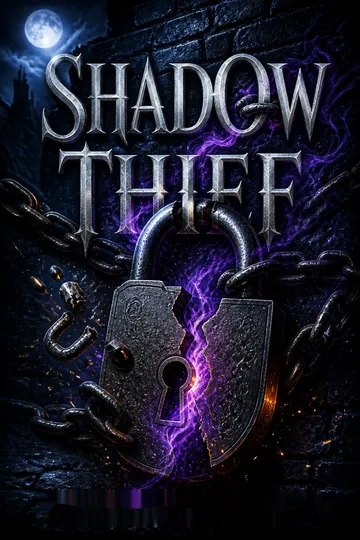
Shadow Thief builds its fantasy conflict out of competing definitions of care. Sorsha frees shadowkind because she rejects the collector’s claim that possession can be benevolent, yet she also shelters Pickle in a relationship Thorn initially misreads. The difference is consent and dependence: Pickle cannot safely fend for himself, but remains with Sorsha willingly. That distinction becomes the story’s moral hinge, linking captivity, protection, and intimacy.
The supernatural abilities are not merely spectacle. Ruse’s influence makes consent precarious; Snap’s impressions make the past accessible but incomplete; Thorn’s strength can save Sorsha while also overwhelming her sense of justice. Each power creates a problem of restraint alongside its practical use. Sorsha’s repeated insistence on boundaries therefore matters as much as her criminal skill. She is not fearless, but she keeps demanding that power answer to choice.
Grief drives the investigation without being reduced to revenge. Sorsha wants answers about Luna and her parents, yet her response to Meriden’s death shows that she cannot treat even an enemy’s life as disposable information. Vivi’s pursuit echoes Sorsha’s own protective secrecy from another angle: both women risk harm because they believe they are acting for the other’s good. Their conflict suggests that care becomes control when it denies another person the knowledge needed to choose.
The ending offers a partial victory rather than closure. Omen is rescued, but the facility and its captives reveal a larger operation whose purpose remains unclear. Sorsha chooses to continue not because the danger has become manageable, but because she has stopped treating survival as a reason to abandon responsibility. The book’s central tension is thus not human versus monster. It is whether anyone, mortal or shadowkind, can use power without turning protection into possession.
Review Summary
Shadow Thief received mixed reviews, with an average rating of 3.83 out of 5. Readers praised the strong female lead, interesting world-building, and unique monster characters. Some enjoyed the romance and character development, while others found the plot lacking or struggled to connect with the story. The book's pacing and writing style were points of contention. Many readers expressed interest in continuing the series, curious about the mysteries surrounding the protagonist Sorsha and the shadowkind world. Some DNF'd early, citing boredom or disinterest.
People Also Read



Characters
Sorsha
Monster-rescuing burglarSorsha is a skilled lock-picker and shadowkind liberator who funds her work by stealing from collectors. Humor, old songs, and constant improvisation help her manage a life shaped by loss, but her stubborn self-reliance can become secrecy when she fears for someone else. She trusts practical evidence more readily than promises, and insists on setting clear limits when others use supernatural influence. Raised by the fae Luna, she carries both the skills Luna taught her and unanswered questions about the violence that disrupted her childhood. Her concern for captive beings is not abstract: she takes physical risks to free them, even when the consequences reach her home and closest relationships.
Thorn
Grim guardian warriorThorn is the imposing, scarred member of the trio, a formidable fighter who measures himself by whether he can protect those entrusted to him. His formal manners and rigid sense of duty conceal a deep fear of failing his companions. Because he comes from a world with different ideas about violence, he initially treats mortal law as less important than immediate survival. He watches closely even when his manner seems cold, and his care often appears through practical acts rather than reassurance. Sorsha’s independence challenges his instinct to decide what is safest for her, while her courage gradually earns his respect.
Ruse
Charming incubus negotiatorRuse is a sensual, quick-witted incubus who understands mortal behavior better than his companions and uses charm to negotiate, distract, and survive. He often masks uncertainty with teasing confidence, particularly when intimacy threatens to become more than a transaction. Feeding makes sexual consent and personal boundaries central to his relationships, yet his supernatural habits do not excuse crossing a line. Sorsha’s insistence on controlling access to her mind forces him to confront how easily his instincts can harm someone who trusts him. His humor is both a social tool and a way to hide vulnerability.
Snap
Curious impression-readerSnap is a striking, gentle shadowkind whose first encounters with mortal life make food, transport, and ordinary objects feel astonishing. His curiosity can draw him off task, but his ability to sense impressions from objects makes him invaluable to the search. Beneath his open enthusiasm lies a painful history tied to the powers he can use, and he is careful not to violate another being’s boundaries. He wants to contribute and to bring pleasure to others, though he is still learning how desire and intimacy work. Sorsha’s patience lets him explore those feelings without treating his inexperience as a weakness.
Omen
Missing shadowkind commanderOmen brought Thorn, Ruse, and Snap together to investigate threats against shadowkind. He is a strategic leader accustomed to giving clear orders and expecting his companions to follow them. His time in the mortal world has left him deeply wary of humans, especially those who claim to help while failing to prevent cruelty. Even among his own people, he is a figure whose judgment carries weight. His suspicion reflects hard experience, but it can also make cooperation difficult when allies do not fit his expectations.
Vivi
Sorsha's devoted best friendVivi is Sorsha’s longtime best friend and fellow member of the Shadowkind Defense Fund. Sociable, stylish, and hungry for a life more adventurous than routine fundraising, she remembers the bold plans they made as teenagers. Her loyalty is sincere, but being shut out makes her act without full knowledge of the danger. She wants to be trusted with difficult choices rather than protected through silence.
Luna
Fae guardian and mentorLuna is the fae woman who raised Sorsha after her parents’ deaths. She taught Sorsha practical caution, self-defense, and a deep respect for shadowkind as individuals rather than curiosities. Her affection for old music and secondhand treasures gives Sorsha a store of ordinary memories alongside the harder lessons. Luna’s guardedness about her past leaves Sorsha with questions about the people and relationships she may have left behind.
Pickle
Disabled pocket dragonPickle is a small dragon-like shadowkind Sorsha rescued after hunters damaged his wings. He is affectionate, stubborn, and happiest close to Sorsha, though his efforts at guarding her are limited. His dependence is not a sign of captivity: he stays because she provides safety and care he could not easily secure alone.
Jade
Cautious shadowkind informantJade owns a bar frequented by mortals and shadowkind, using its unusual design to make both feel at home. She will share information when she judges the risk manageable, but avoids becoming entangled in conflicts that could threaten her own survival. Her cautious independence makes her a useful contact, not an automatic ally.
Ellen
Fund co-leaderEllen co-leads the Shadowkind Defense Fund and helps keep its meetings, fundraising, and information networks running. Her practical preparedness includes keeping protective badges available for members.
Huyen
Fund organizerHuyen helps organize the Fund’s reports and shares information about threats to shadowkind. She represents the group’s careful, collective approach to advocacy.
Leland
Resentful former loverLeland is a Fund member who previously had a casual sexual relationship with Sorsha. He wanted more attention and commitment than she did, and his hurt turns their continued encounters at meetings tense.
Plot Devices
Silver-and-iron badge
Blocks supernatural influenceSorsha wears a small badge made from silver and iron to deflect attempts to manipulate her mind and emotions. It allows her to negotiate intimacy with Ruse while setting a concrete limit on his powers. The badge does not make her invulnerable, and its absence during the attack on her home leaves her more exposed. Its practical function gives physical form to Sorsha’s insistence that consent must include control over her thoughts.
Light-filled cages
Prevents shadow escapeCollectors use spotlights to deny shadowkind access to the darkness they need to travel through shadows. Silver-and-iron bars further restrain them. Sorsha’s blackout cloth and heated blade let her defeat these protections without simply smashing the lights and triggering alarms. The same principle returns in the organized hunters’ equipment and the hidden facility, making light and hostile metals recurring technologies of confinement.
Snap's impressions
Turns objects into cluesSnap senses traces left on objects and surfaces, including emotional impressions, sounds, and fragments of past events. The ability gives the search a way forward when hunters have removed ordinary evidence, but it is not a perfect recording. Old impressions fade, recent contact can obscure earlier traces, and living beings raise painful limits for Snap. His gift therefore advances the investigation while repeatedly forcing the group to weigh useful knowledge against his own boundaries.
Sword-star emblem
Connects separate attacksThe emblem, a star shape formed with sword-like points, appears among the trained hunters who ambushed Omen and in Sorsha’s memory of the attack on Luna. It converts separate experiences into evidence of a continuing organization. The mark helps Sorsha connect her personal history to the trio’s mission, while later discoveries show that recognizing the group is only the beginning of learning what it wants.
Flirting with Monsters Series
About the Author



Download PDF
Download EPUB
.epub digital book format is ideal for reading ebooks on phones, tablets, and e-readers.








