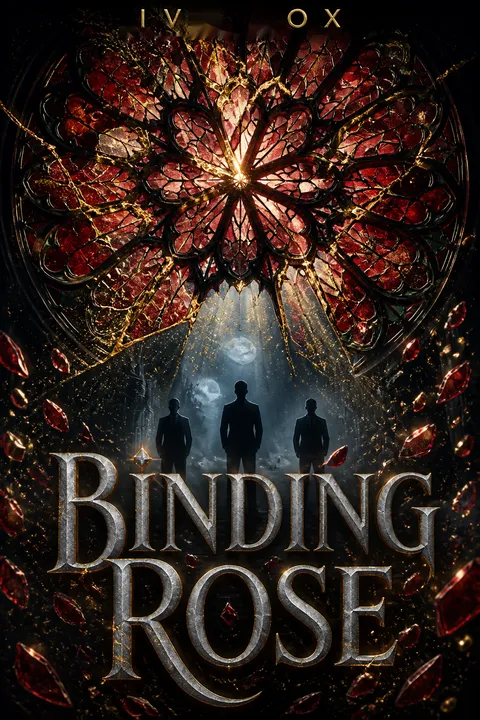


Plot Summary
Prologue
Ten years before Rosa1 arrives in Boston, six crime-family leaders gather to stop a war that is draining their power and lives. Their treaty binds each family to give a daughter in marriage to an enemy heir, turning the women into guarantees of peace. Irish boss Niall Kelly8 and his son2 Tiernan2 swear to protect the bride assigned to them.
A lottery matches Rosa Hernandez1 to Tiernan2 and sends Niall’s daughter,5 Iris,5 to the Volkov family. When Bratva patriarch Vadim13 insists that Iris5 be shared by his sons, Tiernan2 protests, but the other leaders enforce the bargain. He leaves the meeting with two vows: honor the treaty and protect his sister.5
The treaty makes the novel’s central contradiction explicit: men seek peace by transferring risk onto their daughters. The lottery gives the arrangement a veneer of impartiality, but the women have no meaningful choice in its outcome. Tiernan’s protest over Iris shows that he recognizes the cruelty even as he accepts the system when it serves his family’s survival. His two vows therefore begin in conflict. The storm outside the meeting room mirrors a political order that calls itself honorable while treating women’s bodies as collateral. Peace is secured, but its cost is deferred to the brides.
Iris Takes the Vegas Flight
At the Kelly home, Iris5 packs for the flight that will carry her to Vegas and the three Volkov brothers. Tiernan2 helps close her cases and gives her a concealed push dagger bearing the Kelly crest, a reminder that she can defend herself. Iris5 has asked him not to escort her, so he honors her last claim to choose how she enters this marriage.
Their parents say goodbye, while grief over the family’s losses makes the departure harder to bear. Tiernan2 promises to support their father8 after Iris5 leaves, then watches his sister5 go without him. Her absence sharpens the next obligation: he must remain in Boston to marry Rosa Hernandez,1 the cartel daughter assigned to him a decade earlier.
Iris’s departure gives the treaty a present-tense cost before Rosa enters the story. Tiernan’s dagger is both protection and an admission that the family cannot guarantee Iris’s safety through its solemn vows. His choice to respect her request not to accompany her matters: in a world where women’s choices have been traded away, he preserves one narrow decision. Yet he cannot extend that freedom to Rosa or himself. His sister’s empty room becomes the emotional measure of what the treaty has already taken, and the reason he approaches his own marriage carrying fear rather than anticipation.
Rosa Enters Boston
On the flight north, Rosa’s brother6 Alejandro6 describes Tiernan2 as a calculating boss and warns her that his brother3 Shay3 and cousin4 Colin4 are dangerous. He also tells her the marriage may become easier once she bears an heir, giving her a five-year horizon to cling to. Rosa1 once tried to flee, but her younger brother10 Francesco10 stopped her after warning that their father11 would punish him if she escaped.
At the airport, Tiernan2 is absent. Shay3 greets Rosa1 with irreverence, while the scarred, quiet Colin4 escorts her to the car. Alejandro’s6 warnings make the Kellys seem like a pack of predators, but Rosa1 studies them closely, determined to face the marriage with composure rather than let fear decide how she behaves.
Rosa reaches Boston carrying two different forms of pressure: Alejandro’s threat assessment and her father’s control over the family she is leaving behind. The five-year plan is less a promise than a survival strategy, a way to make an imposed future feel finite. Her decision to stay was also shaped by love for Francesco, since escape could expose him to punishment. At the airport, she meets the Kellys through the gap between reputation and behavior. Her careful observation is not passivity. It is the first tool she can use in a marriage where nearly every larger decision has already been made for her.
A Veil, Then a Kiss
At the cathedral, Alejandro6 walks Rosa1 to the altar, where Tiernan2 waits in black. They exchange vows neither has chosen freely. When Tiernan2 lifts her veil, Rosa1 is startled by his mismatched blue and green eyes and the tenderness of his first kiss. The moment does not soften the marriage for long.
In the limousine, Tiernan2 treats her white dress as a false claim of innocence, and Rosa1 answers with a sharpness that reveals she will not quietly accept his contempt. At the reception, Tiernan2 drinks and dances with other women while Rosa1 sits isolated among his guests. Shay3 notices her loneliness and gives her the dance she wanted. Tiernan2 then takes over, turning their first dance into a public contest of control.
The wedding sets ceremony against consent. The priest’s ritual names love and freely chosen commitment, while Rosa and Tiernan know their vows are political obligations. Their first kiss briefly interrupts their inherited hostility, but neither knows how to interpret the tenderness without suspicion. At the reception, Rosa’s dance with Shay supplies a small, chosen pleasure; Tiernan’s intervention recasts it as a challenge to his authority. The scene establishes a pattern that will govern their early intimacy: attraction is real, but it is entangled with public status, resentment, and power. The marriage begins not with trust, but with each testing what the other will permit.
A Wedding Night Withheld
Tiernan2 takes Rosa1 to a hotel that once served as a prison, a setting that matches his view of their marriage. He refuses to bring her into his home and insists that her virtue is safe, yet he soon turns the night into a sexual punishment for dancing with Shay.3 He undresses her, spanks and touches her, then stops before she can reach release, leaving her both humiliated and unsettled by her own physical response.
His cruelty makes the power imbalance unmistakable, even as it exposes the desire neither will admit. Rosa1 retreats to the bathroom believing she has been reduced to an object in his private game. The next morning she is still his wife,1 but no closer to understanding whether his restraint is mercy or another form of control.
This encounter is deliberately unstable: Tiernan names restraint as a boundary, then uses sexual attention as punishment. The scene does not resolve the contradiction between his claim that he will not force her and his willingness to control her pleasure. Rosa’s bodily response further complicates her interpretation, but it does not erase the coercive frame or make her confusion consent. The hotel’s former prison function gives physical shape to her new condition, while Tiernan’s refusal to take her home keeps her socially and emotionally contained. Their attraction becomes a source of leverage, not yet a basis for intimacy. The cost is Rosa’s growing uncertainty about what safety means in this marriage.
Rosa Chooses the Lesson
After Tiernan2 moves Rosa1 into his apartment, she decides that conceiving a child may be her route to a life of her own. She slips into his bed wearing lingerie and asks him to teach her how to please him. Tiernan2 initially mocks her embarrassment and gives her a chance to leave; Rosa1 stays, and the lesson becomes their first consensual sexual encounter.
She loses her virginity, discovering that desire can exist alongside anger and fear. Tiernan2 is attentive to her inexperience, but he still controls the pace and refuses to finish inside her. In the morning, he takes her to church, where Rosa’s1 wish for spiritual comfort puts them among his family and exposes how little she knows about the man she married.2
Rosa’s initiative marks a shift from waiting for Tiernan’s decisions to acting on a goal of her own. Her motive is not simple romantic surrender: she is trying to navigate a system that values her chiefly as a future mother. The encounter gives her firsthand knowledge of desire, but it does not settle the question of what she wants from Tiernan emotionally. His willingness to let her withdraw contrasts with his earlier punishment, while his control over contraception and climax keeps the power balance uneven. The following church visit extends the encounter into public life. Rosa’s faith is a source of steadiness that neither her family’s criminality nor Tiernan’s authority can fully replace.
A Museum Opens the City
Tiernan2 assigns Colin4 to guard Rosa1 after realizing that the treaty leaves her vulnerable to anyone seeking to restart the war. Colin4 finds her alone in the hotel suite, homesick and crying, and takes her to the Museum of Fine Arts instead of leaving her confined. Rosa1 talks him through the paintings; Colin4 admits that one portrait feels false to him, while a Monet landscape recalls Ireland.
Their shared attention to art gives them a language beyond security and suspicion. Rosa1 leaves the museum calling him a friend, and Colin4 tells Tiernan2 she should be brought home. Tiernan2 responds by moving her into his Back Bay apartment, ending the hotel confinement but assigning her a separate bedroom in a home that still feels like a cell.
The museum outing changes the function of Colin’s protection. He is no longer merely a guard between Rosa and physical danger; he becomes the first Kelly to make room for her interests without demanding that she perform as a bride. Their exchange about the paintings exposes different forms of perception: Rosa reads emotional meaning, while Colin distrusts beauty that conceals a lie. The stolen freedom of the hotel room gives way to a more complex intimacy built on attention. Tiernan’s decision to bring her home responds to Colin’s warning, but the separate bedroom shows that practical inclusion is not yet emotional welcome.
An Heir By Arrangement
At Sunday lunch, Colin4 gives Niall8 a Monet he stole after seeing Rosa1 admire it; her correction that the painted river is in France embarrasses Niall8 and worsens his distance from her. Tiernan2 misreads Rosa’s1 attempt to find a clean shirt as snooping and abruptly takes her home. The next day she confronts him at his gym, insisting that their treaty requires an heir.
At the office, Tiernan2 argues that the agreement does not require him to father the child himself and offers Shay3 and Colin4 instead. Rosa1 accepts, but negotiates for dinners together, a home of her choosing, and Tiernan’s2 presence while she is with the other men. Her demands turn his attempt to shock her into a binding arrangement.
The stolen Monet and the family lunch reveal how fragile Rosa’s place among the Kellys remains. Colin’s gesture is affectionate, but it violates the museum’s ownership, and Rosa’s honest correction lands in a household already primed to see her as an outsider. Tiernan’s misinterpretation at the house turns ordinary movement into a suspected threat. Rosa answers by using the treaty’s own logic against him: if her body is an instrument of alliance, she will negotiate the conditions of its use. The proposal is ethically fraught, but her terms are a concrete assertion of agency. She does not escape the arrangement; she changes who gets to define its boundaries.
Three Kellys Share One Bed
When the first scheduled encounter begins, Shay3 sees Rosa’s1 fear and offers her reassurance, while Colin4 follows Tiernan’s2 order despite his discomfort. Rosa1 consents to both men, and their care and attention make the experience feel different from her earlier nights with Tiernan.2
Shay3 understands that she wants a child partly because she longs for unconditional love, not merely because the treaty demands one. After Shay3 and Colin4 leave, Tiernan2 makes Rosa1 crawl to him, asks whether she enjoyed them, and writes a degrading word across her chest with her lipstick.
The encounter leaves Rosa1 caught between affection for the two men and her desire for her husband’s2 approval. Tiernan’s2 plan has secured the heir he wants, but it has also made his jealousy impossible to ignore.
The first shared encounter transforms Tiernan’s proposed workaround into an emotional event he cannot control. Shay and Colin do not treat Rosa as a contract clause; their attentiveness gives her a contrasting experience of intimacy. Yet Tiernan retains power over the room and reasserts it after the others leave, using humiliation to restore the hierarchy he feels slipping. The scene is not a clean passage from coercion to empowerment. Rosa has negotiated terms and consented, but her choices remain constrained by the marriage and her hope for a child. The men’s differing responses reveal that sex is becoming a test of loyalty, tenderness, and possession all at once.
Shay Offers More Than Sex
The morning after the first encounter, Shay3 takes Rosa1 to view a large Beacon Hill home, explaining that Tiernan2 intends it for her and the children she hopes to have. Rosa1 falls for its rooms and nursery, then admits that her deepest reason for wanting a baby is the hope of giving and receiving unconditional love.
Shay3 tells her he could offer love himself, not just sex, and kisses her gently. His mother, Saoirse,7 later welcomes Rosa1 into the family kitchen and speaks of her as a daughter. When Rosa1 asks about Patrick,9 Shay’s3 sensitive brother,9 he describes his kindness and admits the family still carries grief around him. Rosa’s1 growing bond with Shay3 makes her wish for love more visible, not less.
Shay’s offer directly challenges Rosa’s belief that only a child can provide dependable love. He hears the emotional need beneath her practical explanation and responds with vulnerability rather than mockery. The house intensifies the tension: it is designed for a family that Rosa imagines as a refuge, but Shay suggests she may not need to wait for motherhood to be loved. Saoirse’s welcome gives that possibility a maternal counterpart, while Patrick’s memory connects tenderness to grief within the Kelly household. Rosa’s longing is not a simple substitute for romance. It is a response to a life in which affection has been conditional, rationed, or controlled.
Colin Opens the Burning Past
During an outing to the Isabella Stewart Gardner Museum, Rosa1 asks Colin4 whether her family caused the burns on his face. He tells her that, as a teenager in Ireland, he escaped a fire that killed his parents and sisters. Patrick9 pulled Colin4 from the flames, then went back inside and carried out the infant Ciara, who was already dead.
The attack had been intended for Tiernan,2 mistakenly believed to be staying with Colin’s4 family. Rosa1 grieves with Colin4 and tells him she sees more than his scars. Their conversation turns into a private sexual encounter, and Colin4 admits through his actions how deeply he wants her. He leaves knowing that he has crossed a line with Tiernan,2 even though Rosa’s1 affection is no longer only a matter of duty.
Colin’s story rearranges the meaning of his scars. They are not simply evidence of violence survived, but a permanent record of a family destroyed by the feud and of a boy who could not save everyone he loved. His account also links the Kellys’ vengeance to collateral victims, complicating any clean division between innocent family and guilty enemy. Rosa’s response matters because she does not reduce him to damage or turn his pain into spectacle. Their intimacy follows recognition, which is why it carries consequences beyond sex. Colin’s loyalty to Tiernan and his attachment to Rosa now pull in opposing directions.
Blue Against the Black
As Rosa1 and the two Kelly cousins continue their scheduled encounters, Tiernan2 watches from the sidelines and grows increasingly jealous. When Rosa’s1 period begins, he bathes and comforts her, then spends a week working from home and sharing ordinary evenings with her. He even wears blue after she asks to see him in a color beyond his usual black.
Their closeness raises Rosa’s1 hope, and after a film stirs their desire, they have sex. She then asks why he will not father a child with her. Tiernan2 answers that he could not love a child he already expected to hate, crushing the intimacy he had just allowed. Rosa1 is left without an explanation for his fear, and Tiernan2 retreats into drinking and silence.
The blue clothing and domestic care offer Rosa evidence that Tiernan can act outside the role he has built around himself. Their intimacy grows through small choices, not just sexual intensity, which makes his rejection of a child especially damaging. He frames his fear as certainty and presents it as a judgment on a hypothetical child, turning private grief into a weapon against Rosa. The sequence also exposes how hope can be produced by inconsistent treatment: a week of tenderness feels like a promise because it interrupts months of distance. Tiernan’s withdrawal is not emotional neutrality. It is an attempt to prevent attachment by making the possibility of family seem already doomed.
Patrick’s Ghost Gets a Name
After rejecting Rosa,1 Tiernan2 hears her crying from a nightmare and climbs into bed to comfort her. He admits that his claim about hating their child was a lie, then explains how Patrick’s9 sensitivity to the war, the family’s violence, and his drug use preceded his suicide. Tiernan2 blames himself for choosing vengeance over his brother’s9 pleas for peace and fears that children would become weapons for their enemies.
He promises to love any child Rosa1 has, and they reconcile physically. Rosa1 then insists that Shay3 and Colin4 remain part of her life. Tiernan2 refuses, and after their argument he keeps her from the men for a month. His confession opens the wound, but his possessiveness still dictates what happens next.
Patrick’s history makes Tiernan’s fear legible without making it harmless. His brother’s death has become the private explanation for Tiernan’s public hardness: a warning that love creates vulnerabilities enemies can exploit. By acknowledging his own role in the family’s violence, Tiernan moves beyond blaming the cartel alone, but he still tries to manage grief through control. His promise to love a child offers Rosa hope, while his refusal to share her with Shay and Colin reveals that he has not yet accepted her as a person with attachments beyond him. The reconciliation is emotionally real, yet incomplete. The month of separation makes that incompleteness a material cost.
A Test Changes the Terms
After a month apart from Shay3 and Colin,4 Rosa1 discovers she is pregnant. Tiernan’s2 first response is joy, but Rosa1 tells him that the future she wants is still incomplete while he keeps her other loves away. He finally understands that choosing her means accepting the family she has chosen, not merely claiming her body.
Tiernan2 kneels and agrees to share her, then takes Rosa1 to his parents’ home to tell Shay3 and Colin.4 He apologizes for keeping them apart and asks them to build a life with her. Rosa1 welcomes them back with affection, and the three men reunite around her. Tiernan2 also rejects the suit-and-office persona he adopted after Patrick’s9 death, choosing a more honest life rather than continuing to rule from behind it.
The pregnancy gives Tiernan what he once feared most: a beloved child who could be used against him. Rather than treating the test as a simple happy ending, the novel makes it the pressure that forces a choice. Rosa refuses to let motherhood stand in for the other forms of love she needs. Tiernan’s kneeling reverses the treaty’s original image of women compelled to submit, although the change matters because he chooses it after seeing the cost of his refusal. His apology to Shay and Colin repairs more than a sexual arrangement; it restores the relationships he had turned into rivals. The family becomes viable through negotiated attachment, not exclusive possession.
The Church Turns Execution Ground
While Rosa1 visits Holy Cross Cathedral with Saoirse,7 Father Doyle12 knocks her unconscious and binds her beneath the church. He calls her a corrupting influence and prepares to cut the baby from her body. Rosa1 spots her abandoned phone and knows its tracker may lead the Kellys to her. Colin4 breaks into the room, Shay3 frees her, and Tiernan2 waits at the door while the priest12 is seized.
Rather than ask for mercy, Rosa1 tells Tiernan2 to punish the man who tried to kill their child. The Kellys nail Father Doyle12 to a cross and torture him before burning him, while their allies and family watch. The attack turns the treaty’s abstract threat into immediate danger and confirms that Rosa’s1 safety belongs to all of them.
Father Doyle’s assault exposes the treaty’s most dangerous weakness: peace between crime families cannot prevent ideological violence from outside their compact. He interprets Rosa’s sexuality and pregnancy through a punitive religious framework, making his own violence appear to him like purification. Rosa counters that judgment with the knowledge that the church has benefited from the Kellys’ money, but her argument cannot stop the blade. The rescue depends on Colin’s tracker, Shay’s speed, and Tiernan’s restraint until Rosa chooses vengeance. Her decision to witness the punishment marks her belonging, though it also implicates her in the family’s violence. The event asks whether protection can be separated from brutality in a world built on both.
A Son Named Patrick
Nine months later, Rosa1 goes into labor, with Tiernan,2 Shay,3 and Colin4 beside her. The birth is painful and frightening, but the three men hold her hands and encourage her through each contraction. When her son arrives, his mismatched blue and green eyes recall the men who have become his family. Tiernan2 names him Patrick,9 honoring the brother9 whose death shaped his fear of fatherhood.
Niall,8 who once avoided Rosa,1 holds the baby and apologizes for treating her as an outsider. Rosa1 gives her son the love she once believed she could only find in motherhood, while the room confirms that she has also gained a family around her. The heir meant to bind rival bloodlines becomes a child welcomed by choice.
Patrick’s name transforms remembrance from a private burden into an act of care. Tiernan does not replace his brother or erase the family’s grief; he gives the child a name that can carry memory without being made responsible for repairing the past. Niall’s apology completes Rosa’s slow movement from tolerated outsider to daughter, while the presence of Shay and Colin confirms that the family is larger than a conventional marriage. The treaty demanded an heir as a political guarantee. The birth scene instead emphasizes the people who actively choose to protect and love the child. The novel’s resolution rests on this distinction between inherited obligation and care freely practiced.
Epilogue
Ten years later, Tiernan2 hosts a St. Patrick’s Day celebration with Rosa,1 their children, extended Kelly family, and Alejandro6 and Francesco10 among the guests. Their eldest son Patrick9 waits for fireworks with his younger siblings, while Colin4 indulges Rosa1 and Tiernan’s daughter2 Roisin in a tea party.
Shay3 tends the grill with family, and the old enemies now share the same roof as relatives. Tiernan2 and Rosa1 flirt during the fireworks, still drawn to each other after a decade together. The children, the gathering, and the easy presence of Rosa’s brothers6 show what the treaty could not guarantee by itself: a peace made livable through the family they have built.
The epilogue measures peace through ordinary, repeated acts: feeding children, sharing a celebration, and letting a once-feared enemy stand among family. The treaty began with men assigning daughters to prevent extinction; a decade later, its success is visible in relationships that exceed the original bargain. The children are not merely dynastic proof. Their play and teasing show them inhabiting a world less governed by inherited war. Tiernan’s desire for Rosa remains vivid, but it now exists inside a household rather than as a contest for possession. The ending does not erase violence. It shows the family choosing warmth as its daily practice.
Analysis
Binding Rose uses a marriage treaty to examine how political systems make women carry the consequences of male violence. The six families call their exchange a route to peace, but the arrangement is built on daughters who cannot freely refuse. Rosa’s1 situation is especially layered: she is privileged by birth yet lacks control over her own future. Her poise is not proof that the sacrifice is acceptable. It is a survival skill developed inside a family that treats obedience as protection.
Tiernan’s2 emotional arc does not begin with romantic insight. He initially mistakes control for safety and distance for self-discipline. Patrick’s9 death explains why he fears attachment, but it does not excuse his cruelty toward Rosa.1 The story makes that distinction important: grief gives his behavior a history, while Rosa’s1 resistance makes him confront its consequences. His change becomes meaningful only when he relinquishes the exclusive claim he has used to manage fear.
Rosa’s1 relationships with Shay3 and Colin4 broaden the novel’s model of intimacy. Shay3 offers emotional candor, while Colin’s4 guarded attention lets Rosa1 meet his pain without reducing him to it. Their bond is not simply a device to provoke Tiernan’s2 jealousy. It gives Rosa1 forms of affection that the treaty did not anticipate, and forces Tiernan2 to recognize that love cannot be secured by ownership. The shared relationship remains embedded in a violent world, so it is not a simple escape from power. It becomes a negotiated household in which consent and care must be practiced rather than presumed.
The novel also places religious authority beside criminal authority. Father Doyle12 condemns Rosa’s1 sexuality while standing within a church that benefits from Kelly wealth, exposing the gap between moral language and institutional self-interest. Rosa’s1 faith, by contrast, offers comfort without requiring her to deny her own desires. The conclusion does not claim that a child or romance can undo the Mafia Wars. It suggests that inherited violence loses some of its authority when people acknowledge grief, accept responsibility, and make a family through deliberate acts of protection and love.
Review Summary
Binding Rose received mixed reviews, with ratings ranging from 1 to 5 stars. Positive reviews praised the world-building, character development, and steamy scenes. Criticisms focused on the rushed reverse harem storyline and underdeveloped relationships. Some readers found the mafia elements lacking and the protagonist's behavior inconsistent. Many reviewers expressed excitement for future books in the Mafia Wars series, particularly Iris's story. Overall, the book was described as a captivating but divisive start to the interconnected series.
People Also Read









Characters
Rosa Hernandez
Cartel-born brideRosa is the daughter of a powerful Mexican cartel and is promised to Irish mob boss Tiernan Kelly2 as part of a peace treaty. She is polished, observant, and careful with her words, qualities developed in a household where status and obedience are closely monitored. Beneath her composure is a strong capacity for affection and a longing for a home where love is not conditional. She thinks strategically about the choices available to her, even when those choices are narrow, and she is willing to challenge the men who assume her silence means agreement. Her interest in art, faith, and family gives her a life beyond the political role assigned to her.
Tiernan Kelly
Reluctant Irish kingTiernan leads the Irish mob and carries the authority, discipline, and distrust expected of a boss. He has spent years translating personal grief into control, concealing tenderness beneath a black wardrobe, sharp judgment, and a willingness to use force. His loyalty to his family is genuine, but it often becomes possessiveness when he fears losing someone. He is bound to Rosa1 by the treaty before he knows her, and initially treats that bond as a duty rather than a relationship. His central tension is between the man his position requires him to perform and the brother, husband, and son who still wants connection.
Shay Kelly
Flirt with a conscienceShay is Tiernan’s2 younger brother, a charming and sexually confident member of the Irish family. He uses jokes and flirtation to lighten a life shaped by violence, but his humor does not mean he is careless about other people’s pain. He worries about Iris’s5 fate and recognizes Rosa’s1 loneliness sooner than Tiernan2 does. Shay’s instinct is to offer warmth directly, sometimes before he has considered what that intimacy will cost him or his family. Beneath the playboy image is a fiercely loyal brother who wants Tiernan2 to be happy, even when he is frustrated by the choices his brother makes.
Colin Kelly
The scarred loyalistColin is Tiernan’s2 cousin and trusted right hand, a quiet, physically imposing man whose burn scars mark a childhood catastrophe. He is vigilant by habit and more comfortable protecting others than speaking about himself. His loyalty to Tiernan2 is central to his identity, but his capacity for empathy surfaces through small acts: he listens to Rosa1, takes her to an art museum, and notices when she is isolated. Colin’s interest in paintings offers a rare glimpse of the contemplative person beneath the soldier. He is wary of vulnerability because it has been tied to loss, yet he responds deeply when someone looks beyond his scars.
Iris Kelly
The fiercely independent sisterIris is Tiernan2 and Shay’s3 younger sister, a red-haired, sharp-tongued woman with a fierce streak and a fondness for weapons. Her family’s affection for her is deep, but the treaty places her future in the hands of the Bratva. She asks Tiernan2 to let her travel to Vegas without him, showing that independence matters to her even when she cannot choose the larger terms of her life. Tiernan2 sees her as someone whose spirit must be protected, while Iris refuses to be reduced to his fear for her.
Alejandro Hernandez
Rosa’s guarded brotherAlejandro is Rosa’s1 older brother and a senior figure in the Hernandez cartel. Controlled and politically astute, he gives Rosa1 a blunt account of the Kellys before bringing her to Boston. His manner can seem cold, but his concern for his sister and other siblings emerges in private moments. Alejandro believes survival depends on anticipating danger and keeping emotion contained. His protective instincts coexist with his willingness to uphold the family treaty, leaving him caught between responsibility to the cartel and affection for Rosa1.
Saoirse Kelly
The welcoming matriarchSaoirse is Tiernan’s2 mother and the warm center of the Kelly household. She uses teasing, food, and practical care to make people feel included, even when the family is grieving. Unlike Niall8, she does not hold Rosa1 responsible for her family’s history. Saoirse recognizes the cost of the treaty to both daughters and treats Rosa1 with the compassion she would offer Iris5. Her maternal steadiness creates a model of belonging that is not based on bloodline or obedience alone.
Niall Kelly
The grieving family patriarchNiall is Tiernan’s2 father and the former head of the Irish mob. He values loyalty, family protection, and the practical wisdom of appearing ordinary until action is necessary. Years of loss have made him guarded around the Hernandez family, and he struggles to separate Rosa1 from the people who harmed the Kellys. His affection for his children is clear even when he hides it behind stoicism. Niall represents the older generation’s difficulty in imagining peace without first reckoning with grief.
Patrick Kelly
The sensitive brotherPatrick is Tiernan2 and Shay’s3 brother, remembered as gentle, bookish, and unusually attuned to the suffering caused by the family’s war. He argues for peace when the men around him still prize vengeance, making him a moral counterweight to the Kelly code. His sensitivity is treated by others as weakness, though it reflects a capacity to register consequences they prefer to ignore. Patrick’s influence remains present in the family’s memories and in Tiernan’s2 understanding of what violence can do to those who survive it.
Francesco Hernandez
Rosa’s devoted younger brotherFrancesco is Rosa’s1 youngest brother and her closest source of easy companionship in Mexico. He shares gossip with her and helps her understand the Kelly family from afar. When Rosa1 considers fleeing her arranged marriage, he warns her that their father11 would punish him if she escaped. His bond with Rosa1 is affectionate and playful, giving her a glimpse of family love that does not depend on rank or political usefulness.
Miguel Hernandez
The cartel’s controlling fatherMiguel is Rosa’s1 father and the head of the Hernandez cartel. He sees his children through the demands of family power, placing obedience and political advantage above their personal wishes. His authority shapes Rosa’s1 fear of escape and the consequences she imagines for Francesco10. He is a source of the discipline and poise Rosa1 has learned, but also of the coercion she must resist.
Father Doyle
The judgmental priestFather Doyle serves the Boston church attended by the Kelly family. He is doctrinally rigid and quick to judge Rosa1 through the reputation of her family and the choices she makes within her marriage. His sermons reveal a man who understands morality as a defense against temptation, though his certainty leaves little room for compassion or self-examination. He represents the authority of an institution that can condemn private behavior while accepting the benefits of criminal wealth.
Vadim Volkov
The Bratva patriarchVadim leads the Russian Bratva and uses the treaty to strengthen his family’s influence. He is domineering, calculating, and comfortable treating women as instruments of dynastic power. His insistence on terms that make Iris5 vulnerable reveals the limits of the treaty’s promises of protection.
Javier Hernandez
Rosa’s watchful brotherJavier is one of Rosa’s1 brothers and part of the Hernandez family network she leaves behind. He appears among her relatives in the later family gathering, representing the continuing ties between Rosa’s1 new household and her Mexican family.
Plot Devices
The daughters’ peace treaty
Marriage as political bondThe six crime families stop their war by promising daughters to enemy heirs, hoping mixed bloodlines will make future conflict too costly. The agreement drives the central marriages and shapes how Rosa1, Tiernan2, and Iris5 understand their futures. Its language of protection conflicts with the coercion built into the exchange, and its enforcement makes private relationships matter to the survival of entire families. The treaty provides the story’s political stakes, but its terms cannot ensure emotional loyalty. The characters must decide whether they will merely obey its requirements or build a more humane family within them.
The lottery bowl
Chance assigns the bridesNiall Kelly8 proposes writing family names on paper and drawing from a bowl, so no leader can claim a particular daughter. The ritual makes an arbitrary exchange appear fair, but it does not give the women any say. It assigns Rosa1 to Tiernan2 and Iris5 to the Volkovs, establishing the two Kelly siblings’ separate but parallel fears. The bowl becomes a compact image of how powerful men convert personal lives into political arrangements. Chance determines the pairings, while the families’ authority determines that the daughters must accept them.
The Kelly push dagger
A token of self-defenseTiernan2 gives Iris5 a small push dagger stamped with the Kelly crest before she leaves for Vegas. The gift recalls his vow to protect her, but it also admits that promises alone may not keep her safe. It gives Iris5 a practical weapon and a visible reminder of the family she leaves behind. The dagger reflects the novel’s tension between agency and protection: Tiernan2 wants his sister5 equipped to defend herself, while the larger treaty still places her in an environment she did not choose. Its meaning is emotional as well as physical, connecting family loyalty to the possibility of resistance.
Art and the stolen Monet
Beauty creates connectionRosa’s1 visits to Boston museums create space for conversation with Colin4, whose guardedness gives way when he explains why some paintings feel honest and others false. A Monet landscape recalls Ireland and prompts him to steal the painting as a gift for Niall8. The act creates conflict at the Kelly family lunch, where Rosa’s1 correction about the painting’s location further exposes her outsider status. Art gives Rosa1 and Colin4 a shared language beyond their assigned roles, while the stolen canvas shows how affection in this family can still cross ethical boundaries.
The heir requirement
A child binds the familiesThe treaty requires a child to join the Kelly and Hernandez bloodlines, turning Rosa’s1 fertility into a political obligation. Tiernan2 initially tries to shift the task to Shay3 and Colin4, framing the arrangement as a way to satisfy the agreement while avoiding fatherhood himself. Rosa’s1 insistence on an heir is not only political; she hopes motherhood will give her a source of unconditional love. The pregnancy later forces Tiernan2 to confront the vulnerability he fears and choose what sort of family he wants. The device connects the treaty’s public logic to the private needs each character has tried to hide.
Mafia Wars Series Series







Download PDF
Download EPUB
.epub digital book format is ideal for reading ebooks on phones, tablets, and e-readers.








