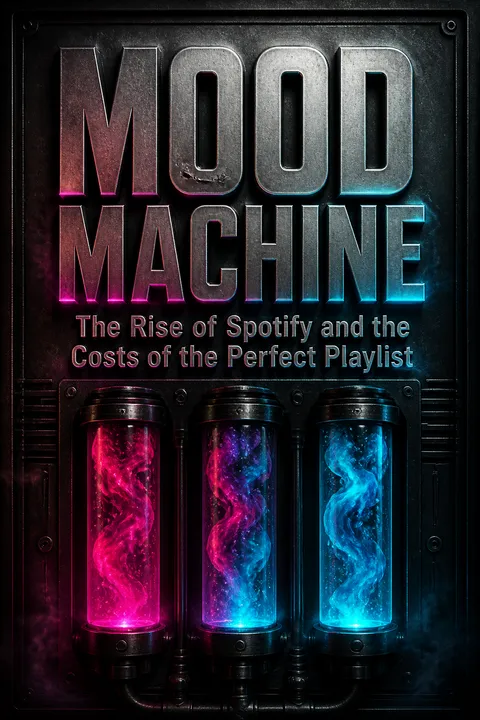


Key Takeaways
Treat streaming as an industry bargain, not a neutral rescue for music.
A bargain with history. Spotify emerged in Sweden during the file-sharing boom, when record companies and governments were desperate for a legal alternative to piracy. Its founders came from advertising technology, and the early business idea centered on ads, not a mission to save music. The beta even used unlicensed files. To secure the catalogs listeners expected, Spotify negotiated with powerful record labels that received advances, equity, advertising, and influence over the service. At its launch, the major labels collectively owned nearly 18 percent of Spotify.
Old power, new interface. Streaming made music easier to access, but it did not erase the existing industry’s power structure. The majors controlled essential catalogs, while independent artists were encouraged to join a system whose rules and payments were hard to see. The book’s central argument is that convenience concealed a partnership between technology firms and established music companies, not a democratic reset.
The history complicates the familiar story of technology disrupting an outdated industry. Spotify did solve a real problem for listeners who wanted immediate, legal access, and that appeal should not be dismissed. But a better consumer product is not automatically a fairer labor system. The distinction matters beyond music: platforms can expand access while preserving, or even strengthening, incumbent power. A useful test for any claimed disruption is to ask who negotiated the rules, who owns the essential inputs, and who bears the cost when the model fails.
A playlist that removes effort can also remove attention and context.
From search to soundtrack. Spotify initially presented itself as a place to search for music. In 2012, research into listening habits helped the company recognize that many people wanted music in the background while commuting, working, or relaxing. The strategy shifted toward playlists for moods and daily activities, followed by professional editors and personalized recommendations. That shift made the service easier to use, but also encouraged users to let the platform select music rather than seek out artists, albums, or scenes.
The playlist has precedents. Radio playlists were designed partly to keep listeners from switching stations. Spotify’s mood lists borrow the intimacy associated with mixtapes, but operate at commercial scale, informed by user data and platform goals. Music can certainly accompany ordinary routines meaningfully. The concern is not background listening itself, but treating it as the model for all listening, while stripping songs from the contexts that help listeners understand them.
Convenience is not the opposite of meaningful engagement, but interfaces can make one mode of engagement far easier than others. A one-click soundtrack is useful when attention is scarce; it can also reduce the chance of encountering unfamiliar music on its own terms. This resembles a broader design problem: tools that minimize friction may also minimize reflection. The distinction between hearing and attentive listening is valuable here, though it should not become a moral test imposed on listeners. People use music for many purposes, and a healthy ecosystem needs room for both ambient use and deliberate exploration.
Cheap playlist filler makes musicians replaceable, even when real people make it.
Content built for margins. Spotify’s internal term for commissioned, playlist-targeted music was perfect fit content, or PFC. The tracks were licensed on cheaper terms and placed in playlists for sleep, focus, relaxation, and similar uses. By 2023, internal materials showed more than 150 playlists made almost entirely of this content. Producers often released work under invented artist names, and some fake biographies made anonymous studio musicians sound like distinctive performers.
The makers are real. A jazz musician interviewed for the book described recording many short, simple tracks in quick sessions, following reference playlists and instructions to avoid anything challenging. The issue is not that production music is inherently illegitimate. It is that listeners were not told about the cheaper arrangements, while artists already in these genres lost playlist space. Sources also described Black and brown musicians being displaced by stock tracks made by a small number of white producers.
This case separates the ethics of a musical form from the ethics of a distribution arrangement. Commissioned background music can be honest, useful work, and a pseudonym does not make its creator imaginary. The deeper concerns are concealed commercial relationships, unequal access to exposure, and a system that treats artists as interchangeable inputs. Similar dynamics appear in other creative fields when platforms privilege low-cost supply. Transparency alone would not resolve unequal bargaining power, but it would let listeners and musicians assess who benefits from a recommendation.
Recommendation systems measure platform behavior, not the full meaning of taste.
Taste becomes data. Spotify combines information about songs, such as tempo and acoustic qualities, with user behavior and playlist labels. Its 2014 acquisition of the Echo Nest added a large music database and tools for analyzing how tracks sound and how people describe them. Discover Weekly became a major success, generating more than 1.7 billion streams in its first year. But recommendation systems also learned from activity inside Spotify, then helped shape what users heard there.
A scene becomes a category. The hyperpop playlist illustrates the tradeoff. Spotify’s playlist brought attention to artists from a varied online scene, but also narrowed a network of communities and distinct sounds into a marketable label. Systems built from streams and tags can identify patterns, but they cannot reliably capture a scene’s relationships, history, or reasons for making music. The book argues that personalized discovery often serves retention, not an open-ended education in music.
Recommendations are not simply a choice between human judgment and machine calculation. Both can reproduce biases; the sharper question is what each system is rewarded for noticing. When platform behavior trains recommendations, the resulting loop can make a category appear more natural or popular than it was before the platform emphasized it. This does not mean every listener is trapped in an echo chamber: many use search, follow artists, and find unexpected music. It does mean that a system’s account of taste should be treated as a partial map, not a neutral portrait of musical culture.
When artists chase stream metrics, the platform's sound can become their sound.
Songs adapt to the meter. Streaming royalties generally count a play only after a track has run for thirty seconds. As playlist listening grew, some songwriters began putting the hook near the start, aiming to prevent skips. Songs that fit several playlists could reach more listeners, and an era of muted, mid-tempo pop suited that broad, seamless use. Spotify’s artist tools also encouraged musicians to study which tracks performed best and consider changing their sound accordingly.
Then the feed sped up. TikTok shifted the contest toward snippets that must capture attention within seconds. Some artists tested unfinished hooks online before completing songs, while labels and songwriters began optimizing for short-form video as well as streaming playlists. These systems do not mechanically dictate what artists create. They do reward certain structures and behaviors, making platform-friendly choices feel like sensible career decisions, even when those choices narrow an artist’s creative options.
The useful concept here is not that technology determines art, but that platforms change the incentives surrounding it. Music has always responded to formats, from radio timing to recording limits. What is distinctive now is the speed and granularity of feedback: a skip, save, or short-video response can quickly be interpreted as a verdict on a song. Artists may also sincerely enjoy the styles that thrive online, so optimization should not be mistaken for automatic inauthenticity. The central risk is reduced freedom to experiment when income and visibility depend on repeated measurable engagement.
Opaque royalties and paid promotion turn discovery into a costly contest.
A stream is not a price. Spotify pays rights-holders, not artists directly, and divides royalty pools according to each catalog’s share of all streams. The frequently cited figure of roughly $0.0035 per stream is only a rough shorthand, not a fixed rate. Contracts, subscription tiers, country, and artists’ own agreements all affect what they receive. Because major-label contracts are secret, musicians often cannot see how the final payment was calculated.
Exposure has a price. Discovery Mode lets rights-holders accept a 30 percent reduction in recording royalties for eligible streams generated through promoted recommendations. Spotify reported that the program produced 61.4 million euros in gross profit from May 2022 to May 2023. Critics call it payola because promotion is tied to lower payments and users are not shown when it affects recommendations. A user-centric alternative would direct each subscriber’s royalty share toward the artists that subscriber actually plays.
A user-centric payment system could make the link between listening and payment easier to understand, and might reduce the advantage that global superstars gain from a shared royalty pool. It would not, by itself, make subscription revenue sufficient to support all working musicians, or repair unfair contracts between artists and rights-holders. Discovery Mode also exposes a conflict of interest: a platform controls recommendations while selling access to them through reduced compensation. Clear disclosure and independent oversight matter because listeners cannot evaluate a recommendation when its commercial conditions are hidden.
Streaming's version of independence shifts risk and unpaid marketing onto artists.
The artist becomes a customer. Spotify for Artists gives musicians statistics, playlist-pitching tools, and guidance about promoting their work. The company also sells advertising and promotion to artists, including products that trade lower royalties for algorithmic exposure. Its messaging often celebrates the solo musician who hustles, studies dashboards, and builds a personal brand. That model is far removed from older independent music networks of labels, venues, blogs, radio, and local communities.
A success story can expire. Spotify once promoted instrumental guitarist Lance Allen as a DIY success after playlist placements helped him earn substantial streaming income. Years later, he complained that his music was no longer receiving support and that stock tracks were taking playlist space. His story does not make his earlier success false. It shows how a career dependent on opaque placement can remain vulnerable, even after the platform holds it up as proof that the system rewards individual effort.
Individual success stories have real value to the people who live them, but they are weak evidence that a system offers fair opportunity. This is a familiar error in labor markets: visible winners are treated as proof of mobility, while the less visible base rate of failure disappears. The book’s account also clarifies that independence is not simply the absence of a major-label contract. It can mean shared infrastructure, transparent agreements, and community ties. A solo artist can be resourceful and autonomous, yet still have little leverage against a platform that controls discovery.
Treat listening data as a privacy issue, not harmless music trivia.
Listening leaves a dossier. Spotify users can request files containing search queries, listening history, playlists, and inferred audience categories. Those categories may combine listening behavior with information from outside sources and data brokers. Spotify has marketed music habits as clues to people’s moods and offline behavior, and has pursued patents involving emotion and personality detection. A 2023 Swedish privacy ruling fined the company 5 million euros over shortcomings in access to user data.
The power lies in combination. A music preference may seem trivial in isolation. Combined with browsing, location, shopping, or other records, it can contribute to a much more detailed profile. The book emphasizes that users often cannot know what information has been inferred, shared, or used to target them. Even inaccurate profiles matter: they reveal an unequal system in which organizations can classify people without giving them comparable insight or control.
The strongest privacy argument does not depend on proving that a playlist can diagnose someone’s inner life. Inference can be crude and still consequential when it enters advertising, profiling, or decisions made elsewhere. Inaccurate targeting may waste an advertiser’s money, but it can also normalize classification without accountability. Music data deserves attention partly because it feels intimate and low-risk, making surveillance easy to accept. The practical question is not whether a service knows a person perfectly; it is whether users can inspect, correct, limit, or delete the information gathered about them.
Build collective music infrastructure instead of waiting for a better app.
Organize for leverage. United Musicians and Allied Workers brought musicians together to demand better streaming pay, contract transparency, and an end to undisclosed paid promotion. The group helped develop the proposed Living Wage for Musicians Act, which would create an additional royalty fund paid directly to artists. This approach treats musicians as workers with shared interests, rather than isolated creators competing for attention.
Make alternatives concrete. Catalytic Sound distributes subscription revenue equally among its thirty musician members. Public libraries in several cities license local recordings for set fees and preserve them as community archives. These projects are small beside Spotify, but they connect access to local context and artist compensation. The book’s conclusion is not to find one perfect replacement app. It is to combine regulation, direct support for artists, public funding, cooperatives, and local cultural spaces.
The alternative examples are strongest as experiments in governance, not as immediate competitors to a global service. A musician cooperative or library collection cannot offer every recording or serve every audience. Its value is that members can shape its priorities, payment rules, and cultural context. That makes the broader lesson institutional: access, compensation, and accountability need not be delivered by the same commercial mechanism. Collective organizing can also rebalance negotiations with large companies. Building alternatives is slower and less frictionless than downloading another app, but it creates choices that individual consumer preferences cannot produce alone.
Analysis
Mood Machine is an investigative account of how convenience becomes governance. Its narrative begins with piracy and Spotify’s licensing bargain, then follows the company from curated playlists into recommendation systems, mood targeting, low-cost commissioned music, creator marketing, and lobbying. Across these stages, the mechanism is consistent: Spotify makes listening easier while increasing its ability to shape what is heard, how it is categorized, and which commercial terms govern it. The central claim is not that algorithms are inherently hostile to art. It is that systems optimized for retention, margins, and bargaining advantage should not be mistaken for neutral cultural infrastructure.
The book’s strongest analytical move is connecting listener experience to labor conditions. Passive playlists, cheap background tracks, and reduced artist payments are not separate defects. They can reinforce one another: when a platform makes music interchangeable, it becomes easier to substitute lower-cost material and harder for listeners to connect a track with its maker. The same feedback loop appears in other digital markets, where measurable engagement becomes a proxy for value. This resembles Goodhart’s law: once a measure becomes a target, behavior can adapt to the measure, weakening its usefulness as evidence of genuine value.
There is also an important limit to keep in view. Streaming undeniably expands access, supports discovery for some artists, and can be a practical tool for listeners who do not want to buy or manage a collection. The problem is not that every playlist is shallow or every recommendation manipulative. The problem is that private platforms set the terms, conceal parts of their commercial arrangements, and make access to audiences depend on systems artists cannot meaningfully govern.
The book’s alternatives are therefore more persuasive as a portfolio than as a blueprint. Direct purchases, local libraries, cooperative platforms, public arts funding, and collective bargaining solve different problems. None alone can replace the scale of streaming. Together, they challenge the assumption that universal access requires one global subscription service governed by shareholder returns. The enduring question is who gets to decide what music is for, and who can afford to keep making it.
Review Summary
Mood Machine by Liz Pelly is a critical examination of Spotify's impact on the music industry. Readers praise its thorough research and eye-opening revelations about algorithmic playlists, ghost artists, and data surveillance. Many found it informative but disturbing, highlighting how Spotify prioritizes profits over artists and authentic music discovery. Some criticize the book's length and repetitiveness, while others appreciate its call for change in the streaming industry. Overall, it's seen as an important read for music enthusiasts and industry professionals, despite mixed opinions on its delivery.
People Also Read



Glossary
Perfect fit content
Lower-cost commissioned playlist musicSpotify’s internal name for music commissioned to match particular playlist moods or activities, often under licensing terms that cost the platform less. Tracks were commonly made by session musicians and released under invented artist identities. The program is controversial because this content could receive prominent placement without clear disclosure, while established artists lost opportunities in the same playlists.
Programmed streamshare
Listening shaped by recommendationsThe percentage of a streaming service’s total listening that is influenced by its own recommendations, playlists, or other programmed features. Spotify monitored this measure as it sought to move more listening toward surfaces it controlled. The metric matters because recommendations can shape user habits and determine which music receives exposure.
Pro rata
Royalties divided by total stream shareA royalty allocation method in which a rights-holder receives a portion of a platform’s royalty pool based on its share of all streams during a period. Spotify pays rights-holders, who then pay artists according to separate contracts. Because the system pools listening across users, catalogs with many streams capture a larger share, even when individual subscribers listened to other artists.
Algotorial
Editorial and algorithmic playlistingA playlisting approach that combines human editorial decisions with algorithmic personalization. Editors identify a pool of eligible tracks or define a playlist’s musical direction, while a system chooses or orders tracks for individual listeners. The result can resemble a human-curated playlist while changing across users according to behavioral data.
Streambait
Music optimized for streaming engagementMusic shaped to perform well in streaming environments, particularly by attracting listeners quickly, avoiding skips, and fitting easily into playlists. The term captures changes such as placing a hook near the beginning or favoring sounds that work across many listening contexts. It describes an incentive, not a fixed genre or proof that a song lacks artistic value.
Discovery Mode
Promotion exchanged for reduced royaltiesSpotify’s promotional program in which participating rights-holders accept a lower recording royalty rate for eligible streams generated through certain personalized recommendations. The program is presented as a way to increase exposure without an upfront payment. Critics compare it to payola because promotion is tied to reduced compensation and listeners are not clearly told when it affects recommendations.
Self-driving music
Automated, continuously personalized listeningSpotify’s vision of a service that selects and updates music for a listener with little or no active input. Products such as personalized mixes, daylist, and the AI DJ approach this experience in different ways. The concept treats ongoing listening data as a means to anticipate what a user might play next and keep a session going.
Functional music
Music categorized by intended useMusic marketed for a practical purpose or setting, such as sleep, focus, relaxation, or study. The term has grown prominent in streaming, where playlists sort music by moods and activities. The category can describe sincere artistic work, but it can also turn diverse musical traditions into interchangeable background material designed to serve a platform’s listening and business goals.
Platform effects
Technology shaping musical formThe ways a digital platform’s design, metrics, and commercial incentives influence how music is made, distributed, and heard. Examples include songs structured to avoid streaming skips or tracks tailored to fit mood playlists. The concept avoids claiming that technology dictates artistic choices; instead, it examines how platforms make certain practices more rewarding or visible than others.
FAQ
What is Mood Machine: The Rise of Spotify and the Costs of the Perfect Playlist by Liz Pelly about?
- Comprehensive critique of streaming: The book explores how Spotify transformed the music industry, focusing on its rise, business model, and the consequences for artists and listeners.
- Economic and cultural analysis: Liz Pelly examines the costs of streaming, including pay-to-play schemes, algorithmic curation, and the flattening of musical diversity.
- Broader societal implications: The narrative connects Spotify’s story to trends in digital capitalism, media consolidation, and the commodification of music as content.
Why should I read Mood Machine by Liz Pelly?
- Demystifies streaming platforms: The book offers transparency about how Spotify operates, revealing the realities faced by independent artists and listeners.
- Insight into industry shifts: It provides a detailed history of the music industry’s transition from piracy to streaming, highlighting power dynamics between labels, tech companies, and artists.
- Cultural impact awareness: Readers gain a nuanced perspective on how streaming affects listening habits, music production, and the future of creative labor.
What are the key takeaways and warnings from Mood Machine by Liz Pelly?
- Double-edged impact of streaming: While Spotify democratized access to music, it entrenched major label power and commodified art for engagement.
- Algorithmic control and opacity: Curated and personalized playlists shape listening habits, often steering users toward more profitable, less diverse content.
- Call for critical engagement: Pelly urges readers to examine the streaming ecosystem and advocate for fairer, more transparent systems that value music as art.
How did Spotify originate and what were the founders’ intentions according to Mood Machine?
- Tech-driven origins: Founders Daniel Ek and Martin Lorentzon came from advertising and tech, not music, focusing initially on streaming technology and advertising.
- Piracy context in Sweden: Spotify emerged as a response to rampant file-sharing, aiming to offer a better user experience than piracy.
- Business-first approach: Early Spotify was designed as a freemium service, negotiating deals with major labels for equity and advances, prioritizing advertising revenue over a cultural mission.
How did Spotify rise to dominate the music streaming industry according to Liz Pelly?
- Strategic licensing deals: Spotify secured agreements with major labels and independent distributors, positioning itself as a legal alternative to piracy.
- User experience innovation: The platform emphasized frictionless, lean-back listening with personalized playlists like "Discover Weekly."
- Political and cultural lobbying: Spotify invested in lobbying and high-profile partnerships to gain legitimacy and maintain dominance.
What is the “perfect playlist” concept and how does Spotify implement it, according to Mood Machine?
- Lean-back listening focus: Spotify shifted from search to curated playlists themed around moods and moments, targeting passive listeners.
- Editorial and algorithmic curation: In-house editors and machine learning algorithms create and personalize playlists, optimizing for engagement.
- Data-driven gatekeeping: Metrics like skip and completion rates determine which songs are promoted, favoring major label acts and homogenizing diversity.
What are “ghost artists” or “perfect fit content” (PFC) in Spotify’s playlists, as described by Liz Pelly?
- Anonymous stock music: Ghost artists are session musicians producing generic tracks for mood playlists, licensed at discounted rates.
- Cost-saving strategy: PFC populates high-follower playlists with cheaper content, often unnoticed by passive listeners, reducing royalty costs.
- Cultural and economic impact: The rise of ghost artists undermines real musicians’ livelihoods and contributes to the commodification of music.
How has Spotify’s playlist culture affected independent artists and music diversity, according to Mood Machine?
- Homogenization of sound: Independent artists are pressured to create streaming-friendly, mellow music, leading to a loss of complexity and risk-taking.
- Opaque playlist pitching: Indie artists face complex systems for playlist placement, with limited access compared to major label acts.
- Shift in artistic priorities: The playlist ecosystem encourages optimizing for streams over artistic expression, challenging the sustainability of diverse music scenes.
How does Mood Machine by Liz Pelly describe the role of algorithms and personalization in Spotify’s music discovery?
- Extensive data collection: Spotify uses machine learning and user data to personalize recommendations through features like “Discover Weekly.”
- Mood and genre tagging: Metadata and acoustic analysis classify music by mood and genre, shaping user recommendations and creating microgenres.
- Engagement optimization: Algorithms prioritize content that extends listening sessions, reinforcing existing tastes and limiting exposure to new music.
What is “functional music” or “perfect fit content” (PFC) and why is it significant in Mood Machine?
- Definition and purpose: Functional music refers to background or mood music designed for specific activities or emotional states, like sleep or focus.
- Industry exploitation: Streaming platforms and labels use PFC to generate endless streams with minimal engagement, maximizing revenue while devaluing artistry.
- AI and stock music: Companies like Endel and Epidemic Sound produce AI-generated or stock music for these playlists, raising questions about creativity and fair compensation.
How does Mood Machine by Liz Pelly critique Spotify’s business and royalty payment models?
- Opaque royalty system: Spotify’s pro rata revenue share pays rights-holders, not artists directly, often resulting in minuscule earnings for musicians.
- Artist disempowerment: Non-disclosure agreements and lack of transparency keep artists in the dark about their compensation.
- Payola-like practices: Programs like Discovery Mode require artists to accept lower royalties for promotion, reinforcing inequities and pressuring independents.
What alternatives and solutions does Liz Pelly propose in Mood Machine for a fairer music ecosystem?
- Music labor organizing: Groups like United Musicians and Allied Workers (UMAW) advocate for fair pay, transparency, and unionization.
- Cooperatives and collectives: Artist-run models like Catalytic Sound offer shared ownership and equitable revenue distribution.
- Public funding and libraries: Proposals include public funding for artists and community-driven streaming projects through libraries, emphasizing local context and cultural preservation.
Download PDF
Download EPUB
.epub digital book format is ideal for reading ebooks on phones, tablets, and e-readers.








