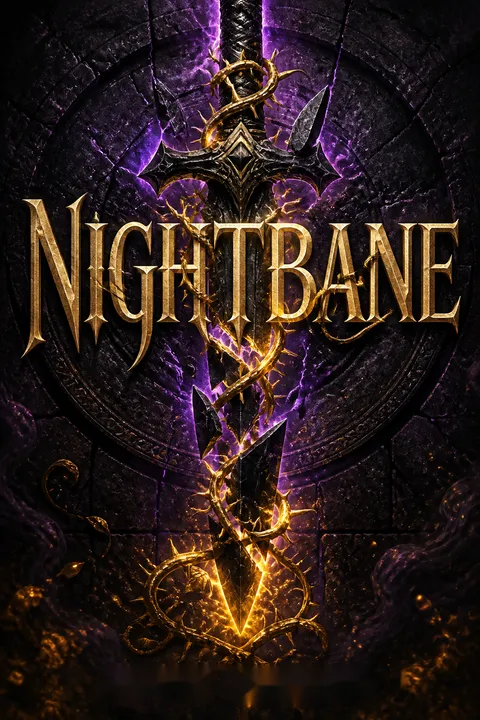


Plot Summary
Prologue
In the Place of Mirrors, Isla Crown1 opens an ancestral vault with her crown. A force hurls her across the room, and a vision shows shadows consuming a field of corpses before entering her mouth. Grim’s3 voice calls her back to consciousness.
Oro2 finds her bleeding, and the vault remains shut. Isla1 cannot tell whether she has seen a warning or a memory, but the darkness has made one thing plain: something inside the vault knows her, and does not want her to enter.
The opening gives Isla a future-shaped horror before she can interpret it, making the reader share her uncertainty about what is prophecy, memory, or threat. The vault behaves less like a container than a judgment: her crown is not enough, and inherited authority cannot replace mastery. The vision’s most disturbing feature is its intimacy. Darkness does not merely surround Isla; it enters her, suggesting that the danger she fears in Grim may be entangled with her own nature. That ambiguity drives the novel’s central problem of responsibility: before Isla can protect others, she must learn what she has already done.
A Crown Between Realms
In the days after the Centennial, Isla1 struggles to leave her room, carrying grief, anger, and the memory of Grim’s3 betrayal. Oro2 explains that when she killed Aurora,13 she used the bondmaker to take the Starling ruler’s13 power and save the Starling people from dying with her. Isla1 is now responsible for Wildling and Starling, though she can barely summon the new ability.
Oro2 urges her to train before her powers overwhelm her, and she agrees partly to escape her thoughts. Their growing closeness brings tenderness, but Isla1 still wears Grim’s3 impossible-to-remove necklace and wonders what he might do next. The island needs a ruler ready for danger; Isla1 is not yet sure she can become one.
Isla’s distress is not simply the aftermath of a battle. Her new authority arrives through the death of a friend, so every sign of power carries moral debt. The inability to use Starling ability makes this contradiction physical: she holds responsibility without feeling capable of exercising it. Oro offers structure, but his insistence also risks turning care into pressure. Isla’s reluctant promise to train shows how survival can begin as avoidance before it becomes commitment. The necklace sharpens that tension. It is a remnant of intimacy with Grim that Isla cannot remove, a material reminder that emotional boundaries do not obey political decisions.
The Table of Six
At a summit of realm leaders, Isla1 watches Sunling, Skyling, and Moonling representatives debate whether their people will return to Lightlark or remain in distant newlands. Azul4 warns that rebellion is brewing across the island, while Oro2 prepares for a possible Nightshade attack. Moonling representative Soren19 presses Isla1 on the condition of her Wildling people, exposing how little she knows about their numbers or needs.
Then Maren,7 a young Starling,7 describes centuries of exploitation and asks for a ruler. Isla1 could refuse, but Aurora’s13 death has left the Starlings alive and leaderless. She accepts the crown and promises a coronation, deciding that she must grow into the responsibility rather than wait until she feels worthy.
The summit makes ruling a public test of knowledge rather than a private claim to power. Soren’s questions expose Isla’s distance from the people whose lives depend on her, while Maren’s request gives that distance a human cost. Isla’s decision is therefore neither a triumph of confidence nor a simple act of duty. She chooses before she feels qualified, then treats the gap between title and competence as something she must close. The different realms’ arguments about migration and self-rule also establish that post-curse recovery will not mean returning to the old order. The island’s political future is already contested before the external enemy arrives.
Coronation Under Attack
Before her coronation, Isla1 visits the Wildling newland and finds her people weakened by hunger. Village leader Wren10 explains that they survived the curse by learning to farm and asks Isla1 to direct help toward the younger, more vulnerable Starlings.
At the ceremony, Oro2 places the Starling crown on Isla’s1 head, and the ground splits open. Black, winged creatures pour through the fissure, their hides resisting most magic as they tear through the crowd. Oro2 burns them, but more attack, leaving forty-five dead and many others wounded by spreading shadow-decay.
One creature pauses when Isla1 touches it, then flies toward Nightshade. Survivors accuse Isla1 of summoning the attack. Oro2 seals the fissure, but the creature’s response makes her suspect her vision was real.
The coronation turns Isla’s symbolic acceptance into an immediate crisis of legitimacy. The people see her crowned and then see monsters spare her, so their suspicion has an intelligible basis even though it is wrong. Her authority is judged not by intention but by the visible pattern of consequences. The attack also links political violence to bodily vulnerability: the injured do not simply bleed, but decay under a force ordinary healing cannot easily halt. Wren’s appeal beforehand complicates Isla’s priorities. She is already being asked to choose which suffering receives scarce aid, and the attack makes clear that leadership will mean acting amid incomplete knowledge.
Power Breaks Its Cage
After Moonling healers help treat the drek victims, a masked group pulls Isla1 from her bed with a surge of seawater and takes her to an underground chamber. The captors include members of several realms, and one argues that the drek assault is only a beginning.
When they touch Isla’s1 raw skin, her power bursts outward, throwing them against the stone and killing some. She escapes through hidden tunnels and reaches the streets, where Sunling guards cloak and protect her.
Oro2 orders an investigation and threatens anyone tied to the rebels. Azul4 assigns Skyling twins Avel15 and Ciel16 to guard Isla.1 Shaken by how her body attacked without her intention, Isla1 finally asks Oro2 to train her and to find a way to untangle her Wildling and Nightshade abilities.
The kidnapping reverses the coronation’s public accusation: Isla is not protected by her status, and the rebels’ assault forces her power into view before she understands it. Her involuntary burst is both rescue and harm, making the distinction between capability and control impossible to ignore. The Sunling guard’s cloak and Azul’s volunteers matter because they provide care without demanding proof of Isla’s worth. Oro’s training becomes more than preparation for an enemy. It is a response to the frightening fact that Isla’s own body can become dangerous when she is cornered. The scene begins her shift from fearing power as a curse to seeking deliberate command over it.
A Knife Between Enemies
As her powers loosen the seal on her memories, Isla1 recalls an earlier visit to Nightshade. Mistaken for a volunteer seeking the ruler’s attention, she is selected by Grim,3 the feared king,3 and kisses him before realizing who he is. She stabs him and escapes. Later, she returns to offer healing elixir and challenge him to a duel; he wins, but agrees to work with her when she returns to Nightshade searching for skin gloves that might help her survive the Centennial.
Grim3 needs her to locate a sword he cannot approach with his powers. Their uneasy partnership includes dangerous searches, his harsh combat lessons, and his rescue of Isla1 from a night-market attacker. She begins to see a person beneath the reputation she was taught to fear.
The recovered past unsettles Isla because it complicates the clean moral story she has built to survive the present. Grim is dangerous and often cruel, but the memories also show him teaching, rescuing, and paying attention to her. That complexity does not cancel his later betrayal; it makes the betrayal harder to dismiss as the work of a stranger. Isla’s own actions also resist a simple victim narrative. She chooses to return, bargain, fight, and learn, even when those choices expose her to danger. Memory therefore functions as an ethical challenge, not merely a romantic reveal: it asks Isla to distinguish what happened from the stories she now needs to believe about it.
The Leopard Chooses Isla
With Oro2 and Sunling organizer Enya,6 Isla1 brings food, supplies, and practical knowledge to Wren’s10 village. The Wildlings agree to gather in a few settlements so help can reach them, while visitors teach safe food preparation.
Isla1 stays to learn her people’s names and customs, then undertakes their dangerous bonded-animal ceremony. After a horned bear wounds her, a huge black leopard carries her back to the village. Wren10 identifies him as Lynx,14 the bonded companion of Isla’s mother.14
Lynx14 initially keeps his distance, but later shows Isla1 memories of her parents and of himself beside her as a baby. The images give her a first glimpse of the mother her guardians rarely discussed, and Lynx’s14 eventual loyalty helps Isla1 feel claimed by her own realm.
Isla’s relationship with Wildling changes through practical contact rather than a sudden declaration of belonging. She listens, organizes aid, and submits to a tradition whose risks she does not fully understand. Lynx’s choice links her political inheritance to a personal history that was withheld from her. His memories do not give Isla a complete account of her mother, but they make the past more than an absence managed by her guardians. The bond also offers a different model of loyalty from the human relationships that have failed her: Lynx is not persuaded by speeches or titles. He tests Isla through presence, risk, and recognition, so belonging becomes reciprocal rather than bestowed.
The Sword Beneath Wildling
Further memories show Isla1 and Grim3 recovering a double-bladed sword from a cave guarded by a dragon. The weapon can control the dreks, creatures Grim3 says once were people, but he abandons it when using it would cost Isla1 her life. He reveals that her father was his missing general, a Nightshade with a rare immunity to curses, and that Lightlark conceals a portal to the original world.
A Wildling ruler must open it, and doing so would destroy the island. Grim3 claims he does not want to use it, but Isla1 learns that he had originally needed her to break the sword’s curse. Feeling used, she ends their relationship. The recollections leave her with a weapon, a hidden world, and a reason to question everything she remembers about Grim.3
The sword joins the novel’s intimate and political stakes in one object. It can stop the dreks, yet its use threatens Isla’s life; the portal may offer another world, yet opening it would erase the home everyone is trying to save. Grim’s confession recasts their relationship as a mixture of genuine attachment and instrumental planning. Isla’s anger is warranted, but the memories do not let her reduce him to a single motive. The revelation of her father’s identity also unsettles the divisions on which Isla’s upbringing depended. Wildling and Nightshade are not sealed categories in her family, and the same is true of life and death in her own power.
Summer Before the Siege
As Isla1 trains, Oro2 helps her steady her Wildling power, and she eventually grows a flower without killing it. She admits that she does not want a life in which every choice carries the weight of thousands of people. Oro2 reminds her that breaking the curses was her work, not a gift of inherited mastery. Their trust deepens, and Isla1 tells him she loves him.
At a Copia banquet, she uses her abilities to grow a tree and flowers before leaders and ordinary islanders, publicly demonstrating that Wildlings may one day return. The garden then darkens in an illusion sent by Grim,3 who gives Lightlark thirty days to evacuate or face destruction. Isla’s1 growing happiness with Oro2 now has a deadline, and the threat may be more than a warning.
The section places emotional recovery beside public performance. Isla’s successful flower is a small, controlled act, but it matters because she has learned to create without immediately fearing herself. Her confession to Oro gives her a relationship founded on present choice rather than the recovered intensity of her history with Grim. The Copia banquet makes that private growth visible to the political community. Grim’s illusion then attacks precisely what Isla has begun to build: a shared future on the island. His ultimatum compresses time, turning her emotional stability into something she must defend while making decisions for whole populations.
Cleo’s Deadly Reason
Isla confronts Cleo,5 who has prepared ships and considered abandoning Lightlark. She argues that the island sustains every realm’s power, then learns why Cleo5 missed an earlier Centennial: the curses killed her son.
Cleo5 admits she is helping because the other world may restore lost souls, but refuses to promise loyalty. She directs Isla1 to the oracle.20 The oracle20 confirms that Grim’s3 devastation is a genuine threat and that Isla’s1 memories hold the explanation for his purpose, his weapon, and how to stop him.
The oracle20 also insists that the vault matters. Isla1 visits Remlar,9 an ancient Nightshade,9 who teaches her to reach her shadow power; each lesson loosens more of the memories Grim3 removed. The truth she needs is now inseparable from the past she dreads recovering.
Cleo’s disclosure reframes her apparent political coldness as grief disciplined into policy. Her desire to reach another world is not abstract ambition; she believes it may reverse the loss of her child. That motive makes her neither a reliable ally nor a simple antagonist. The oracle’s instruction shifts the story’s central resource from armies to Isla’s own mind. She cannot outsource the answer or keep her present happiness intact by refusing to remember. Remlar’s teaching further complicates her self-image: shadow power is not an alien force imposed from outside, but part of her inheritance. The past becomes necessary knowledge, while remaining a source of psychological danger.
Five Realms Make a Plan
Isla organizes help from the people most at risk. Cinder,8 a gifted young Starling,8 agrees to provide energy for a defensive shield, while Maren7 protects the child’s identity. Zed17 and Calder18 find rare ore that Sunling and Starling power can turn into weapons able to pierce drek scales.
Isla1 persuades the Vinderland warriors to join by promising help for their spreading sickness; Soren19 and Calder18 test Wildling healing flowers as medicine. She also discovers a rebel group believes an old curse, the nexus, ties each realm’s people to their ruler, and that ending it may require Oro’s2 death.
Isla1 refuses. The Skyling vote bars Azul4 from fighting, though one hundred volunteer soldiers stay if Starling rule becomes democratic. Meanwhile, civilians begin evacuating to the newlands.
War preparation in this section is an exercise in negotiated interdependence. No realm can supply everything: Starlings provide energy, Sunlings provide fire, Skylings offer aerial defense, Wildlings supply healing and terrain control, and the Vinderland bring trained fighters. Isla’s work is not to erase difference but to make each group’s contribution compatible with the others. The nexus proposal presents a morally sharper alternative: freeing subjects may require sacrificing the ruler who protects them. Isla’s refusal is emotionally understandable, but it leaves the system intact. Azul’s departure and the limited volunteer force show the cost of respecting collective choice when survival seems to demand unanimity.
Grim Takes the Wildlings
Grim’s3 shadow creatures have already attacked Lightlark, but he denies ordering the assault when Isla1 summons him to demand an explanation. He says her Wildlings chose to go with him, and she realizes he has brought Poppy12 and Terra,11 the guardians who raised her,12 to Nightshade.
He has also taken some subjects’ painful memories at their request, deepening Isla’s1 anger at his habit of altering what people remember. She rejects his claim that he is protecting them and returns to the war effort.
The disappearance leaves her without her people, their healing stores, or the support she expected in battle. It also makes the old necklace at her throat more than an unwanted keepsake: it is the only direct link that lets her call Grim3 when she needs answers.
The disappearance forces Isla to confront the limits of her sovereignty. Her subjects are not objects she can command into safety, and Grim’s account of their choice may be true even while his methods remain suspect. His interventions in memory echo the larger political conflict: he believes he can relieve suffering by deciding what people should carry. Isla’s resistance comes from a growing insistence that care without consent can become another form of control. Yet she has no easy way to verify the Wildlings’ wishes. The necklace embodies this unresolved dependence, preserving access to someone she distrusts because the people and information she needs are beyond her reach.
The Vault Becomes a Door
As the battle nears, Isla1 turns to pain to force the vault open, despite Oro’s2 warning that emotional power can kill her. Her crown unlocks the door, and she finds Terra11 waiting inside. Isla1 confronts her former guardian11 over the lies about her parents and her upbringing, then fights her with summoned trees, stone, and blades.
Terra11 defeats her and leaves after thanking her for opening a portal. The remark unlocks the missing memory: Grim3 had explained that a portal to the original world lies beneath the Wildling palace, and only a Wildling ruler can open it.
Isla1 realizes that the vault’s opening has activated the passage for Nightshade. She returns to the war council and admits she has opened the route Grim3 needs, turning the final day before battle into a race to contain her mistake.
The vault’s opening is both a technical success and a catastrophic misreading of what success means. Isla has been trained to treat access as proof of worth, so she uses pain to force the door rather than question what lies beyond it. Terra’s appearance exposes the cost of that urgency: Isla is still vulnerable to the people who shaped her, and her power does not guarantee victory. The portal revelation makes her personal desire to prove herself politically consequential. Yet the scene does not make her mistake a simple failure of character. She acts under a prophecy, a deadline, and years of manipulation, conditions that make responsibility real without making blame the only useful response.
A Vision Reversed
When Grim’s3 army pours onto Lightlark, Isla1 fights beside Oro,2 Lynx,14 and their allies. The Skyling archers use the special metal against the dreks, while Cleo’s5 water and Enya’s6 flames help contain the assault.
Isla1 attempts to strip Grim’s3 power through their bond, giving Oro2 a chance to kill him. Grim3 warns that his death will kill Isla1 too, and the memory of their marriage returns: they share a life as well as power. Isla1 also recognizes the corpses and devouring darkness from her vault vision.
They are not a prophecy of Grim’s3 future attack, but a memory of her own uncontrolled power erupting when she once saved him from the dreks. Her shadows killed the village. The battle now turns on a truth that makes both men’s survival dangerous.
The revelation reverses the moral direction of the opening vision. Isla’s fear had made Grim its apparent author, but memory identifies her own power as the source of the earlier devastation. This does not make Grim innocent of the present invasion, nor does it make Isla irredeemable. Instead, the novel forces her to distinguish responsibility from identity: she caused terrible harm, but the act does not exhaust who she is. The marriage and shared-life bond make the political choice brutally intimate. Killing Grim may kill Isla; sparing him may expose the island. Love here is neither a cure for violence nor a safe refuge from it. It changes the cost of every available action.
The Choice Still Bleeds
With the fighting still raging and more dreks filling the sky, Isla1 asks Grim3 whether he will stop the assault if she goes with him. Grim3 agrees. Oro2 begs her not to leave, but he does not know that the oracle20 has foreseen her killing either him or Grim,3 nor how the recovered memories have changed what she believes about herself.
Isla1 tells Oro2 that she loves him, then takes Grim’s3 hand and admits that she loves Grim3 too. Lynx14 goes with them. They disappear from the battlefield, leaving the outcome of the war and the fate of Lightlark unresolved. Isla’s1 choice is not a clean return to Grim3 or a rejection of Oro;2 it is a desperate attempt to stop the attack while carrying a love that has become divided between two men.
The ending refuses the comforting arithmetic that one true love or one correct political decision can settle every conflict. Isla acts under immediate pressure, seeking to stop the slaughter, but her departure does not demonstrate that Grim has been forgiven or that Lightlark is safe. Her declaration to Oro is painful precisely because it is true; emotional honesty does not make the consequences painless. Taking Lynx preserves a connection to Wildling even as she leaves the island. The unresolved battlefield turns the ending into a suspended ethical choice rather than a conventional victory. Isla has chosen a next action, not a final answer, and the world remains exposed to what follows.
Analysis
Nightbane asks what happens when a person is made responsible for a history she was never allowed to know. Isla1 is simultaneously a ruler,1 a survivor of deception, and the inheritor of powers whose consequences she cannot yet predict. The novel’s fantasy mechanics give those conflicts physical form. Memory can be removed, power can pass through love, and a hidden portal can turn private grief into the possible destruction of a whole world. These are not merely magical complications. They dramatize how knowledge and consent determine who gets to choose the risks others must bear.
Isla’s1 development does not proceed from weakness to uncomplicated mastery. Each gain in power exposes a new danger: she can protect a village, but she can also destroy one; she can claim authority, but she still lacks knowledge of her people; she can love Oro2 and remember loving Grim,3 without either attachment resolving the political crisis. Her capacity to harm becomes ethically meaningful only when she stops treating power as proof of worth and begins asking what its use will cost. The rulers around her embody competing forms of care. Oro2 protects through discipline and sacrifice, Cleo5 through guarded strategy, and Grim3 through acts that blur devotion with control. Their motives do not erase the damage they cause. The same ambiguity shapes the rebels’ claim that the nexus binds subjects to rulers: liberation may be necessary, yet the proposed cost is Oro’s2 life. Isla’s1 refusal is not a clean solution, but it reveals the limits of any politics that treats people as expendable instruments.
The ending preserves this difficulty. Isla1 leaves with Grim3 in an attempt to stop the battle, while affirming love for Oro2 as well. The novel closes before that choice can be judged by its outcome. Its central question remains active: can care become a source of shared power without becoming possession, and can a damaged person accept responsibility without mistaking guilt for her entire identity?
Review Summary
Nightbane received mixed reviews, with some readers praising the improved writing and character development, while others criticized plot holes and lack of originality. Many enjoyed the romance and character dynamics, particularly between Isla and Grim. However, some found the book boring and derivative of other popular fantasy series. The love triangle and world-building were divisive points. Despite criticism, many fans eagerly anticipate the next installment, while others express disappointment with the series' direction.
People Also Read





Characters
Isla Crown
Reluctant dual-realm rulerIsla is a young Wildling ruler raised in isolation and trained to survive through discipline, observation, and self-criticism. She wants to be loved and accepted, but secrecy has taught her to distrust both her own judgment and other people’s motives. Her humor and boldness often cover fear, while her instinct to help can push her into choices she has not fully considered. As the story unfolds, she must learn to connect authority with listening, and power with restraint. Her complicated ties to Oro2, Grim3, her subjects, and her guardians expose how badly she wants certainty in a life shaped by withheld truths.
Oro
Sunlit king and teacherOro is the king of Lightlark and ruler of Sunling, a patient and formidable wielder whose composure conceals old grief and a fear of harming those he loves. He approaches power as a discipline: emotions must be understood before they are allowed to shape action. With Isla1, he offers instruction without demanding immediate trust, though his protectiveness can edge toward deciding what risks she should take. His long familiarity with responsibility gives him political steadiness, while his private tenderness reveals the cost of treating every personal desire as secondary to duty.
Grim
Nightshade king and rivalGrim, also known as Grimshaw, rules Nightshade with a reputation for severity and extraordinary command of shadow and portals. He is guarded, strategic, and shaped by a political culture that treats attachment as a vulnerability. His harshness can be genuine, but so can his moments of patience and care, making him difficult for others to categorize. Isla’s1 history with him is marked by attraction, conflict, and secrets, and his choices repeatedly challenge her assumptions about what protection, loyalty, and love require.
Azul
Skyling king of choiceAzul leads the Skylings, a realm that values participation and individual choice more openly than its neighbors. Immaculate, witty, and perceptive, he is willing to offer Isla1 hard truths without shaming her for being inexperienced. His grief and his devotion to his people coexist with a genuine belief that rulers must earn connection rather than demand it. He helps Isla1 see that choosing to remain responsible is different from being trapped by obligation.
Cleo
Moonling ruler of the seaCleo is a powerful Moonling ruler who commands water and guards her feelings behind immaculate composure. She is strategic, proud, and deeply devoted to the survival of her realm, often making decisions that other rulers interpret as hostile. Her isolation is partly political and partly protective: she has learned that attachment can expose a ruler to unbearable loss. Isla1 gradually discovers that Cleo’s motives are more personal and painful than her chilly public manner suggests.
Enya
Sunling strategist and friendEnya is a capable Sunling organizer and one of Oro’s2 oldest friends. She is direct, observant, and gifted at building workable systems in difficult conditions. Her dry humor softens neither her judgment nor her fierce loyalty to the people she loves. Enya understands the cost of leadership and often measures personal happiness against collective safety. She supports Isla’s1 practical efforts while remaining willing to challenge her when affection clouds political responsibility.
Maren
Starling representativeMaren represents a young Starling population that has endured exploitation, displacement, and generations of neglect. She is guarded, disciplined, and fiercely protective of her cousin Cinder8. Her skepticism toward rulers is grounded in history rather than simple resentment. Maren wants safety and a voice for her people, and she watches carefully to see whether Isla’s1 promises will become tangible improvements in Starling lives.
Cinder
Gifted young StarlingCinder is Maren’s7 young cousin, bright, curious, and unusually confident with Starling energy. Her ease with power makes her a source of wonder to other characters, but her youth also makes her vulnerable to being treated as a resource rather than a child. She asks direct questions and approaches Isla1 without the deference expected by adults, offering a glimpse of a future in which Starling children might be allowed more freedom.
Remlar
Ancient Nightshade mentorRemlar is an ancient winged being with deep knowledge of Nightshade power and the histories that ordinary rulers have forgotten. He is provocative, cryptic, and more interested in forcing Isla1 to confront difficult truths than in comforting her. His lessons make him an unsettling teacher, but he understands the relationship between destruction and renewal better than anyone else Isla1 meets. He treats her dual inheritance as a possibility she must learn to use, not a flaw she must hide.
Wren
Wildling village leaderWren leads one of the larger Wildling villages and speaks plainly about the hardship her people endured during the curses. She is practical, wary of sudden promises, and attentive to the customs that bind her community together. Her memories of Isla’s mother14 give Isla1 an important connection to Wildling history beyond the version taught by her guardians. Wren is willing to help, but expects Isla1 to learn what her people need rather than assume she already knows.
Terra
Fierce Wildling guardianTerra helped raise Isla1 and trained her to fight with relentless rigor. She is disciplined, capable, and convinced that harsh preparation is a form of protection. Her devotion to Wildling survival shaped Isla’s1 childhood, including its isolation and strict rules. Terra’s lessons gave Isla1 formidable physical skills, but her secrecy left Isla1 with gaps in her understanding of her family and her people.
Poppy
Wildling guardian and tutorPoppy helped raise Isla1 alongside Terra11, balancing practical instruction with a more polished, socially attentive approach. She taught Isla1 how appearance and words could matter as much as weapons, and she remained one of the few stable presences in Isla’s1 secluded childhood. Poppy’s care is real, but the protective world she helps maintain leaves Isla1 unprepared to know her subjects or make sense of her family’s history.
Celeste, also called Aurora
Isla’s former closest friendCeleste, whose ruler identity is Aurora, is a Starling and Isla’s1 closest companion during the events leading to the Centennial. She is clever, charismatic, and able to make Isla1 feel seen in a life where trust is scarce. Their friendship gives Isla1 a rare experience of emotional intimacy, which makes every secret between them carry unusual weight. Celeste’s place in Isla’s1 life is central to how Isla1 understands friendship, trust, and the danger of confusing closeness with complete knowledge.
Lynx
Wildling bonded leopardLynx is an enormous black leopard who once accompanied Isla’s mother14. Proud, independent, and sparing with affection, he does not behave like a tame companion. His bond with Isla1 links her to Wildling custom and to a family history she has never been allowed to know. Lynx’s judgment is expressed through action rather than words, and his presence gives Isla1 a form of loyalty that does not depend on political ceremony.
Avel
Skyling warrior and guardAvel is a Skyling warrior who volunteers to protect Isla1 alongside her twin, Ciel16. She is tall, formidable, and decisive, with the flight and combat skills needed to guard a ruler in dangerous territory. Her service is offered as gratitude rather than obligation, giving Isla1 an example of loyalty that crosses realm boundaries.
Ciel
Skyling warrior and guardCiel is Avel’s15 twin and a skilled Skyling warrior who serves as Isla’s1 guard. He shares his sister’s courage and physical presence, but is distinct through his own manner and choices in battle. Together, the twins offer Isla1 protection while she is learning to trust people beyond her own realm.
Zed
Fast Skyling tacticianZed is a quick, competitive Skyling with a history of testing the limits of Oro’s2 security. He is sharp-tongued and suspicious, especially when Isla’s1 hidden abilities complicate the war plan. Beneath his teasing confidence is a practical strategist who recognizes what the alliance lacks. He values competence and is slow to trust, but he remains willing to take risks when the island’s survival requires them.
Calder
Moonling healer and allyCalder is a gentle, imposing Moonling healer who remains outside Cleo’s5 immediate circle. He is patient and sincere, though not always confident in his own expertise. His willingness to learn from others and treat people beyond his realm makes him a counterpoint to Moonling isolation. Calder approaches conflict with a healer’s reluctance, aware that saving lives can still require entering dangerous alliances.
Soren
Moonling political representativeSoren speaks for Cleo5 in political meetings and is a severe, status-conscious Moonling with a cane. He questions Isla’s1 competence and represents the isolationist instincts of Moonling leadership. His knowledge of Moonling history and healing makes him useful, even when his manner alienates other rulers.
The Oracle
Keeper of possible futuresThe Oracle is an ancient Moonling seer who speaks in layered predictions and spends long periods frozen in ice. She offers guidance rather than certainty, insisting that choices still shape outcomes. Her warnings press Isla1 to face the memories she would rather leave buried, while her limited time makes each prophecy feel urgent.
Baron
Nightshade weaponsmithBaron is an ancient blacksmith who creates weapons from the blood and bones of people with unusual abilities. He is physically imposing, dangerous, and proud of his craft. His knowledge links the hidden sword to the old history of the dreks.
Singrid
Vinderland war leaderSingrid leads a band of Vinderland warriors, a people known for fierce combat and distrust of the other realms. He is blunt and proud of his fighters. Isla’s1 unusual heritage changes how he views her, creating a chance for cooperation where hostility had seemed fixed.
Plot Devices
The Place of Mirrors vault
A threshold to hidden truthThe ancestral vault can be approached with Isla’s1 crown, but access requires more than possession of the key. It first rejects her and sends a vision of death and devouring darkness. The vault is linked to the hidden portal beneath the Wildling palace, so opening it has consequences far beyond Isla’s1 search for power. Its refusal tests the difference between inherited authority and actual mastery, while its eventual opening makes Isla’s1 private need for strength a threat to the whole island.
The starstick
A bridge between distant realmsThe starstick is a portaling device that allows Isla1 to travel between places she can visualize. Its use is unreliable over short distances and becomes less dependable near other portal power. Grim3 originally made the relic, though its presence in Isla’s1 life is part of the mystery surrounding her family. It lets her visit Wildling villages, gather allies, and reach people who would otherwise be inaccessible. Because it can move both Isla1 and other people, it becomes an essential tool for wartime evacuation and alliance building.
The love bond
Power shared through attachmentA bond between two people can give each access to the other’s power, making intimacy both a source of strength and a vulnerability. Isla1 already knows that Oro2 can reach her abilities through their connection. Later, her recovered history with Grim3 reveals a deeper consequence: their bond ties their lives together. The device turns emotional relationships into physical stakes. Love can protect, empower, and preserve, but it also complicates any attempt to defeat an enemy without endangering the person bound to them.
The oracle’s visions
A future clouded by memoryThe Oracle’s20 warnings show possible futures rather than a fixed sequence of events. Isla1 initially interprets a vision of bodies consumed by darkness as a forecast of Grim’s3 attack, but the vision later proves to be a memory of her own uncontrolled power. The predictions create urgency while withholding the distinction between what has happened and what might happen. They force Isla1 to seek her missing memories, and they preserve uncertainty even at the climax by making her choices, rather than prophecy alone, determine which future becomes real.
The drek-controlling sword
A weapon with catastrophic reachThe double-bladed sword was made to control the dreks and potentially create more of them. It is cursed so a Nightshade ruler cannot claim it, which is why Grim3 needs Isla’s1 help to find and use it. Its power promises a way to stop a threat that has killed thousands, but the curse may cost Isla1 her life to break. The weapon eventually becomes inseparable from the secret portal beneath Lightlark, binding military survival to the possibility of destroying the island itself.
FAQ
Synopsis & Basic Details
What is Nightbane about?
- Ruler faces impending war: Nightbane follows Isla Crown as she navigates the aftermath of breaking the curses on Lightlark, grappling with newfound powers, a looming war with Nightshade, and a prophecy that dictates she must kill either Oro or Grim.
- Love triangle complicates matters: The story explores the complex relationships between Isla, Oro, and Grim, forcing Isla to confront her feelings and make difficult choices that will determine the fate of Lightlark.
- Uniting realms against darkness: Isla must unite the divided realms of Lightlark against the impending threat of Grim and his Nightshade army, while also dealing with internal conflicts and rebellions.
- Mastering powers and destiny: Isla's journey is about mastering her powers, understanding her past, and ultimately choosing her own destiny in the face of a predetermined prophecy.
Why should I read Nightbane?
- Complex character dynamics: The intricate relationships between Isla, Oro, and Grim create compelling emotional conflict and moral dilemmas.
- High-stakes fantasy world: The fate of Lightlark and its realms hangs in the balance, offering a thrilling and suspenseful reading experience.
- Exploration of power and responsibility: The story delves into the challenges of leadership, the burden of responsibility, and the consequences of wielding great power.
- Themes of self-discovery and choice: Isla's journey of self-discovery and her struggle to break free from predetermined destiny resonate with readers seeking stories of empowerment and agency.
What is the background of Nightbane?
- Post-curse Lightlark: The story takes place after the breaking of five-hundred-year-old curses that plagued the six realms of Lightlark, a setting steeped in history and ancient magic.
- Divided realms and newlands: The realms are still fractured, with many having fled Lightlark to establish newlands, creating political tension and logistical challenges.
- Nightshade threat: The Nightshade realm, historically an enemy of Lightlark, poses a renewed threat, fueled by the breaking of the curses and the power vacuum created by the divided realms.
- Ancient prophecies and power dynamics: The narrative is driven by ancient prophecies and the complex power dynamics between the rulers of the six realms, each with unique abilities and histories.
What are the most memorable quotes in Nightbane?
- "My bane and antidote, are both before me.": This quote from J. Addison's Cato foreshadows Isla's internal conflict and the difficult choices she must make between Grim and Oro, who represent both danger and salvation.
- "We are monsters, Hearteater. Or, at least, that's what they think.": This quote, spoken by Grim, highlights the prejudice and fear surrounding Wildlings and Nightshades, adding depth to Isla's struggle for acceptance and understanding.
- "It's the parts you don't seem to like about yourself that I love the most.": This quote from Oro reveals his unconditional love for Isla and his ability to see beyond her flaws and insecurities, offering her validation and support.
What writing style, narrative choices, and literary techniques does Alex Aster use?
- Fast-paced and action-oriented: The narrative moves quickly, with frequent shifts in perspective and a focus on plot-driven events, creating a sense of urgency and suspense.
- First-person perspective with limited omniscience: The story is primarily told from Isla's point of view, allowing readers to experience her thoughts and emotions directly, while also providing glimpses into other characters' perspectives through dialogue and interactions.
- Foreshadowing and symbolism: Aster uses subtle foreshadowing and recurring symbols, such as the vault, the necklace, and the colors associated with each realm, to hint at future events and deepen the story's themes.
- Romantic tension and emotional intensity: The love triangle between Isla, Oro, and Grim is a central element of the story, creating emotional conflict and driving the plot forward with moments of intense passion and heartbreak.
Hidden Details & Subtle Connections
What are some minor details that add significant meaning?
- The recurring image of the heart: The heart, both literal and metaphorical, is a recurring motif, symbolizing love, betrayal, and the life force of Lightlark, connecting to the Wildling curse and Isla's journey of healing.
- The significance of colors: The colors associated with each realm (e.g., gold for Sunling, silver for Starling, black for Nightshade) subtly reinforce their cultural values and power dynamics, adding depth to the world-building.
- The description of the Place of Mirrors: The decaying state of the Place of Mirrors reflects the fractured state of Lightlark and the lingering effects of the curses, highlighting the need for healing and restoration.
What are some subtle foreshadowing and callbacks?
- Grim's knowledge of portaling: Grim's ability to portal is subtly foreshadowed early on, hinting at his connection to the starstick and his hidden powers, which become crucial later in the story.
- The oracle's ambiguous prophecies: The oracle's cryptic pronouncements about the future serve as a constant source of tension and uncertainty, creating a sense of impending doom and forcing Isla to question her choices.
- The description of the necklace: The description of the necklace Grim gives Isla as impossible to remove foreshadows the inescapable bond between them and the control he has over her.
What are some unexpected character connections?
- Enya's friendship with Oro: The revelation of Enya and Oro's long-standing friendship adds depth to Oro's character and provides Isla with a valuable ally who understands his past and can offer guidance.
- Lynx's connection to Isla's mother: The discovery that Lynx was Isla's mother's bonded animal creates a poignant link to her past and reinforces the theme of legacy and inherited destiny.
- The Vinderland's origins: The reveal that the Vinderland were once Wildlings adds complexity to their animosity towards Isla and highlights the lasting impact of the curses on the realms.
Who are the most significant supporting characters?
- Enya: As Oro's close friend and advisor, Enya provides practical support and a grounded perspective, often challenging Isla's decisions and offering valuable insights into the political landscape of Lightlark.
- Azul: As the ruler of Skyling, Azul offers Isla guidance and support, particularly in navigating the complexities of leadership and the importance of choice, serving as a moral compass and a voice of reason.
- Remlar: As an ancient being with knowledge of Nightshade magic, Remlar plays a crucial role in helping Isla unlock her powers and understand her connection to Grim, acting as a mentor and a source of forbidden knowledge.
Psychological, Emotional, & Relational Analysis
What are some unspoken motivations of the characters?
- Oro's fear of losing control: Oro's overprotectiveness of Isla stems from a deep-seated fear of losing control and repeating past mistakes, driving him to try and shield her from danger, even at the expense of her own agency.
- Grim's desire for redemption: Grim's actions are driven by a desire to atone for his past and break free from the darkness that defines his lineage, seeking redemption through his love for Isla and his efforts to protect Lightlark.
- Cleo's grief and longing: Cleo's alliance with Nightshade is fueled by her grief over the loss of her son and her desperate hope of finding a way to reunite with him, highlighting the lengths to which a parent will go to reclaim what they have lost.
- Maren's protectiveness of Cinder: Maren's overbearing protectiveness of Cinder stems from a deep-seated fear of losing her cousin to the same exploitation and abuse that Starlings have historically faced, driving her to make questionable choices in the name of safety.
What psychological complexities do the characters exhibit?
- Isla's imposter syndrome: Isla struggles with feelings of inadequacy and self-doubt, constantly questioning her ability to lead and protect her people, stemming from her upbringing and the lies she was told about her powers.
- Oro's burden of responsibility: Oro carries the weight of his kingdom on his shoulders, constantly grappling with the responsibility of protecting his people and making difficult decisions that often come at a personal cost, leading to emotional exhaustion and a need for control.
- Grim's internal conflict: Grim is torn between his love for Isla and his duty to his realm, struggling to reconcile his desire for redemption with the darkness that defines his lineage, leading to internal turmoil and unpredictable behavior.
- Cleo's emotional detachment: Cleo's icy demeanor and strategic mind mask a deep well of grief and longing, highlighting the psychological toll of leadership and the sacrifices she has made to protect her people.
What are the major emotional turning points?
- Isla's vision in the vault: The haunting vision of death and destruction in the vault forces Isla to confront the gravity of the situation and the potential consequences of her actions, fueling her determination to master her powers and protect Lightlark.
- The revelation of Grim's deception: The discovery that Grim initially sought to use her to break the curse on the sword shatters Isla's trust and forces her to re-evaluate her feelings for him, leading to a period of intense emotional turmoil.
- Oro's declaration of love: Oro's heartfelt declaration of love provides Isla with validation and support, helping her to overcome her insecurities and embrace her role as a leader, strengthening their bond and giving her the courage to face the challenges ahead.
- The oracle's prophecy: The oracle's prophecy that Isla will kill either Grim or Oro forces her to confront the potential consequences of her choices and the weight of her destiny, leading to a period of intense emotional conflict and self-reflection.
How do relationship dynamics evolve?
- Isla and Oro's bond deepens through shared experiences: Their relationship evolves from a strategic alliance to a deep and loving connection, built on trust, respect, and shared responsibility, providing them with strength and support in the face of adversity.
- Isla and Grim's relationship shifts from animosity to love and back: Their relationship is characterized by intense passion, betrayal, and a constant struggle between love and duty, challenging Isla's perceptions and forcing her to make difficult choices.
- Isla's relationships with her guardians are strained by secrets: The lies and manipulations of Poppy and Terra create a rift between them and Isla, forcing her to question everything she thought she knew about her past and her identity.
- Isla's friendships with Enya and Azul provide support and guidance: These relationships offer Isla valuable insights into leadership, compassion, and the importance of unity, helping her to navigate the complexities of her role as a ruler.
Interpretation & Debate
Which parts of the story remain ambiguous or open-ended?
- The true nature of the other world: The details of the world to which the portal leads remain vague, leaving open the possibility of future exploration and conflict.
- The long-term consequences of Isla's choices: The ultimate fate of Lightlark and its realms after the battle remains uncertain, leaving readers to speculate on the lasting impact of Isla's decisions and the challenges that lie ahead.
- The extent of Grim's redemption: While Grim's love for Isla and his willingness to sacrifice himself are evident, the question of whether he can truly escape his dark past and atone for his actions remains open to interpretation.
What are some debatable, controversial scenes or moments in Nightbane?
- Isla's initial attraction to Grim: Some readers may find Isla's initial attraction to Grim, despite his villainous nature and their history of conflict, to be problematic or difficult to reconcile.
- Isla's use of her powers through emotion: Isla's reliance on her emotions to fuel her powers raises questions about the ethics of wielding such power and the potential for it to be used for destructive purposes.
- The ending and the choice Isla makes: The ending, and the choice Isla makes, is likely to be divisive, with readers debating the merits of her decision and its impact on the characters and the world of Lightlark.
Nightbane Ending Explained: How It Ends & What It Means
- Isla chooses to bind her fate to Grim: Isla, realizing that Grim is being controlled by a force that is using him to destroy Lightlark, chooses to bind her fate to him, hoping to save him and the island.
- The power of choice and sacrifice: The ending emphasizes the power of choice and the importance of sacrifice, as Isla makes a difficult decision that will have lasting consequences for herself and those she loves.
- Hope for a better future: Despite the losses and challenges, the ending offers a glimmer of hope for a better future, as Isla and her allies work to rebuild Lightlark and create a more just and equitable society.
Lightlark Series

About the Author
Other books by Alex Aster


Download PDF
Download EPUB
.epub digital book format is ideal for reading ebooks on phones, tablets, and e-readers.








