

Key Takeaways
Make meaning without asking the universe to certify it.
The cosmos gives no brief. Carroll opens with a freeway near miss, then sets one life against a universe of billions of galaxies and a future that may stretch into darkness. The contrast is stark: human lives are finite, and nature offers no cosmic instruction manual. His answer is poetic naturalism, the view that one natural world can be described in many useful ways, while meaning and value arise from human lives rather than from a purpose imposed on the universe.
Made does not mean fake. Love, friendship, and commitment remain real even if their causes are physical. Learning what love is made of does not cancel the experience. The work is to decide what deserves care, then live accordingly.
What's powerful here is the refusal to confuse cosmic scale with personal worth. A thing can matter locally without mattering to every galaxy; human relationships operate at the scale where people experience loss, kindness, and responsibility. The view also makes meaning a practice, not a consolation prize. Its difficulty is that people care about different things, and human authorship alone cannot settle disputes between conflicting values. The account offers a starting point for ethics, not a guarantee that agreement will follow.
Keep human-scale explanations; atoms do not make people unreal.
One world, many stories. Emergence is when a higher-level description becomes useful for organized systems, even though its concepts are absent from a microscopic account. Air can be described as molecules or as a fluid with pressure and temperature. Both descriptions work in their proper domains. Likewise, people are arrangements of matter, but person-level ideas such as memory and desire can still describe real features of human life.
Identity has practical edges. The Ship of Theseus thought experiment asks whether a ship remains the same one as its planks are replaced. Carroll's answer is that “ship” is a useful category, not a hidden ingredient in the wood. The category can be real without being fundamental.
This layered view avoids two familiar errors: treating only particles as real, or treating every everyday category as a separate substance. It resembles the way maps serve different tasks: a street map and a geological map can both describe the same terrain without being interchangeable. The useful constraint is consistency with evidence and with other successful descriptions. Still, usefulness alone needs care: a convenient category can mislead if it hides who benefits from using it or what its boundaries exclude.
Update beliefs as probabilities, not possessions you must defend.
Begin with a prior. Bayesian reasoning tracks degrees of belief, called credences, and updates them when evidence arrives. A prior is the starting credence; a likelihood measures how expected the evidence would be if a claim were true; the posterior is the revised credence. In poker, an opponent drawing one card makes some hands more plausible than others. In science, a predicted particle such as the Higgs began with a stronger prior than a startling claim that neutrinos exceeded light speed.
Count all the evidence. The Dutch nurse Lucia de Berk was convicted after a dramatic probability claim was mishandled. Investigators had multiplied dependent events and searched selectively for suspicious patterns. Later review exposed the errors, and she was acquitted. Beliefs should move with evidence, including evidence that cuts against a favored explanation.
The framework turns intellectual humility into a procedure: state what would change a mind, compare competing explanations, and avoid treating a plausible story as proof. It also clarifies why data do not speak without background assumptions. The risk is that people can choose priors that protect a cherished conclusion, especially when a theory is too vague to generate testable likelihoods. Bayesian language is most useful when claims are specific enough to make genuine predictions, not when numbers merely decorate intuition.
Trace memory and causal explanations to the universe's low-entropy past.
Time's arrow has a source. The fundamental laws described in the book generally do not distinguish past from future. The observable universe does: it began in a very low-entropy condition and has been moving toward higher entropy. The Past Hypothesis is the assumption that this unusually ordered early state explains the direction of time we experience. Entropy measures how many microscopic arrangements can produce the same large-scale appearance.
Records point backward. A broken egg is likely to have been intact before it hit the ground, while its future remains open to many possibilities. Memories, photographs, and historical records work similarly: present traces help reconstruct a lower-entropy past. Everyday causes are useful descriptions of events that change what would otherwise have happened, not extra ingredients in the deepest physical laws.
This account links cosmology to ordinary reasoning in a striking way. Memory is not a window opening directly onto the past; it is a present physical record whose reliability depends on the universe's history. Causal explanation also relies on context and alternatives, much like modern causal analysis asks what would have happened under different conditions. The idea is clarifying, though it does not make every causal judgment easy. Human-scale causes still require evidence about context, and competing explanations can remain underdetermined.
A universe's first moment need not mean creation from nothing.
The Big Bang marks a boundary. The Big Bang model describes a hot, dense, expanding early universe, supported by evidence such as the cosmic microwave background. But the predicted singularity is where general relativity stops being reliable, not a settled account of what happened at the ultimate beginning. A first moment, if there was one, is not an earlier state called “nothing” turning into something.
Explanation may run out. Carroll argues that known physics permits a self-contained universe; in a uniform universe, positive energy in matter can be balanced by negative gravitational energy. This does not solve why these laws exist. Fine-tuning arguments face uncertain probabilities, possible selection effects, and speculative multiverse explanations. Some ultimate features may be brute facts, not failures of curiosity.
The distinction between a temporal beginning and an event occurring inside time blocks an intuitive but misleading analogy: ordinary objects appear against an already existing background, while the universe includes the background itself. The energy-balance argument shows compatibility with a self-contained cosmos, not a complete origin theory. Fine-tuning likewise depends on poorly known probabilities and on what life could be under other laws. The strongest lesson is methodological: ask what a model explains, and do not treat an unanswered “why” as evidence for one preferred answer.
Let tested physics constrain extraordinary claims without erasing human explanations.
The everyday inventory is powerful. The Core Theory is Carroll's name for the highly successful account of the particles and forces underlying ordinary life. Quantum field theory describes particles as excitations of fields. Experiments and the structure of the theory strongly constrain undiscovered particles or forces that could affect daily life. That is why telekinesis and astrology lack a plausible physical mechanism in this account.
A gap is not a license. If an immaterial soul affects the brain, its interaction must alter the physical account in some way. The book finds no evidence for such an effect, and therefore treats personal survival after death as unsupported by current physics. This conclusion depends on the Core Theory's domain and on physicalism, the view that reality is wholly physical. It does not mean that human-level concepts are useless.
The argument is strongest when it asks extraordinary claims to specify a mechanism and face the same experimental standards as ordinary physics. It also separates two questions often blurred together: whether physics constrains brain behavior, and whether concepts like intention remain useful for describing people. The careful qualification matters. A theory can be exceptionally reliable within a domain without being a final account of everything, and a claim about an immaterial soul is not disproved merely by naming a gap. Its burden is to explain how the soul acts.
Complexity can bloom as entropy rises when energy keeps flowing.
Order can be local. Entropy increases overall, but that does not prevent intricate structures from forming in parts of the universe. Cream poured into coffee begins in a simple arrangement, develops intricate tendrils while mixing, then becomes uniform again. Complexity can peak between low and high entropy rather than steadily increasing.
Life uses gradients. Earth receives relatively concentrated, useful energy from the Sun and radiates it back as more dispersed infrared light. Organisms use that energy to maintain structure and do work. Cells store usable energy in ATP, which powers tasks from muscle contraction to building molecules. Life does not defeat the second law; it depends on energy flowing through a system that is far from equilibrium. When gradients disappear, the processes that sustain life cannot continue.
The distinction between total disorder and local organization is central to understanding living systems. A city can become more organized while consuming fuel and exporting waste; the larger system pays the thermodynamic bill. This perspective also discourages treating complexity as a universal upward march. The coffee example shows that structure can arise and fade, while the specific outcome depends on the system's interactions. The important question is not simply whether entropy rises, but what energy differences are available and how matter can exploit them.
Evolution improves local fit, not toward a prewritten destination.
Variation supplies options. Natural selection occurs when organisms inherit information with small variations, and some variants reproduce more successfully in their current environment. It is not a plan for making life more advanced. Richard Lenski's long-running E. coli experiment followed bacteria across tens of thousands of generations. One population acquired the ability to use citrate, a resource its ancestors could not exploit, after earlier changes helped set the stage.
Search is local. A fitness landscape pictures genomes as positions in a vast space, with reproductive success as elevation. Selection can move populations toward nearby advantages, but it does not survey every possibility or guarantee the best solution. Researchers still debate how early life combined replication, metabolism, and compartments. RNA-world and metabolism-first proposals are promising routes, not settled histories.
The search metaphor makes evolution's creativity intelligible without smuggling in a searcher. It also exposes a limit: what counts as an advantage depends on the environment, and a trait useful in one setting can become a liability in another. Lenski's experiment is especially valuable because frozen generations let researchers compare evolutionary stages directly. Yet laboratory evolution is not a miniature replay of life's origin. It demonstrates mechanisms and possibilities, while the full historical pathway remains an open scientific problem.
Treat consciousness and choice as human realities, not physics violations.
Brains are active systems. Neurons communicate through electrochemical signals, memories correspond to changes in neural connections, and brain damage can alter recognition, emotion, and personality. Carroll argues that consciousness is not a single inner commander but a collection of interacting processes. The difficult question of subjective experience remains, but he sees no compelling reason to add a nonphysical substance to the account.
Choice belongs to another scale. Compatibilism is the view that human choices can be real even if physical events follow natural laws. A person deciding between universities can be described through reasons and preferences, even if a microscopic account uses different terms. That description supports responsibility and deliberation. It does not claim that people can break physical laws or that every action is equally voluntary.
The account is strongest when it rejects the false choice between a ghostly self and a meaningless machine. People can be physically constituted and still deliberate, remember, and respond to reasons. Neuroscience supports links between brain processes and mental life, but correlation and intervention do not, by themselves, settle why experience feels like anything from the inside. Compatibilism preserves ordinary agency while leaving that philosophical challenge visible. It also invites a practical question: how should responsibility change when illness or brain injury narrows a person's control?
Build moral rules from care, then revise them through honest disagreement.
Facts do not issue commands. Hume's is-ought distinction says that descriptions of what happens cannot, by themselves, prove what should happen. Ethical rules require some value premise, such as caring about welfare or fairness. Moral constructivism treats moral systems as human creations, shaped by our sentiments and tested for coherence, rather than facts waiting in nature to be discovered.
No single rule handles everything. Consequentialism judges actions by outcomes; deontology emphasizes duties and rules; virtue ethics focuses on character. The trolley problem, where diverting a runaway trolley saves five people but kills one, reveals why these approaches can conflict. Carroll's closing emphasis is practical: listen, examine assumptions, and make the most of finite lives. His estimate of roughly three billion human heartbeats gives that responsibility a bodily scale.
Constructivism does not imply that every preference deserves equal respect. Moral rules can be assessed for consistency, consequences, and how they treat other people, even if no cosmic authority guarantees the verdict. The approach also explains why moral disagreement cannot always be solved by presenting more facts: people may begin from different commitments. Shared concerns, such as suffering and fairness, can support dialogue, but not ensure consensus. The framework is less a moral calculator than a demand to make hidden values explicit and accept responsibility for them.
Analysis
The book's central contribution is a bridge between scientific naturalism and lived human significance. Its argument does not stop at the claim that matter underlies life. It shows how distinct descriptions can remain valid at different scales, then uses that idea to defend concepts such as memory, agency, consciousness, and value from the charge that they are unreal simply because fundamental physics does not name them.
That layered account is also its most productive tension. Calling a concept real when it belongs to a useful, accurate model protects ordinary experience from reductive dismissal. But usefulness depends on a purpose, and purposes themselves require evaluation. In the moral domain, this becomes explicit: there is no neutral scientific procedure that selects the best ends. Carroll's answer is not that values are arbitrary, but that humans must articulate, compare, and revise them without appealing to a cosmic referee. This is an honest foundation, though not a promise of convergence.
The transition from physics to consciousness is more difficult. Brain research and physical theory constrain what a theory of mind can plausibly claim, and the account of layered descriptions makes mental vocabulary indispensable for discussing people. Still, showing that experience has reliable physical correlates does not automatically explain why those processes have a first-person character. The book treats that gap as a philosophical challenge, not an excuse to abandon naturalism. Readers may find the response persuasive as a research stance while remaining unconvinced that the explanatory problem has been dissolved.
The narrative's deepest unifying idea is temporal. A low-entropy beginning makes records, causes, life, and evolving complexity possible in a universe whose basic laws do not supply purposes. Human beings are not the destination of that history. They are one temporary arrangement through which the universe becomes capable of understanding itself and caring about what happens. That conclusion is both humbling and demanding: knowledge describes the world, while responsibility belongs to the creatures who can value it.
Review Summary
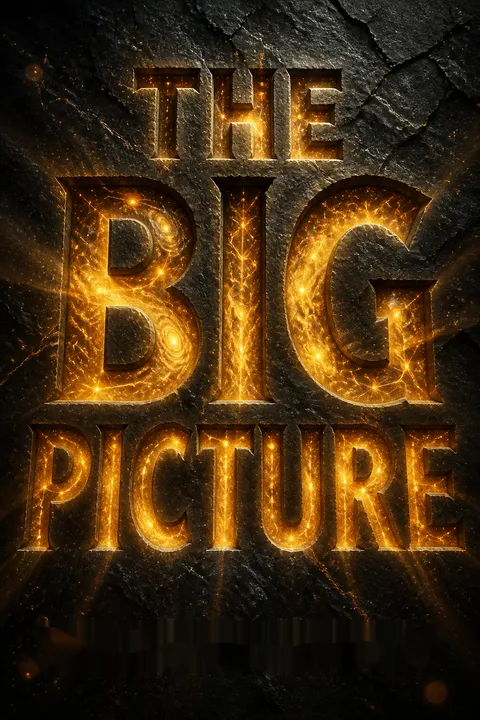
The Big Picture receives mostly positive reviews, praised for its ambitious scope covering science, philosophy, and the meaning of life. Readers appreciate Carroll's clear explanations of complex topics and his "poetic naturalism" worldview. Some find the book too long or philosophically dense, while others enjoy its thought-provoking ideas. Critics note it may be challenging for those without a science background. Overall, reviewers commend Carroll's engaging writing style and ability to connect scientific concepts to everyday life, though opinions vary on the book's effectiveness in addressing existential questions.
People Also Read





Glossary
Poetic naturalism
One world, many descriptionsThe view that there is one natural world governed by patterns, and that many different descriptions can accurately capture it. Fundamental physics, biology, everyday human language, and moral vocabulary use different concepts for different purposes. A description is not false merely because its concepts are not fundamental, but it must fit evidence and remain consistent with other reliable accounts.
Emergence
Higher-level patterns and propertiesA property or description is emergent when it becomes useful or necessary for understanding a system at a broader scale, even though it does not appear in a detailed account of the system's basic components. Fluid pressure, biological life, and human intentions are examples of concepts used to describe organized systems. Emergent descriptions have domains where they work and can be real without being fundamental.
Bayes's Theorem
Rule for updating beliefA mathematical rule for revising degrees of belief when evidence arrives. It combines a prior credence, the starting confidence in a possibility, with the likelihood of observing the evidence if that possibility were true. The resulting posterior credence is the updated confidence. The method makes background assumptions explicit and clarifies why evidence should alter beliefs in proportion to how well competing explanations predict it.
Past Hypothesis
Low-entropy early universeThe assumption that the observable universe began in a very low-entropy state. Since the fundamental laws generally do not distinguish past from future, this special initial condition helps explain why entropy has increased toward what people call the future. It also underpins the asymmetry of ordinary records, memories, and causal explanations, which point toward the lower-entropy past.
Core Theory
Physics of everyday matterCarroll's name for the highly successful physical account underlying ordinary experience: quantum field theory for known particles and forces, together with gravity in its weak-field regime. It describes the matter and interactions relevant to people, planets, and familiar objects. It is not a final theory of everything, and it does not cover every extreme condition, but its tested domain places strong limits on claims about new influences on everyday life.
Effective field theory
Reliable low-energy approximationA quantum field theory designed to describe the features of a system that matter at a particular energy and distance scale. It does not require a complete account of smaller, higher-energy processes; their effects can be absorbed into measured parameters. Effective theories can be precise and reliable within their domain, even if a deeper theory exists or the effective description fails under more extreme conditions.
Compatibilism
Choice within physical lawsThe philosophical position that human agency and choice can be meaningful even if physical events obey impersonal laws or are determined by prior conditions. It treats deliberation, reasons, and decisions as valid concepts in a human-level account, rather than demanding that people violate physics to be free. It distinguishes everyday agency from a stronger claim that choices escape all physical constraints.
Moral constructivism
Ethics built from human valuesThe meta-ethical view that moral systems are constructed by people and communities from their sentiments, commitments, and judgments, rather than discovered as independent facts in nature. Constructed rules can still be treated as real, criticized, and improved through reasoning. The view permits people to condemn harmful conduct, while recognizing that moral disagreement may persist because foundational values differ.
FAQ
What's The Big Picture about?
- Exploration of Existence: The Big Picture by Sean Carroll explores the origins of life, meaning, and the universe itself, combining insights from physics, philosophy, and biology.
- Naturalism Focus: Carroll advocates for a naturalistic worldview, explaining that everything we experience can be understood through the laws of nature without supernatural elements.
- Interconnected Themes: The book is structured into six parts, each addressing different aspects of reality and human experience, emphasizing the importance of both fundamental laws and emergent properties.
Why should I read The Big Picture?
- Comprehensive Framework: The book provides a coherent framework for understanding the universe and our place within it, making complex scientific concepts accessible.
- Engaging Writing Style: Sean Carroll's engaging and thought-provoking writing style invites readers to ponder deep questions about life and existence.
- Encourages Critical Thinking: It challenges conventional views and promotes a scientific approach to understanding the world, encouraging readers to think critically about their beliefs.
What are the key takeaways of The Big Picture?
- Naturalism as a Foundation: Carroll argues for a naturalistic worldview, emphasizing that everything we experience is part of a single, unified reality governed by natural laws.
- Emergence of Complexity: The book discusses how complex systems, including life and consciousness, emerge from simpler components, highlighting the dynamic nature of existence.
- Meaning and Values: Meaning and values are human constructs arising from our interactions with the world, not transcendent but still meaningful.
What is poetic naturalism in The Big Picture?
- Definition of Poetic Naturalism: Poetic naturalism combines naturalism with the recognition of multiple ways to talk about the world, each capturing different aspects of reality.
- Emergent Properties: This approach acknowledges emergent properties like consciousness and social interactions as real and meaningful, even if not part of the fundamental description of reality.
- Compatibility of Theories: Poetic naturalism asserts that different theories can coexist and provide valuable insights into the same underlying reality.
How does The Big Picture address the concept of consciousness?
- Consciousness as Emergent: Carroll explores consciousness as an emergent property of complex systems, arising from the interactions of simpler components.
- Philosophical Implications: The book discusses the challenge of reconciling subjective experiences with a physicalist worldview, engaging with the "hard problem" of consciousness.
- Rejection of Dualism: Carroll argues against dualistic interpretations, emphasizing that consciousness should be understood as part of the natural world.
What does The Big Picture say about the nature of reality?
- Unified Reality: Carroll asserts that reality is unified and operates according to natural laws, rejecting the notion of a separate supernatural realm.
- Ontology and Epistemology: The book distinguishes between what exists and how we know what exists, emphasizing the importance of understanding both.
- Emergence of Meaning: Meaning and purpose emerge from human experiences and interactions, rather than being inherent in the universe.
How does The Big Picture explain quantum mechanics?
- Wave Function Concept: Carroll explains that particles exist in a state of superposition, represented by a wave function encompassing all possible outcomes.
- Observer Effect: The book discusses the measurement problem, where observation causes the wave function to collapse into a specific outcome.
- Quantum Probability: Quantum mechanics operates on probabilities rather than certainties, meaning outcomes can only be predicted probabilistically.
How does The Big Picture relate entropy to the emergence of complexity?
- Entropy and Time: Carroll discusses how entropy provides an arrow of time, allowing for the emergence of complex structures.
- Complexity from Disorder: While entropy increases, complexity can emerge during the transition from low to high entropy.
- Self-Organization: Self-organization occurs in open systems, where energy and information exchange can lead to complex structures.
How does The Big Picture address the origin of life?
- Abiogenesis: Carroll explores abiogenesis, the process by which life arises from non-living matter, governed by physics and chemistry.
- Key Features of Life: The book identifies compartmentalization, metabolism, and replication with variation as key features of life.
- Environmental Conditions: Specific conditions, like those in hydrothermal vents, may have facilitated the emergence of life.
How does The Big Picture challenge traditional views of purpose and meaning?
- Purpose as Construct: Carroll posits that purpose is not inherent but a construct emerging from our understanding of complex systems.
- Naturalism Perspective: Meaning and purpose are derived from experiences and relationships, not dictated by external forces.
- Human Agency: Humans have the capacity to create their own meaning and purpose through actions and choices.
What is the relationship between science and morality in The Big Picture?
- Constructed Morality: Carroll argues that moral values are constructed by humans, not derived from scientific facts.
- No Objective Morality: Scientific descriptions do not dictate moral imperatives; moral reasoning requires reflection and dialogue.
- Practical Ethics: While subjective, morality can be guided by principles promoting well-being and reducing suffering.
How does The Big Picture explain the concept of meaning in life?
- Subjective Creation: Meaning is created by individuals through choices and relationships, not inherent in life.
- Caring and Connection: Caring about others and the world is fundamental to creating meaning.
- Embracing Change: Life's impermanence adds depth to experiences, allowing meaning to be found in the journey.
About the Author
Other books by Sean Carroll

Download PDF
Download EPUB
.epub digital book format is ideal for reading ebooks on phones, tablets, and e-readers.








