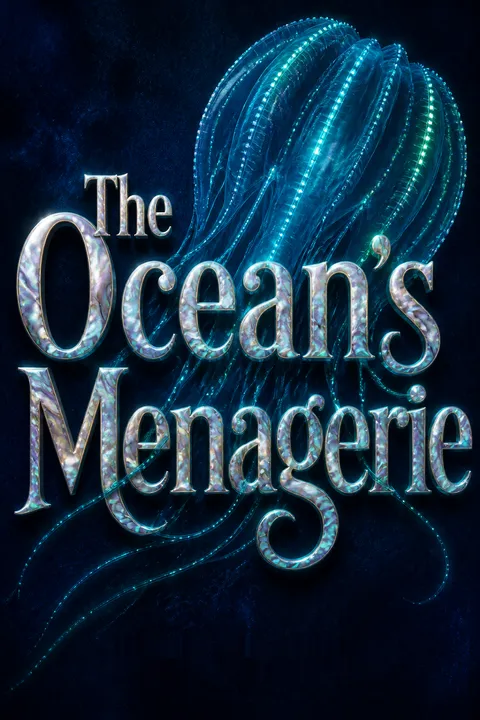


Key Takeaways
Read ocean invertebrates as ancient experiments, not simpler versions of animals.

Life has many blueprints. Harvell’s central argument is that spineless marine animals are not lesser versions of familiar vertebrates. They are ancient lineages that evolved unusual solutions to feeding, defense, movement, and survival. Invertebrates make up about 99 percent of ocean animal diversity, and their histories stretch back more than half a billion years. Some capture energy from sunlight, build enormous structures from seawater, or borrow useful abilities from other organisms.
Fieldwork reveals the surprises. Harvell traces this idea through decades of diving, experiments, and encounters with creatures that challenge neat definitions of an animal. A sea slug’s prey changes its body, a coral builds a reef, and a clam bends light. The scientific lesson is not that biology has no rules, but that its rules are broader than familiar land-based examples suggest.
The book’s strongest organizing idea is a change of scale: instead of treating vertebrates as the standard and invertebrates as exceptions, it makes ocean life the test of what biology can do. That shift helps readers notice that familiar categories such as individual, animal, and defense are partly conveniences. The vivid superpower metaphor makes unfamiliar processes memorable, though it can imply an organism deliberately designed its adaptation. Evolution has no such foresight. The book’s stories work best when wonder is paired with mechanisms, trade-offs, and the environmental conditions that make each ability useful.
Treat an animal as a partnership, not a sealed individual.

Partners add abilities. A holobiont is an organism considered together with the microbes and other symbionts living in or on it. Coral polyps rely on photosynthetic algae for energy; some sponges depend on bacteria that make protective chemicals. Giant clams also host algae, while some luminous animals obtain light-producing ingredients through food. These associations complicate the idea that an animal’s abilities belong to its cells alone.
The partners vary. In some sponges, microbes can make up more than half the animal’s total weight, and researchers still do not know exactly how many partnerships work or how tightly host and microbe control one another. The arrangement is not simply a decorative add-on: it can change what the host eats, builds, or uses to defend itself.
This view connects marine biology to a broader question: where does one organism end and its working system begin? The holobiont is a useful lens because it directs attention to exchanges of energy, chemicals, and protection that an animal-only account would miss. It also discourages easy claims about a single species’ capabilities. Yet the term should not blur the partners into one harmonious unit. Their interests can differ, and the book emphasizes that the terms of many partnerships remain unknown. Calling a relationship a partnership is a starting point for investigation, not proof that it is mutually beneficial.
Mine sponges carefully: their microbial partners have supplied real medicines.

Chemical defense can become medicine. Sponges are stationary filter feeders, drawing water through pores and trapping tiny food particles. Their exposed bodies face predators, competitors, and microbes, and many species contain potent chemicals that can disrupt other organisms. In the 1980s, sponge extracts looked promising in cancer-cell assays, but several extracts killed healthy and cancerous cells alike. A strong biological effect is not automatically a safe drug.
Nature offers starting points. The compound halichondrin B was isolated from a sponge in 1986. Its supply and fragile structure made development difficult, but chemists later synthesized it and produced a more practical version. Eribulin, based on that research, was approved in 2010 for some metastatic breast cancers, 24 years after the original discovery. Further work showed that bacteria inside sponges make many valuable compounds, shifting the search from harvesting animals toward understanding their microbial chemistry.
The drug story is a useful antidote to the idea that discovery means finding a miraculous substance ready for a prescription. Nature supplies chemical possibilities; testing, synthesis, and clinical development determine whether those possibilities become treatments. The halichondrin example also shows why biodiversity has value beyond the immediate commercial payoff: a compound can reveal a biological mechanism and inspire a synthetic medicine. The caution is equally important. A promising assay is only an early signal, and collecting wild organisms is neither a reliable nor necessarily ethical route to mass production. Conservation and medical research need not be opposites when discovery leads to sustainable synthesis.
Protect coral reefs as living infrastructure, while reducing the heat that breaks them.
Tiny builders make large defenses. Coral reefs are built by small polyps living with photosynthetic algae. The algae supply sugars and help create conditions for depositing calcium carbonate, which polyps shape into strong skeletons. Reefs shelter roughly a quarter of marine animal species and protect shorelines: one study cited in the book found that reefs can absorb up to 97 percent of wave energy. In Fiji, the Great Sea Reef also supports fisheries and local livelihoods.
The partnership has a cost. Heat stress can drive the algae out, leaving corals bleached and short of food. Carbon dioxide absorbed by seawater also increases acidity, making skeleton-building harder. Local pollution and physical damage add pressure. Coral engineering is extraordinary, but it cannot remove the climate conditions that undermine the very partnership powering the reef.
Coral reefs make ecosystem services visible: the same living structure supports biodiversity, food, livelihoods, and coastal protection. Calling a reef infrastructure is useful because it brings those benefits into decisions usually dominated by engineered defenses or short-term extraction. It also avoids portraying conservation as a luxury. Still, a reef is not a seawall that can be expected to perform indefinitely under worsening conditions. Local management can reduce pollution and damage, but it cannot substitute for cutting the warming that destabilizes coral-algae relations. The most credible strategy combines protection of local resilience with action on the larger cause.
Study ancient immunity where sea fans wall off a lethal fungus.
A disease revealed the defense. In the 1990s, a fungus called Aspergillus sydowii spread through Caribbean sea fans. At some surveyed sites in Florida and Mexico, more than 90 percent died. Yet some fans contained the infection, regrew damaged tissue, and survived. Harvell’s team found that specialized immune cells gathered around infections and laid down melanin, forming barriers that helped prevent the fungus from spreading.
Fast defense has deep roots. Invertebrates such as sea fans use innate immunity, an immediate, broadly acting defense that detects and attacks threats. Their cells engulf invaders and release antimicrobial substances. Humans also have an innate immune system, alongside a more targeted adaptive system. The shared features suggest that some basic immune processes arose early in animal evolution, although the sea fan’s response is not identical to human immunity.
The epidemic turns immunity from an abstract list of molecules into an observable contest: infection advances, host tissue responds, and some individuals survive. That makes the sea fan a valuable comparative model for understanding defense without assuming that a simple organism has a primitive or irrelevant system. The comparison with human innate immunity is suggestive, not a shortcut to treatment. Similar components can serve different roles in different animals, and a defense that works in a coral may not transfer directly to people. The value lies first in discovering shared biological principles, then testing where those principles apply.
A sea slug can turn its prey’s harpoon into its own defense.
The predator steals weapons. Aeolid nudibranchs eat cnidarians such as anemones, whose tentacles contain nematocysts, microscopic capsules that fire toxin-tipped threads. Some aeolids avoid being stung, digest their prey, and retain selected nematocysts in fingerlike projections called cerata. This process, kleptocnidae, means “stolen stinging cells.” The captured weapons can then deter the nudibranch’s own predators.
The details remain mysterious. The sea slug appears to select immature nematocysts, transport them in specialized cells, and store them until they mature in the cerata. Researchers still do not know precisely how selection and transport work. The ability challenges the usual expectation that foreign cells or structures will be rejected by an animal’s body. It also suggests a distant biological analogy to xenotransplantation, the use of organs or tissues from another species, though the book presents that connection as an avenue for study, not a ready-made medical solution.
Kleptocnidae is striking because it turns predation into biological repurposing: the prey’s defense becomes the predator’s armor. The case also shows why immune systems cannot be reduced to a universal rule of rejecting everything foreign. Some tissues, especially along digestive pathways, can encounter and tolerate material that would be dangerous elsewhere. That does not mean immune rejection is merely a mistake to switch off. Selective tolerance must preserve protection against infection. Any medical lesson from the nudibranch therefore depends on identifying how it distinguishes a useful borrowed structure from a harmful invader.
Copy the giant clam’s light management, not just its solar partnership.
The clam is a living solar system. Giant clams host photosynthetic algae in columns within their mantle, the colorful tissue exposed by an open shell. In the largest species, Tridacna gigas, a mature clam can meet all its energy needs through photosynthesis. Its iridocytes are specialized cells that reflect and redirect light, helping more useful wavelengths reach the algae while reducing exposure to harmful ultraviolet light. The clam’s bright colors are part of this optical system, not merely decoration.
Structure matters. The vertical arrangement of algae and reflective cells gives light access to a larger photosynthetic area. Engineers study this layout as inspiration for solar cells and algae-growing systems. But the same partnership is vulnerable: heat can stress the algae, causing them to leave and the clam to bleach. Overharvesting and ocean warming threaten populations even where local protection has helped them recover.
The clam invites a useful engineering question: can a system improve energy capture by managing the path of light, rather than merely increasing the number of energy-producing cells? That reframes the animal as a source of design principles, not just a source of materials. The iridocyte is especially compelling because biological structure and optical function are inseparable. However, the clam’s effectiveness depends on a living partnership and stable environmental conditions. A device can imitate geometry without reproducing that ecology. Biomimicry gains rigor when it identifies which feature is being copied and which living dependencies are being left behind.
An octopus can redesign its appearance faster than a human can blink.
Camouflage is active computation. Octopuses change skin color, pattern, texture, and posture to match or imitate their surroundings. In one encounter in the Philippines, Harvell watched an octopus resemble a drifting clump of algae so convincingly that it disappeared into the background. Such changes can occur in roughly 200 to 700 milliseconds. Neural polyphenism is the rapid production of different body forms or appearances through nervous-system control.
The skin does the work. Pigment sacs called chromatophores expand or contract through tiny muscles, while other cells reflect light and skin muscles raise bumps and ridges. Together, these systems produce a fast, coordinated disguise. Researchers and engineers have used cephalopod skin as inspiration for color-changing and shape-changing materials. The octopus’s central brain initiates the display, while its arms also have substantial neural control, and the exact coordination remains incompletely understood.
The octopus makes camouflage more than a passive color match. It is a fast interaction among perception, neural control, skin mechanics, and behavior. That offers a useful model for responsive materials, where sensing and changing shape or color need to work as one system. It also complicates the assumption that intelligence requires a body organized like ours: the octopus distributes control in an unusual way. The caution is that an impressive visual result does not reveal how the animal experiences its surroundings. Copying the effect is easier than reproducing the integrated biological process that produces it.
Jellyfish chemistry became a microscope’s window into living cells.
Light became a research tool. Many ocean animals glow, often using a light-emitting molecule called luciferin and an enzyme or protein that helps produce light. The crystal jelly Aequorea victoria gave scientists two especially useful tools. Aequorin emits light in response to calcium, allowing researchers to measure calcium inside cells. Green Fluorescent Protein, or GFP, glows green and can be attached to biological targets so scientists can watch cells and processes in living organisms.
Discovery took persistence. Osamu Shimomura and colleagues collected more than a million crystal jellies while studying their light-producing chemistry. Their findings, developed into widely used research tools with other scientists, earned the 2008 Nobel Prize in Chemistry. The story has another twist: jellies appear to obtain coelenterazine, a chemical ingredient in their light system, from prey rather than making it themselves.
The jellyfish story illustrates how basic research can create tools whose importance is far removed from the animal that supplied the insight. GFP allows researchers to observe living processes that would otherwise remain hidden, turning biology into something more directly visible. That is a powerful reminder that discovery does not always begin with a practical target. The account also resists a simple story of human mastery: the jelly’s chemistry depends partly on ecological exchange. A useful caution is that a bright signal is not automatically a complete explanation. Researchers still need to interpret what the signal marks and how it changes the system being observed.
A slow sea star can hold an entire coastline’s food web together.
A few predators can reshape a habitat. Ecologist Robert Paine showed that ochre sea stars control mussels on Pacific Northwest shores. Where stars were removed, mussels spread across the rocks and crowded out other species. Paine called a species with an unusually large effect relative to its abundance a keystone species. The concept explains why an organism’s ecological importance cannot be judged by its size or speed.
Disease exposed another keystone. A wasting epidemic beginning in 2013 left the sunflower star absent from about 97 percent of the continental United States. Sea urchins then surged, stripping kelp forests that shelter young fish and support fisheries. Sea stars also pry open shellfish using tube feet and mutable collagenous tissue, a collagen-rich skin that can rapidly stiffen or slacken. Their ecological role and unusual biology are both vulnerable to warming and disease.
The sea star story makes ecological importance a question of relationships rather than spectacle. A species can be inconspicuous until its removal changes the abundance of prey, the structure of habitat, and the prospects of other organisms. This is why ecosystem monitoring needs more than counts of charismatic animals. The keystone label is useful, but it can oversimplify a food web if treated as a permanent rank. A species’ influence depends on place and circumstance. The sunflower star’s collapse shows how a sudden loss can reveal dependencies that were poorly understood beforehand.
Protect habitat and evolution’s options, not only charismatic species.
Healthy habitats protect people too. On polluted Indonesian islands, Harvell’s team found high levels of human fecal bacteria near shore and lower levels in surrounding seagrass meadows. The researchers also found fewer known pathogens affecting marine animals in those meadows. Seagrass can reduce exposure to harmful microbes, but it cannot replace sewage treatment. Plastic entangled on corals was associated with an 85 percent higher disease risk, showing how local damage can compound broader stress.
Protection can preserve resilience. Marine protected areas can reduce extractive damage and help habitats recover. In Fiji, scientists and local communities are propagating coral strains that withstand heat and restoring reefs inside protected areas. Seagrass meadows also store carbon and shelter marine life. These measures preserve options for adaptation, but they cannot cancel the underlying pressures of warming, acidification, pollution, and overfishing.
This conclusion shifts conservation from saving attractive species to maintaining the conditions that let ecological relationships function. Seagrass, coral, and mangrove habitats can support both marine life and human health, making protection a form of public infrastructure. Assisted evolution adds a practical tool, but it also raises questions about choosing which strains to propagate and how to monitor unintended effects. Most importantly, local interventions cannot compensate for global warming. The strongest reading is neither technological optimism nor despair: protect ecosystems now, learn from their resilience, and reduce the pressures that exceed their capacity to adapt.
Analysis
The book’s underlying argument is not simply that marine invertebrates are strange. It is that their biology exposes the limits of treating an animal as a self-contained unit, or vertebrate anatomy as the default template for life. Across the examples, capability emerges from relationships: microbes supply chemicals, algae provide energy, tissues coordinate with nerves, and predators reshape habitats. The recurring surprises are therefore relational as much as anatomical.
Harvell’s field narrative gives this argument an effective emotional structure. A discovery begins in a particular place, becomes an experiment, and eventually changes the questions the scientist asks. The sea fan epidemic, for example, moves the story from competition for reef space toward immunity and disease. Such episodes make scientific knowledge feel provisional without making it feel flimsy. Measurements, comparisons, and repeat observations turn wonder into evidence.
The word “superpower” is memorable, but it risks suggesting that adaptations are designed for a purpose or that a striking trait is an unqualified advantage. The book complicates that idea well: photosynthetic partnerships support reefs and clams, yet make them vulnerable to heat; a sea star’s success as a predator cannot protect it from disease. Every capability depends on conditions, and those conditions can change.
That tension also governs the conservation argument. Habitat protection, seagrass restoration, coral propagation, and new genetic tools can preserve local resilience, but they do not replace emissions reduction or basic pollution control. Intervention brings its own questions about risk, governance, and whose needs determine which organisms are restored. The book’s most durable lesson is that biological discovery and conservation belong together. Knowing how an animal works expands the imagination, while preserving its habitat keeps both the animal and its still-unknown possibilities in reach.
People Also Read



Glossary
Holobiont
host and associated lifeAn organism considered together with the microbes and other symbiotic organisms living in or on it. A coral holobiont includes the coral animal, its photosynthetic algae, and associated microbes. The term shifts attention from an isolated host to the network of relationships that can contribute to nutrition, defense, and other biological functions.
Secondary chemicals
bioactive compounds beyond metabolismChemicals that do not perform a central metabolic task such as eating, breathing, or reproduction, but can still be important to an organism. In marine invertebrates, they may deter predators, hinder pathogens, reduce inflammation, or affect cell division. Some have useful biological activity in human medicine, though an active compound is not necessarily a safe or effective drug.
Innate immunity
rapid, broad immune defenseAn immediate defense system found in invertebrates and vertebrates. It responds broadly to signs of potential infection through processes such as recognizing foreign material, engulfing invaders, and releasing antimicrobial substances. Unlike adaptive immunity, it does not depend on building a highly specific antibody response and long-term immune memory for each particular pathogen.
Kleptocnidae
stolen stinging cellsThe acquisition and reuse of cnidarian stinging structures by certain predators, especially aeolid nudibranchs. The sea slug eats animals such as anemones, retains selected immature nematocysts, and stores them in projections on its body where they can mature. The retained structures can then serve as a defense against the nudibranch’s own predators.
Neural polyphenism
rapid nervous-system-controlled form changeThe production of markedly different appearances or forms through nervous-system control. In cephalopods, it describes rapid changes in color, pattern, skin texture, or posture used for camouflage, signaling, or mimicry. Octopuses can coordinate these changes in a fraction of a second, although the full process by which the brain selects and organizes a display is not yet understood.
Iridocytes
light-reflecting cellsCells containing reflective structures that alter how light moves through or reflects from tissue. In giant clams, iridocytes help direct useful wavelengths toward photosynthetic algae and reduce exposure to damaging ultraviolet light. Their arrangement contributes to the clam’s iridescent colors and has inspired research into more efficient ways to manage light in engineered solar systems.
Green Fluorescent Protein (GFP)
a fluorescent biological markerA protein first studied in the crystal jelly Aequorea victoria that glows green under suitable conditions. Researchers can use GFP to label cells, genes, or microbes and observe them in living organisms. The tool made previously hidden biological activity visible and became widely useful in research on development, infection, genetics, and disease.
Mutable collagenous tissue
rapidly adjustable connective tissueA collagen-rich tissue found in echinoderms, including sea stars and sea cucumbers, whose stiffness can change quickly. Nervous signals alter connections among collagen fibers and skeletal elements, allowing the tissue to become stiff or slack with little energy. Sea stars use this property when pulling open shellfish and when releasing an arm during self-severing.
Keystone species
species with outsized ecosystem effectsA species whose ecological influence is disproportionately large compared with its abundance. Robert Paine used the concept to explain how ochre sea stars control mussels and, in turn, affect the diversity of rocky shore communities. The term emphasizes that removing a relatively small number of organisms can trigger major changes in habitat structure and food webs.
One Health
connected human, animal, and environmental healthAn approach that recognizes the close links among human health, animal health, and shared environments. Harvell’s coral research made this connection tangible when field scientists studying reef disease became ill in sewage-polluted water. The concept also frames findings that seagrass habitats can reduce exposure to some waterborne pathogens affecting people and marine organisms.
Download PDF
Download EPUB
.epub digital book format is ideal for reading ebooks on phones, tablets, and e-readers.








