

Key Takeaways
Treat every replacement as a negotiation with biology, not an upgrade.
Progress can mislead. Early dentures often looked like teeth but worked poorly for eating. Some people even had healthy teeth pulled in hopes that false ones would be better. A survey cited in the book found that 53 percent of denture wearers had received them before age forty-five. The pattern recurs in modern headlines promising lab-grown organs or printed limbs: impressive results in a lab do not automatically become safe, reliable treatments.
The body sets the pace. Replacement parts have moved from external devices toward implants and attempts at regeneration, but progress is uneven. A medical idea can take years of testing, refinement, and cost reduction before it reaches ordinary care. The obstacle is not simply engineering; it is the body’s intricate, interdependent biology.
What's striking is how the book makes technological optimism tangible through the mouth: a replacement can resemble the original while failing at its basic job. That distinction echoes a core principle of engineering, where a prototype's appearance is not evidence of performance under real conditions. The same caution applies to dramatic research announcements. Still, slow adoption is not proof that an idea is empty. It can reflect the demanding evidence needed before a device is used in vulnerable patients. The useful question is not whether a replacement looks futuristic, but whether it reliably improves daily life.
Use another person's skin as a bridge, not a permanent substitute.
Skin has a supply problem. In a severe burn, a surgeon may run out of unburned areas from which to take the patient's own skin. An autograft is skin taken from the same person; an allograft comes from another human, and a xenograft from another species. The latter two can temporarily cover a wound, help limit fluid loss and infection, and make dressing changes less painful. They are eventually rejected, so the patient's own skin remains the usual permanent solution.
Recovery is more than grafting. Diana Tenney survived burns over 90 percent of her body, but her treatment involved more than twenty-five operations over seven years. Repeated grafting helped address contractures, where surrounding skin tightens and restricts movement. Her account also shows why healing includes rehabilitation, relationships, and adapting to a changed appearance, not simply finding a better dressing.
This section exposes a useful distinction between a substitute that buys time and one that restores lasting function. In emergency medicine, temporary stabilization is often an achievement in its own right, even when it is not a cure. Burn care also shows how a treatment's value depends on its place in a sequence: covering a wound can create the conditions for a later, more durable repair. The limitation is that technical success can be mistaken for recovery. A graft may close skin while leaving pain, movement, and emotional adjustment unresolved.
Gene-editing pigs can ease organ scarcity, but not erase rejection.
Pigs offer a supply advantage. Their organs are similar enough to human organs for researchers to adapt them, and pigs reproduce quickly. Gene editing can remove alpha-gal, a pig-cell marker that triggers an immediate human immune attack. Researchers also add human genes in hopes of making pig organs more compatible. These changes have enabled experimental heart and kidney transplants in people who had no other treatment option.
Compatibility remains unfinished. Removing alpha-gal prevents one form of rejection, not all immune responses. Recipients still need immunosuppressive drugs, and early patients in the book's reporting died within weeks or months. A pig organ might serve as a temporary bridge to a human transplant, but it could also bring infection and other complications. The strategy raises an ethical question too: what obligations arise when animals are bred and genetically altered to supply human body parts?
Xenotransplantation turns a shortage problem into a design problem: instead of waiting for a scarce human organ, scientists modify a plentiful animal source. That shift is powerful, but it does not make scarcity disappear. It moves some of the burden to infection control, immune suppression, animal welfare, and long-term monitoring. The bridge-to-transplant idea is especially important because it gives an early intervention a realistic purpose without claiming permanence. Its success should be measured against the actual alternative for each patient, not against an imagined perfect organ.
Judge a replacement by the life it enables, not bodily completeness.
Preservation is not always restoration. Judy Berna spent years struggling with a foot that offered little useful function before she chose amputation. Some patients endure repeated attempts to save a limb, losing time they might have spent learning to use a prosthesis. Studies described in the book often found better function and less pain after below-knee amputation than after salvage surgery in comparable injury cases. Prostheses, however, also involve trade-offs: a sophisticated arm can be heavy, frustrating, and left unused.
The user defines the goal. In gender-affirming care, some patients choose a vulva without a vaginal canal, avoiding a procedure that requires ongoing dilation and can bring complications. Such choices challenge the assumption that the most extensive reconstruction is automatically the best one. A replacement succeeds when it supports the person's actual priorities, whether those involve mobility, comfort, appearance, or intimacy.
The examples here align with user-centered design: a tool is judged by the tasks and values of the person using it, not by how closely it imitates an ideal form. The same logic can correct the reflex to preserve every limb or build every possible anatomical feature. Yet choice is shaped by access, cost, clinician expertise, and social pressure, so consent alone does not guarantee a genuinely free decision. Good care requires presenting realistic options and their burdens without quietly treating one body's appearance as the default standard.
Test materials in bodies for years, not just on the workbench.
A plausible material can fail. Surgeon John Charnley tried Teflon for artificial hip sockets after tests suggested it offered low friction. After hundreds of operations, the material wore down, and the debris provoked inflammation that damaged nearby bone and tissue. A later plastic, ultra-high-molecular-weight polyethylene, performed better and became a common liner for hip implants. The contrast shows why a bench test cannot capture everything that happens inside a living joint.
The body adds new failure modes. Bacteria can attach to an implant and form a biofilm, a protected community that is difficult to eliminate with antibiotics. Rough implant surfaces help bone grow into the device, but may also provide places for bacteria to settle. Even successful joint replacements therefore depend on infection control, material choice, placement, and long-term follow-up. A small design change can have consequences that only emerge after patients have lived with the device.
This is a case study in the gap between material properties and system performance. A substance may be durable in isolation yet trigger inflammation, wear, or infection when placed in a joint. The lesson resembles safety engineering: failure often occurs at the interfaces, where materials meet tissue, microbes, and repeated motion. Long follow-up is essential because early function can conceal later harm. At the same time, demanding perfect certainty would block useful technologies. The challenge is to match the strength of evidence to the severity and reversibility of the risks.
Machines can restore a function without recreating the body's whole design.
Perfusion keeps organs working. A donated heart normally has only a few hours outside the body when stored on ice. Portable perfusion systems can extend that window to roughly eight to twelve hours, while researchers test ways to keep hearts beating longer and assess their condition. In a University of Michigan lab, an experimental setup supported a heart for a twenty-four-hour run. Yet basic supplies of oxygen and nutrients may not be enough: researchers suspect organs also depend on signals from the brain.
Breathing reveals the same trade-off. An iron lung breathes by lowering pressure around the chest, helping the lungs expand much as natural breathing does. Modern ventilators usually push air into the lungs instead. They can save lives, but prolonged use can damage lung tissue and create other risks. A machine can take over a vital task, but its method may differ from the body's and introduce new problems.
These examples distinguish reproducing an outcome from reproducing the process that created it. A heart can beat outside a body, and a ventilator can move air, but neither fact proves that the full biological system has been recreated. This is a familiar problem in control systems: the parts interact, and missing feedback can destabilize an apparently adequate mechanism. The contrast also cautions against dismissing simpler technologies. An iron lung may be less versatile than modern intensive-care ventilation, yet its gentler method can suit some patients better.
Choose reliable care over sophisticated equipment when access is the real problem.
A simpler operation can serve more people. In rural Mongolia, cataracts are a major cause of blindness, while advanced phacoemulsification equipment is available mainly in the capital. That procedure uses ultrasound to break up the cloudy lens. Orbis instead trains local surgeons in manual small-incision cataract surgery, which requires only a handful of instruments and is easier to teach and maintain. It can restore useful vision without waiting for expensive machines and specialized infrastructure.
Training is part of the treatment. The surgeons who learn the technique can care for patients in their own communities. This matters where travel is difficult and people may delay surgery until their vision is severely impaired. A well-equipped operating room is valuable, but the best technology is not automatically the one that can help the most people. Availability, local skill, and follow-up shape whether a treatment works in practice.
The Mongolian example reframes innovation as a question of fit rather than novelty. Health systems need tools that can be repaired, taught, and used where patients live, not just procedures with the highest technical ceiling. This is closely related to appropriate technology: the strongest solution is often the one that matches local resources and needs. Simplicity should not become an excuse to deny communities advanced care, however. The goal is to expand reliable options, not to make unequal access seem acceptable.
Treat ostomy stigma as a health barrier, not a private embarrassment.
A pouch can restore ordinary life. An ostomy diverts waste through a surgically created opening into an external pouch. Early patients had crude containers and few ways to leave home comfortably. Modern systems offer many discreet, odor-resistant options, but the social stigma remains. Rebecca, a young woman with an ileostomy, described being able to travel and go out again after years of anxiety and severe Crohn's disease. At an ostomy awareness run, she and other participants wore their pouches openly.
Visibility changes the conversation. People with ostomies may face suspicion about swimming, intimacy, or cleanliness, despite the fact that everyone carries waste in a rectum. A public event lets participants show that a pouch is equipment, not a definition of a person. Better devices matter, but so do respectful language, practical support, and the freedom to discuss the condition without shame.
The ostomy story shows that a medical device can be technically effective while the surrounding culture still restricts its user. That is a social-design problem, not a failure of the patient's attitude. Visibility and candid discussion can reduce the imagined distance between people with and without a stoma. Public disclosure should remain a choice, though: normalization is not the same as demanding that patients educate everyone around them. The broader aim is a world where a person can use necessary equipment without having to justify it.
Separate promising lab demonstrations from treatments patients can actually use.
Living tissue is hard to build. Induced pluripotent stem cells, or iPS cells, are adult cells regressed to a flexible state and then guided toward a new cell type. Researchers can combine cells and structural materials through 3D bioprinting, but an organ also needs the right architecture, blood supply, and coordinated function. In one lab, researchers had created a tiny heart-muscle construct that beat in a coordinated way, but it was still far from a transplantable heart.
A working demonstration has limits. Stemson Therapeutics attempted to grow replacement hair follicles from iPS cells. The company reported progress in getting human-derived follicles to grow in mice, while important questions remained about direction, durability, and immune compatibility. It closed in 2025 after an investor funding shortfall. These setbacks do not invalidate the science; they show why a striking image or early experiment is not yet a practical treatment.
Regenerative medicine is especially vulnerable to hype because images of beating cells or a sprouting hair make complex progress look complete. But biological function depends on organization, integration, and durability, not merely the presence of living cells. The shutdown of a promising company also reveals that scientific feasibility and commercial survival are different problems. Public communication should preserve excitement while distinguishing proof of concept from clinical readiness. That distinction protects patients from false promises and gives researchers room to describe real advances honestly.
Make tissue donation transparent enough for families to trust it.
Consent is part of recovery. Tissue recovery organizations ask families detailed questions about a donor's medical history and life, then seek permission before removing tissue. In the case described, a widow and daughter needed reassurance about how the body would appear at a viewing. Staff explained what could be recovered and how the donor would be restored. The process was careful and documented, with labels and tracking to prevent mix-ups.
One donor can help many. Donated skin, corneas, bones, tendons, and other tissues can support burn treatment, restore eyesight, or assist reconstructive surgery. The book reports that as many as seventy-five people may benefit from one donor's tissues. Yet most people who consent are ruled ineligible because of medical or behavioral risk factors. Transparency about the work can replace frightening guesses with a clearer understanding of what donation involves.
Donation depends not only on individual generosity but on institutional trust. Families are asked to authorize an intimate process at a moment of grief, so clear explanations and respectful handling are not public-relations extras; they are part of ethical practice. This account also highlights an asymmetry: recipients and families may know little about the systems that move tissue between them. Openness can strengthen confidence, but it must be balanced with privacy and careful oversight. A compelling story is not a substitute for accountable standards.
Do not turn one narrow beauty ideal into a surgical specification.
Beauty standards are constructed. Surgeons have tried to describe ideal bodies using measurements such as the golden ratio, including in studies of buttocks and calves. But those judgments often come from small panels of surgeons viewing selected photographs, not from a universal law of attractiveness. Trends shift: the exaggerated silhouette promoted by some celebrities can give way to a leaner fashion, leaving patients with costly procedures and bodies shaped around a temporary ideal.
The risks can be permanent. A Brazilian butt lift moves a patient's fat to the hips or buttocks. Fat injected into muscle can enter large blood vessels and cause a fatal embolism. The surgeon described in the book avoids that danger zone, yet deaths have continued where untrained providers perform the procedure. In gender-affirming and reconstructive care, too, the patient's own goals should guide which features are created or left alone.
The chapter reveals how technical language can lend authority to cultural preferences. A ratio may be measurable, but measurement alone cannot prove that a body is beautiful or that surgery is worthwhile. This distinction matters because clinical procedures can make social ideals look like objective requirements. Informed consent should include the possibility that preferences change, alongside concrete risks and alternatives. Respecting autonomy does not require endorsing every trend; it requires avoiding shame and ensuring that patients can make decisions without a clinician's aesthetic assumptions taking over.
Analysis
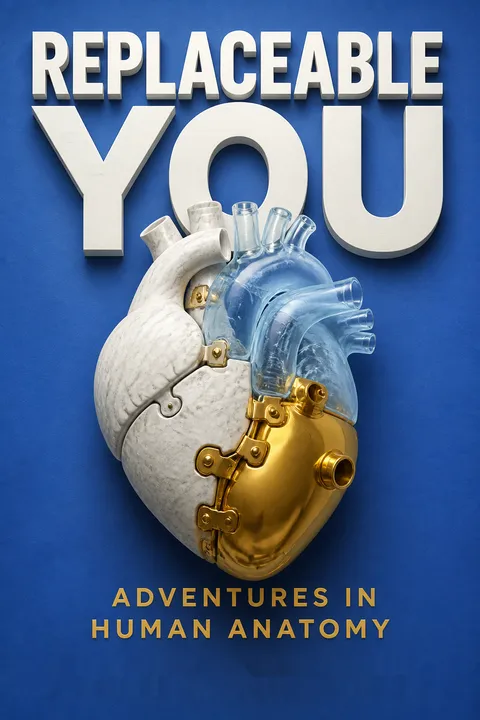
Replaceable You is a reported tour through the distance between imagining a replacement and making one work in a human life. Its structure moves from familiar devices, such as dentures and prosthetic limbs, toward grafts, transplanted organs, machine-assisted functions, and engineered tissues. The central argument is not that replacement medicine is futile. It is that biological complexity, clinical evidence, social meaning, and practical access all constrain what counts as progress.
The book's most useful analytical distinction is between technical possibility and dependable benefit. A heart beating on a perfusion rig, a cell cluster contracting under a microscope, and a transplant surviving for weeks are genuine achievements. None alone establishes long-term function, safety, affordability, or suitability for routine care. This resembles the difference between a laboratory result and a system deployed in the world: context introduces failure modes that prototypes cannot fully reveal. The body is not a passive container. Immune responses, infection, blood flow, nerve signaling, and patient behavior all shape outcomes.
The stories also challenge the assumption that more intervention means more success. A simpler cataract operation may reach patients whom advanced machinery cannot. A prosthesis may serve better than a risky transplant. A patient may choose a smaller operation, or amputation, because it better supports the life they want. In this sense, replacement is not a contest to reproduce anatomy. It is a decision about function, burden, identity, and acceptable risk.
The book's humor makes technical detail memorable, while its patient stories prevent novelty from eclipsing human consequences. Its limitation is also its strength: this is a primer and a reported snapshot, not a systematic review or forecast. The individual cases illuminate trade-offs but cannot settle comparative clinical questions. Read the book as a corrective to hype and a defense of patient-centered judgment, not as a ranking of treatments. Its final standard is demanding and practical: a replacement matters when it helps a person, not merely when it impresses an audience.
Review Summary
Replaceable You by Mary Roach receives mostly positive reviews (4.11/5 stars) for its engaging exploration of body part replacement science. Readers praise Roach's signature humor, curiosity, and ability to make complex medical topics accessible and entertaining. The book covers prosthetics, organ transplants, cosmetic surgery, and emerging technologies like 3D-printed organs. Reviewers appreciate her footnotes, adventurous research methods, and respectful approach to sensitive subjects. Some critics note the humor occasionally feels inappropriate or that the book doesn't match earlier works like Stiff. Most find it educational and laugh-out-loud funny.
People Also Read









Glossary
Autograft
Tissue from the same personA graft made from tissue taken from the patient who receives it. In burn care, a patient's own skin is the preferred permanent covering because the immune system recognizes it as self. The amount available may be limited, so tissue from another person or species can be used temporarily while the patient heals.
Allograft
Tissue from another humanA graft or transplant using tissue from a different person of the same species. Donated human skin can cover a serious burn, protect the wound, and reduce fluid loss while the patient's own skin is unavailable. The recipient's immune system eventually rejects it, so it usually serves as temporary coverage rather than a lasting replacement.
Xenotransplantation
Transplant across speciesThe transplantation of cells, tissues, or organs from one species into another. The book focuses on genetically altered pigs as possible sources of human transplant organs. Editing can reduce some immune reactions, but it does not remove every risk. Rejection, infection, the need for immunosuppressive drugs, and animal welfare remain important concerns.
Osseointegration
Prosthesis anchored to boneA method of attaching a prosthetic limb directly to the skeleton through an implanted metal component. Bone grows into the implant, allowing the prosthesis to connect without a conventional socket. Some users experience improved control and a more direct sense of contact with the ground, but the opening through the skin can create a risk of infection.
Biofilm
Protected bacterial communityA group of bacteria attached to a surface and enclosed in a protective layer they produce. On an artificial joint or other implant, a biofilm can shield bacteria from immune defenses and antibiotics. Some cells may become dormant and survive treatment, allowing infection to return. Preventing bacteria from reaching an implant is therefore especially important.
Negative-pressure ventilation
Breathing by lowering external pressureA method of assisting breathing by lowering pressure around the chest, allowing the lungs to expand and draw in air. The iron lung is a historical example. This differs from positive-pressure ventilation, which pushes air into the lungs. Negative-pressure devices can suit some patients, although they may not provide enough support for every severe respiratory condition.
iPS cells
Adult cells reset to flexibilityInduced pluripotent stem cells are adult cells that have been returned to a flexible, less specialized state in a laboratory. Researchers can then guide them toward particular cell types, such as neurons or hair-follicle cells. Because they can be made from a patient's own cells, they may reduce the risk of immune rejection, but producing useful tissue remains technically difficult.
FRESH
Printing inside a support gelFreeform Reversible Embedding of Suspended Hydrogels is a 3D bioprinting method developed to support soft materials while they are being printed. The printer deposits the tissue construct inside a gel bath, which holds it in place until the structure can stand on its own. The technique helps with fragile materials such as collagen, but it does not by itself solve the challenge of building functional organs.
Donor dominance
Transplanted hair keeps its origin traitsThe observed tendency of transplanted hair follicles to retain characteristics of their original location. For example, follicles taken from areas of the scalp less affected by male-pattern baldness may continue producing hair after being moved to a balding area. The principle has also informed the use of hair from other body sites, though hair texture and growth cycles can differ.
Vitalin
Hypothesized organ-supporting signalA hypothetical substance proposed by researcher Bob Bartlett to explain why organs may need signals from a brain to remain functional. Organs can survive outside the body on perfusion systems for a limited period, yet basic oxygen and nutrients do not appear to sustain them indefinitely. Vitalin has not been isolated or established as a known hormone.
Download PDF
Download EPUB
.epub digital book format is ideal for reading ebooks on phones, tablets, and e-readers.








