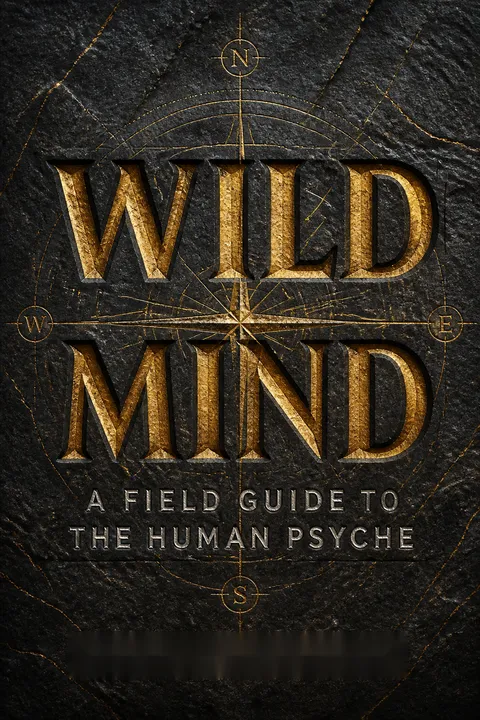


Key Takeaways
Treat symptoms as clues to missing capacities, not as the whole problem.
Look beneath the symptom. Plotkin argues that distress can signal underdeveloped inner resources, damaged relationships, or unhealthy surroundings, rather than being the whole problem. His ecological analogy is a degraded habitat overtaken by invasive plants: removing the plants may quiet the visible problem, but restoring soil and native growth addresses the conditions that allowed it to spread. He proposes a similar emphasis in psychology: build emotional, imaginative, relational, and caring capacities instead of focusing only on symptom control.
Do not mistake this for dismissal. Plotkin does not say that suffering is trivial or that treatment is unnecessary. He argues that symptom relief without broader development can leave the underlying fragmentation untouched, ready to emerge in another form.
The ecological analogy usefully shifts attention from blame to conditions: a person’s distress can be shaped by family, community, and environment, not just private willpower. It also raises a practical question: which response both reduces immediate suffering and builds capacity? Symptom relief can be crucial, especially when distress is severe. The stronger version of Plotkin’s argument is therefore not either treatment or growth, but treatment that does not confuse short-term relief with the entire work of becoming well.
Map your psyche across four directions, plus the depths and the sky.
Use a nature-based map. The Nature-Based Map of the Human Psyche organizes inner life around seven directions. Its horizontal plane has four facets of the Self, Plotkin’s term for shared human capacities: North is mature care and generative action; South is embodied feeling and kinship with nature; East is innocence, perspective, and clear perception; West is imagination, meaning, and transformation. Each direction also has a wounded or immature counterpart, called a subpersonality.
Place awareness at the center. The Ego is the conscious sense of “I” at the map’s center. Beneath it lies Soul, a person’s unique, deep identity or purpose; above it lies Spirit, the universal consciousness or mystery in which life participates. The map is a guide for noticing capacities and patterns, not a literal diagram of separate inner people.
The map’s distinctive strength is its refusal to equate maturity with one favored trait. Competence without feeling can become cold control; feeling without care can become reactivity. The directional structure makes these imbalances easier to notice and discuss. Its limitation is also clear: a compass is an orientation tool, not a clinical measurement. The model is most useful when its labels prompt curiosity about lived experience, rather than becoming fixed categories that people are expected to fit.
Use sensation, feeling, imagination, and thought as equal ways of knowing.
Broaden the evidence you consult. Plotkin calls thinking, feeling, sensing, and imagining the four windows of knowing. Each offers a different kind of information: thinking helps interpret and plan; feeling registers emotional and bodily responses; sensing attends to what is directly perceived; imagination reveals images, symbols, and possibilities that may not arrive through deliberate reasoning.
Let them correct one another. To understand a difficult relationship, analysis alone may miss the emotions in the room. Feeling alone may miss context; imagination can offer a new perspective, while careful attention to gesture and tone supplies concrete observations. Plotkin pairs these windows with the four Self facets: thought with North, feeling with South, sensing with East, and imagination with West. A fuller view draws on all four rather than treating one as the only reliable instrument.
This framework treats good judgment as a process of triangulation. Each mode can correct the blind spots of the others: sensation checks fantasy against what is present, while imagination loosens assumptions about what is possible. The model is not an invitation to treat every hunch as fact. It is a reminder to identify what kind of information a conclusion rests on, then test it against other modes of attention before acting.
Thank protective parts for surviving childhood before asking them to change.
Understand the old assignment. Subpersonalities are wounded or fragmented patterns that operate as versions of a person, often outside conscious awareness. Plotkin groups them by direction: Loyal Soldiers try to secure belonging by keeping a person small or useful; Wounded Children pursue basic needs through immature emotional strategies; Addicts and Escapists evade overwhelming experience; Shadow elements keep disowned traits outside awareness.
Retirement requires trust. Plotkin compares Loyal Soldiers to Japanese servicemen found decades after World War II, still acting as if their mission continued. The comparison explains why a once-useful defense may persist after danger has changed. His proposed approach is to recognize the protection it offered, express gratitude, establish whether adequate support and self-care now exist, and only then invite the strategy to loosen. The aim is integration, not banishment.
Seeing defensive habits as adaptations can reduce shame and make change less adversarial. The metaphor of an old guard still on duty captures how a strategy can outlive its original context without becoming irrational or foolish. It also suggests an important test: a person should not declare the danger over merely because the calendar has changed. Present safety, material support, and reliable relationships matter as much as insight when a protective pattern is being reconsidered.
Give from care, not from fear of becoming unnecessary.
Separate care from control. The North facet, the Nurturing Generative Adult, supports people and places with compassion, skill, and practical follow-through. Plotkin distinguishes this caregiving from caretaking, where apparent generosity is driven by fear of rejection or a need to remain indispensable. A parent who repeatedly does tasks a child can manage may be protecting the parent’s place more than the child’s growth. A farmer who supplies food while knowingly degrading the land likewise confuses output with genuine care.
Let care create capacity. Thomas Berry described a meadow he encountered at age eleven as shaping his lifelong test of whether actions preserve and enhance life. Plotkin extends that ethic to communities: healthy giving sustains relationships and shared wellbeing, rather than turning every human need into a transaction.
The distinction is valuable because helpful behavior can conceal incompatible motives. Care that strengthens another person’s agency differs from care that quietly secures dependence. Still, motives are rarely pure, and a need to feel useful does not erase the value of real help. The practical question is whether the recipient gains dignity and capability, and whether the giver can set limits without treating those limits as proof of disloyalty.
Feel emotions fully, then translate them into relationally responsible action.
Treat emotion as information. Plotkin’s Wild Indigenous One is the Self facet that experiences the body, feelings, and relationship with the living world as connected. He proposes a four-part emotional process: first feel the emotion in the body without immediately explaining it; then explore what it reveals about personal values, expectations, or needs; next communicate and act in a way that repairs or strengthens relationships; finally, view the episode within a wider life story.
Feeling is not obeying. Anger may signal perceived unfairness, sadness may point to loss, and fear may identify danger, but an emotional appraisal can be mistaken. Plotkin describes some depression as accumulated, unprocessed feeling, an interpretation that should not be mistaken for a complete account of depression. The useful lesson is to investigate emotions rather than reflexively suppress, obey, or condemn them.
The sequence offers a bridge between emotional acceptance and accountability. An emotion deserves attention, but it does not automatically justify the action it urges. The pause between feeling and response creates room to examine whether the appraisal fits the facts and what repair is possible. Plotkin’s account of depression is intentionally provocative, but depression has varied causes and presentations. Persistent or dangerous symptoms warrant qualified care, alongside any effort to understand emotional life.
Stop escaping only after building support for what returns.
Notice what avoidance provides. In Plotkin’s model, Addicts and Escapists are protective patterns that numb, distract, or remove a person from experiences that feel intolerable. Their strategies may temporarily reduce pain or create a sense of relief, but can also narrow relationships, choices, and participation in life. Plotkin suggests they may be reaching toward belonging, intensity, or transcendence while using a substitute that ultimately fails to meet that longing.
Recovery needs more than stopping. His approach includes naming the pattern, interrupting it, strengthening support and Self capacities, facing avoided feelings or circumstances, and discovering the deeper desire beneath the escape. He describes a woman with twenty-one years of sobriety who, through supported inner work, recognized a suppressed appetite for vivid, expressive life. Such exploration is not a substitute for addiction care; substance dependence can require professional and community support.
The idea that an addictive behavior both avoids pain and reaches toward something helps explain why removal alone can leave a painful vacancy. Yet the search for symbolic meaning must not obscure the physiological and social realities of dependence. Framing a behavior as a message can be helpful if it reduces shame and informs care; it becomes risky if it implies that insight alone is enough. Recovery is more credible when interpretation is paired with practical safeguards and sustained support.
Use strong reactions as clues to yourself, without reducing others to mirrors.
Look for the unrecognized. Plotkin defines the Shadow as traits or desires that a person does not know about themselves and would sincerely deny if accused. It can contain qualities judged unacceptable, but also strengths a person cannot imagine claiming. A strong emotional response to another person may offer a clue, though it does not prove projection. Plotkin recounts working with recurring dream figures he experienced as threatening. In a group exercise, participants acted those figures, whose bluntness revealed a directness he recognized as underused in himself.
Own the clue, meet the person. Basic Shadow work means examining one’s part in a judgment and changing harmful behavior where needed. Deeper work means getting to know the other as an independent person, not merely treating them as a screen for self-discovery.
The mirror metaphor is powerful but can be misused. A person may be reacting intensely because another person is genuinely dangerous, exploitative, or unjust, not because the observer has disowned the same trait. The book’s emphasis on encountering the other as a real and separate person guards against that error. A sound inquiry asks both what the reaction reveals about the self and what evidence supports the judgment of the other.
Turn a private calling into work that repairs the shared world.
Connect identity to contribution. Plotkin uses Soul for a person’s singular, deep identity, understood through images, dreams, and metaphor, and tied to a distinctive place in the more-than-human world. The everyday Ego can organize and act, but the book argues that it needs this deeper sense of direction to know what is worth doing. A calling becomes practical through a delivery system, such as a craft, profession, art, or project that makes the person’s gifts useful to others.
Make development collective. Plotkin links personal maturity to healthy communities and ecosystems. He argues that cultures need ecological vitality, adults who can guide younger generations, and practices that support people’s wholeness. The destination is not constant happiness or private self-improvement, but a meaningful contribution to a living community. Soul work is portrayed as a demanding journey, not a quick career-planning exercise.
The model resists the idea that purpose is simply a satisfying personal brand. It asks whether a person’s distinctive capacities answer a need beyond the self, and whether that answer can be embodied in ordinary work. This is a strong ethical test for vocation. The more metaphysical claim that each person has a preexisting destiny is harder to establish, however. The framework remains useful if treated as an invitation to discover and develop commitments, not as proof that only one life path is authentic.
Analysis
Wild Mind is simultaneously a psychological map, a developmental argument, and an ecological ethic. Its central move is to put capacities before deficits without pretending that wounds are unreal. The four directions make that move memorable: care, embodied belonging, clear presence, and deep imagination are treated as interdependent dimensions of maturity, while protective fragments are understood as adaptations rather than defects. The center and vertical axis then widen the frame beyond personality, linking conscious agency to an individual calling and a universal mystery.
The strongest practical contribution is the shift from asking how to eliminate an inconvenient pattern to asking what it protects, what capacity is missing, and what conditions would make change safe. This allows the model to honor defenses without endorsing their costs. Its account of caregiving, emotional processing, addiction, and projection repeatedly turns abstract self-knowledge into a question about conduct and relationship. Its insistence that people are embedded in social and ecological systems also challenges explanations that isolate distress within an individual.
The map should nevertheless be read as a heuristic, not as a validated diagnostic instrument. Its archetypal language can illuminate experience, but the source offers no comparative evidence showing that the seven-direction structure is uniquely comprehensive or that the named categories reliably sort people. Some claims, particularly that symptoms often express absent wholeness or that depression is suppressed emotion, are too broad to function as clinical rules. The author’s cautions about safety and support matter, especially around trauma, addiction, and intensive inner work.
A useful reader can keep the map and loosen its metaphysics. The directions can be treated as prompts for capacities, not fixed identities; Soul can be explored as a vocabulary for durable meaning without requiring belief in a predetermined cosmic assignment. The ecological test remains concrete: does a practice deepen agency, honesty, care, and responsibility to the communities that sustain life? That question captures the book’s most compelling insight. Psychological maturity is not merely feeling better inside. It is becoming more capable of participating well outside oneself.
Review Summary
Wild Mind receives mostly positive reviews, with readers praising its insightful approach to understanding the human psyche and potential for personal growth. Many find the nature-based map and exercises valuable for self-discovery and healing. Some readers appreciate the ecological perspective and connection to Jungian psychology. However, a few critics find the book too academic or pseudoscientific. Overall, readers recommend it for those interested in deep psychological exploration and ecopsychology, though some suggest it may not be for everyone.
People Also Read





Glossary
Nature-Based Map of the Human Psyche
A map of psychological wholenessPlotkin’s framework organizes the psyche through nature’s seven directions. The four cardinal directions represent facets of the Self and corresponding groups of wounded subpersonalities; the center represents the conscious Ego; the downward axis represents Soul; and the upward axis represents Spirit. It is intended as a guide to self-understanding and development, not a literal anatomy of the mind.
Four facets of the Self
Four shared human capacitiesThe four facets are capacities Plotkin considers innate but requiring cultivation. North is mature nurturing and generative action; South is embodied emotion and kinship with the living world; East is innocence, wisdom, and present awareness; West is deep imagination, romance, and transformation. Together they form the horizontal dimension of wholeness in the Nature-Based Map.
Nurturing Generative Adult
Mature care and creative serviceThe North facet of the Self. It enables a person to care for self and others, offer skilled support, create useful work, and contribute to communities and ecosystems. Its care is grounded in compassion and insight into real needs, rather than in a wish to secure approval or make others dependent.
Wild Indigenous One
Embodied belonging with natureThe South facet of the Self. It describes a sensuous, emotional, instinctive capacity to inhabit the body and experience kinship with the more-than-human world. Plotkin uses indigenous here broadly to mean belonging to Earth, while distinguishing that sense from belonging to a particular culture or geographic place.
Innocent/Sage
Presence, wisdom, and perspectiveThe East facet of the Self, combining openness to immediate experience with broad discernment. Its qualities include clear perception, humor, simplicity, and comfort with paradox. Plotkin distinguishes this mature capacity to widen perspective from escapist patterns that merely avoid painful realities or seek temporary elevation above them.
Muse-Beloved
Imagination and transformative meaningThe West facet of the Self. It is associated with deep imagination, romance, dreams, metaphor, mystery, and the changes that come with letting an old identity die. Plotkin also describes it as a guide toward discovering and expressing Soul, while distinguishing this psychological capacity from Soul itself.
Subpersonalities
Protective, fragmented patternsSubpersonalities are recurring patterns of thought, feeling, memory, and behavior that function as partial versions of a person. Plotkin describes them as forming in response to childhood vulnerability and attempting to protect the person. They may continue to operate outside awareness, even when their strategies have become limiting or harmful.
3-D Ego
Conscious agency linked to wholenessPlotkin’s term for a conscious Ego with some integration of the four facets of the Self and some relationship with Soul and Spirit. Unlike an Ego identified only with a protective subpersonality, the 3-D Ego can notice inner patterns, choose among responses, and act with awareness of personal and wider responsibilities.
Wholing
Cultivating the whole SelfWholing means developing access to all four facets of the Self and learning to understand the gifts and limits of wounded subpersonalities. Plotkin treats it as foundational to deeper healing: greater inner capacity makes it possible to approach vulnerable patterns with compassion and choice, rather than trying only to suppress them.
Four windows of knowing
Four modes of understandingThe four windows are thinking, feeling, sensing, and imagining. Each provides a distinct kind of information about self and world. Plotkin pairs thinking with North, feeling with South, sensing with East, and imagination with West, and argues that fuller understanding draws on all four rather than privileging analysis alone.
War of Childhood Survival
The danger defenses were built forPlotkin’s phrase for the conditions that led protective subpersonalities to develop in childhood. The war is considered over only when a person has enough inner skills and outer support to handle risks such as rejection, criticism, or conflict. Recognizing that safety has changed can help loosen old defenses, but declaring safety prematurely can be harmful.
Soul
A person’s deep, unique identityIn Plotkin’s specialized usage, Soul is a person’s distinctive purpose or identity, deeper than personality or social role. It is expressed through images, dreams, symbols, and stories, and is associated with a particular place or contribution in the more-than-human world. The Ego gives this identity practical expression through work, art, or service.
Spirit
Universal consciousness or mysteryPlotkin uses Spirit for the universal consciousness, intelligence, or mystery that animates and includes the cosmos. A conscious relationship with Spirit is described as an experience of connection with all things. In the map, Spirit is distinct from the East facet of the Self, which may help orient a person toward that experience.
Sacred Wound
A wound explored for deeper meaningA core wound becomes a Sacred Wound when a psychologically prepared person explores it with support and the resources of the Self, rather than only avoiding or suppressing it. Plotkin proposes that such work may loosen an old identity and disclose qualities relevant to a person’s deeper purpose. He cautions that this intensive process is not suitable for everyone or every stage of life.
FAQ
What's Wild Mind: A Field Guide to the Human Psyche about?
- Exploration of the Psyche: Wild Mind by Bill Plotkin explores the human psyche through a nature-based lens, presenting a map that includes various facets of the Self and subpersonalities.
- Four Facets of the Self: The book identifies four primary facets: the Nurturing Generative Adult (North), the Wild Indigenous One (South), the Innocent/Sage (East), and the Muse-Beloved (West).
- Healing and Wholeness: It emphasizes healing by cultivating psychological wholeness and integrating these facets into our lives, rather than just addressing symptoms.
Why should I read Wild Mind: A Field Guide to the Human Psyche?
- Unique Perspective: The book offers a fresh approach by integrating ecological and spiritual dimensions into psychology, challenging conventional Western psychology's focus on pathology.
- Practical Guidance: It provides practical exercises and insights for personal growth, healing, and self-discovery, applicable to enhancing emotional and psychological well-being.
- Cultural Relevance: In the context of environmental crisis, it emphasizes understanding our relationship with the Earth, making it relevant for those interested in ecological consciousness.
What are the key takeaways of Wild Mind: A Field Guide to the Human Psyche?
- Nature-Based Map: The book presents a comprehensive map of the human psyche rooted in nature, highlighting the interconnectedness of all beings.
- Cultivating the Self: It stresses the importance of cultivating the four facets of the Self to achieve psychological wholeness and integrating subpersonalities.
- Healing Through Connection: True healing involves reconnecting with our innate wholeness and our relationship with the natural world, linking psychological health with environmental health.
What are the best quotes from Wild Mind: A Field Guide to the Human Psyche and what do they mean?
- Nature as a Guide: “Nature is an incomparable guide if you know how to follow her.” This suggests that nature can teach us about ourselves and our place in the world.
- Cultivating Wholeness: “The key to healing and to growing whole is not suppressing symptoms, eliminating wounds, or eradicating subpersonalities but, rather, cultivating our wholeness.” It advocates for embracing our full selves for healing.
- Reclaiming Wholeness: “We must reclaim and embody our original wholeness.” This calls for a reconnection with our true nature and the natural world, often lost in modern society.
What are the four facets of the Self in Wild Mind: A Field Guide to the Human Psyche?
- Nurturing Generative Adult (North): Embodies empathy, compassion, and the ability to care for oneself and others, representing the mature, responsible part of our psyche.
- Wild Indigenous One (South): Connected to our instinctual nature and emotional depth, encouraging us to embrace our wildness and kinship with the natural world.
- Innocent/Sage (East): Combines innocence and wisdom, allowing us to approach life with curiosity and openness, emphasizing presence and appreciation.
- Muse-Beloved (West): Associated with creativity, romance, and transformation, inviting exploration of life's mysteries and engagement with passions.
How does Bill Plotkin define subpersonalities in Wild Mind: A Field Guide to the Human Psyche?
- Immature Aspects: Subpersonalities are immature, wounded, or fragmented parts of our psyche that develop as survival strategies in childhood.
- Categories of Subpersonalities: They are categorized into four groups: Loyal Soldiers (North), Wounded Children (South), Escapists/Addicts (East), and Shadows (West).
- Healing Through Integration: Recognizing and integrating these subpersonalities is crucial for achieving wholeness and cultivating healthier relationships.
What practices does Wild Mind: A Field Guide to the Human Psyche suggest for cultivating the Self?
- Nature Walks: Engage in mindful walks to connect with the Nurturing Generative Adult or Wild Indigenous One, focusing on sensory experiences.
- Voice Dialogue: Involves conversations with different facets of the Self and subpersonalities to understand inner dynamics and foster self-awareness.
- Creative Expression: Encourages artistic practices like writing, drawing, or dancing to access the Muse-Beloved and express true selves.
How does Wild Mind: A Field Guide to the Human Psyche address the relationship between psychology and nature?
- Ecopsychology Framework: Integrates ecopsychology, emphasizing that psychological health is linked to the health of the natural world.
- Nature as a Teacher: Posits that nature can guide us in understanding ourselves and our place in the world, learning from natural processes.
- Ecological Responsibility: Urges readers to recognize their role in the ecological crisis and take action in service of the Earth.
What is the significance of the "war of childhood survival" in Wild Mind: A Field Guide to the Human Psyche?
- Defense Mechanisms: Refers to strategies developed by subpersonalities to protect from emotional harm during childhood, which can become limiting.
- Healing and Integration: Emphasizes recognizing when this war is over and integrating lessons learned from Loyal Soldiers.
- Path to Wholeness: Addressing remnants of this war allows individuals to move toward a more authentic and fulfilling life.
How can I apply the concepts from Wild Mind: A Field Guide to the Human Psyche in my daily life?
- Self-Reflection: Regularly engage in self-reflection to identify active facets of the Self, understanding motivations and behaviors.
- Nature Connection: Spend time in nature to cultivate the Wild Indigenous One, enhancing emotional well-being and connection to the Earth.
- Creative Practices: Incorporate creative expression into your routine to access the Muse-Beloved, through art, writing, or other resonant forms.
What role does the Shadow play in Wild Mind: A Field Guide to the Human Psyche?
- Unconscious Aspects: Represents parts of ourselves that we repress or deny, containing both negative and positive traits.
- Projection and Transference: Discusses how we project Shadow elements onto others, leading to misunderstandings and conflicts.
- Reclaiming Resources: Involves reclaiming resources hidden within the Shadow, accessing full potential and enhancing well-being.
About the Author


Download PDF
Download EPUB
.epub digital book format is ideal for reading ebooks on phones, tablets, and e-readers.








