

Plot Summary
The Twin in the Trap
During a raid to free imprisoned shadowblood children, Riva followed someone she thought was Jacob into a sealed room. Lavender gas knocked her unconscious, and she woke bound in a chair with her powers suppressed.
James Clancy, a senior Guardian, promised a new purpose for her group, while keeping the other shadowbloods locked away. Then the man she had watched die appeared: Griffin, Jacob’s twin, alive but unnervingly unemotional.
He proved his identity with a private memory, then defended the capture as protection from the harm the group had caused while fleeing. Riva could not dismiss the damage they had done, but neither could she trust the Guardians who had lied to them before. Clancy offered missions as an alternative to confinement.
The opening makes captivity morally complicated without making it consensual. Riva recognizes that her group has harmed bystanders, yet Clancy uses that guilt to justify controlling them rather than restoring their choices. Griffin’s return sharpens the conflict: his factual proof establishes who he is, but not whether the person Riva loved remains accessible. The scene’s central tension is therefore not simply escape versus imprisonment. It is whether accountability can be separated from the Guardians’ claim to own the people they trained.
A Paradise With Locks
Clancy released Riva from the chair and showed her the Guardianship’s hidden island, a green valley carved into a mountain and filled with training grounds. Younger shadowbloods trained there, including Nadia and Tegan, who described a life more comfortable than the facilities they had left.
Clancy then showed Riva images of several children she and her friends had freed, now dead after reaching the shadowkind. The photographs reopened Riva’s fear that their attempt to rescue the children had only exposed them to another danger.
Clancy offered a different use for the group’s abilities: missions against human threats, alongside training to control their powers. Riva agreed to try because the alternative was confinement and testing, but she kept watching for a way to reach her friends and escape.
The island’s beauty functions as an argument, not proof of freedom. Open air, choice at meals, and friendly younger trainees contrast with the locked doors and controlled schedules, making the offer persuasive precisely because it improves on a brutal baseline. Clancy’s photographs deepen that leverage by making Riva feel responsible for the children she tried to save. Her agreement is pragmatic, not trusting. The story asks readers to distinguish humane conditions from genuine autonomy: a gilded environment can still make another person’s consent the price of access.
The Family Reassembles
Jacob woke alone in a stone room and destroyed the screen through which Clancy tried to contact him. Griffin entered, calmed him with his empathic influence, and explained that the Guardianship’s leadership had changed.
Jacob embraced his twin, but Griffin’s muted response left their reunion painfully incomplete. Riva later met Andreas and Zian on the training grounds, then reunited with Jacob when he finally agreed to Clancy’s terms. He apologized for failing to protect her during the capture; Riva reminded him that Griffin had manipulated their emotions and that none of them had escaped the trap.
Clancy then invited Riva and Jacob to discuss their first assignment. The group remained separated in shifts, but the reunion restored enough trust for them to consider working together again.
The reunion gives physical closeness and emotional repair different speeds. Jacob can embrace Griffin immediately, yet the absent warmth in Griffin’s response prevents the gesture from restoring their old bond. Riva, meanwhile, refuses to let Jacob turn a shared capture into private blame. Her insistence that responsibility belongs to the group counters the Guardians’ habit of isolating people and making them feel personally culpable. Clancy’s controlled access to reunions becomes another form of leverage, but the affection that passes among the shadowbloods also begins rebuilding the cooperation he fears.
Power Under Glass
Clancy tested Riva, Jacob, and Dominic for a mission requiring stealth, speed, and rapid healing. Riva practiced climbing walls with her claws, while Dominic tested a harness that let him carry a living plant as an energy source.
To help Riva control her destructive scream, Clancy gave her mice as targets; her first attempt killed one, but she gradually learned to stop before causing fatal harm. He then identified a child-abduction ring and showed the group its leader and associates.
Riva and Jacob would enter the compound, Dominic would wait nearby to heal them, and younger shadowbloods would provide backup. Clancy required the pair to wear ankle bands that tracked their physical condition and location, presenting surveillance as mission safety.
Training makes control a practical skill rather than a demand for Riva to suppress her nature. She learns by noticing when her power crosses from restraint into harm, a process that requires attention to appetite as well as willpower. Clancy’s methods are gentler than the Guardians’ earlier training, but the ankle bands preserve the same hierarchy: he decides which risks count and who gets to watch. The mission seems to offer a moral use for abilities built for combat, yet the surveillance device quietly reveals that the new arrangement still treats the shadowbloods as managed assets.
A Paid Massacre
Riva and Jacob entered the slavers’ mansion through an upstairs window and quietly killed the men in Clancy’s files, including the gang’s leader. When a household worker alerted the others, the pair fought through armed resistance and escaped. Jacob’s panic at nearly losing Riva softened into a mutual declaration of love, and their intimacy formed a new shadowblood mark on Riva.
Meanwhile, Dominic waited nearby with a local guide. The guide revealed that his employer had paid Clancy to eliminate the rival slavers, then planned to take over their records, contacts, and business. On the flight back, Dominic told Riva. The mission had removed child traffickers, but it had also cleared a path for another group to exploit children.
The raid gives Riva and Jacob a rare experience of acting in concert rather than merely surviving one another. Their bond forms in the aftermath of danger, linking intimacy with a freely chosen recognition of mutual care. Dominic’s discovery then contaminates the mission’s apparent justice: the same violence can interrupt an atrocity and serve the commercial ambitions of its replacement. The chapter refuses an easy verdict on the dead slavers’ guilt. Instead, it exposes the missing question in Clancy’s moral framing: who benefits from an intervention, and what happens after the rescuers leave?
The Bond Becomes Evidence
Riva and Jacob confronted Clancy about the paid operation. He admitted he had not investigated the sponsor’s motives, insisting that removing the slavers still counted as useful work.
He also revealed that the tracking bands had recorded their private conversation and intimacy, allowing him to study the marks that formed between Riva and her partners. Then he confined Riva and Zian in a monitored room and pressured them to create another bond, threatening to keep their friends isolated until they complied.
Zian panicked, shifted into his wolf-like form, and wrecked the room before Guardians subdued both him and Riva. Later, he told Riva that an earlier coerced encounter had caused him to lose control and kill a woman, leaving him terrified of harming her.
Clancy’s breach turns a private connection into an institutional specimen. His interest in the marks is not merely scientific curiosity: he uses confinement and threats against friends to pursue information that belongs to Riva and Zian. Zian’s outburst is therefore a consequence of coercion, not evidence that intimacy itself is dangerous. His disclosure also reframes his restraint as ethical vigilance rather than rejection. By making the trauma specific and shared, the story shows how coercive institutions can create the very instability they later cite as justification for control.
The Island's Weak Seam
Riva began looking for an exit while Andreas searched Guardians’ memories for weaknesses in the island facility. He found a control system designed to unlock the rooms during an earthquake. A young shadowblood named Ajax, who could catch fragments of people’s thoughts, also offered to help.
Later, he learned that a supply helicopter would arrive after the evening meal. Riva and Dominic realized Jacob might create enough force to trigger the emergency system, while Dominic might be able to strengthen Jacob by transferring energy.
The plan carried obvious risks, and there was no way to evacuate everyone at once. Still, Clancy’s attempt to manipulate Riva and Zian convinced her that waiting would only give him new opportunities. She told Jacob the escape would begin that night.
The escape plan grows from knowledge gathered across relationships: Andreas reads the machinery of the institution, Ajax catches information the adults overlook, and Riva connects their findings to the group’s powers. This collective intelligence contrasts with Clancy’s belief that keeping them apart prevents danger. Their choice is not a fantasy of effortless freedom; it accepts that some younger shadowbloods may refuse to leave and that the helicopter may not carry everyone. Riva’s decision marks a shift from enduring improved captivity to judging the risk of action against the cost of remaining.
Earthquake for an Exit
Jacob and Dominic shook the mountain hard enough to trigger the facility’s emergency system, and Riva led willing shadowbloods into the halls. They fought the responding Guardians and climbed toward the supply helicopter, while Tegan used her toxic smoke to delay pursuers.
Griffin joined them to influence the pilot, and the group escaped with a dozen younger shadowbloods. Zian identified tracking devices in their teeth; Devon melted them with focused heat, avoiding the painful extraction the older group had endured.
Then George accidentally struck the pilot while trying to teleport, and the aircraft plunged into the jungle, killing the pilot on impact. The survivors gathered food from the wreck, followed Griffin’s sense of a distant population, and set out on foot toward the mainland city.
The escape is a victory of coordination, but it does not turn power into mastery. Jacob can open the rooms only by exerting himself to a dangerous extreme, and George’s poorly controlled ability transforms their escape vehicle into a crash site. The younger shadowbloods are not passengers in a plan designed by the Firsts; Tegan and Devon make essential contributions of their own. By carrying the tracking-device problem into the helicopter, the story also shows how captivity persists inside the body. Freedom begins as a collective effort to disable what the institution has planted.
Across the Green Dark
The survivors crossed jungle terrain on foot, carrying supplies from the wreck and resting at an abandoned eco-hotel. Zian explained that a past forced encounter had left him afraid of losing control; Riva reassured him that their relationship needed no proof on Clancy’s schedule.
With Jacob’s encouragement, Zian directed the others as they shared intimacy without requiring him to touch Riva. The group later faced a tiger, which Riva killed with a full, uncontrolled scream to protect the younger shadowbloods.
At last they found a city beyond the hills. The reprieve ended when helicopters appeared. Celine admitted she had signaled the Guardians because she feared Riva would lead them to the shadowkind, whom she believed had killed her friend and other escaped children.
The journey makes freedom materially demanding: hunger, fatigue, uncertain water, and danger replace the facility’s controlled comforts. Yet it also creates space for relationships to be negotiated without surveillance dictating the outcome. Zian’s participation on his own terms is a meaningful counterpoint to Clancy’s attempted experiment. Riva’s killing of the tiger protects the children but unsettles them, exposing the unresolved cost of her power. Celine’s choice is not a simple villainous turn. Her fear grows from real losses and from Riva’s uncertain history with the shadowkind, so the group’s hope fractures along an understandable fault line.
Celine Calls Them Back
The Guardians attacked with helicopters and electrified nets, injuring Jacob, Zian, and several younger shadowbloods. Dominic seized Celine as a hostage, but Clancy declared that only the original six mattered enough to protect.
Griffin then acted as if he had betrayed the group, provoking Celine into attacking him so the Guardians would believe he remained loyal to them. Jacob intervened before Griffin’s knife struck her, but his power broke Celine’s neck. The Guardians overwhelmed the escapees and took them back to the island.
Clancy separated the younger shadowbloods, confined the Firsts, and showed them footage of insurgents holding villagers hostage. He demanded their agreement to a new mission, threatening punishment if they refused or sabotaged it.
The failed escape makes trust costly in two directions. Celine’s decision threatens the group, but her fear is grounded in what she believes the shadowkind have done. Griffin tries to exploit the Guardians’ expectations, while Jacob’s intervention turns a staged confrontation into an irreversible death. Clancy’s response makes his priorities explicit: the Firsts are valuable, while younger shadowbloods are expendable leverage. The mission he presents next may save civilians, but its coercive terms show that even a morally urgent cause can be used to discipline people who have no meaningful right to refuse.
Consent Under Threat
The Firsts accepted Clancy’s mission rather than submit to continued testing and isolation. Andreas arranged to see Riva in the cafeteria, where she helped him identify Richmond, an older Guardian who challenged Clancy’s authority. To learn more, Andreas pretended to become sick.
When Clancy and Dominic came to examine him, Dominic blocked the doctor’s view while Andreas searched Clancy’s memories. He discovered that Richmond and the Guardianship’s board were considering removing Clancy after the failed escape, and that Clancy’s next contract was meant to prove his approach worked.
Meanwhile, Griffin recognized that Clancy’s fear of failure could be used. He persuaded him to bring all six Firsts and selected younger shadowbloods to the mission, placing the group together and closer to a chance to act.
The forced agreement is not a conversion to Clancy’s cause; it is a survival decision made under credible threat. Andreas turns his talent inward, using a staged illness to learn how power is distributed above Clancy. That information changes the Guardianship from an apparently unified enemy into a contested institution with a vulnerable leader. Griffin’s recommendation similarly works by reading Clancy’s needs, but now serves the group rather than the organization. The movement from captivity toward resistance depends on using institutional knowledge without accepting the institution’s moral authority.
Hostages in the Courtyard
At the village, Riva’s team found civilians held in a courtyard and learned that insurgents planned to kill them unless the government met their demands. Jacob and Zian moved to eliminate gunmen in nearby buildings, while Griffin kept the attackers calmer and younger shadowbloods watched for openings.
When one insurgent threatened a child, Lindsay jolted the ground and made him stumble. Riva then used her scream against the armed men surrounding the hostages, killing them before they could retaliate.
The team cleared the remaining sentries, but a second force arrived in armored trucks and opened fire. George was killed, while Jacob, Zian, and Lindsay were wounded. The surviving attackers drove the civilians into a building, leaving Riva with no clear way to use her scream without hitting the people she meant to save.
The operation exposes the gap between tactical success and safety. Riva’s controlled attack saves the hostages from the first insurgent ring, but it cannot prevent another armed group from arriving. The children’s powers matter, yet their presence also makes the stakes brutally concrete: George’s death follows the adults’ decision to put young people into a conflict they cannot fully control. Riva’s restraint becomes a tactical problem when hostages and attackers share the same enclosed space. The scene tests whether her power can serve protection when the conditions themselves are designed to make clean action impossible.
The Sheep Pen's Price
With Jacob and Zian wounded and civilians trapped, Riva killed the sheep in a nearby pen, drawing strength from their pain. Jacob used his power to fling her through an upper window, where she shot and screamed her way through the militants without striking the fleeing hostages.
Zian joined the fight below, and the civilians escaped into their homes. Riva smashed her ankle monitor, then the group returned to Clancy’s mobile base. She feigned collapse to draw him close and cut his throat; the others killed the Guardians who tried to intervene.
They planned to return for the shadowbloods left on the island. Before they could reach the runway, an explosion destroyed their trailer and an unseen force overturned their truck. A newly arrived man named Balthazar ordered his companion Toni to shoot Dominic, and a blow knocked Riva unconscious.
Riva’s choice to kill the sheep is the story’s starkest confrontation with the cost of survival. She uses suffering as fuel because every less violent option has been closed by the attackers, then directs that power toward the armed men rather than the hostages. Her attack on Clancy completes one struggle but does not make the survivors safe. The sudden ambush refuses the comforting equation of killing a captor with achieving freedom. It also reveals how narrow their victory was: the Guardianship’s old power structure reaches beyond Clancy’s mobile base and can still seize control through force.
A Founder Takes Them
After the truck overturned, Riva struggled to move while Jacob and Dominic lay injured nearby. Two strangers approached the wreck: a broad-shouldered man and Toni, the armed woman accompanying him.
The man identified himself as Balthazar, a figure tied to the Guardianship’s founding circle, and praised the shadowbloods for doing part of his work by eliminating Clancy’s people. He singled out Dominic, whose tentacles made him conspicuous, and directed Toni to shoot him.
Riva tried to intervene, but she could barely speak or lift her arm. A blow struck the back of her head, and darkness took her as a gunshot sounded. The group’s escape from Clancy’s control has ended not in safety but in the hands of a new enemy whose intentions remain unknown.
The ending turns apparent resolution into a change of scale. Riva and her companions have defeated the Guardian who most directly controlled them, but Balthazar’s arrival shows that Clancy’s organization was only one expression of a larger power network. His praise is especially unsettling because it treats their rebellion as useful labor, repeating the exploitative logic they thought they had escaped. Riva’s failed attempt to protect Dominic echoes the book’s opening helplessness, but the context has changed: she now understands the threat and has chosen her allies. The unanswered gunshot leaves their survival uncertain and their struggle unfinished.
Analysis
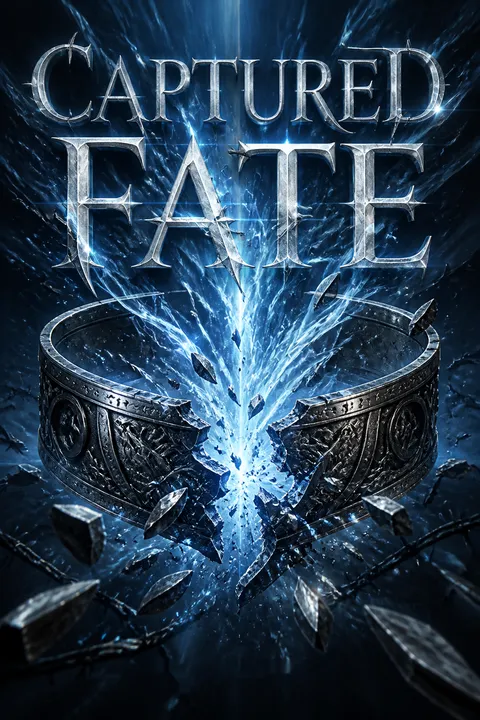
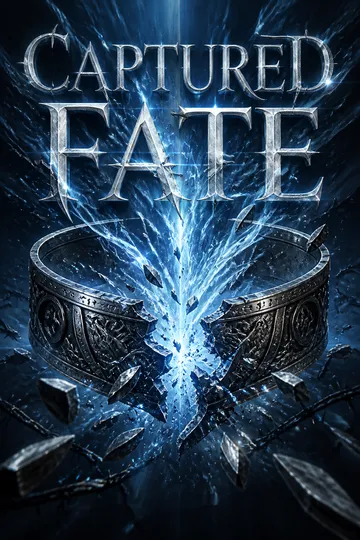
Captured Fate treats freedom as more than the absence of locked doors. Clancy’s island offers outdoor training, decent meals, private rooms, and work against genuine human cruelty, yet he still decides who may leave, what information they receive, and which intimate bonds he can turn into research. That contradiction makes his reforming vision persuasive and dangerous at once. The shadowbloods are not choosing between a good life and a bad one. They are weighing partial safety against the right to direct their own bodies and loyalties.
Riva’s power gives that dilemma physical form. Her scream can stop attackers, but it can also make her feel the pain she inflicts as strength. She cannot become morally clean simply by deciding to be a hero; she must choose targets, accept the costs, and live with the fear that her force may spill beyond its purpose. The rescue of the villagers shows both her hard-won control and its limits, while the sheep she kills expose the price of power when every alternative has been closed.
The romances deepen rather than soften the ethical conflict. Jacob’s protectiveness can become self-punishment, Zian’s desire is entangled with fear of harming Riva, and Griffin’s emotional numbness makes his own judgment difficult to trust. Their bond becomes meaningful only when each person can choose how to participate. Clancy’s attempt to manufacture intimacy violates that principle; Riva’s patience with Zian and Griffin restores it through consent and care.
The younger shadowbloods widen the question from one found family to a whole generation. Their abilities differ, their beliefs about the world diverge, and they do not all want the same escape. The book’s most durable lesson is that protection without choice can reproduce captivity under kinder conditions. Its ending complicates victory further: removing one captor does not dismantle the system that made him powerful, and a new claimant is ready to turn the shadowbloods’ rebellion to his advantage.
Review Summary
People Also Read

Characters
Riva
The controlled destroyerA compact, battle-trained shadowblood whose scream can inflict devastating pain, Riva has spent her life being treated as a weapon. Her instinct is to protect the people beside her, but she knows that protection can become destruction when her power escapes her control. She carries guilt over the civilians and creatures harmed during the group’s flight, and that guilt makes Clancy’s promise of useful missions tempting. Riva is also the emotional center of the group: she insists that Jacob share responsibility rather than drown in shame, and she gives Zian space to decide what intimacy means to him. Her strength lies not in being unafraid, but in continuing to make choices while fear and power pull in opposite directions.
Jacob
The fierce protectorJacob is Griffin’s twin and a powerful telekinetic whose anger often surges from a desire to keep his loved ones safe. Years of separation and manipulation have taught him to expect betrayal, and he turns that fear inward when he believes he has failed to protect Riva. His violence is not simple bloodlust: he is haunted by the people he has hurt, even while insisting that he would act again to save his friends. Riva’s refusal to let him carry their shared failures alone gives him room to become more than her shield. He remains fiercely protective, but he begins to accept that trust, tenderness, and cooperation can protect her as effectively as force.
Griffin
The empathic twinGriffin is Jacob’s twin and Riva’s childhood love, with an ability to sense and influence other people’s emotions. He is thoughtful and compassionate by nature, but the Guardianship’s treatment has left him struggling to recognize his own feelings and trust his judgment. His strongest instincts are toward connection and protection, especially where the old group is concerned. Riva’s presence helps him approach emotions he has spent years avoiding, while Jacob’s anger reminds him that love does not erase the consequences of his choices. Griffin’s challenge is to balance emotional awareness with independent moral judgment, rather than letting either numbness or another person’s influence decide for him.
Andreas
The memory keeperAndreas can enter and manipulate memories, a talent that makes him both an intelligence gatherer and a careful observer of human experience. He often remembers stories from other people’s lives and uses them to make difficult moments easier to bear. Beneath his warm, teasing manner sits a sharp awareness of the danger around his friends and a tendency to blame himself when he misses something important. Andreas helps Riva and the others understand the Guardianship’s systems, then uses his ability strategically when open resistance becomes impossible. He wants to be useful without becoming the kind of person who treats another mind as property, a conflict that shadows even his most necessary acts.
Dominic
The living healerDominic heals by drawing energy from living things, and his tentacles make his body visibly unlike the people around him. He has learned to live with that difference without allowing it to define his worth, though he remains alert to how others react to him. Plants offer him a less troubling source of strength than animals or people, and his care for them reflects his reluctance to take more life than he must. Dominic is observant and quietly persistent. When a local guide reveals the hidden motive behind Clancy’s mission, Dominic keeps asking questions despite the risk, showing that his gentleness does not mean passivity. He is a steady source of care for the group and a sharp judge of concealed motives.
Zian
The guarded shapeshifterZian combines immense strength with a wolf-like transformation that can overwhelm his judgment when fear and anger collide. He is careful about physical contact, not because he lacks affection but because he fears what he might do if his instincts take over. That fear comes from past trauma the Guardians exploited rather than helped him heal. Riva understands that his boundaries are part of his courage, and she refuses to let anyone else decide when he should cross them. Zian is also deeply attentive to the younger shadowbloods, stepping in when they struggle or blame themselves. His progress comes through honest disclosure, patience, and choices made without coercion.
James Clancy
The reforming captorA senior Guardian who takes control of the organization, Clancy believes shadowbloods could be used against human atrocities rather than confined to hunting supernatural enemies. He offers more humane training, better living conditions, and missions that can genuinely help people. Yet he remains convinced that he should decide what risks the shadowbloods take and what information they deserve. His practical idealism makes him more persuasive than the Guardians who came before him, but it does not keep him from turning their relationships into research or using their friends as leverage. Clancy’s central contradiction is that he wants to improve the world while retaining the authority to control the people he claims to serve.
Nadia
The bright signalAn older teen shadowblood, Nadia can make her body glow and has a fondness for vivid clothing. She is eager to train and see more of the world, but she has spent much of her life separated from the boys she grew up with. Her crush on Booker gives her a tentative hope of ordinary closeness. Nadia’s light becomes practical during the group’s escape, helping them work in darkness, while her questions about her own limited power reveal how sharply the younger generations have been constrained.
Tegan
The smoke-breathing childTegan is one of the youngest shadowbloods, a curious and generous girl who approaches Riva with brownies and an open eagerness to learn about the outside world. Her ability to expel toxic smoke makes her more dangerous than her age suggests. Tegan wants to help rather than be protected, but she is still a child placed in adult conflicts by the Guardianship. Her bravery is real, and so is the responsibility the older shadowbloods feel toward her.
Celine
The wary field traineeCeline is a young shadowblood trained to assist the Guardianship in the field. She presents herself as upbeat, but her experiences have left her wary of the shadowkind and uncertain whether escape will make her safer. Her ability involves manipulating some metals and sensing signals, talents that can be useful around technology. Celine’s divided loyalties grow from fear and grief, not simple malice, making her a reminder that the younger shadowbloods have been taught very different stories about the world.
Booker
The aura readerBooker is an easygoing older teen who can sense a person’s general physical and emotional state through their aura. His humor helps soften tense encounters, but he is perceptive enough to notice when Riva is uneasy. He cares for Nadia and worries about whether he has offended her, revealing a gentleness beneath his joking manner. Booker is among the younger shadowbloods who begin to imagine lives beyond training and missions.
Ajax
The thought listenerAjax is a quiet adolescent whose limited telepathy lets him catch fragments of thoughts people hold strongly. He understands that the Guardianship does not give the younger shadowbloods much choice, and he privately offers to help the Firsts find a way out. His ability is subtle, but it supplies information the group could not safely gather by asking questions aloud. Ajax is motivated by the people he has been separated from and by a desire to help his fellow shadowbloods choose their own lives.
Devon
The focused heat wielderDevon can generate heat and concentrate it on small objects. During the escape, he applies that skill carefully to disable tracking devices without removing the younger shadowbloods’ teeth. He is Ajax’s close partner and tends to approach dangerous moments with more thought than bravado. His talent is modest beside the Firsts’ powers, but it proves valuable when precision matters more than force.
George
The uncertain teleporterGeorge is a very young shadowblood who can teleport short distances, though worry can make the ability trigger unpredictably. He is painfully aware of the danger his mistakes can create and is quick to blame himself when events go wrong. Zian recognizes that self-blame and tries to help him see that the Guardianship never taught the children to control their gifts properly.
Lindsay
The earth pathfinderA shy younger shadowblood, Lindsay can sense features of the ground, including slopes and thick roots. During the group’s trek, she identifies easier routes through the jungle and later uses her power to disrupt an insurgent’s footing. She is hesitant to assert herself, especially around more forceful personalities, but grows more confident when the others listen to her.
Richmond
The board's emissaryRichmond represents the Guardianship’s board and questions Clancy’s authority after the escape. He is skeptical of Clancy’s methods and measures the organization’s success in terms of lost resources and operational control. His presence shows that Clancy’s leadership is contested, even within the institution.
Balthazar
The absent founderBalthazar is a figure from the Guardianship’s founding circle whose absence has left room for Clancy to take control. He is confident, ruthless, and interested in the shadowbloods as tools that can clear obstacles for his own purposes. His arrival reveals that the Guardianship’s power extends beyond Clancy’s faction.
Toni
Balthazar's armed aideToni accompanies Balthazar and carries a gun. She follows his instructions during the ambush, serving as the immediate physical threat to the injured group.
Ursula Engel
The creator who recoiledUrsula Engel is one of the Guardianship’s founders and the scientist involved in creating the shadowbloods. Her records helped Riva’s group understand that the later generations were made with a weaker version of the original process. She is remembered as a powerful figure whose choices shaped the shadowbloods’ origins.
Rollick
The shadowkind allyRollick is a shadowkind leader who offered Riva and her friends protection and help controlling their abilities. His support complicated the Guardianship’s claim that all shadowkind were monsters, though Riva remains uncertain about how far his people can be trusted.
Lua
Griffin's loyal catLua is Griffin’s white cat, a steady source of uncomplicated affection in a life shaped by institutional control. Griffin brings her with him when he leaves the facility, showing how much their bond matters to him.
Plot Devices
Shadowblood marks
A bond across distanceIntimacy between Riva and her partners creates visible marks near the collarbone and a faint sense of one another’s presence. The marks help Riva recognize that her friends are alive and nearby even while the Guardians keep them in separate rooms. They also become evidence Clancy uses to investigate the group’s relationships. The same mechanism therefore offers comfort and connection while exposing the shadowbloods to surveillance.
Guardian monitoring bands
A hidden leashThe ankle bands track location and vital signs during missions, and they can also transmit audio. Clancy presents them as a way to keep the team safe and alert Dominic if someone needs healing, but he uses their recordings to learn about the shadowbloods’ private bonds. The bands make the Guardians’ control feel like practical mission support until the group discovers what else they report.
The earthquake release
A door opened by forceThe facility contains an emergency system that unlocks rooms when sensors detect an earthquake. Andreas discovers the mechanism through a Guardian’s memory, and Jacob’s telekinetic power supplies the tremor needed to trigger it. This discovery turns the facility’s safety design into an escape route, but it also demands an exhausting use of Jacob’s ability and starts a dangerous race through the mountain corridors.
Riva's pain-fueled scream
Destruction converted to strengthRiva’s scream can paralyze or violently damage living bodies, while the suffering it causes feeds her power. Clancy’s training helps her learn to modulate the effect, but control is not absolute, especially when she is frightened or protecting someone. In the village siege, she deliberately draws strength from the sheep before attacking the armed men, turning the story’s recurring problem of power and restraint into a desperate tactical choice.
Shadowblood Souls Series

About the Author


Download PDF
Download EPUB
.epub digital book format is ideal for reading ebooks on phones, tablets, and e-readers.








