


Plot Summary
Prologue
Twenty years before Rhianna’s1 search for the truth, seer Bronwyn12 places her newborn daughter in the arms of her sister, Mabel.13 Bronwyn12 has foreseen her own death and believes the child is named in the Fourth Prophecy, making her a target for those who would destroy her or seize her powers.
The child’s father is Caspian,11 the feared Black Prince,11 but Bronwyn12 warns Mabel13 that Rhianna1 must be hidden even from him. Heartbroken, Bronwyn12 asks her sister to raise the baby and preserve one certainty for her: that her mother loved her.
The opening makes protection an act of separation. Bronwyn gives up the person she most wants to keep close because she believes love cannot shield Rhianna from political power or prophecy. Her choice is emotionally costly, and it establishes the book’s central tension: caretaking can require secrecy, but secrecy leaves the protected person unable to understand her own history. The scene also makes the father’s identity a source of danger before Rhianna knows it, so later questions about inheritance carry the weight of a decision made before her birth.
The Memory Beneath the Lock
At the hidden mansion, Rhianna1 asks Professor Phoenix Stone3 to reopen memories her aunt sealed away. Inside her mind, Stone3 finds an unfamiliar golden memory, and Rhianna1 lets it unfold in private. Her aunt’s13 recorded message explains that Bronwyn12 was a seer, that she fled the West with her baby, and that Rhianna1 was foretold in the Fourth Prophecy.
She also reveals that she suppressed Rhianna’s1 prophetic dreams and gave her Pip,14 the pig, to contain dangerous magic. To access her full power one day, Rhianna1 will have to release him. The message gives Rhianna1 answers, but its demand feels like another abandonment. She decides she will not give Pip14 up.
The discovery gives Rhianna a history but not a stable identity. Her aunt’s secrecy was meant to protect her, yet it has left Rhianna to interpret protection as distrust and absence as rejection. Pip matters because he is both beloved companion and restraint on her power; affection and limitation occupy the same relationship. By choosing him over the warning, Rhianna claims the right to define her own loyalties, even while the message suggests that independence will eventually require a painful separation.
The Gray Isle Decision
Rhianna’s mates debate whether fate has a purpose or whether their connection is chance, while the Lord Protector’s7 restrictions and bounty on fugitives make remaining at the mansion dangerous. Stone3 and Azlan2 argue for escape; Rhianna1 wants the original text before deciding what her future demands. Winnie8 believes the prophecy concerns Queen Æðelflæd’s return, but neither she nor Stone3 has read the source manuscript.
The prophecies are kept at the abandoned Albany Convent on the Gray Isle, ringed by treacherous, supposedly haunted waters. Rhianna1 insists they go there, and Stone3 agrees that second-hand interpretations are no substitute for evidence. Their destination turns a vague family warning into a concrete, risky investigation.
Rhianna’s insistence is not simple faith in destiny. She wants to inspect the evidence that others are using to describe her, an act of self-definition within a world that repeatedly treats her as an instrument. The argument also exposes how differently the group handles uncertainty: Azlan seeks safety through retreat, Stone seeks proof, and Winnie trusts the story’s pattern. Rhianna’s choice brings these competing instincts into one plan. It is the first time the group risks danger not merely to survive an immediate attack, but to learn what survival is for.
Spencer’s Other Self
After confinement and injury, Spencer5 struggles to keep his werebeast contained. Rhianna1 asks to witness his transformation rather than let him suffer alone, and follows him into the winter prairie. The change is painful, but when the beast meets her, he recognizes her as his mate and speaks with a tenderness Spencer5 has never allowed himself to show.
He carries her across the grass and forest, then lets a stag escape rather than hunt it when she asks him to spare it. Once human again, Spencer5 admits he fears losing control and hurting someone. Rhianna1 reassures him that the beast is part of him, not proof that he is a monster. Her acceptance helps him begin to trust her with the truth.
Spencer’s transformation turns an abstract fear of monstrosity into a relationship Rhianna can encounter directly. The beast is dangerous, but he is also attentive, capable of restraint, and able to articulate the shame Spencer hides. Rhianna does not deny the risk; she refuses the assumption that risk makes a person irredeemable. Her response matters because Spencer’s self-control has been built through concealment and medication, not acceptance. The scene begins a shift from treating the beast as an enemy to treating him as a part of the person she loves.
Terms of Sharing
Rhianna1 and Tristan4 resume their intimacy, but afterward realize that an earlier encounter lacked protection. Winnie8 brews Cloudpuff to prevent an unwanted pregnancy, and Rhianna1 recognizes that her mother could have chosen the same remedy yet did not, strengthening her belief that Bronwyn12 wanted her.
Later, a drinking game makes the five men acknowledge their jealousy and their interest in sharing Rhianna1 rather than competing for exclusive claim. Rhianna1 makes clear that her consent and happiness must guide the arrangement.
Tristan,4 who once treated her carelessly, now tries to earn her trust through patience, while Azlan2 admits he feels some jealousy but will not make it her burden. The group begins to negotiate its bonds instead of pretending they are simple.
The romance’s unusual structure works best when desire is treated as a matter of negotiation rather than destiny’s automatic permission. The group’s conversation does not erase jealousy; it makes jealousy speakable, which gives Rhianna room to set terms. The pregnancy scare also places bodily autonomy inside the larger prophecy plot: Rhianna wants a future, but not one imposed by a bond, a father, or a magical prediction. Her mother’s presumed choice to keep her becomes a source of reassurance, suggesting that being wanted is not the same as being owned.
Brooms Through Winter
While Rhianna1 gathers Cloudpuff outside the mansion, she spots an enforcer and two magicals searching the prairie for Azlan2 and the fugitives. Their shield keeps them hidden, but the visitors identify the house and promise to return with reinforcements. The group must leave at once. With no vehicle large enough and Renzo’s6 mass teleportation too dangerous, Trent9 suggests broomsticks in the attic.
Rhianna1 learns to guide one by joining her magic to its will, then helps the others master the awkward craft. They fly above the clouds as the search party fires after them, escaping sight and reaching the coast. Winnie8 and Trent9 take a separate route toward the Mulhony caves, while Rhianna,1 her mates, and Pip14 continue toward the Gray Isle.
The broomsticks make an old, feminized form of magic the practical answer to a military problem. Rhianna’s willingness to learn what the men dismiss as undignified becomes a matter of survival, while her ability to listen to the broom suggests that power is not always command. The escape also tests the group’s new cooperation: everyone must accept an unfamiliar method and trust Rhianna’s lead. The division from Winnie and Trent is tactical, but it sharpens the emotional stakes by separating Rhianna from the people who have become her chosen family.
The Dead Call Back
The group finds a rowing boat and pushes across the sea toward the convent, entering fog that carries the voices of the dead. Each traveler hears someone they have lost: Spencer5 hears family and a fellow werebeast, Azlan2 hears his mother, Stone3 hears his father, and Rhianna1 hears her aunt. The voices draw them toward the water, and a spirit tears Rhianna’s1 locket away.
Her mates pull her back before she follows it. When the spirits keep attacking, Rhianna1 combines her magic with Tristan’s4 and Azlan’s,2 producing a burst of light that scatters the shadows. The boat reaches the island, but the locket is gone. Rhianna1 must continue without the last object that connected her to her aunt.13
The haunted crossing makes grief an active force, not a memory safely contained in the past. Each person is tempted by a voice that offers reunion without the demands of living, while Rhianna’s attachment to her aunt nearly makes her surrender to the illusion. Her mates do not rescue her by replacing the lost relationship; they help her turn toward present connection. Losing the locket is therefore both a concrete bereavement and a shift in where Rhianna locates belonging. The light appears through cooperation, suggesting that shared power can answer grief without pretending to undo it.
Five Names in Prophecy
Inside the convent, Stone3 and Azlan2 open the protected collection and find the Fourth Prophecy. It describes a woman bound to five mates, born again from dark origins, who will claim a crown and bring dawn. Stone3 explains that only Queen Æðelflæd was known to have five fated mates, so the group believes the verse may point to Rhianna.1
When they return to the beach, Christopher Kennedy,7 the Lord Protector,7 attacks with trained magicals. Rhianna1 and her mates resist, but a golden dragon dives from the sky, disrupting the assault. Its western rider identifies himself as Caspian Moray,11 the Black Prince,11 and claims Rhianna1 as his daughter. He offers escape from Kennedy,7 and Rhianna1 chooses to go with him.
The prophecy gives the group a plot-shaped explanation for its bonds, but its language remains open enough to invite competing interpretations. Rhianna’s choice to travel with Caspian is not a surrender to the verse; Kennedy’s attack has made the immediate alternative nearly fatal. The dragon’s arrival also changes the scale of the conflict, linking Rhianna’s personal history to the West’s military power. Yet the rescue is uneasy: the father she was hidden from offers safety, while the aunt’s warning remains unresolved. The choice is therefore both refuge and a test of trust.
A Palace of Shadows
Caspian’s11 dragons carry the group to a sleek western capital, far more prosperous than the republic’s stories about the West suggested. At a feast, Caspian11 presents Rhianna1 as a returned princess and tells Tristan4 that he once had an understanding with Christopher Kennedy.7
In private, he claims Kennedy7 killed Bronwyn12 after a quarrel drove her away. Rhianna1 wants to believe her father, but Stone3 distrusts the polished welcome. Spencer5 and Rhianna1 grow closer, and she seals their bond, which strengthens her magic.
The increase is accompanied by a sharper surge of crimson power. Spencer’s5 beast warns that darkness has always existed in her, leaving Rhianna1 unsettled even as comfort, affection, and luxury briefly make the palace feel like a home.
The West unsettles Rhianna because it contradicts the political story she inherited. Its visible prosperity does not prove justice, just as the republic’s claims of civilization did not prevent its repression. Caspian offers intimacy and status, but his admission of an alliance with Kennedy complicates his reassuring account of the past. The completed bond with Spencer intensifies both her magical capacity and her fear of what that capacity means. Love gives her strength, yet strength does not arrive morally neutral; the novel refuses to let emotional security settle the question of power.
The Sources Rise
Rhianna1 follows palace servant Charmaine17 and discovers Caspian11 feeding on a chained young magical, draining his power while other exhausted Sources wait nearby. The revelation explains Charmaine’s17 failing magic and overturns the image of the West as a humane alternative to the republic.
Caspian’s11 followers seize Rhianna,1 intending to use her as an exceptionally powerful Source. She breaks their restraints and fights beside her mates, but Caspian11 can still compel the drained servants to obey him.
Renzo6 teleports Rhianna1 to the dragon stables, where she frees the chained dragons. Caspian11 follows and threatens Renzo;6 Rhianna1 restrains her father with crimson magic. The Sources then turn on him and kill him, breaking the system that kept them enslaved.
The palace’s central deception is not that it lacks prosperity, but that prosperity is presented as evidence of benevolence. The Sources reveal its hidden cost: the ruling class sustains itself by converting other people’s vitality into private power. Rhianna’s discovery also changes her relationship to her father from hopeful uncertainty to moral judgment. Yet she does not personally deliver his death; the enslaved Sources act for themselves. Their revolt makes freedom collective rather than a gift bestowed by a royal rescuer, even as the violence leaves the future of the West unsettled.
Back to Arrow Hart
After Caspian11 falls, Rhianna1 refuses to remain in the West while her friends and the republic face Christopher Kennedy.7 She orders the dragons east toward Arrow Hart Academy, and her mates follow despite their fear that Kennedy7 will be waiting.
On arrival, the group finds Principal York15 sheltering fugitives and organizing a small resistance, including Winnie,8 Trent,9 and Azlan’s2 sister, Ellie.10 Winnie8 reports that her grandmother Rosa20 has been taken, making the threat personal again.
York15 confirms that Kennedy7 is likely to attack the academy and that the resistance cannot win by hiding indefinitely. The group now has a base, allies, and dragons, but Rhianna1 must persuade students who have been taught to distrust her that they should risk their lives beside her.
Rhianna’s return rejects the seductive bargain of private safety. The West offered comfort, but staying would have meant accepting security while other people remained exposed to the same machinery of persecution that shaped her childhood. Her decision is not simply a move toward danger; it is a refusal to let rescue become another form of isolation. The academy’s resistance also turns friendship into political infrastructure. Winnie, Trent, Ellie, and York are not extensions of Rhianna’s destiny; they are agents with their own skills and reasons to oppose Kennedy.
The Academy Takes Sides
At Arrow Hart, Spencer5 and Tristan4 address the students and explain that Kennedy’s7 rule has harmed families, restricted liberties, and targeted weres. They invoke the prophecy as a reason for hope, but insist that Rhianna1 and her five mates cannot end the regime alone.
Several students hesitate until classmates describe relatives and friends seized by the authorities. Summer Clutton-Brock16 denounces Rhianna,1 but her usual allies refuse to follow her away. The students agree to fight, and Spencer5 and Tristan4 organize them around the academy’s defenses.
Stone3 also confronts his old guilt about Renzo,6 revealing that they knew each other as vulnerable children on the streets. He agrees to trust the assassin now. The group prepares for Kennedy’s7 attack together.
The recruitment scene shows how political belief changes when official abstractions meet named losses. Kennedy’s language of public safety has persuaded students until they compare it with missing sisters, seized grandparents, and vanished families. Spencer and Tristan use their reputations to open the door, but the students make the consequential choice themselves. Summer’s isolation marks the collapse of her social authority. Stone’s admission about Renzo adds a quieter counterpoint: coalition requires more than strategic usefulness; it asks people to acknowledge how earlier abandonment helped shape the person they now fear.
Pip’s Last Protection
Before dawn, Rhianna1 leaves the sleeping group and carries Pip14 into the forest. She has dreamed of the coming battle and understands that she cannot use her full power while he contains it. Winnie8 meets her at the forest edge, but Rhianna1 asks to go alone. She places Pip14 on the ground, thanks him for staying beside her through years of hardship, and lets him walk away.
The spirits of her mother, aunt,13 grandmother, and other women in her family appear in his place, showing that they have watched over her through the familiar. Then they fade, and the restraint on Rhianna’s1 magic disappears. She returns to Winnie8 grieving, but no longer confused about why her aunt13 made this bargain.
The farewell revises Rhianna’s understanding of abandonment. Pip’s departure is not a repetition of Bronwyn’s choice to surrender her baby; Rhianna makes this separation knowingly, for a purpose she has chosen. The ancestral spirits reveal that care can persist without possession, even when the cared-for person cannot see it. Still, the scene does not make loss painless or magically uncomplicated. Rhianna gains access to greater power precisely by losing the familiar who helped her survive. Her next test is whether power can be used without letting grief or anger dictate its use.
The Hill Gives Way
Kennedy’s7 forces surround the academy and demand that its defenders surrender Rhianna.1 The students and staff hold their ground, and the old protective spells withstand repeated magical attacks before finally breaking.
The planned trap fails when the attackers press uphill and the fighters become scattered in a close battle. Spencer5 sees former persecutors among the soldiers and freezes, unable to strike; Azlan’s2 warning and the beast’s instinct push him into transformation and combat.
Principal York15 fights beside the students but is killed by a magical bolt. Her death removes the leader who organized the resistance, while Kennedy’s7 larger force continues to advance. Rhianna1 is still away from the main line, and the defenders must survive without knowing when she can intervene.
The battle exposes the difference between preparing for violence and living through it. Spencer’s paralysis is not cowardice; it is the return of memories that strategy cannot neatly contain. His beast carries him back into action, but that rescue also shows how little time the fighters have to process trauma. York’s death gives the resistance a material loss, not merely a symbolic one: the person who coordinated its shelter and planning is gone. The collapse of the wards turns the academy from a defensible institution into a vulnerable place its students must protect themselves.
Fire Above the Academy
As Rhianna1 races toward the dragons, Summer16 blocks her path and tries to seize her for Kennedy.7 Rhianna1 knocks her unconscious and binds her instead of retaliating. She mounts Gwenhwyfar, but cannon fire kills one of the green dragons, and the matriarch’s grief turns to rage. Rhianna’s1 newly unrestrained crimson magic joins the dragon’s fury.
Together they burn and strike down Kennedy’s7 troops; then Rhianna1 nearly directs that same destruction at the academy and the people who once bullied her. The bonds with her mates bring their voices back into her mind, and she forces herself to turn Gwenhwyfar away. A cannonball catches the dragon in a violent dodge, throwing Rhianna1 from the sky toward Kennedy’s7 forces.
The crisis is not whether Rhianna can wield enough power, but whether she can keep power from turning old injury into indiscriminate punishment. Summer gives her a personal target; the dead dragon supplies grief; the soldiers give her an apparent justification for destruction. Her decision to spare Summer precedes the more difficult choice to spare the academy, where her own humiliations are concentrated. The bonds do not erase the dark magic or make her harmless. They reconnect her to specific people she wants to protect, giving her a reason to resist the narrowing logic of revenge.
Kennedy Loses His Power
Rhianna1 survives the fall with a broken arm and head wound, then faces Christopher Kennedy7 before her mates can reach her. He admits he killed Bronwyn12 to protect his rise to power and claims he tortured Tristan4 to shape him into an obedient heir. Kennedy7 attacks, but Rhianna1 pulls his magic out of him, stripping away his ability to command or harm others.
The stolen power poisons her and she collapses. Tristan4 heals her injuries, while Azlan2 reaches them through the bond and beats Kennedy7 before deciding that death would spare him justice. The fighting stops as Kennedy’s7 forces surrender. Rhianna1 has defeated the ruler without killing him, but her survival comes at the cost of absorbing the power that made him dangerous.
Rhianna’s victory answers the novel’s repeated question about whether power must reproduce the violence that created it. She does not kill Kennedy, but neither does she simply forgive him or return him to authority. Removing his magic disables his capacity to dominate while leaving him answerable for what he has done. The act carries a bodily price: his power enters her as poison, making moral restraint neither clean nor easy. The battle’s emotional climax is thus less a triumph of superior force than a difficult act of control under conditions designed to provoke vengeance.
The First New Dawn
After the fighting ends, the academy mourns York15 and celebrates Kennedy’s7 defeat. Kennedy7 is held for judgment, and Summer16 loses her magic and is placed under house arrest after Rhianna1 argues against sending her to the labor camps.
Tristan,4 Spencer,5 Azlan,2 Stone,3 and Renzo6 remain with Rhianna1 as the group turns from battle toward reconstruction. Six months later, Rhianna1 helps negotiate a representative council that includes magicals, weres, and non-magicals rather than restoring rule to another powerful family.
Eight years on, she teaches at Arrow Hart, lives with her mates and their daughter, and is expecting another child. The ending gives her a home and a future, while the work of changing the republic remains a shared, unfinished responsibility.
The resolution resists the easy conclusion that removing one ruler automatically repairs the society he governed. Rhianna’s insistence on a representative council shifts the question from who deserves the crown to who gets a voice in public life. Her decision to spare Summer from the labor camps extends that principle without pretending trust has been restored. The time jump grounds political change in ordinary continuities: teaching, negotiation, parenting, and shared domestic work. Rhianna’s long-awaited safety is not withdrawal from the world; it is a life in which affection and civic responsibility can coexist.
Epilogue
Six months after Kennedy’s7 defeat, Rhianna1 and her mates take part in peace talks, arguing for a council that represents the West and the republic’s magicals, weres, and non-magicals. Eight years later, she teaches at the reopened Arrow Hart Academy15 and lives with her five mates, their daughter Mabel, and a growing collection of animals.
The dragons still come and go, and Rhianna1 continues to miss Pip.14 Her second child is overdue when labor begins during dinner. The story closes not with a coronation but with a family gathered at home, facing a new life together.
The two epilogues translate the scale of the prophecy into forms of life that prophecy cannot guarantee. Political repair happens through negotiations over representation; personal repair appears in a crowded household, a classroom, and the daily work of caring for children and animals. Rhianna does not take the crown that others expect her to claim. Instead, she uses her authority to widen participation and chooses a life not organized around being a weapon. Pip’s absence remains, preventing domestic happiness from erasing grief. The final labor scene makes the future literal: it arrives through vulnerability, not conquest.
Analysis
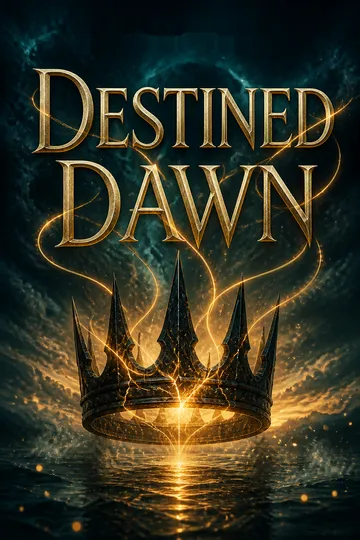
Destined Dawn treats prophecy as a political problem as much as a supernatural one. The Fourth Prophecy gives Rhianna1 a public identity before she can decide what she believes, and every authority around her tries to turn that identity toward its own ends. Christopher Kennedy7 calls her a threat, Caspian11 sees her as a route to greater power, and even allies can be tempted to treat her safety as more important than her agency. Rhianna’s1 repeated insistence on choosing where to go and whom to help is therefore not a rejection of destiny so much as a refusal to let other people define its terms. The novel also complicates the idea that power makes a person good or evil. Rhianna’s1 crimson magic can protect others, but it can also magnify her anger until she nearly attacks people she once hated. Spencer’s5 beast is frightening without being reducible to cruelty, while Renzo’s6 capacity for tenderness does not erase his history of violence. Caspian11 and Kennedy7 reveal different versions of domination: one extracts other people’s magic, the other governs through fear and political control. Rhianna’s1 refusal to kill Kennedy7 offers no easy absolution. She removes his power and leaves him accountable, choosing restraint without confusing it with forgiveness.
Care is the counterforce the book trusts most, but it does not make care painless. Bronwyn12 hides Rhianna1 to protect her, Mabel13 accepts the burden of raising her, Pip14 contains her power, and the five mates learn that attachment requires consent and negotiation. Rhianna1 ultimately releases Pip,14 not because love has become unimportant, but because she can carry that love without keeping him beside her. The final movement from prophecy to council, classroom, and family rejects the solitary savior model. A better world requires shared authority and the daily work of people who choose to remain responsible to one another.
Review Summary
People Also Read

Characters
Rhianna Blackwaters
Prophecy-marked survivorRhianna has survived poverty, isolation, and repeated attempts to control her, yet she remains curious enough to demand original evidence and stubborn enough to act on what she learns. Her independence can look like recklessness, especially to the people trying to protect her, but it grows from years in which no authority proved reliably safe. She is deeply attached to Pip14 and to the friends she has chosen, and her capacity for tenderness exists alongside anger and formidable magic. Rhianna’s defining struggle is not simply learning how powerful she is; it is deciding what kind of choices she will make when that power can answer fear with overwhelming force.
Azlan Kennedy
Steadfast field commanderAzlan is an experienced enforcer, Tristan’s4 cousin, and Ellie’s10 brother. He approaches danger as a tactical problem, planning routes, assessing threats, and trying to keep Rhianna1 safe. That discipline comes with emotional restraint: he wants to protect people but is not always comfortable naming what he feels. His loyalty is practical as well as romantic, shown through the risks he takes and the steady presence he offers. Azlan’s protective instincts can become overbearing, especially when Rhianna1 insists on choosing her own path. Their bond asks him to distinguish care from control without losing the caution that has helped keep the group alive.
Phoenix Stone
Scholar with guarded loyaltiesPhoenix Stone is a professor, a skilled mind-reader, and one of Rhianna’s1 fated mates. He values evidence and intellectual rigor, often challenging interpretations that others accept too quickly. Beneath his dry, professorial manner is a deeply protective man shaped by an unstable childhood and a strong attachment to learning. His confidence in analysis does not prevent fear, particularly when Rhianna1 risks herself. Stone’s relationships require him to admit that skepticism can protect people from false certainty but can also become a way to avoid trust. He is sharp-tongued, perceptive, and more emotionally vulnerable than he prefers to appear.
Tristan Kennedy
Heir resisting his fatherTristan is a gifted duelist and the son of the Lord Protector7. He grew up with privilege and public admiration, but his polished confidence conceals a painful history with his father. At first he repeats the habits of a popular young man who expects attention; his connection with Rhianna1 challenges him to recognize the harm he causes and to make amends rather than relying on charm. Tristan is also creative, observant, and capable of drawing people together. His conflict is not only political disobedience but the harder task of deciding which parts of his father’s lessons to reject and what kind of authority he wants to become.
Spencer Moreau
Shamed werebeast championSpencer is a formidable duelist and a werebeast who struggles with the fear of losing control. He has been taught to see his nonhuman nature as dangerous and shameful, so secrecy and restraint become both survival strategies and barriers to intimacy. Rhianna’s1 acceptance unsettles that belief, but it does not instantly erase his trauma or guilt. Spencer brings humor, physical courage, and an instinct for motivating others, though memories of captivity and violence can still overwhelm him. His relationship with his beast reflects a larger question in the story: whether a feared part of the self can be acknowledged without either denying its danger or treating it as proof of moral failure.
Renzo Barone
Assassin learning attachmentRenzo is an assassin whose bluntness, violent instincts, and difficulty reading ordinary social cues make him an unsettling presence among Rhianna’s mates. He has been treated as useful when dangerous and disposable when inconvenient, so belonging is unfamiliar territory. His attachment to Rhianna1 gives him a reason to consider other people’s needs, though his first language for affection is still provocation and physical intensity. Renzo is not softened into a conventional hero; his pleasure in violence remains part of his character. The tension lies in whether he can make choices beyond the behavior that others trained and rewarded, and whether intimacy can become a genuine alternative to isolation.
Christopher Kennedy
Authoritarian Lord ProtectorChristopher Kennedy rules the republic through surveillance, emergency powers, propaganda, and the suppression of groups he labels dangerous. He is Tristan’s4 father and Azlan’s2 uncle, which makes political resistance inseparable from family history for both young men. Kennedy is strategic rather than merely impulsive: he understands how fear can make repression appear protective and how public stories can define an enemy before people meet one. His authority rests on controlling information as much as controlling magic. The family relationships around him expose the intimate cost of authoritarian power, especially when obedience is presented as care and violence is disguised as preparation.
Winnie Wence
Rhianna’s loyal best friendWinnie is Rhianna’s1 closest friend, a capable magical, and Trent’s9 partner. She trusts her instincts about prophecy but is also practical, helping Rhianna1 with potions and offering steady emotional support. Her confidence and humor make difficult subjects easier to face without making them trivial. Winnie’s loyalty is active: she contributes skills, takes risks, and pushes Rhianna1 to imagine a future beyond immediate survival.
Trent
Inventor and quiet allyTrent is Winnie’s8 partner and a gifted maker of practical technology, including improvised communication devices. His technical skill complements the magical abilities of the people around him, and he contributes without demanding the spotlight. He is patient and supportive, giving Winnie8 room to act while remaining useful in dangerous situations. Trent embodies a kind of courage based on preparation, invention, and dependable partnership.
Ellie Kennedy
Empathic Kennedy sisterEllie is Azlan’s2 sister and Tristan’s4 cousin. Her empathy and gentleness are sometimes mistaken by her family for weakness, but she is intelligent, capable with potions, and willing to take part in resistance work. Ellie offers a humane counterweight to the Kennedy family’s emphasis on power and control. Her understanding of people gives her a role in building trust across divisions that force alone cannot resolve.
Caspian Moray
Western kingdom’s rulerCaspian Moray, known as the Black Prince, is a charismatic ruler whose authority and history connect the West to Rhianna’s1 origins. He presents himself as a father and protector, and his kingdom appears to contradict the republic’s stories about western life. His polished manner makes him difficult to read, especially for people who know him only through inherited accounts. Caspian’s presence forces Rhianna1 to question whether a personal bond can be trusted when it is entangled with political power.
Bronwyn
Seer facing a dangerous futureBronwyn is a seer whose visions place her in conflict with powerful people seeking control of the future. She is Rhianna’s1 mother and Mabel’s13 sister. Her choices are shaped by fierce love, regret, and the burden of knowing that some dangers may not be escaped. Bronwyn’s story establishes the cost of being valued for a gift rather than treated as a person.
Mabel
Bronwyn’s steadfast sisterMabel is Bronwyn’s12 sister, a steady and loving presence whom Bronwyn12 trusts with her child. She has no seer’s gift, but her reliability matters more than specialized power in the moment she is asked to help. Mabel represents the practical labor of care: accepting a responsibility that is emotionally painful because someone vulnerable needs a safe home.
Pip
Rhianna’s beloved pigPip is Rhianna’s1 cherished animal companion, almost always at her side. He is unusually perceptive and seems to understand more than an ordinary pig could, though Rhianna’s1 affection for him is not based on solving that mystery. His presence gives her comfort through isolation and danger. Pip is a living link to the years when Rhianna1 had few people she could trust.
Principal York
The academy’s stern leaderPrincipal York is the formidable head of Arrow Hart Academy. She is disciplined, politically alert, and capable of looking beyond official claims when students and fugitives need protection. Her authority comes with responsibility for the young people in her care, and she is willing to question the Lord Protector7 rather than treat obedience as the only form of order. York is exacting, but her standards are rooted in a serious concern for justice.
Summer Clutton-Brock
Rhianna’s privileged rivalSummer is a socially powerful student accustomed to admiration and control over her place in the academy. She sees Rhianna1 as a threat to her status and responds with contempt rather than curiosity. Her polished image conceals insecurity about losing influence, and she readily adopts the assumptions of people who promise to preserve her position. Summer’s role exposes how prejudice can be enforced not only by rulers but by peers invested in the existing hierarchy.
Charmaine
A wary palace servantCharmaine works in Caspian’s11 palace and is initially too cautious to speak freely with Rhianna1. She is kind to Pip14 and shares small moments of familiarity when she feels safe enough to do so. Her exhaustion and guarded behavior suggest that palace life is more complicated than its formal welcome implies. Charmaine’s quiet presence lets Rhianna1 notice the difference between respectful service and genuine freedom.
Coach Hank
The academy’s battle coachCoach Hank trains students in combat and understands the value of discipline, but he is more than a source of military instruction. His blunt praise and steady encouragement matter to Tristan4 and Spencer5, who have often measured themselves against harsher standards.
Mrs. Holyhill
The history teacherMrs. Holyhill teaches magical history and politics, bringing long memory and scholarly knowledge to the group’s questions about the prophecy. Her age and unassuming manner obscure a sharp understanding of the past and its patterns.
Rosa
Winnie’s beloved grandmotherRosa is Winnie’s8 grandmother, an older woman whose safety weighs heavily on Winnie8 and Rhianna1. Her absence reminds them that the regime’s reach extends beyond the people directly involved in the prophecy.
Plot Devices
The Fourth Prophecy
A contested map of fateThe ancient verse predicts a woman bound to five mates who will return, claim a crown, and bring an end to darkness. Its original manuscript is kept in the Albany Convent, so the group must risk the haunted crossing to read it for themselves. Because its language is symbolic, the prophecy motivates allies and alarms enemies without providing a clear set of instructions. It can be read as a promise of rule, a warning about power, or a call to change an unjust order. Its function is to make Rhianna’s1 choices politically consequential while leaving the moral meaning of those choices unsettled.
Sealed Memories
A history hidden in mindRhianna’s1 aunt13 has locked away painful memories and dreams in her mind to shield her from knowledge that could expose her to danger. Stone3 can enter those memories, but doing so risks distressing Rhianna1 and requires her consent. A separate golden memory, left for Rhianna1 to discover, carries her aunt’s13 explanation of her mother12, the prophecy, and Pip14. The device turns memory into both evidence and emotional risk: recovering information helps Rhianna1 understand her past, while confronting what was withheld forces her to reconsider whether protection without truth can still feel like love.
The Fivefold Bond
Shared magic and attachmentFated bonds connect Rhianna1 to five men, creating powerful attraction and allowing their magic to strengthen one another. The bonds do not remove differences, jealousy, mistrust, or the need for consent. Each relationship develops at a different pace, particularly Spencer’s5 struggle to accept his werebeast nature and Tristan’s4 effort to repair earlier harm. When the group finally works together, their linked power becomes central to resisting larger magical forces. The bond operates as both supernatural mechanism and relationship test: it gives the group capacity, but it does not decide how they treat one another.
Pip the Familiar
A beloved limit on powerPip14 appears to be Rhianna’s1 small, unusually intelligent pet pig, but he is also the familiar assigned to suppress her prophetic dreams and contain dangerous magic. His protection lets Rhianna1 grow up without being overwhelmed by visions, while also keeping part of her power inaccessible. Releasing him will remove that restraint, but Rhianna’s1 attachment makes the choice emotionally costly. Pip therefore links magical capacity to care rather than treating greater power as an uncomplicated reward. He has kept Rhianna1 company through isolation, so letting him go asks her to trust what he has helped her become.
The Sources
Power extracted from othersIn the western palace, vampires drain magic from living magicals called Sources, using the stolen power to sustain their own abilities and authority. The Sources are weakened, controlled, and hidden behind a public image of prosperity. The practice reveals that Caspian’s11 kingdom is not the humane refuge it first appears to be, and it gives Rhianna1 a direct reason to reject his plans for her. The Sources’ ability to resist when control falters drives a collective revolt. This device makes exploitation literal: rulers do not merely command the labor or loyalty of others, they take the capacity that makes those people powerful.
The Arrow Hart Academy Series
About the Author
Other books by Hannah Haze


Download PDF
Download EPUB
.epub digital book format is ideal for reading ebooks on phones, tablets, and e-readers.








