

Plot Summary
Light Against the Shadows
After the academy’s fear trial, Briony Storm finds Thorne Cadieux badly wounded and trapped in a wasteland with creatures made from his own shadows. When she runs to save him, light bursts from her hands and drives the attackers away. Professor Fox Tudor recognizes the force as lumomancy, an ability thought lost for centuries, while Briony cannot explain or control it.
Fox takes her to the Princes’ tower, where Beaufort and Dray have healed Thorne. His body is safe, but his distress continues after he wakes. Briony’s relief at finding him alive is tangled with fear of her unfamiliar power. The trial has changed more than her score: she may possess magic powerful enough to alter her place in the realm.
The rescue makes Briony’s power an answer to an immediate emotional crisis, not a talent she has pursued for status. Her light appears when she refuses to accept Thorne’s suffering as inevitable, which links magic to attachment and action. The contrast with his self-generated shadows is especially important: his power turns memory into punishment, while hers interrupts that punishment without erasing its cause. Briony’s astonishment also exposes how little she has been taught about her own potential. The academy claims to discover what students can become, yet her ability has remained invisible until love and danger force it into the open.
Thorne's Old Wound
Thorne insists he remembers nothing about the trial, but Beaufort explains that when Thorne was nine, his violent father attacked his mother. Thorne lost control of his magic and killed his father; his mother and younger brother died in the same outburst.
He still believes himself responsible, and the trial’s shadow creatures embodied the punishment he inflicts on himself. His bond brothers keep watch beside him until morning, while Briony tries to understand how his strength can coexist with such private despair.
Elsewhere, Veronica Bardin, the academy’s deputy head and Fox’s former lover, pressures Fox to report anything unusual about Briony. He refuses to give her useful information, but her warning makes clear that the academy’s danger reaches beyond its trials.
Thorne’s history reframes his silence as self-protection rather than indifference. He does not simply fear losing control again; he has organized his identity around the belief that survival itself is undeserved. The brothers’ vigil offers care without pretending to cure him, while Briony recognizes the familiar logic of a person who has learned to endure pain alone. Veronica’s pressure introduces a different form of danger: institutional power can turn intimacy into surveillance. Both strands unsettle the idea that safety comes from strength. Thorne is powerful but vulnerable to memory, while Fox’s authority as a teacher depends on a system that expects him to betray what he cares about.
Bardin's Cold Questioning
Beaufort and Dray question Briony about the trial, and she finally admits that Thorne helped her in the earlier maze, where Madame Bardin attacked her. The group suspects that the latest trial was manipulated to test Briony and that the powerful Hardie family may be plotting against the Empress. Briony refuses to let the men rush into a confrontation that could expose Thorne’s role or endanger them all.
After arguing with Beaufort over his attempt to control her, she leaves to find her friends and runs into Bardin on the snowy paths. Bardin reveals that Briony earned the highest score in the trial, then presses her for an explanation. Briony conceals her light magic and refuses to be intimidated.
This confrontation marks a shift from private survival to deliberate resistance. Briony shares a secret she has guarded because she understands that information can endanger the people who trust her. Her insistence on caution challenges the Princes’ assumption that power entitles them to decide for her. Bardin’s interest in Briony’s score makes achievement itself suspicious: a commoner’s success does not simply earn praise, it attracts scrutiny from an authority who can punish her. Briony’s refusal to disclose her new magic is not denial of herself. It is a tactical choice shaped by her knowledge that the academy’s official guardians may also be threats.
A Dragon in the Woods
Briony tells her friends Fly and Clare about lumomancy, the Princes’ claim that she is their fated mate, and the young dragon she has hidden in the forest. She brings Fox to meet Blaze, who has grown rapidly since hatching from a firestone that called to Briony years earlier. Blaze distrusts Fox and shoots fire at him.
Briony’s light flares without conscious effort, extinguishing the flames before they can hurt him. Fox realizes that danger to someone she loves may trigger her power, then begins teaching her to summon it deliberately. Their attraction deepens, but Briony chooses to stay at the academy rather than run away with him: she has friends, the Princes, and questions about her sister that she will not abandon.
Blaze makes Briony’s hidden inheritance physical. The dragon is not merely evidence of an ancient history; he is a living relationship that has grown alongside her power, though she does not yet know what their bond means. Her light again emerges through protection, suggesting that its first language is relational rather than technical. Fox’s instruction begins to translate instinct into agency, but Briony’s refusal to flee matters just as much. She is no longer measuring freedom by distance from the place that hurt her. She is choosing connections and unfinished questions, a choice that turns belonging from a reward bestowed by powerful men into something she actively claims.
Esme's Unanswered Death
The academy’s students learn that Esme Jones, a respected Granite student who was badly injured in the fear trial, has died in the clinic. Her girlfriend, Naomi, was not allowed to see her, and the academy offers little explanation. Briony sees a pattern in Esme’s talent and the way the institution treats ordinary students’ deaths as routine.
Professor Cornelius admits that promising students have often died at the academy, especially in recent years, though he cannot explain why. When Naomi describes how Bardin mentored Esme, Briony recognizes a resemblance to the Madame’s earlier interest in her sister. The Princes attend Esme’s student-organized memorial, and Briony remembers how little ceremony accompanied her own sister’s funeral.
Esme’s death converts Briony’s private suspicion into a pattern with living witnesses and institutional consequences. Naomi’s grief is not just an emotional detail: the academy’s refusal to share information leaves the bereaved with no account of what happened, and therefore no grounds on which to demand justice. Briony’s anger risks turning coincidence into certainty, but her questions are sharpened by the asymmetry of whose deaths matter. The Princes’ presence at the memorial signals a small change in their relation to ordinary students. Briony’s recollection of her sister’s sparse funeral also binds the two losses together without yet proving they share a cause.
The Trophies in Bardin's Office
Briony asks the enchanted library to trace Bardin’s contact with her sister, Amelia. Its records show that Bardin taught Amelia, invited her to private meetings, and took a personal interest in her before Briony finds the page she once removed.
The library expels her before it can reveal more. Fox then confirms that Bardin turned him into a vampire when he was her student, though he rejects Briony’s hope that Amelia might still be alive.
Briony secretly breaks into Bardin’s office and finds jewelry and keepsakes that do not belong to the Madame, including a pendant matching the one Naomi wears for Esme. She escapes through an abandoned office once used by the Headmaster, carrying the pendant as tangible evidence rather than relying on suspicion alone.
The library and the stolen keepsakes offer different kinds of evidence. The library preserves institutional memory but controls access to it, while the pendant survives as a material trace that Briony can carry beyond its walls. Neither proves the full crime by itself. Fox’s admission also complicates the investigation: Bardin’s power over students is not an abstract rumor but part of his own past, and his shame has kept him away from home. Briony’s break-in is reckless, yet it responds to an environment where formal channels are unavailable or compromised. Her movement from reading records to gathering physical evidence marks a new investigative competence.
The Black Worm's Bargain
Beaufort and Dray confront the Hardies, who admit that their thrall attacked Briony but deny anyone directed them. Thorne later sees Kratos Hardy and Henrietta Smyte meet a cloaked stranger, though a silencing spell and erased scents prevent him from identifying the visitor.
Beaufort questions Henrietta and learns that she and Kratos are using Dream Rot, a dangerous drug that magnifies shadow magic. Henrietta names their supplier the Black Worm and hints that powerful figures may be involved.
To obtain the information, Beaufort travels with her to the palace and gives her access to a room of ancient weapons. Rumors make Briony think they have reunited, but Beaufort returns and explains the bargain, easing her fear without resolving the conspiracy.
This strand shows how political power feeds on compromised loyalties. The Hardies are dangerous but not necessarily the architects of the plot; their willingness to accept a drug and meet an anonymous supplier suggests dependency as much as ambition. Henrietta’s bargain with Beaufort is similarly transactional, mixing old intimacy with strategic leverage. Briony’s jealousy is not simply possessiveness: it reactivates the expectation that affection will be withdrawn once someone more socially acceptable appears. Beaufort’s explanation repairs some trust, but the exchange leaves a larger question unanswered. Information has been purchased, not verified, and the power structure remains opaque.
A Vision of Amelia
After Briony insists that Bardin is behind the deaths, Beaufort suffers a painful vision of a girl with Briony’s face and different eyes. He sees Bardin strike Amelia down with lightning and drink from her neck. The vision confirms Briony’s long-held suspicion that her sister was murdered, not lost in an accident.
Briony also connects Esme’s death and the keepsakes in Bardin’s office to a pattern of targeting talented students from the common Quarters. The group agrees that accusation alone will not persuade the Empress, so they plan to make Bardin reveal herself during the next trial, with the Empress watching. Briony volunteers as bait, despite the Princes’ and Fox’s warnings that Bardin could overpower her.
The vision supplies certainty but not yet public proof. Beaufort’s supernatural knowledge shifts the emotional burden from Briony’s suspicion to shared responsibility, though it cannot by itself convict Bardin. The revelation also changes the meaning of Amelia’s sealed coffin: a family’s grief was shaped by an official account that concealed violence. Briony’s plan to serve as bait arises from a desire to stop further deaths, but it also exposes a familiar survival strategy: she makes herself the instrument through which others might be protected. The others’ objections recognize the danger, yet the plan proceeds because the system has left them few credible routes to justice.
Blaze Takes the Sky
Briony reveals Blaze to Beaufort and Dray, who had not known the dragon existed, and Beaufort recognizes the significance of the firestone and the old dragon-rider bond. He lifts Briony onto Blaze’s back; the young dragon takes off before she can refuse. Though frightened at first, she learns to balance in flight and eventually guides him back to the cave.
Meanwhile, Fox reports Briony’s unusual power to Bardin in exchange for information about the next trial. He learns students will face a dangerous lake crossing, and the Princes help Briony practice swimming and protective spells. On the trial morning, however, Bardin announces paired teams. Briony is matched with Linette Smyte, while the promised lake is replaced by a mountain trial.
The first flight converts the dragon from secret companion into a possible source of public and political power. Briony’s growing trust in Blaze is earned through bodily experience: she must endure his unpredictable movements before she can guide him. Fox’s report to Bardin is ethically complicated, but it is framed as an attempt to obtain practical intelligence, not simple obedience. The lake preparations show the group turning affection into labor, teaching Briony skills she can use without them. Bardin’s last-minute change then tests the limits of preparation. Their knowledge has been useful, but it cannot secure control over an opponent who can alter the conditions without warning.
The Trial Changes Shape
The paired students are sent into a mountain landscape instead of the lake the Princes expected. Briony’s partner, Linette, refuses to help her navigate, but Briony summons light to illuminate their route through the tunnels.
Linette is stunned to see a Slate student wielding magic and fears that accepting help will get her punished. In a vast cavern, five demons attack. Briony fights them with light while Linette collapses in fear and cannot defend herself.
Briony realizes Linette has no shadow-weaving ability, despite her place among the Onyx shadow weavers. Briony protects her anyway, destroying most of the demons and watching the final creature tear through the air and escape. The trial has become something far more dangerous than a test for points.
The altered trial exposes two forms of manufactured vulnerability. Bardin’s changed terrain isolates students from the preparation they were given, while Linette’s status conceals a lack of power that may have made her dependent on family protection. Briony’s light offers practical guidance, but using it also forces her to reveal herself to a hostile partner. Her decision to keep defending Linette despite their antagonism contrasts with the academy’s competitive logic. The demon’s escape introduces a threat outside the trial’s supposed boundaries, suggesting the danger is not contained by the institution’s rules. Briony’s competence is real, but it cannot make the structure around her safe.
Light in the Demon Cave
After the demons are defeated, Bardin appears, gives Linette the silver egg, and removes her from the cavern, leaving Briony alone. The Madame admits she knows Briony has powers and moves to kill her. Briony’s light breaks through Bardin’s shadow magic long enough to knock her against the cave wall, but the effort drains her.
As Bardin closes in to feed, Blaze arrives and drives her back with fire. Beaufort, Dray, Thorne, Fox’s allies, and the Empress reach the cave soon after. The Empress witnesses Bardin restrained and hears the evidence of her attacks on students. Before she can be taken into custody, Bardin opens a red tear in the air and escapes toward the demon realm; Thorne is nearly pulled through with her.
Briony’s confrontation with Bardin is both a victory and a limit. Her light can wound the antagonist, but it cannot sustain her indefinitely, so the climax refuses the simple fantasy that discovering power makes a vulnerable person invulnerable. Blaze’s arrival fulfills the bond’s protective promise, while the Empress’s presence gives the crime public witness at last. Yet Bardin’s escape prevents justice from becoming a clean resolution. The red rift reframes her killings as part of a larger relationship with the demon realm, transforming an academy conspiracy into a threat to the realm itself. Evidence is secured, but the danger remains mobile.
A Ring Beside the Rift
Back at the academy, the Empress begins questioning Briony and recognizes the value of her lumomancy and connection to Blaze. She also reveals that Beaufort is her son, a fact he had kept from Briony because he feared she would despise what he represented.
Briony is hurt by his silence but postpones the argument when she realizes Fox is missing. The guards search his quarters and find them ransacked. Briony takes the Princes to the distant lake, where a red tear like the one Bardin used shimmers near the shore.
There, she finds Fox’s family ring in the sand. Dray suspects Fox may have gone willingly with Bardin or the demons, but the evidence cannot settle whether he was taken or chose to leave. Briony ends the story facing another betrayal she cannot yet prove.
The ending expands the consequences of revelation rather than closing them. Beaufort’s hidden lineage shows that even affection between Briony and the Princes has been shaped by class, secrecy, and fear of judgment. Her hurt is justified, but she does not let that private fracture displace the urgent disappearance of Fox. The ring functions as a material echo of the pendant and other keepsakes: an object becomes evidence, but never a complete explanation. Dray’s suspicion reopens the question of Fox’s loyalties precisely when Briony most needs to trust him. The book ends with her emotional world enlarged and less secure, leaving agency dependent on investigation rather than certainty.
Analysis
Taste of Thorns makes institutional inequality concrete through the academy’s routines. Students are ranked, assigned futures, and sent into trials whose risks are not evenly distributed. Briony’s success does not free her from that system; it makes her more visible to the authority she suspects. The story’s central political question is therefore not whether individuals can become powerful, but who gets to define power, record its history, and decide which deaths deserve investigation.
Briony’s search for Amelia begins as grief sharpened by doubt. It develops into a method: she compares the deaths of capable students, asks Naomi and Cornelius what they know, consults the library, and gathers physical evidence. Her conclusions are sometimes premature, but her instinct that the official account is incomplete proves essential. The novel treats knowledge as a contested resource. Records can be withheld, witnesses silenced, and apparently benevolent mentorship used to conceal predation.
The romantic relationships complicate, rather than replace, Briony’s pursuit of agency. The men’s devotion gives her warmth and protection, yet Beaufort’s secrecy and controlling impulses show how care can reproduce hierarchy when it assumes the right to decide for another person. Briony’s friendships with Fly and Clare provide a different model: affection expressed through candor, practical help, and room to disagree. Her refusal to flee with Fox, and her decision to confront Bardin despite the danger, show that belonging is no longer simply safety from Slate. It is participation in a community she wants to protect.
The ending resists a neat victory. Bardin is exposed before the Empress, but escapes through a rift; Fox disappears, leaving his ring and an unresolved question of loyalty. Briony’s power has grown, yet the forces around her remain opaque. The book’s emotional movement is from isolation toward chosen connection, then from confidence into renewed uncertainty. Its final challenge is whether Briony can keep acting on what she knows when even the people she loves remain partly unknowable.
Review Summary
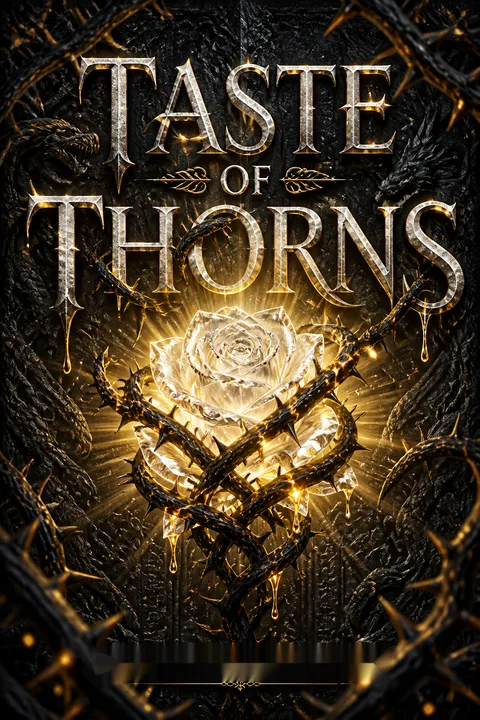
Taste of Thorns is the third book in The Firestone Academy series, receiving overwhelmingly positive reviews. Readers praise the character development, plot twists, and spicy romance. The story follows Briony as she uncovers secrets about her sister's death and develops her newfound powers. Many enjoy the dynamic between Briony and her four love interests, especially the tension with Thorne. The book ends on a cliffhanger that leaves readers eagerly anticipating the next installment.
Characters
Briony Storm
Slate-born light wielderBriony is a young woman from the impoverished Slate Quarter who arrives at the academy carrying grief, old injuries, and little expectation that anyone will protect her. Years of mistreatment have taught her to hide what she knows and to rely on herself, but her sharp skepticism also makes her alert to unfair rules and convenient explanations. She forms close friendships with Fly and Clare, grows attached to the Princes and Professor Fox Tudor, and has a fierce bond with the dragon Blaze. Her awakening light magic complicates her sense of who she is, but does not erase the resourcefulness she developed before discovering it. Briony’s defining drive is to uncover what happened to her sister and prevent others from being discarded as she was.
Fox Tudor
Vampire professor and loverFox is an immortal vampire who teaches at the academy and guards the boundary between his professional obligations and his attachment to Briony. He is observant, controlled, and often cynical about the realm’s official history, partly because he has experienced how institutions can exploit those they claim to protect. His past with Madame Bardin leaves him ashamed of what he became and wary of intimacy, yet Briony’s trust draws him toward honesty and affection. He wants to protect her without taking away her choices, a difficult balance when his position also requires him to report unusual abilities. His loyalty, desire, and secrets pull him in competing directions, making him both a source of knowledge and a person Briony must learn to question.
Beaufort Lincoln
Commanding shadow weaverBeaufort is a powerful shadow weaver, one of the Princes whose authority and confidence make him accustomed to being obeyed. He is protective of Briony and deeply invested in his bond brothers, but his instinct to manage danger often becomes an attempt to manage the people he loves. His visions give him glimpses beyond ordinary knowledge, though they can be painful and difficult to control. Beaufort’s affection for Briony forces him to confront the difference between protecting someone and deciding for her. He is strategic, proud, and capable of tenderness, but his secrecy and entitlement can damage trust even when his motives are loving.
Dray Eros
Playful shifter protectorDray is a shifter and one of Beaufort’s bond brothers, known for irreverence, appetite, and a willingness to turn tension into humor. His playful manner can conceal how seriously he takes loyalty. He is fiercely protective of the people he considers his own, especially Briony and the other men bound to him, and he responds quickly when danger becomes physical. Unlike Beaufort, Dray tends to act before fully considering consequences, which makes him both reassuring and volatile. His warmth helps Briony experience desire without shame, while his candid affection shows that humor need not mean emotional carelessness.
Thorne Cadieux
Guilt-burdened shadow weaverThorne is a formidable shadow weaver whose reserve is often mistaken for arrogance. He is precise, guarded, and deeply affected by a childhood catastrophe for which he holds himself responsible. His gloves help him contain his magic, while his bond brothers provide a connection he struggles to accept as support. Briony’s compassion unsettles his belief that he is useful only as a protector, and their growing intimacy asks him to tolerate closeness without surrendering control. He is more gentle and curious than his severe exterior suggests, with a fondness for books and quiet routines. His central conflict is learning to live with painful memory without treating himself as its permanent punishment.
Blaze
Briony's young dragonBlaze is a fast-growing dragon who hatches from a firestone connected to Briony and makes his home in the forest near the academy. Curious, impulsive, and fiercely loyal, he treats Briony as someone worth following even before she understands how to command him. His affection often takes the form of enthusiastic licking and dramatic displays of fire, which make him both endearing and dangerous. Blaze’s existence links Briony to a nearly forgotten history of dragons and riders, while his growing ability to respond to her suggests their bond may be more than ordinary companionship.
Madame Veronica Bardin
Deputy head with secretsBardin is the academy’s deputy head, a vampire with considerable influence over students and their trials. She is controlled, socially skilled, and accustomed to making her authority feel inevitable. Her attention can appear like mentorship, but her interest in students is difficult to read and carries an edge of threat. Her history with Fox complicates the way she treats Briony, while her closeness to the realm’s leadership gives her actions political weight. Bardin represents the danger of a trusted official whose private motives are hidden behind institutional respectability.
Fly
Briony's outspoken best friendFly is Briony’s loyal friend, quick with jokes and unusually attentive to the social weather of the academy. His humor helps Briony speak about sex, fear, and embarrassment without feeling judged. He is also creative, making clothes and turning an insult painted on Briony’s door into a bold design. Beneath his flamboyance, Fly wants companionship and recognition for talents that the academy does not value. He often acts as the bridge between Briony and the ordinary students around them.
Clare
Thoughtful scholar and friendClare is Briony’s intelligent, careful friend, known for her academic curiosity and habit of testing assumptions before accepting them. She is more cautious than Fly and sometimes misses the emotional force beneath a situation, but she offers Briony thoughtful company and practical help. Her developing relationship with Damian gives her a chance to ask for what she wants rather than waiting for others to infer it. Clare’s skepticism is useful to the group, even when it makes her slower to accept Briony’s suspicions.
Amelia Storm
Briony's lost older sisterAmelia is Briony’s older sister, whose experience at the academy shapes Briony’s grief and her distrust of official explanations. Briony remembers her through fragments, old letters, and the knowledge that Amelia hoped to develop her abilities at the school. Her absence remains central to Briony’s understanding of family and injustice. Amelia’s hopes for the academy become a measure against which Briony judges what the institution claims to offer.
Henrietta Smyte
Unpredictable Onyx studentHenrietta is a powerful shadow weaver whose erratic behavior and sharp appetite for attention make her difficult to predict. She has a long history with Beaufort and a close, complicated attachment to her twin sister. Her confidence can conceal fear of losing status or control, and her choices are shaped by both family expectations and personal ambition. Henrietta is dangerous, but she is not simply a bully; she has loyalties and vulnerabilities that make her an unpredictable player in the academy’s political tensions.
Linette Smyte
Henrietta's guarded twinLinette is Henrietta’s twin sister and an Onyx student who presents herself as aloof and superior to Briony. She is guarded about her place in the academy and wary of becoming entangled in someone else’s conflict. Her relationship with Henrietta shapes how she navigates both social pressure and family expectation. Linette’s polished exterior makes it difficult for other students to see what she fears or what she needs.
Esme Jones
Gifted Granite studentEsme is a talented and well-liked student from Granite Quarter whose intelligence earns the attention of teachers and peers. Her relationship with Naomi gives her life beyond the academy’s points system, while her promising record makes her a figure Briony cannot dismiss as an isolated tragedy. Esme’s story reveals how little control ordinary students have over the narratives told about their safety.
Naomi
Esme's grieving girlfriendNaomi is Esme’s girlfriend, a grieving student who struggles with the academy’s silence about what happened. She carries a half-heart pendant that connects her to Esme and becomes an important witness to the girl’s life. Naomi is cautious about learning painful details, unlike Briony, whose need for answers is relentless. Her grief reminds Briony that seeking truth can help expose wrongdoing, but can also force survivors to revisit what they would rather not know.
Professor Cornelius
A distracted history teacherProfessor Cornelius is an elderly teacher whose hearing device and occasional confusion make students underestimate him. He has spent decades at the academy and remembers patterns that younger staff may overlook. His casual remarks about student deaths give Briony a clue, though he cannot offer a complete explanation. Cornelius embodies the uneasy difference between noticing an institution’s habits and having the authority or clarity to challenge them.
The Empress
Ruler guarding the realmThe Empress rules the realm and is responsible for protecting it from threats inside and beyond its borders. She is composed, perceptive, and accustomed to weighing evidence before acting. Her position makes her both a powerful potential ally and a demanding authority for Briony to face. She values abilities that could strengthen the realm, but her concern for security can place institutional priorities ahead of personal trust.
Kratos Hardy
Ambitious shadow-weaver rivalKratos is one of the Hardie brothers, an arrogant shadow weaver who resents the Princes’ influence. He enjoys attention and presents himself as more formidable than his judgment often proves. His rivalry with Beaufort makes him vulnerable to schemes that promise greater power. Kratos’s bravado hides how much he wants recognition and dominance among the realm’s elite.
Nathan Hardy
Quiet Hardy brotherNathan is one of the Hardy brothers, quieter than Kratos and less eager to dominate a room. He speaks when pressure rises, but his loyalties remain difficult to read. His caution makes him a useful contrast to Kratos’s showmanship.
Prentice Hardy
Third Hardy brotherPrentice is the third Hardy brother, part of the family’s rivalry with the Princes. He tends to follow the group’s lead and becomes involved when their confrontations turn physical. His role underscores how family status can amplify adolescent conflicts into political risks.
Damian
Clare's thoughtful boyfriendDamian is a Granite student who is shy, considerate, and genuinely interested in Clare’s intelligence. He hopes to return to Granite after the academy and worries about whether their futures will align. His willingness to listen helps Clare communicate her needs.
Stanley Chandlers
Briony's hostile former friendStanley is a boy from Briony’s past who once offered her companionship before turning cruel. His contempt for her new status repeats the social rejection she has learned to expect. Briony’s refusal to shrink before him shows how her confidence has changed.
Odessa
Former Slate tormentorOdessa is a former tormentor whose social circle helped make Briony’s life at the academy more dangerous. She represents the everyday cruelty that can thrive under a hierarchy even before the larger conspiracy comes into view.
Muriel
Briony's abusive stepmotherMuriel is Briony’s abusive stepmother, a source of the fear and physical harm Briony carries into the academy. Her presence in Briony’s trial shows how old violence can persist in memory even when its perpetrator is no longer present.
Plot Devices
Lumomancy
Light as defenseLumomancy is the rare ability to wield light, believed to have vanished centuries earlier alongside dragons. Briony first releases it in a moment of desperation, when she sees Thorne attacked by his own shadows. With Fox’s help, she learns to call up a small beam and gradually use it in defense. The power is linked to her protective instincts, but it can exhaust her and does not guarantee victory. In the trial, it illuminates a cave, destroys demons, and lets Briony resist Bardin long enough for help to arrive. Its existence challenges the academy’s history and makes Briony valuable to a realm facing growing danger.
The firestone and Blaze
A bond across generationsA firestone calls to Briony in the forest on the day her sister is buried. Years later, it hatches into Blaze, a young dragon who grows quickly and becomes attached to her. The dragon’s presence links Briony to an older world in which dragons and riders fought alongside shadow weavers and light wielders. Blaze’s fire can be dangerous, but his loyalty repeatedly protects Briony. His ability to carry her into the air makes him more than a secret companion: he becomes a potential ally in a political struggle and a sign that lost powers may be returning.
The academy trials
Fear turned into spectacleThe academy’s trials test students’ abilities and determine their future placement among the realm’s Quarters. The fear trial forces students to confront personal terrors, but its unequal conditions and unexplained manipulation make the scoring suspect. Later trials are designed as competitive spectacles, leaving ordinary students exposed to risks that powerful shadow weavers may better survive. Briony’s high score attracts Bardin’s attention, while the altered fourth trial separates her from the lake crossing she prepared for and sends her into a demon-filled cave. The trials thus measure students while also concealing the choices made by those who design them.
Fated-mate marks
Destiny made visibleThe Princes and Fox believe Briony is their fated mate, a bond that intensifies their protective instincts and draws their magic toward her. Markings appear on Beaufort’s and Thorne’s wrists, while Dray remains frustrated by the absence of his own visible sign. The bond offers Briony affection and a sense of belonging she has rarely known, but it also risks being used to justify control. Her insistence on making her own choices keeps destiny from becoming an excuse for the men to decide her future.
The red rifts
A breach beyond the realmA tear in the air appears when Bardin escapes from the cave and again near the lake where Fox’s ring is found. The openings reveal a connection to the demon realm, a territory the academy and its guardians are meant to keep beyond the borders. Their appearance turns the investigation into a broader security crisis. The rifts can pull people toward them and seem to permit movement between realms, but the book leaves their rules and the identity of anyone who crosses them uncertain.
About the Author
Other books by Hannah Haze



Download PDF
Download EPUB
.epub digital book format is ideal for reading ebooks on phones, tablets, and e-readers.








