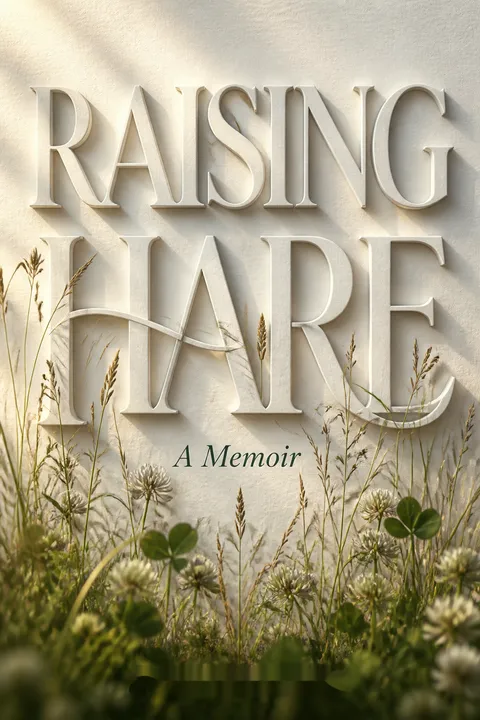


Key Takeaways
One rescued leveret unsettled a crisis-driven life more than any career plan.
An unlikely beginning. During a bitter February in the English countryside, political adviser Chloe Dalton found a tiny leveret, or young hare, on a track after hearing a dog nearby. Unsure whether its mother would return, she first left it alone, then brought it home when it remained exposed for hours. A conservationist warned that it might die and that hares could not be domesticated. Dalton had no experience raising one, but the pandemic had already interrupted her restless, work-centered life, and she decided to try.
A new daily rhythm. The hare needed feeding, quiet, and careful observation. Caring for it gradually redirected Dalton’s attention from political crises and travel toward the barn, garden, and surrounding fields. The animal did not offer advice or affection on human terms. Its presence alone changed what filled her days.
What's striking is how attention becomes the engine of change. Environmental psychology’s attention-restoration theory suggests that natural settings can help replenish the capacity for sustained focus, especially after demanding work. Dalton’s experience gives that broad idea a more intimate shape: the hare’s needs interrupt a life organized around urgency and make small, repeated acts matter. The account is not evidence that nature cures burnout, and the rescue itself was risky. Its sharper lesson is that an unexpected responsibility can expose how little room a supposedly successful routine leaves for anything beyond work.
Care for wild animals by protecting their freedom, not claiming them.
Care without possession. Dalton initially followed online advice to keep the young hare in a pen. She soon noticed urine and droppings accumulating there, and abandoned the enclosure. The hare’s behavior changed once it could move freely through the house and garden. It ignored a wooden hutch because the enclosed space blocked its view, a poor arrangement for an animal that survives by watching for danger.
Freedom with boundaries. Dalton kept the doors open and let the hare choose when to go outside, while still providing milk, food, and shelter when needed. It began crossing the garden wall into the fields, then returning to the house. This was not a pet-learning routine. The hare retained its own instincts and could leave whenever it chose. Dalton came to see that the best human care was limited, attentive, and temporary.
The distinction between care and control connects this memoir to animal-welfare debates about agency: an animal’s wellbeing includes some ability to choose its surroundings and behavior, not merely protection from immediate harm. The hare’s return suggests that freedom and familiarity can coexist without turning a wild animal into a possession. But the story should not be mistaken for a general rescue protocol. The author began without expertise, and her improvised care carried real risks. The useful principle is not to keep wild animals at home, but to recognize when human intervention is necessary, seek qualified guidance, and avoid confusing affection with ownership.
A hare’s stillness is camouflage, not proof that danger has passed.
Built to disappear. A leveret is born with fur and open eyes, but for its first weeks it cannot outrun most threats. Its safest response is often to freeze. Hares use cryptic behaviour, meaning concealment that makes an animal harder to detect. Their counter-shading, with a pale underside and darker back, disrupts the body’s outline and shadow. The leveret could vanish against grass or carpet even when Dalton knew it was nearby.
A fragile advantage. The hare’s ability to hide is effective against some predators, but it can fail against people and machines. The book reports that only about a quarter of leverets reach adulthood, and cites farming activity as a major cause of their deaths. Harvest equipment can injure or kill an animal that remains motionless rather than fleeing. Stillness, in other words, is a survival strategy shaped for a different kind of danger.
This is a vivid example of how an adaptation can become a liability when the environment changes faster than behavior can. Camouflage helps a hare evade predators that search visually, but it offers little protection from a machine that cuts through a field regardless of what is hidden there. The same pattern appears in human systems: a strategy that works under familiar conditions can fail when the threat changes. The memoir’s account also encourages caution in interpreting apparent calm. An animal that does not move may be frightened, not comfortable, and may need space rather than contact.
Observe an animal’s routines before assigning human motives to its behavior.
A life of small patterns. Dalton learned that the hare returned to familiar resting places, favored clear views, and used predictable routes around the garden. Its resting hollow, called a form, is a shallow depression where a hare lies concealed. Hares are crepuscular, meaning they are most active around dawn, dusk, and at night. Dalton had initially disrupted this rhythm by waking the young hare for daytime outings.
A changed landscape. When Dalton removed a sofa, the hare avoided the room for days. She first treated its reaction as fussiness, then considered that the furniture change had altered a familiar part of its environment. Watching closely revealed not a pet’s preferences but an animal responding to the safety and predictability of its surroundings. She also began to notice repeated movements and habits among other wildlife that she had previously overlooked.
The memoir models a useful discipline from behavioral science: describe what an animal does before deciding what it means. Repeated observation can reveal patterns that a quick glance misses, while also exposing the limits of human interpretation. The sofa episode is suggestive, not proof that the hare understood the room as a home in the human sense. That distinction matters. Anthropomorphism can make animal behavior emotionally legible, but it can also replace observation with projection. Dalton’s strongest insights come when she treats her explanations as hypotheses rather than certain access to the hare’s inner life.
A hare needs connected territory, not merely a safe garden.
Room to live. A hare’s home range is the area it uses for food, shelter, breeding, and safety. The book gives an average range of about 21 to 190 hectares, and notes that hares may cover 15 to 20 kilometres at night while foraging. Dalton began to see that her garden was only one small part of a much larger landscape. Roads, walls, and fences can obstruct movement, separate animals, and expose them to traffic.
A shrinking habitat. British hare numbers have fallen by more than 80 percent over the past century, according to the conservation information Dalton encountered. Intensive farming, removed hedgerows, and fewer uncultivated margins reduce food and cover while increasing danger. A safe patch is not enough if it cannot connect to other places where an animal can feed, find mates, and escape threats.
The home-range idea shifts conservation from protecting isolated patches to maintaining connections between them. In landscape ecology, habitat corridors matter because species need to move between resources and populations; a green space can be valuable yet functionally cut off. Dalton’s hare makes that abstraction concrete. A garden wall provides shelter while also creating a barrier the animal must negotiate. Connectivity is not automatically beneficial, since routes may expose animals to roads or predators, but the broader point stands: habitat quality depends on what lies beyond a property line.
Wild motherhood is watchful and deliberate, not the neglect folklore assumes.
Care at a distance. When the hare had her first litter in Dalton’s garden, she kept the newborns hidden separately and fed them at dusk. Dalton later watched her chase leverets back into cover and confront crows that came too close. The young were not constantly beside their mother, but that distance helped keep them concealed. What looked like absence could be a protective strategy.
Unexpected trust. In a later spring, the hare gave birth to two leverets behind a curtain in Dalton’s office. She returned several times each night to nurse them, then hid them again. One had weak hind legs, but the mother continued caring for both. Dalton also learned about superfetation, the rare occurrence of overlapping pregnancies in which a hare carries developing young at different stages. The hare’s reproductive life proved more complex than simple claims about solitary animals suggested.
The story challenges a familiar error in interpreting animal care: measuring it by human standards of constant proximity. For a prey species, concealment can be a form of parental care, and brief, carefully timed feeding may reduce the chance that predators find the young. Dalton’s observations also show how one animal’s behavior can complicate broad generalizations without disproving them. A single unusually close view cannot establish that all hares behave this way. It can, however, identify where received descriptions may be too simple and invite better observation.
Harvest efficiency can conceal a lethal cost when machinery ignores wildlife.
A field transformed. After a young leveret died for reasons Dalton could not determine, potato-harvesting machines worked the neighboring field. The next day, she found a juvenile hare crushed in the soil and another injured and struggling to move. Nearby, an adult hare had been killed, and a buzzard was found with a badly broken wing. The machines were designed to collect crops quickly, not to detect or avoid animals hidden among them.
Costs beyond the crop. Dalton saw the scene as part of a wider pattern: modern machinery, frequent cutting, and the removal of hedges can make farmland dangerous for wildlife. The following autumn, neighboring landowners converted fields to organic farming and added wide wildflower margins. These measures could offer more food and cover, though they could not guarantee survival.
This is an account of an externality: the ecological damage of production that is not reflected in the immediate price or efficiency of a harvest. The machines succeed on their own terms, while the harm to hares, birds, and other animals remains outside the calculation. That framing points beyond individual kindness toward changes in technology, timing, and land management. At the same time, farming is not simply a contest between nature and human need. Food production has real constraints. The harder question is how to make wildlife costs visible enough that practical safeguards become part of efficiency rather than an afterthought.
Treat mystery as an invitation to observe, not a license to project.
A creature of contradictions. Across folklore and literature, hares appear as sacred beings, witches’ companions, omens of bad luck, symbols of fertility, and figures of foolishness or madness. Dalton found these stories alongside scientific accounts of hares’ unusual reproduction and their ability to evade hunters. The animal’s nocturnal habits, silence, speed, and sudden appearances may help explain why people have read so many incompatible meanings into it.
What remains unknown. Living beside the hare did not make Dalton certain of its thoughts. She avoided naming it or treating it as a pet, and accepted that much of its life beyond the wall would remain hidden. The animal could seem calm and trusting near the house while still belonging to the wild. The memoir holds both facts together: intimacy can deepen attention without dissolving the boundary between species.
The hare’s competing symbolic roles reveal as much about human culture as about the animal. People often turn what they cannot readily explain into a symbol, then mistake the symbol for knowledge. Dalton’s restraint offers a useful alternative: curiosity can coexist with uncertainty. This is not a demand to strip nature of meaning. Stories can help people care about animals, but care becomes ethically stronger when it remains answerable to observation and evidence. The memoir’s most persuasive stance is neither sentimental certainty nor cold detachment, but affection that leaves room for what cannot be known.
Repair the everyday margins that farming and building have stripped from wildlife.
Small acts of repair. The hare drew Dalton into gardening and land stewardship. She and neighboring landowners planted nearly a thousand native hedge saplings, restored a pond, and added wildflower margins around fields. Dalton also stopped cutting some long grass and nettles after learning that they fed or sheltered insects, birds, and hares. These were modest interventions, but they changed the patch of land wildlife could use.
A different measure of value. The work grew from noticing what had vanished: hedgerows, ponds, varied plants, and quiet places to hide. The hare had once seemed like a dependent visitor. Over time, Dalton understood that it needed little from her beyond room and the chance to live without unnecessary disturbance. Her own priorities shifted too, away from constant travel and toward caring for the place immediately around her.
Restoration often begins not with grand wilderness projects but with small decisions about edges: leaving a margin unmown, keeping a hedge, or restoring a pond. Such changes can support multiple species because different plants and structures provide food, shelter, and movement routes. They are not a substitute for protecting larger habitats or addressing damaging agricultural incentives. Their value is practical and civic: they make stewardship visible in ordinary land use. Dalton’s transformation is especially compelling because care for the hare becomes care for a whole community of organisms, not a private effort to keep one animal close.
Analysis
Raising Hare is a memoir shaped by encounter rather than argument. Its narrative begins with an uncertain rescue, follows the hare from helpless leveret to adult and mother, and widens from one house to the surrounding agricultural landscape. That structure lets readers feel how knowledge accumulates: through feeding mistakes, repeated observation, library research, and attention to the animal’s chosen routines. The hare is not merely a symbol for Dalton’s personal change. Its distinct biology, vulnerability, and freedom repeatedly resist being reduced to a human lesson.
The book’s strongest ethical insight is that closeness need not mean ownership. Dalton is attached to the hare, yet she tries not to turn it into a pet or claim complete understanding of it. Her approach is imperfect by her own account, which gives the memoir useful tension. A wild animal depends on her early care, then moves beyond her reach. The limits of her knowledge are part of the story, not a defect to be solved.
The book also moves from intimate observation to structural critique. A garden can offer refuge, but it cannot protect wildlife from every road, predator, or harvesting machine. The scenes of agricultural damage make clear that individual compassion has limits when land use is organized around speed and yield. Habitat margins and restored features are presented as possible repairs, not a complete answer to the competing demands of food production and conservation.
One caution is important: this is a record of one unusual relationship, not a dependable guide to raising hares or a universal account of hare behavior. Dalton’s interpretations are sometimes necessarily tentative, and the memoir is strongest when it preserves that uncertainty. Its lasting contribution is a change in scale. The reader begins with one small animal and ends noticing how ordinary routines, buildings, fields, and work habits shape the lives that share them.
People Also Read







Glossary
Leveret
young hareA young hare is called a leveret. Unlike newborn rabbits, leverets arrive with fur and open eyes, and they are hidden in shallow resting places rather than raised inside underground burrows. They are vulnerable when very young and rely heavily on concealment until they can move quickly enough to escape danger.
Form
hare’s resting hollowA form is the shallow depression in grass or other cover where a hare rests. It is not a permanent burrow. Hares use these exposed resting places while remaining alert to their surroundings, relying on camouflage and stillness rather than the underground refuge used by rabbits.
Cryptic behaviour
concealment from detectionCryptic behaviour describes actions that make an animal harder for predators to detect. In the memoir, a hare’s stillness, choice of cover, and camouflage help conceal it in the landscape. This strategy can be effective against predators that search visually, but may leave the animal at risk when people or machinery approach.
Counter-shading
concealing body shadingCounter-shading is a coloration pattern in which an animal’s underside is lighter than its back. Because ordinary light and shadow can make a body look three-dimensional, this reversed shading can blur the animal’s outline. The hare’s pale underside and darker back help it blend into its surroundings.
Home range
area used for survivalA home range is the area an animal regularly uses to find food, shelter, mates, and safety. It is not necessarily defended as exclusive territory. The memoir describes hare home ranges as potentially extensive, making roads, fences, and lost hedgerows consequential obstacles to movement and survival.
Superfetation
overlapping pregnanciesSuperfetation is the development of a second pregnancy while an earlier pregnancy is already underway. The memoir describes it as a reproductive phenomenon observed in hares, allowing young at different stages of development to be carried at the same time. Its frequency and biological mechanism remain uncertain in the research discussed.
Crepuscular
active at twilightCrepuscular animals are most active around dawn and dusk, often extending their activity into the night. Hares’ timing can help them avoid some predators and human disturbance. Recognizing this rhythm helped Dalton understand that taking the young hare outdoors during daylight could interrupt its natural pattern of rest.
Download PDF
Download EPUB
.epub digital book format is ideal for reading ebooks on phones, tablets, and e-readers.








