

Key Takeaways
Practice philosophy in the life you have, not the life you wish for
A working philosophy. Marcus Aurelius did not write a polished treatise for readers. He wrote private reminders while governing Rome through war and plague, trying to live by principles under pressure. The point is not to wait for quiet, perfect conditions before becoming thoughtful. Daily responsibilities, difficult relationships, and illness are where philosophical practice becomes real.
Practice, not performance. Marcus learned from teachers whose character mattered as much as their arguments. He admired self-command, fairness, plain speech, and the ability to keep teaching without impatience. For him, philosophy meant repeatedly examining his conduct and returning to the work of living well, not collecting impressive ideas or adopting a public identity as a sage.
What's striking is how this makes philosophy resemble a practiced skill rather than a body of opinions. A musician does not wait for a concert to rehearse; Marcus treats ordinary decisions as the rehearsal itself. That approach is useful because ideals become visible in small choices, such as whether to listen carefully or answer an insult with restraint. It also guards against a familiar failure: using abstract wisdom to feel superior while behaving poorly. Yet relentless self-monitoring can become punishing. The practical test is whether reflection helps someone act more clearly and humanely, not whether it produces an immaculate inner life.
Treat your first impression as a hypothesis, not a verdict
Pause before assent. An impression is the first appearance of something to the mind, such as the thought that a colleague's silence signals hostility. Marcus urges himself not to accept that interpretation automatically. Separate what is directly known from the story added to it: someone was silent; their motive is still uncertain. This pause creates room to choose a response rather than simply obey a reaction.
Examine the source. Marcus draws on Epictetus, who advises inspecting an impression before agreeing with it. This is not a demand to deny pain or pretend that wrongdoing is harmless. It is a way to avoid turning incomplete information into certainty, anger, or fear. If another person speaks badly of you, the report itself does not prove that you have been harmed or that retaliation is wise.
This resembles cognitive reappraisal, the psychological practice of reconsidering an interpretation before responding emotionally. The resemblance is practical: both approaches distinguish an event from the meaning assigned to it. That distinction can reduce needless escalation in conflict, especially when evidence is ambiguous. It also supports intellectual humility, since people routinely mistake confidence for accuracy. The caution is that some impressions are based on repeated, reliable evidence, and constant doubt can become indecision. The useful discipline is not to distrust every perception, but to ask what is observed, what is inferred, and what evidence would change the conclusion.
Change the judgment you control before trying to command events
Locate the point of leverage. Marcus distinguishes events from our judgments about them. Illness, insult, loss, and other people's choices may be outside a person's command; the interpretation placed on them is more directly one's own. This does not make external events imaginary. It means that an event alone does not dictate whether someone acts unjustly, panics, or abandons their responsibilities.
Return to the present choice. Marcus repeatedly tells himself to clear away judgments that add unnecessary suffering, then act well in the situation that remains. His image of retreat is inward: a person can pause, regain perspective, and return to public duties without needing to flee to a quiet landscape. The aim is not withdrawal from life, but freedom from being dragged around by every passing reaction.
The distinction between circumstances and appraisal is one reason Stoic thought has influenced modern cognitive therapies. It gives people a point of agency even when they cannot control outcomes. But the idea becomes distorted if it implies that suffering is merely a bad attitude or that injustice should be passively accepted. Marcus pairs inner composure with duties to other people, so self-command should support action, not excuse inaction. A helpful question is whether changing an interpretation clarifies the next responsible step. If it instead silences a legitimate grievance or minimizes harm, the reappraisal has become avoidance.
Use inner freedom to serve the human community
Reason is social. Marcus does not treat self-command as permission to ignore others. He argues that human beings are made for cooperation, much as parts of a body perform different tasks within one organism. Reason is shared, he says, so humanity forms a wider community than any city or empire. Justice, kindness, and useful work are therefore not optional extras to private peace; they express what a human being is for.
Act within your role. Marcus reminds himself to complete the task in front of him with care and fairness, without being distracted by status, resentment, or speculation about other people's motives. He also warns against severing oneself from others through hatred. When someone obstructs a task, circumstances may change the means, but they do not erase the duty to act decently.
This is a valuable correction to the caricature of Stoicism as emotional self-sufficiency. Marcus's ideal of independence is compatible with obligation because the self is understood as part of a social whole. That connection resonates with contemporary accounts of well-being that emphasize relationships, contribution, and belonging, rather than pleasure alone. Still, communal duty can be invoked to demand sacrifice from individuals, especially by powerful institutions. The test is reciprocal: does a duty serve a genuinely shared good, and are the people assigning it also accountable? Inner freedom should help a person serve wisely, not make exploitation easier to justify.
Expect human error, then teach or tolerate without becoming cruel
Prepare for difficult people. Marcus begins his day by reminding himself that he will meet people who are selfish, dishonest, or difficult. His response is not to approve of their conduct, but to remember that people often act badly because they misunderstand what is good. He sees a kinship between himself and them, and argues that cooperation is more natural than hostility.
Correct without contempt. When someone is mistaken, Marcus recommends teaching them if possible and otherwise bearing the difficulty patiently. He also asks himself to examine his own errors before condemning another person's. This is not an instruction to tolerate every harm without limit. It is a warning against adding hatred to an already bad situation, or expecting the world to contain no foolishness, deceit, or conflict.
The move from condemnation to explanation is closely related to restorative approaches to conflict, which ask what conditions and misunderstandings produced harmful behavior while still taking the harm seriously. It can make correction more effective because humiliation often makes people defensive. Marcus's insistence on self-examination also counters the asymmetry by which people notice others' flaws more readily than their own. The nuance is important: understanding why someone acts badly does not remove responsibility or the need for boundaries. Compassion works best when paired with clear standards, protection for those at risk, and consequences proportionate to the conduct.
Let good action be its own reward, not a bid for applause
Choose the inner measure. Marcus distrusts fame, wealth, pleasure, and public approval as foundations for a good life because they depend on forces outside a person's command. Reputation is especially fragile: the people who praise someone will die, and the memory they pass on will fade. Good action, by contrast, is complete in its own right. A person need not receive praise or payment to have acted justly.
Practice without advertising. Marcus values honest conduct, self-restraint, and fairness over ceremonial display or polished moral talk. He even warns against announcing one's own straightforwardness, since character is better shown in conduct than declared in advance. His question is not whether the crowd approves, but whether an action fits the responsibilities of a rational, social human being.
This challenges the tendency to confuse visibility with value. In workplaces and online spaces, measurable recognition can crowd out contributions whose benefits are diffuse or delayed. Marcus offers an internal standard that makes action less dependent on audience response. At the same time, public recognition can expose injustice, reward expertise, and sustain collective effort. The point is not that praise is always corrupting, but that it is an unreliable definition of goodness. A useful distinction is whether recognition helps a community notice valuable work or becomes the reason the work is done.
Remember death to shrink distractions, not your responsibilities
Time is narrow. Marcus repeatedly considers how brief a human life is and how quickly both fame and memory disappear. He uses this perspective to question wasted effort: Why spend the present chasing lasting applause, worrying about distant uncertainties, or resenting what cannot be changed? The reminder is meant to concentrate attention on the task and conduct available now.
Mortality is natural. Marcus compares death with other processes of change, rather than treating it as a unique cosmic injustice. He asks himself to meet the end without confusing it with moral failure. This view does not make grief unreal or deny the importance of relationships. It puts impermanence in the frame so that fear of losing life does not prevent a person from living it justly.
Mortality awareness can clarify priorities because it exposes how much energy goes to status contests and imagined future control. It also gives urgency to care: finite time makes relationships and obligations more, not less, consequential. The risk is that repeated reminders of death can become emotionally numbing, particularly for people facing fresh bereavement or danger. Marcus's approach is strongest when impermanence functions as a lens for choosing well, rather than as an argument that nothing matters. A short life is not a reason to detach from others; it is a reason to attend to them while there is time.
Turn obstacles into material for the next right action
Adapt without surrendering principle. Marcus compares a resilient mind to a fire that can use what is thrown onto it as fuel. The practical claim is not that every setback is secretly pleasant, but that an obstacle need not end the effort to act well. If a plan is blocked, another just and useful action may still be possible.
Separate outcome from conduct. A person may be unable to secure a desired result, yet still choose patience, honesty, or courage in response. Marcus says a task can remain morally complete even when external circumstances prevent its intended outcome. He also treats hardship as compatible with human nature: pain or illness may be difficult, but they do not automatically make a person unjust or cowardly.
This is a compact theory of adaptive agency: preserve the goal's ethical core while changing the route. It resembles problem-solving approaches used in high-stress professions, where teams distinguish mission from method and revise plans when conditions shift. Such flexibility is more realistic than demanding perfect control. Still, not every obstacle should be reframed as an opportunity. Some barriers are preventable, unjust, or evidence that a goal needs to change. Resilience should preserve the capacity to respond, while honest assessment determines whether persistence, repair, protest, or withdrawal is the right response.
Rehearse a few guiding principles until they are ready under pressure
Keep the rules usable. Marcus returns to a compact set of reminders: examine impressions, do the present task well, treat others justly, accept what cannot be changed, and remember life's brevity. He does not present them as slogans to memorize once. He repeatedly tests them against anger, fatigue, illness, ambition, and the duties of ruling.
Practice makes recall possible. Marcus compares principles to tools kept close at hand for urgent work. His own writing is part of that preparation: brief, repeated self-correction designed to bring attention back when it wanders. He advises returning to sound principles after failure without treating philosophy as a punishment. The goal is a dependable habit of judgment, not flawless performance or a dramatic transformation overnight.
The method anticipates what learning science calls retrieval practice: recalling an idea in varied situations can make it more available when needed. Marcus's repetitions also reveal that insight alone does not reliably govern behavior; attention must be renewed, especially under stress. A modern application is to choose a small number of principles and review them against actual decisions, rather than collect an endless inventory of maxims. There is a limitation: rehearsed rules can become rigid if circumstances are ignored. The best principles function as prompts for judgment, not automatic scripts that replace it.
Analysis
The enduring force of Marcus Aurelius lies less in a novel doctrine than in the form of the work: a powerful ruler repeatedly correcting himself in private. The historical frame matters. Marcus governed amid military campaigns, a devastating plague, political demands, and personal losses. The Meditations is therefore not a detached handbook written from a life of ease. It is a record of philosophy being used as an instrument of attention under pressure. Its central movement is from impression to judgment, from judgment to choice, and from choice to conduct. This sequence gives the text its psychological practicality. A person cannot command every event, but can examine the meaning assigned to it and decide how to act. Crucially, Marcus does not make this inner freedom purely individual. Human beings share reason and belong to a moral community, so self-command is supposed to make justice and cooperation more possible. That social dimension distinguishes his ideal from mere emotional invulnerability. The text also contains a metaphysical confidence in cosmic order and providence that readers need not accept wholesale to use its ethical exercises. Its strongest claims concern the discipline of judgment, attention to present duties, and refusal to make approval the measure of worth. Its weaker or more contestable implication is that a person can always preserve freedom by changing judgment. Trauma, illness, coercion, and social injustice can constrain agency in profound ways. Reading Marcus well means treating his counsel as a practice for recovering agency where possible, not as a verdict that those who suffer have failed to think correctly. The book's great invitation is modest but demanding: stop outsourcing the quality of a life to fortune, reputation, or other people's behavior, and examine how the next action can be made more just.
Review Summary
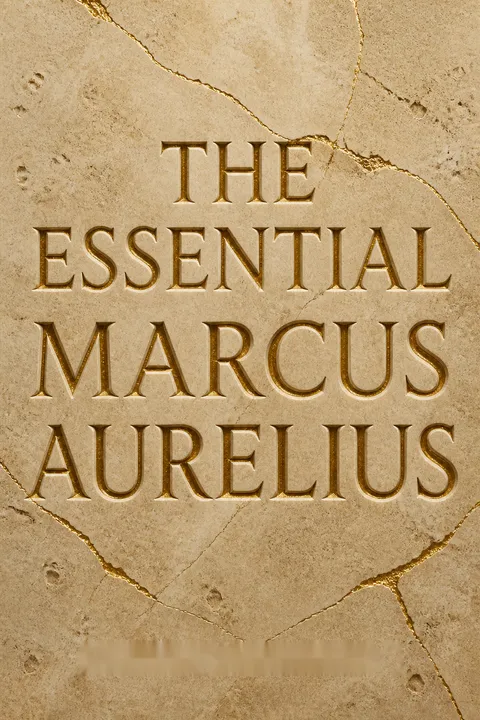
The Essential Marcus Aurelius is widely praised as a timeless and insightful collection of Stoic philosophy. Readers appreciate its practical wisdom, finding it applicable to modern life despite being written centuries ago. Many view it as a profound self-help book, offering guidance on virtue, resilience, and inner peace. The translation is commended for its clarity and accessibility. While some find it repetitive, most consider it a valuable resource for personal growth and reflection, recommending regular re-reading to fully absorb its teachings.
People Also Read








Glossary
COSMOS
Ordered universeThe whole universe, understood not merely as physical space but as an ordered and interconnected reality. Marcus often treats it as governed by Reason and uses the related term Whole. Seeing oneself as part of the Cosmos places personal events within a larger order and supports his claims about acceptance, kinship, and shared human obligations.
NATURE
A being's order and functionNature refers both to what a thing is and to the order that produces and sustains living things. For a human being, living according to Nature means using reason, acting justly, and cooperating with others. Universal Nature refers to the larger ordering force of the Cosmos, which Marcus sees as the source and context of individual life.
REASON (logos)
Ordering principleLogos can mean reason, cause, discourse, or account. In Marcus's writing it often names the rational principle that orders the Cosmos, while also referring to the human capacity to judge and choose well. Human Reason is understood as related to the universal order, giving people both the ability and the responsibility to act rationally and socially.
GUIDING-PART, GOVERNING PART (hêgêmonikon)
Rational ruling facultyThe guiding-part is the rational center of a person that assesses impressions and directs action. In the philosophical psychology described by the book, a person is well ordered when this faculty governs appetites and impulses rather than serving them. Marcus's repeated instruction to protect or recollect this part means maintaining sound judgment and deliberate conduct.
IMPRESSION, IMAGINING (phantasia)
Initial mental appearanceAn impression is an appearance or thought presented to the mind, arising from sensory experience, emotion, or internal reflection. It is not automatically true merely because it feels compelling. In Stoic practice, a person examines an impression before assenting to its interpretation, creating space between what appears to happen and the judgment formed about it.
JUDGMENT (hupolêpsis)
Assessment of an impressionJudgment is the mind's assessment of an impression, including the conclusions it draws about whether something is good, bad, harmful, or desirable. Marcus holds that many disturbances grow from these assessments rather than from events alone. Examining and revising a judgment is a central means of preserving inner freedom and choosing a just response.
PRINCIPLE (dogma)
Practiced guiding beliefA principle, or dogma, is not simply a rigid doctrine accepted on authority. In this text, it is a guiding idea to be repeatedly considered, tested, and enacted in daily life. Marcus uses short principles as practical reminders, such as attending to present duties and distinguishing one's choices from events beyond one's control.
EXCELLENCE (aretê)
Fulfilling one's proper functionAretê is commonly translated as virtue, but its meaning also includes performing a function well. A tool has excellence when it works as it should; a human being displays excellence by fulfilling human capacities, especially reason, justice, self-control, and social concern. The term therefore joins moral goodness with the development of one's characteristic abilities.
INDEPENDENCE (eleutheria)
Freedom of judgmentMarcus's independence is primarily inner freedom, not freedom from every external limit. It means maintaining the capacity to judge and act well even when circumstances, other people's conduct, or social status cannot be controlled. This freedom depends on disciplined attention and should support responsible action rather than withdrawal from obligations.
SPIRIT (daimon)
Inner divine guideThe Greek term daimon refers here to an inner guiding presence, not the later, purely negative sense associated with the English word demon. Marcus describes this spirit as a divine element within each person that can direct conduct toward Reason and goodness. Attending to it means guarding one's capacity for truthful judgment and ethical action.
FAQ
What is "The Essential Marcus Aurelius" by Marcus Aurelius about?
- Meditations and Philosophy: The book is a curated translation of Marcus Aurelius’ Meditations, a series of personal philosophical reflections written by the Roman emperor for his own self-examination and guidance.
- Stoic Wisdom: It presents the core tenets of Stoic philosophy, focusing on self-mastery, virtue, acceptance of fate, and the cultivation of inner freedom.
- Practical Guidance: The text is intended as a practical manual for living a good life, especially in the face of adversity, uncertainty, and the challenges of leadership.
- Universal Relevance: Though rooted in ancient Rome, the book’s themes—such as resilience, justice, and the search for meaning—are presented as universally applicable to people in all walks of life.
Why should I read "The Essential Marcus Aurelius" by Marcus Aurelius?
- Timeless Self-Help: The book offers enduring advice on how to handle life’s difficulties, disappointments, and temptations with dignity and composure.
- Inner Strength and Clarity: Readers gain tools for cultivating inner strength, self-respect, and a sense of purpose, regardless of external circumstances.
- Philosophical Depth: It provides a unique window into the mind of a philosopher-king, blending metaphysical insight with practical wisdom.
- Personal Transformation: The meditations encourage readers to develop a conscious relationship with their own minds, fostering self-awareness and intentional living.
What are the key takeaways from "The Essential Marcus Aurelius" by Marcus Aurelius?
- Control What You Can: Focus on what is within your control—your thoughts, actions, and judgments—while accepting what is not.
- Live According to Nature: Strive to live in harmony with your own nature and the greater order of the universe, acting justly and rationally.
- Practice Inner Freedom: True freedom comes from mastering your reactions and desires, not from external circumstances.
- Community and Duty: Human beings are made for cooperation; fulfilling your role in society with kindness and justice is central to Stoic ethics.
Who was Marcus Aurelius, and what is his significance in "The Essential Marcus Aurelius"?
- Roman Emperor and Philosopher: Marcus Aurelius (AD 121–180) was a Roman emperor renowned for his wisdom, leadership, and commitment to philosophy.
- Stoic Practitioner: He is considered one of the most important Stoic philosophers, embodying the principles he wrote about in his own life and rule.
- Personal Reflections: The Meditations were written as private notes, not for publication, offering a rare, intimate look at the inner struggles and aspirations of a powerful leader.
- Historical Context: His reign was marked by war and plague, making his meditations on resilience and virtue especially poignant.
What is Stoicism, and how is it presented in "The Essential Marcus Aurelius" by Marcus Aurelius?
- Ancient Philosophy: Stoicism is a school of philosophy founded in Athens by Zeno of Citium, emphasizing rationality, virtue, and acceptance of fate.
- Key Concepts: The book highlights Stoic ideas such as living in accordance with nature, distinguishing between what is and isn’t in our control, and cultivating indifference to external events.
- Practical Application: Marcus Aurelius’ writings focus less on abstract theory and more on daily practice—how to embody Stoic principles in real life.
- Influence of Other Stoics: The text draws on the teachings of earlier Stoics like Epictetus and Seneca, adapting them to Marcus’ own experiences.
How does "The Essential Marcus Aurelius" by Marcus Aurelius define and advise on the concept of the "ruling part" or "guiding part" of the soul?
- Inner Ruler: The "ruling part" (hêgêmonikon) refers to the rational, decision-making aspect of the soul, which should govern thoughts and actions.
- Source of Freedom: Marcus emphasizes that harm cannot come from outside, only from the judgments made by this inner part.
- Self-Mastery: The book advises constant vigilance over the ruling part, ensuring it remains aligned with reason, justice, and nature.
- Practical Exercises: Readers are encouraged to step back, examine their impressions, and maintain the integrity of their guiding principle in all circumstances.
What practical advice does "The Essential Marcus Aurelius" by Marcus Aurelius offer for dealing with adversity and suffering?
- Accept What Happens: View challenges as natural processes, prescribed by the universe, and respond with acceptance rather than resistance.
- Transform Obstacles: Use difficulties as opportunities to practice virtue, turning obstacles into fuel for personal growth.
- Endure with Dignity: Maintain composure and self-control, focusing on what is within your power even in pain, loss, or hardship.
- Perspective on Death: Recognize the brevity of life and the inevitability of death, using this awareness to prioritize what truly matters.
How does "The Essential Marcus Aurelius" by Marcus Aurelius address the relationship between the individual and society?
- Communal Nature: Marcus asserts that humans are made for cooperation and that fulfilling one’s role in society is essential to living rightly.
- Justice and Kindness: The book repeatedly urges acting justly, tolerating others’ faults, and contributing to the common good.
- Universal Brotherhood: There is an emphasis on the kinship of all rational beings, transcending divisions of class, nation, or status.
- Duty Over Recognition: Actions should be motivated by duty and virtue, not by the desire for praise or external reward.
What are the most important concepts and terms explained in "The Essential Marcus Aurelius" by Marcus Aurelius?
- Nature (phusis): Both the inner nature of a person and the universal order; living in accordance with nature is central.
- Reason (logos): The rational principle that orders the cosmos and should guide human life.
- Impressions (phantasia): The initial perceptions or thoughts we receive, which must be examined before accepting or acting on them.
- Virtue/Excellence (aretê): Fulfilling one’s function as a human being through justice, self-control, courage, and wisdom.
- The Ruling Part (hêgêmonikon): The rational, governing aspect of the soul responsible for judgment and action.
What is the structure and style of "The Essential Marcus Aurelius" by Marcus Aurelius?
- Meditative Format: The book is organized into short, numbered passages or meditations, often written as reminders or exhortations to himself.
- Non-Systematic: The text is not a systematic treatise but a collection of personal notes, sometimes repetitive or fragmentary.
- Greek Language: Originally written in Greek, the language of philosophy at the time, even though Marcus was a Roman emperor.
- Modern Translation: This edition selects and translates key passages, aiming for accessibility while preserving the depth and nuance of the original.
What are some of the best quotes from "The Essential Marcus Aurelius" by Marcus Aurelius, and what do they mean?
- “Begin each day by saying to yourself: Today I am going to encounter people who are ungrateful, arrogant, deceitful, envious, and hostile…” (2.1): Prepare your mind for adversity and respond with understanding, not anger.
- “The noblest way of taking revenge on others is by refusing to become like them.” (6.6): Maintain your own virtue regardless of others’ actions.
- “Do not live as if you still have ten thousand years left. Your fate hangs over you.” (4.17): Live with urgency and purpose, aware of life’s brevity.
- “The person who loves reputation supposes that his own good depends on the activities of others; the lover of pleasure finds his own good in being affected by his emotions. But the person who has Intelligence understands the good to be in his own actions.” (6.51): True happiness comes from your own actions, not from external validation or pleasure.
How can readers apply the teachings of "The Essential Marcus Aurelius" by Marcus Aurelius to modern life?
- Mindful Self-Examination: Regularly reflect on your thoughts, motives, and actions, striving for self-improvement and integrity.
- Emotional Resilience: Practice distinguishing between what you can and cannot control, letting go of anxiety over external events.
- Ethical Living: Prioritize justice, kindness, and duty in your interactions, both personally and professionally.
- Acceptance and Adaptability: Embrace change and uncertainty as natural, using them as opportunities for growth and wisdom.
About the Author

Download PDF
Download EPUB
.epub digital book format is ideal for reading ebooks on phones, tablets, and e-readers.








