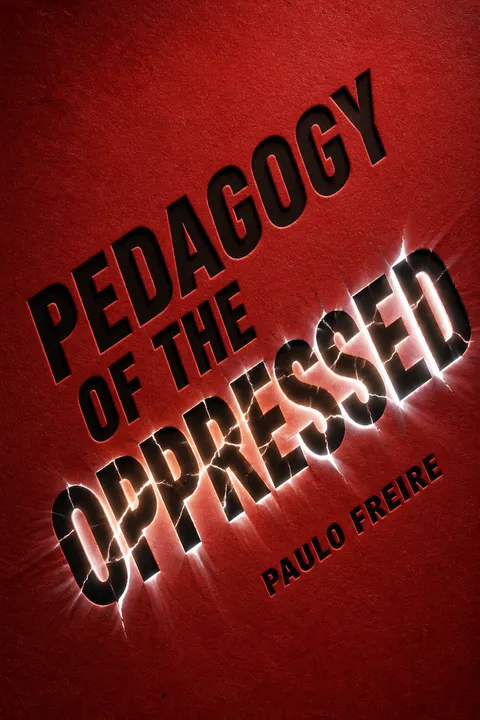


Key Takeaways
Build liberation alongside oppressed people, rather than delivering it to them.
Humanity is the measure. Freire argues that oppression deforms both the people denied freedom and the people who dominate them. Humanization means becoming an active maker of history, not merely surviving inside conditions set by others. Because oppression is created and maintained through social arrangements, it can be challenged through collective action.
No rescue without agency. People facing oppression must help define and lead their liberation. Outside allies can join the struggle, but cannot claim ownership of it or hand down a finished plan. Replacing one ruling group with another would reverse the roles without ending the underlying relationship. The goal is a society in which people can act as subjects, with power to participate in shaping their shared life.
The argument anticipates a central problem in participatory development: programs designed for people can reproduce dependence even when their stated purpose is benevolent. Treating affected communities as co-authors improves both legitimacy and the quality of local knowledge. Yet participation should not be romanticized as effortless consensus. Communities contain disagreements and unequal power of their own. A liberating process therefore needs ways to surface dissent, protect less powerful voices, and make decisions accountable. Freire's standard is not simply that people are invited into a room, but that their agency changes what gets decided.
Replace information deposits with shared investigation of the world students inhabit.
The classroom as a bank. Freire calls passive, one-way instruction the banking concept of education. The teacher selects and delivers information, while students are expected to store and repeat it. This treats knowledge as a possession of the teacher and learners as empty containers. It can train students to adapt to existing conditions rather than examine them.
Learning as joint inquiry. Freire proposes problem-posing education, in which teachers and students investigate a shared subject and question how it relates to their lives. A class might examine why different newspapers describe the same event differently, rather than treating each account as unquestionable fact. The teacher still brings knowledge and responsibility, but uses them to help students think, ask better questions, and test interpretations.
This contrast remains useful wherever education is judged mainly by recall. Inquiry gives learners practice in evaluating claims, tracing assumptions, and connecting ideas to evidence. It also changes the teacher's authority from control over answers to responsibility for the conditions of learning. Still, instruction cannot be reduced to discovery alone. Beginners often need explicit explanation and structured practice before they can investigate a subject well. Freire's strongest implication is not that expertise should disappear, but that expertise should open inquiry rather than close it.
Keep reflection and action joined, or education collapses into talk or motion.
Thinking must meet the world. Freire uses the term praxis for reflection and action working together to understand and change reality. Reflection without action can become empty talk; action without reflection can become blind activity, unable to learn from consequences. Neither is enough to transform oppressive conditions.
A cycle of learning. People examine a situation, act on what they understand, and reflect on what the action reveals. Freire applies this principle to education and political organizing: learners are not simply told what to do, and action is not treated as proof that the analysis was correct. The point is an ongoing process in which people deepen their understanding through purposeful action and revise their practice as they learn.
Praxis resembles a disciplined feedback loop: action produces consequences, and reflection turns those consequences into revised understanding. That connection helps explain why discussion and practical work need one another. In fields from clinical training to community planning, repeated cycles of trying, observing, and adjusting can expose errors that abstract debate misses. But action is not automatically educative. Without records, honest criticism, or attention to unintended effects, a group can repeat the same failed intervention with greater confidence. Reflection needs evidence, not just conviction.
Let people's lived questions shape what education investigates.
Begin with local meaning. Freire calls recurring questions rooted in people's circumstances generative themes. They connect everyday experience to larger social conditions and can open further lines of inquiry. Rather than importing a finished syllabus, educators investigate what people notice, worry about, and want to understand.
Study together. Freire describes teams observing local life, speaking with residents, and discussing their interpretations with them. They might create drawings or photographs of recognizable situations, then invite participants to analyze what is happening and why. In one example, workers repeatedly returned to low pay and the need for collective organization. These concerns could become the basis for learning, while investigation reveals how they connect to broader forces.
This method shares ground with participatory research: people are not merely sources of data, but interpreters of their own circumstances. Local questions can make abstract concepts consequential and reveal what an outside observer has overlooked. The method also imposes a demanding standard on educators. Listening is not enough if the resulting curriculum is already fixed. At the same time, local relevance should not confine learners to familiar topics. Education can widen the questions people are able to ask, provided it does so through inquiry rather than by dismissing their starting concerns.
Treat social constraints as changeable boundaries, not permanent fate.
Name the limits. Freire calls oppressive conditions that appear to block action limit-situations. They may include poverty, exclusion, or dependence. People can experience them as inevitable, especially when daily hardship obscures the social arrangements that produce it. Critical learning helps make those arrangements visible and allows people to see constraints as historical conditions rather than laws of nature.
Look for possible action. Freire describes an untested feasibility as a possibility that exists beyond a limit-situation but has not yet been recognized or tried. When people analyze a familiar problem together, they may begin to see routes for action that previously seemed impossible. The recognition alone does not change reality. It matters when it informs collective action capable of testing whether a different arrangement can be built.
This framing resists fatalism without pretending that every barrier can be overcome by attitude. It directs attention to the difference between a real constraint and the belief that the constraint is eternal. That distinction is valuable in systems analysis, where identifying feedback and decision points can reveal room for intervention. The danger is overstating agency: people facing immediate coercion or scarcity may have few safe options. Freire's model is most convincing when possibility is pursued collectively and materially, not offered as a substitute for resources or protection.
Make dialogue rigorous inquiry, not merely kind, open conversation.
Dialogue is a way of knowing. For Freire, dialogue is a shared effort to understand the world, not a technique for keeping students engaged or a conversation valued for its own sake. It requires humility, trust, hope, and a willingness to examine the subject at hand. Participants bring experience, but they must also question and develop their understanding.
Conversation needs an object. Dialogue becomes weak when it stops at exchanging personal reactions, or when one person uses discussion to steer others toward a predetermined answer. Freire instead asks teachers and learners to investigate a common subject, relate it to experience, and reflect critically on both. Knowledge and practice remain connected, and disagreement can serve learning rather than being treated as a disruption.
The distinction helps separate genuine inquiry from performative listening. A meeting can feel inclusive while leaving its assumptions and decisions untouched. Giving discussion a shared object encourages participants to test interpretations rather than merely announce identities or preferences. Yet dialogue does not erase differences in expertise or responsibility. A teacher may know more about a subject and still teach dialogically by making that knowledge available for examination. The critical question is whether authority supports participants' capacity to think, or uses their participation to disguise a decision already made.
Liberation must confront the oppressor's image carried inside the oppressed.
Oppression shapes aspiration. Freire argues that people living under domination may absorb the values and expectations of those who dominate them. Freedom can therefore feel frightening: it requires rejecting an imposed identity and accepting responsibility for choices. At first, the imagined reward of liberation may be to occupy the oppressor's position rather than to change the system.
Changing roles is not enough. Freire describes a peasant who becomes an overseer and treats former fellow workers even more harshly than the landowner did. The example shows how a new title can reproduce old power relations. A liberating struggle must therefore aim beyond access to the privileges of domination. It must help people recognize and transform the relationships that make some people rule and others obey.
This is a sharp account of how institutions reproduce themselves through learned habits, not only through laws or ownership. People who gain authority can copy the behavior that once constrained them because it appears to be the available model of success. The insight connects political change to socialization and organizational culture. Still, internalized patterns should not be treated as a permanent defect in oppressed people. Their conduct is shaped by constrained choices, and responsibility for changing oppressive structures remains unevenly distributed between those who benefit from them and those harmed by them.
Replace charity that preserves dependence with solidarity that changes its causes.
Relief can protect injustice. Freire distinguishes genuine generosity from aid that eases suffering while leaving the source of suffering intact. If assistance depends on keeping people powerless, it can strengthen the very arrangement it appears to soften. He argues that people are not outside society waiting to be included; they are held within structures that deny them control over their lives.
Solidarity changes the relationship. To stand with oppressed people means joining efforts to alter the conditions that make dependence necessary. That requires seeing people as agents, not as cases to manage or recipients to discipline. Immediate assistance may matter, but it is not a substitute for changing who has power, who controls resources, and who can participate in decisions.
The distinction clarifies a practical tension in social policy: urgent assistance can save people from harm, while poorly designed programs can make recipients answerable to institutions without giving them influence. The strongest response need not choose between relief and structural change. It can meet immediate needs while involving affected people in setting priorities and examining why those needs persist. Freire's critique is most useful when aimed at paternalism, not at the people who provide care or the people who need it.
Build unity through organization, not slogans, paternalism, or political manipulation.
Division protects power. Freire describes how dominant groups can weaken collective action by isolating communities, rewarding selected leaders, or offering benefits that draw people into competition. Political messages can also encourage people to follow a leader while mistaking that dependence for participation. Such tactics keep people from seeing how their separate difficulties are connected.
Organization should grow from shared action. Freire's alternative is to build unity with people through communication, common work, and decision-making. Organization needs coordination and discipline, but it must not turn people into instruments of a leadership group. The test is whether people become more capable of acting and deciding together, not whether they repeat the right slogans or comply with instructions.
Collective action needs more than shared grievance. It needs durable ways to coordinate, make decisions, resolve conflict, and hold leaders accountable. Freire's warning about manipulation helps distinguish those capacities from mobilization that depends on a charismatic figure or selective rewards. A further test is whether an organization can tolerate criticism without treating it as betrayal. Unity that suppresses disagreement may be orderly, but it can leave the underlying power structure intact under new management.
Change cultures through reciprocal synthesis, not imported models or invasion.
Imposed help displaces knowledge. Freire calls cultural invasion the imposition of one group's worldview on another, often under the language of expertise or assistance. The people being served are treated as objects, expected to adopt outsiders' explanations and goals. This can weaken local expression while making outside authority seem naturally superior.
Create understanding together. Freire's alternative, cultural synthesis, brings educators or organizers into a community to learn about its world and work with its members to interpret and change it. This does not mean accepting every existing belief or limiting action to what people already expect. It means examining differences openly, connecting local understanding with wider knowledge, and developing plans through shared analysis rather than importing a finished model.
The contrast is relevant to cross-cultural work, where good intentions can still carry assumptions about what counts as knowledge or progress. Reciprocal learning makes those assumptions available for challenge and can prevent expertise from becoming a vehicle for control. Synthesis is not the same as cultural relativism: harmful practices and unequal power can still be questioned. The difficult work is to criticize without treating a community as backward, and to offer outside knowledge without claiming the authority to decide what its members should want.
Analysis
Freire's central intervention is to treat education as a political relationship and knowledge as something made through engagement with the world. This makes his critique broader than a complaint about dull classrooms. One-way instruction models a society in which some people name reality and others receive its authorized description. Shared inquiry, by contrast, rehearses the capacity to interpret conditions and act on them. The educational method is therefore already a theory of social participation.
The book's most durable strength is its insistence that agency cannot be bestowed. A teacher, organizer, or reformer may contribute knowledge and coordination, but when that contribution replaces the judgment of affected people, it reproduces dependence. Freire also understands that domination persists psychologically as well as materially: people can desire the status of the powerful because the existing order has made that status appear to be the only route to dignity. That insight links institutional critique to everyday aspiration.
The framework is less persuasive if treated as a complete account of every educational situation. The contrast between depositing information and shared inquiry can obscure how beginners need explicit teaching, and how specialized knowledge can correct mistaken assumptions. Dialogical education is strongest when expertise is present but answerable to questions, evidence, and the learners' capacity to judge. Similarly, naming oppression is necessary, but educators must distinguish a defensible analysis of power from simply declaring their political interpretation correct.
The book's introduction also resists reducing oppression to one axis. Class analysis matters, yet race, gender, culture, language, and ethnicity shape how power is experienced and how people align politically. This nuance strengthens Freire's method: no single account should be imposed as the whole reality. His lasting challenge is both ethical and practical. Education should help people become authors of collective understanding, while building institutions capable of making that authorship consequential.
Review Summary
Pedagogy of the Oppressed is a groundbreaking work on education and liberation. Reviewers praise its revolutionary ideas but note its dense academic language. The book critiques traditional "banking" education and proposes dialogic, problem-posing methods to empower the oppressed. Many find its concepts still relevant today, particularly in addressing social inequalities. Some criticize its Marxist leanings and lack of concrete examples. Despite its challenging prose, the book is considered essential reading for educators and those interested in social change.
People Also Read





Glossary
Banking concept of education
One-way deposit teachingFreire's term for an instructional model in which teachers select and deliver information while students receive, memorize, and repeat it. The model treats knowledge as something held by the teacher and students as passive recipients. Freire argues that it can encourage adaptation to existing social conditions instead of critical inquiry into them.
Problem-posing education
Shared critical inquiryFreire's alternative to one-way instruction. Teachers and students investigate a subject together, treating reality as open to questioning and change. The teacher contributes knowledge and structure, while learners participate as critical thinkers. Learning centers on examining problems in people's relations with the world, rather than storing information supplied by an authority.
Praxis
Reflection joined to actionThe ongoing unity of reflection and action through which people understand and transform their world. Freire distinguishes praxis from talk that never informs action and from activity that proceeds without critical reflection. In education and political struggle, people act, examine what their action reveals, and use that understanding to guide further action.
Conscientização
Critical social awarenessA process of learning to perceive social, political, and economic contradictions and to act against oppressive conditions. In Freire's account, critical awareness is not merely intellectual recognition or a change in attitude. It becomes meaningful through people's reflective involvement in transforming the reality they have come to understand.
Generative themes
Themes rooted in lived realityRecurring concerns and ideas that express how people understand their concrete circumstances. Freire uses these themes as starting points for education because they connect learners' experience to wider social relationships and can open further questions. Educators investigate them with the people concerned rather than imposing a finished program from outside.
Limit-situations
Perceived barriers to changeConcrete historical conditions that restrict people's ability to act and may appear impossible to overcome. Freire argues that such conditions are not simply permanent boundaries. When people recognize their causes and view them critically, they can identify actions that challenge the limits and possibilities that had previously gone unrecognized.
Thematic investigation
Collaborative inquiry into concernsFreire's process for discovering the themes that matter in a community and using them to shape educational work. Investigators observe local life, listen to people's language and concerns, and discuss representations of familiar situations with them. The people participate as co-investigators, helping interpret the reality that will become the subject of learning.
Cultural invasion
Imposed worldview and goalsA form of domination in which one group imposes its values, interpretations, or plans on another and treats the latter as objects rather than participants. It can be overt or presented as benevolent assistance. Freire argues that it suppresses the creativity and independent judgment of the people whose culture and experience are being overridden.
Cultural synthesis
Shared cultural analysisA dialogical approach in which educators or organizers learn about a community's world and work with its members to understand and transform it. Rather than importing a finished model or simply accepting existing views, participants bring different knowledge into a shared analysis. The resulting action is created with the people concerned, not imposed upon them.
FAQ
What's "Pedagogy of the Oppressed" about?
- Central Theme: "Pedagogy of the Oppressed" by Paulo Freire explores the concept of education as a tool for liberation rather than oppression. It critiques traditional education systems that treat students as passive recipients of knowledge.
- Oppression and Liberation: The book discusses the dynamics between oppressors and the oppressed, emphasizing the need for the oppressed to regain their humanity through critical consciousness and active participation in their own education.
- Dialogical Approach: Freire advocates for a dialogical approach to education, where teachers and students learn from each other in a collaborative process, transforming the world together.
- Historical Context: Written in the context of Latin American social struggles, the book addresses broader themes of social justice, human rights, and the role of education in societal transformation.
Why should I read "Pedagogy of the Oppressed"?
- Transformative Education: It offers a revolutionary perspective on education, emphasizing its potential to empower individuals and transform societies.
- Critical Consciousness: The book encourages readers to develop a critical awareness of social injustices and to engage actively in the struggle for liberation.
- Influential Work: As a seminal text in critical pedagogy, it has influenced educators, activists, and scholars worldwide, making it essential reading for those interested in social change.
- Practical Application: Freire's ideas provide practical insights for educators and anyone involved in social movements, offering strategies for fostering dialogue and critical thinking.
What are the key takeaways of "Pedagogy of the Oppressed"?
- Banking Concept of Education: Freire criticizes the traditional "banking" model of education, where students are treated as empty vessels to be filled with knowledge, advocating instead for a problem-posing model.
- Dialogue and Praxis: Emphasizes the importance of dialogue and praxis (reflection and action) in education, where learners critically engage with the world to transform it.
- Humanization vs. Dehumanization: The struggle for humanization is central, with the oppressed needing to reclaim their humanity by overcoming internalized oppression.
- Role of Educators: Educators should act as facilitators of learning, engaging in a mutual process of knowledge creation with students, rather than imposing knowledge.
What is the "banking concept of education" according to Paulo Freire?
- Definition: The "banking concept" refers to a traditional model of education where teachers deposit information into passive students, who merely receive, memorize, and repeat it.
- Critique: Freire argues that this model dehumanizes students, treating them as objects rather than active participants in their own learning process.
- Oppressive Nature: It serves the interests of oppressors by maintaining the status quo and discouraging critical thinking and transformation.
- Alternative Approach: Freire advocates for a problem-posing education model, where students and teachers engage in dialogue, critically reflect on reality, and work together to transform it.
What is "problem-posing education" in "Pedagogy of the Oppressed"?
- Definition: Problem-posing education is an approach where students and teachers engage in a dialogical process, critically examining and reflecting on their reality to transform it.
- Active Participation: It encourages students to be active participants in their learning, questioning and exploring issues relevant to their lives and society.
- Empowerment: This method empowers students to become critical thinkers and agents of change, capable of challenging oppressive structures.
- Contrast to Banking Model: Unlike the banking model, problem-posing education fosters creativity, critical consciousness, and a deeper understanding of the world.
How does Paulo Freire define "dialogue" in education?
- Essence of Dialogue: Dialogue is a process of communication and reflection between teachers and students, aimed at transforming the world through mutual understanding and action.
- Foundation of Education: Freire sees dialogue as essential for authentic education, where both parties learn from each other and contribute to the learning process.
- Love and Humility: True dialogue requires love, humility, and faith in the potential of others, fostering a collaborative and respectful learning environment.
- Opposition to Antidialogical Action: Dialogue stands in contrast to antidialogical actions, such as manipulation and cultural invasion, which seek to dominate and oppress.
What is "conscientization" in "Pedagogy of the Oppressed"?
- Definition: Conscientization, or conscientizagao, is the process of developing a critical awareness of one's social reality through reflection and action.
- Empowerment: It empowers individuals to perceive social, political, and economic contradictions and to take action against oppressive elements.
- Role in Liberation: Conscientization is crucial for the oppressed to regain their humanity and engage in the struggle for liberation.
- Educational Process: Freire emphasizes that education should facilitate conscientization, enabling learners to question and transform their world.
What are the best quotes from "Pedagogy of the Oppressed" and what do they mean?
- "Education is suffering from narration sickness." This quote critiques the traditional education model where teachers narrate information to passive students, emphasizing the need for a more interactive and engaging approach.
- "Liberation is thus a childbirth, and a painful one." Freire uses this metaphor to describe the challenging process of liberation, where the oppressed must struggle to overcome internalized oppression and reclaim their humanity.
- "Dialogue cannot exist without humility." This highlights the importance of humility in dialogue, where both teachers and students must be open to learning from each other.
- "The oppressors do not perceive their monopoly on having more as a privilege which dehumanizes others and themselves." This quote underscores the dehumanizing effects of oppression on both the oppressors and the oppressed, emphasizing the need for systemic change.
How does "Pedagogy of the Oppressed" address the concept of humanization?
- Central Theme: Humanization is a central theme, with Freire arguing that the struggle for humanization is the oppressed's vocation, constantly negated by oppression.
- Dehumanization: Dehumanization affects both the oppressed and the oppressors, distorting their humanity and perpetuating the cycle of oppression.
- Liberation as Humanization: Liberation involves the restoration of humanity for both the oppressed and the oppressors, achieved through critical consciousness and transformative action.
- Educational Role: Education plays a crucial role in the process of humanization, fostering critical thinking and empowering individuals to challenge oppressive structures.
What is the role of educators in "Pedagogy of the Oppressed"?
- Facilitators of Learning: Educators should act as facilitators, engaging in a mutual process of knowledge creation with students rather than imposing knowledge.
- Dialogical Approach: They should foster a dialogical approach, encouraging critical reflection and action to transform the world.
- Empowerment: Educators have a responsibility to empower students, helping them develop critical consciousness and become agents of change.
- Avoiding Oppression: They must avoid oppressive practices, such as the banking model of education, and instead promote a problem-posing model that respects students' autonomy and creativity.
How does "Pedagogy of the Oppressed" relate to social justice and activism?
- Education as Liberation: The book positions education as a tool for liberation, emphasizing its potential to empower individuals and transform societies.
- Critical Consciousness: It encourages the development of critical consciousness, enabling individuals to recognize and challenge social injustices.
- Role in Activism: Freire's ideas provide a framework for activism, offering strategies for fostering dialogue, critical thinking, and collective action.
- Broader Implications: While rooted in the context of Latin American social struggles, the book's themes of social justice and human rights have universal relevance, inspiring movements worldwide.
What impact has "Pedagogy of the Oppressed" had on education and society?
- Influential Work: As a seminal text in critical pedagogy, it has influenced educators, activists, and scholars worldwide, shaping discussions on education and social change.
- Educational Reforms: Freire's ideas have inspired educational reforms that prioritize dialogue, critical thinking, and student empowerment.
- Social Movements: The book has been a catalyst for social movements, providing a theoretical foundation for activism and liberation struggles.
- Continued Relevance: Decades after its publication, "Pedagogy of the Oppressed" remains relevant, offering insights and strategies for addressing contemporary social and educational challenges.
About the Author
Other books by Paulo Freire
Download PDF
Download EPUB
.epub digital book format is ideal for reading ebooks on phones, tablets, and e-readers.








