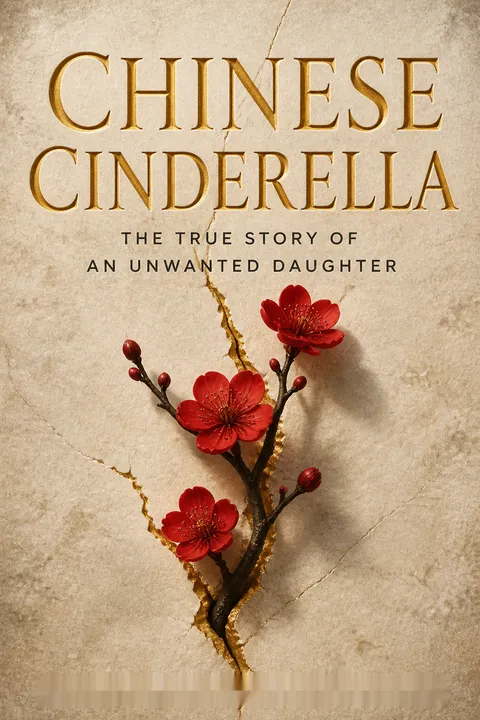


Key Takeaways
Do not let a family's rejection define a child's human worth.
Blame is not identity. Adeline is told that her birth caused her mother’s death, and her siblings turn that loss into a lifelong accusation. Her father’s wealthy household offers comfort and status, but she is treated as an unwanted daughter while his new wife’s children receive affection and privilege. The gap between material security and emotional safety gives the memoir its central tension: a child can have a fine home and still feel she has no place in it.
The story answers the accusation. Adeline dedicates her account to children who have been made to feel unwanted. Her intelligence and persistence matter, but they do not prove that she deserved love. The truth of her worth exists before any award, praise, or achievement.
What's striking is how precisely the memoir separates a child's circumstances from a child's responsibility. Adeline is assigned guilt for an event she could not control, then forced to live inside the family story built around that guilt. Family-systems thinking helps clarify the harm: scapegoating can stabilize a group by giving its pain a convenient target, but the target is not the cause. The memoir's insistence on intrinsic worth is powerful, though it should not be mistaken for a demand that wounded children simply believe harder. Recognition from safe adults and protection from abuse matter too.
Let achievement reveal ability, not serve as rent paid for affection.
A medal becomes a plea. At four, Adeline wins her class award soon after starting school. Her aunt treasures the certificate, and her father briefly praises her for bringing honour to the family. Adeline learns to study harder because achievement is one of the few ways to attract his attention. Yet her siblings mock and hurt her for standing out, and the praise does not make home safe.
Success has limits. She repeatedly tops her class, wins a writing prize in Shanghai, and is elected class president by her peers. These accomplishments show real ability and give her moments of confidence. But they cannot make her family fair or dependable. School provides respect that home withholds, while the medal also exposes her to jealousy and punishment.
The medal is more than a school prize: it is a child's attempt to make affection predictable. Developmental psychology distinguishes competence, the sense that one can do things well, from secure attachment, the confidence that care does not have to be earned. Adeline gains the first without reliably receiving the second. That distinction makes the episode useful beyond this family. Achievement can build skill and open doors, but when it becomes a bid for love, every setback risks feeling like proof of personal unworthiness.
Preserve one loyal bond when the household makes belonging conditional.
Aunt Baba makes room. Adeline’s unmarried aunt shares her room, listens to her, and treats her school reports as precious. Her grandfather Ye Ye also offers encouragement, teaching her about Chinese writing and urging her to imagine a future of her own. Neither can control the household, but both help Adeline see herself as more than the family’s unwanted child.
Care travels both ways. Adeline pours affection into her duckling, Precious Little Treasure, or PLT, feeding and protecting the smallest bird. When her brother strikes her and a family demonstration of the dog’s obedience leaves PLT mortally injured, the loss is devastating. The episode shows how seriously she takes the care she receives and gives. A loyal connection does not erase cruelty, but it gives her a place to be seen.
The memoir presents care as a relationship, not a sentimental cure. Aunt Baba's attention matters because it is specific: she saves the reports, listens, and makes room for Adeline's ambitions. PLT's story extends the same pattern to a vulnerable animal, showing that a child denied tenderness can still offer it. A nuance matters here: a single caring adult can be a lifeline, but children should not have to rely on private affection to survive public neglect. Support is protective, while responsibility for changing the harmful household remains with the adults.
Turn private pain into words, stories, and work you can shape.
Writing creates another room. Adeline begins composing stories for school and writes about her aunt as her best friend. In fiction, she can imagine a paradise where girls are treated as well as boys and where children are not scolded without cause. Stories let her express feelings she cannot safely share at home, while her classmates and teachers respond to her work with respect.
Practice carries the dream. A classmate lends her A Little Princess, the story of a girl whose life changes from privilege to hardship and then improves through her own efforts. Adeline copies the book by hand so she can keep it. Years later, she enters an international playwriting competition with a story about a separated, unwanted girl. The work becomes both an outlet and a serious craft she can develop.
Creative work here does two jobs: it offers imaginative distance from pain, and it turns private experience into something another person can encounter. Narrative psychology describes this as a way people organize experience into a story rather than leaving it as undifferentiated distress. The memoir also resists a simplistic claim that expression alone heals trauma. Adeline still needs safety, education, and allies. Writing matters because it gives her a form of agency within limits, not because a story can make an abusive home harmless.
Treat a child's secrecy as a warning, not evidence of resilience.
Silence protects the secret. At school, Adeline hides the truth about home. She refuses invitations and gifts because she cannot return them, and she fears that classmates will discover how little affection she receives. When she attends a friend’s birthday party against her stepmother’s rules, she is slapped, whipped by her father, and threatened with separation from Aunt Baba.
The mask breaks publicly. After classmates arrive to celebrate her election as class president, her stepmother strikes her in front of them and orders them out. Adeline is terrified that they will see her family life. Instead, her friend offers a handkerchief, and the girls leave her gifts. The moment shows both the cost of hiding abuse and the relief of being met with care rather than ridicule.
Children often conceal painful conditions because disclosure can feel more dangerous than silence. Adeline's fear of exposing the family's private life is not evidence that the situation is manageable; it reflects her dependence on the very adults she fears. The classmates' presence also changes what can be witnessed, even though it cannot immediately repair the home. This is a useful corrective to the romantic idea of the stoic child: quiet competence may coexist with intense fear, and adults must make disclosure safer rather than waiting for a child to ask perfectly.
Read household rules to see how power is distributed.
Inequality hides in routine. After the family moves to Shanghai, the children from the first marriage receive no pocket money for tram fares and are told to walk to school. Adeline walks through bad weather while siblings gradually give in and ask for money. The contrast extends to food, clothing, haircuts, bedrooms, and permission to see friends. The family calls the restrictions lessons in thrift, but the rules fall unevenly on the stepchildren.
Small controls carry meaning. Adeline is excluded from treats and family outings, while Niang’s children receive special meals and fashionable clothes. These details are not merely about objects. They tell the children who belongs, who may ask, and whose comfort counts. The memoir makes family power visible through daily logistics rather than through a single dramatic declaration.
The tram fare is a compact example of how authority works through control of ordinary resources. A small amount of money determines whether a child can travel safely and comfortably, while the demand for an apology turns access into a test of submission. This resembles a broader institutional pattern: rules can appear neutral in wording yet distribute burdens unequally in practice. Reading the household's routines closely reveals more than reading its stated values. At the same time, the memoir shows that material comparison alone cannot measure the deeper emotional injury.
Name the history around a child without excusing adult abandonment.
War reshapes the family map. Adeline grows up amid Japanese occupation, the end of the Second World War, and the Chinese Civil War between Nationalist and Communist forces. In 1948, her parents take her from Shanghai to Tianjin, leave her at a convent boarding school, and return south. As the Communists advance, the other students flee until Adeline is the only pupil left.
A rescue comes from outside. Her parents do not return for her. Niang’s sister, Aunt Reine, discovers that Adeline is still at the school and takes her to Hong Kong, where her parents have settled. The political crisis explains why families are moving and why the school empties. It does not explain away the child’s fear or the adults’ failure to keep her informed and safe.
Historical context changes the scale of the memoir without diminishing its intimate focus. Adeline's abandonment happens inside a real political emergency, not in a timeless domestic vacuum. Yet explanation and excuse are different acts: war constrains choices, while adults still bear responsibility for communicating with and protecting a child. The episode also shows how institutions can become fragile during upheaval. The convent provides schooling and shelter, but its shrinking community cannot replace family care. Personal testimony gives political history a human measure: one abandoned child in an almost empty school.
Seek education as a route to agency, while recognizing talent needs access.
Recognition opens a door. At fourteen, Adeline wins first prize in an international playwriting competition. The award includes fifty English pounds and brings public attention in Hong Kong. Her father, previously dismissive of her, takes pride in telling a business colleague that the winner is his daughter. He agrees to send her to England for university, but directs her toward medicine rather than the writing career she wants.
Ability is not the whole story. Adeline's grades, persistence, and writing help make the opportunity visible. Her father’s money and permission make it possible to take up. She accepts medical studies because leaving for further education is what she most wants. The episode is a triumph, but not a simple victory: her achievement creates leverage, while her choices remain limited by family authority and gender expectations.
This turning point complicates the familiar meritocratic story that talent naturally earns opportunity. Adeline has talent and sustained effort, but the practical gateway is controlled by adults with resources and authority. The award changes how her father sees her in public, yet his approval comes with a decision about her future. Education expands her options without making her wholly free. That tension is important: access can be transformative even when the available path is imperfect, and celebrating success should not obscure who gets to choose the terms.
Let old stories offer courage without prescribing a single happy ending.
A Chinese heroine enters the story. Near the memoir’s end, Aunt Baba sends Adeline the tale of Ye Xian, a girl from the Tang dynasty whose stepmother favors her own daughter. Ye Xian is a skilled potter, and the bones of a beloved fish give her pottery a special sheen. Forbidden to attend a festival, she goes in beautiful clothing, loses a gold shoe, and is eventually found by a local ruler.
Inheritance becomes encouragement. Aunt Baba presents Ye Xian as a kindred figure who survives neglect through talent and effort. The story also gives Adeline a cultural inheritance: a Chinese Cinderella tale recorded centuries before the European version. Its comfort does not erase the memoir's harsher reality. Adeline's childhood does not resolve through a magical rescue or marriage; the act of telling it becomes a way to reach other unwanted children.
The embedded folktale gives the memoir a literary frame: one neglected daughter recognizes another across centuries and cultures. It also complicates the idea of triumph. Ye Xian's skill matters, but magical help and marriage shape her ending; Adeline's account instead values education, work, and the preservation of memory. Folktales can make courage imaginable, especially when ordinary life offers few models. Their endings should remain open to scrutiny, however. A story can inspire without serving as a blueprint for what every girl must want.
Analysis
Chinese Cinderella is a memoir of childhood, but it is also an account of how children learn what they are allowed to believe about themselves. Its narrative strength comes from the collision of scales: family cruelty is rendered through tram fares, a medal, a missing birthday, and an empty place at the school gate, while occupation and civil war repeatedly alter the family's geography. Historical events are not background decoration. They shape who can leave, who is left behind, and which adults have the means to intervene.
The book's emotional argument is not that effort reliably defeats adversity. Adeline works intensely, but effort alone cannot supply affection, safety, or access to education. Her achievements matter because teachers, friends, Aunt Baba, Ye Ye, and eventually an award create points of recognition beyond the rejecting household. That makes the memoir more convincing than a simple resilience narrative: the child exercises agency, yet her survival also depends on relationships and chance. The father’s approval after the playwriting prize illustrates the limits of achievement as a route to belonging. He recognizes her accomplishment, but still attempts to choose her vocation.
The memoir's use of stories is central to its method. Adeline first uses imagined worlds to bear what she cannot disclose, then turns experience into a written account intended for other unwanted children. The ancient Ye Xian tale offers cultural kinship and a model of resourcefulness, while its magical aid and marriage ending differ from the memoir's account of a life built through education and work. This contrast prevents the book from reducing every story to the same moral.
A reader should also distinguish the memoir's retrospective interpretation from a complete history of the family or of China. Its focus is deliberately the child's experience, so explanations of political change and family motives remain selective. That limitation is also its power: the reader encounters upheaval through the bewilderment of someone who does not yet understand why adults disappear. The result is a specific testimony about neglect, not a universal formula for overcoming it.
Review Summary
Chinese Cinderella is a memoir that evokes strong emotions in readers. Many praise Yen Mah's resilience and find her story inspiring, while others criticize her for seeming privileged or whiny. The book is often described as heartbreaking, detailing emotional abuse and neglect. Readers appreciate the insights into Chinese culture and history. Some find the writing style awkward or simplistic. Overall, the book is seen as a powerful account of overcoming adversity, though opinions on its quality and message are divided.
People Also Read

Glossary
Chinese Cinderella
Memoir of an unwanted daughterThe title and framing of Adeline Yen Mah's account of her childhood. It links her experience of being neglected by her stepmother and treated as an unwanted daughter with the Cinderella story tradition, including the older Chinese tale of Ye Xian. The comparison highlights exclusion and endurance, while the memoir gives its own historical and personal account.
Ye Xian
Ancient Chinese Cinderella heroineThe heroine of a Chinese folktale from the Tang dynasty, recounted to Adeline by Aunt Baba. Ye Xian is a motherless girl mistreated by her stepmother who develops skill as a potter and receives magical help connected to a beloved fish. At a festival she loses a gold shoe, which leads a local ruler to find her.
Precious Little Treasure (PLT)
Adeline's beloved ducklingThe name Adeline gives to the smallest duckling she receives as a pet. She feeds and cares for PLT, who becomes a source of companionship in a household where she often feels unwanted. PLT's injury and death after the family uses the dog to test its obedience become one of Adeline's most painful childhood memories.
Holy of Holies
Stepmother's private bedroomThe children's nickname for Niang's bedroom in the Shanghai home. It reflects their sense that the room is a powerful, restricted space where they are summoned, questioned, or punished. The nickname turns a domestic location into a symbol of who holds authority and who must ask permission.
FAQ
1. What is "Chinese Cinderella: The True Story of an Unwanted Daughter" by Adeline Yen Mah about?
- Autobiographical account of childhood: The book is an autobiography detailing Adeline Yen Mah’s difficult childhood in China, where she was considered bad luck after her mother died giving birth to her.
- Themes of rejection and resilience: It explores her experiences of neglect, emotional abuse, and discrimination by her family, especially her stepmother, Niang.
- Historical and cultural context: The story is set against the backdrop of significant events in 20th-century China, including the Japanese occupation, World War II, and the Communist revolution.
- Journey to self-worth: Despite adversity, Adeline’s intelligence, academic achievements, and the support of her Aunt Baba help her persevere and eventually find her own path.
2. Why should I read "Chinese Cinderella" by Adeline Yen Mah?
- Inspiring story of resilience: The book offers a powerful message about overcoming adversity, making it relatable and uplifting for anyone who has felt unwanted or marginalized.
- Insight into Chinese culture: Readers gain a deeper understanding of Chinese family dynamics, traditions, and the impact of historical events on personal lives.
- Universal themes: The narrative addresses universal issues such as family, identity, self-worth, and the importance of hope and dreams.
- Emotional and literary impact: Adeline’s storytelling is poignant and evocative, making the book both moving and memorable.
3. What are the key takeaways from "Chinese Cinderella" by Adeline Yen Mah?
- Persistence in adversity: No matter how hopeless circumstances seem, perseverance and belief in oneself can lead to eventual triumph.
- Value of education: Academic achievement and a love of learning can provide a sense of purpose and a means of escape from difficult situations.
- Importance of positive support: Even one supportive figure, like Aunt Baba, can make a significant difference in a child’s life.
- Transforming trauma into strength: Adeline’s story demonstrates how personal suffering can be transformed into creativity, compassion, and courage.
4. Who are the main characters in "Chinese Cinderella" and how do they influence Adeline Yen Mah’s life?
- Adeline Yen Mah (Jun-ling): The protagonist, whose intelligence and determination drive the narrative.
- Niang (Stepmother): The main antagonist, whose cruelty and favoritism create much of Adeline’s suffering.
- Father: Distant and often indifferent, he fails to protect Adeline from mistreatment.
- Aunt Baba: Adeline’s loving aunt, who provides emotional support and encouragement.
- Siblings: Her brothers and Big Sister often join in the neglect or bullying, while her half-siblings are favored by Niang.
5. How does Adeline Yen Mah portray Chinese family structure and culture in "Chinese Cinderella"?
- Patriarchal hierarchy: The family is structured with clear hierarchies, with the father and stepmother at the top and stepchildren at the bottom.
- Preference for sons: The book highlights the traditional preference for male children and the resulting discrimination against daughters.
- Role of tradition and superstition: Customs such as foot-binding, arranged marriages, and beliefs about luck and fate are explored.
- Impact of historical events: The family’s fortunes and dynamics are shaped by war, political upheaval, and changing social norms in China.
6. What are the most significant events in Adeline Yen Mah’s childhood as described in "Chinese Cinderella"?
- Mother’s death and being labeled ‘bad luck’: Adeline’s life is marked from birth by the loss of her mother and the resulting stigma.
- Niang’s arrival and favoritism: The stepmother’s entry into the family brings increased neglect and cruelty toward Adeline and her full siblings.
- Academic achievements: Adeline’s consistent academic success is both a source of pride and resentment within the family.
- Boarding school isolation: She is sent away to boarding schools, often left alone and feeling abandoned, especially during the Communist takeover.
- Winning the playwriting competition: This achievement finally earns her father’s recognition and the opportunity to study in England.
7. How does Adeline Yen Mah use the motif of "Cinderella" in her autobiography?
- Parallels to the fairy tale: Adeline’s life mirrors the Cinderella story, with a cruel stepmother, neglect, and eventual recognition.
- Chinese version of Cinderella: The book includes the story of Ye Xian, the original Chinese Cinderella, drawing cultural connections.
- Symbol of hope: The Cinderella motif represents the possibility of transformation and triumph despite adversity.
- Dedication to unwanted children: Adeline dedicates her story to all unwanted children, reinforcing the universal relevance of the Cinderella archetype.
8. What role does education and academic success play in "Chinese Cinderella" by Adeline Yen Mah?
- Means of validation: Academic achievements are Adeline’s primary way of gaining recognition and self-worth in a hostile family environment.
- Source of hope: Success at school provides her with hope for a better future and a sense of belonging among peers.
- Catalyst for change: Her academic accomplishments ultimately lead to life-changing opportunities, such as studying abroad.
- Contrast with family values: The family’s lack of appreciation for her talents highlights the emotional neglect she endures.
9. How does Adeline Yen Mah depict the impact of historical and political events on her family in "Chinese Cinderella"?
- Japanese occupation and World War II: The family’s movements and fortunes are directly affected by the war and foreign occupation.
- Civil war and Communist revolution: The rise of the Communists leads to upheaval, fear, and the family’s eventual flight to Hong Kong.
- Loss of status and security: Political instability results in financial uncertainty and changes in the family’s social standing.
- Personal isolation: The chaos of the times exacerbates Adeline’s sense of abandonment, especially when left alone in Tianjin.
10. What are the most memorable quotes from "Chinese Cinderella" and what do they mean?
- “Please believe that one single positive dream is more important than a thousand negative realities.” – This quote, from the preface, encapsulates the book’s message of hope and perseverance.
- “To those who were neglected and unloved as children, I have a particular message… each of you has within you something precious and unique.” – Adeline’s dedication to unwanted children emphasizes self-worth despite adversity.
- “Family ugliness should never be revealed in public.” – This reflects the cultural pressure to maintain appearances, even at the cost of personal suffering.
- “Chinese Cinderella is dedicated to you with the fervent wish that you will persist in trying to do your best in the face of hopelessness.” – The author’s encouragement to readers facing similar struggles.
11. How does Adeline Yen Mah’s relationship with Aunt Baba shape her development in "Chinese Cinderella"?
- Source of unconditional love: Aunt Baba is the only adult who consistently supports and believes in Adeline.
- Emotional refuge: Their shared room becomes a sanctuary from the rest of the family’s hostility.
- Encouragement and validation: Aunt Baba celebrates Adeline’s achievements, preserving her report cards as treasures.
- Lasting influence: Aunt Baba’s faith in Adeline’s potential helps her develop resilience and self-confidence.
12. What is the significance of the story of Ye Xian (the original Chinese Cinderella) in Adeline Yen Mah’s autobiography?
- Cultural connection: The inclusion of Ye Xian’s story links Adeline’s personal narrative to a broader Chinese tradition.
- Symbol of hope and agency: Ye Xian’s triumph through her own talents mirrors Adeline’s journey and reinforces the theme of self-empowerment.
- Message from Aunt Baba: The story is shared in a letter from Aunt Baba, serving as a talisman against despair for Adeline.
- Universal resonance: By connecting her life to the Cinderella archetype, Adeline underscores the universality of her experiences and the possibility of transformation for all unwanted children.
Download PDF
Download EPUB
.epub digital book format is ideal for reading ebooks on phones, tablets, and e-readers.








