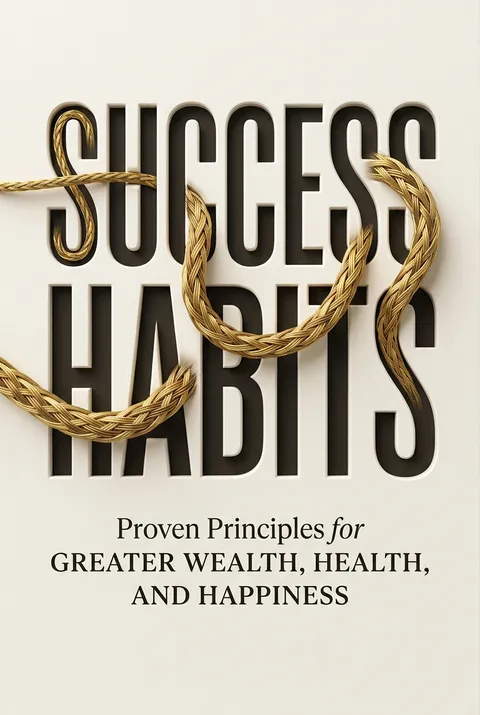


Key Takeaways
Write the outcome precisely enough to expose loopholes before you commit.
Make the target testable. Hill says that in 1919 he changed his written income goal from $10,000 to $100,000. Within weeks, a Texas businessman offered him that salary. Hill accepted a contract that withheld all pay unless he stayed a year. After discovering the man was misusing funds, Hill left and received nothing, despite having helped raise millions. He later saw the gap: his statement covered earning money, not receiving it. He believed a more careful goal would have prompted him to scrutinize the contract and negotiate regular payments.
Replace someday with a date. Paris businessman Bill Robinson had wanted Hill to speak in his town for fourteen years. Only when he made a concrete plan to bring Hill did the visit happen. The lesson is practical: define the result, deadline, terms, and next step.
What's striking is how the contract story turns a motivational lesson into a lesson in risk management. A precise ambition can direct attention toward neglected details, but wording alone cannot protect anyone from an exploitative counterparty. The stronger application is to pair goals with written agreements, independent review, and clear payment terms. Robinson's story adds a behavioral point: a time-bound intention creates something that can be scheduled and checked. Specificity is useful not because it summons luck, but because it makes both action and accountability visible.
Treat claims as hypotheses until their evidence survives scrutiny.
Sort evidence before judgment. Hill's method begins by separating facts from hearsay, then deciding which facts matter to the problem at hand. He distinguishes inductive reasoning, which draws conclusions from incomplete evidence, from deductive reasoning, which starts with accepted facts. Logic tests whether a conclusion fits relevant experience. He urges readers to ask how a speaker knows what they claim, and to examine a writer's expertise, incentives, and sources.
Test advice against outcomes. Hill describes a student about to spend $2,500 printing a children's book with rough illustrations and poor grammar. He advised improving the manuscript and finding an established publisher with a market. The student avoided a costly mistake and later found a publisher. For Hill, a confident opinion is not evidence; it earns trust only when its basis can be examined.
This is the book's strongest defense against its own persuasive style: readers are told not to accept even Hill on reputation alone. The approach resembles scientific practice, where a claim remains provisional until methods and evidence can be inspected. It also anticipates a useful habit in decision-making: separate what is known from what is inferred, and then ask which information could change the choice. Skepticism can become paralysis, however. Not every daily decision permits a full investigation, so evidence standards should match the stakes and the cost of being wrong.
Turn belief into rehearsal, allies, and observable action.
Make confidence practical. Hill's term applied faith means directing belief toward a specific aim, while acting as though effort can bring it within reach. He recommends writing down the aim, revisiting it regularly, and imagining the work of achieving it. This is not merely wishing: the aim must be joined to a plan and sustained action.
Borrow courage from others. Hill tells of Edwin Barnes, an ambitious young man who spent years doing low-level work around Thomas Edison while holding to his goal of becoming Edison's partner. Hill also describes Barnes as a source of encouragement during his own difficult research years. A mastermind alliance, in Hill's vocabulary, is a cooperative relationship in which people combine support, knowledge, and effort around a purpose. Belief becomes more durable when it is reinforced by other people and tested in action.
The useful core here is not a supernatural promise, but a sequence: clarify a goal, rehearse it, seek reinforcing relationships, and take steps that generate new information. That sequence connects naturally with mental practice and social support, both of which can make demanding work more manageable. Yet confidence is not proof that a goal is feasible, and supportive allies can reinforce a bad plan as easily as a good one. A sound alliance should encourage both persistence and honest challenge, not just enthusiasm.
Make adversity useful by searching for a benefit you can actively grow.
Look for workable material. Hill argues that painful setbacks can contain the beginnings of a useful opportunity, but he does not describe the benefit as automatic. It must be noticed and developed through action. After a St. Louis lecture campaign lost about $5,500, Hill treated the loss as a setback rather than a final verdict. Bill Robinson had seen the advertisement, invited him to Paris, and helped arrange the local radio series. The failed campaign had created a connection that Hill had not planned.
Convert, do not merely endure. Hill's framing asks people to look for something they can learn, change, or build from a difficult event. In Paris, the lectures prompted discussion groups and community activity, according to the book's introduction. The point is not that every loss secretly pays off. It is that a setback can still produce value when someone responds creatively.
This is a resilient way to interpret misfortune because it shifts attention from helpless replay toward possible action. In contemporary terms, it resembles cognitive reappraisal: changing the meaning assigned to an event can help a person find a next step. The limit matters just as much. Some losses do not yield an equivalent benefit, and insisting that they must can burden people with blame for circumstances beyond their control. The most defensible version is modest: search for available value without denying the damage or promising that every hardship has a hidden reward.
Decide when the facts are ready, before hesitation spends the opportunity.
Separate caution from delay. Hill recounts a car-company president offering one hundred young employees a chance to train for executive work while keeping their existing pay. They had an hour to decide. Twenty-three accepted within that hour; thirty more returned the next day, after the opportunity had closed. The story presents indecision as costly when the offer and its conditions are already clear.
Choose at the right speed. Hill treats procrastination as waiting for favorable circumstances instead of creating them. His practical standard is not to decide blindly, but to make a decision once the necessary facts are in hand. That distinction matters: delay can feel prudent while simply avoiding discomfort. When uncertainty is still material, seek information. When the important facts are settled, set a deadline and act.
The story captures a real asymmetry: some opportunities expire while a person is still seeking reassurance. Decision science often distinguishes reversible choices from choices that are expensive or impossible to undo. Hill's advice is most useful for decisions where the relevant facts are available and the cost of waiting is real. It is less suitable for medical, financial, or life-changing decisions that demand careful review. Promptness is not a virtue by itself; good judgment means knowing when more evidence is valuable and when it has become a cover for avoidance.
Use failure as feedback, then keep working the problem.
Persist with adjustment. Hill recounts Thomas Edison trying more than ten thousand approaches before producing a workable incandescent lamp. The story's lesson is not that every failed attempt proves success is near. It is that sustained effort can reveal which conditions need to change. Hill also spent twenty years researching his success philosophy, while relatives questioned whether the work was worth the sacrifice.
Do not confuse repetition with progress. Hill treats quitting when the work becomes difficult as a major cause of failure. His examples point toward continuing through setbacks, especially when a worthwhile goal still has a plausible route forward. Persistence is strongest when each attempt teaches something, improves the method, or builds a needed skill. Repeating the same ineffective move indefinitely is not perseverance; it is refusal to learn.
The important distinction is between persistence and stubbornness. Iterative work can turn failed attempts into information, but only if the person examines results and changes the approach. That makes Edison's story more valuable as a model of experimentation than as a heroic endurance contest. Hill's own long research effort also shows that meaningful projects may need years of uncertain labor. Still, persistence should remain conditional: evidence that a goal is harmful, impossible, or no longer worth its costs can justify stopping or changing direction.
Budget attention and time as deliberately as money.
Self-discipline is directed attention. Hill defines self-discipline chiefly as taking charge of one's thinking and keeping it focused on chosen aims rather than fears and distractions. He lists thirteen areas where he had to correct himself, including weak self-confidence, fear of criticism, impatience, poor time use, and the desire to display wealth. The breadth of the list makes discipline less a single act of restraint than a practice of managing one's habits and priorities.
Give time a plan. Hill recommends assigning portions of the day to important responsibilities and reviewing how time is spent. He urges readers to take stock of both material and less tangible assets, such as experience and relationships. His own proposal to use nearly every waking moment for self-improvement is severe. The more workable lesson is to protect time for meaningful work, rest, relationships, and health rather than letting the day disappear by default.
Treating time as a budget makes opportunity cost concrete: every hour spent on one activity is unavailable for another. This helps translate ambition into actual scheduling, where intentions can be tested against a calendar. Hill's account also usefully connects self-discipline with gratitude and modesty, not merely productivity. His near-total demand for self-improvement risks turning life into a ledger in which rest looks wasteful. Sustainable discipline should include recovery, because attention and judgment are finite resources, not machines that improve through constant pressure.
Make listening, fairness, and emotional control part of your professional skill.
Personality is behavior others experience. Hill presents a pleasing personality as a combination of traits that shape how people respond to someone, including tone of voice, flexibility, tolerance, tact, patience, courtesy, and willingness to listen. He asks readers to rate themselves and invite someone who knows them well to offer another assessment. His example of steel executive Charles Schwab is striking: Hill reports that Andrew Carnegie valued Schwab's ability to create goodwill among workers so highly that he paid him substantial additional compensation.
Practice respect in small moments. Hill's list also warns against interrupting, monopolizing conversation, exaggerating, gossiping, and treating others as inferior. These are observable habits, not mysterious charisma. His central practical point is that people notice not only what is said, but how they are treated while it is being said.
This section translates social effectiveness into behaviors that can be practiced and assessed. Listening, tact, and fairness matter in organizations because cooperation depends on trust, not just technical competence. The Schwab anecdote makes interpersonal climate visible as a productive resource, although Hill's reported compensation figures are his account rather than independent proof. There is also a boundary to the ideal: pleasing others should not require suppressing justified disagreement. Respectful conduct is not the same as agreeableness; it means making candor possible without turning every exchange into a contest.
Repeat chosen thoughts and actions until they become your default pattern.
Habit makes intention durable. Cosmic Habit Force is Hill's name for a universal principle that, he argues, makes repeated patterns increasingly automatic. He applies the idea to human habits: repeated thoughts and actions can become enduring tendencies, whether helpful or harmful. Readers can deliberately rehearse a purpose, maintain routines, and shape their surroundings so that desired conduct is easier to repeat.
Use a personal cueing system. Hill describes eight guiding princes, imagined inner advisers representing prosperity, health, peace, hope, faith, love, romance, and wisdom. He speaks to them before sleep as a way of directing his attention and reinforcing his priorities. The literal cosmic explanation is Hill's own theory. The practical technique is easier to test: use regular reflection to keep priorities present, then connect them to concrete choices the next day.
The memorable contribution is the link between repetition and identity: what is rehearsed regularly can become the path of least resistance in daily life. The eight imagined advisers function as a personal reflection device, giving abstract priorities a memorable form. That can be psychologically useful without requiring belief in an invisible force. Hill's larger claim that one law governs the universe and human habits goes beyond what his anecdotes establish. Separating the observable habit mechanism from the cosmic explanation preserves the useful practice while keeping the evidence in proportion.
Put ethical limits around ambition before influence amplifies it.
Achievement needs a moral direction. Hill warns that methods for gaining influence do not determine how that influence will be used. He recounts sending books to Adolf Hitler before Hitler's intentions were clear, then argues that Hitler adopted techniques for gaining power while rejecting principles of service and reciprocal treatment. The story is Hill's warning that effectiveness alone is not a measure of success.
Make service part of the standard. Hill repeatedly urges people to provide useful work, sometimes beyond the minimum required, while also expecting fair compensation. His idea is neither self-erasure nor pursuit of power at any cost. It is ambition bounded by a duty not to injure others. Without such limits, discipline, persuasion, and persistence can make harmful goals more effective rather than making a life better.
This is a necessary ethical correction to a book preoccupied with personal agency and achievement. Persuasion, confidence, and coordination are morally neutral capacities; their value depends on whom they serve and what harms they permit. Hill's Hitler anecdote dramatizes that danger, though it cannot establish a simple causal account of Hitler's rise. A more durable safeguard is to evaluate goals by their effects on other people, not only by whether they succeed. Ethical constraints are not decorative virtues added after ambition; they shape which ambitions deserve effort in the first place.
Analysis
These lectures offer a compact operating philosophy built around a repeated move: turn an intention into a specified aim, then use thought, allies, habits, and sustained effort to pursue it. Their strongest practical insights are unusually concrete. Clarify what success means in a contract, distinguish evidence from rumor, decide when information is sufficient, schedule time, and treat interpersonal conduct as part of professional competence. The Paris setting gives the ideas a collective dimension. Hill's invitation followed a failed St. Louis campaign, and the local broadcasts reportedly led residents to organize discussion groups and new activity. The story suggests that personal motivation can spread through social networks, not just individual will.
The book's rhetoric is less reliable when it presents personal anecdotes as proof of universal laws. Hill treats nature's order as evidence for a cosmic force, and his claims about mental focus, health, and outcomes often exceed what the stories establish. Cosmic Habit Force is best understood as a memorable framework for how repetition can shape habits, not as a demonstrated law controlling the universe. Similarly, his emphasis on personal control can energize readers while understating constraints such as illness, unequal opportunity, or exploitation. The contract story itself shows that clarity and effort cannot eliminate bad-faith behavior.
The most useful reading therefore keeps Hill's behavioral tools and loosens his guarantees. Purpose works best with a realistic plan; belief works best with feedback; persistence works best with adaptation; and self-discipline works best when it includes rest and ethical limits. The book is at its most persuasive when it teaches readers to take responsibility for the next decision without pretending they control every circumstance. Its lasting value lies less in a promise that thought can command life than in its insistence that people can make their intentions more deliberate, test their assumptions, and act with greater consistency.
Review Summary
Success Habits receives mixed reviews, with ratings ranging from 2 to 5 stars. Positive reviews praise Hill's motivational advice, success principles, and timeless wisdom. Critics find the content outdated, repetitive, and sometimes contradictory. Many readers appreciate the book's focus on developing a positive mindset, setting clear goals, and cultivating beneficial habits. However, some find Hill's style arrogant and his claims exaggerated. The book's origins as radio transcripts are noted, explaining its conversational tone and occasional redundancy.
People Also Read








Glossary
Definite Major Purpose
A specific central aimHill's term for a clearly stated primary objective that organizes a person's plans and effort. It should be more definite than a wish, and should be paired with a plan and action. Hill recommends making the desired outcome concrete enough to guide decisions and to distinguish important opportunities from distractions.
Accurate Thinking
Evidence-based judgmentHill's method for reaching conclusions by separating facts from hearsay, distinguishing important facts from irrelevant ones, and testing claims through reasoning and experience. It includes questioning the source and motive behind information rather than adopting opinions automatically. The method aims to make decisions more deliberate, not to eliminate uncertainty.
Applied Faith
Belief directed toward actionHill's term for a cultivated state of confidence focused on a definite aim. It involves rehearsing the objective, maintaining a constructive mental attitude, seeking supportive relationships, and continuing to act through setbacks. Hill gives it spiritual language, but its practical elements are goal rehearsal, confidence, social support, and effort.
Mastermind alliance
Cooperative minds pursuing an aimA cooperative relationship in which two or more people work in harmony toward a shared purpose. Hill presents the alliance as a source of encouragement, experience, specialized knowledge, and coordinated effort that an individual may not possess alone. It requires more than proximity: the participants must contribute constructively to the objective.
Cosmic Habit Force
A universal habit principleHill's name for a supposed universal law that maintains patterns in nature and makes repeated human thoughts and actions habitual. He argues that people can deliberately shape their patterns through repetition, then benefit as those patterns guide future conduct. The habit-building application is distinct from his broader cosmic claim, which the book supports mainly through analogy.
Eight guiding princes
Imagined inner advisersHill's personal visualization technique: he imagines eight advisers representing prosperity, physical health, peace of mind, hope, faith, love, romance, and wisdom. He mentally addresses them to reinforce priorities and ask for guidance. Hill describes them as creations of his own mind, making the practice a structured form of self-reflection rather than a group of literal beings.
Seed of an equivalent benefit
Potential value within adversityHill's recurring idea that a loss, failure, or painful circumstance may contain the beginning of a compensating advantage. The benefit is not automatic or necessarily equal to the loss. A person must notice a possible lesson or opportunity and develop it through action. Hill uses his failed St. Louis campaign, which led to his Paris lectures, as an example.
FAQ
What's "Success Habits: Proven Principles for Greater Wealth, Health, and Happiness" about?
- Overview of the book: "Success Habits" by Napoleon Hill is a motivational guide that outlines principles for achieving success in various aspects of life, including wealth, health, and happiness.
- Historical context: The book is based on Hill's extensive research and interviews with successful individuals, including his famous meeting with Andrew Carnegie, which inspired his lifelong work on success philosophy.
- Core principles: It presents a series of lectures and teachings that focus on developing personal attributes and habits that lead to success.
- Legacy and impact: Hill's work has influenced millions worldwide, and this book continues to be a cornerstone in the field of personal development and success literature.
Why should I read "Success Habits" by Napoleon Hill?
- Proven strategies: The book offers time-tested principles that have helped countless individuals achieve their goals and improve their lives.
- Comprehensive guidance: It covers a wide range of topics, from developing a definite purpose to mastering self-discipline and maintaining a positive mental attitude.
- Practical applications: Hill provides actionable advice and real-life examples that readers can apply to their own lives to overcome challenges and achieve success.
- Inspirational content: The book is filled with motivational insights and stories that encourage readers to believe in their potential and strive for greatness.
What are the key takeaways of "Success Habits"?
- Definiteness of Purpose: Having a clear and specific goal is the starting point of all achievement.
- Accurate Thinking: Distinguishing between facts and opinions is crucial for making sound decisions.
- Applied Faith: Belief in oneself and one's goals is essential for overcoming obstacles and achieving success.
- Cosmic Habit Force: Habits shape our lives, and understanding this principle helps in forming positive, success-oriented habits.
How does Napoleon Hill define "Definiteness of Purpose"?
- Foundation of success: Hill emphasizes that having a clear and definite purpose is the cornerstone of all successful endeavors.
- Clarity and focus: It involves knowing exactly what you want and creating a plan to achieve it.
- Commitment: Hill illustrates the importance of committing to your purpose with unwavering determination.
- Examples: He shares stories of successful individuals who achieved greatness by adhering to their definite purpose.
What is "Accurate Thinking" according to Napoleon Hill?
- Critical thinking: Hill stresses the importance of separating facts from opinions and hearsay.
- Logical reasoning: It involves using inductive and deductive reasoning to make informed decisions.
- Avoiding assumptions: Hill advises against forming opinions without sufficient evidence or based on biases.
- Practical application: He provides techniques for developing accurate thinking skills, which are essential for success.
How does "Applied Faith" contribute to success in Hill's philosophy?
- Belief in oneself: Hill highlights the power of believing in your abilities and goals as a driving force for success.
- Overcoming adversity: Applied faith helps individuals persist through challenges and setbacks.
- Positive mindset: It involves maintaining a positive mental attitude and expecting favorable outcomes.
- Real-life examples: Hill shares stories of individuals who achieved success by applying faith in their endeavors.
What is the "Cosmic Habit Force" and its significance in "Success Habits"?
- Universal law: Hill describes it as a natural law that governs the formation of habits and their influence on our lives.
- Habit formation: Understanding this principle helps in developing positive habits that lead to success.
- Consistency and persistence: It emphasizes the importance of consistent actions and thoughts in achieving goals.
- Practical guidance: Hill provides strategies for harnessing cosmic habit force to create a life of success and fulfillment.
What are the "Fifteen Major Causes of Failure" identified by Napoleon Hill?
- Lack of purpose: Drifting through life without a clear goal is a primary cause of failure.
- Procrastination: Delaying decisions and actions leads to missed opportunities.
- Negative mental attitude: A pessimistic outlook can hinder success and attract negative outcomes.
- Fear and indecision: Allowing fear to dictate actions and being indecisive are significant barriers to success.
How can one overcome the "Fifteen Major Causes of Failure"?
- Develop a clear purpose: Establish a definite major purpose and create a plan to achieve it.
- Cultivate self-discipline: Practice self-control and focus on productive activities.
- Maintain a positive attitude: Surround yourself with positive influences and focus on solutions rather than problems.
- Take decisive action: Make prompt decisions and act on them with confidence and determination.
What role does "Self-Discipline" play in achieving success according to Hill?
- Control over mind: Self-discipline involves taking control of your thoughts and actions to align with your goals.
- Consistency: It requires consistent effort and focus on your objectives, even when faced with challenges.
- Avoiding distractions: Hill emphasizes the importance of avoiding negative influences and staying committed to your purpose.
- Building habits: Self-discipline helps in forming positive habits that support long-term success.
What are the best quotes from "Success Habits" and what do they mean?
- "Whatever the mind can conceive and believe, the mind can achieve." This quote encapsulates the power of belief and imagination in achieving success.
- "The path of least resistance makes all rivers, and some men, crooked." Hill warns against taking the easy way out, as it often leads to failure.
- "Every adversity carries with it the seed of an equivalent advantage." This highlights the potential for growth and opportunity in every challenge.
- "Accurate thinking is cold-blooded thinking." Hill stresses the importance of objective and logical reasoning in decision-making.
How can "Success Habits" by Napoleon Hill help me in my personal and professional life?
- Goal setting: The book provides a framework for setting and achieving personal and professional goals.
- Improved decision-making: By practicing accurate thinking, you can make better decisions that lead to success.
- Enhanced relationships: Developing a pleasing personality and positive mental attitude can improve interactions with others.
- Increased resilience: The principles of applied faith and cosmic habit force help build resilience and persistence in the face of adversity.
About the Author
Other books by Napoleon Hill








Download PDF
Download EPUB
.epub digital book format is ideal for reading ebooks on phones, tablets, and e-readers.








