

Key Takeaways
Make apologetics ordinary: know your faith, explain it, and point to Christ.
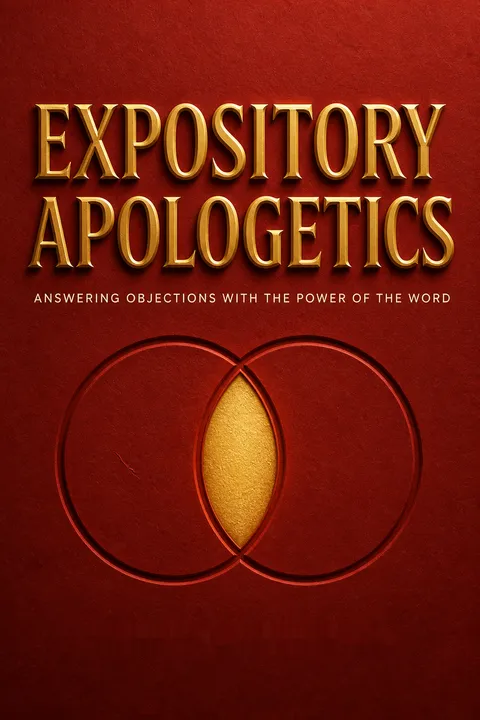
Not just for experts. Baucham defines apologetics as knowing what Christians believe, why they believe it, and how to explain it effectively. His term, expository apologetics, means answering objections by drawing on Scripture and explaining its claims clearly. It is intended for ordinary conversations, not only formal debates. The goal is not to win an argument but to make the Christian message understandable and direct people toward Christ.
A formative encounter. As a college student, Baucham was not a Christian and knew little about the Bible. Campus minister Steve Morgan patiently examined the claims of Christianity with him, then taught him to find answers in Scripture himself. Baucham presents that combination of patient conversation and guided learning as the model: explain the faith, help others understand it, and equip them to explain it in turn.
The book's most useful reframing is to treat apologetics as a basic practice of communication and discipleship, rather than a specialized performance. Morgan's approach illustrates an important educational principle: guided inquiry builds more durable understanding than simply supplying answers. The aim of pointing toward Christ also prevents apologetics from becoming a collection of clever rebuttals. Still, this method is not religiously neutral. It begins from the authority of Scripture, a commitment Christians can explain but their conversation partners may not share. The approach works best when that starting point is made explicit rather than mistaken for common ground.
Let conviction sound like hope, not a courtroom victory.
Peter's whole passage matters. Baucham reads the familiar instruction in 1 Peter 3:15 within the surrounding passage, which describes Christians facing suspicion and suffering. The defense of faith belongs to a life marked by humility, good conduct, and care in speech. It is not permission to humiliate an opponent or display intellectual superiority. The responsibility extends to every believer, not only trained debaters.
Character is part of the answer. Peter's counsel to speak gently and respectfully does not mean hiding conviction or avoiding difficult claims. It means that the manner of the defense should fit the hope being defended. Baucham argues that Christians should be ready to explain both what they believe and why, while accepting that an explanation may not win approval and may even intensify opposition.
This link between argument and conduct is a strength because people assess a claim partly through the credibility of its messenger. Communication research often finds that perceived respect and trust affect whether audiences will engage with a message, even when they disagree with it. The book also resists equating gentleness with passivity: a person can challenge an idea firmly without treating its holder contemptuously. The difficult balance is that appeals to suffering can become self-confirming, with criticism interpreted as proof of faithfulness. A useful check is to ask whether opposition follows from the truth claim itself or from avoidable failures of accuracy, tone, or care.
Answer objections without mistaking every question for an information gap.
Diagnose the exchange. Baucham reads Romans 1 as teaching that unbelief is not simply a shortage of information. In his theological account, people resist what they know of God, so more facts alone cannot address the deepest problem. This does not make questions irrelevant. It means that apologetics should answer sincere questions while keeping the gospel, rather than information delivery, at its center.
Notice the moving target. He calls a pattern of raising one objection, ignoring its answer, and switching to another the Cycle of Foolishness. His related image of whac-a-mole apologetics describes the frustration of repeatedly answering disconnected challenges without making progress toward the central issue. Proverbs 26 warns both against adopting a fool's premise and against leaving folly unchallenged. The practical task is to distinguish honest inquiry from evasion without assuming bad faith too quickly.
The distinction between an information problem and a motivational problem has parallels in psychology: people can resist evidence that threatens identity, values, or group belonging. That insight cautions against assuming that a technically stronger argument will automatically persuade. But diagnosing another person's resistance is itself risky. A question that sounds evasive may reflect confusion, mistrust, or an unanswered concern. The book's advice is strongest when its theological diagnosis is paired with patient listening, not used as a shortcut for dismissing interlocutors. In practice, a clear answer followed by a sincere question about what remains unresolved can keep the exchange both honest and humane.
Read Romans and Acts as models for Scripture-shaped replies.
Paul anticipates objections. Baucham points to Romans, where Paul repeatedly voices questions that might arise from his teaching, then answers them. Examples include whether grace encourages sin and whether God's judgment is unjust. Paul grounds his replies in Scripture and keeps returning to the gospel rather than treating each issue as an isolated debate. Baucham sees these questions as reflecting real objections Paul encountered, though their literary form is rhetorical.
Adapt without retreating. In Acts 17, Paul addresses Athenians who do not share Jewish scriptural assumptions. He refers to creation, human dependence on God, repentance, judgment, and the resurrection, while also drawing on language familiar to his audience. For Baucham, this shows that a Christian can adapt the route into a conversation without abandoning the biblical message at its destination.
These examples offer a valuable model of audience awareness. Paul does not deliver the same explanation in the same form to every audience, yet his central claims remain coherent. That resembles good translation: a speaker changes vocabulary and entry points without changing the meaning being conveyed. The book's reading of Paul's questions as echoes of actual encounters is plausible, but the text alone cannot establish the history behind every rhetorical question. The more secure lesson is practical: biblical argument can anticipate objections, answer them directly, and adjust its presentation to what an audience knows.
Memorize the church's inherited summaries before inventing new arguments.
Use shared memory. Baucham recommends creeds, confessions, and catechisms as preparation. Creeds summarize core Christian claims; confessions set out a fuller statement of belief; catechisms teach through questions and answers. He highlights the Apostles' and Nicene Creeds, the Athanasian Creed, and the Second London Baptist Confession. These give Christians concise ways to identify what they believe and how historic communities have distinguished it from competing teachings.
Make doctrine usable. Baucham recounts a child repeatedly asking why Jesus had to die. Instead of giving another explanation, he guided the child through familiar catechism questions about sin, Christ's obedience, atonement, and faith. The child recognized that the memorized answers addressed a real question. The point is not that memorization replaces understanding, but that well-learned summaries can make important ideas available in conversation.
These materials function as cognitive scaffolding: they organize complex doctrine into forms that can be recalled under pressure. They also connect an individual believer to a community's long-running conversation, countering the tendency to treat every question as unprecedented. Yet inherited summaries are not self-authenticating. Different Christian traditions disagree, and concise formulas can be repeated without comprehension. Their best use combines memorization with explanation, scriptural examination, and the ability to say where a tradition's interpretation is contested. The book's insistence on measuring confessions against Scripture provides an important safeguard against turning historical inheritance into unquestionable authority.
Keep moral commands distinct from Israel's ceremonial and civil rules.
Sort before applying. The threefold division of the law is a Reformed framework that distinguishes moral, ceremonial, and civil or judicial laws. Baucham treats the Ten Commandments as a summary of moral requirements that remain binding. Ceremonial rules shaped Israel's worship and pointed to Christ; civil rules governed ancient Israel as a political community, though their broader principles may still inform ethical judgment.
Context answers the charge. This distinction responds to the accusation that Christians inconsistently follow some Old Testament rules and ignore others. Laws about sacrifices, food, or grooming do not function in the same way as prohibitions on theft or murder. The book uses examples such as Israel's gleaning rules for the poor to show how an ancient civil law may express a continuing concern without being copied directly into modern policy.
The framework makes a serious interpretive point: religious texts contain different kinds of instruction, and application requires attention to purpose, audience, and historical setting. That is a broadly useful principle even for readers outside this theological tradition. The categories, however, are not accepted or applied identically by all Christians, and placing a rule in one category does not settle every interpretive dispute. Nor does identifying a biblical source for a modern moral claim, by itself, persuade people who reject that authority. Strong public reasoning needs to explain both the interpretation and its implications, rather than treating the labels as a complete argument.
Listen for the hidden premise, then test it before rebutting.
The conversational method. Baucham names the Expository apologetic waltz, a three-part approach to discussion. First, listen carefully and restate the other person's claim fairly. Next, identify inconsistencies and trace any sound moral intuition to its biblical source. Finally, explain the Christian account and why it matters. The sequence is meant to prevent a quick, inaccurate rebuttal and keep a disagreement from becoming a contest of insults.
Test the actual claim. In discussing the claim that love should determine who may marry, Baucham asks whether that principle supplies clear boundaries. He then argues that the desire for equal treatment has a biblical foundation, while explaining his own account of marriage from Scripture. The example illustrates his method, not a guarantee that exposing a tension settles a contested moral or legal question.
The strongest element of this framework is its first move: accurately restating a position before criticizing it. In argumentation theory, this is often called charitable interpretation, and it reduces the risk of attacking a caricature. The next moves can clarify where a claim depends on an unstated moral premise. But tracing a value to a biblical parallel does not prove that the person holding it borrowed it from Christianity, or that the author's preferred application follows. The framework is most persuasive when it separates three questions: what the other person means, whether the claim is consistent, and what grounds the Christian offers for a different conclusion.
Train through sermons and discipleship for questions people actually ask.
Prepare the audience. Baucham urges preachers and teachers to read a passage as a skeptic might: What could be confusing, objectionable, or difficult to accept? He also recommends challenging one's own claims and addressing hard questions rather than assuming listeners already agree. This turns exposition into preparation for real conversations without making every sermon a formal debate.
Practice in relationships. Parents, mentors, and church leaders can use catechism and ordinary discussion to help people connect doctrine with daily questions. Baucham also recommends learning from conversations with friends, family, evangelists, and the broader culture. The goal is not to chase every controversy but to become familiar with recurring objections while deepening understanding of the faith being taught.
This approach brings audience analysis into teaching and treats discipleship as formation over time, not simply the delivery of a short course. Repeated practice can help people retrieve ideas when a real conversation becomes emotionally charged. It also makes skepticism a useful test of clarity: if a claim cannot be explained to a sincere questioner, the teacher may need to understand it better. There is a limit, however. A sermon organized around anticipated objections can become defensive or overly focused on controversy. The book's own emphasis on the gospel and disciple making offers the right restraint: answer questions as part of teaching a full Christian life.
Analysis
This book is both a practical guide and a theological argument about what counts as a faithful defense of Christianity. Its central move is to relocate apologetics from the specialist's debate platform to ordinary life: a new believer learning to read Scripture, a parent answering a child, a preacher anticipating resistance, or a Christian responding patiently to a colleague. The narrative of Baucham's conversion under Steve Morgan's patient guidance gives that ambition a human scale. The method is not simply to collect proofs, but to connect explanation, biblical interpretation, character, and evangelism.
Its strongest contribution is the insistence that answers are not enough if they are detached from the questioner's actual concern or from the speaker's conduct. The instruction to listen, summarize fairly, and address objections within the flow of teaching provides a usable discipline. Creeds and catechisms supply a memorable structure for learning, while the readings of Romans and Acts show how the author sees Scripture itself modeling this work.
The method also rests on clear confessional commitments. It treats Scripture as final authority, reads unbelief through a Reformed account of sin, and applies a Reformed distinction among moral, ceremonial, and civil law. Those premises make the book coherent for readers who share them, but they are not neutral starting points. A conversation partner who rejects biblical authority may not accept the source of the answer, even when the reasoning is internally consistent. The book's advice to explain one's commitments openly is therefore crucial.
A further tension lies between describing opponents as suppressing truth and approaching them as people whose questions deserve careful attention. The framework is most constructive when the first claim informs the speaker's theology without predetermining the motives of each individual. The same caution applies to claims that objections are limited or recurring: many deep questions return across generations, but their details shift with history and knowledge. Taken as a training guide rather than a promise of persuasion, the book offers a durable model: know the faith, understand the listener, answer from the text, and keep the purpose larger than winning the exchange.
Review Summary
Expository Apologetics receives overwhelmingly positive reviews (4.35/5) for making presuppositional apologetics accessible to everyday Christians. Readers praise Baucham's biblical, practical approach that emphasizes defending faith through Scripture rather than philosophical arguments. The book teaches Christians to engage conversations naturally while keeping the gospel central. Reviewers appreciate its focus on catechisms, creeds, and the Ten Commandments as tools, plus practical guidance for apologetic encounters. Some note the book feels disjointed or lacks conversational examples. Critics wanting technical depth found it basic, but most consider it essential reading for equipping all believers—not just specialists—to defend their faith biblically and winsomely.
People Also Read





Glossary
Expository apologetics
Scripture-centered defenseA way of defending Christian belief by using biblical exposition to answer objections. It combines knowing what Christians believe, understanding why they believe it, and communicating those beliefs clearly in ordinary conversation. Baucham presents it as an everyday responsibility for believers, with gospel proclamation as its purpose, rather than a task reserved for formal debaters.
Cycle of Foolishness
Objections that keep shiftingBaucham's name for a frustrating pattern in which someone raises an objection, receives an answer, then moves to a different objection without engaging the response. The term draws on Proverbs' paired cautions about answering a fool: do not adopt a false premise, but do expose faulty reasoning rather than letting it stand.
Spiral of ungodly unbelief
A descent from rejected truthBaucham's description of Paul's account in Romans 1 of humanity's rejection of God. People encounter God's revelation, refuse to honor God, and turn toward idolatry and further wrongdoing. This theological model shapes the book's claim that apologetics must address sin and the need for the gospel, not only gaps in information.
threefold division of the law
Three categories of biblical lawA Reformed framework that distinguishes moral, ceremonial, and civil or judicial laws in the Old Testament. Baucham treats moral law as permanently binding, ceremonial law as tied to Israel's worship and fulfilled in Christ, and civil law as specific to ancient Israel, with broader principles that may still inform ethical reasoning.
Expository apologetic waltz
A three-step conversation methodBaucham's model for discussing a claim that conflicts with Christian belief. The participant listens and restates the claim accurately, identifies inconsistencies and biblical roots in any sound moral intuition, then explains the Christian account and its significance. The method aims to keep conversation both truthful and respectful rather than turning it into a contest.
Whac-a-mole apologetics
Endless disconnected rebuttalsBaucham's metaphor for answering a succession of objections when the questioner ignores each response and simply raises another challenge. The exchange produces activity without progress toward the central issue. He recommends answering sincere questions while recognizing when repeated topic changes prevent meaningful discussion.
presuppositional apologetics
Reasoning from foundational commitmentsAn approach to defending Christianity that examines the basic assumptions underlying competing worldviews and argues that Christian belief provides the necessary foundation for truth and knowledge. Baucham locates expository apologetics within this tradition, emphasizing Scripture as the authority from which Christians should answer objections rather than treating it as a source to set aside.
About the Author
Other books by Voddie T. Baucham Jr.

Download PDF
Download EPUB
.epub digital book format is ideal for reading ebooks on phones, tablets, and e-readers.








