

Key Takeaways
Let empathy open the door, but do not let it decide what is true.
Feeling is not a verdict. The book begins with an ordinary act of empathy: the author helps a struggling mother board a plane because she recognizes the stress of traveling with a young child. That kind of perspective-taking can make people more patient and generous. Stuckey distinguishes it from love, which she defines as choosing another person’s good, and compassion, which means sharing concern for someone’s suffering. Empathy is an emotion that can motivate care, but, in her view, cannot by itself determine what is right.
Truth sets the boundary. The book calls empathy toxic when advocates use a person’s pain to demand agreement with a political or moral position, presenting disagreement as proof of cruelty. Its Christian answer is to pair compassion with biblical truth: care about the person without assuming that affirming every feeling or choice serves that person’s good.
The distinction is useful beyond religious politics: emotional resonance can reveal whose needs have been overlooked, but it does not settle which remedy works. In that sense, empathy is a powerful attention mechanism and a poor substitute for ethical reasoning. The book’s strongest insight is that compassion need not mean automatic agreement. Its limit is that invoking truth does not resolve disputes over how truth is known. Readers outside the author’s faith commitments may accept the need for evidence and moral standards while disagreeing about whether biblical authority supplies them.
Treat emotional slogans as claims to test, not commands to obey.
Look beneath the language. Stuckey offers warning signs for what she calls toxic empathy, a term for emotional appeals that turn compassion into pressure to endorse a particular agenda. Her checklist includes:
1. Euphemisms that soften or obscure what a policy does.
2. Biblical language used without its original context.
3. Calls for kindness that lead directly to a political demand.
4. Familiar moral words given unfamiliar meanings.
5. Emotional accusations substituted for answers to substantive objections.
Ask what follows. The book’s examples include using the language of care to support abortion access, pronoun affirmation, same-sex marriage, open borders, or race-conscious policy. Its practical advice is to identify the actual action being proposed, check the supporting evidence, and compare the claim with the speaker’s stated moral framework. An emotional story can matter without proving the policy attached to it.
This is a memorable method for slowing down public debate: translate a slogan into its concrete policy implications, then examine the evidence and assumptions. It resembles argument analysis, where emotionally compelling premises are separated from the conclusion they are meant to support. The warnings are best treated as prompts, not a verdict on the speaker’s motives. Euphemism, moral language, and strong emotion also appear in sincere advocacy. A fair test asks whether the reasoning holds up, not whether the advocate belongs to a favored political camp.
When pregnancy stories narrow the frame, count the unborn child too.
Consider every life in view. The abortion chapter opens with Samantha and Luis, whose daughter Halo was diagnosed with anencephaly, a severe condition that made survival unlikely. Samantha wanted to end the pregnancy, but, as the book describes Texas law at the time, the diagnosis alone did not qualify for an abortion exception. Halo was born at 33 weeks and lived for four hours. Stuckey argues that a story centered only on the mother’s suffering leaves out the child whose life is at stake.
Name the moral question. The author’s central case is that an unborn child is a human being with moral worth, so size, dependency, disability, or circumstances of conception do not justify intentionally ending that life. She distinguishes procedures intended to save a mother’s life from an abortion intended to kill the unborn child, while also urging support for pregnant women and mercy for people who regret abortions.
The chapter’s strongest move is to challenge a one-person narrative by asking whose interests have been omitted. That is a valuable discipline in any debate about dependent people. But the story itself cannot settle the hardest questions: readers may disagree about fetal personhood, bodily autonomy, medical exceptions, and the proper role of law. Those questions require explicit moral reasoning, not only an emotionally vivid account. The book’s Christian argument is clear about its premises, but its broader persuasiveness depends on showing why readers who do not share those premises should accept its legal conclusions.
Do not confuse affirming distress with resolving its cause.
Listen beyond the relief. Laura Perry Smalts’s story anchors the chapter on transgender identity. She described feeling happier after beginning testosterone and presenting as a man, then becoming more distressed after surgeries and realizing that transition had not resolved painful experiences from her past. She later stopped hormones, returned to her Christian faith, and detransitioned. Stuckey uses her experience to argue that relief after affirmation does not, by itself, establish that a person’s understanding of their sex is accurate or that medical transition is the best response.
Examine the evidence and risks. The book argues that biological sex is fixed, raises concerns about the effects of hormones and surgery, especially for minors, and questions whether distress among young people is always innate. It also recounts the case of David Reimer, a boy raised as a girl after a medical injury, as a challenge to the idea that gender is shaped only by upbringing.
The distinction between acknowledging distress and endorsing a single treatment is important, particularly when decisions may have lasting effects. Laura’s account makes the author’s concern vivid, while the Reimer story illustrates how one case can unsettle a sweeping theory. Neither kind of testimony, on its own, establishes what approach works best across a varied population. A careful discussion must keep compassion, clinical evidence, uncertainty, and consent in view together. The book insists on biological limits; readers should also notice how quickly it moves from that claim to conclusions about policy and individual care.
Judge marriage policies by children’s interests, not adult affirmation alone.
Ask who bears the cost. Stuckey argues that marriage is not merely a label for adult affection. In her Christian account, its male-female form is tied to procreation, parenting, and a biblical picture of the relationship between Christ and the church. She contends that changing the definition of marriage shifts attention from children’s needs to adults’ desires. The chapter uses examples of donor conception and surrogacy, including a surrogate who developed cancer and said the intended parents pressured her to abort the premature child she carried.
Separate the principle from the cases. The author argues that children have an interest in their biological origins and in relationships with both a mother and a father. She acknowledges that loving parents can be found in many family arrangements, but maintains that this does not make those arrangements equivalent. Her broader point is that reproductive technology and family policy should be evaluated from the child’s perspective, not only the adults’ longing to parent.
The child-centered question is a serious contribution because family debates can make children’s interests secondary to adult rights or recognition. The chapter also raises distinct issues that should not be collapsed: legal marriage, parenting quality, donor conception, and surrogacy each involve different evidence and ethical concerns. A general claim about the value of mothers and fathers does not, by itself, establish the likely outcomes for every child or the effects of a particular law. The author’s theological account gives her position coherence; a public argument also needs careful comparison of real family experiences and policy consequences.
Balance mercy for migrants with the public duties of borders.
Hold two stories together. Maribel Trujillo Diaz, a mother deported to Mexico after living in Ohio for years, represents the human cost of immigration enforcement. Kate Steinle, killed in San Francisco by a man who had been deported multiple times and later released, represents the potential cost of failing to enforce the law. Stuckey argues that neither story alone can determine sound policy. She also cites nearly 1.7 million Border Patrol apprehensions in fiscal year 2021, while acknowledging that estimates of people who crossed without being apprehended are uncertain.
Distinguish welcome from limitlessness. The book argues that governments have duties to protect citizens, enforce laws, and decide who may enter, while treating migrants with dignity. It describes border crossings as dangerous for migrants too, citing exploitation by smugglers and cartels. The author distinguishes refugees and asylum seekers from people seeking economic opportunity, and supports legal immigration and vetted refuge alongside tighter enforcement.
The chapter usefully resists a policy debate built around only one class of victims. It also separates human dignity from a claim to unrestricted entry, a distinction that can make room for both humane treatment and enforceable rules. The central difficulty is empirical: vivid crimes demonstrate that failures can have grave consequences, but they do not quantify overall risk or identify the best mix of enforcement and admission. Apprehension totals are not the same as a count of unique people, and undocumented status does not define a person’s character. Policy requires broader evidence than anecdotes can supply.
Demand evidence before turning unequal outcomes into proof of oppression.
Separate disparity from cause. The chapter begins with Elijah McClain, a young Black man who died after police restrained and sedated him. The book condemns the treatment he received, including the officers’ and paramedics’ conduct, and notes that people were later convicted in connection with his death. Stuckey argues that such cases deserve accountability but do not, by themselves, prove that every police interaction or institution is driven by racial animus.
Define justice as impartial. Drawing on economist Thomas Sowell, the author rejects the assumption that every difference in group outcomes proves discrimination. She calls attempts to force equal outcomes through state power cosmic justice, and contrasts them with fair, proportionate treatment under law. She argues that weakening policing can expose vulnerable communities to more violence, while insisting that claims of discrimination should be investigated rather than assumed or dismissed.
The distinction between unequal outcomes and their causes is essential to responsible analysis. A disparity is a signal to investigate, not a complete explanation. The book is right to resist inferring intent from a single case and to insist that public safety includes victims of crime. The same standard should apply in the opposite direction: rejecting a simple causal story does not establish that institutions are fair. Sound analysis needs relevant comparisons, attention to context, and willingness to revise a conclusion when evidence changes. That discipline is more persuasive than treating either side’s preferred explanation as settled.
Make compassion tangible, and speak convictions without treating people as enemies.
Turn care into practical help. Maria, a refugee facing an unexpected pregnancy, arrived at a church-affiliated pregnancy center after learning she could not afford an abortion. Staff offered counseling, prenatal vitamins, help with Medicaid, parenting classes, a car seat, and a crib. Maria chose to continue the pregnancy, and volunteers supported her through labor and the birth of her daughter. Stuckey presents the story as an example of compassion that meets immediate needs rather than stopping at a slogan. She cites about 3,000 pregnancy centers in the United States and says they served more than two million people in 2019.
Pair courage with service. The book urges Christians to state unpopular convictions clearly, accept that criticism may follow, and support others facing costs for their beliefs. But it also says that not everyone needs a public platform: ordinary acts of care, family responsibilities, and local service matter. Its final measure is whether conviction leads to protection of vulnerable people, not simply winning an argument.
The Maria story gives the book’s account of love an institutional and practical form: assistance can make a choice less desperate and a person less alone. This is stronger than treating compassion as a matter of tone. Direct service, however, cannot answer every question about law or structural support, and the effectiveness of any service deserves transparent evaluation. Likewise, courage is not the same as certainty or harshness. The most durable version of the book’s appeal combines conviction with listening, material help, and a willingness to distinguish people from the positions they hold.
Analysis
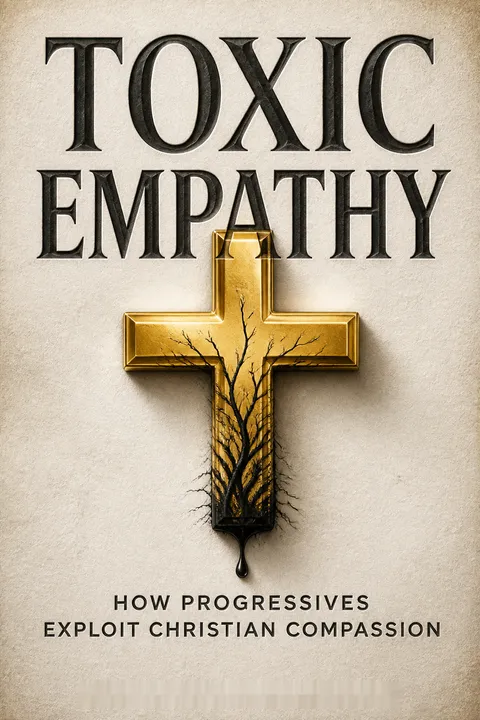
Toxic Empathy is a Christian political argument organized around five contested issues. Its central distinction is between empathy as recognition of another person’s feelings and love as a judgment about that person’s good. The distinction gives the book a clear through-line: first resist emotional pressure, then examine the moral and policy claim hidden inside it. The recurring stories, from the overwhelmed mother at an airport to Halo, Laura, Maribel, and Elijah, make the abstract argument memorable by revealing who a slogan includes and who it leaves out.
The book’s strongest analytical contribution is its insistence that compassion does not automatically validate a proposed remedy. That principle is broadly useful, including to readers who reject its theology. Its method is less even when it tests competing explanations. The author frequently treats progressive arguments as politically strategic, then supports her own conclusions with selected anecdotes, statistics, and biblical interpretation. These are different kinds of evidence. A personal story can establish that a harm occurred; it cannot establish how common the harm is, what caused it, or which policy would reduce it. Similarly, a disparity can neither prove discrimination on its own nor rule discrimination out.
The book is most persuasive to readers who share its view of Scripture as authoritative and its account of human nature. For other readers, the key disputes are not only about policy but about who has standing to define human flourishing, how pluralistic law should handle conflicting moral beliefs, and what evidence can justify claims about social outcomes. The adaptation’s central lesson is therefore also a useful test of the book itself: emotional narratives deserve attention, but so do the evidence and assumptions that connect those narratives to broad conclusions. Its call to join moral conviction with concrete service is stronger than any invitation to dismiss an opponent as merely manipulative.
Review Summary
Toxic Empathy by Allie Beth Stuckey receives polarized reviews, averaging 4.32/5 stars. Five-star reviewers praise her biblical worldview on abortion, transgenderism, immigration, marriage, and social justice, calling it courageous, well-researched, and timely. One-star reviewers criticize the book as politically biased rather than genuinely Christian, accusing Stuckey of lacking compassion, using anecdotal arguments while condemning others for the same, and misrepresenting Jesus's teachings. Critics describe it as Christian nationalism disguised as faith literature. Both sides acknowledge her articulate presentation, though they fundamentally disagree on whether her arguments reflect authentic Christianity or harmful political rhetoric.
People Also Read


Glossary
Toxic empathy
Empathy used as pressureThe author’s term for appeals that use compassion or fear of appearing unkind to pressure people into affirming a moral position or supporting a political agenda. In the book, the problem is not empathy itself, but treating another person’s feelings as decisive evidence of what is true, right, or beneficial.
Social justice hypothesis
Systemic oppression as explanationThe author’s label for the claim that social institutions are fundamentally oppressive and that unequal group outcomes are evidence of discrimination. She argues that this framework assigns people to oppressor or oppressed groups and supports broad political changes intended to redistribute power or produce more equal outcomes.
cosmic justice
Enforced equality of outcomesA term the book draws from Thomas Sowell for attempts to make society achieve a chosen pattern of equal outcomes. The author contrasts this goal with justice based on impartial rules, fair procedures, and proportionate consequences. She argues that forcing equal results requires authorities to reshape society according to their preferred distribution.
mishpat
Biblical justice and judgmentA Hebrew term the book uses for justice in the Old Testament. Stuckey describes it as including the fair application of law and appropriate punishment, as well as recognizing people’s worth and meeting legitimate needs. The term supports her claim that biblical justice combines impartial judgment with concern for vulnerable people.
rapid-onset gender dysphoria
Proposed adolescent-onset patternA term associated in the book with researcher Lisa Littman. It describes a proposed pattern in which adolescents, particularly girls, adopt a transgender identity after showing no earlier history of gender distress, sometimes alongside peers. The book presents social influence and other vulnerabilities as possible factors; the term is not presented as a settled explanation for every young person’s experience.
fallacy of the excluded middle
Ignoring other possible causesA reasoning error identified in the book by pastor Voddie Baucham. It occurs when an argument treats two explanations as the only possibilities, such as attributing every disparity either to discrimination or to individual blame. The author uses the term to argue that outcomes can reflect several causes that require investigation.
teleological view
Design understood through purposeA way of understanding a thing by reference to its purpose or intended end. In the book, Stuckey applies this idea to human biology, arguing that sexed bodies have purposes grounded in God’s design. This framework underpins her rejection of the view that personal feelings can redefine biological sex.
About the Author
Other books by Allie Beth Stuckey

Download PDF
Download EPUB
.epub digital book format is ideal for reading ebooks on phones, tablets, and e-readers.








