

Key Takeaways
Your inadequacy is not a defect to cure; it is reason to depend on God
Limits expose a false burden. Stuckey argues that people cannot make themselves sufficient for every role, heal every wound, or guarantee their own happiness. Her account of college bingeing and purging shows how rejection and fear of being unwanted fed a destructive attempt to control her body and regain approval. Counseling helped her see the deeper fear, and she describes turning back to God as central to stopping the cycle. She explicitly recognizes that her recovery is not everyone’s experience.
Dependence replaces self-rescue. The book’s Christian answer is not shame or passivity, but reliance on God for identity, purpose, and strength. Stuckey contrasts that stable source with affirmations that soothe briefly but leave the underlying demand to fix oneself intact.
The distinction between accepting limits and surrendering to them is important. In practical terms, admitting that self-reliance has failed can make room for help from counselors, loved ones, and medical professionals, rather than replacing those supports. The story makes the cost of self-sufficiency vivid, though one person’s spiritual turning point should not be treated as a universal treatment for an eating disorder. The book is strongest when it challenges the fantasy of total control, not when that challenge is mistaken for a reason to avoid professional care.
Anchor moral judgment in Scripture, not the impulse of the moment
Feelings are not a compass. Stuckey challenges the idea that each person can determine what is true simply by consulting private intuition. She argues that desires, emotions, and personal experience can be sincere yet mistaken, and that Christian belief therefore needs an authority beyond the self: God, known through Scripture. The chapter applies this claim to individual choices and public disputes, including cancel culture and social justice. The author’s position is that moral standards based chiefly on shifting public sentiment can change with the crowd.
Justice still needs evidence. Stuckey distinguishes her account of biblical justice, which calls Christians to care for vulnerable people and hold wrongdoers accountable, from systems she sees as aiming to equalize group outcomes. Her argument depends on a Christian account of God as the source of moral truth.
An external moral standard can protect judgment from becoming a contest of personal preference or social power. Yet an appeal to an objective source does not remove the human work of interpretation: people can read the same text differently, misunderstand evidence, or apply principles selectively. The book acknowledges that Christians have misused Scripture, which points toward a useful test: does a moral claim withstand careful reading and factual scrutiny, especially when it challenges one’s own interests? Conviction is more trustworthy when paired with intellectual humility.
Read Scripture in context, and seek correction in a church
Learn before applying. Stuckey warns against what she calls “meology,” a me-centered approach that turns biblical passages into messages about personal success or affirmation. She recommends studying a passage’s historical setting, audience, purpose, and place in the larger Bible before deciding what it means. Her example is the familiar story of David and Goliath: rather than treating David as a template for conquering personal obstacles, she reads the story as pointing to God’s rescue.
Choose communities carefully. She argues that sermons, devotionals, and churches should be judged by whether they teach Scripture and the Christian message of sin, salvation, and spiritual growth, rather than simply offering motivation. A 2018 Ligonier survey cited in the book found that 32 percent of evangelical respondents viewed religious belief as personal opinion rather than objective truth, while 51 percent believed God accepts worship from all religions.
The method here is a form of disciplined reading: context limits the temptation to make every text confirm a reader’s existing preferences. Community can improve that discipline by exposing interpretations to questions and shared knowledge. It can also reinforce error if disagreement is discouraged, so accountability should run in more than one direction. The survey figures indicate confusion within a particular population, not its causes. The book’s practical questions about context and purpose are useful precisely because they invite examination rather than relying only on a preacher’s confidence.
Replace perfection projects with the slower work of Christian character
Affirmation can hide a demand. Stuckey calls it the “paradox of perfection” when people are told they are already perfect while being sold books, programs, or practices to uncover that perfection. She also challenges personality typing, including the Enneagram, when it encourages people to treat a type as a complete explanation of who they are. In her view, Christians should pursue qualities such as patience, kindness, and self-control rather than simply optimizing their supposed natural type.
Care is not worship. The author rejects the claim that a person is flawless as they are, but she does not argue for self-contempt. She accepts body care, exercise, and rest when their purpose is stewardship rather than earning worth through appearance. Her alternative to self-discovery is an identity grounded in being created and loved by God, with character shaped by Christian teaching.
The critique of perfectionism lands because self-acceptance and self-improvement are often marketed as if they never conflict. Personality frameworks can help people name tendencies, but they become limiting when a label turns into destiny or an excuse. The same caution applies to ideals of bodily acceptance: refusing shame need not mean denying health needs, and pursuing health need not mean making appearance the measure of worth. The author’s theological account supplies a clear direction for growth, though readers outside that faith tradition may need other sources of identity and moral guidance.
Treat feelings as signals to investigate, not commands to obey
Real does not mean accurate. Stuckey distinguishes an emotion’s reality, the fact that it is genuinely felt, from its validity, whether it fits the facts. She recalls becoming furious when her husband briefly switched a phone call to Bluetooth and asked her to repeat herself. After reflecting, she recognized that work stress, not his small request, was driving her reaction.
Ask what lies beneath. The book proposes a simple check: ask why the emotion has appeared and what the person is actually upset or afraid about. That pause can prevent misplaced blame and impulsive behavior. Stuckey’s Christian framework adds that feelings should be examined against Scripture rather than treated as final authority. Emotions remain worth noticing, but they do not automatically justify the conclusions or actions they prompt.
This approach resembles a core move in cognitive behavioral therapy: distinguish an event from the interpretation attached to it, then test whether that interpretation fits the evidence. Naming an emotion can create enough distance to choose a response rather than react automatically. The caveat is that emotions are not merely faulty reasoning; fear or anger can register genuine danger or injustice. Investigation should clarify what a feeling signals, not train people to dismiss it. A strong question is not only “Is this feeling accurate?” but also “What information might it contain?”
Work faithfully without demanding your dream job
Effort matters without guarantees. Stuckey describes entering public relations convinced she would quickly excel, then forgetting deadlines and struggling with basic tasks. The experience taught her that talent and ambition do not entitle anyone to easy success. She later built a career in media, speaking, and writing, yet says even fulfilling work did not become a complete source of identity or satisfaction.
Ordinary work has dignity. In the book’s Christian view, work is meaningful when it is done diligently, meets a real need, and serves other people, whether paid or unpaid. The author argues that work can honor God even when it is not a dream career, while acknowledging that effort may not produce the hoped-for result. A job can matter without being asked to answer every question about purpose.
This account resists two familiar extremes: treating work as disposable if it is not personally exciting, and treating career success as proof of personal worth. The idea of vocation helps explain how routine tasks can contribute to a shared good even when they are not glamorous. At the same time, the language of calling can be misused to romanticize poor conditions or endless labor. Meaningful work still benefits from fair compensation, reasonable limits, and the freedom to leave harmful situations. Purpose does not require pretending every job is fulfilling.
Start serving before you feel fully confident or healed
Love can begin in action. Stuckey argues that people need not complete a project of self-improvement before caring for others. She points to Camp Barnabas, where she volunteered alongside people with disabilities, and to her brother Daniel, who is autistic and has often struggled to find friendship. The experience required sustained attention and practical care, not a prior feeling of perfect confidence.
Do not make readiness a gate. The author reads the command to love one’s neighbor as a call to extend the care people naturally give themselves to others. Her examples range from helping a person in need to showing up for family and community. She does not deny that people need rest or support; her concern is that endless inward focus can keep real needs unmet and postpone relationships indefinitely.
Service can interrupt rumination by directing attention toward a person and a concrete need. It can also create connection and a sense of usefulness that private affirmations cannot manufacture. Still, helping others should not become a test of moral worth or a route to neglecting one’s own safety and health. The most sustainable service is reciprocal at the level of communities: people give, receive, and take turns carrying burdens. The book’s central challenge is valuable when it loosens perfectionistic delay, not when it turns self-sacrifice into another impossible standard.
Build love through commitment, not endless self-optimization
Commitment outlasts mood. Stuckey describes the strain of early parenthood, a house move, and family deaths that left her and her husband exhausted and quarrelsome. They chose to apologize, forgive, and keep working on the relationship when affection did not come easily. She presents marriage as one setting where love becomes repeated action rather than a constant feeling of ease.
A relationship is not a cure. The book also challenges the belief that people must first discover or perfect themselves before committing to a partner or family. Stuckey says marriage and parenting can be meaningful, demanding forms of shared life, but neither replaces God as a source of ultimate fulfillment. She notes that singleness is also a valid Christian life, and that marriage is not a prerequisite for serving or loving others.
Long-term commitment can create the trust and shared history that fleeting, mood-based relationships cannot easily provide. The account is especially persuasive when it shows repair as ordinary work: listening, apologizing, and reconsidering one’s own behavior. But commitment is not a universal answer to relationship difficulty. Endurance should not be confused with tolerating abuse, coercion, or danger, and a person’s worth does not depend on marrying or having children. The strongest version of this insight is that love asks for reliability, while still requiring boundaries and mutual respect.
Rest to sustain your responsibilities, not to escape them
Rest is a human need. Stuckey explicitly allows mothers to ask for help, trade caregiving shifts, take a nap, or make time for activities such as reading or exercise. Her distinction is not between rest and duty, but between rest that restores a person and a worldview that treats personal preference as the highest good.
Build a sustainable rhythm. The book compares life to a long course of work that requires patterns of activity and recovery. For a new mother, a short walk or an earlier bedtime might make more sense than an elaborate self-care routine. The point is practical: people are finite, and asking others for support is not a moral failure. Within Stuckey’s faith, rest is received as part of serving God and neighbor, not as proof that the self must always come first.
This distinction helps separate self-care from self-absorption. Recovery can make relationships and responsibilities more sustainable, especially in caregiving roles where exhaustion is easily normalized. Yet rest also has value beyond its usefulness to productivity or service. If every break must justify itself by making someone more effective, rest remains subordinate to performance. A balanced reading honors both interdependence and intrinsic human limits: people need pauses because they are human, not only because they have more work to do afterward.
Analysis
The book’s central move is to replace self-sufficiency with dependence on God, then trace that shift through five cultural claims: personal adequacy, private truth, innate perfection, entitlement to dreams, and self-love as a prerequisite for loving others. Its structure is effective because memoir gives the argument a bodily cost. The opening account of disordered eating and later scenes of work, marriage, and motherhood make abstract claims about control and identity concrete. The recurring question is not simply whether people should think well of themselves, but whether the self can reliably serve as both the source of distress and its final remedy.
The argument is specifically Christian, not a neutral psychological theory. Its answer depends on Scripture as divine authority, sin as a condition requiring redemption, and Jesus as the source of lasting identity and purpose. That clarity is a strength for readers who share the premises. It also means the conclusion cannot be established by anecdotes or social trends alone. The evidence that self-focus correlates with unhappiness, for example, does not by itself prove that self-love causes unhappiness or that religious commitment is the necessary remedy.
The book is most persuasive when it distinguishes finite capacity from moral failure, or when it shows how emotional affirmation can briefly soothe without resolving a deeper problem. It is less careful when it treats broad political or cultural disputes as straightforward consequences of self-worship. Competing explanations, empirical uncertainty, and variation within religious communities receive less space than the author's prescriptions. A reader can accept the central warning against making personal preference the sole standard while still asking how a community tests its own interpretation and protects vulnerable people from misuse of authority.
Its lasting contribution is a change in the question. Instead of asking how to feel sufficient enough to manage everything, readers are asked what they serve, whom they trust, and what kind of love their commitments require. The answer is unapologetically theological, but the practical invitation is recognizable beyond the book's faith tradition: stop demanding that private affirmation perform the work of healing, moral judgment, and belonging all at once.
Review Summary
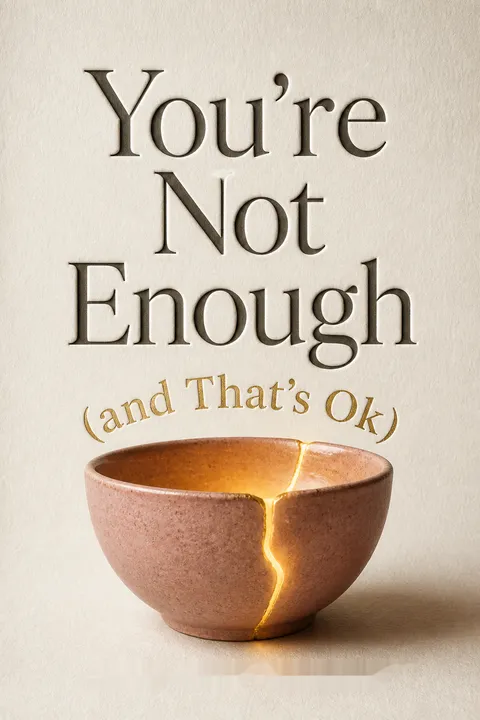
"You're Not Enough (and That's Okay)" received mixed reviews, with supporters praising its biblical perspective and critique of self-love culture, while critics found it judgmental and lacking nuance. Many Christian readers appreciated Stuckey's emphasis on finding worth in God rather than self. However, some readers felt the book oversimplified complex issues and pushed conservative viewpoints too strongly. The book's stance on topics like gender, sexuality, and social justice sparked controversy. Overall, reactions varied greatly based on readers' existing beliefs and perspectives.
People Also Read

Glossary
Cult of Self-Affirmation
Self as highest authorityStuckey’s name for a cultural outlook that treats personal authenticity and autonomy as supreme values. In this outlook, following one’s own desires is treated as morally validating, while outside limits are often dismissed as oppressive or judgmental. The book argues that this approach promises freedom but can leave people governed by their changing wants and feelings.
meology
Me-centered theologyStuckey’s term for religious teaching that centers the believer’s happiness, needs, or personal success instead of interpreting Scripture primarily as a revelation of God. She uses it to criticize sermons and devotional material that select Bible passages to affirm the audience while minimizing sin, repentance, or the demands of Christian faith.
paradox of perfection
Perfect already, improve constantlyStuckey’s description of the conflicting message that people are flawless as they are but need products, programs, or self-discovery practices to realize that perfection. She argues that this combination offers affirmation while continuing to imply that the person must work to become complete, often keeping self-improvement at the center of identity.
self-forgetfulness
Attention turned away from selfA Christian posture the book draws from Tim Keller: humility is neither magnifying oneself nor constantly putting oneself down, but becoming less preoccupied with oneself. Rather than judging each interaction by what it says about personal worth, the believer is freed to attend to God and other people.
FAQ
What's "You're Not Enough (and That's Ok)" about?
- Author's Perspective: The book, written by Allie Beth Stuckey, challenges the modern self-love culture that promotes the idea that individuals are inherently enough on their own.
- Core Argument: Stuckey argues that the belief in self-sufficiency is misleading and that true fulfillment comes from recognizing one's insufficiency and relying on God's love and guidance.
- Structure: The book is organized around debunking five myths related to self-love and self-sufficiency, offering a Christian perspective on finding purpose and satisfaction.
- Target Audience: It is aimed at women who feel pressured by societal expectations to be perfect and self-reliant, offering them a faith-based alternative.
Why should I read "You're Not Enough (and That's Ok)"?
- Challenging Popular Beliefs: The book provides a counter-narrative to the prevalent self-help and self-love messages, encouraging readers to question these cultural norms.
- Faith-Based Insights: It offers a Christian perspective on personal growth and fulfillment, making it particularly relevant for readers interested in integrating faith with daily life.
- Practical Advice: Stuckey provides practical advice on how to navigate feelings of inadequacy and find peace through faith rather than self-reliance.
- Relatable Stories: The author shares personal anecdotes and stories that many readers may find relatable, making the book engaging and accessible.
What are the key takeaways of "You're Not Enough (and That's Ok)"?
- Myth of Self-Sufficiency: The book argues that the idea of being "enough" on one's own is a myth and that true fulfillment comes from acknowledging one's need for God.
- Role of Faith: It emphasizes the importance of faith and God's love as the foundation for self-worth and purpose, rather than self-love or societal validation.
- Self-Forgetfulness: Stuckey advocates for self-forgetfulness, focusing on serving others and God rather than obsessing over self-improvement.
- Critique of Modern Culture: The book critiques modern culture's emphasis on self-love, self-care, and personal truth, suggesting these are insufficient for true happiness.
What are the five myths discussed in "You're Not Enough (and That's Ok)"?
- Myth #1: You Are Enough: Challenges the belief that individuals are inherently sufficient and argues for the necessity of God's sufficiency.
- Myth #2: You Determine Your Truth: Critiques the idea that personal truth is valid and emphasizes the importance of objective truth found in God.
- Myth #3: You’re Perfect the Way You Are: Disputes the notion of inherent perfection and encourages growth through acknowledging imperfections.
- Myth #4: You’re Entitled to Your Dreams: Argues against the entitlement to personal dreams and stresses the importance of aligning desires with God's will.
- Myth #5: You Can’t Love Others Until You Love Yourself: Refutes the idea that self-love is a prerequisite for loving others, promoting self-forgetfulness instead.
How does Allie Beth Stuckey define self-love in "You're Not Enough (and That's Ok)"?
- Cultural Definition: Stuckey describes self-love as a cultural trend that encourages individuals to prioritize their own needs and desires above all else.
- Critique of Self-Love: She argues that self-love is inherently unsatisfying and unreliable because it is based on fluctuating feelings and circumstances.
- Alternative to Self-Love: The book suggests that God's love is a more stable and fulfilling foundation for self-worth and purpose.
- Self-Forgetfulness: Stuckey promotes self-forgetfulness, focusing on serving others and God rather than obsessing over self-improvement.
What is the "toxic culture of self-love" according to Allie Beth Stuckey?
- Definition: The toxic culture of self-love refers to societal messages that promote self-sufficiency, self-empowerment, and the idea that individuals are inherently enough.
- Consequences: Stuckey argues that this culture leads to feelings of inadequacy, burnout, and a cycle of seeking superficial validation.
- Criticism: She criticizes this culture for being self-centered and for failing to provide lasting fulfillment or peace.
- Alternative View: The book offers a Christian perspective, suggesting that true fulfillment comes from recognizing one's need for God and serving others.
How does "You're Not Enough (and That's Ok)" address the concept of self-sufficiency?
- Myth of Self-Sufficiency: Stuckey argues that the belief in self-sufficiency is a myth and that individuals are not meant to be self-reliant.
- Role of God: The book emphasizes the importance of relying on God's love and guidance for true fulfillment and purpose.
- Critique of Modern Messages: It critiques modern messages that promote self-sufficiency as misleading and ultimately unfulfilling.
- Call to Action: Stuckey encourages readers to embrace their insufficiency and turn to God for strength and direction.
What does Allie Beth Stuckey say about the role of faith in personal fulfillment?
- Central Role of Faith: Stuckey argues that faith in God is central to personal fulfillment and that self-reliance is insufficient.
- God's Love as Foundation: The book emphasizes that God's love provides a stable and lasting foundation for self-worth and purpose.
- Faith vs. Self-Love: It contrasts faith with self-love, suggesting that the latter is unreliable and temporary.
- Practical Application: Stuckey provides practical advice on how to integrate faith into daily life for a more fulfilling and purposeful existence.
What are the best quotes from "You're Not Enough (and That's Ok)" and what do they mean?
- "The self can’t be both the problem and the solution." This quote highlights the book's argument that self-reliance is insufficient for solving personal issues.
- "Our sufficiency isn’t the answer to insecurity, and self-love isn’t the antidote to our feelings of self-loathing." It emphasizes the need for God's love as a more reliable source of self-worth.
- "The answer to the purposelessness and hollowness we feel is found not in us but outside of us." This quote underscores the book's central message that fulfillment comes from God, not self.
- "You’re not enough, you’ll never be enough, and that’s okay, because God is." It encapsulates the book's core argument that recognizing one's insufficiency is key to finding peace and purpose.
How does "You're Not Enough (and That's Ok)" critique modern culture?
- Critique of Self-Love Culture: The book critiques the modern culture of self-love for promoting self-sufficiency and self-empowerment as solutions to personal issues.
- Impact on Society: Stuckey argues that this culture leads to feelings of inadequacy, burnout, and a cycle of seeking superficial validation.
- Alternative Perspective: The book offers a Christian perspective, suggesting that true fulfillment comes from recognizing one's need for God and serving others.
- Cultural Messages: It challenges cultural messages that prioritize self-love and self-care over faith and community.
What practical advice does Allie Beth Stuckey offer in "You're Not Enough (and That's Ok)"?
- Embrace Insufficiency: Stuckey advises readers to embrace their insufficiency and rely on God's love and guidance for fulfillment.
- Focus on Faith: She encourages integrating faith into daily life as a source of strength and purpose.
- Self-Forgetfulness: The book promotes self-forgetfulness, focusing on serving others and God rather than obsessing over self-improvement.
- Critique of Self-Help: Stuckey critiques self-help messages that promote self-sufficiency and offers a faith-based alternative.
How does "You're Not Enough (and That's Ok)" address the concept of self-forgetfulness?
- Definition of Self-Forgetfulness: Stuckey defines self-forgetfulness as focusing on serving others and God rather than obsessing over self-improvement.
- Contrast with Self-Love: The book contrasts self-forgetfulness with self-love, suggesting that the latter is unreliable and temporary.
- Role in Fulfillment: Stuckey argues that self-forgetfulness leads to true fulfillment and peace, as it aligns with God's purpose for individuals.
- Practical Application: The book provides practical advice on how to practice self-forgetfulness in daily life, emphasizing the importance of community and faith.
About the Author
Other books by Allie Beth Stuckey
Download PDF
Download EPUB
.epub digital book format is ideal for reading ebooks on phones, tablets, and e-readers.








