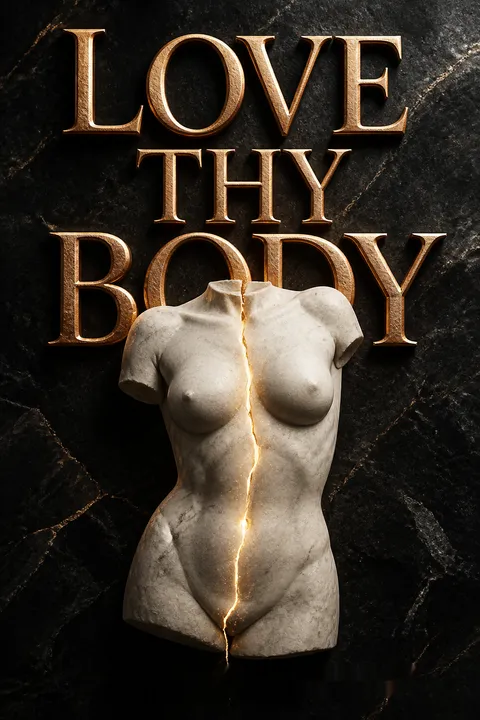


Key Takeaways
Treat the body as part of the person, not equipment for the self.
The central division. Pearcey calls the separation of body and person two-story dualism. In this view, biology belongs to the realm of measurable facts, while the supposedly authentic self belongs to a separate realm of feelings, choice, or consciousness. The divide helps explain why the book connects debates about abortion, assisted death, sex, and gender: each concerns whether bodily life has meaning and value in itself, or only through what a person thinks or wants.
An embodied alternative. Christianity, Pearcey argues, sees body and soul as distinct but integrated parts of one person. The body is not a disposable shell; it participates in human dignity. She draws this conviction from creation, the incarnation of Christ, and the promise of bodily resurrection. The book’s title expresses its central claim: accepting the body as a gift is part of respecting the person.
The framework is useful because it shifts discussion from isolated rules to the underlying picture of human beings. It also connects with embodied cognition, the research tradition showing that perception, emotion, and thought are shaped by bodily experience rather than occurring in a detached mind. Still, biological facts do not, by themselves, settle every ethical question. People can agree on anatomy and disagree about what obligations follow. The strongest use of Pearcey’s lens is therefore diagnostic: it reveals assumptions that need defending, rather than treating one account of embodiment as self-evident.
Debate the worldview beneath the rule, not only the headline.
Facts and values. The book describes a fact/value split: scientific claims are treated as public, testable knowledge, while moral and religious claims are often dismissed as private preference. Pearcey uses a two-story building as a picture of this separation. The lower floor holds empirical facts; the upper floor holds values. Her concern is that morality then appears to have no objective connection to reality.
Follow the assumptions. A public practice can express a view of human nature even when its supporters do not use philosophical language. For example, an argument may acknowledge that an embryo is biologically human while denying that this fact settles its moral standing. Pearcey’s strategy is to ask what concept of personhood, dignity, and the body makes that conclusion possible, and whether the same logic applies consistently elsewhere.
This is a strong method for serious disagreement: identify the premises before trading slogans. Political philosophy and science studies make a related point: evidence is interpreted through frameworks, and apparently neutral policies still embody choices about which harms or interests count. The caution is that calling a position a worldview does not refute it. Secular and religious arguments alike need clear premises, sound evidence, and fair treatment of objections. The method works best when it helps each side state its own assumptions accurately, not when it assigns hidden motives to opponents.
Ground human dignity in being human, not in current mental ability.
The personhood problem. Pearcey argues against personhood theories that make rights depend on capacities such as awareness, autonomy, or self-consciousness. These abilities vary over a lifetime: infants have not developed them, and illness or disability can diminish them. If they determine who counts as a person, the boundary may become uncertain and vulnerable people may lose protection. The book applies this concern to abortion, infanticide, and arguments for ending the lives of disabled or cognitively impaired patients.
Care is not the same as cure. Pearcey distinguishes intentionally causing death from declining burdensome treatment when death is already approaching. She presents hospice care as a whole-person alternative, addressing physical pain, emotional isolation, family needs, and spiritual concerns. Her Christian case grounds equal worth in the belief that humans are created and loved by God, not in what they can presently do.
The book’s most durable contribution here is its warning against making dignity conditional on performance. Disability ethics and human rights debates repeatedly confront the danger of defining worth through independence, productivity, or communication. At the same time, decisions about treatment involve more than a simple choice between life and death. Patients’ wishes, likely benefits, suffering, and medical burdens matter. Pearcey’s distinction between killing and allowing death helps clarify the debate, but compassionate policy also requires careful clinical judgment and protection against both neglect and unwanted intervention.
Treat sex as embodied communication, not a detachable pleasure service.
The hookup script. Pearcey describes a culture in which people are encouraged to separate physical intimacy from emotional attachment. Students interviewed by researcher Donna Freitas reported pressure to appear detached, even when casual encounters left them lonely or hurt. Alcohol could help some participate, while dating skills and ordinary conversation were strangely unfamiliar. The book argues that treating sex as a merely physical act underestimates its effects on the whole person.
A larger meaning. In Pearcey’s Christian account, bodily actions communicate. Sexual union is meant to express a committed union of lives, which is why she places sex within marriage. She also points to research on bonding hormones as evidence that sexual behavior can affect attachment, although that evidence alone cannot establish a moral rule. Her practical implication is that young people need guidance in relationships, not only information about contraception and disease.
The useful insight is that consent, emotional context, and expectations all matter, and that people can be harmed by social scripts that reward indifference. Attachment research helps explain why intimacy may carry consequences beyond the moment, but hormonal effects vary and do not make every encounter emotionally identical. Nor does the existence of emotional consequences prove that one relationship model fits everyone. The book’s challenge to purely mechanical sex education is valuable; its argument is most persuasive when paired with honest discussion of consent, power, pleasure, and the diverse ways people experience intimacy.
Separate attraction from identity, conduct, and moral judgment.
Feelings are not actions. Pearcey distinguishes sexual attractions from chosen behavior and from the identity labels people adopt. She argues that a person should not be reduced to a desire, and that people can make decisions according to their deepest convictions even when their feelings remain unchanged. Sean Doherty’s account illustrates one path: he remained attracted to men while choosing celibacy, and later married a woman. The author also warns against promising that attraction will reliably change; she acknowledges that many people do not experience such a change.
A pastoral distinction. The book treats temptation as different from acting on it, and argues that Christian sexual standards should apply consistently rather than singling out one group for harsher judgment. It also urges churches to honor celibacy and friendship, so that those who do not marry are not left with isolation as the price of their convictions.
This distinction can reduce shame by separating involuntary experience from deliberate conduct, and it respects the complexity of identity over time. It also avoids a simplistic promise of therapeutic change, a point with particular importance given the harm caused by coercive or guaranteed-change approaches. The harder question is whether a community’s moral standard is genuinely chosen or imposed through social pressure. A humane conversation must allow people to describe their own experience, while taking seriously that religious commitments, relationships, and identity can all be central to a person’s life.
Challenge gender stereotypes before telling a child their body is wrong.
Temperament is not anatomy. Brandon, a sensitive boy who preferred girls’ company and imaginative play, believed God should have made him a girl. His parents did not shame him or demand conventional masculinity. They helped him see that gentleness and emotional sensitivity are compatible with being male, and that narrow social stereotypes are not biological facts. Their approach gave him room to grow without treating his temperament as proof that his body was mistaken.
Care without shortcuts. Pearcey distinguishes gender nonconformity from intersex conditions, which involve biological variations, and from gender dysphoria, the distress some people experience about their sexed bodies. She calls for compassion, support, and attention to individual circumstances. She opposes assuming that every child who questions gender needs the same answer, and warns against both rigid gender roles and automatic medical intervention.
This section is strongest when it protects children from restrictive ideas about what boys and girls may enjoy or become. Developmental psychology likewise cautions against treating hobbies, clothing, or temperament as reliable tests of identity. But gender dysphoria can be profound, and a single family story cannot establish how best to support every young person. The careful principle is to avoid both forced conformity and reflexive certainty. Listening, competent clinical care, and respect for a child’s safety are essential, especially when distress is severe or decisions could have lasting effects.
Let family obligations be gifts, not contracts renewed only when convenient.
From contract to covenant. Pearcey contrasts a contract, a limited agreement between parties who set terms and may leave when it no longer serves them, with a covenant, a commitment that carries enduring obligations. She argues that modern social contract theory imagines people as independent individuals who choose relationships for mutual benefit. Applied to family life, that picture can make ties seem optional and fragile.
Start with the dependent child. The book counters that nobody begins life as an independent adult. Babies depend on care long before they can consent to or repay it. Family relationships therefore involve duties that precede choice. Pearcey does not reject adoption; she presents it as a profound commitment that extends family bonds. Her claim is that durable obligations help people learn responsibility and create stable care for children and relatives.
Beginning political thought with the dependent infant corrects the familiar tendency to picture society as a collection of fully formed adults negotiating from equal positions. Care ethics and developmental research also emphasize that dependence is ordinary, not an exception to human life. Yet covenant language can be misused to trap people in abusive or dangerous relationships. Durable commitment needs safeguards, accountability, and practical support. The strongest version of Pearcey’s argument is not that every existing family bond must be preserved at any cost, but that care should not depend entirely on convenience.
Choice can weaken natural bonds while increasing the state's power to define them.
The power behind definitions. Pearcey argues that when legal status is detached from biological relationships, the state gains greater authority to define who counts as a person, spouse, or parent. She traces this concern across abortion, assisted death, gender policy, and marriage. In her account, expanding individual choice can paradoxically make people more dependent on public institutions to determine which choices receive recognition and protection.
A political warning. The book’s social-contract critique says that when families are treated chiefly as agreements between autonomous individuals, children’s needs may be subordinated to adults’ preferences, and public agencies may take on more family functions. Pearcey sees stable families and local institutions as buffers between individuals and state power. This is a warning about the consequences of a particular legal philosophy, not proof that every change in family law leads inevitably to authoritarian government.
The tension between personal liberty and public authority is real: law does not merely regulate relationships, it also helps define them. Political theorists have long asked how institutions can protect vulnerable people without absorbing every social function. Pearcey is right to make that question visible, though her chain of consequences can sound more inevitable than political history warrants. States can recognize new family arrangements while still protecting children and limiting bureaucratic overreach. The useful test is specific: Which rights are at stake, who decides, and what checks protect people with less power?
Turn homes and churches into kinship networks for the lonely.
Make conviction tangible. Pearcey argues that moral teaching is not credible if people facing crisis encounter only condemnation. She highlights practical responses such as pregnancy support, help for parents, recovery ministries for people grieving abortions, hospice care, and adoption of embryos left in storage. These examples express her claim that valuing life requires sustained care, not only public argument.
Build belonging beyond marriage. The book also asks churches to make room for single people, people with painful sexual histories, and those struggling with gender or attraction. Friendship, shared housing, hospitality, and long-term pastoral support can make celibacy and community life more than abstract ideals. Pearcey’s closing vision is that families and congregations should offer a place to belong, especially to people who feel rejected or alone.
This is the book’s most practical challenge: a community’s moral claims become legible through the care it provides. Social support can reduce isolation and make difficult choices more viable, while hospice and family caregiving show that dignity is expressed through presence as well as principle. The demand is substantial. Hospitality requires money, time, trained support, and clear safeguards, particularly when people are vulnerable. A church that welcomes someone must be prepared to accompany that person beyond the first conversation, not merely offer a warm slogan.
Analysis
Love Thy Body is a Christian argument about anthropology before it is an argument about particular rules. Its organizing idea is that many modern conflicts share a picture of the human being as a thinking or choosing self who merely possesses a body. Pearcey counters with an integrated account of embodiment, then traces how competing assumptions shape law, sexuality, medicine, and family life. This gives the book unusual connective power: abortion, euthanasia, casual sex, gender identity, and parenthood are treated not as unrelated controversies but as disputes over what human beings are and what makes them worthy of care.
The book is also strongest when it moves from abstraction into lived experience. A young person unable to imagine dating, a disabled patient whose value is questioned, or a child who feels alienated by gender stereotypes makes philosophical claims concrete. Its insistence that churches offer practical support is not an optional softening of the argument; it is part of the argument’s credibility.
Its central limitation is its tendency to group diverse secular positions under one account of dualism. People who support abortion rights, same-sex marriage, or gender transition may hold very different views about embodiment, dignity, and responsibility. Describing their actions as logically implying contempt for the body risks mistaking one interpretation of a practice for the only possible one. Likewise, biological facts do not automatically dictate a complete moral code. They constrain arguments, but values and judgments about flourishing still require interpretation.
The most productive reading therefore separates the book’s powerful questions from its more contestable answers. Does a theory of dignity exclude infants or disabled people? What does the body contribute to identity? How can freedom coexist with dependence? What institutions protect vulnerable people without overriding them? Those questions travel beyond the author’s theological commitments. The book invites readers to make their own assumptions explicit, examine the human consequences of their ethics, and test whether their communities embody the care they claim to defend.
Review Summary
Reviews of Love Thy Body are largely positive, averaging 4.58/5. Supporters praise Pearcey's unified philosophical framework connecting abortion, euthanasia, homosexuality, and transgenderism to a secular "personhood theory" that separates body from self. Many Christians find it an essential apologetics resource. Critics argue the book relies on straw-man arguments, politically biased sources, and poor philosophical rigor. Some LGBTQ+ readers find the conclusions harmful despite following the initial logic. Several reviewers note a combative, preachy tone that undermines its persuasive intent.
People Also Read



Glossary
two-story dualism
Mind and body separatedPearcey’s term for a view that treats the body as biological material and the authentic person as a separate mind, consciousness, or will. The body belongs to the realm of measurable facts, while personal identity and moral worth are placed in a different realm. She argues that this division can make bodily life seem less important than mental capacity or individual choice.
fact/value split
Facts separated from moralsA division between claims treated as objectively knowable, such as scientific observations, and moral or religious judgments treated as subjective preferences. Pearcey argues that this split makes it difficult to ground ethical duties in facts about human nature. She uses it to explain why some people accept biological descriptions of life while denying that those facts determine moral status.
personhood theory
Rights based on capacitiesAn approach that distinguishes biological membership in the human species from moral or legal personhood. It typically makes personhood depend on abilities such as awareness, self-consciousness, or autonomy. Pearcey objects that these abilities vary and develop over time, making them unstable criteria for deciding who deserves basic protection.
teleological view of nature
Nature has built-in purposesA view that living things and their parts are ordered toward purposes or ends. In Pearcey’s account, the body’s structures can provide clues about how human beings are meant to flourish, rather than functioning as morally neutral material for personal use. The term derives from telos, the Greek word for purpose or goal.
natural law ethics
Morality follows human natureAn ethical approach that connects moral duties to the purposes and capacities built into human nature. Pearcey presents morality as guidance for living well in accordance with the created order, rather than as arbitrary rules or personal preferences. Her version is grounded in Christian belief that nature and human beings are created with purposes by God.
social contract theory
Society formed by agreementA political theory that explains social order as arising from agreements among individuals who are initially considered independent. Pearcey argues that this model can encourage people to treat relationships as optional arrangements based on consent and self-interest. She contrasts it with the view that family and other communities create obligations before individuals are able to choose them.
covenant
Enduring personal commitmentA relationship understood as a lasting commitment that involves the whole person and carries obligations beyond a limited exchange of services. Pearcey contrasts covenant with contract: a contract has negotiated terms and can be ended when it no longer benefits a party, while a covenant emphasizes fidelity, responsibility, and a shared life.
creation, fall, and redemption
Christian account of historyA three-part Christian framework for understanding the world. Creation describes the goodness of what God made, the fall explains how sin and disorder damage it, and redemption describes its healing and restoration through God. Pearcey uses this framework to affirm the body’s goodness without denying suffering, disability, or moral struggle.
total pain
Whole-person suffering in illnessA term associated in the book with hospice pioneer Cecily Saunders. It describes the physical, psychological, spiritual, and social suffering experienced by people who are dying. The concept supports care that attends not only to bodily symptoms but also to relationships, emotional needs, and the patient’s sense of meaning.
About the Author

Download PDF
Download EPUB
.epub digital book format is ideal for reading ebooks on phones, tablets, and e-readers.








