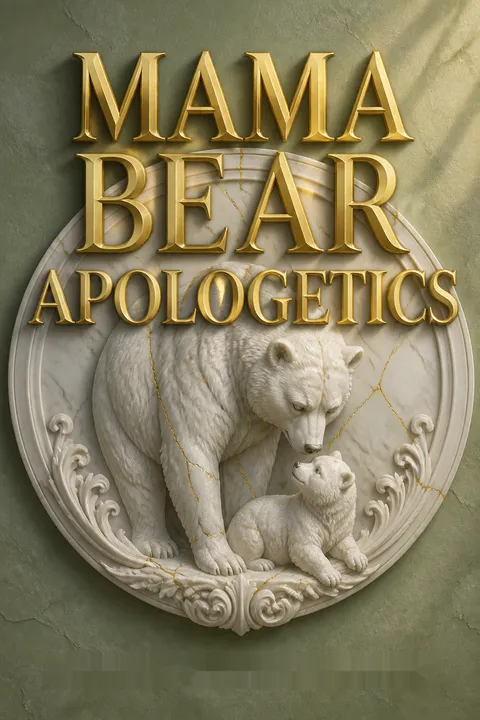


Key Takeaways
Prepare children for the questions arriving before college.
The first challenge may come early. The book warns parents not to treat college as the first threat to a child’s faith. It cites studies reporting substantial departures from church, with estimates varying by study and by what counts as leaving. Some research it discusses places disengagement in middle school or earlier. Attendance, however, is not the same measure as belief, and the figures should be read as warnings rather than a single definitive forecast.
Questions need a safe landing place. Jody’s son announced that he no longer believed in God after encountering skeptical arguments at work. Jody listened, asked what had changed, and then studied the objections. The authors’ point is not that parents must know every answer. They should make honest inquiry normal, and prepare children to think through ideas before a crisis makes the conversation urgent.
The timing matters because belief is shaped by more than formal lessons. Children absorb assumptions from peers, entertainment, and ordinary conversation, often before they can name those influences. Developmental research on parent-child communication supports the value of an open, nonpunitive climate: questions are more likely to surface when curiosity is not treated as disloyalty. The book’s statistics deserve caution, since religious attendance, affiliation, and conviction are distinct outcomes. Its strongest case does not depend on a dramatic forecast. A parent who listens well and investigates alongside a child is useful whether that child stays, doubts, or changes belief.
Teach discernment as digestion, not a blacklist.
Culture can contain mixed ingredients. The book’s “chew-and-spit” image asks families to identify what is true or valuable in a cultural work while refusing what is false or harmful. The alternative, dividing everything into approved and forbidden categories, may leave older children unprepared to evaluate material independently. It can also damage trust if they discover that a source labeled wholly bad contains something worth considering.
Use a repeatable process. The authors’ ROAR method is a four-part practice: identify the message, weigh its strengths and errors, offer a reasoned alternative, and reinforce the discussion through ongoing family life and prayer. A family might examine a film’s heroes, villains, and ideas about success, then discuss what the story gets right and where it misleads. The aim is thoughtful engagement, not reflexive condemnation.
This method resembles media literacy education, which teaches students to ask who made a message, what values it promotes, and what assumptions it leaves unspoken. The useful shift is from policing content to building interpretive skill. That approach can improve trust, too, since parents explain their judgments rather than simply issuing verdicts. Still, “discernment” can become a label for confirming prior beliefs. A fair-minded family should be willing to discover that a favored source has errors, or that a disliked source makes a valid point. The process works only if scrutiny applies to the parent’s own side as well.
Interrogate charged words before accepting their moral verdict.
Definitions shape the argument. The book calls deliberate redefinition of familiar words “linguistic theft”: using a word’s positive or negative force to steer a discussion without clarifying what it means. It focuses on words such as love, tolerance, justice, equality, and authentic. If tolerance means peaceful coexistence despite disagreement, it differs from treating every belief as equally true. If love means affirmation of every choice, it differs from the book’s Christian definition of willing another person’s good.
Ask for specifics. When a conversation relies on a charged term, ask what the speaker means and what concrete facts support the claim. The authors argue that labels such as “crisis” or “oppression” can trigger emotion while obscuring details. Their warning is about strategic manipulation, not every ordinary change in language.
Semantic precision is a basic condition of sound reasoning. In law, medicine, and public policy, definitions determine which cases count and what remedies follow. Asking for a definition can therefore lower the temperature and expose a genuine disagreement about values or facts. The caution is that language changes constantly, and a changed meaning is not automatically propaganda. The stronger test is whether someone is switching meanings mid-argument, or using a word’s emotional charge in place of evidence. That test should be applied symmetrically. Political and religious speakers alike can exploit attractive terms to make contested conclusions sound self-evident.
Treat feelings as signals to examine, not judges of reality.
Emotion can inform judgment. The chapter distinguishes bodily reactions, which may be difficult to control, from emotions understood as judgments about what is happening. A child waiting an hour for a parent might feel angry because the child assumes they were forgotten. News of an accident can rapidly change that anger into fear and concern. New information changes the interpretation, and the feeling changes with it.
Neither suppress nor obey every feeling. The authors describe emotions as warning signals that deserve attention, then recommend testing the accompanying belief against evidence, Scripture, and reason. Anger can alert someone to injustice; fear can prompt caution. But feeling rejected does not prove rejection, and feeling certain does not make a claim true. Parents can model naming feelings, checking assumptions, and choosing actions deliberately.
This account usefully resists two errors: treating emotion as meaningless noise, and treating it as unquestionable knowledge. Psychological approaches such as cognitive behavioral therapy similarly distinguish an event from the interpretation attached to it, then examine how that interpretation shapes emotion and behavior. The distinction can help children gain emotional vocabulary without being ruled by each passing state. It also needs a humane qualification. Persistent anxiety, depression, trauma responses, or mood disorders are not simply faulty judgments that a person can correct by thinking harder. Emotional reflection can support care, but it should not replace appropriate clinical help.
Use self-help as a tool, not a substitute for God.
Effort has limits. The chapter defines self-helpism as the belief that a person can find the ultimate problem and its complete remedy within the self. Its opening story describes a family that stacked one broken television on another to combine picture and sound. The workaround functioned, but it did not repair either set. The authors use this as an image of strategies that ease a symptom without addressing what they consider humanity’s deeper brokenness.
Responsibility still matters. The book traces the popular phrase “God helps those who help themselves” to Benjamin Franklin’s almanac, not the Bible, and argues that self-discipline, counseling, and practical learning can be useful without becoming saviors. In its Christian framework, people steward their choices and seek help, while lasting transformation depends on God. The dividing line is whether self-improvement supports a larger account of human need or replaces it.
The distinction between agency and self-salvation is useful beyond religious settings. People can take responsibility for habits while acknowledging that illness, circumstance, relationships, and social conditions also shape outcomes. The chapter’s critique is strongest when it resists simplistic promises of total control. It is weaker if “self-help” becomes a catch-all for secular psychology or ordinary skill-building. Therapy, coaching, and behavior change do not necessarily claim that the self is divine or self-sufficient. A practical test is whether a method makes modest claims, recognizes limits, and helps a person function, rather than promising that the right mindset can solve every problem.
Ask what counts as evidence before debating the answer.
A debate depends on shared standards. The book recounts a discussion between New Testament scholars Bart Ehrman and Daniel Wallace about the reliability of biblical manuscripts. Wallace presented manuscript evidence; Ehrman asked what would establish certainty, and, in an exchange recalled by the authors, proposed evidence far more demanding than what survives for ancient texts generally. They take the episode to show how skepticism can set a standard no historical source could meet.
Separate science from philosophical naturalism. The authors define naturalism as the view that nature is sufficient to explain reality, and argue that this is a philosophical commitment, not a scientific result established by a laboratory test. They distinguish that claim from scientific investigation itself, which they regard as compatible with Christian belief. Their practical advice is to ask whether a challenge concerns evidence, interpretation, or an assumption that only material explanations can count.
The distinction between data and the assumptions used to interpret it is essential in both science and history. Historical knowledge rarely offers laboratory-style repetition; it relies on documents, artifacts, comparison, and inference. The book is right to ask whether a standard is applied consistently, but one debate anecdote cannot establish that a skeptic is unreachable or that all objections are unreasonable. Nor does the existence of philosophical assumptions make every origin account equally supported. Good inquiry requires standards that are demanding, relevant to the claim, and open to revision when evidence changes.
Separate objective claims from preferences, and test moral relativism.
Not every disagreement is the same kind. The book contrasts subjective preferences, such as a favorite dessert, with claims it regards as objective, such as whether a historical event occurred. It describes postmodernism as skepticism toward universal truth claims, and moral relativism as the view that right and wrong depend on individuals or cultures. The authors argue that the positions can undermine themselves when someone insists that no one may make an absolute moral judgment.
Reason about rules, not just reactions. The card-game story illustrates how people may favor rules that benefit them, then try to change the rules when the advantage shifts. The book urges parents to explain why moral boundaries exist and to distinguish binding principles from areas of legitimate Christian freedom. It also warns against using a single virtue, such as compassion or truth-telling, without judgment about context and consequences.
The distinction between preference and fact prevents many category errors. At the same time, the philosophical labels here cover diverse traditions, and “postmodernism” is not one uniform doctrine that every scholar or student accepts. The self-refutation argument is useful against sweeping claims such as “nothing is objectively true,” but it does not resolve particular moral disputes on its own. Those require careful accounts of harm, rights, responsibility, and context. The book’s emphasis on both compassion and moral reasoning is valuable, especially when it discourages children from treating rules as arbitrary commands or disagreement as proof of hostility.
Respect other faiths without pretending contradictory doctrines agree.
Plurality is not the same as pluralism. A pluralistic society contains people of many religions. Religious pluralism, as the book uses the term, says that different religions are equally valid paths to God. The authors argue that contradictory claims cannot all be true in the same sense: beliefs about whether God is one, many, or triune cannot simply be blended. They urge Christians to treat people of other faiths with dignity while being honest about disagreement.
Watch for spirituality that dissolves distinctions. The chapter on new spirituality describes ideas such as pantheism, the belief that God and the universe are one, and the claim that people can discover divinity within themselves. It contrasts these with Christian belief in a Creator distinct from creation. The authors also distinguish biblical meditation, focused reflection on Scripture, from some practices presented as purely secular despite their spiritual roots.
The chapter makes a helpful distinction between tolerance of people and agreement with propositions. In interfaith dialogue, that distinction allows genuine respect without pretending that differences are trivial. Its logical point is strong when beliefs directly contradict, though traditions are internally diverse and cannot always be summarized by a single slogan. Likewise, meditation practices vary in purpose and history; the label alone does not establish whether a practice is religious, therapeutic, or both. Careful comparison asks what a practice teaches, how it is used, and what a participant is expected to believe, rather than relying on its branding.
Test justice movements by their diagnosis, remedies, and view of people.
A good concern can carry a flawed theory. The Marxism chapter explains that Marx centered history on conflict between economic classes and criticized the exploitation of industrial workers. The book acknowledges that some criticisms of labor conditions and unequal treatment are legitimate. It argues that Marxism becomes dangerous when it treats economic structures as the root of evil, underestimates human selfishness, and promises that reorganizing society can produce a just utopia.
Separate concern from prescription. The authors urge families to ask what a movement identifies as the problem, whom it blames, and whether its remedy accounts for human motives and unintended consequences. They distinguish Marxism, socialism, and communism, while warning that Marxist ideas can be presented through the language of social justice. Their own Christian alternative emphasizes serving the marginalized and reforming genuine abuses without treating every difference as injustice.
This diagnostic approach is useful because moral urgency can make proposed remedies feel beyond scrutiny. Political theory and economics both show that institutions shape incentives, while history also cautions against assuming that good intentions eliminate concentrated power or corruption. The book’s warning about utopian certainty is substantial. Its tendency to associate broad social-justice language with Marxism needs more precision, however. People advocate for reform from many ethical and political traditions, and structural inequality can be real without proving that every activist shares one ideology. The fair question is not simply who uses a term, but whether a specific claim and remedy withstand evidence.
Defend women’s dignity without confusing equality with sameness.
Feminism has several histories. The book describes an early movement that sought voting, education, property, and economic rights, with both equality-focused and motherhood-focused advocates. It then presents a later shift toward autonomy, reproductive rights, and opposition to what some activists call patriarchy. The authors argue that contemporary feminism can treat sex differences as obstacles and undervalue caregiving, while recognizing that women have faced real abuse and discrimination.
Critique without erasing achievements. The book’s position is that men and women have equal dignity but need not be identical in role or ability. It encourages parents to reject stereotypes, celebrate children’s interests, and model respectful relationships. Its strongest practical point is that criticizing a movement is unpersuasive when institutions, including churches, fail to address mistreatment within their own walls. The proposed response is to protect women and confront abuse while evaluating particular claims rather than treating feminism as one unified doctrine.
The historical distinction between legal equality, workplace opportunity, reproductive politics, and contemporary gender theory helps prevent “feminism” from functioning as a single, imprecise label. The book acknowledges this diversity, but its critique sometimes treats the loudest activists as representative of a much broader movement. A useful analysis separates empirical questions, such as patterns of discrimination, from philosophical questions about sex, family, and autonomy. Its call to confront abuse in churches is especially important: a movement gains credibility when it names harms that insiders would rather minimize. Equality need not mean identical lives, but difference should not be used to excuse unequal protection or respect.
Know historic Christianity well enough to spot familiar-looking substitutes.
A near-copy can be persuasive. The book calls progressive Christianity a movement that reinterprets historic doctrines to fit contemporary convictions. It identifies disputes over Jesus as the exclusive way to God, the meaning of the cross, the authority of Scripture, sin, and social justice. The authors argue that a faith can retain Christian language while changing what those words mean, so asking for definitions matters as much inside a church as outside it.
Doctrine and conduct both matter. The chapter grew from the editor’s experience in a church study group that questioned inherited beliefs. The book acknowledges that progressive Christians often respond to genuine problems, including spiritual abuse, hypocrisy, and legalism. It argues that those failures should be confronted without assuming that Christian doctrines caused them. The authors close by emphasizing lived example: parents should welcome hard questions, admit mistakes, care for vulnerable people, and embody the faith they teach.
The “near-copy” idea captures a real challenge in religious communities: shared vocabulary can conceal sharply different meanings. Comparing definitions and tracing claims to their sources is more constructive than judging by labels alone. The book is strongest when it distinguishes abuses of religion from the doctrines being abused. Its account is less balanced when it treats progressive Christianity as a fairly unified path toward abandoning orthodox belief. People revise beliefs for different reasons, and some changes are responses to evidence or moral concern. The practical standard remains useful: ask what a person believes, why, and how those convictions shape conduct toward others.
Analysis
The book’s deepest argument is about formation, not merely rebuttal. Parents cannot anticipate every cultural message or memorize responses to every objection. They can, however, teach children to notice assumptions, ask what words mean, distinguish evidence from interpretation, and disagree without contempt. The recurring sequence is pedagogical: expose a claim, identify what makes it attractive, assess its errors, and offer a more coherent account. That emphasis makes the work more durable than a catalog of answers.
Its most memorable tools are also its most transferable. The chew-and-spit metaphor replaces binary screening with active evaluation. The ROAR method turns that disposition into a family practice. The warning about linguistic theft adds a useful habit of conceptual hygiene: before debating whether a claim is good, establish what it means. Together, these ideas treat worldview as something learned in ordinary moments, not only in formal religious instruction.
The book’s limitations follow from its polemical purpose. It often groups complicated intellectual traditions under one label, and it sometimes presents contested claims about science, politics, gender, or religious change with more certainty than the evidence in the excerpt can support. Some of its statistics describe church attendance rather than personal belief, and its descriptions of movements may privilege their most visible advocates. Readers should apply the book’s own discernment standard to its arguments: retain its questions and practical methods, while checking its examples and generalizations against independent sources.
Its Christian framework is explicit, not neutral. The goal is to form children who reason from biblical authority and Christian doctrine, rather than to survey all worldviews evenhandedly. For readers within that tradition, the most useful challenge is to make intellectual confidence compatible with curiosity, humility, and accountability. For readers outside it, the parenting method remains legible: teach children how to evaluate ideas, not just which conclusions to inherit. In either case, the quality of the conversation matters as much as the answer.
Review Summary
Mama Bear Apologetics receives mixed reviews. Some praise it as a valuable resource for Christian mothers to defend their faith and teach critical thinking to their children. Others criticize its tone as condescending and its arguments as oversimplified. Positive reviews highlight its practical advice and cultural relevance, while negative reviews point out its bias and potential to reinforce harmful ideologies. The book's approach to addressing various worldviews and cultural issues is both appreciated and contested. Overall, readers' responses vary widely based on their theological and ideological perspectives.
People Also Read



Glossary
Youth exodus
young people leaving churchThe book’s term for young people who stop attending church, become unaffiliated, or move away from Christian belief. The authors stress that leaving church and leaving faith are not identical, and that studies measure these outcomes in different ways. They use the trend to argue that parents should begin faith conversations before adolescence or college.
Chew-and-spit method
separating value from errorA discernment practice in which a person examines an idea, film, book, or other cultural source for both worthwhile elements and errors. Instead of labeling an entire source safe or dangerous, the learner accepts what aligns with their convictions and rejects what does not. The book presents this as a way to build independent judgment.
ROAR method
a four-part discernment practiceThe book’s named approach to evaluating cultural messages and responding to them. Its four movements are to notice the message, distinguish its valuable parts from its errors, make a reasoned case for a better alternative, and reinforce the learning through conversation, discipleship, and prayer. The method is intended to guide family discussions, not just formal debates.
Linguistic theft
strategic redefinition of wordsThe book’s term for deliberately changing or exploiting the meaning of familiar words to make a position seem virtuous, shut down discussion, or hide relevant details. It gives examples involving terms such as love, tolerance, justice, and equality. The concept calls for asking speakers to define charged words and clarify the claims attached to them.
Self-helpism
self as ultimate solutionA worldview the book identifies with the claim that people can find the ultimate source and remedy for their deepest brokenness within themselves. It differs from practical self-improvement, which the authors allow can be useful. Their objection is to self-reliance becoming a substitute for God and for the Christian account of sin, grace, and transformation.
Naturalism
nature explains all realityIn this book, naturalism is the view that natural causes are sufficient to explain reality, with material things treated as all that exists or all that can count as knowledge. The authors distinguish this philosophical position from science itself. They argue that scientific investigation can coexist with belief in a Creator and in realities that cannot be measured materially.
Moral relativism
morality varies by personThe view, as the book uses the term, that moral right and wrong depend on an individual or culture rather than an objective standard. The authors argue that complete relativism is difficult to maintain because people still make moral judgments when personally harmed. They distinguish this position from legitimate differences of conscience or areas of Christian freedom.
New Age mysticism
spirituality blending varied traditionsA movement the book describes as combining ideas from Eastern religions, occult practices, psychology, modern philosophy, and other sources. It highlights beliefs such as pantheism, human divinity, and inward access to spiritual truth. The authors distinguish these claims from Christian teachings about a Creator distinct from creation and meditation focused on Scripture.
Progressive Christianity
Christianity reinterpreted for modern valuesThe book’s label for a movement that reconsiders historic Christian doctrines in light of contemporary beliefs and experiences. It identifies debates about biblical authority, sin, the atonement, Jesus’s exclusivity, and social justice. The authors acknowledge that concerns about abuse and hypocrisy can motivate this rethinking, while arguing that changing doctrine does not necessarily solve those failures.
FAQ
What's Mama Bear Apologetics about?
- Empowering Parents: The book is designed to equip parents, particularly mothers, to address and counter cultural lies that challenge Christian beliefs.
- Cultural Context: It highlights the skepticism and challenges to faith that children face in a postmodern society.
- Practical Tools: Offers methods like the "chew-and-spit" technique to help parents guide their children in understanding and defending their faith.
Why should I read Mama Bear Apologetics?
- Relevance to Modern Parenting: It addresses contemporary issues faced by parents raising children in a secular culture.
- Equipping for Conversations: Prepares parents for meaningful discussions with their children about faith and cultural ideologies.
- Community and Support: Encourages building a community of like-minded parents for mutual support in the apologetics journey.
What are the key takeaways of Mama Bear Apologetics?
- Importance of Apologetics: Parents are the primary apologists for their children and must be prepared to answer tough questions about faith.
- Cultural Lies: Identifies cultural lies like moral relativism and naturalism that can undermine a child's faith.
- Practical Strategies: Provides actionable strategies, including the ROAR method, to help parents navigate these challenges.
What is the "chew-and-spit" method in Mama Bear Apologetics?
- Discernment Technique: Encourages children to engage with cultural content critically, discerning between good and bad ideas.
- Practical Application: Involves consuming cultural messages and identifying what aligns with biblical truth while rejecting what does not.
- Empowerment: Fosters a habit of discernment in children, empowering them to think critically about the media they consume.
How does Mama Bear Apologetics address the youth exodus from the church?
- Statistics and Trends: Highlights that nearly 60% of young Christians disconnect from the church after age 15.
- Preventative Measures: Discusses how parents can engage their children in faith discussions to prevent them from leaving the church.
- Cultural Awareness: Stresses the importance of being aware of cultural influences and preparing children to face faith challenges.
What are some cultural lies discussed in Mama Bear Apologetics?
- Moral Relativism: Describes it as the belief that morals are subjective, undermining absolute truths.
- Naturalism: Discusses it as the belief that only natural causes exist, dismissing the supernatural.
- Self-Helpism: Critiques it for promoting self-reliance without acknowledging the need for divine help.
What is the ROAR method in Mama Bear Apologetics?
- Recognize the Message: Identify the message in cultural content and understand its implications.
- Offer Discernment: Help children discern what is good and what should be rejected based on biblical principles.
- Argue for a Healthier Approach: Provide reasons for beliefs and suggest healthier alternatives to cultural messages.
- Reinforce Through Discussion: Emphasizes ongoing conversations and prayer to solidify understanding of biblical truths.
How does Mama Bear Apologetics define linguistic theft?
- Redefining Words: Refers to hijacking words and changing their definitions to promote specific agendas.
- Impact on Communication: Can stop meaningful discussions and compel emotional rather than rational responses.
- Examples in Culture: Highlights how terms like love, tolerance, and justice have been redefined, distorting their original meanings.
What are the best quotes from Mama Bear Apologetics and what do they mean?
- “Mess with our kids...”: Captures the protective instinct of parents to defend their children’s faith against cultural lies.
- “Truth is powerful...”: Emphasizes discerning truth from lies, as falsehoods often appear reasonable.
- “We cannot simply rely...”: Highlights the need for parents to actively engage in learning contemporary challenges to faith.
How does Mama Bear Apologetics address the issue of feminism?
- Historical Context: Provides a brief history of feminism, acknowledging positive contributions while critiquing radical aspects.
- Critique of Modern Feminism: Argues that modern feminism often devalues traditional femininity and overlooks unique roles of women.
- Biblical Perspective: Encourages viewing gender roles through a biblical lens, affirming the dignity of both men and women.
What is the relationship between progressive Christianity and traditional Christian beliefs in Mama Bear Apologetics?
- Reinterpretation of Doctrine: Progressive Christianity often reinterprets traditional doctrines to align with contemporary values.
- Focus on Social Justice: Places strong emphasis on social justice, sometimes at the expense of essential theological truths.
- Danger of Compromise: Warns that embracing progressive Christianity can lead to a departure from historic Christian faith.
How can parents help their children navigate the complexities of modern ideologies according to Mama Bear Apologetics?
- Teach Critical Thinking: Emphasizes teaching children to evaluate ideas against biblical truth.
- Modeling Faith: Encourages parents to demonstrate how to engage with cultural issues while remaining grounded in Scripture.
- Encouraging Questions: Suggests fostering an environment where children feel comfortable asking questions and exploring their faith.
Download PDF
Download EPUB
.epub digital book format is ideal for reading ebooks on phones, tablets, and e-readers.








