

Key Takeaways
Let honest doubt test your faith instead of forcing premature certainty
Doubt can expose assumptions. Childers begins with a crisis that arrives while she is pregnant and caring for a young child. A pastor she trusts leads a study group that challenges the resurrection, the Bible, and other beliefs she had never learned to defend. The questions unsettle her, but the experience also reveals how much of her confidence rested on inherited conviction rather than examined reasons.
Truth is not a feeling. Her response is not to protect Christianity at any cost, but to ask whether its claims match reality. She compares religious certainty to everyday claims that can be checked against consequences: believing something sincerely does not make it true. Doubt becomes a reason to investigate, not proof that faith has failed.
The memoir makes a useful distinction between having faith and understanding why one holds it. In education, knowledge becomes more durable when learners retrieve, question, and test what they think they know. The same process can make religious belief less dependent on the confidence of a trusted leader. The risk is treating every doubt as a puzzle with a clean answer. Some questions remain unresolved, and emotional distress deserves care as well as argument. A robust faith community needs room for both intellectual inquiry and the experience of not knowing.
Take church wounds seriously without making doctrine the culprit by default
People arrive by different roads. Childers recognizes that abuse of authority, dismissed questions, moral disagreement, suffering, and troubling passages in Scripture can all unsettle faith. She recounts a friend forced to choose between trusting a pastor unquestioningly and leaving a church. She also recalls young Christians whose questions were shut down, teaching them that faith could not withstand scrutiny.
Name the actual problem. The book argues that a bad church experience does not, by itself, prove historic Christian teaching false. Its peach story makes the point: a child throws a peach after striking his head on a cabinet, punishing the nearest object rather than the cause of his pain. But the analogy has limits. Church leaders must confront abuse and harmful teaching directly, not use the distinction between doctrine and misconduct to excuse them.
This distinction is valuable because psychological injury and theological truth are different questions, even when they become entangled in a person’s life. A community that listens well can prevent some hurt from turning into needless isolation. Yet the peach comparison can misfire if it implies that an injured person has merely blamed the wrong thing. Institutions shape experience, and abusive practices may be connected to how authority is taught or exercised. Careful discernment asks both whether a belief is true and whether a community has treated people justly.
Anchor Christianity in its earliest claims, not a modern mood
Start with the first witnesses. Seeking a stable starting point, Childers examines the early Christian summary in 1 Corinthians 15: Jesus died for sins, was buried, rose, and appeared to followers. Paul presents this as teaching he received and passed on. The book argues that the creed circulated very early, before Paul wrote the letter, and that its content makes the resurrection central rather than optional.
Trace the shared core. Childers also describes the early church’s rule of faith, a compact account of Christian teaching passed on across communities. Its recurring claims include one Creator God, Jesus as divine and human, his death and bodily resurrection, salvation, and future judgment. The point is not that Christians have never disagreed, but that disagreement does not mean every version of Christianity is equally representative of its earliest form.
Historical origins can clarify what a tradition has meant, especially when a movement claims to recover or revise that tradition. The early creed is strong evidence that resurrection belief was not a late embellishment. It does not, by itself, establish that the resurrection occurred; that further conclusion depends on assessing historical testimony and alternative explanations. The book’s method is most persuasive when it separates these steps. Early agreement identifies a central claim, while evidence for the claim still has to be examined on its own terms.
Ask what a theology changes about Scripture, Jesus, and salvation
Labels can conceal a shift. Childers describes progressive Christianity as a varied movement, not a single organization with one creed. In her account, its different expressions often converge around a changed view of the Bible, the Cross, and the gospel. Some leaders treat Scripture primarily as a record of ancient people’s understanding of God; some reject the idea that Jesus’ death paid for sin; others emphasize social action or reinterpret traditional moral teachings.
Compare the actual claims. Childers traces similarities to older controversies: the Judaizers added requirements to faith in Jesus, Gnostics emphasized special knowledge, and Marcion rejected the Old Testament and its God. These parallels are meant to show that revisionist ideas have precedents, not to prove that every modern progressive Christian holds every earlier heresy. The practical test is to examine specific beliefs rather than infer them from a label.
The book’s strongest diagnostic move is to shift attention from a movement’s public tone to its central claims. A community can sound compassionate and still disagree sharply about sin, salvation, or the identity of Jesus. Historical comparisons can help readers recognize recurring patterns, but analogy is not identity: a modern thinker should not be dismissed simply because an older group held a superficially similar view. The fair test is close reading, accurate representation, and attention to what each belief entails.
Use manuscript evidence to test the text, not to prove inspiration
Copies can be compared. Textual criticism is the scholarly comparison of surviving manuscripts to determine, as carefully as possible, the wording of an ancient work whose originals are lost. Childers notes that more than 5,000 Greek New Testament manuscripts survive, with the earliest known fragment of John dating roughly 50 to 100 years after the original. Manuscripts contain many differences, but most are spelling or copying variations that do not alter meaning.
Some passages need a note. The book discusses the story of the woman accused of adultery in John 7:53 to 8:11 and the longer ending of Mark. Many scholars regard these passages as absent from the earliest reliable manuscripts, which is why modern Bibles often mark them. Childers argues that known variants do not overturn core Christian doctrines. Manuscript evidence supports textual reliability, but cannot alone establish divine inspiration.
This is one of the book’s clearest lessons in intellectual honesty: acknowledging a textual problem can strengthen a reader’s understanding rather than destroy it. A transparent footnote is better than pretending every copied text is identical. The distinction between textual reliability and theological authority is crucial, though. Manuscripts can help establish what an author wrote; they cannot settle whether the author’s claims are true or divinely inspired. Keeping those questions separate prevents evidence from being asked to do more than it can.
Read Gospel differences as evidence to examine, not errors to dismiss
Perspective can explain variation. Childers argues that the Gospels contain signs of historical reporting: knowledge of local places, names, customs, and languages, as well as details that would not obviously help a new movement’s public image. The disciples misunderstand Jesus, abandon him, and deny him. Women are named as the first witnesses to the resurrection, despite their testimony having low standing in that society.
Compare accounts carefully. The Gospels also differ in details. Childers uses the number of donkeys at Jesus’ entry into Jerusalem: Matthew mentions a mother and colt, while the other accounts focus on the colt. She argues that distinct audiences and purposes help explain why writers include different details. Differences alone neither prove fabrication nor prove authenticity. The book’s counsel is to investigate the context and ask whether accounts can be reconciled before reaching a verdict.
The detective analogy is helpful: independent witnesses often notice different things, while perfectly matched accounts can raise questions about coordination. Still, variation is not automatically evidence of independence. Historical readers also need to consider memory, editing, literary aims, and the possibility that some differences cannot be harmonized. The disciplined approach is neither to label every discrepancy a contradiction nor to force every account into agreement. It is to ask what each source says, what it leaves out, and how much confidence the evidence warrants.
Interpret Scripture in context while letting its claims challenge you
Authority is not proof-texting. Childers contrasts the historic Christian view of the Bible as inspired and authoritative with progressive approaches that treat it chiefly as a human record shaped by ancient culture. She argues that Jesus himself treated the Jewish Scriptures as God’s word, appealed to them in debate, and relied on them when resisting temptation. For her, a reader should not simply discard passages that offend present-day preferences.
Context prevents misuse. The book also stresses that reading Scripture seriously means attending to genre, audience, historical setting, and the difference between description and command. A specific instruction to ancient Israel is not automatically a rule for all people in every era. Childers rejects interpretations that flatten those distinctions, while maintaining that interpretation should not make the reader the final authority over every difficult passage.
The central tension is real: interpretation always involves readers, communities, and inherited assumptions, but that does not make every interpretation equally sound. Historical context can restrain both selective literalism and selective dismissal. A further question remains about how communities adjudicate disagreements when readers share a commitment to Scripture but reach different conclusions. The book answers by appealing to Jesus, the apostles, and historic Christian teaching. That offers a coherent standard for its intended audience, though readers outside that tradition may require a different argument for why the standard should bind them.
See the Cross as God's self-giving answer to sin and justice
Atonement explains the rescue. Childers defends penal substitutionary atonement: the belief that Jesus willingly takes the penalty for human sin, acting as a substitute so people can be reconciled to God. She connects this claim to the Old Testament sacrificial system and to New Testament descriptions of Jesus as the Lamb who dies for others. The Cross, in this account, is not an uninvolved Father punishing an unwilling child. Jesus is God incarnate, choosing to give his life.
Love and judgment meet. The book argues that divine wrath means just opposition to evil, not a human-style temper tantrum. It uses the image of a cup to explain Jesus’ anguish before his death. Childers also notes that the Bible describes the Cross through several images, including ransom, victory, moral example, and reconciliation. These are presented as complementary ways of understanding what Jesus’ death accomplishes.
The account takes seriously a question often lost in heated debate: how can forgiveness address real harm without pretending the harm does not matter? The book’s answer is that God bears the cost of reconciliation rather than leaving evil unanswered. That makes the Cross an account of both justice and self-giving love. Readers may still debate whether penal substitution is the best explanation of biblical atonement, or how it relates to other images. A strong discussion should engage the doctrine itself, not reduce it to either cruelty or a simple moral lesson.
Treat judgment as part of the gospel's account of evil and hope
Hell is more than a scare tactic. Childers recounts frightening childhood lessons about eternal punishment, then argues that rejecting those lessons does not settle what the Bible teaches. She describes hell as final judgment and separation from God, using biblical images of fire, darkness, and destruction while noting that these images may be metaphorical. In her account, hell is not Satan’s kingdom: Satan is judged there, not its ruler.
Grace is not earned. The book rejects the idea that good behavior earns salvation, and uses the contrast between a kind non-Christian and a cruel professing Christian to explain why grace matters. It also argues that biblical judgment can vary according to knowledge and wrongdoing. The chapter’s central claim is that hope in a world made right requires taking evil seriously, though its account of eternal punishment remains deeply contested among Christians.
The strongest point here is moral rather than sensational: a vision of ultimate hope must explain what happens to cruelty and injustice, not merely ask readers to look away. The author’s childhood fear also illustrates why teaching about hell requires care; terror can distort the very message it is meant to convey. Christians disagree about the nature and duration of judgment, and the book’s preferred account is not the only interpretation within Christianity. Readers should distinguish the biblical texts, theological inferences, and emotional images used to explain them.
Rebuild faith around essentials, and distinguish them from disputable details
Not every belief carries equal weight. Childers compares reconstruction to repairing a broken LEGO model: inspect the pieces, find the weak point, and rebuild from a sound base rather than throwing away the whole set. She identifies core Christian claims such as human sin, one God, salvation by grace, Jesus’ deity and humanity, his atoning death, his bodily resurrection, and the need for faith. Other debates, such as the age of the earth or particular views of spiritual gifts, matter but are not presented as requirements for salvation.
Trust grows through inquiry. Childers says her own reconstruction came through apologetics, reading early Christian writers, and studying theology. Her faith changed, but she believes its foundations became stronger. The conclusion is not that every question has a quick answer. It is that a tradition worth trusting should be examined, and that following Jesus involves more than agreeing with a list of ideas.
The distinction between foundational commitments and secondary disputes can reduce needless division without implying that secondary questions are trivial. It also gives communities a practical way to preserve unity while allowing serious debate. The LEGO image captures the patience of revision, though real beliefs are not always separable pieces: changing one claim can alter how others fit together. The most useful reconstruction therefore includes intellectual humility, transparent standards for evidence, and space for people whose questions remain unsettled.
Analysis
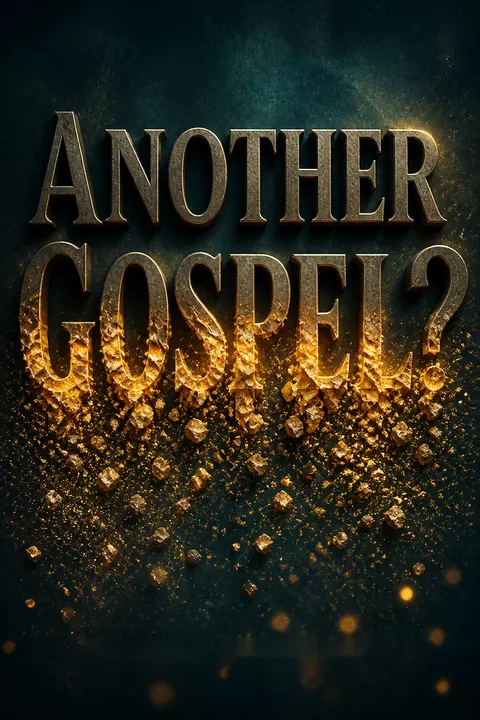
Another Gospel? is a memoir-driven apologetic, not a neutral survey of every form of progressive Christianity. Its narrative carries the argument: an experienced Christian enters a trusted pastor’s study group, finds her beliefs destabilized, and rebuilds them through historical research and apologetics. That arc makes abstract disputes personal. The reader sees why questions about manuscripts, the resurrection, hell, or atonement can feel existential rather than academic.
The book’s most broadly useful contribution is its insistence on separating questions that are often collapsed. A person can be sincerely convinced and still be mistaken. A church can cause real harm without every Christian doctrine being false. A manuscript can be textually reliable without that fact proving divine inspiration. Gospel differences may be explainable without every proposed harmonization being certain. These distinctions model a more disciplined form of religious reasoning.
Its argument is also clearly situated within conservative evangelical commitments: biblical authority, bodily resurrection, substitutionary atonement, and final judgment. The work presents these positions forcefully, but gives less space to the strongest progressive counterarguments and to the diversity among progressive Christians. Historical parallels to early heresies can illuminate recurring disputes, yet they do not establish that modern movements are identical to those earlier groups. The critique of critical theory, likewise, would benefit from distinguishing its varied forms and uses from any single religious application.
The book is strongest when it invites readers to investigate claims, learn context, and distinguish central teachings from secondary disputes. It is less persuasive when opponents are mainly represented through brief quotations or when contested theological conclusions are treated as settled by historical continuity alone. Readers can value its testimony and evidential questions while still examining its interpretations critically. Its deepest practical lesson is not that doubt should be suppressed, but that doubt deserves better than slogans, shame, or an easy substitution of personal preference for careful inquiry.
Review Summary
Reviews of Another Gospel? reveal a polarized readership. Conservative Christians widely praise the book as an accessible, well-researched defense of historic Christianity against progressive theology, appreciating Childers' personal storytelling woven with apologetics. Critics, however, argue she misrepresents progressive Christianity through oversimplification, cherry-picked quotes, and false generalizations. Some note her failure to distinguish between first and second-order doctrines, while others appreciate her as a helpful starting point for Christians navigating faith questions. Overall, supporters find it an invaluable resource, while detractors see it as a flawed, one-sided critique.
People Also Read





Glossary
Deconstruction
Dissecting inherited beliefsIn the book, deconstruction is the process of systematically examining and often rejecting beliefs a person inherited or accepted without question. It can lead someone away from Christianity, or it can be followed by reconstruction of faith. Childers distinguishes the process itself from its outcome, while warning that deconstruction can unsettle core beliefs without supplying a sound alternative.
Historic Christianity
Faith's inherited core claimsChilders uses this term for the central teachings she believes have defined Christianity from its earliest centuries. These include belief in one Creator God, Jesus as divine and human, his death for sin, bodily resurrection, Scripture's authority, salvation, and future judgment. The term distinguishes these claims from later cultural revisions, while allowing disagreement over less central doctrines.
Rule of faith
Early teaching summaryThe rule of faith is a concise summary of apostolic Christian teaching used by early Christians to preserve and pass on core beliefs. Writers expressed it in different forms, but it commonly covered the Creator, Jesus’ identity and work, salvation, resurrection, and future judgment. Childers presents it as an early guide for recognizing the boundaries of Christian belief.
Textual criticism
Comparing ancient manuscriptsTextual criticism is the scholarly study of surviving handwritten copies of ancient works to determine, as closely as possible, the wording of their lost originals. Scholars compare manuscripts, dates, and copying patterns. In the book, it is used to examine New Testament transmission, including both minor copying differences and passages whose presence in the earliest text is disputed.
Meaningful variants
Differences affecting meaningMeaningful variants are manuscript differences that may affect how a passage is understood, rather than simple spelling or copying mistakes. Childers discusses examples such as the story of the woman accused of adultery in John and the longer ending of Mark. Modern Bible translations often identify such passages in notes or brackets so readers can see the textual question.
Criterion of embarrassment
Unflattering detail as evidenceThe criterion of embarrassment is a historical reasoning tool that treats an account’s inclusion of awkward or damaging details as potentially supporting its authenticity. Childers applies it to the Gospels’ portrayal of confused, cowardly disciples and women as the first resurrection witnesses. The criterion can contribute to an argument, but does not prove a report true by itself.
Progressive revelation
God's unfolding disclosureProgressive revelation is the theological idea that God disclosed more about himself over the course of biblical history. Childers contrasts this with the claim that biblical writers moved from mistaken ideas about God to more accurate ones. In her account, revelation develops toward Jesus without contradicting or invalidating what came before.
Penal substitutionary atonement
Jesus bears sin's penaltyPenal substitutionary atonement is the Christian teaching that Jesus willingly died in humanity’s place, bearing the judgment due to sin so that people can be reconciled to God. Childers connects it to biblical language about sacrifice, the Lamb, and forgiveness. She distinguishes this account from views that treat Jesus’ death chiefly as a moral example or demonstration of forgiveness.
Original sin
Humanity's inherited sinfulnessOriginal sin is the doctrine that humanity is affected by the sin of Adam and Eve, so people inherit a sinful condition rather than entering life morally untouched. Childers treats this doctrine as necessary to the gospel’s account of why people need salvation. It explains the human problem the Cross is understood to address.
Universalism
All people are ultimately savedUniversalism is the belief that all human beings, and in some versions fallen spiritual beings as well, will ultimately be reconciled to God. The book distinguishes this broad claim from universal reconciliation, which holds that salvation comes through Jesus but eventually includes everyone. Childers argues that universalism is attractive to many readers but conflicts with her interpretation of biblical judgment.
Download PDF
Download EPUB
.epub digital book format is ideal for reading ebooks on phones, tablets, and e-readers.








