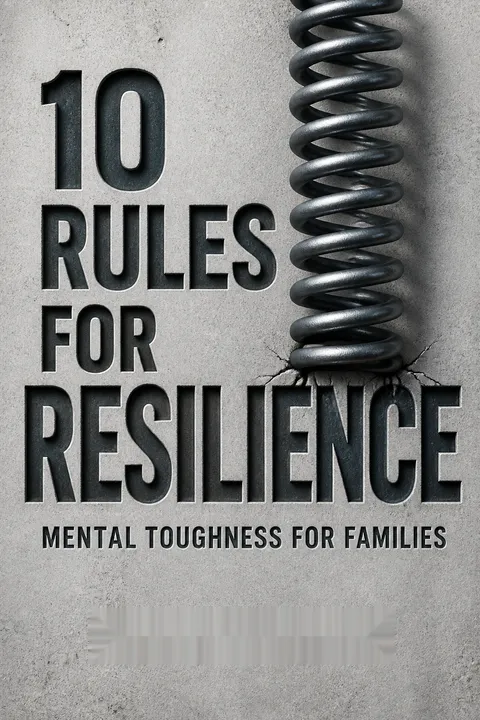


Key Takeaways
Train for adversity before life makes the choice for you
Practice before crisis. Joe De Sena calls his aim “true resilience”: not merely enduring a setback, but learning to adapt and grow through it. A runner who meets unexpected snow and keeps moving has resilience; one who treats the snow as useful training has the deeper quality he wants families to build. The book’s premise is that this capacity comes from repeated effort, failure, and recovery, not from buying a product or reading about toughness. Spartan races provide the author’s main example: participants enter difficult physical challenges and discover abilities they had underestimated.
Choose your hard. Routine challenges, such as exercise, honest conversations, and changing habits, can prepare people for difficulties they cannot choose, including illness, job loss, or disruption. The goal is not to seek danger, but to become less helpless when life gets uncomfortable.
The strongest version of this claim is about practice, not glorifying pain. Rehearsing manageable challenges can make unfamiliar demands feel less overwhelming, much as emergency drills make procedures more accessible under pressure. But difficulty does not automatically produce growth: its effects depend on safety, support, and whether a person can recover. The book’s snowy-trail metaphor is memorable, yet real adversity may require stopping, asking for help, or changing course. Resilience is better understood as flexible response than as relentless forward motion.
Treat “I can’t” as an untested prediction, not a verdict
Collect evidence through action. The book distinguishes a difficult task from a genuinely desperate one. A newcomer at a Spartan workout may feel unable to continue, though the situation is uncomfortable rather than life-threatening. De Sena suggests narrowing attention to the next manageable step instead of imagining the entire challenge at once.
Build proof, not slogans. Dr. Lara Pence calls concrete memories of overcoming difficulty “resilience data points,” or RDPs. A teenager who joined De Sena for a long bicycle trip had no long-distance training, but completed the ride on a borrowed bike. The experience gave him evidence that his assumptions about his limits could be wrong. The parable of a grown elephant still tethered by a rope illustrates learned helplessness: past failure can convince someone that current effort is pointless, even when circumstances have changed.
This approach resembles behavioral experiments in cognitive therapy: test a prediction, observe what happens, then update the belief. The emphasis on small steps also reduces the mental burden of a large task. Still, “difficult, not desperate” cannot be decided by motivational language alone. Pain, exhaustion, disability, and environmental risk need careful judgment. A useful resilience record should include both persistence and sound decisions, such as recognizing when rest or assistance is necessary.
Make patience tangible by working toward rewards instead of handing them over
Effort changes the reward. De Sena describes being rejected by Cornell three times before admission on his fourth application. Taking classes and improving his record mattered more to him than simply receiving the acceptance; the effort made the achievement feel earned. The book contrasts this with parents who bought admission for their children in the Varsity Blues scandal, removing the struggle that could have helped build competence and ownership.
Practice waiting. The authors use Walter Mischel’s marshmallow study, in which preschoolers could eat one treat immediately or wait fifteen minutes for two. The book connects waiting with later outcomes, while also emphasizing that patience can be practiced. Examples include saving toward a purchase, completing a week of chores before allowance, or increasing a running distance gradually rather than attempting a marathon immediately.
The enduring value here is that self-control is trainable, not a fixed personality trait. Small delays can make longer-term goals easier to pursue. However, the marshmallow findings should not be read as proof that a child’s ability to wait determines adult success. Later interpretations have stressed that a child’s choices can reflect how reliable the promised reward seems, as well as family circumstances. The practical lesson is therefore to create trustworthy, achievable ways to practice patience, not to label children as disciplined or deficient.
Trade preparatory theater for the first uncomfortable action
Start before you feel equipped. De Sena’s “no bullshit” rule targets excuses that disguise avoidance. Buying specialized clothes, equipment, or supplies can create the appearance of commitment without the work itself. Someone who wants to paint can spend weeks researching brushes and never make a picture; the same person can begin with basic materials today.
Notice the detour. De Sena’s mother modeled a different path. After her own mother died of cancer, she changed her habits, took up yoga and meditation, and began running in a community where those choices were unusual. The lesson is not that preparation is useless, but that preparation should serve action. The authors also urge parents to acknowledge their own mistakes, resist perfectionism, and avoid inconsistency, since children learn from the conduct they observe as much as from advice.
The distinction between preparation and avoidance is useful because perfectionism often makes starting feel like a public test of identity. A small first attempt shifts the task from imagining failure to gathering information. Yet preparation is not always theater: proper equipment, training, or expert advice can be essential for safety and accessibility. The practical question is whether a preparatory step removes a real obstacle or merely delays exposure to the work. That test preserves the book’s bias toward action without dismissing responsible planning.
Use a short family credo to settle hard choices
Name the direction. De Sena and his wife, Courtney, developed a family statement around two priorities: hard work and kindness. Their compact credo gives them a reference point when daily decisions compete for attention. The authors recommend identifying a few core values, then describing how those values should shape behavior at home, at work, and in relationships.
Make it shared and visible. A family statement works best when members contribute, understand the words, and can use them to guide choices. The process can include a conversation about how the family wants to treat one another, handle disagreements, and spend time together. The book also notes that partners may value the same principle but express it differently. Curiosity and compromise can help them agree on a workable practice rather than turning value differences into a contest.
A concise family credo functions like a decision rule: it reduces the number of choices that must be improvised under stress. Its value comes less from inspiring language than from repeated use in ordinary situations. Family participation matters because a rule imposed from above can feel like branding rather than shared identity. Values can also conflict, such as achievement and emotional rest. A useful credo should help families discuss those tensions, not pretend that one slogan can resolve every trade-off.
Let setbacks teach a method, not become a judgment of worth
Study what happened. On a family hike near Squamish Mountain, De Sena underestimated the route and weather. Snow and darkness arrived, some children lacked suitable gear, and the group reached its cabin late at night. His son Charlie helped pull a loaded sled through the storm. De Sena could see mistakes in his preparation, while Charlie experienced an adventure. The same event can teach different people different lessons.
Separate skill from identity. Psychologist Carol Dweck’s growth mindset describes the belief that abilities can develop through effort and learning; a fixed mindset treats ability as settled. The book encourages adults to respond to mistakes with questions about what can change next time. A failed attempt is useful when it produces insight and a revised approach, not when it becomes evidence that someone is incapable.
The chapter’s most valuable distinction is between learning from failure and celebrating failure indiscriminately. Reflection turns an unpleasant outcome into information; without it, repeated mistakes may simply repeat. The growth mindset also works best when praise is specific to strategy, persistence, or revision, rather than treating effort alone as sufficient. The mountain story makes that nuance vivid: Charlie’s perseverance mattered, but the adults’ planning errors also deserved correction. A resilient response can include both pride in coping and accountability for preventable risk.
Put key behaviors on a schedule before mood gets a vote
Structure beats improvisation. De Sena argues that a routine can protect important actions from passing cravings, fatigue, or distraction. His own day includes an early wake-up, exercise, family time, work, and a consistent bedtime. The exact timetable is less important than making the routine personally meaningful and repeatable.
Keep the plan workable. The book recommends measurable tasks, small starting points, and consistency, while allowing flexibility when circumstances such as a newborn disrupt sleep. Dr. Pence offers a simple planning prompt called the three Bs: choose an action for the brain, one for the body, and one next step toward a goal. Parents are also urged to model the routines they want children to adopt. A schedule becomes more credible when adults follow it themselves rather than only demanding it from others.
Routines reduce reliance on momentary motivation by turning decisions into defaults. This aligns with behavioral research on implementation intentions, where specifying when and how an action happens can make follow-through more likely. The book is persuasive about consistency, but its rigid examples may not fit shift work, caregiving, illness, or disability. A routine should create stability without becoming another standard for self-punishment. The authors’ allowance for flexible timing points toward a useful principle: preserve the essential behavior when possible, and adapt its form to real conditions.
Give children real duties, clear limits, and room to own outcomes
Responsibility grows through practice. The book recommends age-appropriate chores, clear boundaries, and consequences that teach rather than simply punish. A child can begin with putting away toys, then take on more demanding household tasks as skills develop. De Sena describes a Japanese wrestling program where children helped prepare and clean the mats, giving each participant responsibility for the group.
Resist rescuing by default. The authors warn that fixing every forgotten assignment or smoothing every disappointment can teach children to expect someone else to solve problems. They call the pattern of trying to keep children happy at every moment the “happiness hoax.” Children need practice tolerating ordinary frustration and making choices. Parents should still provide guidance and protection, but the goal is to help a young person become capable, not to make every difficult feeling disappear.
Chores and boundaries are practical ways to build competence, belonging, and predictability. They also give children repeated chances to see that their actions affect a shared environment. The line between support and overreach is not always obvious, though. A child who struggles may need a scaffold, not abandonment, and a consequence should fit the child’s age and capacity. The most useful standard is whether adult help increases the child’s ability to act independently next time, rather than merely ending today’s conflict.
Replace some screen hours with outdoor movement and unstructured play
Move in the real world. De Sena presents nature as both a training ground and a place to recover. Uneven trails, weather, and physical tasks require adaptation; time outdoors can also provide calm. The book describes forest bathing, a Japanese practice of spending time among trees, and points to research associating outdoor exposure with improved well-being.
Make activity ordinary. The authors cite figures including more than seven hours of daily screen use among children on average, and a decline of about thirty minutes in moderate to vigorous activity between ages six and eleven. Their advice is to make movement accessible through play, climbing, hiking, swimming, or family games, not only organized sports. They also urge parents to set screen expectations and model putting devices away.
This section joins physical health to attention, mood, and family habits, which makes the case for outdoor time broader than fitness alone. Unstructured play also lets children practice negotiation, imagination, and problem-solving without adults scripting every move. The statistics are snapshots, not universal forecasts, and screen use varies in purpose and context. The stronger principle is to protect time for movement and direct experience, rather than treating every digital activity as harmful or assuming that outdoor exposure by itself resolves complex health problems.
Act while afraid, then judge your effort by what you learn
Fear is a signal, not an order. De Sena recounts entering an ocean swim despite a childhood fear of sharks. The authors explain that fear can trigger the body’s fight, flight, or freeze response even when a situation is not truly dangerous. They suggest naming the feeling, considering whether a threat is real, and taking a next step rather than waiting for fear to vanish.
Build persistence quietly. The book distinguishes resilience, responding to adversity, from grit, sustained passion and perseverance toward long-term goals. Wrestler Nate Carr’s approach to losing illustrates the difference between self-blame and useful analysis: identify a technical weakness, then work on it. The family can support courage by offering practice and guidance, as in Dr. Pence’s staged preparation for her son’s dental procedure, rather than dismissing fear or doing everything for the child.
Courage is more credible when it includes judgment. Gradual exposure, such as rehearsing a dental visit, can help people approach specific fears while retaining support and control. De Sena’s instinct to act quickly may suit some situations, but it is not a universal method for assessing danger. The book’s deeper point is that fear need not define identity or dictate avoidance. Pairing action with reflection makes courage more than bravado: the person learns what the fear predicted, what actually happened, and what support may be needed next time.
Analysis
The book’s central argument is that resilience is not a private attitude formed by positive thinking. It is learned through behavior, especially when people encounter manageable discomfort, act, and discover what they can handle. Its most important move is from individual toughness to family modeling: adults cannot credibly teach responsibility, courage, or physical activity while consistently avoiding those demands themselves. This makes the book less a parenting manual than a theory of culture transmitted through daily habits.
Its stories make abstract concepts memorable. The teenager’s long bicycle trip, the snowy mountain hike, and the child practicing for a dental procedure each show a different route into capability: direct challenge, learning through imperfect experience, and gradual exposure with support. Together, these examples suggest that resilience is not one temperament. It can develop through action, reflection, and relationships.
The book is strongest when it recommends ordinary practices: routines, chores, honest discussion of mistakes, outdoor play, and allowing children to attempt difficult tasks. It is less convincing when it treats greater discomfort as inherently better or frames softness as the primary explanation for broad problems such as anxiety, obesity, or depression. Those outcomes have many causes, and adversity can strengthen some people while overwhelming others. The distinction between tolerable challenge and harmful stress deserves more emphasis, as do differences in age, health, disability, and family resources.
Read as a call to calibrated challenge, the book offers a useful corrective to overprotection. Read as a mandate to push through every limit, it risks confusing resilience with compliance. Its most durable lesson is therefore not simply to choose the hard option, but to practice difficult things with purpose, support, and room to learn from the result. That combination can help people become more capable without making suffering the measure of their worth.
Review Summary
10 Rules for Resilience receives mostly positive reviews, with readers praising its practical advice on building resilience in children and adults. Many appreciate the straightforward approach and actionable tips provided. Parents find the book particularly helpful, noting its emphasis on allowing children to face challenges and develop grit. Some readers mention the author's occasional use of strong language but still recommend the book. Critics argue that some examples are overly simplistic, and a few view it as marketing for Spartan Race.
People Also Read










Glossary
True resilience
Growth through adversityThe book’s term for responding to adversity while using the experience to develop greater capacity. It goes beyond enduring or recovering from a setback. De Sena presents it as a character trait built through repeated challenges, effort, failure, and adaptation, rather than something acquired through inspiration or purchased as a product.
Resilience data points
Evidence of past capabilityMemories of specific occasions when a person attempted something difficult and learned that they could cope, improve, or finish. Dr. Lara Pence uses the abbreviation RDPs. Recalling these experiences can challenge assumptions of incapability and help someone approach a new task with evidence drawn from their own history.
Growth mindset
Belief that abilities developCarol Dweck’s term for the belief that skills and abilities can improve through practice, effort, feedback, and learning. In the book, a growth mindset helps people treat mistakes as information rather than proof of permanent inability. It contrasts with a fixed mindset, which assumes that ability is largely settled.
Scaffolding
Gradual support into challengeA way to help a child approach a difficult or anxiety-provoking activity through smaller preparatory steps. For example, a reluctant child might visit a sports field, meet the coach, and learn about the activity before attending a first practice. The support is meant to make the challenge approachable, not remove it entirely.
BRAIN
Decision and fear promptsA decision-making prompt in the book that asks about Benefits, Risks, Alternatives, Instinct, and what happens if nothing is done. Dr. Pence also uses BRAIN as a separate sequence for responding to fear: Breathe, Recognize the feeling, identify Armor or coping tools, Imagine a successful outcome, and take the Next step.
Stress inoculation training
Practice coping with stressA psychological approach described in the book as repeatedly encountering fear-provoking situations in a controlled way to build skills for managing stress. The authors compare it with challenge-based training, while noting that Spartan events are not the formal clinical method. The principle is repeated practice, not exposure to uncontrolled danger.
Agoge
Spartan rite of passageAn ancient Greek term for a Spartan system of training and education that prepared a child to become a warrior. De Sena uses it to evoke leadership, discipline, and shared training. The book also names its youth camp Agoge, where children undertake challenging physical and practical activities.
Happiness hoax
Fixing every child’s distressThe authors’ label for a parenting pattern that treats a child’s unhappiness or discomfort as a problem that must immediately be removed. They argue that constant soothing, rewards, or rescue can prevent children from practicing patience and tolerating ordinary disappointment. The term is not a clinical diagnosis.
FAQ
What is "10 Rules for Resilience: Mental Toughness for Families" by Joe De Sena about?
- Focus on True Resilience: The book is a practical guide to building mental toughness and resilience in families, especially parents and children, through ten actionable rules.
- Transformation Through Adversity: Joe De Sena, founder of Spartan, shares personal stories and lessons learned from extreme endurance events, parenting, and business, emphasizing that resilience is forged through facing and overcoming challenges.
- Family-Centered Approach: The book addresses how parents can model and instill resilience in their children, making the next generation stronger and more prepared for life's obstacles.
- Actionable Framework: Each chapter presents a rule, explains its importance, and provides strategies for both adults and kids to implement resilience-building habits in daily life.
Why should I read "10 Rules for Resilience: Mental Toughness for Families" by Joe De Sena?
- Practical Parenting Advice: The book offers concrete steps for parents to help their children develop grit, responsibility, and adaptability in a world that often prioritizes comfort and ease.
- Real-Life Examples: Joe De Sena and co-author Dr. Lara Pence share relatable stories and case studies, making the advice accessible and actionable.
- Addresses Modern Challenges: The book tackles issues like overparenting, screen addiction, entitlement, and the decline of physical activity, providing solutions for today's families.
- Builds Lifelong Skills: Readers will learn how to foster resilience, discipline, and a growth mindset—skills that benefit both children and adults throughout life.
What are the key takeaways from "10 Rules for Resilience: Mental Toughness for Families"?
- Resilience Is Built, Not Bought: True resilience comes from facing discomfort, failure, and adversity, not from avoiding challenges or seeking shortcuts.
- Parents Set the Example: Children learn resilience by watching their parents handle setbacks, model discipline, and embrace hard work.
- Growth Mindset Over Fixed Mindset: Encouraging effort, learning from mistakes, and valuing process over perfection are essential for developing grit.
- Routine, Responsibility, and Risk: Daily routines, clear boundaries, and opportunities for risk-taking and failure are crucial for building strong, adaptable families.
What are the "10 Rules for Resilience" outlined by Joe De Sena in the book?
- Rule 1: You Can’t, Until You Can: Build a better belief system by challenging self-imposed limitations and encouraging family members to attempt hard things.
- Rule 2: Earned, Not Given: Emphasize the value of hard work and delayed gratification, teaching that rewards must be earned, not handed out.
- Rule 3: Commit to No Bullshit: Eliminate excuses, excess, and self-deception to foster accountability and honesty.
- Rule 4: Live Your Values: Define and communicate your family’s core values as a guiding “true north” for decisions and behavior.
- Rule 5: Fail Forward: Embrace failure as a necessary part of growth, using setbacks as learning opportunities.
- Rule 6: Dedicate to a Daily Routine: Establish consistent routines and habits to build discipline and reduce anxiety.
- Rule 7: Discipline Breeds Responsibility: Teach responsibility and integrity through consistent boundaries, chores, and modeling.
- Rule 8: Into the Wild: Prioritize physical activity and time in nature, while resisting the lure of screens and devices.
- Rule 9: Raw Courage: Confront and manage fear by taking action, not avoidance, and teaching kids to do the same.
- Rule 10: Ready for Anything: Develop grit and perseverance to prepare for life’s unpredictability and challenges.
How does Joe De Sena define "true resilience" in "10 Rules for Resilience"?
- Beyond Endurance: True resilience is not just surviving adversity but using it as an opportunity for growth and transformation.
- Embracing Discomfort: It involves seeking out and embracing discomfort, rather than avoiding it, to build mental and physical toughness.
- Consistent Character Trait: True resilience becomes a part of one’s character, influencing decisions and actions in all areas of life.
- Family and Community Impact: It’s a quality that benefits not just individuals but entire families and communities, especially when modeled and taught to children.
What is the role of parents in building resilience according to "10 Rules for Resilience"?
- Modeling Behavior: Parents must embody the resilience, discipline, and values they wish to see in their children, as kids learn primarily by example.
- Setting Boundaries and Expectations: Consistent rules, routines, and consequences help children develop responsibility and self-discipline.
- Allowing Struggle and Failure: Parents should resist the urge to overprotect or rescue their children from discomfort, instead allowing them to face challenges and learn from failure.
- Encouraging Risk and Independence: By supporting risk-taking and independence, parents help children build confidence and adaptability.
How does "10 Rules for Resilience" address overparenting and its effects?
- Identifies Overparenting Patterns: The book critiques helicopter, snowplow, and bubble-wrap parenting styles that shield children from adversity.
- Consequences of Overprotection: Overparenting leads to children who are less resilient, more anxious, and unprepared for real-world challenges.
- Promotes Healthy Struggle: De Sena advocates for letting kids experience discomfort, risk, and even failure as essential for growth.
- Practical Strategies: The book offers exercises and examples for gradually increasing children’s exposure to challenge and responsibility.
What practical methods does "10 Rules for Resilience" suggest for teaching delayed gratification and hard work?
- Marshmallow Test Analogy: The book references the Stanford marshmallow experiment to illustrate the importance of teaching patience and self-control.
- Earning Rewards: Children are encouraged to work toward goals over time, rather than receiving instant rewards or participation trophies.
- Chore and Allowance Systems: Implementing multi-step goals, chore charts, and visual progress trackers (like marble jars) help kids see the value of effort.
- Family Challenges: The book suggests family-wide challenges (e.g., cold showers, reading goals, physical feats) to practice delayed gratification together.
How does "10 Rules for Resilience" recommend handling failure and fostering a growth mindset?
- Normalize and Reframe Failure: Failure is presented as a necessary and valuable part of learning, not something to be avoided or feared.
- Growth vs. Fixed Mindset: The book draws on Carol Dweck’s research, encouraging families to praise effort and process rather than innate talent or intelligence.
- Constructive Criticism: Parents are advised to give honest, supportive feedback and to model learning from their own mistakes.
- Encourage New Experiences: Regularly trying new things and reflecting on past successes helps children and adults build confidence in their ability to grow.
What strategies does "10 Rules for Resilience" offer for reducing screen time and increasing physical activity in families?
- Lead by Example: Parents are urged to limit their own device use and prioritize outdoor activities and exercise.
- Precommitments and Earning Screen Time: Children must complete chores, homework, and physical activity before accessing screens.
- Make Movement Fun: The book suggests incorporating play, sports, and family adventures into daily routines to make physical activity enjoyable.
- Highlighting Health Risks: De Sena discusses the negative effects of excessive screen time and sedentary behavior, motivating families to make healthier choices.
How does "10 Rules for Resilience" help families define and live by their core values?
- Vision Statement Exercise: The book provides step-by-step guidance for families to identify and articulate their shared values in a concise, memorable statement.
- Daily Integration: Families are encouraged to display their vision statement and refer to it when making decisions or resolving conflicts.
- Modeling Values: Parents must consistently demonstrate the values they espouse, both at home and in public.
- Flexibility and Re-evaluation: The book acknowledges that values may evolve and encourages families to revisit and revise their vision statement as needed.
What are the best quotes from "10 Rules for Resilience" and what do they mean?
- "Choose your hard." – Life is inherently difficult, whether you choose the discomfort of growth or the pain of stagnation. The choice is yours.
- "You can’t, until you can." – Limitations are often self-imposed; with effort and persistence, what once seemed impossible becomes achievable.
- "Earned, not given." – True satisfaction and self-esteem come from working for rewards, not receiving them without effort.
- "Resilience is the ability to respond to some kind of adversity as if the adversity didn’t happen." – The most resilient people adapt and keep moving forward, using challenges as opportunities for growth.
- "When they go easy, we go hard." – In a world that often seeks comfort, choosing the harder path builds strength, character, and lasting fulfillment.
About the Author
Other books by Joe De Sena

Download PDF
Download EPUB
.epub digital book format is ideal for reading ebooks on phones, tablets, and e-readers.








