

Key Takeaways
Practice mental self-care before stress becomes your default response
Train the response, not just the body. Leaf’s central argument is that mental self-care deserves regular attention, just as physical health does. Thoughts and emotions influence how people interpret and act in stressful moments, so resilience is built through repeated choices, not a single calming trick. Planning intentions for the week can create room for rest and reflection; during panic, deliberately studying one visible object can redirect attention, while slow breathing may help settle the body.
Choose instead of reacting. The book distinguishes reflexive reactions from considered responses. Gathering facts, pausing before speaking, and deciding what to do next can protect relationships and reduce avoidable distress. The aim is not to control every event, but to build a more deliberate way of meeting it.
The most useful feature of this approach is its emphasis on practice before crisis. A response rehearsed in ordinary moments is easier to access when attention narrows under pressure. This fits stress-regulation models that treat coping as a set of learnable skills rather than a fixed personality trait. Still, breathing or visual focus is not a universal solution, and panic symptoms can warrant professional assessment. The advice is strongest when understood as a small set of tools for everyday stress, not as a promise that disciplined thinking can remove every cause of distress.
Treat anxious thoughts as hypotheses, then check them against facts
Separate evidence from interpretation. A tense email, a delayed reply, or a critical comment can prompt a story that goes beyond what is known. Leaf recommends asking what was actually said, what is being assumed, and what other explanations fit. Asking someone to clarify can prevent a private guess from hardening into a conflict.
Reframe without denying. The book calls looking at a thought from a different, more useful perspective reconceptualization. It suggests examining an upsetting situation for facts, triggers, and possible lessons instead of replaying it indefinitely. This is not the same as declaring that everything is fine. An uncomfortable interpretation may be accurate, but checking it before acting can make the response more proportionate and informed.
This method closely resembles cognitive behavioral approaches, which help people identify automatic interpretations and test them against available evidence. Its practical strength is that it inserts a question between a trigger and a response. Yet emotions are not merely faulty conclusions: fear, anger, or sadness can carry information about real danger, unfairness, or unmet needs. A balanced check asks both whether an interpretation is supported and what the feeling may be signaling. Fact-checking works best as a way to improve judgment, not to prosecute oneself for having a reaction.
Acknowledge difficult feelings without turning them into your identity
Name the struggle, not the self. Leaf cautions against defining a person by a temporary difficulty. Instead of treating anxiety or a mistake as a permanent identity, describe what is happening now and leave room for change. She also treats failure as an action that occurred, not a label for the person who experienced it.
Let feelings be examined. The book argues against suppressing anxiety, jealousy, grief, or hurt. It recommends acknowledging the emotion, writing about it, and talking it through with someone trustworthy. Forgiveness, in particular, may take time; insisting on instant acceptance can add shame to the original pain. A feeling can be recognized without being obeyed, hidden, or treated as the whole truth about a person.
The distinction between a person and a problem is a useful safeguard against shame. In psychology, describing an experience as temporary can support psychological distance, making it easier to reflect rather than fuse with a self-critical label. The book’s invitation to acknowledge emotion also avoids the common trap of treating positivity as emotional housekeeping. One nuance matters: changing language alone does not resolve trauma, discrimination, or a persistent mental health condition. A compassionate description can open the door to support, but it should not become pressure to manage serious suffering privately.
Schedule pauses and protect the physical basics that support clear thinking
Make room for mental rest. Leaf’s term “thinker moments” means brief periods away from external demands, when a person can daydream, reflect, or meditate. She recommends building these pauses into the day rather than waiting until exhaustion. She also values sleep, movement, and creative activity, and suggests walking outside as a way to interrupt stress and refresh attention.
Support the body, too. The book points to sleep routines, mindful eating, and nutritious foods, including sources of omega fats such as walnuts, chia seeds, and salmon. It discusses gut health as relevant to mental well-being. These suggestions belong in a broader routine, not as a collection of miracle cures. Rest, nourishment, and movement can create better conditions for coping, though individual needs and medical circumstances vary.
The strength here is the refusal to treat mental life as detached from the body. Sleep loss, inactivity, and irregular meals can affect mood and concentration, so basic care is a sensible foundation for psychological work. The label “thinker moments” also gives permission to stop filling every gap with work or scrolling. The caution is that nutritional and brain-health claims vary in evidential strength, and the book sometimes presents them with more certainty than is appropriate. These habits are supportive, not substitutes for clinical care or individualized medical advice.
Make relationships part of mental care, not a prize for fixing yourself
Care is social, too. Leaf argues that self-help becomes lopsided when it treats improvement as a solo project. She encourages joining groups, seeking therapy, helping others, and reaching out to trusted people when stress rises. When someone else is struggling, listening to their story is often more useful than rushing to correct or rescue them.
Make conflict workable. The book recommends approaching an argument as two people facing a shared problem, not as opponents trying to defeat each other. Clear language, questions, and curiosity can reduce needless escalation. With a difficult person, building trust through genuine interest may make later conversations more constructive. Boundaries still matter: protecting one’s own energy is part of maintaining a relationship, not a betrayal of it.
This emphasis counters the cultural idea that emotional difficulty should be solved through private effort alone. Social support can offer perspective, practical help, and a sense of belonging, while listening well can communicate respect without pretending to have a cure. The book cites research linking relationships with better survival, including a reported association of up to 50 percent, but that figure should not be read as proof that relationships alone cause the difference. Connection is a powerful resource, not a guarantee, and harmful relationships may require distance rather than deeper engagement.
Turn recurring unease into a pattern you can investigate and change
Study the moment, then act. Leaf’s “mental autopsy” is a review of an experience to understand what happened, what triggered it, and what might be handled differently next time. An “unease journal” records moments of discomfort, including the situation, people involved, and feelings that arose. Both practices are intended to reveal patterns rather than fuel self-blame.
Use a learning loop. The book’s “ask, answer, and discuss” process begins with questions about an idea, applies it to personal experience, then considers practical changes. For a recurring work conflict, that could mean noting the trigger, checking one’s assumptions, and deciding what to say or do in a similar situation. Leaf also proposes dividing attention between defining a problem, planning a solution, and taking action, so analysis does not consume the entire effort.
Reflection becomes valuable when it changes the next decision. Journals and post-event reviews can expose patterns that are hard to see in the heat of the moment, much like after-action reviews in teams. The distinction between review and rumination is essential: a useful review has a clear question and produces a next step, while repetitive replay often deepens distress without adding information. The author’s structured sequence helps create an endpoint. For severe or traumatic experiences, however, self-analysis may be insufficient or destabilizing, making skilled support especially important.
Define success by growth and priorities, not by busyness or comparison
Choose your own scoreboard. Leaf asks readers to define what success means across areas such as work, relationships, health, and personal growth. Without a personal definition, outside standards can take over. She challenges the habit of measuring worth by completed tasks, long work hours, or someone else’s visible achievements.
Protect the life around work. The book recommends setting clear limits on work time, including when a task intrudes on a holiday. It also encourages following curiosity rather than waiting to discover one permanent passion. Reading, learning, and exploring interests can help reveal what matters. The point is not to reject ambition, but to pursue it without making productivity the sole measure of a person’s value.
This advice speaks to a familiar measurement problem: what is easy to count often becomes mistaken for what matters. Hours worked and tasks completed are visible; connection, learning, and recovery are harder to quantify. Writing down personal criteria can make decisions more coherent, especially when career demands compete with other commitments. Still, individual choice has limits: economic pressure, caregiving, and workplace power can constrain how freely someone sets boundaries. A personal definition of success is useful, but it does not erase structural conditions or make every overworked person responsible for their workload.
Stay curious when plans fail, and search for more than one next move
Make room for alternatives. Leaf’s “possibilities mindset” means looking beyond a single expected outcome or a simple plan A versus plan B. When events do not go as hoped, listing other possible paths can preserve a sense of agency and invite creative problem-solving. The book also recommends pursuing curiosity instead of demanding certainty about one lifelong passion.
Treat stress as information. The same situation can feel more or less manageable depending on how it is interpreted. Leaf encourages readers to ask what can be learned, what can be changed, and what action is available now. This is not a claim that every hardship is beneficial. It is a way of finding room to respond while acknowledging that some circumstances remain genuinely difficult or outside personal control.
Generating options can loosen the grip of all-or-nothing thinking and support flexible problem-solving. In decision science, considering multiple scenarios can reduce overcommitment to an initial plan, particularly when uncertainty is high. The useful question is not whether every setback hides an opportunity, but whether there is any action that remains possible. That distinction protects the advice from forced optimism. A person facing grief, illness, or injustice need not call the experience good in order to retain agency in specific choices.
Practice gratitude without pretending hardship is harmless
Notice what remains valuable. Leaf recommends making gratitude a repeated practice, not only a response to unusually good days. She suggests identifying things worth appreciating, beginning or ending the day by noticing what went well, and writing a letter to someone whose presence matters. The letter is concrete: it takes time, names a relationship, and communicates appreciation directly.
Keep gratitude honest. In the book’s view, attention to what is good can help people gain perspective during difficult periods. It should not require denying pain or comparing one person’s suffering with someone else’s. Gratitude is presented as a way to notice support, meaning, or possibility alongside hardship, rather than a test of whether someone is positive enough. Its value lies in attention and connection, not in declaring every situation acceptable.
Gratitude practices can redirect attention toward overlooked sources of support, and expressing thanks may strengthen the relationship being acknowledged. The letter is especially practical because it turns an internal feeling into a social act. But gratitude becomes counterproductive when used to silence anger or suggest that suffering reflects a failure to appreciate life. The book’s most defensible version is additive: notice what is sustaining without erasing what hurts. That approach allows appreciation and protest, or hope and grief, to coexist without forcing either one to cancel the other.
Analysis
This book is an accessible collection of small practices organized around a large claim: daily mental habits shape how people experience stress, relationships, and personal change. Its format is both a strength and a challenge. The 101 entries make the advice easy to sample, but many overlap, and the book offers no single, rigorous method for deciding which tip fits which problem. The most coherent through-line is a cycle of noticing, questioning, choosing, and acting. That process appears in advice about panic, assumptions, journaling, conflict, and goals.
The adaptation preserves that practical center while grouping the tips into a usable model. First, pause and regulate attention. Then distinguish observable facts from interpretation. Name emotions without treating them as identity. Seek support, review what happened, and choose a next action. Sleep, movement, food, and rest provide context for this work rather than functioning as guaranteed cures. The book’s strongest insights are not its more dramatic claims about the brain, but its humane reminders that feelings need not be suppressed, relationships are part of care, and self-worth should not be reduced to productivity.
A scientifically careful reading also requires separating sound behavioral suggestions from confident biological explanations. The text sometimes implies that thoughts directly build or damage brain structures, alter genes, or predict broad health outcomes. Neuroplasticity and mind-body interactions are real research areas, but specific causal claims need more qualification than the book supplies. Similarly, a suggested routine or supplement-rich food should not be treated as a clinical intervention. The book itself advises consulting health professionals, and that caveat matters.
The most durable use of the material is experimental rather than doctrinal. Try a pause, a clarifying question, a journal entry, a boundary, or a gratitude letter, then observe whether it helps in a particular context. Mental self-care is not a demand to control every feeling or circumstance. It is the practice of creating a little more space between what happens and what happens next.
Review Summary
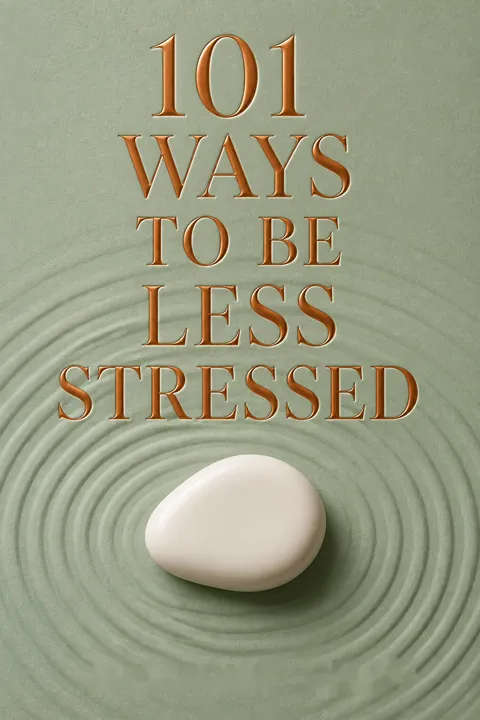
"101 Ways to Be Less Stressed" offers practical tips for stress reduction and mental health improvement. Readers appreciate its concise format and variety of strategies, finding it a quick, impactful read. While some reviewers note familiar themes and lack of depth, many value the book's scientific approach and applicability. The audiobook version receives praise for its accessibility. Critics suggest it's best suited for beginners or as a refresher. Overall, the book is seen as a helpful tool for incorporating stress-reduction techniques into daily life, despite some repetition and oversimplification.
People Also Read





Glossary
thinker moments
intentional mental pausesBrief periods spent away from external demands, allowing the mind to wander, daydream, meditate, or reflect. Leaf presents these pauses as a way to rest attention and organize thinking during the day. They are meant to be scheduled or used when stress rises, rather than treated as wasted time.
purposeful procrastination
deliberate acceptance of incompletionA practice of intentionally setting aside tasks that cannot or need not be completed immediately. It involves making space for priorities, declining unrealistic deadlines, and accepting that some work remains unfinished for now. The term distinguishes planned postponement from anxious avoidance that leaves a task unresolved and repeatedly occupying attention.
reconceptualization
reframing an upsetting experienceLeaf’s term for examining a difficult thought or experience and redesigning how it is understood. The process can involve acknowledging emotions, identifying assumptions and triggers, considering facts, and looking for learning or a possible response. It is not simply replacing a negative thought with a positive one or denying that harm occurred.
gathering time
scheduled reflection and solitudeProtected time set aside to be alone and reflect, journal, learn, meditate, pray, or daydream. Leaf recommends placing it on the calendar so that external tasks do not routinely displace it. Its purpose is to help a person notice patterns in thoughts and habits, and to consider what may need attention.
mental autopsies
reviews of past experiencesA structured review of a difficult event, mistake, or interaction to understand what happened and how it unfolded. The person considers causes, triggers, responses, and possible changes for a similar situation. The intended result is learning and improved action, rather than repeatedly replaying an upsetting experience without reaching a conclusion.
unease journal
record of distressing momentsA written record of occasions when a person feels uneasy or distressed. Leaf suggests noting the circumstances, possible triggers, feelings, and people present. Reviewing entries may help reveal recurring situations or patterns that deserve attention. It is an observation tool, not a diagnosis or a substitute for professional evaluation.
possibilities mindset
search for alternative pathsA way of thinking that looks beyond one expected outcome or a narrow set of plans. When circumstances change, a person considers additional options, actions, or interpretations instead of treating a setback as proof that progress is impossible. The idea encourages flexibility and hope while allowing that some problems remain outside personal control.
ask, answer, and discuss
three-step reflective learning processA journaling process Leaf recommends for applying an idea to personal experience. First, write questions about the material. Next, answer them in detail using relevant memories and observations. Finally, discuss what those answers suggest about thoughts, words, actions, and practical changes. The process is intended to turn reading into active reflection rather than passive recall.
About the Author
Other books by Caroline Leaf




Download PDF
Download EPUB
.epub digital book format is ideal for reading ebooks on phones, tablets, and e-readers.








