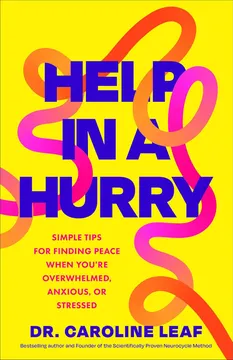


Key Takeaways
Treat a bad day as a moment to steer, not a verdict on your life
Small interventions matter. This book is a first-aid kit for stressful moments, not a promise to erase pain or replace deeper healing. Its central move is to notice a reaction before it takes over, then choose a response that helps you get through the next hour or day. A missed task, a sharp exchange, or an anxious spiral need not dictate everything that follows.
Practice beats perfection. Leaf argues that repeated reactions can become habits, and cites research estimating about 63 days for a habit to form. That is a rough guide, not a countdown or a reason to blame yourself. Use brief exercises consistently, and seek professional support when distress is severe, persistent, or connected to trauma.
The first-aid metaphor usefully separates immediate stabilization from long-term treatment. In crisis work, reducing the next step to something manageable can restore a sense of agency without pretending the underlying problem is solved. The caution is important: the language of choosing a response should not imply that people control every circumstance, or that distress is a personal failure. Structural pressures, illness, unsafe relationships, and limited resources can constrain options. A practical tool is most humane when it expands what is possible without making the person responsible for everything that happened.
Turn perfection pressure into a specific next step you can actually control
Pressure can help or harm. A deadline or challenge can sharpen attention, but pressure becomes corrosive when it turns into demands such as needing to succeed, never making mistakes, or keeping everything together. Leaf calls a quick calming action a mindhack, and a deliberate shift in perspective a mindshift. For an unfinished to-do list, breathe slowly, name the fear, then identify what was completed and what can wait.
Track the pattern. The book lists seven common pressure statements, including fear of disappointing others, exhaustion, and feeling destined to fail. Write down the thought, its trigger, and its effect on your body. This makes a sweeping judgment more concrete and gives you something specific to reconsider, rather than another demand to try harder.
The useful distinction is not between pressure and no pressure, but between a challenge that mobilizes attention and a demand that makes worth depend on performance. That distinction resembles the difference between standards and perfectionism: standards guide effort, while perfectionism makes mistakes evidence of personal inadequacy. Naming completed work can correct the mind’s tendency to notice unfinished tasks, but it should not become forced gratitude for an unreasonable workload. Sometimes the accurate mindshift is not to reframe the list, but to reduce it, renegotiate it, or ask for help.
Give repetitive thoughts a job, a time limit, and a route toward action
Reflection needs an endpoint. Leaf distinguishes useful deep thinking, which examines a problem to learn or decide, from rumination, which repeats the same distress without resolution. She cites a report that 73 percent of adults ages 25 to 35 and 52 percent of adults ages 45 to 55 struggle with negative rumination. Unwanted intrusive thoughts are common too: a study across six continents found that about 94 percent of participants experienced them.
Interrupt the loop. Instead of arguing with every thought, pause, breathe, and ask what is known versus assumed. Set a short period to consider the issue, then choose a next action: clarify a misunderstanding, apologize, set a boundary, or postpone what cannot be solved now. Writing thoughts down or advising yourself as you would a friend can help create distance.
This approach turns introspection from an endless search for certainty into a decision process. The key test is whether thinking produces new information, a clearer interpretation, or a next step. If not, more analysis may simply rehearse distress. The book’s reassurance that intrusive thoughts are widespread can reduce shame, but frequency alone does not determine whether someone needs care. Persistent, highly distressing thoughts, especially when accompanied by compulsions or impaired daily functioning, deserve assessment rather than a self-help exercise alone.
Pause before answering anger, then respond to the problem rather than the imagined motive
Create a gap first. Anger can alert someone to a boundary violation or injustice, but frequent outbursts can narrow attention and make a response more impulsive. Leaf describes her own angry reaction after seeing unfinished emails at bedtime, then noticing that the outbursts were becoming a pattern. Her suggested first move is to step away if possible and breathe slowly, with a longer exhale than inhale.
Separate facts from guesses. Name the feeling, identify what actually happened, and avoid treating assumptions about another person’s motives as facts. When calm enough to respond, use direct language about the impact and the need. The goal is not to swallow anger or let someone walk over you. It is to communicate firmly without turning a difficult interaction into a larger conflict.
The pause protects both judgment and relationships because strong arousal can make immediate retaliation feel more compelling than it will seem later. Naming anger can also distinguish the emotion from the story attached to it: feeling insulted is real, while the other person’s intention may still be uncertain. Restraint should not be confused with passivity. In situations involving coercion, abuse, or serious power imbalances, distance, documentation, and outside support may be safer than a calm conversation. Regulation is useful partly because it helps people choose among responses, including leaving.
Choose rest that restores attention, not just time away from work
Rest is not one-size-fits-all. Leaf distinguishes stopping activity from feeling genuinely restored. Someone can spend a weekend watching shows and still carry work worries through every episode. She recommends short thinker moments, periods of daydreaming or quiet thought, and regular breaks rather than waiting until exhaustion forces a stop. Rest might mean reading, walking, laughing with someone, or being alone, depending on the person.
Reduce mental switching. The book calls rapid, scattered multitasking milkshake thinking, arguing that constant task changes drain attention and make it harder to settle. Try doing one activity at a time, protect breaks from draining demands, and remove tasks where possible. A free space in the schedule does not have to be filled.
The distinction between rest and restoration is practical because passive time does not necessarily quiet the demands occupying attention. A break works better when it fits the person and the source of fatigue: social contact may restore one person, while solitude is essential for another. The advice to subtract rather than add is especially strong in a culture that can turn self-care into another performance checklist. Still, exhaustion is not always solved by better scheduling. Persistent fatigue can have medical, occupational, or caregiving causes that require more than a new routine.
Stop treating happiness as a full-time mood requirement
Unhappiness is part of being human. Leaf challenges the expectation, amplified by advertising and social media, that a good life means feeling positive most of the time. Painful emotions can be proportionate responses to loss, difficulty, or uncertainty. Trying to force happiness over them may add shame to the original pain. The book instead distinguishes a temporary mood from the broader quality of a life.
Move attention toward an action. Leaf contrasts focusing on whether you feel happy with attending to a chosen task, without pretending the emotion has vanished. She also emphasizes connection: friendships, family, colleagues, and shared activities can support well-being more reliably than possessions or likes. The point is not to suppress sadness, but to make room for it while remaining engaged with life.
The argument challenges a subtle trap: judging an emotion by whether it matches an ideal rather than asking what it signals and what matters now. This resembles acceptance-based approaches, which make room for difficult feelings while directing attention toward meaningful action. The distinction between happiness and well-being also helps resist the consumer promise that a purchase can deliver a permanent emotional state. Action orientation should remain flexible, however. At times, attending to grief or fear is the meaningful action; productivity is not automatically healthier than emotional attention.
Use regret as information about your next choice, not evidence against your past self
Hindsight distorts the past. Regret often imagines a better route that seems obvious only because the outcome is now known. Leaf calls using regret to prepare for future choices positive regret. Her approach is to name what happened, identify what the experience taught, and list possibilities it opens now. A business owner who paid too much for a contractor, for example, can learn to get costs and deadlines in writing and decide which work to bring in-house.
Borrow another viewpoint. The Multiple Perspective Advantage means stepping outside an emotionally charged situation and advising yourself as if you were a friend. For uncertainty, imagine more than one outcome and plan a response to each. This is not a guarantee that events will go well. It is a way to act without waiting for certainty that may never arrive.
Regret is painful, but it can carry decision-relevant information: what mattered, what was overlooked, or what should change. The productive question is less whether the past can be made perfect and more whether the memory improves a future choice. Multiple perspectives can weaken the grip of hindsight, though they should not be used to excuse genuine harm or rush forgiveness. Planning for several outcomes is similarly valuable when it produces adaptable choices, not an illusion that every uncertainty can be controlled through enough rehearsal.
Remember childhood adversity without letting it become the whole story
Both harm and support count. Adverse Childhood Experiences, or ACEs, include events such as abuse, neglect, domestic violence, and household substance misuse. The book describes research linking repeated childhood adversity with later health risks, while emphasizing that positive experiences also matter. It cites findings that people reporting three to five positive childhood experiences alongside adversity had 50 percent lower odds of adult depression or poor mental health; six to seven were associated with 72 percent lower odds.
Balance is not denial. Leaf encourages recalling supportive relationships and moments alongside painful experiences, while still addressing harm that needs care. Her 3:1 thought ratio suggests adding three positive memories for each negative thought. This is presented as a way to widen attention, not to erase trauma or declare a painful childhood secretly good.
The insistence on a fuller narrative resists two damaging simplifications: that adversity leaves someone permanently broken, and that a few positive memories cancel serious harm. Positive relationships can be protective without making abuse acceptable or treatment unnecessary. The numerical ratios are best understood as prompts for attention, not universal clinical prescriptions. A person’s response to trauma varies, and memory work can be destabilizing. When recalling childhood experiences brings intense distress, pacing the exploration with a trusted professional is more important than completing an exercise.
Set boundaries that protect your values before resentment makes the decision
Approval can become a trap. Leaf distinguishes a peacemaker, who tries to resolve conflict honestly, from a people pleaser, who avoids disapproval even at the cost of personal values or well-being. Repeatedly saying yes can erode self-trust and leave someone resentful toward the very people they are trying to satisfy.
Delay the automatic yes. When asked for something, take a moment before answering. Consider what is realistically possible, then give a clear limit or decline. The same approach applies to an inner critic: instead of trying to silence it, ask what fear or evidence lies behind its accusation, and whether the judgment is fair. Self-talk can be treated as information to examine, not a final verdict on identity.
The useful measure of kindness is not how often someone agrees, but whether care for others coexists with honesty about capacity and values. A pause creates room for that distinction, while boundaries make relationships more truthful by preventing consent that is actually resentment in disguise. The inner critic may sometimes flag a real concern, but its harshness does not make it accurate. Examining evidence preserves the possibility of learning without accepting humiliation as motivation. For people facing retaliation or dependence, setting limits may require careful planning and support.
Question mental health content before turning a label or screen habit into identity
Context matters more than blanket rules. Leaf warns that a short online video cannot diagnose a complex person. She discusses prevalence inflation, the hypothesis that widespread mental health messaging can lead some people to interpret ordinary distress as evidence of a disorder. Labels can help someone find language and care, but they should not become the whole explanation for a life. Social media can also offer genuine support, especially to people lacking community offline.
Observe your own pattern. Technology does not affect everyone in the same way, and the book notes that research on screen use and sleep is more nuanced than simple warnings suggest. Track what you use, when, and how you feel afterward. Slow down before accepting a diagnosis from a feed, and consult a qualified professional when symptoms are persistent or disruptive.
This section’s strongest principle is epistemic humility: a label, a screen, or a popular explanation can offer clues, but none is the person. That stance avoids both careless self-diagnosis and the opposite mistake of dismissing distress because it is common. The same individualized approach suits technology: effects depend on content, timing, person, and purpose, so observation beats universal rules. Still, skepticism toward online claims should not become skepticism toward professional assessment. A diagnosis can open access to treatment and accommodations when it is carefully evaluated.
In a crisis, breathe, name what is happening, and reach for another person
Peace is not pretending. In the book’s final crisis guide, peace means staying able to think and act while life remains painful, not feeling happy about what happened. Slow breathing can help settle immediate arousal. Then name the problem, identify what is within reach, and choose one next action. Gratitude and memories of earlier support can help widen attention, but they are not substitutes for addressing the crisis.
Ask before going in circles. Leaf recounts a therapy exercise in which blindfolded participants followed a rope maze, repeatedly circling because they did not ask for help. The lesson is concrete: self-reliance can become another loop. A trusted friend, family member, therapist, or other support can provide perspective and practical assistance when the way forward is hard to see.
The rope-maze story makes help-seeking memorable because the participants are not failing from lack of effort. They are stuck because effort alone cannot reveal the pattern. A second person can supply information, safety, or a different route. This reframes dependence as a normal feature of problem-solving rather than a defect. Breathing may make the next decision more accessible, but it cannot resolve material emergencies or substitute for urgent care. The strongest version of the message is both self-compassionate and relational: regulate where possible, then bring in the help the situation requires.
Analysis
Help in a Hurry is best read as a field guide for emotional first response. Its chapter-by-chapter structure starts with recognizable trouble, such as anger, exhaustion, regret, or intrusive thoughts, then offers compact practices: pause, label, examine assumptions, widen perspective, and choose a next step. That format fits the book’s promise. A reader in distress is unlikely to benefit from a grand theory alone; an immediately usable question or breathing pattern may help create enough distance to act more thoughtfully.
The book’s most coherent insight is that attention and interpretation shape the experience of a difficult moment. It repeatedly asks readers to separate what happened from what they infer, and to treat emotions as meaningful without treating them as commands. This is especially effective in its distinctions between rumination and reflection, rest and restoration, and social care and people pleasing. The stories, including the rope-maze exercise, give these abstractions a human scale.
Its scientific language needs more caution than its practical advice. The text sometimes presents complex claims about brain waves, cellular effects, and mind-brain causation with a certainty that the summarized evidence may not support. The 63-day habit estimate and 3:1 positivity ratio should be treated as heuristics, not biological laws. Similarly, reframing should not imply that a person can think their way out of trauma, unsafe conditions, poverty, illness, or overwork. The book itself acknowledges the need for longer-term healing and professional help, and that qualification matters.
The most responsible use of its tools is selective and experimental: try a strategy, notice whether it helps, and adapt it to the actual problem. Brief self-regulation can support agency, but persistent symptoms, severe impairment, or danger call for appropriate professional or practical support. Its durable message is not that every storm is manageable alone. It is that a hard moment can be met with attention, a next step, and connection.
Review Summary
Help in a Hurry receives largely positive reviews, praised for its accessible, practical approach to managing stress, anxiety, overthinking, and emotional overwhelm. Readers appreciate the short, topic-based chapters that can be read out of order, making it easy to find immediate help. Many highlight the actionable tools, worksheets, and science-backed strategies as standout strengths. Some critics note the content isn't groundbreaking, feeling repetitive of standard self-help advice, and a few caution it may oversimplify serious trauma. Overall, most find it a genuinely useful, compassionate mental wellness resource.
Glossary
psychoneurobiology
Mind, brain, and body interactionLeaf uses psychoneurobiology for the connected relationship among mental activity, the brain, and the body. Thoughts, emotions, and choices are described as influencing brain and bodily responses, while bodily states also shape experience. The term supports the book’s practical emphasis on calming the body and examining thought together, rather than treating stress as purely mental.
mindhack
Quick calming practiceA mindhack is a brief exercise used during pressure to settle the mind, brain, and body enough to think more clearly. Examples in the book include slow breathing, movement, and grounding through the senses. It is intended as an immediate aid, not a complete solution to the underlying stressor.
mindshift
Deliberate perspective changeA mindshift is a consciously chosen alternative interpretation of a stressful thought. Rather than denying the problem, a person examines what they are telling themselves and tries a more balanced view. For example, an unfinished task can be reconsidered in light of what was completed and what can reasonably wait.
thinker moments
Intentional mental downtimeThinker moments are short periods of mind-wandering, daydreaming, or inward reflection. Leaf presents them as breaks from active problem-solving that can help restore attention and surface thoughts worth examining. They may last seconds or minutes, and can include closing the eyes, walking, or reflecting on a story.
milkshake thinking
Scattered task switchingMilkshake thinking is Leaf’s name for rapid, fragmented shifts between tasks. She argues that this style of multitasking strains attention and makes it harder to concentrate deeply or feel restored. Her alternative is to focus on one activity at a time and limit unnecessary switching.
Multiple Perspective Advantage
View yourself from outsideThe Multiple Perspective Advantage, abbreviated MPA, is a technique for gaining distance from an emotionally charged problem. A person imagines advising themselves as a friend might, or physically moves between two chairs to take different roles. The change in viewpoint is meant to reveal assumptions, clarify feelings, and support a considered next step.
controlled indulging
Bounded reflection on regretControlled indulging means deliberately making time to examine a regret without allowing reflection to become endless rumination. The person names the regret, considers how it arose and affects the present, then asks what lesson or action can guide the future. The approach neither suppresses regret nor treats repeated dwelling as useful.
expectancy mindset
Hope with contingency plansAn expectancy mindset means hoping for a favorable outcome while preparing for less favorable possibilities. Rather than insisting that everything will work out, a person considers what they would do across different outcomes and looks for ways to learn or adapt. Leaf presents this as a way to feel more prepared amid uncertainty.
ACEs and PCEs
Adverse and positive childhood experiencesACEs are adverse childhood experiences, including abuse, neglect, domestic violence, and household substance misuse. PCEs are positive childhood experiences, such as supportive relationships and caring moments. The book discusses research associating childhood adversity with later health risks and positive experiences with resilience, while emphasizing that positive memories do not erase harm.
prevalence inflation
Possible overinterpretation of distressPrevalence inflation is a hypothesis discussed in the book about how widespread mental health messaging may lead some people to interpret ordinary distress as a disorder. It is not a claim that mental illness is unreal or that awareness is harmful in every case. The idea raises questions about how labels and repeated online content shape self-understanding.
3:1 thought ratio
Three positive thoughts per negativeThe 3:1 thought ratio is Leaf’s exercise of responding to a negative thought with three positive memories or thoughts. In the chapter on childhood experiences, it is offered as a way to broaden attention while still acknowledging adversity. It is a suggested balancing practice, not a universal clinical rule or a reason to suppress painful material.
About the Author
Other books by Caroline Leaf


Download PDF
Download EPUB
.epub digital book format is ideal for reading ebooks on phones, tablets, and e-readers.








