

Key Takeaways
Turn painful experience into work that gives other people language and hope.
Pain can become material. Jones describes childhood shaped by poverty, violence, and his mother’s severe mental illness. Music became a refuge where he could give emotion a form, first in private and eventually in work that reached others. He points to Marvin Gaye’s What’s Going On as another example: personal and social turmoil became a song listeners could use to recognize shared pain and possibility.
Expression is not erasure. Jones does not suggest that creativity makes suffering disappear. Rather, it can move anguish out of isolation and into a form that offers connection. He compares the process to recycling: painful experiences become something useful, though the work of changing one’s relationship to them can take years.
The strongest part of this idea is its movement from private coping to public recognition. A piece of art can make an otherwise solitary feeling legible to someone else, creating solidarity without requiring identical experiences. The necessary caution is that pain does not automatically produce insight, and no one owes the world a beautiful response to trauma. Jones’s account is most useful as an invitation to seek expression when it helps, not as a demand to turn every wound into a gift.
Make possibility visible before asking talent to outrun its surroundings.
A glimpse can redirect a life. As a boy in Seattle, Jones found a piano in a recreation center he had entered to steal dessert. The instrument drew him back. A superintendent let him practice, a music teacher opened his home and books to him, and a school teacher gave him room to explore the band room. Each encounter revealed a future beyond the gang life he had seen around him.
Hope needs access. Jones’s path was not simply a story of individual grit. It depended on people who made equipment, instruction, and encouragement available. Learning music gave him a reason to practice and a growing sense of control. He argues that young people need examples of attainable futures, not merely praise for potential they have never had a chance to develop.
This account distinguishes inspiration from opportunity. A role model can make a new life imaginable, but access to a room, an instrument, a teacher, or sustained practice makes that possibility actionable. Jones’s story therefore points beyond individual motivation toward the conditions that allow talent to appear. Its limit is also important: one breakthrough cannot substitute for reliable support. The piano mattered, but so did the adults who kept opening doors after the first discovery.
Travel and listen until another culture changes the questions you ask.
Immersion widens the palette. On tour with Lionel Hampton’s band in the segregated United States, Jones and his fellow Black musicians were denied ordinary access to restaurants and lodging. They relied on the Chitlin’ Circuit, a network of Black-owned venues and safe places that hosted Black entertainers. Touring Europe brought a different kind of welcome, especially in France, where Jones felt recognized as a musician rather than reduced to his race.
Learn through daily life. Saxophonist Ben Webster urged him to learn local words, eat local food, and listen to local music. Jones found that these experiences expanded both his understanding of people and his musical imagination. He also argues that creative forms have histories: for instance, hip-hop draws on long traditions of African oral performance, not just recent American trends.
Cultural immersion is more than collecting references. It asks a traveler to let local habits and histories complicate familiar assumptions. That posture can make artistic collaboration less extractive and more curious. Jones’s own experience also shows that travel does not dissolve discrimination: treatment differed sharply from place to place, but one country’s welcome could not undo another’s exclusion. The practical test is whether exposure changes listening and interpretation, rather than becoming a souvenir or a claim of expertise.
Build identity anchors before a crisis starts writing your story.
Prepare for the valley. At twenty-six, Jones led a large band and its families through a European tour that collapsed after the show failed and a promoter disappeared with promised advances. He was left trying to support thirty-three people, borrowing money, and struggling to get everyone home. In Finland, overwhelmed by debt and shame, he considered suicide. A reminder from his father that his life had purpose helped him reach out for help and keep going.
Repeat what matters. After returning, Jones began using daily affirmations to reinforce the person he wanted to be and the responsibilities he valued. He presents this practice as a personal guidepost, not a universal formula. The point is to decide what will orient life before a crisis makes it harder to think clearly.
A prewritten set of values can serve as a cognitive handrail when panic narrows attention. Jones’s story also makes clear that self-talk was not the whole rescue: he contacted people, accepted financial help, and made practical plans. This matters because resilience is often misrepresented as an internal virtue alone. For severe distress, personal rituals cannot replace professional or social support. The lesson is to establish anchors early and to treat asking for help as part of staying oriented.
Practice until a rare opportunity feels like a familiar assignment.
Preparation leaves a trail. At fifteen, Jones’s band was selected to back Billie Holiday because its members could read music quickly. They began the performance distracted by the star in front of them, but recovered after the pianist and music director corrected them. Jones took the lesson seriously and continued developing his arranging and conducting skills.
One good job can travel. Years later, Billy Eckstine recommended Jones for work in Paris, and the experience there helped lead to a call from Frank Sinatra. Sinatra had seen Jones conduct an orchestra in Monaco and, years afterward, invited him to arrange and lead music for an album with Count Basie. Jones’s point is that opportunity becomes repeatable when skill, reliability, and attention are already in place.
The story makes preparation visible as a chain, not a motivational slogan. A performance creates an impression, a colleague remembers it, and that memory becomes a future referral. It also suggests that readiness includes correction: Jones’s first high-pressure job was imperfect, but he adjusted rather than freezing. The idea should not be mistaken for a guarantee that effort earns access. Preparation improves the ability to use an opening; it cannot ensure that gatekeepers offer one.
Study craft’s rules so your imagination has something sturdy to bend.
Soul needs structure. Jones describes creativity as a meeting of feeling and technique. As a young musician, he once wrote a note instructing players to lower every B because he did not yet know how key signatures worked. Later, teachers and study gave him tools to express musical ideas more clearly. In Paris, composer Nadia Boulanger trained him in orchestration and asked him to reduce a complex score to a compact sketch, then transpose it through every key.
Knowledge expands choices. Jones carried this approach into film scoring and production, studying how music, image, timing, and story work together. He argues that constraints can make creative decisions more precise: knowing the conventions allows an artist to depart from them deliberately. His shorthand, “Sharpen your left brain,” means learning the analytical and technical side of a craft rather than relying on passion alone.
The useful distinction is between freedom and randomness. Technique supplies a vocabulary for making choices; it does not dictate what those choices must be. Jones’s musical examples make that relationship unusually concrete, from notation to orchestration. His left-brain language is a simplification, though, not a literal map of creativity onto two separate brain regions. The deeper principle survives the metaphor: practice builds options, and informed experimentation can be more original than uninformed spontaneity.
Trust the first honest signal before audience approval takes over.
Notice what moves you. Jones calls his emotional response to a piece of art the Goosebump Test: if a song genuinely moves him, it may reach someone else too. He warns against beginning a project by guessing what critics or listeners will reward. That concern can drown out the artist’s own instincts before the work has a chance to take shape.
Start before certainty. Jones also describes entering what he calls an alpha state, a relaxed, drowsy condition in which he feels less caught in conscious judgment and more able to write freely. He kept paper nearby and captured ideas as they came. The method is personal, not a universal recipe. His example of Soul Bossa Nova, written quickly, supports his larger point that prolonged analysis is not always the route to better work.
The Goosebump Test is valuable as an early filter: it asks whether the creator feels any real connection before optimizing for external response. It is not a reliable forecast of popularity, and a creator’s taste is not the audience’s taste. Likewise, the alpha-state account is best understood as Jones’s description of a useful working condition, not a scientific law about how creativity must happen. The broader discipline is to protect an initial impulse, then use judgment and feedback to develop it.
Use underestimation as room to work, not as a verdict on worth.
Doubt can create space. When Michael Jackson asked Jones to produce his first major solo album as an adult, record executives objected that Jones was too jazz-oriented for the project. Jones accepted the challenge and built a team of experienced songwriters, musicians, and engineers. Off the Wall became a major success, followed by Thriller and Bad.
Work answers better than boasting. Jones argues that low expectations can reduce pressure and leave room to exceed them. He also warns against letting either praise or dismissal define a person’s identity. The same instinct guided his support for artists and ventures that others considered too obscure or unconventional, including the digital piano-learning platform Playground Sessions.
Underestimation can be strategically useful when it frees a person from constant performance for an audience. But the advantage belongs to the person who still has resources, skill, and room to act. Many people face skepticism without receiving a comparable opportunity to prove themselves. Jones’s story is therefore not a reason to romanticize bias. It is a reminder to separate a critic’s assessment from actual capacity, while also building teams and conditions that let that capacity become visible.
Aim beyond personal achievement, and use each breakthrough to widen access.
Cross boundaries on purpose. Jones wanted to connect musical generations and styles that the industry often kept apart. His album Back on the Block placed jazz performers alongside rappers. He also helped create Vibe magazine in 1992 to give hip-hop and Black culture a fuller platform than the narrow narratives common in mainstream coverage.
Create room for others. During a period of intense conflict in hip-hop, Jones organized a 1995 gathering where artists and community figures could discuss responsibility, hope, and violence. The meeting did not end the conflict, and Tupac and Biggie were later killed. Jones still regarded the effort as worthwhile because it created dialogue and visibility. His measure of a breakthrough is not only who reaches a door, but who can follow.
This is a model of ambition as institution-building. An album can connect audiences, while a magazine or public gathering can change who gets represented and who gets heard. The examples also resist a tidy success story: the summit could not prevent later deaths, and the magazine’s original vision did not remain intact. That limitation strengthens the point. Cultural work can matter without solving the whole problem, provided its contribution is described honestly and its effects are not exaggerated.
Turn what mentors gave you into an opening for someone else.
Belief can travel. At thirteen, Jones asked trumpeter Clark Terry for lessons. Terry was exhausted from touring, yet agreed to teach him before school. He corrected Jones’s technique, encouraged his early compositions, and helped him believe that a musical future was possible. Jones later saw Terry mentor younger musicians, including pianist Justin Kauflin, and helped produce a documentary about their relationship.
Pass support forward. Jones treats mentorship as a reciprocal responsibility, not a formal title reserved for famous experts. A mentor can offer instruction, access, or simply confidence at a vulnerable moment. A student can also teach the mentor: Kauflin’s experience of blindness helped Terry adjust when he lost his own sight. The essential practice is to keep knowledge and encouragement moving between generations.
Terry’s example shows how small acts can compound without becoming a transaction. He invested time in a young musician without knowing what the return would be, and that relationship became part of a wider teaching lineage. The reciprocal element matters too: mentorship is strongest when the experienced person remains open to learning. Still, personal kindness cannot replace accessible education or fair institutions. Its value is both immediate and cultural: it helps individuals grow while making expertise less dependent on private access.
Treat people fairly when it costs you, because trust outlives a single deal.
Integrity shows up in money. When Jones’s band played a poorly attended show, Count Basie told him to return half the fee to the promoter. Jones believed he had earned the money, but followed Basie’s advice because his name had helped draw the audience. The decision taught him to consider fairness beyond what a contract technically allowed.
Relationships carry work. Jones later collaborated with Basie and Frank Sinatra, and he credits long-standing trust for making ambitious projects possible. The Weeknd’s foreword offers another small example: after a show, Jones urged him to greet his fans before coming over to meet his idol. In both cases, respect is not a networking trick. It is the substance of the relationship.
The stories distinguish relationships from strategic networking. Trust can generate opportunities, but treating kindness as a tactic would hollow out the very thing that makes trust useful. Basie’s advice also involves a real tradeoff: generosity can be costly, and fairness is not always simple when contracts, labor, and unequal bargaining power are involved. Jones’s standard is clearest when it is applied to durable conduct, not isolated gestures: reputation is built by how people are treated when there is something to lose.
Protect your health and attention; being present is part of the work.
Success has a cost. Jones survived a car crash that killed his fellow passengers, a pair of brain aneurysms, and a diabetic coma. He also describes decades of overwork, drinking, and missed family time. After the 2015 coma, he stopped drinking and began reflecting more clearly on the choices that had shaped his life. He came to see family, health, and creative connection as more important than adding achievements to an already long résumé.
Use the life available. Jones does not argue against ambition. He asks people to notice why they pursue it and what it is displacing. Being present with family, caring for the body, and continuing to create are all part of a meaningful life, not distractions from one.
The closing insight complicates the familiar story of relentless achievement. Work can provide purpose and an escape from a constricted beginning, yet the same drive can consume health and relationships if no other values set its limits. Jones’s experience is not proof that a positive attitude prevents illness or death; rather, it shows how a near miss can clarify priorities. Presence is not passive. It is an ongoing allocation of time toward the people and capacities that make further work worthwhile.
Analysis
The book’s form mirrors its central metaphor: twelve notes can produce radically different music, just as a life draws on a limited set of recurring forces, pain, curiosity, discipline, relationships, and choice. Jones does not offer a universal success formula. He offers a memoir-shaped repertoire of practices, each tested against a specific episode in a long career. That structure makes the advice memorable because the principle arrives attached to a scene: a stolen dessert leads to a piano, a failed tour to daily affirmations, a dismissed jazz arranger to Off the Wall.
Its strongest contribution is the insistence that creative achievement is never only individual. Jones’s talent mattered, but so did the piano made available to him, the teachers who took him seriously, the peers who remembered his work, and the mentors who corrected his conduct. The narrative quietly challenges the mythology of the self-made artist. It suggests that opportunity is partly built through institutions and generosity, then carried forward through collaboration and mentorship.
The book also contains tensions worth keeping visible. It celebrates turning pain into purpose while acknowledging that trauma can damage relationships, health, and self-understanding. It promotes relentless ambition while describing the costs of workaholism. It praises intuition while insisting on technical rigor. These are not contradictions to erase; they are the central balancing acts of creative life. Instinct without craft can remain vague, but craft without feeling can become empty. Ambition can open doors, but without values it can crowd out the life those doors were meant to serve.
The most transferable reading is therefore not to imitate Jones’s volume of work or his specific routines. It is to build a personal practice that joins expression with skill, ambition with care, and individual success with wider access. His stories show that a creative life is not a straight climb. It is a continual adjustment of what deserves attention, and who should benefit from the work.
Review Summary
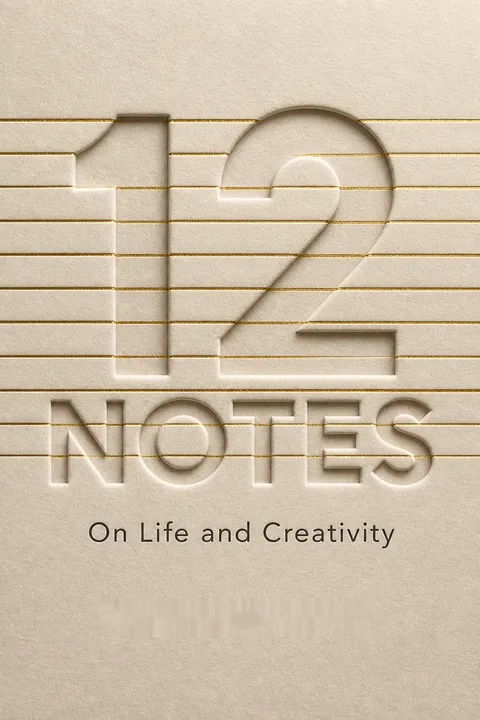
12 Notes by Quincy Jones offers wisdom on life and creativity, structured around musical notes. Readers appreciate Jones' humble approach, personal anecdotes, and practical advice. The book is praised for its inspirational tone and insights into the music industry. While some find it repetitive or self-promotional, many value its lessons on perseverance, relationships, and personal growth. Critics note its brevity and lack of depth in certain areas, but overall, it's recommended for aspiring creatives and fans of Jones' work.
People Also Read



Glossary
Goosebump Test
Personal emotional responseJones’s name for checking whether a piece of music or other art genuinely moves its creator. He uses the response as an early guide to authenticity, rather than beginning by guessing what critics or audiences will want. It is a personal creative filter, not a guarantee that a work will succeed with others.
alpha state
Relaxed creative conditionJones’s term for a calm, drowsy state in which he feels less constrained by conscious judgment and more receptive to ideas. He describes relaxing near the boundary of sleep, keeping writing materials nearby, and recording what comes to mind. This is his account of a useful working method, not a claim that every creator must use it.
Sharpen your left brain
Strengthen technical craftJones’s shorthand for studying the analytical, technical, and structural elements of a discipline. In music, this includes notation, harmony, orchestration, and arranging. He contrasts these learnable skills with emotional expression, arguing that technical knowledge gives creativity more options. The phrase uses a simplified left-brain and right-brain metaphor rather than a precise account of brain science.
Chitlin’ Circuit
Black performance networkThe network of Black-owned theaters, clubs, dance halls, and other venues that provided places for Black entertainers to perform during segregation. Jones describes it as a safer alternative to venues where Black performers were excluded from ordinary services or treated as unwelcome after performing.
Ubuntu
Humanity through communityA concept Jones learned from Nelson Mandela, associated with the Zulu expression Umuntu ngumuntu ngabantu. It conveys that a person’s humanity is bound up with other people and that collective well-being exceeds isolated individual achievement. Jones uses it to frame creative and social progress as something that should benefit more than its originator.
image system
Recurring film imageryA storytelling technique Jones encountered through Robert McKee’s teaching. An image system is a pattern of related visual or sound motifs repeated across a film, with variation, to deepen its emotional or thematic effect. Jones gives the recurring imagery of confinement in Casablanca as an example of how details can reinforce a story’s larger meaning.
synesthesia
Cross-sensory perceptionA neurological condition in which stimulation of one sensory or cognitive pathway automatically triggers another. Jones describes hearing music and experiencing corresponding colors. He notes that he, Clark Terry, and Justin Kauflin shared this experience, which helped form one point of connection among them.
FAQ
What's "12 Notes: On Life and Creativity" about?
- Author's Journey: "12 Notes: On Life and Creativity" by Quincy Jones is a reflective memoir that shares the author's life experiences and the lessons he learned about creativity and success.
- Life Lessons: The book is structured around twelve "notes," each representing a key lesson or principle that has guided Jones throughout his career.
- Personal and Professional Insights: It combines personal anecdotes with professional insights, offering readers a glimpse into the music industry and the creative process.
- Inspirational Guide: The book serves as an inspirational guide for anyone looking to harness their creativity and live a life of purpose.
Why should I read "12 Notes: On Life and Creativity"?
- Unique Perspective: Quincy Jones offers a unique perspective as a legendary music producer and artist, sharing wisdom gained from decades in the industry.
- Practical Advice: The book provides practical advice on creativity, success, and personal growth, applicable to various fields beyond music.
- Inspiring Stories: Readers will find inspiration in Jones's stories of overcoming adversity and achieving success against the odds.
- Universal Themes: The themes of resilience, creativity, and the power of relationships are universal and resonate with a wide audience.
What are the key takeaways of "12 Notes: On Life and Creativity"?
- Creativity and Pain: Jones emphasizes the importance of recycling pain into purpose, using creativity as a means of expression and healing.
- Preparation and Opportunity: He highlights the necessity of being prepared for opportunities and the hard work required to achieve success.
- Value of Relationships: The book underscores the significance of building and maintaining meaningful relationships in both personal and professional life.
- Continuous Learning: Jones advocates for lifelong learning and the importance of understanding the science behind one's craft.
How does Quincy Jones define creativity in "12 Notes: On Life and Creativity"?
- Two Parts: Jones defines creativity as a combination of science and soul, involving both learned skills and innate emotions.
- Expression of Emotions: He views creativity as a way to express emotions and gain stability, especially in challenging circumstances.
- Universal Potential: Jones believes that everyone has creative potential and deserves to realize it, regardless of their background.
- Transformative Power: Creativity is portrayed as a powerful tool for personal transformation and connecting with others.
What is the significance of the "12 Notes" structure in the book?
- Musical Metaphor: The "12 Notes" structure is a metaphor for the twelve notes in music, symbolizing the foundational elements of creativity and life.
- Guiding Principles: Each note represents a guiding principle or lesson that has shaped Jones's life and career.
- Flexible Framework: The structure allows readers to explore the lessons in any order, encouraging them to find their unique path.
- Comprehensive Coverage: The twelve notes cover a wide range of topics, from personal growth to professional success, providing a holistic view of Jones's philosophy.
What are some of the best quotes from "12 Notes: On Life and Creativity" and what do they mean?
- "Recycle your pain into purpose." This quote emphasizes the transformative power of creativity in turning negative experiences into positive outcomes.
- "If you can see it, you can be it." It highlights the importance of visualization and hope in achieving one's goals.
- "Always be prepared for a great opportunity." This underscores the necessity of hard work and readiness to seize opportunities when they arise.
- "Your music can never be more or less than you are as a human being." This reflects the idea that personal growth and integrity are integral to creative success.
How does Quincy Jones address the concept of mentorship in the book?
- Mutual Growth: Jones views mentorship as a symbiotic relationship that benefits both the mentor and the mentee.
- Lifelong Impact: He shares personal stories of how mentors like Clark Terry shaped his career and life, emphasizing the long-lasting impact of guidance.
- Responsibility to Give Back: Jones believes in the responsibility to pass on knowledge and support to the next generation.
- Breaking Barriers: Mentorship is portrayed as a way to break down generational gaps and foster a sense of community and continuity.
What role does adversity play in Quincy Jones's life and creativity, according to the book?
- Source of Strength: Adversity is depicted as a source of strength and resilience, fueling Jones's creativity and drive.
- Learning Opportunities: He views challenges as opportunities for growth and learning, rather than obstacles.
- Empathy and Connection: Adversity has given Jones the empathy to connect with others and create meaningful art.
- Motivation for Change: Difficult experiences have motivated him to push boundaries and strive for positive change in his life and work.
How does Quincy Jones describe the relationship between science and creativity in "12 Notes: On Life and Creativity"?
- Interconnected Elements: Jones describes creativity as a blend of science (technical skills) and soul (emotional expression).
- Foundation for Innovation: Understanding the science behind one's craft provides a foundation for innovation and artistic freedom.
- Balance of Skills: He emphasizes the importance of balancing technical proficiency with emotional authenticity in creative endeavors.
- Continuous Improvement: Jones advocates for continuous learning and skill development to enhance creative potential.
What advice does Quincy Jones give about handling criticism and being underestimated?
- Power of Underestimation: Jones sees being underestimated as an advantage, allowing him to exceed expectations and prove doubters wrong.
- Focus on Goals: He advises focusing on personal goals and capabilities rather than external opinions.
- Use Criticism as Fuel: Criticism is viewed as fuel for motivation and improvement, rather than a deterrent.
- Maintain Humility: Jones stresses the importance of humility and grace in handling success and criticism alike.
How does Quincy Jones's personal life influence his creative work, as discussed in the book?
- Interwoven Experiences: Jones's personal experiences, including childhood trauma and family relationships, deeply influence his creative work.
- Source of Inspiration: His life story serves as a source of inspiration and authenticity in his art.
- Balancing Priorities: The book discusses the challenges of balancing personal life with a demanding career, highlighting the importance of family and health.
- Reflective Growth: Personal growth and reflection are integral to his creative process and artistic evolution.
What is Quincy Jones's perspective on the value of life, as expressed in "12 Notes: On Life and Creativity"?
- Ultimate Achievement: Jones views the gift of life itself as the ultimate achievement, beyond material success.
- Gratitude and Presence: He emphasizes the importance of gratitude and being present in everyday moments.
- Legacy and Impact: The book encourages readers to consider the legacy they wish to leave and the impact they have on others.
- Continuous Reflection: Jones advocates for continuous reflection on one's values and priorities to live a fulfilling life.
Download PDF
Download EPUB
.epub digital book format is ideal for reading ebooks on phones, tablets, and e-readers.








