

Key Takeaways
Treat elders as field-tested guides, not relics or oracles.
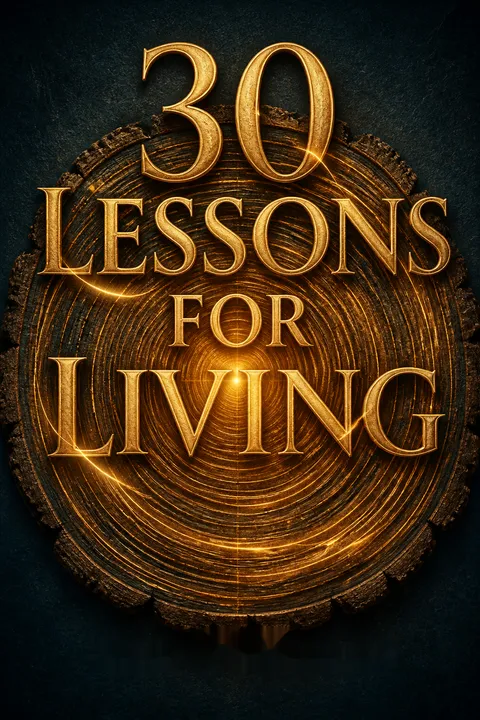
Wisdom from lived lives. Sociologist Karl Pillemer set out to preserve practical advice from older Americans before their experiences disappeared with them. The Legacy Project gathered responses from close to 1,200 people through written accounts, a national random-sample survey of 314 adults aged 65 and over, and longer interviews with elders nominated for their wisdom. Their advice ranged across relationships, work, parenting, aging, regret, and happiness.
A life is evidence. The book opens with June, a nursing-home resident whose body required extensive care but who took pleasure in the sunlight, meals, and people around her. Her story captures the project’s premise: decades of living can reveal ways to meet hardship that abstract advice misses. The elders are guides because they have traveled the terrain, not because every judgment they offer applies to everyone.
The project’s strength is its insistence that experience contains knowledge that is easy to overlook when advice comes only from professional authorities. Its mix of a random survey and open-ended interviews also gives the observations more breadth than a collection of memorable anecdotes alone. Still, the elders’ wisdom is testimony, not a controlled test of what causes a good life. Its greatest value may be less as a universal rulebook than as a set of questions readers can use to examine their own choices.
Choose a partner for shared values and friendship, not repair potential.
Compatibility outlasts chemistry. The elders repeatedly emphasized shared core values, including attitudes toward money, family, commitment, and how to treat other people. They did not insist that partners share every hobby or background. Their point was that differences in basic priorities can turn small disagreements into recurring conflicts. One interviewee, after a difficult first marriage, described a later marriage as happier because the couple understood each other’s values.
Build a working partnership. Friendship matters when early romantic intensity quiets. The elders recommended communication, listening during conflict, and generosity rather than measuring who has contributed more. They also urged couples to take marriage seriously as a lasting commitment, while making clear that no one should remain in an abusive relationship. Before committing, ask whether the person is a friend as well as a beloved, and whether the relationship depends on changing them.
This advice shifts partner selection from attraction alone toward the everyday negotiations that shape a shared life. Friendship and aligned values are useful because they provide common ground when circumstances change. The counsel not to expect a partner to transform is especially practical: it replaces an imagined future person with the person actually choosing the relationship now. Similarity is not a guarantee of happiness, however. The useful question is not whether two people are alike in every respect, but whether their differences can be discussed without eroding respect.
Choose work for daily meaning, then seek autonomy and humane colleagues.
A paycheck is not the whole return. The elders had accumulated tens of thousands of years of work experience, yet not one respondent recommended choosing a career simply to become rich or buy more. They urged people to find work they could respect and enjoy, even if it meant accepting less income. This did not mean ignoring financial needs. It meant asking whether the trade of so much time for money was worth the daily cost.
Make every job teach you. Some people needed to experiment before finding satisfying work. Gerald Hendrix advised treating early career choices as limited trials rather than permanent verdicts. When a job could not be changed immediately, others recommended learning from it, taking pride in doing it well, and noticing how coworkers operate. Technical skill matters, but empathy, humility, and freedom to make decisions can determine whether work feels livable.
The book makes time spent working the central measure of career value, rather than salary or status alone. That lens helps explain why autonomy and workplace relationships matter: they affect the texture of ordinary days, not just a résumé. The advice to experiment is also a useful corrective to treating a first career decision as destiny. Yet financial security is not a trivial preference, especially for workers with few options. The more practical lesson is to weigh income against meaning and control, rather than pretend one can always maximize all three.
Give children your time, protect fairness, and choose connection over perfection.
Presence beats elaborate programming. The elders recalled ordinary shared activities as the foundation of closeness: working in a garden, attending a child’s event, or joining an interest the parent did not initially share. Time together also helped parents notice what was happening in their children’s lives. Several older parents regretted giving work and worry more attention than their children received.
Be firm without causing needless harm. Parents may naturally feel closer to one child than another, but the elders warned against revealing favoritism. Many also regretted using physical punishment and advised discipline that is controlled and respectful. With adult children, they urged parents to defuse disagreements before anger calcifies into estrangement. Their standard was not perfect parenting. It was a durable relationship, built through attention, fairness, repair, and room for children to make mistakes.
The long view changes the parenting question from how to produce an impressive child to how to build a relationship that can survive adulthood. Shared time is not merely a warm memory; it creates chances to notice, listen, and reconnect. The warning about favoritism also distinguishes private feeling from public behavior: equal affection may be impossible to measure, but fairness remains a choice. Preserving connection should not require tolerating abuse or abandoning necessary boundaries. The book’s strongest point is that everyday respect matters more than parental perfection.
Prepare for old age by protecting health, relationships, and choice.
Later life is not only decline. Many interviewees described old age as calmer and more open to new interests than they had expected. They also stressed that habits matter because chronic illness can constrain years of life without ending it quickly. Their warning was to care for the body not only to live longer, but to preserve the ability to enjoy later years.
Plan before a crisis. The elders urged people to guard against isolation by continuing to learn, maintaining relationships, and deliberately making plans with others. They also recommended deciding early where to live as needs change. Some had resisted moving to senior communities but found that meals, activities, and regular company expanded their lives. Aging successfully did not mean denying physical limits. It meant adapting valued activities and making choices while options remained.
This account of aging resists two unhelpful extremes: treating old age as a catastrophe, or assuming that optimism makes physical limits disappear. The elders’ practical focus is agency: preserve health where possible, build social ties, and make decisions before a crisis narrows the options. Their positive reports about senior communities challenge the assumption that support always means diminished independence. At the same time, one person’s good experience cannot establish that every community is suitable. The broader lesson is to plan for changing needs rather than wait for a sudden forced choice.
Make irreversible choices carefully, and say important things before time runs out.
Some regrets can be prevented. The elders repeatedly pointed to dishonesty, missed opportunities, and hasty choices as sources of remorse. They advised treating a life partner decision with unusual care, and saying yes to worthwhile challenges even when confidence was incomplete. Many also wished they had traveled more while health and companions made it possible. The point was not to chase every opportunity, but to avoid letting fear or inertia make the choice by default.
Speak while there is time. Several interviewees regretted leaving love, gratitude, or forgiveness unspoken. One widower wished he had expressed his devotion more clearly before his wife died. Others were grateful that their last conversations with loved ones included affection. The elders also cautioned against demanding a flawless record: mistakes cannot be erased, but people can accept themselves and stop punishing themselves for choices they cannot change.
This section treats regret as information about what people value: honesty, courage, connection, and experiences that cannot be deferred indefinitely. The contrast between action and omission is particularly memorable. A missed trip or an unspoken affection can feel harmless in the present and irreversible in retrospect. Still, saying yes to every challenge is not wise when obligations, risk, or resources make a no necessary. The useful practice is to distinguish a deliberate refusal from avoidance, then act on the things that matter while action remains possible.
Spend finite time on what matters instead of postponing life.
Time changes the view. The elders described a sharp awareness that life passes faster than it seems when one is young. Pillemer calls the sense that one’s remaining time is limited a limited time horizon. It prompted interviewees to question the habit of waiting for the right job, retirement, or some future milestone before enjoying life.
Use the day you have. Some elders regretted saving so relentlessly or worrying about future approval that they missed pleasures available at the time. Others made a point of attending friends’ celebrations rather than waiting to honor them after death. Their advice was not to abandon long-term plans. It was to balance planning with attention to what can be loved, attempted, or shared now. Time is not merely a resource to allocate later; it is the material of life as it is happening.
A limited time horizon can clarify priorities without requiring dramatic changes. The elders’ examples make the idea concrete: take the trip while able, show up for the friend, and stop treating pleasure as a reward that must be earned after every task is complete. This perspective also helps explain why small acts of attention matter. A life is made from ordinary days, not just major achievements. The caution is that urgency can become impulsiveness. Awareness of limited time is most useful when it sharpens choices, not when it eliminates thoughtful planning.
Practice joy in present conditions, not only after life improves.
Happiness is not a prize. Many elders described happiness as something they practiced even when circumstances remained difficult. Ruth Helm, after losing her young daughter in a plane crash, spent years overwhelmed by grief. A painful conversation with another daughter helped her recognize that her withdrawal was harming the family still around her. She gradually chose to reengage, without pretending the loss had stopped mattering.
Notice what is already good. Interviewees described gratitude for modest pleasures: a warm bed, a favorite song, a bird outside, or a conversation. Some had learned to appreciate these things after illness or deprivation made ordinary capacities feel less guaranteed. The book contrasts this habit with waiting for a new job, relationship, or purchase to deliver lasting happiness. External changes can matter, but the elders urged readers not to postpone all contentment until life becomes ideal.
The book’s strongest version of chosen happiness is not forced cheerfulness. Ruth’s story makes room for grief, time, and the needs of other people, while showing how attention can gradually widen beyond pain. Small pleasures are powerful partly because they do not depend on solving every large problem first. The idea needs care, however: people cannot simply choose away depression, bereavement, or injustice. A humane reading treats gratitude as a practice that may support people through hardship, not as evidence that those who suffer have failed to think positively.
Turn worry into preparation, then release what cannot be controlled.
Worry is not problem solving. Many elders regretted the time they spent imagining what might go wrong. They distinguished repetitive worry from concrete concern: if a problem can be acted on, gather information and prepare; if nothing can be done now, worrying does not improve the outcome. One former physician argued that delaying a decision until the facts arrive wastes energy without making the decision easier.
Use practical exits. The elders suggested focusing on the day at hand, identifying the specific fear, and preparing for situations that cause anxiety. One woman reduced her fear of public speaking by writing and rehearsing what she planned to say. Another learned to accept what she could not change by mentally setting it aside. Their advice was not to ignore real danger, but to replace unbounded rumination with action where possible and acceptance where action is not possible.
This distinction gives the advice real bite: concern can direct attention toward a next step, while rumination can consume attention without changing circumstances. Preparation also makes acceptance less passive, because it follows an honest attempt to address what can be addressed. The elders’ absolute language against worry is best read as a challenge to pointless repetition, not a rule against vigilance. Some situations require continued monitoring or contingency planning. The practical test is whether the thought is producing useful information or action, rather than simply replaying threat.
Let faith or shared moral practice deepen community and compassion.
Belief takes many forms. Most elders recommended some spiritual practice, but they did not prescribe a single religion. Some found comfort in belief in God or an afterlife; others valued ritual and the community around a congregation without strong theological certainty. Several nonreligious interviewees also described meaningful lives, so the book’s case is not that one faith fits everyone.
Practice care toward others. Religious communities offered companionship and support during illness, bereavement, and other crises. Across traditions, elders also returned to a shared ethical principle: treat other people with the consideration one would want for oneself. Pillemer interprets this as compassion, the effort to understand another person’s experience rather than judge from a distance. Faith, ritual, or secular community can give that principle a regular social form, turning private values into habits of attention and help.
The section’s most inclusive insight is that spiritual life can offer both meaning and a network of people who show up when life becomes difficult. Its ethical center, however, does not depend on agreement about theology: compassion asks people to imagine another person’s experience and respond with care. This distinction helps the advice speak to believers and nonbelievers alike. Religious communities are not the only source of belonging, and participation can be complicated for some people. The enduring principle is to build shared practices that make care more dependable than good intentions alone.
Analysis
The book’s method is also its central argument: knowledge about living is not confined to experts with credentials. Pillemer treats older people as authorities on the consequences of choices because they have seen those choices unfold across decades. The result is unusually concrete advice, grounded in stories of marriage, work, parenting, illness, bereavement, and ordinary pleasure. Its narrative form matters. A recommendation about time with children carries more weight when paired with a parent’s regret; a claim about resilience becomes more credible when an elder describes grief rather than bypassing it.
The evidence nevertheless has boundaries. The project combines a random-sample survey with self-selected written contributions and elders nominated for wisdom. That breadth helps identify recurring themes, but the latter groups may be especially reflective or articulate. Retrospective accounts can also simplify complicated histories. People who reached old age and were available to be interviewed are not a neutral cross-section of every life, and lessons formed in the Great Depression, war, and different family norms may not transfer unchanged to younger generations. The book’s strongest claims should therefore be read as experienced advice, not proof that following a rule guarantees an outcome.
Its most useful contribution is a shift in attention. It asks readers to assess decisions by their long-term human cost: whether a job consumes the day, whether a conflict damages a bond, whether postponed affection is ever expressed, and whether small pleasures are being overlooked. This approach complements planning rather than replacing it. Financial needs, health constraints, and structural inequality shape what choices are available, while attitude alone cannot erase them. A mature use of the elders’ counsel keeps both truths in view: circumstances limit agency, yet people still make consequential choices within those limits. The book offers not one prescription for a good life, but a set of durable questions for choosing with fewer avoidable regrets.
Review Summary
"30 Lessons for Living" receives high praise from readers for its insightful advice gathered from elderly Americans. Reviewers appreciate the book's practical wisdom on marriage, careers, parenting, and aging. Many find it heartwarming and inspirational, noting its ability to provide perspective on what truly matters in life. While some critics find the advice predictable, most readers value the collective wisdom of experienced individuals. The book is frequently described as easy to read, thought-provoking, and a source of valuable life lessons applicable to various age groups.
People Also Read









Glossary
Legacy Project
Elders’ life-advice studyPillemer’s research project collecting older Americans’ advice about the lessons they had learned in life. It combined written responses, a national random-sample telephone survey, and longer interviews with elders nominated for their wisdom. The resulting book organizes recurring themes across relationships, work, parenting, aging, regret, and happiness.
homogamy
Similarity between partnersA social-science term for pairing with someone similar in important characteristics. In the book’s discussion of marriage, research on homogamy considers factors such as economic background, religion, age, and values. The elders’ advice particularly emphasizes shared core values, while allowing that partners need not have identical interests or backgrounds.
eudaimonia
Fulfillment through meaningful activityA form of well-being associated with activities valued for their meaning and contribution, rather than mainly for pleasure or material reward. In the book, it describes the satisfaction elders associate with work involving growth, relationships, or service. It is contrasted with hedonia, which emphasizes pleasure and, in the career discussion, material rewards.
hedonia
Pleasure-centered well-beingA form of well-being focused on pleasure and enjoyment. Pillemer uses the term to contrast work pursued mainly for material rewards with eudaimonic work, which is valued for meaning, growth, contribution, or relationships. The book argues that elders found deeper career satisfaction in intrinsic rewards than in income or status alone.
intergenerational stake
Parents’ greater relational investmentA gerontological concept describing the tendency for parents to value and need their relationship with adult children more strongly than children value the relationship with parents. In the book, this imbalance helps explain why parents may bear a particularly painful cost when a family rift becomes estrangement, especially if contact with grandchildren is also lost.
middle-aged blur
The hurried years of parentingPillemer’s label for the busy stretch, often from roughly ages 30 to 50, when work, family life, and raising children can merge into a rush of activity. Parents may be so focused on immediate demands that they lose sight of the much longer relationship with their children after those children become adults.
limited time horizon
Awareness of finite remaining timeA perspective in which a person recognizes that the time left in life is limited. Pillemer uses the term to describe how older interviewees’ awareness of mortality shaped their choices. It encouraged attention to relationships, present-day pleasures, and opportunities that might become unavailable, rather than endless postponement.
selective optimization with compensation
Adapt valued activities to changeA concept for adapting to aging by selecting the activities that matter most, finding ways to continue or improve participation in them, and compensating for changing abilities. The book contrasts this approach with trying to defeat aging. For example, a person who can no longer climb the hardest mountains may continue hiking routes suited to current capacity.
FAQ
What's 30 Lessons for Living about?
- Focus on Wisdom: The book compiles life lessons from over a thousand older Americans, referred to as "the experts," sharing their insights on living a fulfilling life.
- Practical Advice: It distills advice into actionable lessons covering marriage, career, parenting, and aging, aiming to help readers avoid common pitfalls.
- Unique Perspective: Karl Pillemer draws from the Cornell Legacy Project, emphasizing the often unrecognized value of wisdom in contemporary society.
Why should I read 30 Lessons for Living?
- Learn from Experience: Offers insights from those who have lived through significant life events, providing a perspective younger generations may lack.
- Avoid Regrets: Helps readers make informed decisions for a more fulfilling life, potentially avoiding regrets later on.
- Diverse Topics: Covers a wide range of topics, making it relevant for anyone at different life stages, from starting a career to approaching retirement.
What are the key takeaways of 30 Lessons for Living?
- Marriage Matters: Emphasizes marrying someone with similar values for a lasting relationship, based on elders' experiences.
- Pursue Happiness: Stresses that happiness is a choice, advocating for actively seeking joy in daily life.
- Value Time: Highlights the importance of spending quality time with loved ones, as it pays off significantly in the long run.
What are the best quotes from 30 Lessons for Living and what do they mean?
- "Happiness is what you make it, where you are." Reflects the idea that attitude and perspective play a significant role in determining happiness.
- "You can’t dwell on the past and you can’t be bitter." Emphasizes the importance of forgiveness and moving forward in relationships.
- "If you can’t be with the one you love, honey, love the one you’re with." Encourages finding value in current situations, even if they are not ideal.
What lessons on marriage does 30 Lessons for Living offer?
- Shared Values: Marrying someone with similar core values leads to a more satisfying and lasting marriage.
- Friendship is Key: Friendship is as important as romantic love in a marriage, ensuring couples enjoy each other's company.
- Communication is Crucial: Open communication about issues is vital for a healthy marriage, preventing disagreements from festering.
How does 30 Lessons for Living address parenting?
- Time Investment: Spending time with children is essential for building strong relationships and better communication.
- Avoiding Favoritism: Advises parents to be aware of preferences among children but never show favoritism to maintain harmony.
- Discipline Without Violence: Advocates for non-violent discipline, emphasizing that physical punishment can harm the parent-child relationship.
What insights does 30 Lessons for Living provide about aging?
- Positive Aging Perspective: Many older individuals find joy and fulfillment in later years, contrary to common stereotypes.
- Finding Magic in Life: Suggests finding joy in simple pleasures, such as nature and relationships, for a fulfilling old age.
- Emotional Resilience: Highlights that older individuals often develop emotional resilience, inspiring younger readers to approach aging with optimism.
How does 30 Lessons for Living address health and wellness?
- Prioritize Health Early: Urges readers to adopt healthy habits early, acting as if they will need their body for a hundred years.
- Avoid Chronic Disease: Stresses the importance of lifestyle choices in preventing long-term health issues.
- Stay Active and Engaged: Advocates for maintaining physical activity and social engagement as key components of a healthy lifestyle.
What insights does 30 Lessons for Living provide about happiness?
- Happiness is a Choice: Asserts that happiness is a choice, encouraging readers to cultivate a positive mindset.
- Savor Small Pleasures: Recommends focusing on daily joys rather than waiting for big events to find happiness.
- Let Go of Worry: Advises that worrying detracts from the ability to enjoy life, suggesting time spent worrying is wasted.
How do the elders in 30 Lessons for Living view aging?
- A Time of Opportunity: Many elders express that aging can be filled with new opportunities and adventures.
- Acceptance of Limitations: Acknowledge physical limitations but emphasize adapting and finding joy in everyday experiences.
- Community and Connection: Highlights the importance of staying connected with others for happiness in later life.
What methods did Karl Pillemer use to gather insights for 30 Lessons for Living?
- Interviews and Surveys: Conducted over a thousand interviews with older Americans, using structured surveys and in-depth conversations.
- Pilot Studies: Initial studies helped refine questions and approach, ensuring meaningful insights.
- Qualitative Analysis: Employed qualitative analysis to interpret responses, focusing on themes and lessons from elders’ experiences.
How can I apply the lessons from 30 Lessons for Living in my own life?
- Reflect on Your Choices: Consider lessons on relationships, health, and happiness, and how they apply to your life.
- Practice Gratitude: Incorporate daily practices of gratitude and savoring small pleasures to enhance well-being.
- Engage with Elders: Seek conversations with older individuals to learn from their experiences, fostering intergenerational connections.
Download PDF
Download EPUB
.epub digital book format is ideal for reading ebooks on phones, tablets, and e-readers.








