Plot Summary
Echoes Through Thin Walls
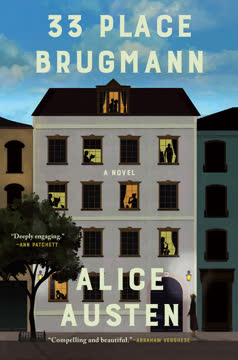
At 33 Place Brugmann, the lives of its residents are intimately entwined, their secrets and sorrows traveling through thin walls and echoing up stairwells. Charlotte Sauvin, a young artist, narrates the daily symphony of footsteps, laughter, and arguments, revealing a community both close-knit and divided by class, religion, and history. The building is a microcosm of pre-war Brussels, where the Raphaëls, a Jewish family of art dealers, live across the hall from the Saucins, and Masha, a Russian refugee, sews in the attic. The residents' routines—coffee, bread, music, and gossip—mask a growing unease as rumors of war and anti-Semitism seep in from the outside world. The building itself becomes a character, its architecture both fortress and sieve, holding the residents together even as the world outside begins to fracture.
Saturday Light, Falling World
On a luminous August morning in 1939, Charlotte, Julian, and Esther Raphaël capture their youth on film, momentarily freed from the weight of looming catastrophe. The children's playful rituals—filming stray cats, discussing paradoxes, and sharing bread—are tinged with the knowledge that change is coming. The Raphaëls' apartment, filled with paintings and treasures, stands in contrast to the Saucins' spare elegance, symbolizing the diversity and fragility of their world. A sudden accident—the death of a cat—shatters the morning's innocence, foreshadowing the violence to come. The children make a pact not to cry unless it's an ending, clinging to each other and to the rituals that define their lives, even as the shadow of war lengthens across the square.
Masha's Attic Kingdom
Masha Balyayeva, the building's attic-dwelling seamstress, recounts her escape from pogroms in Russia and her arrival in Brussels with nothing but a name and a talent for sewing. Taken in by Sophia Raphaël, Masha becomes both confidante and surrogate mother to Charlotte, teaching her the magic of fabric and the geometry of transformation. Masha's sharp wit and hard-won wisdom—"men are dogs, men are death"—anchor her in a world that has repeatedly betrayed her. Her atelier becomes a sanctuary for the building's women, a place where secrets are shared and identities remade. Yet Masha's past is never far behind, and her presence in the building is both a testament to resilience and a reminder of the precariousness of safety.
The Art of Disappearance
As tensions rise in Brussels, the Raphaëls quietly prepare to flee, leaving behind their furniture, films, and a blank canvas for Charlotte. Their sudden disappearance sends shockwaves through the building, sparking rumors about missing silver and vanished paintings. Leo Raphaël's dealings in the art world—his lunches with buyers, his efforts to safeguard paintings from Nazi looting—mirror the larger struggle to preserve culture and identity in the face of destruction. The act of hiding art becomes an act of resistance, and the building's walls conceal not only secrets but treasures. The loss of the Raphaëls marks the first rupture in the building's fragile community, a prelude to the greater losses to come.
Paradoxes and Promises
Charlotte's relationships—with Julian, Esther, and her absent lover Philippe—are shaped by paradoxes: the liar's paradox, the impossibility of truly knowing another, the tension between strength and vulnerability. Julian, brilliant and reserved, asks Charlotte to think of him "like a prayer" if war comes. Esther dreams of becoming a nurse, while Charlotte struggles with her own emotional reticence. The promise not to cry unless it's an ending becomes a touchstone, a way to hold onto hope in a world unraveling. The children's philosophical debates and artistic collaborations are both a refuge and a rehearsal for the choices they will soon be forced to make.
The Lioness in the Square
Throughout the narrative, the image of a lioness—sometimes real, sometimes imagined—haunts Charlotte and Masha. The lioness, seen in moonlit squares and in dreams, becomes a symbol of feminine strength, survival, and the mystical forces that shape ordinary lives. For Charlotte, who sees the world in shades of gray due to color blindness, the lioness represents both the limits and the possibilities of perception. For Masha, the lioness is a guardian spirit, a reminder that even in the darkest times, there is beauty and power in the unseen. The lioness's presence weaves together the personal and the historical, the mundane and the miraculous.
Shadows and Silences
As the German occupation tightens its grip, the building's residents are forced to make impossible choices. Some, like Francois Sauvin, refuse to collaborate, risking everything for principle. Others, like Dirk DeBaerre, navigate the shifting allegiances of the VNV and the resistance, driven by self-preservation and a hunger for significance. Miss Hobert, the building's self-appointed truth-teller, spies on her neighbors, her vigilance both comic and tragic. The silences between characters—what is left unsaid, what is hidden—become as important as their words. The cost of kindness, the danger of trust, and the inevitability of betrayal are laid bare as the war invades every corner of their lives.
The War Arrives
With the Nazi invasion, Brussels is transformed. Rationing, curfews, and the constant threat of violence erode the routines that once defined the building's life. Charlotte trades drawings for meat, stands in line for butter, and watches as neighbors turn informer or victim. The factory where she works is taken over by collaborators; her job, and her dignity, are threatened by men like DeDecker. The city's architecture—its hidden rivers, its mismatched facades—mirrors the dislocation and confusion of its people. The war is not a single event but a slow, cunning process of attrition, always happening to someone else until it happens to you.
Occupation and Betrayal
As the occupation deepens, the building's fragile alliances are tested. Francois's architecture firm is shut down for refusing to comply with anti-Jewish regulations. Friends become enemies, and the boundaries between right and wrong blur. The resistance network—"the line"—operates in secret, ferrying downed airmen and fugitives through a labyrinth of safe houses and false identities. Masha, now in Paris, risks everything to help others escape, even as betrayal and suspicion threaten the network from within. The cost of resistance is high, and the line between heroism and self-destruction grows ever thinner.
The Line and the Labyrinth
Julian, now a navigator in the RAF, is shot down over Belgium and hidden in his own building, disguised as a deaf-mute. The Colonel, aided by Jacques and a network of unlikely allies, orchestrates a daring escape, even as the gestapo close in. Dirk, torn between collaboration and conscience, plays a double game, ultimately choosing to help Julian at great personal risk. The escape is a labyrinth of shifting identities, coded signals, and last-minute improvisations. The building itself becomes a maze, its ledges and balconies offering both danger and salvation. The cost of freedom is measured in trust, sacrifice, and the willingness to act in the face of fear.
The Hatmaker's Hands
Charlotte, now a hatmaker, pours her grief and hope into her craft, making hats for neighbors and strangers alike. Each hat is an act of resistance, a way to assert beauty and individuality in a world determined to erase both. The act of creation—painting, sewing, storytelling—becomes a lifeline, connecting the past to the present and the living to the dead. The building's hidden paintings, the films made in childhood, and the stories told in the dark are all forms of memory, preserving what the world would destroy. In the end, it is art that endures, bearing witness to both suffering and survival.
The Cost of Kindness
The war exacts a heavy toll on the building's residents. Masha is betrayed and killed while helping the resistance; Francois is arrested and disappears; the newsboy is taken by the gestapo. The cost of kindness—of helping others, of refusing to look away—is measured in loss and guilt. Charlotte, now pregnant and alone, must navigate a world where every act of compassion is dangerous. The building empties out, its community shattered by death, exile, and betrayal. Yet even in the face of overwhelming loss, the survivors find ways to endure, to remember, and to hope.
The Rescue Network
The resistance network, a web of shifting alliances and coded messages, is both lifeline and trap. Characters like Harry, the Colonel, and Dirk navigate its dangers, never sure whom to trust. The machinery of survival—false papers, hidden rooms, secret signals—depends on both courage and luck. The network's successes are hard-won, its failures devastating. The line between rescuer and betrayer is razor-thin, and the cost of a single mistake is often death. Yet the network endures, a testament to the power of collective action and the stubborn will to live.
The Trap and the Escape
A planned escape for Julian is nearly undone by betrayal within the network. Dirk, once a collaborator, redeems himself by warning Charlotte and Francois, enabling them to outwit the traitor and save Julian. The escape is a masterclass in improvisation, with disguises, coded language, and quick thinking turning the trap into a triumph. The episode crystallizes the novel's central themes: the unpredictability of fate, the necessity of trust, and the power of individual action in the face of overwhelming odds. The escape is both a literal and symbolic victory, a moment of agency in a world determined to strip it away.
The Bombing of Avenue Louise
The bombing of the gestapo headquarters on Avenue Louise marks a turning point. The building where so many were interrogated and killed is itself destroyed, taking with it both victims and perpetrators. For Charlotte, the bombing is both an ending and a beginning: her father disappears, the newsboy is lost, and the community is irrevocably changed. Yet in the aftermath, Charlotte feels the first movement of her unborn child, a sign of life and hope amid the ruins. The bombing is both a literal and metaphorical act of retribution, a moment when the machinery of oppression is itself undone.
The Weight of Absence
In the war's aftermath, the survivors are left to reckon with absence: the missing, the dead, the vanished past. Charlotte, alone in the apartment, sifts through memories, letters, and her father's sketchbook, searching for meaning in the ruins. The building, once alive with voices and stories, is now a mausoleum of loss. Yet in the act of remembering—of telling and retelling the stories of those who are gone—Charlotte finds a measure of solace. The weight of absence is heavy, but it is also the ground from which new life and new stories can grow.
The Lioness Returns
In the novel's final pages, the lioness returns, a symbol of resilience, transformation, and the mystical forces that shape human destiny. Charlotte, standing at her window, welcomes the lioness into her home, unafraid. The boundaries between dream and reality, past and present, living and dead, blur and dissolve. The lioness's presence affirms the possibility of survival, the persistence of beauty, and the power of the unseen. The novel ends not with closure but with a sense of ongoing possibility, a recognition that what is thinkable is also possible.
What Is Thinkable
The story closes with Charlotte reflecting on Wittgenstein's dictum: "What is thinkable is also possible." In the aftermath of war and loss, she turns to art, to memory, and to the act of imagining a different world. The building, the city, and the lives within it are transformed by suffering, but not destroyed. The possibility of hope, of kindness, of beauty endures, even in the darkest times. The novel's final message is one of resilience: that in the face of unimaginable horror, the act of thinking, of imagining, of creating, is itself an act of survival.
Characters
Charlotte Sauvin
Charlotte is the novel's central consciousness, a young woman whose color blindness shapes both her art and her worldview. Raised by her widowed father, Francois, and mentored by Masha, Charlotte is both fiercely independent and deeply loyal. Her relationships—with Julian, Esther, and Philippe—are marked by paradox and longing, her emotional reticence a shield against a world that demands strength. Charlotte's journey is one of transformation: from sheltered student to hatmaker, from daughter to mother, from bystander to participant in the resistance. Her color blindness becomes a metaphor for the limits and possibilities of perception, and her art—strange, vibrant, and original—is both a refuge and a form of resistance. Charlotte's psychological depth lies in her struggle to reconcile the need for self-protection with the imperative to act, to love, and to remember.
Masha Balyayeva
Masha is the building's moral and emotional anchor, a Russian-Jewish refugee whose survival is both a triumph and a burden. Her sharp wit, hard-won wisdom, and deep empathy make her a confidante to Charlotte and a lifeline for the building's women. Masha's past—marked by pogroms, loss, and flight—haunts her, but she refuses to be defined by victimhood. Her relationships are complex: she loves fiercely but guards her independence, and her affair with Harry, a British spy, is both a source of joy and a fatal risk. Masha's psychoanalysis reveals a woman who has learned to trust only herself, yet who cannot help but care for others. Her death, a result of betrayal within the resistance, is both a tragedy and a testament to the cost of kindness in a world at war.
Julian Raphaël
Julian is Charlotte's closest friend and, in many ways, her emotional twin. Brilliant, reserved, and deeply ethical, Julian is shaped by his family's Jewish heritage and by the philosophical debates that animate his world. His love for Charlotte is both unspoken and undeniable, complicated by her relationship with Philippe and by the demands of war. As a navigator in the RAF, Julian is both participant and observer, calculating odds even as he risks his life. His survival depends on trust, improvisation, and the willingness to act in the face of uncertainty. Julian's psychological complexity lies in his struggle to reconcile logic and emotion, duty and desire, and in his ultimate recognition that love, like mathematics, is both discovered and invented.
Francois Sauvin
Francois is Charlotte's father, a man whose devotion to art, architecture, and his daughter defines his life. Haunted by the loss of his wife and by the traumas of the First World War, Francois is both pragmatic and philosophical, a dreamer who insists on the possibility of a better world. His relationships—with Leo Raphaël, with Masha, with his colleagues—are marked by loyalty and disappointment, as the war tests the limits of his ideals. Francois's psychoanalysis reveals a man who seeks order and meaning in a world that resists both, whose greatest fear is not death but irrelevance. His final act—hiding the Raphaëls' paintings beneath the floor—embodies his belief in the endurance of beauty and the necessity of hope.
Leo Raphaël
Leo is the patriarch of the Raphaël family, a man whose wit, intelligence, and pragmatism are both shield and weapon. His work in the art world—buying, selling, and ultimately hiding paintings from Nazi looters—mirrors the larger struggle to preserve culture and identity. Leo's relationships—with Sophia, Julian, and his neighbors—are marked by affection and irony, his humor a defense against despair. His psychoanalysis reveals a man who understands the power of ideas, the fragility of civilization, and the necessity of action. Leo's journey from Brussels to Britain is both a flight and a fight, a refusal to surrender to the forces of destruction.
Sophia Raphaël
Sophia is the emotional heart of the Raphaël family, a woman whose strength lies in her capacity for care and her refusal to be deceived. Her relationships—with Leo, Julian, Esther, and Masha—are marked by both tenderness and skepticism. Sophia's psychoanalysis reveals a woman who has survived by recalibrating her expectations, who understands that kindness is the true measure of humanity. Her exile in Britain is both a loss and a liberation, forcing her to confront the limits of safety and the necessity of letting go.
Esther Raphaël
Esther, Julian's sister and Charlotte's friend, is defined by her desire to help, to heal, and to bear witness. Her journey from sheltered daughter to wartime nurse is marked by trauma, loss, and the hardening of resolve. Esther's psychoanalysis reveals a young woman who learns to balance empathy with detachment, who refuses to cry except at endings, and who finds meaning in the act of caring for others. Her letters and clinical notes provide a counterpoint to the novel's broader narrative, grounding the story in the daily realities of suffering and survival.
Dirk DeBaerre
Dirk is both insider and outsider, a man whose loyalties shift with the tides of war. His relationships—with his parents, with Charlotte, with the VNV and the resistance—are marked by calculation and self-interest. Dirk's psychoanalysis reveals a man who trusts no one, not even himself, and whose greatest fear is irrelevance. Yet his ultimate decision to help Julian marks a moment of redemption, a recognition that survival is not enough without meaning. Dirk embodies the moral ambiguity of wartime, the ease with which victim becomes perpetrator, and the possibility of change.
Colonel Warlemont
The Colonel, a widower and veteran, becomes an unlikely hero, sheltering fugitives and orchestrating escapes. His relationships—with Masha, with Jacques, with the building's residents—are marked by a gruff kindness and a deep sense of duty. The Colonel's psychoanalysis reveals a man who has seen the worst of humanity and chooses, nonetheless, to act with decency. His pragmatism is both a strength and a shield, allowing him to navigate the dangers of occupation without losing his soul.
Agathe Hobert
Miss Hobert, the building's resident busybody, is both comic relief and a cautionary figure. Her obsession with truth, her vigilance, and her loneliness make her both a danger and a victim. Hobert's psychoanalysis reveals a woman desperate for significance, whose meddling has real consequences. Her relationship with Charlotte, mediated through the making of a hat, is both transactional and transformative, a reminder that even the most peripheral characters are shaped by—and shape—the world around them.
Plot Devices
The Building as Microcosm
33 Place Brugmann is more than a setting; it is a living organism, its architecture and acoustics shaping the lives within. The building's symmetry and thin walls allow for both intimacy and surveillance, making it a perfect stage for the drama of war, betrayal, and resistance. The residents' fates are intertwined, their secrets and sorrows echoing through shared spaces. The building's transformation—from sanctuary to prison, from home to mausoleum—mirrors the larger transformation of Brussels and of Europe itself.
Art and Memory
Art is both subject and structure in the novel: the making, hiding, and loss of paintings; the filming of childhood rituals; the creation of hats and stories. These acts of creation are forms of resistance, ways to preserve identity and hope in the face of destruction. The hidden paintings beneath the floor, the films watched in reverse, the hats made for neighbors—all are acts of memory, preserving what the world would erase. Art becomes both a weapon and a refuge, a means of survival and a testament to what endures.
Foreshadowing and Paradox
The novel is structured around paradoxes—liar's paradox, color blindness, the limits of language—and uses foreshadowing to build tension. Early events (the death of a cat, the promise not to cry) prefigure later losses. The philosophical debates between Julian, Charlotte, and their fathers are not mere digressions but frame the novel's central questions: What is truth? What is possible? What is the cost of knowing? The narrative structure, with its shifting perspectives and recursive motifs, mirrors the uncertainty and ambiguity of wartime existence.
The Lioness Motif
The recurring image of the lioness—seen in dreams, in the square, in moments of crisis—serves as a unifying symbol of courage, survival, and the mystical in the ordinary. The lioness is both real and imagined, a guardian spirit and a reminder of the power of the unseen. Her presence weaves together the personal and the historical, the mundane and the miraculous, offering hope and strength in the darkest times.
The Rescue Network ("The Line")
The resistance network, with its coded signals, shifting identities, and constant danger, is both lifeline and labyrinth. The machinery of escape—false papers, hidden rooms, last-minute improvisations—depends on both courage and luck. The network's successes and failures are shaped by the choices of individuals, the unpredictability of fate, and the ever-present threat of betrayal. The line between rescuer and betrayer is razor-thin, and the cost of a single mistake is often death.
Narrative Structure and Multiplicity
The novel's structure—alternating perspectives, nonlinear chronology, and recursive motifs—reflects the fragmentation of wartime experience. Each character's voice is distinct, their stories overlapping and diverging, their memories and dreams blurring the boundaries between past and present, reality and imagination. The use of letters, clinical notes, and official reports adds layers of meaning and ambiguity, inviting the reader to piece together the truth from fragments.
Analysis
33 Place Brugmann is a masterful meditation on the fragility and resilience of community in the face of catastrophe. Through the microcosm of a single Brussels apartment building, Alice Austen explores the ways in which ordinary lives are shaped—and shattered—by the forces of history. The novel's structure, with its shifting perspectives and recursive motifs, mirrors the uncertainty and ambiguity of wartime existence, while its rich cast of characters embodies the full spectrum of human response: courage, betrayal, kindness, and complicity. At its heart, the novel is a meditation on the power of art, memory, and imagination to endure and transform suffering. The recurring motif of the lioness, the philosophical debates about truth and possibility, and the acts of creation—painting, sewing, storytelling—are all forms of resistance, ways to assert meaning in a world determined to erase it. The novel's final message is one of resilience: that even in the darkest times, the act of thinking, of imagining, of creating, is itself an act of survival. In a world where "what is thinkable is also possible," hope endures—not as certainty, but as the stubborn refusal to surrender to despair.
Last updated: