

Key Takeaways
Let character show in small choices, not just a heroic résumé
Character under pressure. At ninety, George H. W. Bush insisted on another parachute jump, despite frailty and mixed medical advice. Wind pushed the tandem landing off course; he hit the ground hard, then smiled. Asked how it felt, he answered that it was cold and gave his partner credit for the work. The moment gathers the qualities his son sees in him: appetite for challenge, humor, humility, and pleasure in family company.
A deliberately partial portrait. George W. Bush says this is a loving account, not an objective or comprehensive biography. Its central claim is that the father who served as President was also the man who kept promises, shared credit, and looked for joy in ordinary family life.
The jump works as more than an entertaining opening because it compresses public image into observable behavior. The distinction between courage and performance matters: Bush accepts a real risk, but does not turn the landing into a self-congratulatory scene. That makes the anecdote a useful test for leadership narratives. Do the habits praised in grand speeches appear in small moments, especially when attention is available? The book is candid about its affection, which helps readers treat this vivid scene as evidence of a son’s interpretation, rather than a neutral verdict.
Compete fiercely, then give the team the credit
Competition without vanity. Bush’s mother, Dorothy, taught her children to work hard, accept defeat gracefully, and avoid boasting. When young George celebrated a home run, she asked how the team had done. Her father, Prescott, modeled another lesson: wealth and opportunity carried obligations to community and country. George absorbed both influences. As a boy, he tried to share even new toys with his older brother, and as an adult he routinely passed credit to colleagues.
A family culture, not a slogan. Faith was part of the household, but Dorothy’s religion came with warmth rather than harsh judgment. The result, in his son’s account, was a blend of drive and restraint: Bush wanted to win, yet treated humility and service as part of winning well.
This family portrait offers a more practical account of character formation than the idea that values are simply declared. A child learns what achievement means through repeated responses: whether a parent praises only individual performance, whether mistakes invite repair, and whether success is shared. Dorothy’s question redirected attention from personal glory to collective outcome. The limitation is that one household cannot explain a whole public life. The memoir’s richer claim is that these lessons became habits, reinforced by later choices, rather than a complete explanation of Bush’s temperament.
Treat duty as responsibility to people, not a claim to glory
Combat made duty intimate. At eighteen, Bush chose Navy flight training despite his father’s advice to attend Yale first. During World War II, he flew 58 combat missions. In 1944, Japanese fire struck his plane over Chichi Jima. He bailed out, reached a life raft, and paddled for hours before a U.S. submarine rescued him. Two crewmen died. Bush felt responsible for their fate, wrote to their families, and stayed in contact with them for decades.
Service continued after survival. He rarely described himself as a hero, believing the dead deserved the attention. In 2002, he returned to the island and laid wreaths for the men he had lost. The book presents his military service less as a source of status than as an enduring obligation to comrades, families, and country.
The story complicates the familiar idea that survival automatically produces closure. Bush’s rescue did not erase his sense of responsibility; the lost crewmen remained present in his life. His letters could not repair the loss, but they recognized the families as people owed care, not merely recipients of official condolences. This is a humane model of leadership after tragedy: acknowledge the human cost, maintain relationships, and resist converting survival into personal mythology. The memoir cannot establish exactly how the experience shaped every later decision, but it shows how Bush himself understood that debt.
Take the unfamiliar job where effort can earn its own proof
Begin at the bottom. After graduating Phi Beta Kappa from Yale, Bush could have joined his father’s Wall Street world. Instead, he moved his young family to Odessa, Texas, for a junior job at an oil equipment company. His starting salary was $375 a month, and the work included sweeping floors, managing inventory, and painting equipment. He learned the business through daily work, then became a traveling salesman and eventually an independent oilman.
Connections open doors, not outcomes. Family and friends helped him find opportunities, a fact his son acknowledges. Bush later helped build Zapata Petroleum and entered offshore drilling, including a risky bet on a new rig design. His career joined inherited access with field-level effort, personal trust, and a willingness to risk failure.
The move west resists two easy stories: that success is purely self-made, or that family connections explain everything. Bush benefited from access, but his first job did not confer competence or guarantee advancement. His repeated willingness to learn unfamiliar work made the opportunity more than a name on a résumé. This distinction is useful when evaluating entrepreneurial biographies, which often understate privilege or overstate individual grit. Here, the son makes the helpful concession that doors were opened for his father, while emphasizing that the work after entry still mattered.
Use defeat as information, not a verdict on your usefulness
Loss left options open. Bush lost two Senate races in Texas, in 1964 and 1970. After the second defeat, Richard Nixon appointed him Ambassador to the United Nations. He went on to lead the Republican National Committee, represent the United States in China, and direct the CIA. Those roles deepened his experience even though they did not immediately lead to elected office.
The pattern repeated. Bush lost the 1980 Republican presidential nomination to Ronald Reagan, then became Reagan’s running mate. In 1988, he won the presidency. His son also recalls the 1978 congressional campaign he lost, which taught him about campaigning and introduced him to Laura. The lesson is not that every defeat conceals a prize, but that a loss need not end useful work.
The memoir makes setbacks legible by showing the next door they opened. That is encouraging, but hindsight creates a selection effect: failed candidates who later rise are more likely to become stories than those whose careers simply end. The sturdier lesson is narrower. Bush kept working, maintained relationships, and remained available for new responsibilities, so opportunity could find him. That approach does not promise a comeback. It does prevent a single electoral result from becoming an all-purpose judgment about a person’s capacity to serve.
Build relationships before you need them to move a country
Trust was working capital. Bush’s son describes a man who kept friendships across decades and party lines. As Ambassador to the United Nations, Bush built ties with other envoys through dinners, concerts, baseball games, and family visits. In China, he welcomed staff, learned from experienced diplomats, and treated even small nations as worthy of attention. His approach, which he called personal diplomacy, used relationships to create channels for serious conversations.
Connection had practical value. Bush’s friendships with foreign leaders helped him assemble international support against Iraq’s invasion of Kuwait. He also drew on a personal connection with Deng Xiaoping to reopen communication after the Tiananmen crackdown. These ties did not guarantee agreement, but they gave diplomacy a human route when formal exchanges stalled.
The account presents relationship-building as infrastructure, not decoration. Repeated contact creates familiarity, lowers the social cost of disagreement, and gives leaders a way to communicate when institutions are strained. Bush’s attention to ordinary shared experiences also made diplomacy less dependent on formal ceremony. Yet personal trust is not a substitute for policy or leverage. The book’s strongest implication is that relationships help make action possible, while the underlying interests still determine what action can succeed.
Spend political capital when fairness demands more than popularity
Principle over applause. In 1968, Bush supported the Fair Housing Act, which prohibited racial discrimination in housing. His Houston district was nearly 90 percent white, and his office received about thirty letters opposing the bill for every one in favor. Bush had seen Black and white servicemen risk their lives together in Vietnam and could not accept that a qualified veteran might be barred from buying a home because of race. He explained his reasoning to an angry town hall, and the crowd eventually applauded.
Loyalty had limits. As Republican National Committee chair during Watergate, Bush defended Nixon until evidence showed the President had participated in the cover-up. He then privately urged Nixon to resign, while acknowledging the President’s earlier achievements. In both cases, Bush tried to act from conviction without turning disagreement into contempt.
These episodes show that principle is tested most clearly when it carries a cost. Bush risked support in his own district and later put a painful truth before a President to whom he felt loyal. His approach was neither theatrical defiance nor automatic obedience. It joined judgment with restraint, a combination that can preserve working relationships without surrendering the substance of a decision. The crowd’s response to his housing vote is striking, but applause should not be treated as proof that the choice was correct. The choice stands on its reasons, not its reception.
Define the mission tightly enough to know when to stop
Bound the objective. After Iraq invaded Kuwait in 1990, Bush built a coalition, secured United Nations backing, and sought congressional authorization before using force. He gave diplomacy a final chance, then ordered a campaign to expel Iraqi forces from Kuwait. The ground war lasted one hundred hours, and Kuwait was liberated. Bush stopped rather than expanding the mission to remove Saddam Hussein from power, arguing that the agreed objective had been achieved.
A boundary is a decision. Bush had learned from Vietnam that military commitments need a clear purpose people can understand. The Gulf War’s limited aim helped coordinate a broad coalition and define what success meant. It also left Saddam in power, a consequence that became central to later debate and conflict.
A defined objective makes military power easier to authorize, coordinate, and evaluate. It also forces leaders to distinguish the goal they can defend from the larger ambitions they may find attractive. Bush’s decision to stop after Kuwait’s liberation was consistent with the coalition’s mandate, although it left serious problems unresolved. This is the hard edge of limited war: restraint can prevent mission expansion, but it may also preserve threats that future leaders must confront. The value of a boundary depends on whether its consequences are faced honestly.
Practice restraint when an adversary's self-control can prevent bloodshed
Restraint was strategic. As communist governments in Eastern Europe began to collapse in 1989, Bush resisted demands to turn the Berlin Wall’s opening into a personal spectacle. He worried that triumphalism could strengthen Soviet hard-liners and weaken Mikhail Gorbachev, who was allowing change without military intervention. Bush pursued direct talks instead. The Soviet Union dissolved in 1991 without a violent crackdown, and the Cold War ended peacefully.
The same instinct shaped his China policy. After Chinese forces crushed protests in Tiananmen Square, Bush condemned the violence and imposed limited sanctions, while keeping communication open through a private letter and emissaries. His son argues that this helped preserve a relationship with an emerging power. The strategy balanced condemnation with engagement, though it could not guarantee political reform.
The account treats patience as active statecraft: avoid needless provocation, maintain communication, and preserve room for an opponent to choose restraint. That is different from passivity, especially when paired with public condemnation and diplomatic pressure. Still, outcomes cannot be attributed to one leader’s style alone. The peaceful Soviet collapse depended on choices made across societies and governments, and the book cannot prove that a more dramatic American posture would have changed the result. Its persuasive point is that restraint can protect an opening when another actor’s decisions matter.
A strong record cannot erase a broken promise or bad timing
Politics punished the mismatch. Bush campaigned on keeping taxes unchanged, then accepted tax increases in a 1990 budget deal that also included spending cuts. He believed deficit reduction was necessary, but his administration did not explain the compromise forcefully, and the broken pledge alienated Republicans. His record also included the Americans with Disabilities Act, civil rights legislation, Clean Air Act amendments, and a national volunteer initiative called Points of Light.
Timing narrowed the story. In 1992, recession fears, a divided party, Ross Perot’s independent campaign, and Bill Clinton’s focus on change and the economy helped defeat Bush. Perot won 19 percent of the vote. Revised figures later showed strong growth in the election year’s final quarter, but that news arrived too late to help Bush.
The contrast between substantial legislation and electoral defeat illustrates that governing achievement and political credibility are related but not interchangeable. A compromise can be defensible on policy grounds and still damage trust when it contradicts a memorable promise. Communication is not cosmetic in that situation; it is part of accountability. The memoir also gives Perot and economic timing significant weight, which reflects the family’s view of the election rather than a settled counterfactual. Voters encountered a crowded field of causes, not a single explanation.
Keep serving after office by showing up for people who hurt
Care outlasted power. The Bushes’ daughter Robin died of leukemia at age three, after seven months of treatment. They donated her body for research, and childhood cancer became a cause they supported. Their grief did not erase the family bond. Later, after losing the 1992 election, Bush welcomed Bill Clinton into the White House and wished him well. The former rivals eventually worked together to raise disaster relief funds, becoming friends.
Attention stayed practical. In retirement, Bush supported veterans, cancer research, and public service, while remaining closely involved with children and grandchildren. As illness limited his mobility, he continued to accept invitations and offer small acts of solidarity, including shaving his head when a Secret Service agent’s young son was treated for leukemia. The book’s closing portrait is of service expressed through presence, not office.
This final portrait makes care concrete: a visit, a letter, a shared cause, or simply remaining available. Such gestures cannot undo bereavement or erase political conflict, but they can prevent suffering from becoming private and unattended. The friendship with Clinton is especially revealing because it follows Bush’s most painful electoral defeat. The family memoir understandably presents these acts as evidence of character; readers should also notice how often that character is defined through relationships. Here, public virtue is not separate from private affection. It is practiced through it.
Analysis
This is a family memoir shaped as a presidential biography. Its author states plainly that it is a loving, non-neutral portrait, and the form delivers what that promise implies: letters, family memories, campaign episodes, and intimate scenes that make a public figure emotionally legible. George H. W. Bush emerges not as a policy abstraction but as a person whose habits of humility, loyalty, sociability, and duty recur across different settings.
The book’s narrative strength is also its interpretive limit. Anecdotes such as the parachute landing, the fair-housing vote, and Bush’s private letter to Nixon are persuasive portraits of conduct, but they cannot by themselves settle broad historical judgments. The account is especially careful to connect character with outcomes when describing diplomacy, yet the peaceful end of the Cold War was produced by many actors and pressures. Bush’s patience may have helped preserve room for a peaceful transition; it cannot be isolated as the sole cause.
The most important tension appears in the Iraq chapters. The son praises his father for limiting the 1991 mission to liberating Kuwait, then argues that his own 2003 invasion of Iraq was necessary after Saddam rejected demands to comply. The book distinguishes the mandates, intelligence available, and stated objectives, but the parallel invites scrutiny: a limited victory can leave a danger unresolved, while a broader intervention can create consequences beyond its initial plan. The author’s defense of his own presidency makes this a revealing family document, not an impartial adjudication.
The deeper portrait is of leadership as a balance between relational loyalty and independent judgment. Bush’s friendships helped him operate across political and national divides, while his better decisions required him to resist pressure, including pressure from allies. His public record is therefore not simply a story of decency producing success. It is a study of how decency can support trust, and how trust still needs clear aims, credible explanation, and honest reckoning with costs.
Review Summary
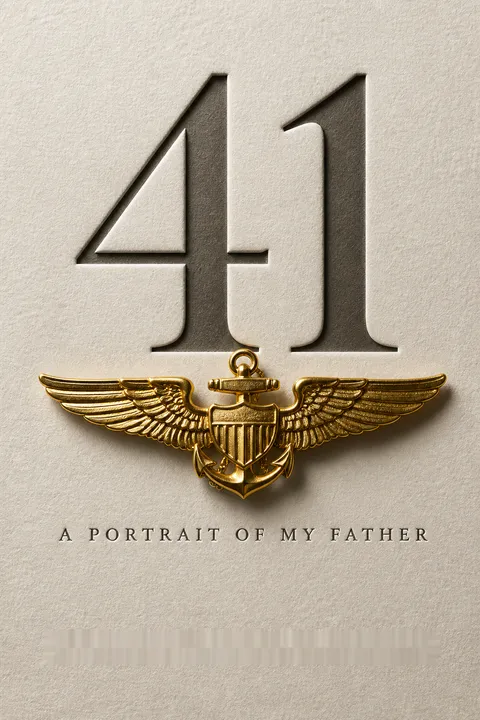
41: A Portrait of My Father is a heartfelt tribute by George W. Bush to his father, George H.W. Bush. Readers appreciate the intimate, personal stories and insights into the 41st president's character, family life, and political career. While some note the book's bias and occasional digressions, most find it an enjoyable and touching account of a father-son relationship. The book highlights Bush Sr.'s integrity, humility, and dedication to public service, offering a unique perspective on both presidencies and the Bush family legacy.
Glossary
personal diplomacy
Relationship-based diplomacyBush’s approach to international relations through sustained personal contact with diplomats and foreign leaders. He used meals, visits, shared activities, and direct correspondence to build familiarity and trust. The method did not replace formal policy or negotiation; it created channels for communication that could be useful when official relations became tense.
Points of Light
Volunteer recognition initiativeA program Bush established by executive order to recognize people and organizations serving their communities. The White House presented a daily award to an individual volunteer, and Bush continued the effort as a private organization after leaving office. The name drew on his call for citizens to improve life through service.
the Van Buren factor
A vice president's succession hurdleBush’s label for the historical difficulty faced by a vice president seeking election after the president who selected him. He used the pattern to describe how rarely a sitting vice president had won the presidency in his own right after serving under that president. The term framed a political obstacle, not a formal rule.
Big Mo
Perceived campaign momentumA campaign shorthand for momentum, especially the burst of attention and support that can follow a primary victory. Bush used the term after winning the Iowa caucuses in 1980, anticipating that the energy would carry into New Hampshire. The episode also illustrates that a media narrative of momentum can be temporary and difficult to convert into votes.

Download PDF
Download EPUB
.epub digital book format is ideal for reading ebooks on phones, tablets, and e-readers.








