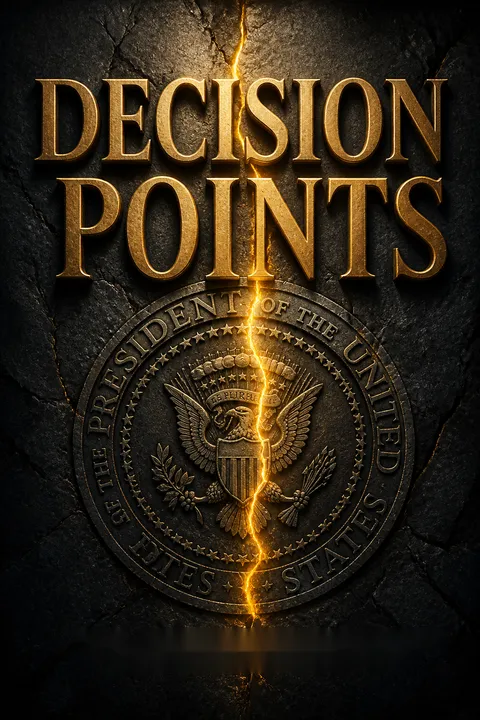


Key Takeaways
Turn a private reckoning into a durable change in daily behavior.
A question broke the routine. At forty, Bush could not remember a recent day without alcohol. His wife, Laura, asked him to face what drinking was costing his family and faith. After a drunken birthday weekend in Colorado, he decided to quit. The choice was not effortless: cravings followed, and he ran, prayed, ate chocolate, and leaned on Laura’s encouragement and friends’ company.
New habits took hold. Bush says he has not drunk since 1986, and that quitting changed the course of his life. He does not claim to know whether he was an alcoholic, and acknowledges that others may need different help. In his telling, faith supplied the motive, while repeated sober days built momentum.
The story makes change feel less like a sudden triumph of willpower than a shift supported by relationships, routines, and a new account of what matters. Behavioral science similarly emphasizes that intentions are easier to sustain when daily cues and social settings reinforce them. The memoir’s spiritual explanation is personal rather than universal: another person might rely on clinical care, peer support, or medication. Its broader insight is that an honest reckoning can begin change, but a durable life usually needs practical support after the emotional moment passes.
Set decision criteria before loyalty, politics, or urgency narrows the field.
Start with the job. For major appointments, Bush says he defined what the role required, searched widely, interviewed candidates, and looked for integrity, competence, humility, and composure. His selection of Dick Cheney as running mate followed that logic: experience and readiness mattered more to him than electoral advantage. Bush also invited dissent, including Karl Rove’s objections, before making the call.
Perception matters too. His nomination of longtime friend Harriet Miers to the Supreme Court exposed a weakness in his process. He trusted her character and believed she could be confirmed, but underestimated how others would judge her qualifications. She withdrew after a backlash. On embryonic stem-cell research, he used a slower process, hearing scientists and ethicists before supporting research on existing cell lines while rejecting federal funding for further embryo destruction.
Explicit criteria can protect a decision from charisma, familiarity, and short-term political pressure. The Miers episode also shows that good intentions do not eliminate the need to test how a choice will be understood by people outside the decision-maker’s circle. In organizational psychology, dissent is most useful when it arrives before a decision becomes a public commitment. Still, consultation is not a substitute for expertise: a leader must distinguish informed disagreement from advice shaped mainly by institutional self-interest.
Project calm, gather facts, then act decisively under uncertainty.
The first signal mattered. On September 11, 2001, Bush was visiting a Florida elementary school when he learned a second plane had hit the World Trade Center. He stayed through the children’s reading lesson rather than rushing out in panic, then spoke to the country. He describes his first tasks as establishing calm, finding out what had happened, protecting the nation, and helping the affected communities.
The facts kept shifting. Air Force One received confused reports of further threats, and communications with Washington repeatedly failed. Bush authorized fighter pilots to attempt peaceful landings first, but gave them permission to shoot down a suspicious plane if necessary. He also accepted a diversion from Washington, despite wanting the reassurance of returning to the capital, because protecting continuity of government mattered.
A leader’s composure can reduce panic, but it is not merely performance: it gives a team room to gather information and coordinate. Crisis research and emergency practice both distinguish command presence from omniscience. The memoir’s episode shows why decisions must be made with imperfect, changing reports, not with hindsight’s clean narrative. It also raises a useful caution: projecting certainty can steady a public, yet decision-makers still need channels where subordinates can report uncertainty without fear of weakening the leader’s authority.
Use emergency powers, but make their legal basis durable.
Urgency expanded the toolkit. After 9/11, the administration backed the USA PATRIOT Act, which enabled intelligence and law-enforcement agencies to share information and use updated investigative tools. Bush also authorized surveillance of communications linked to suspected al Qaeda numbers and approved an intelligence interrogation program. He says these decisions were reviewed by government lawyers and included safeguards, while acknowledging that they raised serious civil-liberties concerns.
Temporary authority proved fragile. The administration initially relied on presidential powers and Congress’s post-attack authorization. Disputes inside the Justice Department nearly ended the surveillance program in 2004. Later court decisions also disrupted military tribunals and the interrogation program. Bush argues that Congress should have been asked sooner to place these tools on a clearer statutory footing, though he says secrecy complicated that choice.
The section exposes a durable problem in democratic emergencies: speed can be essential, but executive action without broad legal ownership invites later instability. Oversight is not simply a brake on security; it can make effective measures more legitimate and more resilient across changes of government. At the same time, laws passed in fear can outlast the immediate threat. A sound test is whether authorities have defined limits, independent review, and a public explanation that can survive scrutiny without revealing operational secrets.
Treat liberty as both a moral commitment and a security strategy.
The Bush Doctrine had four parts. Bush describes a post-9/11 approach: hold terrorist groups and governments that shelter them responsible, fight threats overseas before they reach the United States, confront dangers before they fully emerge, and support liberty as an alternative to extremist rule. He called this last element the Freedom Agenda. In Afghanistan, the campaign removed the Taliban and opened space for girls to return to school and for elections to begin.
Military victory was only a start. Bush’s account extends the agenda to support for democratic movements, economic openness, and political reform. He cites Lebanon’s withdrawal of Syrian forces and elections in Iraq and Afghanistan as signs of possibility. But he also describes setbacks, including Russia’s pressure on neighboring democracies and Hamas’s seizure of Gaza. He argues that freedom must be chosen and sustained through local institutions, not simply imposed by force.
The argument links political rights to security by treating repression and hopelessness as conditions extremists can exploit. That connection is plausible, but it does not make democratization a predictable counterterrorism instrument. Elections can produce illiberal governments, and institutions need legitimacy, security, and time to function. The strongest version of the idea is not that military power can deliver freedom, but that external policy should avoid treating stability under repression as a lasting substitute for accountable government.
Test threat intelligence, and plan for the political vacuum after victory.
The central intelligence claim failed. Bush says that before the 2003 invasion, the administration and other governments believed Saddam Hussein retained chemical and biological weapons programs. Saddam had used chemical weapons before, defied UN resolutions, and failed to account for his stockpiles. After the invasion, inspectors found evidence of past programs and deception, but not the expected weapon stockpiles. Bush calls that failure a major blow to his credibility and says officials should have challenged their assumptions more rigorously.
The aftermath exposed another error. Planning had addressed humanitarian relief, but the collapse of Iraqi police and military forces left Baghdad insecure. The Coalition Provisional Authority barred many Baath Party members from public roles and disbanded the army. Bush later recognized that these actions helped convince some Sunnis they had no place in the new state and contributed to instability.
The memoir is most persuasive when it distinguishes an honest intelligence failure from a proven conspiracy to deceive, while still admitting that consensus was not enough. Decision science warns that agreement across institutions can reflect shared assumptions rather than independent confirmation. The postwar account adds a second lesson: plans must model how defeated groups will interpret political decisions, not just how aid and infrastructure will be delivered. Invasion planning is incomplete if the political order after victory is treated as an administrative detail.
Protect civilians first, even when that means reversing your strategy.
The existing approach stalled. In 2006, sectarian killings and attacks in Iraq rose sharply. The strategy had assumed that political milestones and training Iraqi forces would let American troops withdraw. Yet security in Baghdad deteriorated, and Iraqi forces could not hold neighborhoods cleared of insurgents. Bush asked for new options rather than simply defending the old plan.
The surge changed the priority. The administration sent five additional brigades to Baghdad, supported by more Marines in Anbar, and appointed David Petraeus to command. His counterinsurgency method, clear, hold, and build, meant removing armed groups, keeping forces among residents to protect them, and helping local institutions and services recover. Bush reports that sectarian killings fell by more than 95 percent by the surge’s end. The memoir also credits Sunni tribal leaders who organized the Anbar Awakening against al Qaeda.
The shift matters because it changes the measure of progress from training units or hitting targets to whether ordinary people feel safe. That is a useful operational distinction in any conflict where armed groups depend on local acquiescence. Yet the reported improvement cannot be attributed to troop numbers alone: local alliances, political shifts, and the adversary’s choices also mattered. The section’s strongest leadership lesson is a willingness to change strategy when its assumptions fail, while resisting the temptation to claim that one intervention explains every result.
Fund measurable care, and let local partners shape delivery.
PEPFAR joined a clear goal to local delivery. The President’s Emergency Plan for AIDS Relief began as a proposed $15 billion, five-year effort focused on treatment, prevention, and care in heavily affected countries. Local governments and organizations developed plans, while U.S. support supplied funding and medical resources. In Uganda, Bush met Mohamad Kalyesubula, a seriously ill patient who later received antiretroviral medicine, recovered enough to work, and eventually visited the White House.
The program reported large reach. By the end of Bush’s presidency, PEPFAR had supported treatment for 2.1 million people, care for more than 10 million, and AIDS testing or counseling for 57 million. Africans called the visible revival of patients such as Mohamad the Lazarus Effect. The administration also launched a malaria initiative using bed nets, indoor spraying, and medicine, with a goal of reducing deaths in participating countries.
The design combines a measurable public-health mission with local knowledge about how to reach patients, a valuable alternative to aid that simply transfers money from donor to recipient. Treatment gains can also strengthen clinics and trust in public services. Still, program totals show reach, not the full causal impact of a single administration’s funding. Strong evaluation asks who was served, what changed, and what would likely have happened without the intervention. The memoir’s human story gives those numbers a face without replacing the need for that harder accounting.
Make schools and health programs answer for results, not promises.
No Child Left Behind made performance visible. The law required regular reading and math tests, public reporting of results by student groups, and consequences for schools that repeatedly fell short. Bush presents this as a way to identify which children needed help, rather than judging schools by spending alone. He reports that national math scores and fourth-grade reading scores reached record levels during his presidency, with gains among Black and Hispanic students.
Reform also meant compromise. The Medicare Modernization Act added prescription-drug coverage and expanded private-plan options, but cost more than Bush wanted. His proposals to change Social Security and overhaul immigration did not pass. He acknowledges that he misjudged the order and political conditions for reform. The record is therefore mixed: measurable changes became law, while larger structural problems remained for successors.
Public measures can expose neglect that averages conceal, especially when results are broken out by income or race. But measurement shapes behavior: if schools are judged narrowly by test scores, teaching can narrow too, and the measure can become a target rather than a guide. Similar caution applies to market competition in health care. Choice may discipline costs, but only when consumers can compare quality and understand prices. Accountability works best when indicators are broad enough to reveal progress without pretending to capture the whole mission.
Move quickly when local command fails, and make compassion visible.
Katrina revealed a failure of speed. Federal supplies were staged before the storm, but New Orleans flooded after levees broke, evacuation came late, and local response systems buckled. Bush describes confusion over who was in charge and his own delay in pressing for federal troops. He later said he should have acted sooner, returned earlier, and stopped to meet officials in Baton Rouge rather than viewing devastation from Air Force One.
Presence communicates responsibility. Bush’s praise of FEMA director Mike Brown became a public symbol of misplaced confidence. The president says his concern for victims was sincere, but concedes that his actions and images failed to convey it. He later sent troops, replaced Brown, visited the region repeatedly, and ordered changes to disaster coordination. The episode taught him that a correct intention does not erase a slow response or a damaging public impression.
The chapter distinguishes response capacity from response legitimacy. Supplies and rescue operations matter, but visible command helps people know who is accountable and where to seek help. Public perception is not merely a communications problem when it reflects a real failure of coordination. The memoir also highlights the cost of rigid jurisdictional boundaries during emergencies. Clear escalation rules can preserve local leadership in normal conditions while allowing faster intervention when local systems are overwhelmed.
In a panic, protect the system without pretending the rescue is free.
The crisis moved beyond individual firms. In 2008, falling home values damaged mortgage securities, highly leveraged banks faced runs, and credit markets froze. The government rescued Bear Stearns through a sale, let Lehman Brothers fail when no buyer emerged, and lent $85 billion to keep AIG from collapsing. The different outcomes reflected different available options, but the Lehman bankruptcy intensified the panic.
TARP was a reluctant intervention. Bush backed a $700 billion authorization to stabilize finance, initially intended to purchase troubled assets. Treasury later injected capital directly into banks because it was faster. Bush says preserving the market required intervention in the short term, despite the risk that rescues would encourage future risk-taking. He also acknowledges that regulators and his administration underestimated the dangers created by leverage, complex financial products, and weak judgment on Wall Street.
The chapter frames rescue as a choice between moral hazard and systemic collapse, not as a clean defense of bankers. That is a useful distinction: stabilizing payments and credit can protect households even when the firms at the center of a crisis deserve to fail. But emergency support creates expectations, so it needs transparent conditions, credible oversight, and a plan to reduce government ownership. The memoir’s own admission of regulatory blind spots also complicates its preferred explanation that executive misjudgment, rather than inadequate oversight, was the main cause.
Analysis
Decision Points is a presidential memoir organized around choices rather than a calendar. That structure gives the book a strong narrative engine: a question from Laura precedes the decision to quit drinking; a second plane hitting the World Trade Center transforms a school visit into a command crisis; a failing Iraq strategy forces a choice between withdrawal and escalation. The recurring question is not simply what Bush decided, but what information, values, advisers, and imagined consequences shaped the choice.
The memoir is unusually revealing when Bush admits decisions he would change. He identifies the failure to disclose his old DUI, the slow response to Katrina, the false confidence in Iraq’s weapons intelligence, and the damage caused by early postwar security choices. These admissions strengthen the account because they expose the gap between conviction and competence. They also show that decision quality is not reducible to decisiveness: waiting can be a failure, but acting quickly on a mistaken premise can be worse.
The book remains an interested source. It presents many policies through the logic available to the president at the time, but gives less space to how opponents, affected civilians, or independent investigators would frame the same choices. That is especially important when the memoir moves from describing a policy to claiming it worked, as in Iraq, counterterrorism, or economic recovery. Outcomes may support a decision, but they do not by themselves prove the decision caused those outcomes or that a better alternative was unavailable.
Its most durable contribution is a portrait of responsibility under uncertainty. A president must act before evidence is complete, rely on institutions that can fail, and accept consequences that may outlast the administration. Bush’s strongest stories show the value of clear criteria, candid advisers, operational humility, and willingness to revise a strategy. His weakest arguments treat confidence in a cause as stronger evidence than it is. The book is most useful when read as both a record of decisions and a case study in how leaders explain them to history.
Review Summary
Decision Points received mixed reviews, with many praising Bush's candor and personal reflections on key decisions during his presidency. Readers appreciated insights into his thought processes and the challenges he faced, particularly regarding 9/11 and the Iraq War. Some found the book enlightening and humanizing, while others criticized its lack of depth and self-reflection. Many reviewers noted Bush's writing style as straightforward and conversational. Overall, the book was seen as an important historical document, offering Bush's perspective on pivotal moments in recent American history.
People Also Read



Glossary
Bush Doctrine
Post-9/11 security principlesBush’s name for the principles guiding his response after September 11: hold terrorist groups and governments that shelter them responsible, fight threats abroad before they reach the United States, confront dangers before they fully materialize, and support political liberty as an alternative to extremist rule. The book presents the Freedom Agenda as one part of this doctrine.
Freedom Agenda
Support for political libertyBush’s approach to advancing political freedom beyond the United States. It included supporting democratic movements and institutions, encouraging reformers in repressive states, and helping Afghanistan and Iraq build representative governments after their regimes fell. Bush presents liberty as both a moral principle and a long-term security interest, while emphasizing that it cannot simply be imposed from outside.
coercive diplomacy
Negotiation backed by forceThe Iraq strategy Bush describes as using two tracks together: building international pressure on Saddam Hussein to comply with UN demands, while preparing a credible military option if he did not. The threat of force was meant to make diplomacy consequential. Bush saw the final choice as Saddam’s, though the memoir acknowledges that the resulting war was based in part on intelligence that proved wrong.
clear, hold, and build
A civilian-protection strategyA counterinsurgency approach used in Iraq, especially during the 2007 surge. Forces first remove insurgents from an area, then remain there to protect residents and prevent armed groups from returning, while military and civilian teams help restore local institutions and economic activity. Its premise is that political progress depends on basic security.
silent surge
Afghan troop increaseBush’s label for the 2006 increase in U.S. forces and civilian resources in Afghanistan, a change that received less attention than the later Iraq surge. The plan raised American troop levels from about 21,000 to 31,000 over two years and expanded reconstruction, Afghan security-force training, and efforts to address insurgent sanctuaries.
PEPFAR
U.S. global AIDS programThe President’s Emergency Plan for AIDS Relief, launched by Bush in 2003 as a large U.S. effort against HIV/AIDS. It supported treatment, prevention, and care, with local governments and organizations helping shape delivery. The program initially focused on heavily affected countries in sub-Saharan Africa and the Caribbean, and later received expanded funding.
Lazarus Effect
Recovery through AIDS treatmentA phrase used by Africans, as Bush recounts it, for the striking recovery of people who had been gravely ill with AIDS and regained health after receiving antiretroviral treatment. The memoir illustrates it through Mohamad Kalyesubula, an Ugandan patient who recovered enough to work and later visited the White House.
Troubled Asset Relief Program (TARP)
Financial crisis stabilization fundThe 2008 program authorized by Congress to give the Treasury up to $700 billion to address the financial crisis. It was first presented as a way to purchase troubled mortgage-related assets, then used to inject capital directly into banks. Bush describes the intervention as an emergency measure to restore confidence and lending while acknowledging its risks and unpopularity.
No Child Left Behind
School testing and accountability lawThe federal education law Bush signed in 2002. It required regular testing in reading and mathematics, public reporting of results by student groups, and additional support or consequences for schools that repeatedly missed performance targets. Bush framed the law’s central purpose as making school performance visible so parents and officials could identify students and schools needing help.
FAQ
What's Decision Points about?
- Memoir of Key Decisions: Decision Points by George W. Bush is a memoir that focuses on the pivotal decisions made during his presidency, offering insights into his thought processes and leadership style.
- Thematic Organization: The book is structured thematically, with each chapter dedicated to a major decision or series of related decisions, such as the wars in Afghanistan and Iraq, the response to 9/11, and domestic policies.
- Personal and Political Reflections: Bush shares personal anecdotes and reflections, providing a deeper understanding of his character and the challenges he faced as a leader during tumultuous times.
Why should I read Decision Points?
- Insight into Leadership: The book offers a unique perspective on the challenges of presidential decision-making, making it valuable for anyone interested in politics or leadership.
- Personal Anecdotes: Bush shares personal stories and reflections that humanize him, providing readers with a deeper understanding of his character and motivations.
- Contemporary Relevance: The issues discussed remain relevant today, making it a timely read for those wanting to understand the complexities of governance and policy-making.
What are the key takeaways of Decision Points?
- Importance of Values: Bush emphasizes that personal values and beliefs play a crucial role in decision-making, highlighting the moral framework guiding his presidency.
- Complexity of Leadership: The memoir illustrates the complexities and pressures of leadership, especially during crises, underscoring the weight of presidential decisions.
- Resilience and Accountability: Bush reflects on the need for perseverance and courage when facing difficult decisions, emphasizing personal accountability and growth.
What are the best quotes from Decision Points and what do they mean?
- “I tried to do that every day of my eight years in office.”: Reflects Bush's commitment to making principled decisions, emphasizing integrity and accountability in leadership.
- “The deliberate and deadly attacks which were carried out yesterday against our country were more than acts of terror; they were acts of war.”: Captures the gravity of 9/11 and the shift in America’s approach to terrorism, marking a new era in U.S. foreign policy.
- “To whom much is given, much is required.”: Highlights Bush's belief in the moral responsibility of those in power to help others, particularly in global health initiatives.
How does Decision Points address the Iraq War?
- Rationale for Invasion: Bush outlines the reasons for the Iraq War, including the belief that Saddam Hussein possessed weapons of mass destruction, reflecting the complexities of the decision-making process.
- Consequences of War: He reflects on the challenges faced during the war, including the sectarian violence that erupted afterward, highlighting the difficulties of post-war governance.
- Personal Accountability: Bush takes responsibility for the decisions made during the war, illustrating his commitment to accountability as a leader.
How does Decision Points portray the events of September 11, 2001?
- Immediate Response: Bush describes his initial reactions to the attacks, emphasizing the urgency and gravity of the situation as he began to formulate a response.
- Emotional Impact: He reflects on the emotional toll of the day, underscoring the human cost of the tragedy and his personal connection to the victims and their families.
- Shift in Focus: The attacks marked a turning point in his presidency, leading to a focus on national security and the war on terror, indicating the lasting impact of 9/11 on his administration.
What insights does Decision Points provide on the financial crisis?
- Causes of the Crisis: Bush explains the factors that led to the financial meltdown, including the housing bubble and risky financial practices by banks.
- Government Response: The book details the emergency measures taken to stabilize the economy, emphasizing the need for decisive action to prevent a deeper recession.
- Long-Term Implications: Bush reflects on the lessons learned from the crisis and the importance of regulatory reform to prevent future financial disasters.
How does Decision Points address the issue of stem cell research?
- Moral Dilemma: Bush discusses the ethical complexities surrounding embryonic stem cell research, weighing potential medical benefits against moral implications.
- Decision Process: He decided to allow federal funding for research on existing stem cell lines while prohibiting the destruction of new embryos.
- Impact of the Decision: Bush reflects on the backlash he faced from both sides of the debate, illustrating the contentious nature of the issue and its political ramifications.
What personal challenges does Bush discuss in Decision Points?
- Struggles with Alcohol: Bush candidly shares his battle with alcohol addiction, reflecting on how this personal struggle influenced his character and decision-making.
- Family Dynamics: He discusses the impact of his sister Robin’s death on his family and his own emotional development, highlighting the profound effects of loss on his upbringing.
- Balancing Public and Private Life: Bush addresses the challenges of maintaining family life while serving as president, emphasizing the importance of family support.
How does Decision Points reflect on the role of faith in Bush's presidency?
- Guiding Principle: Bush discusses how his faith influenced his decisions and personal growth, emphasizing the importance of faith in his life.
- Moral Framework: His beliefs provided a moral framework for addressing complex issues, such as stem cell research and the war on terror.
- Source of Strength: Throughout his presidency, Bush relied on his faith for strength during challenging times, showcasing the role of spirituality in his leadership.
How does Decision Points reflect on Bush's legacy?
- Mixed Reviews: Bush acknowledges that his presidency will be viewed through various lenses, with some decisions being praised and others criticized.
- Focus on Freedom and Security: He hopes to be remembered as a president who prioritized national security and the promotion of freedom.
- Personal Satisfaction: Despite the challenges faced during his presidency, Bush expresses pride in his accomplishments and the opportunity to serve.
How does Decision Points address the issue of bipartisanship?
- Collaborative Efforts: Bush discusses instances where he worked across party lines to achieve significant legislation, such as the PEPFAR initiative to combat AIDS in Africa.
- Challenges Faced: The book highlights the difficulties of maintaining bipartisanship in a polarized political environment, reflecting on the impact of partisanship on decision-making.
- Hope for the Future: Despite the challenges, Bush remains optimistic about the potential for future collaboration between parties, encouraging leaders to prioritize the common good over political gain.

Download PDF
Download EPUB
.epub digital book format is ideal for reading ebooks on phones, tablets, and e-readers.








