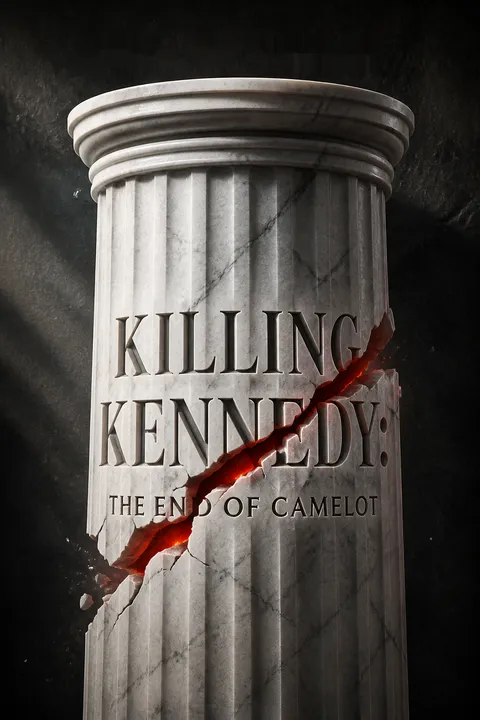


Key Takeaways
Turn survival into service, but do not mistake rescue for destiny
A crisis forged a leader. In 1943, Japanese destroyer Amagiri split PT-109 in two, leaving Lieutenant John Kennedy and ten surviving crew members stranded in enemy waters. After hesitating to command, Kennedy took charge, swam for help, and carried a wounded sailor through the water. Local islanders eventually helped rescue the crew. Kennedy later kept a coconut carved with a rescue message on his desk as a reminder of the ordeal.
A story became political capital. His older brother Joe’s death in 1944 shifted the family’s political hopes toward John. In 1946, campaign aide Dave Powers used PT-109 to show voters a different side of the wealthy young candidate. Kennedy won a congressional seat. The episode became both a test of leadership and a carefully useful campaign story.
What's striking is how a private ordeal became public evidence of character. In leadership terms, the episode shows a shift from waiting for authority to accepting responsibility when others have no better option. Yet courage under pressure is not the same as governing skill: the rescue story could make voters trust Kennedy, but it could not establish how he would handle a covert operation or a nuclear standoff. The coconut therefore works as both memory and political symbol. It reminds the president of vulnerability while helping the public see him as unusually brave.
When advisers all agree, ask who bears the cost of being wrong
Confidence hid weak planning. In April 1961, Kennedy approved an invasion of Cuba by about 1,400 anti-Castro exiles, a plan inherited from the Eisenhower administration and endorsed by the CIA and military leaders. He doubted parts of the operation, but reduced the planned air strikes and then canceled another wave. The landing force lacked the air cover and escape routes it needed. Castro’s forces defeated it within three days; more than a hundred invaders died and over a thousand were captured.
Responsibility changed the White House. Kennedy publicly accepted blame rather than passing it to advisers. The failure also deepened his reliance on his brother Bobby, who became a blunt internal advocate when other officials seemed more interested in protecting themselves. The episode damaged the administration’s credibility and taught Kennedy that expert consensus could still produce disastrous advice.
The Bay of Pigs is a compact example of a principal-agent problem: advisers may recommend policies whose risks fall most heavily on the elected leader and those sent into danger. Kennedy cannot escape responsibility by saying the CIA designed the plan, because he approved it and retained the power to stop it. The useful lesson is not to distrust expertise, but to test its incentives and assumptions. At the same time, the book’s hindsight makes the outcome feel more predictable than it was to participants. A sound review should ask what evidence was available before the decision, not only what became obvious after defeat.
Contain a nuclear crisis with strength that leaves room to retreat
Resolve replaced improvisation. In October 1962, U-2 photographs showed Soviet missiles being installed in Cuba, close enough to threaten much of the United States. Kennedy kept the discovery secret while advisers debated air strikes, invasion, and a naval quarantine. He chose the quarantine, announced the threat publicly, and warned that a missile launched from Cuba would be treated as an attack. For thirteen days, U.S. forces prepared for war while the president kept diplomatic channels open.
A compromise prevented catastrophe. Soviet leader Nikita Khrushchev agreed to remove the missiles. Kennedy also secretly accepted a Soviet demand to withdraw U.S. missiles from Turkey. The public saw a firm American stand, but the private settlement involved concessions on both sides. The crisis left Kennedy more careful about the human cost of military advice and more skeptical of Lyndon Johnson’s judgment.
The crisis illustrates coercive diplomacy: a leader uses credible pressure while preserving an exit that allows the opponent to yield without total humiliation. The quarantine signaled resolve but delayed an immediate attack, buying time for negotiation. That distinction matters because nuclear brinkmanship is not a test of who can sound most fearless; it is a search for a settlement both sides can accept. The narrative can make Kennedy appear singularly in command, though the process depended on advisers, military readiness, and Khrushchev’s choices. A durable account of leadership should include the team and the adversary, not only the president.
Follow the images that turn hidden suffering into public pressure
Photographs made injustice visible. In Birmingham, officials used police dogs and fire hoses against young Black protesters. An Associated Press photograph of a dog attacking student Walter Gadsden put the violence before a national audience. Kennedy, previously cautious about civil rights, recognized that segregation could no longer be treated as a distant local dispute. In August, Martin Luther King Jr.’s speech at the March on Washington gave the movement a powerful public vision; weeks later, a bomb at Birmingham’s Sixteenth Street Baptist Church killed four Black girls.
Saigon produced another warning. A photograph of Buddhist monk Thich Quang Duc burning himself in protest against South Vietnamese repression horrified viewers, including Kennedy. The U.S.-backed coup that removed President Ngo Dinh Diem ended with Diem’s murder. After Kennedy’s death, Lyndon Johnson used his political skill to help pass the Civil Rights Act of 1964.
The paired images show how visual evidence can change what distant audiences are willing to accept. A photograph compresses a complicated dispute into a scene that is difficult to dismiss, helping journalists and organizers focus public attention. But visibility is not the same as justice. Images can generate outrage without changing laws, institutions, or the incentives that permit violence. Birmingham’s organizers, King’s leadership, government pressure, and public response all mattered. The book’s account is strongest when it treats photographs as catalysts within a political struggle, rather than as magical causes of change.
Treat repeated warning signs as a pattern, not as unrelated noise
Oswald’s history offered scattered clues. Lee Harvey Oswald had drifted through schools and homes, defected to the Soviet Union, and returned to the United States with a Russian wife. In Dallas, the FBI interviewed him about possible Soviet ties, then treated the case as low priority. In April 1963, Oswald tried to kill retired General Edwin Walker, an anti-Communist figure, but missed. Months later he bought a military-style rifle, joined pro-Cuba activities, and worked at the Texas School Book Depository.
The clues did not form a clear forecast. Oswald’s behavior was volatile, but individual facts could look like political eccentricity, domestic conflict, or routine surveillance concerns. The book traces his growing isolation and desire to matter, while showing that agencies did not connect the pieces into a credible threat assessment. That failure is important, but it does not prove that anyone knew he would attack Kennedy.
This sequence invites a useful distinction between hindsight and warning. Once the assassination is known, the rifle, Walker attempt, and political agitation seem to point in one direction. Beforehand, each could be filed under a different category, especially when agencies hold separate fragments of information. The challenge is to build ways of noticing convergence without treating every radical or troubled person as dangerous. That requires judgment, context, and clear standards for escalating concern. The book’s chronology makes Oswald’s path legible, but a coherent story after the fact should not be mistaken for a prediction that officials could easily have made.
A predictable route turned presidential visibility into lethal exposure
The motorcade created an opening. Secret Service planners knew Dallas presented risks, including hostile demonstrations and streets lined with windows. Yet the chosen route took Kennedy’s open limousine through slow turns in Dealey Plaza, directly below the Texas School Book Depository. On November 22, 1963, Oswald fired from a sixth-floor window. One bullet wounded Kennedy and Texas Governor John Connally; another struck Kennedy in the head and killed him. The motorcade reached Parkland Hospital, but medical staff could not save the president.
The aftermath moved at a desperate pace. Kennedy’s body was taken to Air Force One, where Lyndon Johnson was sworn in before the plane left Dallas. Oswald was arrested, then shot and killed by Jack Ruby two days later while in police custody. Ruby’s act prevented a public trial of the accused assassin and helped fuel lasting suspicions about what the evidence could not settle.
The assassination exposes the tension between a president’s public role and the security demands of protecting a person. A motorcade is a political performance: citizens see their leader, and the leader sees them. That visibility also creates predictable exposure, especially when routes, pauses, and vantage points become public. The book’s account points to concrete security choices, but a failed security system does not by itself establish a conspiracy. Nor does the later killing of Oswald prove that he had accomplices. These events demand scrutiny precisely because operational failure and hidden coordination are different claims.
Remember Camelot as a crafted legacy, not a complete account of JFK
The public image left things out. The Kennedy White House projected youth, glamour, and optimism. Jackie’s restoration of the White House and televised tour made the presidency feel culturally distinctive; the name Camelot captured that public enchantment. But the private and political record was less polished. Kennedy endured severe chronic illness, lost children, and conducted numerous affairs. His presidency also included the Bay of Pigs failure, a growing U.S. role in Vietnam, and delayed action on civil rights.
Grief shaped the memory. After Kennedy’s death, Jackie emphasized the Camelot comparison in an interview, giving a grieving nation a way to remember what had been lost. The book presents this not simply as deception, but as a deliberate act of memorial-making. The idealized story honored Kennedy’s promise, even as it softened the conflicts and compromises of his actual presidency.
Camelot shows how political memory works: a community selects symbols that help make loss bearable and a leader’s life intelligible. Jackie’s image of a shining, brief presidency gave the public a shared language for mourning. The same process can narrow historical judgment, turning a politician into a legend and leaving policy failures or private harm at the margins. The better approach is not to discard the myth, but to read it as evidence about what mourners needed. A legacy can be emotionally true without being a complete account of its subject.
Separate documented events from theories that fill the record’s gaps
The book distinguishes fact from suspicion. Oswald was identified as the shooter, arrested, and killed by Ruby before a trial could test the evidence in public. The authors describe unanswered questions and note that the FBI director believed a conspiracy might exist, but they do not establish that claim. The book also recounts rumors linking the Mafia, the CIA, Marilyn Monroe’s death, and Kennedy’s assassination, while acknowledging that these stories remain unproven.
Uncertainty is not a verdict. The narrative argues that the available evidence supports a clear account of the assassination’s immediate sequence, while some surrounding relationships and motives remain uncertain. That distinction matters: a gap in knowledge can justify further investigation, but it cannot by itself confirm a preferred theory. The death of Oswald made that distinction harder for the public to accept.
The assassination is a case study in how uncertainty invites narrative completion. When a suspect dies before trial, the public loses a formal setting for weighing evidence, testing testimony, and examining motive. Suspicion then becomes easier to circulate than to resolve. Good historical reasoning keeps separate what was observed, what investigators inferred, and what later commentators imagined. That discipline does not require defending official conclusions from criticism. It requires applying the same evidentiary standard to every explanation, including the most compelling one. The book’s refusal to claim proof where it has none is an important part of its account.
Analysis
Killing Kennedy is a narrative history organized around a countdown. It moves from Kennedy’s wartime survival and political rise through crises in Cuba, civil rights, and Vietnam, then narrows toward Dallas. Its chief strength is temporal juxtaposition: while Kennedy faces public decisions, the book follows Oswald’s private instability and the security arrangements that bring the two paths together. This structure makes history feel contingent. The assassination is not presented as an abstract date, but as the end of ordinary routines, strained relationships, political calculations, and preventable vulnerabilities.
The book also makes a strong case that leadership is learned under pressure. The failed Bay of Pigs invasion exposes the danger of confident advisers and the president’s reluctance to reject a plan that had already acquired institutional momentum. The missile crisis shows a more disciplined response, combining military readiness with negotiation. Yet the narrative’s focus on Kennedy can exaggerate presidential agency. Civil rights organizing depended on people outside the White House, and the Cuban crisis depended on Khrushchev’s willingness to compromise. A president shapes events, but does not own them alone.
The treatment of evidence requires particular care. The assassination account is vivid and confident, while the surrounding political atmosphere includes unproven claims involving the Mafia, intelligence agencies, and other figures. The authors repeatedly distinguish reported fact from rumor, but dramatic storytelling can make proximity feel like causation. Readers should therefore separate the book’s chronology from any inference that a character’s grievance, access, or later death proves a role in the crime.
Finally, Camelot is both the book’s emotional frame and a subject of historical analysis. Jackie’s memorial language transformed private grief into a national story of promise cut short. That story preserves real affection and aspiration, but can obscure the administration’s failures and Kennedy’s contradictions. The most useful reading holds both versions together: the admired public figure, and the fallible president whose choices mattered because they carried consequences for millions.
Review Summary
Killing Kennedy received mixed reviews. Many praised its readability and compelling narrative style, while others criticized its lack of new information and O'Reilly's perceived bias. Some readers appreciated the behind-the-scenes look at Kennedy's life and presidency, while others found the book superficial and poorly sourced. The book's treatment of conspiracy theories was both commended and criticized. Overall, readers familiar with Kennedy's story found little new, but those seeking an accessible overview generally enjoyed the book. O'Reilly's writing style and approach to historical events divided opinion.
People Also Read


Glossary
PT-109
Kennedy’s patrol boatPT-109 was a U.S. Navy patrol torpedo boat commanded by John F. Kennedy during World War II. In August 1943, a Japanese destroyer struck and split the boat in the Solomon Islands. Kennedy and surviving crew members struggled to reach safety. The episode later became an important part of Kennedy’s public image and congressional campaign.
Irish Mafia
Kennedy’s loyal inner circleThe book uses Irish Mafia as an informal label for a close group of Kennedy’s friends and aides, including Dave Powers and Kenneth O’Donnell. They were not a criminal organization. The name reflects their shared Irish-American background, personal loyalty to Kennedy, and influence within his political and White House circle.
Operation Zapata
Bay of Pigs invasion planOperation Zapata was the CIA-backed plan to land Cuban exiles at the Bay of Pigs and overthrow Fidel Castro’s government. President Kennedy authorized the operation in 1961, but reduced air support and the invasion force failed to secure an escape route or control the skies. The invasion ended in defeat, deaths, and the capture of more than a thousand exiles.
Brigade 2506
Anti-Castro exile forceBrigade 2506 was the force of Cuban exiles trained and supported by the United States for the 1961 invasion at the Bay of Pigs. About 1,400 men landed in Cuba expecting to challenge Castro’s government. Without adequate air cover and with key roads blocked, they were defeated; many were killed or captured.
ExComm
Crisis advisory committeeExComm, short for the Executive Committee of the National Security Council, was the group of senior officials and advisers who met with Kennedy during the Cuban missile crisis. Its members considered possible responses to Soviet missiles in Cuba, including air strikes, invasion, and a naval quarantine. Their disagreements shaped the administration’s decisions during the thirteen-day confrontation.
Operation Mongoose
Covert campaign against CastroOperation Mongoose was a U.S. covert effort to weaken or overthrow Fidel Castro’s Cuban government. The book describes plans involving Cuban exiles and the Mafia, including efforts aimed at Castro’s removal. Kennedy’s promise to Khrushchev not to invade Cuba did not end the covert campaign, which continued after the missile crisis.
magic bullet
Contested bullet trajectoryMagic bullet is the popular label for the bullet that, according to the official account described in the book, passed through Kennedy and then wounded Texas Governor John Connally. The bullet’s path became central to arguments about the number and direction of shots. The label expresses public skepticism, but the phrase itself does not establish that the trajectory was impossible.
Camelot
Idealized Kennedy-era imageCamelot is the metaphor Jackie Kennedy used to describe the Kennedy presidency after her husband’s assassination, drawing on the Broadway musical about King Arthur. It cast the administration as a brief, glamorous period of idealism cut short by tragedy. The image became a lasting part of public memory, while simplifying the administration’s conflicts and failures.
FAQ
What’s Killing Kennedy: The End of Camelot by Bill O’Reilly about?
- Comprehensive historical narrative: The book chronicles the life, presidency, and assassination of John F. Kennedy, providing a detailed account of his political career and personal life.
- Context of the 1960s: It situates JFK’s story within the Cold War, civil rights movement, and major international crises, highlighting the turbulent era in which he led.
- Focus on key figures: The narrative also explores the roles of Jackie Kennedy, Lee Harvey Oswald, Lyndon B. Johnson, and others who shaped or were affected by JFK’s presidency.
- Assassination and aftermath: The story culminates in the events leading up to and following JFK’s assassination in Dallas, Texas, examining its impact on America and the world.
Why should I read Killing Kennedy: The End of Camelot by Bill O’Reilly?
- Engaging, accessible history: Bill O’Reilly and Martin Dugard use a narrative style that makes complex historical events easy to understand and compelling to read.
- Insight into JFK’s leadership: The book offers a nuanced look at JFK’s presidency, revealing both his public charisma and private struggles.
- Debunking myths and conspiracies: While not a conspiracy book, it addresses inconsistencies and unknowns about the assassination, encouraging critical thinking.
- Emotional connection: Vivid descriptions and personal anecdotes help readers connect with the characters and the gravity of the events.
What are the key takeaways from Killing Kennedy: The End of Camelot by Bill O’Reilly?
- JFK’s complex legacy: The book highlights JFK’s achievements, personal flaws, and the enduring impact of his presidency.
- Historical context matters: Understanding the Cold War, civil rights movement, and political rivalries is crucial to grasping JFK’s challenges.
- Assassination’s significance: The detailed account of the assassination and its aftermath underscores its profound effect on American history.
- The power of myth: The “Camelot” narrative shaped public memory, emphasizing hope and idealism despite underlying complexities.
Who was John F. Kennedy according to Killing Kennedy: The End of Camelot by Bill O’Reilly?
- Charismatic yet flawed leader: JFK is portrayed as charming, witty, and politically skilled, but also deeply affected by health issues and personal indiscretions.
- Crisis manager: He navigated major events like the Cuban Missile Crisis and civil rights tensions with both caution and boldness.
- Public vs. private persona: The book contrasts his youthful, vigorous public image with a private life marked by pain and complexity.
- Family and political legacy: His relationships with Jackie, Bobby, and other family members are central to understanding his presidency.
How does Killing Kennedy: The End of Camelot by Bill O’Reilly portray Jackie Kennedy and her influence?
- Supportive and resilient First Lady: Jackie is depicted as a devoted wife and mother who endured personal tragedies and maintained composure during crises.
- Shaping JFK’s image: Her style and public appearances contributed to the “Camelot” myth, enhancing the administration’s glamour and appeal.
- Role after assassination: Jackie’s actions at Parkland Hospital and during the funeral, as well as her efforts to shape JFK’s legacy, are highlighted.
- Later life: The book briefly covers her marriage to Aristotle Onassis and her career in publishing.
What is the significance of the “Camelot” theme in Killing Kennedy: The End of Camelot by Bill O’Reilly?
- Idealized presidency: “Camelot” symbolizes a brief, shining moment of hope, glamour, and idealism in American history, popularized by Jackie Kennedy.
- Contrast with reality: The book reveals the complexities and challenges behind the romanticized image, including political struggles and personal flaws.
- Legacy shaping: Jackie’s insistence on the “Camelot” theme influenced how history remembers JFK, focusing on inspiration over controversy.
- Cultural memory: The theme remains a powerful symbol of JFK’s impact and the public’s nostalgia for his era.
How does Killing Kennedy: The End of Camelot by Bill O’Reilly depict the Cold War and international crises during JFK’s presidency?
- Bay of Pigs and Cuba: The failed invasion of Cuba is examined as a major Cold War event that damaged U.S. credibility and set the stage for future crises.
- Cuban Missile Crisis: The book provides a detailed account of the 1962 confrontation with the Soviet Union, highlighting JFK’s leadership and the near-brinkmanship of nuclear war.
- Vietnam War escalation: JFK’s increasing involvement in Vietnam, his doubts, and the complexities of the conflict are discussed.
- Berlin Wall and Soviet relations: The construction of the Berlin Wall and Khrushchev’s policies are portrayed as significant tests of JFK’s resolve.
Who was Lee Harvey Oswald according to Killing Kennedy: The End of Camelot by Bill O’Reilly?
- Troubled and complex figure: Oswald is depicted as a loner with a difficult childhood, a defection to the Soviet Union, and a strong affinity for communism.
- Assassination planning: The book details his attempts to assassinate other figures, his marksmanship, and his preparations leading up to JFK’s assassination.
- Aftermath and controversy: Oswald’s arrest, denial of involvement, and subsequent killing by Jack Ruby are covered, along with the controversies and conspiracy theories about his role.
- Motivations and mystery: The book suggests that Oswald’s motivations and connections remain partly mysterious, adding to the intrigue.
How does Killing Kennedy: The End of Camelot by Bill O’Reilly portray the events of November 22, 1963?
- Minute-by-minute account: The book provides a detailed timeline of JFK’s motorcade in Dallas, Oswald’s actions, and the shots that killed the president.
- Eyewitness and forensic evidence: It includes testimonies, Secret Service actions, and the chaotic aftermath at Parkland Hospital.
- Immediate political transition: The swearing-in of Lyndon Johnson aboard Air Force One and the national response are described.
- Security failures: The book highlights lapses in security planning and the conflicts between authorities during the investigation.
How does Killing Kennedy: The End of Camelot by Bill O’Reilly address the civil rights movement and Martin Luther King Jr.?
- Children’s Crusade and Birmingham: The book describes the 1963 protests in Birmingham, Alabama, and the national outrage that followed.
- MLK’s leadership and controversies: King is shown as a charismatic leader under FBI surveillance, with both political alliances and personal risks.
- JFK’s civil rights stance: The narrative explores JFK’s political calculations regarding civil rights and his relationship with King.
- International parallels: The book draws connections between the U.S. civil rights struggle and Buddhist protests in Vietnam.
What role did Lyndon B. Johnson play in Killing Kennedy: The End of Camelot by Bill O’Reilly?
- Vice president and rival: LBJ is depicted as a powerful political figure with ambitions that sometimes clashed with the Kennedys.
- Assumption of presidency: The book details Johnson’s swearing-in after JFK’s death and his immediate political maneuvers.
- Civil rights and Vietnam: LBJ’s inheritance of major issues like civil rights legislation and the Vietnam War is discussed.
- Complex relationships: His interactions with the Kennedy family and his own legacy are explored.
What are the best quotes from Killing Kennedy: The End of Camelot by Bill O’Reilly and what do they mean?
- “I’m just a patsy.” – Lee Harvey Oswald’s famous denial of involvement, reflecting the confusion and controversy surrounding the assassination.
- “Don’t let it be forgot, that once there was a spot, for one brief shining moment that was known as Camelot.” – Jackie Kennedy’s invocation of the Camelot myth, symbolizing the idealized memory of JFK’s presidency.
- Quotes on leadership and crisis: The book includes JFK’s speeches and remarks during the Cuban Missile Crisis and civil rights movement, illustrating his rhetorical skill and resolve.
- Reflections on legacy: Passages about the aftermath of the assassination and the shaping of JFK’s memory highlight the enduring impact of his life and death.
About the Author
Other books by Bill O'Reilly
Download PDF
Download EPUB
.epub digital book format is ideal for reading ebooks on phones, tablets, and e-readers.








