

Key Takeaways
Read the Old West as a contest between lived events and manufactured legend
The West had two histories. One was made by settlers, Native nations, soldiers, lawmen, and outlaws confronting real danger. The other took shape in newspaper stories, cheap adventure books, traveling shows, and films, which turned messy lives into clean dramas of heroes and villains. Daniel Boone, for instance, became a model frontiersman even as he acknowledged that stories about him had been embellished. Buffalo Bill Cody later staged the frontier as a thrilling spectacle for audiences across America and Europe.
The book's method is comparison. It places familiar legends beside the less tidy record: a respected lawman could enable dispossession, a celebrated outlaw could be a killer, and an admired hero might owe his fame to a convenient story. The point is not that every legend is false, but that fame is not proof.
What's valuable here is the distinction between an event and the story that makes it culturally useful. A legend can preserve a real act of courage while concealing its cost, or turn an outlaw into a political symbol. That distinction invites readers to ask who benefits from a version of the past. The book's vivid scenes make history accessible, but the same dramatic style can blur the line between documented fact and retold anecdote. Treating those as separate layers strengthens the narrative rather than draining its excitement.
Judge frontier loyalty by choices under pressure, not accusations
Boone faced divided loyalties. In 1778, Shawnee warriors captured him while he led a party gathering salt for the struggling settlement of Boonesborough. To prevent his men from being killed, he persuaded them to surrender. The Shawnees adopted him, called him Sheltowee, and trusted him enough to take him to Detroit. When he learned that a large force planned to attack Boonesborough, he escaped, raced back, and helped prepare the settlement for an eleven-day siege.
His neighbors still suspected him. Militia officers accused him of aiding the British and Shawnees, but Boone argued that he had used deception to save lives. The court acquitted him and promoted him. His later service for the Revolutionaries supported his patriotism, yet Boone also understood that settlers were taking Native land. His life resists a simple division between loyal patriot and treacherous turncoat.
Boone's predicament shows how survival decisions can look like betrayal when judged from a distance. His conduct is best understood in the immediate setting: a small settlement, an overwhelming opposing force, and prisoners whose lives depended on negotiation. Yet courage in that setting does not erase the larger conflict over land. The episode asks readers to keep two scales in view at once, the individual decision and the political system that made such choices necessary.
A populist image can be both political weapon and commercial product
Crockett made his background political capital. He presented himself as a plainspoken hunter who understood poor farmers, then carried that identity into Tennessee politics and Congress. He opposed a land measure he believed threatened squatters and voted against Andrew Jackson's Indian Removal Act, calling it unjust. That vote cost him support in his district, and Jackson's allies helped defeat him.
His fame was built for sale, too. Crockett's autobiography, stump speeches, and theatrical portrayals made the backwoods congressman a national character. After losing his seat, he went to Texas, where he joined the fight at the Alamo and died in 1836. Accounts of his final moments conflict, but his death enlarged the legend. His politics were real, and so was the machinery that packaged him as a folk hero.
Crockett illustrates a durable tension in popular politics: authenticity can be both a genuine relationship with ordinary people and a carefully legible public style. His opposition to removal matters because it complicates the image of the frontier as uniformly hostile to Native rights. At the same time, one principled vote did not overturn the expansionist project surrounding him. The case cautions against treating a politician's persona as either pure fraud or transparent truth.
Frontier expertise could protect Native people and help dispossess them
Carson knew the West intimately. A skilled guide, tracker, and interpreter, he lived among Native communities and sometimes helped prevent violence. As an Indian agent, he was respected by Utes for advocating on their behalf. He also recognized that white aggression often helped provoke conflict.
His service had a darker consequence. During the Civil War, General James Carleton ordered Carson to subdue the Navajos and move them to Bosque Redondo. Carson initially objected, but ultimately led the campaign. Soldiers destroyed crops, orchards, and food stores, forcing thousands to surrender. In 1864, Navajos were driven more than three hundred miles to the reservation on what became known as the Long Walk. Many died on the march or in captivity. Carson's skill and mixed record cannot be separated from the policy he helped carry out.
Carson's story exposes a hard distinction between personal respect and institutional harm. Knowing people, speaking their languages, and sometimes defending them did not make him independent of the government he served. The same expertise that could avert a local confrontation also made forced removal more effective. This is a useful lens for judging figures whose humane intentions coexist with participation in destructive systems: individual character matters, but it is not the whole measure of responsibility.
Bass Reeves shows what frontier law looked like beyond the white legend
Reeves enforced federal law across Indian Territory. Born enslaved, he became a deputy US marshal, fluent in the languages of several Native nations and known as a skilled tracker and marksman. The book credits him with more than three thousand arrests over a thirty-three-year career. He used disguises to approach fugitives, often brought suspects back alive, and once insisted on personally arresting his own son, who was wanted for murder.
His career complicates the Lone Ranger myth. Reeves sometimes rode with Native posse members, worked far from settled towns, and reportedly rewarded people who helped him. These details resemble the later fictional hero, though there is no conclusive proof Reeves inspired the character. When Oklahoma statehood brought Jim Crow laws, his federal career ended. His achievements were then largely forgotten, and even his burial place is unknown.
Reeves makes the frontier's racial history harder to reduce to a single pattern. The book describes Indian Territory as a place where people of different backgrounds lived and worked together, while also showing how racial exclusion shaped Reeves's later career. His record of arresting his own son gives the law personal stakes rather than abstract grandeur. The proposed Lone Ranger connection is compelling as cultural interpretation, but the absence of direct evidence should remain part of the story.
At Little Bighorn, flawed intelligence met a people defending their homeland
Custer misread the scale of the camp. In June 1876, he saw a vast Lakota and Cheyenne encampment near the Little Bighorn River but believed it held no more than two thousand hostile warriors. The actual force was much larger than his estimate, though its precise size remains uncertain. Custer divided his troops, sending Major Reno to attack from one direction while he moved toward the village. Reno's charge met strong resistance, and the units could not coordinate a rescue.
The defeat was more than a tactical error. Custer's men faced fighters defending land and a way of life already threatened by broken agreements and encroachment, including a gold rush into the Black Hills. Custer rejected additional troops and machine guns, then attacked without sufficient intelligence. Every man in his immediate force was killed. The battle became a national legend, while the conflict that produced it was often pushed to the margins.
The account works best when military failure and political context remain connected. Custer's decisions help explain the defeat, but they do not explain why the opposing nations were fighting. The book's emphasis on intelligence failures also offers a general lesson: confidence in an incomplete picture can make a risky plan seem manageable. Still, accounts of the battle are incomplete, and describing Custer's choices cannot resolve every disputed detail of the fighting.
Do not confuse an outlaw's manners with justice or virtue
Politeness made Black Bart memorable. From 1875 to 1883, he robbed Wells Fargo stagecoaches alone, on foot, and without firing a shot. He generally left passengers' belongings untouched and sometimes left poems at the scene. The public's image of the gentleman bandit grew from this unusual conduct, but he was still stealing from a company and escaping accountability.
Jesse James's image was more political. Journalist John Edwards portrayed him as a noble Southern rebel robbing powerful institutions on behalf of ordinary people. James helped sustain that story, but his gang robbed broadly, killed civilians and lawmen, and kept the proceeds. Butch Cassidy planned robberies carefully and was described as avoiding unnecessary violence, yet his Wild Bunch included killers. A courteous style or a popular cause can soften the image of crime without changing what happened to its victims.
These outlaws show how reputation can be built from selective contrast. Bart's restraint distinguished him from violent robbers, while James's postwar politics gave criminal acts a story of retaliation. Such context helps explain public sympathy without turning sympathy into a verdict of innocence. The distinction is especially important when a powerful institution is an outlaw's target: criticism of the institution may be justified, while the robber's methods still impose costs on individuals.
A gunfighter's reputation often mattered more than a fast draw
The familiar showdown was unusual. Wild Bill Hickok's 1865 duel with Davis Tutt in a Springfield town square became famous partly because public street confrontations were rare. In many towns, carrying a gun was illegal, and weapons were more often used for hunting or protection than for formal duels. Real gunfights were usually sudden, confused, and fought at close range. Smoke, unreliable ammunition, and concealed weapons made the cinematic quick draw a poor guide to actual violence.
Reputation could prevent a fight or invite one. Hickok's fame helped him control disorder as a lawman, but it also attracted challengers eager to test him. Doc Holliday's dangerous reputation similarly helped deter some threats, while his friendship with Wyatt Earp drew him into the Tombstone gunfight. The book also describes Billy the Kid as a practiced escape artist whose notoriety expanded beyond what the evidence can confirm.
The gap between gunfighter legend and ordinary violence is a reminder that stories often celebrate spectacle over probability. A reputation can function as deterrence, but it is unstable: it may calm one encounter and provoke another. The book's examples also show how repeated retelling turns isolated shootings into a defining identity. That does not make the violence unreal; it means the legend can obscure the less dramatic conditions in which it occurred.
Center Native sovereignty, not settler fear, in the story of western expansion
Native nations were defending their homes. The book challenges the familiar picture of peaceful settlers repeatedly beset by hostile tribes. Many Native communities traded with settlers, guided them, or tried to live alongside them. Conflict intensified as the United States expanded, broke treaties, and pushed tribes onto smaller territories. Native leaders repeatedly objected to being removed from lands where their communities had long lived.
The costs were enormous and unequal. The book cites a 1890 estimate of roughly nineteen thousand white people and at least thirty thousand Native people killed in forty Indian wars, while arguing that the true Native death toll was likely far higher once disease and forced marches are considered. The comparison is not a complete accounting, but it underscores that the violence cannot be understood only through settler fear or frontier adventure.
Centering sovereignty changes the meaning of familiar episodes: a military campaign becomes part of a contest over land, not simply a response to danger. The book also distinguishes attacks on settlers from the wider violence of wars and removal, a distinction that popular stories often collapse. Its numbers should be read cautiously because the passage itself signals uncertainty about the count. Even so, the asymmetry of power and the repeated violation of agreements remain central to the account.
Follow the entertainment business to see how the West became a global myth
The frontier became a product. Dime novels made real people such as Buffalo Bill and Wild Bill Hickok into larger-than-life characters. Their plots rewarded escalating danger and improbable heroics. Buffalo Bill Cody carried that formula onto the stage, building a traveling Wild West show with cowboys, Native performers, animals, sharpshooting, and staged battles. Annie Oakley became a star through extraordinary marksmanship presented in a distinctly feminine style.
The spectacle outlived the frontier. Cody's show toured Europe, drew crowds of tens of thousands, and presented a romanticized West to audiences who had never seen it. Early films and television borrowed its familiar ingredients: the clear hero, the outlaw, the attack, and the decisive gunfight. These entertainments made the West widely recognizable, but they also trained audiences to mistake a dramatic performance for a representative account of history.
The book's strongest cultural insight is that the myth was not merely an accidental distortion. It was shaped by businesses competing for attention, from publishers to touring shows and film studios. Entertainment needed legible characters and fast-moving conflict, so complex histories were compressed into portable symbols. That process created shared cultural memory, but popularity is not a test of historical accuracy. Knowing how a story was sold helps explain why it persists.
When the record breaks, mark uncertainty instead of polishing it into certainty
Some famous endings remain disputed. The evidence for Billy the Kid's death rests heavily on Sheriff Pat Garrett's account. Decades later, an elderly Texan named Brushy Bill Roberts claimed to be the Kid, but the claim remains contested. The book also describes competing accounts of Butch Cassidy and the Sundance Kid's deaths in Bolivia. The bodies identified as theirs were never available for conclusive confirmation, leaving room for speculation but not proof.
Uncertainty has degrees. Boone's court-martial is difficult to reconstruct because few records survive. Hickok's killing is well established, though the motive remains unknown. These are different evidentiary problems, not interchangeable mysteries. The book's recurring task is to separate what is documented, what witnesses reported, and what later storytellers added. A compelling possibility can enrich a legend, but it should not be mistaken for a settled fact.
What's striking is how uncertainty itself becomes material for storytelling. A missing record invites a satisfying escape, a secret survival, or a final act of redemption. Historical care does not require suppressing those possibilities; it requires labeling their evidentiary status. That discipline is particularly important in narrative history, where a vivid scene can feel more certain than its sources warrant. The reader gains more by seeing the limits clearly than by receiving a falsely complete ending.
Analysis
Legends & Lies is a story-driven collection of western biographies and cultural history, organized around a productive contradiction: the frontier's famous characters were real, but the versions remembered by the public were often edited for politics, profit, and drama. Its strongest cases are not simple debunkings. Boone's strategic surrender could be interpreted as disloyalty, Crockett's political convictions sat alongside his manufactured celebrity, and Carson's respect for Native people did not prevent him from participating in forced removal. These tensions make the book more valuable than a catalogue of colorful exploits.
The narrative approach has a cost. Fast scenes and confident details help readers picture events, but the source material varies in reliability. Autobiographies, newspaper reports, later recollections, dime novels, and folklore do not carry equal evidentiary weight. The text often acknowledges this, especially around Billy the Kid and Butch Cassidy, yet its dramatic reconstructions can still make uncertain moments feel witnessed. A careful reader should distinguish the documented event from the scene built around it.
The book also complicates the standard frontier morality play, but its emphasis on individual heroes can leave systems in the background. Native dispossession, treaty violations, and federal policy are not simply obstacles in the protagonists' journeys. They are the structure within which many of those journeys occurred. The dedicated discussion of Native history helps correct the imbalance, as do Carson's and Custer's stories, but the reader must keep that context active across the biographies.
The collection's most durable lesson is methodological: cultural memory is evidence about what a society wants to admire, not necessarily a reliable account of what happened. Looking at how the West was narrated, performed, and filmed reveals both the power of its heroes and the omissions that made them easier to celebrate.
Review Summary
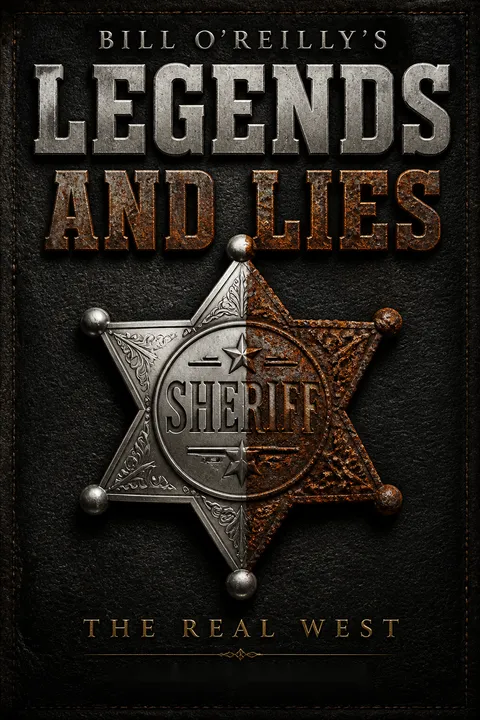
Bill O'Reilly's Legends and Lies: The Real West receives mixed reviews. Many find it entertaining and informative, praising its accessible writing and interesting stories about Old West figures. However, some criticize it for lacking depth, containing inaccuracies, and not offering much new information for those already familiar with the subject. Readers appreciate the book's illustrations and its efforts to dispel myths, but some feel it oversimplifies complex historical events. Overall, it's seen as a good introduction to Old West history, though not a scholarly work.
People Also Read
Glossary
Manifest Destiny
Continental expansion ideologyThe belief, described in the book as a national vision, that the United States was destined to expand across the continent. It helped justify settlement and territorial growth, even as Native nations resisted the loss of their lands. The term connects westward expansion to a larger political and religious claim about the nation's future.
dime novels
Cheap adventure fictionInexpensive popular books, often issued in numbered series, that told fast-moving adventure stories. They borrowed real names and events but exaggerated them to entertain readers and sell more copies. Their heroic cowboys, outlaws, and Native antagonists helped establish a durable popular image of the Old West before movies and television adopted similar stories.
Indian Territory
Native nations' designated territoryA large region that included present-day Oklahoma, where Native nations and communities lived alongside white settlers and fugitives. In the book, it is portrayed as a vast, dangerous jurisdiction where federal deputy marshals pursued white criminals beyond ordinary local boundaries. The name reflects a place shaped by the forced relocation and continuing presence of Native peoples.
counting coup
A warrior's act of courageA measure of bravery in battle described in the book through a warrior's close approach to an enemy, sometimes touching the opponent. It represented courage and carried honor within the warrior culture discussed in the Kit Carson chapter. The term helps explain the different values and forms of recognition that shaped encounters between Native warriors and mountain men.
the Long Walk
Navajo forced removalThe forced march of Navajo people more than three hundred miles to Bosque Redondo in 1864, following the army campaign led by Kit Carson under General James Carleton. Hundreds died during the march, and many more suffered in captivity. The term is a name used in tribal history for a devastating episode of displacement and government coercion.
Download PDF
Download EPUB
.epub digital book format is ideal for reading ebooks on phones, tablets, and e-readers.








