

Key Takeaways
Lincoln's murder struck just as reunion became possible.
Victory had a narrow window. Lincoln’s second inaugural, delivered while the war still raged, called for national healing rather than punishment. On April 9, 1865, Robert E. Lee surrendered at Appomattox. Five days later, John Wilkes Booth shot Lincoln at Ford’s Theatre. The armies had stopped fighting, but reconciliation was still only a promise, dependent on political choices and a fragile public mood.
The timing changes the story. The assassination did not reverse the Union victory. It removed the leader most closely associated with a lenient return to national life, before that policy could be tested. The book follows this collision between an emerging peace and Booth’s conviction that the South’s defeat, and emancipation, must be answered with violence.
The timing makes the assassination more than a shocking crime. It exposes how peace depends on institutions and leadership after the battlefield goes quiet. A military victory can settle who governs without settling how former enemies will live together. Lincoln’s personal authority mattered, but it could not guarantee that his approach would survive him. The story also cautions against treating reconciliation as automatic: policies still require enforcement, public consent, and protection for those whose freedom is newly recognized.
Grant won by closing roads, not merely winning battles.
Movement decided the campaign. Petersburg had resisted Union forces for 293 days, and the Appomattox River kept the city from being completely surrounded. When Lee abandoned Petersburg, Grant did not simply chase the Confederate army from behind. He aimed to get ahead of it, using Union cavalry and infantry to block the routes Lee needed to reach the Carolinas.
The map became a weapon. At Jetersville, Grant positioned troops across Lee’s path; at later crossings, Union forces cut into the retreating column and captured men, wagons, and supplies. Lee could still fight, but every detour cost time and energy. The Union’s advantage came not only from numbers and firepower, but from repeatedly making the next destination unreachable.
The campaign illustrates a useful distinction between defeating an opponent and limiting the opponent’s choices. Grant’s strategy made geography, roads, bridges, and timing part of the battlefield. This resembles a broader systems principle: pressure applied to a critical bottleneck can matter more than force spread across the whole system. Yet the book’s portrait also shows the human cost of this approach. A route blocked to an army is also a route blocked to exhausted soldiers trying to get home.
Starvation broke Lee's retreat before Grant's final terms did.
An army needs more than courage. Lee’s men left Petersburg hungry, exhausted, and short of shoes. They marched toward Amelia Court House expecting food, but the railcars there held ammunition and equipment instead. The promised rations had been left behind in Richmond, where scavengers had taken them. Forage parties returned empty, and soldiers ate whatever they could find.
Each shortage compounded the next. Without food and rest, men deserted, fell behind, or became too weak to carry weapons. At Sayler’s Creek, the Union captured or killed thousands as Lee’s retreating forces broke apart. Lee continued to maneuver, but the army’s ability to move and fight was disappearing. By the time surrender terms were discussed, deprivation had already narrowed his choices almost to nothing.
This account makes logistics visible as a human condition, not a dry tally of wagons and rations. Food supports movement, attention, morale, and the capacity to follow orders, so its absence creates cascading failures. The sequence also complicates the heroic image of a general directing events from above: Lee’s decisions mattered, but so did every missing meal and exhausted teamster. Still, hardship alone does not explain defeat. Grant’s ability to exploit that hardship turned scarcity into military collapse.
Use lenient surrender terms to make military defeat politically survivable.
The terms aimed beyond victory. Before Lee surrendered, Lincoln had urged Grant to offer generous conditions. At Appomattox, Grant allowed Confederate soldiers to return home rather than face mass punishment. Lee did not have to surrender his ceremonial sword. The practical message was clear: the army was finished, but its soldiers could leave the battlefield and resume civilian life.
Mercy served a strategic purpose. Lincoln and Grant understood that humiliation and confiscation could deepen resistance rather than restore the Union. Their approach was not simple softness. The country needed former combatants to stop fighting, and the South’s labor and resources would matter to national recovery. The book presents leniency as an attempt to turn military surrender into the beginning of political reintegration.
The distinction between victory and settlement is central here. Punishment can express moral judgment, but it can also create incentives for renewed resistance. Grant’s terms sought compliance without making surrender needlessly degrading. That is a powerful political calculation, especially when defeated soldiers still have weapons, loyalties, and local networks. Leniency, however, is not self-executing. It cannot by itself protect freed people or ensure that former Confederates accept the rights and institutions the war has changed.
Booth turned pro-slavery conviction and celebrity into a murder plot.
His politics were not a passing grievance. Booth believed slavery was essential to Southern society and treated emancipation as an intolerable attack on white supremacy. The actor had first organized a plan to capture Lincoln and deliver him to Confederate hands. As the Confederacy collapsed, he abandoned the original purpose and decided that killing Lincoln would be a more dramatic blow.
Performance shaped the crime. Booth used his fame, his knowledge of Ford’s Theatre, and his appetite for public recognition to plan the attack. He chose the theater, prepared a route into the president’s box, and imagined a theatrical escape. The book portrays both ideology and vanity as fuel: Booth wanted to defend slavery, but he also wanted to become the central character in a historic spectacle.
The account is strongest when it refuses to treat political violence as an inexplicable eruption. Booth’s convictions supplied a justification, while celebrity and theatrical self-image helped him imagine himself as a hero rather than a murderer. That combination matters because violence often depends on a story perpetrators tell about their own actions. Yet personality should not eclipse ideology. Describing Booth as vain or unstable cannot substitute for confronting the racial order he meant to preserve.
One guard's absence exposed a whole chain of security failures.
The protection was thinner than it looked. John Parker was assigned to guard Lincoln’s theater box, but he left his post to drink at a nearby saloon. Booth knew Ford’s Theatre well, had prepared a way to block the box door, and was familiar enough to pass through the building without attracting serious suspicion. The president was therefore left exposed at close range.
Several small gaps aligned. Lincoln’s attendance was publicly known, his party arrived late, and Booth had time to examine the building and prepare his entrance. No single lapse explains the killing on its own. Together, however, they gave a determined attacker a clear path to the president. Parker was never meaningfully punished for abandoning his post, a detail that underlines how weak accountability followed the failure.
This episode reads like a study in layered risk. A reliable security system cannot depend on one person remaining attentive, especially when the target’s movements are public and the venue is familiar to a potential attacker. Access control, backup protection, and clear responsibility all matter because human attention is fallible. The book’s emphasis on Parker is memorable, though the larger failure was institutional: the guard’s absence mattered because no other safeguard stopped Booth.
The conspiracy's grand plan collapsed under ordinary fear and friction.
Coordination proved harder than planning. Booth wanted simultaneous attacks on Lincoln, Secretary of State William Seward, and Vice President Andrew Johnson. Seward was badly wounded, but survived. Johnson’s would-be assassin, George Atzerodt, drank instead of carrying out his assignment. At the Seward home, David Herold fled rather than wait for Lewis Powell, leaving Powell to make his own escape.
Then the escape plan unraveled. Booth broke his leg during his leap from the theater box and became dependent on others for food, shelter, and transportation. He and Herold hid in Maryland swamps before crossing into Virginia. At Garrett’s farm, Herold surrendered and Booth was shot by a Union soldier. The plot’s dramatic ambition could not compensate for unreliable partners, injury, confusion, and the demands of staying on the run.
The failed parts of the conspiracy reveal a gap between a plan on paper and a coordinated operation under stress. The conspirators had distinct tasks, but little redundancy when someone panicked, failed, or became incapacitated. Booth’s confidence appears to have mistaken agreement for dependable execution. This is a useful corrective to stories that make conspiracies seem omnipotent: complex plans are vulnerable to ordinary human limits, especially when secrecy prevents participants from building trust or correcting mistakes.
Lincoln's death strengthened the case for vengeance over reconciliation.
The public mood was already divided. After Lee’s surrender, many Northerners celebrated, but Lincoln’s April 11 address urged patience and discussed limited voting rights for Black Americans. Booth heard the speech as proof that Lincoln’s postwar vision threatened the racial hierarchy he defended. Meanwhile, some in the North wanted Confederate leaders punished, not welcomed back.
The succession changed the political setting. Lincoln’s successor, Andrew Johnson, favored a harsher approach toward Confederate leaders, while Lincoln had sought a more forgiving path. The book suggests that Lincoln’s death made reunion more difficult by removing a leader committed to leniency at a decisive moment. It does not prove that Lincoln’s preferred policy would have produced a peaceful or equitable Reconstruction.
The assassination reshaped the political problem even though it did not determine every later outcome. Lincoln’s death removed a person with unusual authority to argue for a particular settlement, leaving policy to a successor with different instincts and a nation demanding justice or revenge. Counterfactual history must remain cautious: no one can know exactly how Lincoln would have governed Reconstruction. The more defensible insight is that leadership transitions are especially consequential when institutions are rebuilding after civil conflict.
Treat suspicious links as evidence to test, not proof of conspiracy.
The book separates clues from certainty. It recounts financial connections involving Booth and the investigator Lafayette Baker, Baker’s relationship with Secretary of War Edwin Stanton, and the later disappearance of pages from Booth’s diary. These details have fueled claims that Stanton or others knew more about the assassination than they admitted.
The strongest allegations remain unproved. The book also reports that a proposed coded message used to implicate Stanton was rejected by most trained historians and assassination scholars. Baker’s actions and Stanton’s handling of evidence raise questions, but questions are not proof of participation. A careful reader should distinguish documented events, plausible inference, and claims that cannot be verified from the evidence presented.
The unresolved material offers a useful lesson in historical reasoning. Suspicious timing, missing records, and personal connections can justify investigation, but they do not establish guilt by themselves. A sound account keeps the levels of confidence visible instead of letting unanswered questions accumulate into a single dramatic explanation. That discipline does not dismiss the possibility of hidden knowledge; it prevents possibility from being mistaken for fact.
Analysis
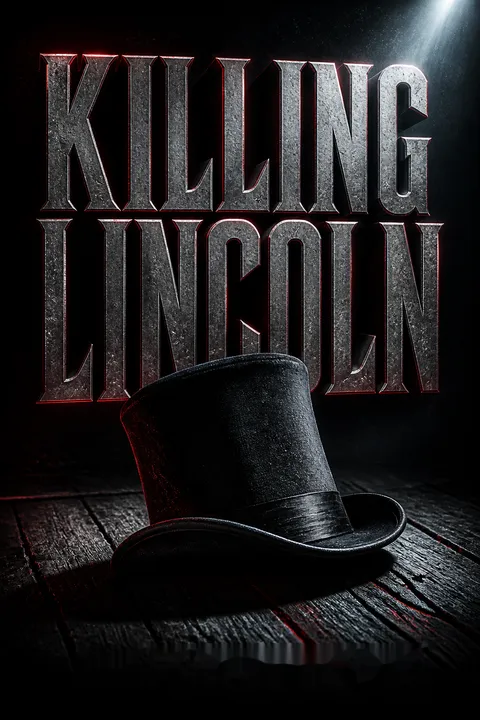
Killing Lincoln is a popular history built as a suspense narrative. It intercuts the final Union campaign, Booth’s move from kidnapping plans to assassination, the attack at Ford’s Theatre, and the search through Maryland and Virginia. The structure keeps the story moving while giving readers a clear account of how battlefield collapse and political violence converged in April 1865. Its most illuminating thread is practical rather than conspiratorial: armies depend on supply routes, people depend on institutions, and a peace settlement depends on what happens after military defeat.
The book’s dramatic method also creates a risk. It often reconstructs private thoughts, motives, and dialogue with the confidence of a novel, even when the account relies on later recollections or disputed interpretations. That approach is effective at making history vivid, but vividness can make inference feel like direct observation. The strongest reading therefore separates the documented sequence of events from the author’s interpretation of what individuals felt or intended.
The same caution matters most in the book’s treatment of a possible wider conspiracy. It recounts suggestive connections among Booth, Baker, and Stanton, then acknowledges that claims based on a proposed cipher were rejected by most trained historians. This tension is valuable when it prompts scrutiny, but it can also give weak evidence narrative weight simply because it is mysterious. The book is more persuasive when it shows the consequences of known choices: Grant’s effort to block Lee’s retreat, Lincoln’s push for leniency, Booth’s pro-slavery motive, and the security failures at Ford’s.
Its central historical insight is not that one assassination single-handedly determined Reconstruction. The outcome cannot be known with that certainty. Rather, Lincoln was killed at a moment when the Union had won the war but had not settled what victory meant. His death removed a consequential political voice and intensified an already dangerous struggle over reunion, racial freedom, and punishment. The story’s lasting force lies in that unfinished transition.
Review Summary
Killing Lincoln receives mixed reviews, averaging 4.06 stars. Supporters praise its thriller-like narrative style, accessibility, and thorough research, finding it engaging despite knowing the outcome. Critics cite O'Reilly's polarizing persona, lack of footnotes, speculative content presented as fact, and oversimplified writing. Many reviewers note tension between appreciating the book's readability while questioning its scholarly rigor. The co-author Martin Dugard often goes unrecognized. Reviewers value learning lesser-known details about Lincoln's assassination, Booth's conspiracy, and Civil War context, though some desire deeper analysis of reconstruction's impact.
People Also Read


Glossary
black flag warfare
political killing in wartimeA term used in the book for murder treated as outside the rules governing Confederate agents. Booth’s initial mission was to capture Lincoln, not kill him. After the Confederacy’s collapse, he questioned whether that restraint still applied and chose assassination, recasting political murder as a wartime act.
United States Colored Troops (USCT)
Black Union military unitsThe name for Black soldiers serving in the Union Army during the Civil War. The book describes USCT soldiers among the troops entering Richmond after its fall, a visible sign that emancipation and Black military service had become part of the Union’s wartime reality.
Nélaton’s probe
instrument for locating a bulletA long, pencil-like medical instrument made of porcelain, described in the book as being used during the examination of Lincoln’s body. Surgeons inserted it into the wound in an effort to locate the bullet and understand its path through the president’s brain.
About the Author
Other books by Bill O'Reilly
Download PDF
Download EPUB
.epub digital book format is ideal for reading ebooks on phones, tablets, and e-readers.








