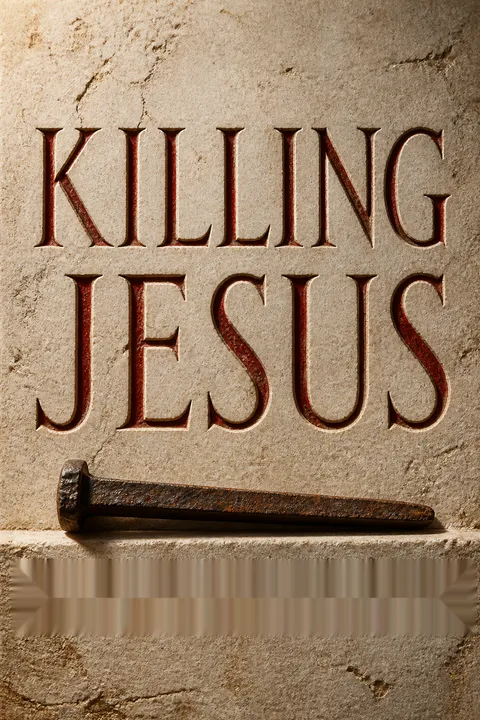


Key Takeaways
Read Jesus's execution as the collision of empire, Temple power, and dissent
Power sets the stage. The book begins with a world where rulers treat threats to authority as threats to survival. Herod orders the killing of Bethlehem's young boys after hearing that a rival king may have been born. Centuries of Roman conflict form the backdrop: Julius Caesar crosses the Rubicon, the Republic gives way to imperial rule, and Caesar Augustus's successor, Tiberius, governs through fear. Judea is a small, strategically useful territory inside that system, with local rulers dependent on Rome.
A life under pressure. Jesus's teaching attracts ordinary people but alarms both Roman officials and Temple leaders. His execution is presented not as an isolated tragedy, but as the outcome of overlapping political and religious interests. The authors reconstruct events from the Gospels and classical sources, while acknowledging gaps in the record.
The strongest organizing idea is that Jesus's death cannot be understood apart from the machinery around him. The political history is not background decoration: it explains why a teacher with no army could still appear dangerous. The book also makes clear that coercion need not come from a single villain. Rulers, administrators, and religious authorities can each protect their own position while contributing to one outcome. The vivid opening, however, sometimes gives reconstructed scenes the feel of eyewitness certainty, so readers should distinguish the book's narrative confidence from the strength of its evidence.
Rome ruled Judea through local elites, taxes, and carefully managed fear
Occupation had local faces. Rome did not administer every village directly. Herod the Great and, after his death, his sons held authority under Roman supervision. When Rome judged Herod's son Archelaus unfit, it made Judea a province governed by a Roman prefect. In Galilee, Herod Antipas taxed the population and financed grand building projects, including the cities of Sepphoris and Tiberias.
Taxes touched daily life. Farmers paid in crops or money, while fishermen faced fees on their catch and access to ports. Debt could cost families land, homes, or even children sold into servitude. Rebellions followed, and Roman force answered them. The arrangement kept local rulers useful to Rome, while making ordinary people experience imperial power through the tax collector, the mercenary, and the threat of crucifixion.
This account makes occupation tangible by tracing power from emperor to prefect, local ruler, and tax collector. The pressure is economic as well as military: households can be impoverished without a soldier appearing at the door. The arrangement also helps explain why religious language and political hope were inseparable for many Jews. Still, the book's dramatic portrayal of exploitation can make a diverse society seem uniformly desperate. Its own examples show variation in wealth, work, and political response, so hardship should be understood as widespread pressure, not a single shared experience.
A crowd expecting a warrior king struggled to hear Jesus's nonviolent kingdom
Messiah meant deliverance. Many Jews hoped for an anointed king who would free them from Roman rule, echoing the memory of King David. John the Baptist's preaching of a coming ruler drew crowds in a population hungry for change. Jesus's followers, too, often expected political victory. On the road to Jerusalem, two disciples seek prominent places in the regime they assume is coming.
Jesus offers a different answer. He speaks of God's kingdom, service, forgiveness, and love, and tells Pilate that his kingdom is not of this world. Yet he rides into Jerusalem on a donkey, an act the crowd reads as a public fulfillment of prophecy and a claim to kingship. The book's central tension is that Jesus accepts the title while rejecting the political and military meaning many attach to it.
The gap between what Jesus says and what listeners hope to hear gives the narrative much of its force. A symbol can gather a crowd while leaving the crowd divided about its meaning. The disciples' ambitions make that mismatch especially human: proximity to a revered teacher does not guarantee understanding. The book is persuasive in showing how political expectations shape religious interpretation. At the same time, a reader should not assume that every follower held the same expectation or that Jesus's statements had only one possible meaning in their historical setting.
Make compassion, not religious performance, the test of faith
Jesus centers moral conduct. In the Sermon on the Mount, he blesses the poor, the meek, the merciful, and the peacemakers, then teaches a prayer concerned with daily bread, debts, and temptation. His summary of religious duty emphasizes love of God and neighbor rather than mastery of a long list of rules. He also challenges the idea that outward purity alone makes someone righteous.
The overlooked become examples. When Mary of Magdala, a woman known as a prostitute, weeps over Jesus's feet and anoints them, he treats her with dignity and says her faith has saved her. He also chooses Matthew, a tax collector despised for collecting revenue under Roman rule, as a disciple. The book presents these encounters as evidence that spiritual worth is not reserved for the respectable.
The narrative ties Jesus's ethical teaching to specific social boundaries. The tax collector and the stigmatized woman are not merely colorful side characters; their welcome tests whether religious values apply beyond the honored and familiar. That makes the message concrete. It also complicates any simple contrast between faith and rules, since Jesus himself argues from Scripture and religious tradition. The more precise distinction is between rules used to serve moral life and rules used to protect status. The book could say more about how those traditions were understood by people outside its central conflict.
Expose the interests hiding beneath claims of sacred authority
The Temple was also an economy. During Passover, pilgrims exchanged Roman coins for Temple-approved currency and bought animals for sacrifice. The book describes high priests as profiting from exchange fees, Temple loans, and the livestock trade. Jesus's action against the money changers therefore targets both what he sees as corruption and the economic arrangements supporting the religious establishment.
Authority feels threatened. Jesus's teaching also challenges the Pharisees' role as interpreters of religious law. Their disputes with him focus on practices such as hand washing and Sabbath observance, while he argues that inner motives and acts of mercy matter more. The authors portray the leaders' response as a blend of theological disagreement, fear of losing influence, and concern that Rome may punish unrest. They regard Jesus as dangerous partly because his popularity puts their position at risk.
The book's most useful political insight is that ideals and material interests can coexist inside the same institution. A sacred setting does not make its economic arrangements immune from scrutiny, and sincere belief does not prevent leaders from protecting privilege. That is a sharper claim than simply calling the authorities hypocrites. The account also benefits from recognizing several motives at once: theological dispute, public order, and money. Its limitation is that it often infers private motives from public actions, which makes a compelling story but cannot establish every leader's interior reasoning.
Judas's betrayal grew from money, ambition, and a misread messianic mission
The bargain is explicit. Judas Iscariot agrees to help the Temple authorities arrest Jesus in exchange for thirty silver coins, which the book equates to about four months' wages. The authors also portray Judas as having stolen from the disciples' shared funds. His betrayal is not framed as a sudden impulse but as a choice made by someone who has placed material gain and self-interest above loyalty.
His expectation may be mistaken. The book suggests Judas thinks the arrest will force Jesus to reveal his power and confirm his role as the political Messiah. If Jesus is truly the Christ, Judas reasons, he can escape. This motive is an interpretation of Judas's thinking, not something the text can independently verify. The episode shows how a follower can share a leader's fame while misunderstanding the leader's purpose.
Judas's story is more revealing when read as a collision between belief and ambition than as a cartoon portrait of evil. In the book's reconstruction, he wants Jesus to deliver the kind of power he expects, and he treats the arrest as a calculated gamble. That reading gives betrayal an intelligible human logic without excusing it. It also highlights a broader danger in movements built around charismatic leaders: followers may project their own goals onto a message. The precise motive remains uncertain, and the authors' confident psychological account should be treated as narrative inference.
When institutions share power, each can pass responsibility for injustice
The case moves between authorities. The Sanhedrin, the Jewish religious court of seventy-one members, condemns Jesus for blasphemy but lacks Roman authority to execute him. Pontius Pilate, the Roman prefect, holds that power. He sends Jesus to Herod Antipas, the ruler of Galilee, who returns him without a sentence. Pilate then offers the crowd a choice between Jesus and Barabbas, a prisoner accused of violence.
The choices remain deliberate. The book depicts the nighttime interrogation and hurried proceedings as violations of Jewish legal norms, while Pilate attempts to avoid the political consequences of either release or execution. Yet his reluctance does not erase his authority: he ultimately orders the punishment. The sequence shows how institutions can transfer a prisoner, cite procedure, and shift blame, while the people making consequential decisions remain part of the outcome.
This chain of hearings shows responsibility being distributed without disappearing. Each authority faces a different constraint, but each also makes choices that narrow Jesus's chance of survival. That is a useful distinction between structural pressure and personal agency: systems shape decisions, yet they do not make decisions by themselves. The account's moral clarity is effective, though its legal reconstruction should be read with care because the Gospels provide different details and later writers interpret the proceedings differently. The narrative is strongest when it exposes the political incentives, not when it presents every procedural claim as settled fact.
Crucifixion was public terror, designed to punish bodies and warn spectators
The sentence was a message. The Romans used crucifixion for people they considered threats, especially those of low status. In the book's account, the condemned were flogged, forced to carry a crossbeam, and exposed to prolonged suffering in public. The execution site outside Jerusalem's walls made punishment visible to people entering and leaving the city. The sign above Jesus names him king of the Jews, turning the claim that alarmed authorities into part of the spectacle.
Jesus's death has physical detail. The authors describe soldiers nailing him to the cross, mocking him, and remaining nearby until he dies. His mother and Mary Magdalene watch. Joseph of Arimathea and Nicodemus later obtain permission to bury him before the Sabbath. The book uses this sequence to emphasize that crucifixion was not just killing, but degradation intended to deter imitation.
The public nature of crucifixion is essential to understanding its political function. The punishment addresses two audiences: the condemned person and everyone who might consider challenging the state. That makes the cross a tool of communication as much as a method of execution. The detailed bodily description can make the scene immediate, but it also risks giving speculative reconstruction the authority of forensic certainty. The narrative is most dependable when it explains the punishment's role in Roman rule; claims about precise mechanics and moment-by-moment experience require more caution.
A teacher without armies or institutions built a movement through witness and memory
Jesus had little infrastructure. The authors stress that he had no government, corporation, or army behind him. His small circle of disciples depended on charity for food and shelter, and many followers were ordinary workers. During his lifetime, his message spread through public teaching, personal encounters, and the stories people carried between towns.
His followers change after his death. The Gospels say that Jesus's body was found missing and that he appeared to followers after his death. The book does not present belief in the resurrection as something historical method can settle. It does note that the disciples, formerly frightened and scattered, became active preachers. Roman and other ancient writers later refer to Jesus or his followers, while Christianity eventually gained legal status in the Roman Empire. The movement's historical reach is clear even where its theological claims remain matters of faith.
The contrast between scarce resources and extraordinary reach is a compelling closing lens. The book invites readers to notice that ideas can travel through relationships and testimony rather than formal machinery. Yet influence alone cannot verify the supernatural explanation offered by believers. Historical evidence can trace communities, texts, and changing public status; it cannot use those facts to prove a miracle. Keeping those questions distinct respects both the movement's historical importance and the difference between documenting belief and affirming its truth.
Analysis
Killing Jesus is a popular history organized as a three-act narrative: the political world that shaped Jesus, the emergence of his public ministry, and the arrest, trial, and execution that end it. Its central interpretive move is to make the crucifixion legible as a political event without reducing Jesus to a political rebel. Rome's appetite for order, local rulers' dependence on imperial favor, and Temple leaders' preservation of status converge around a teacher whose symbolic authority is difficult to control.
The book's strength is contextualization. Taxation, pilgrimage, Temple commerce, Roman occupation, and public execution give the familiar Gospel episodes social and political stakes. The result is a vivid explanation of why a seemingly peaceful preacher could trouble authorities. Its focus on ordinary people, including fishermen, debtors, women, and tax collectors, also keeps the narrative from becoming only a succession of rulers and elite conspiracies.
Its weakness is the boundary between historical evidence and dramatic reconstruction. The authors acknowledge gaps and differing Gospel accounts, but they often narrate private conversations, motives, and physical details as though a camera had recorded them. The ancient sources do not provide that level of access. Some material is historical context, some comes from Christian texts written after the events, and some is plausible inference. Those categories deserve more visible separation. The book's confident language can make contested chronology and details feel more certain than they are.
That tension is especially important around resurrection. The book describes the missing body and the followers' later testimony, then declines to make a religious argument. This is a productive distinction: historians can examine claims, communities, and consequences, while the truth of a miracle exceeds what ordinary historical methods can demonstrate. Read with that distinction in mind, the book offers a memorable account of how power, faith, and public memory shaped the story of Jesus, while its most cinematic scenes should be treated as interpretation rather than transcript.
Review Summary
Killing Jesus received mixed reviews, with many praising its historical context and engaging writing style. Critics appreciated the background on Roman politics and Jewish culture. Some found it informative and eye-opening, while others criticized its lack of scholarly rigor and reliance on traditional interpretations. Religious readers had varying reactions, with some finding it respectful and others questioning its portrayal of Jesus. Overall, readers valued the book's accessibility and its ability to provide a fresh perspective on a well-known story, despite some concerns about accuracy and theological implications.
People Also Read






Glossary
Sanhedrin
Jewish religious courtThe Sanhedrin was the leading Jewish religious and judicial council in Jerusalem. The book describes it as a body of seventy-one members, including high priests and other authorities, with power to apply Jewish religious law. Under Roman rule, it could not carry out a death sentence without the Roman governor's approval.
tetrarch
Subordinate regional rulerA tetrarch was a local ruler subordinate to Roman authority. After Herod the Great's death, his territory was divided among family members, and Herod Antipas governed Galilee as a tetrarch. The title reflects a delegated position within Rome's political order, not independence from the emperor.
quaternio
Four-soldier execution squadA quaternio was the four-soldier team assigned to carry out a Roman crucifixion. In the book's description, its members handled the condemned person and the physical work of the execution, while a centurion supervised them. The arrangement also ensured that soldiers observed one another's conduct during the punishment.
exactor mortis
Execution supervisorThe exactor mortis was the centurion overseeing a Roman execution detail. In the book's account of Jesus's crucifixion, he directs the soldiers, monitors the condemned person's condition, and verifies death. The title emphasizes that crucifixion was an organized military procedure, not an informal act of violence.
verberatio
Roman scourgingVerberatio was the Roman punishment of scourging, in which a condemned person was struck with a multi-thonged whip. The book presents it as a severe physical punishment that could precede crucifixion. Pilate orders Jesus scourged before deciding to hand him over for execution, and the narrative stresses that the beating leaves him gravely weakened.
About the Author
Other books by Bill O'Reilly





Download PDF
Download EPUB
.epub digital book format is ideal for reading ebooks on phones, tablets, and e-readers.








