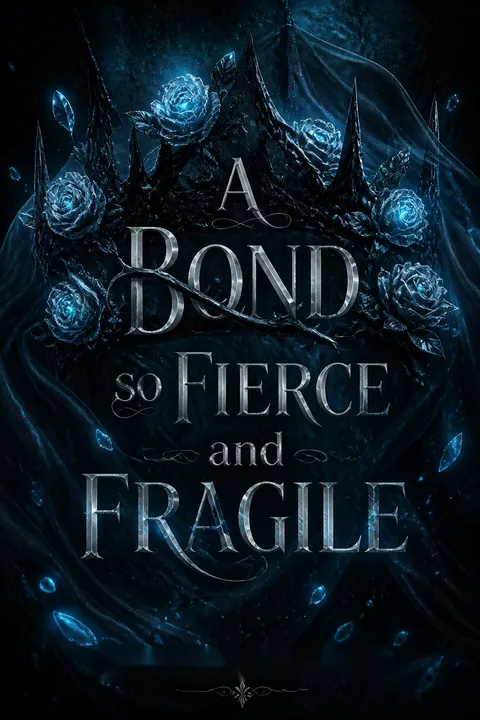


Plot Summary
The Home That Lies
Captive aboard King Rioner’s ship, Lessia wakes inside a nightmare dressed as her childhood home. Her father accuses her of killing her mother and sister, then drives a sword into Merrick, the mate she loves. The grief nearly tips her into vengeance, but Merrick’s voice urges her to focus.
She recognizes the scene as a mind attack when its details contradict what she knows, then nearly strangles Rioner with her magic before realizing her father is real and gasping for air. Lessia forces the spell to release him. The illusion collapses, revealing her family and friends chained in a ship’s cabin with Rioner and his guards. The king threatens to torture them to break her.
The opening makes perception itself a battleground. Rioner does not merely frighten Lessia with invented loss; he recruits her existing guilt and grief, making her nearly repeat the violence she fears defines her. Her recovery depends on recognizing contradiction and accepting help from Merrick’s remembered voice. The crucial act is not an attack but restraint: she stops her magic before it kills her father. In a story where power can seize minds and bodies, self-command becomes an ethical choice, not simply a tactical advantage.
A Scream as Bait
Lessia has already decided that staying near Rioner may be her only chance to fulfill the prophecy, so she keeps her plan from the prisoners around her. To bring the king into the cabin, she screams as if the cellar tortures have broken her. Rioner arrives, but his guards answer the noise with blows that break her nose and leave her disoriented.
Her father and sister protest as the king orders the prisoners punished, then singles Lessia out for Torkher, the guard who has terrorized her before. Days of beatings follow. Blindfolded and chained, Lessia tries to convince the guards she will surrender, but their distrust keeps the violence going. Rioner’s order to break her mind and body turns her staged collapse into genuine danger.
Lessia’s performance is a form of agency, but it uses the very signs of helplessness that her captors expect from her. That makes resistance costly: she must let others believe she has surrendered while concealing the purpose behind it. Her family’s presence intensifies the moral trap, since every blow is meant to make her choose between her own survival and theirs. The strategy also exposes the limits of deception under coercion. Once the guards control food, movement, and sight, Lessia cannot dictate how convincingly she appears broken.
Her Father’s Refusal
Rioner gives Alarin, Lessia’s father, an antidote that restores his magic, then demands he break the mate bond between Lessia and Merrick. Alarin refuses, even as the king uses the threat of further torture to pressure him. When Rioner cuts his brother’s throat instead, Lessia initially believes the death is another illusion.
She accepts it only after touching her father’s cold hand. With her mind and body battered, she decides the prophecy cannot wait. To free herself from her restraints, she crushes her own hand against an iron fitting until it slips through the cuff, then crawls from the cabin and takes a sword. Her escape costs her more pain, but it gives her a chance to reach Rioner.
Alarin’s refusal gives Lessia a final model of resistance that is neither triumphant nor painless. He cannot save himself, but he can refuse to make his daughter’s deepest bond into a weapon for Rioner. Lessia follows that example in a harsher register, turning bodily injury into a means of escape. The scene complicates the idea that survival always means preserving the body intact. Here, she spends part of her physical self to reclaim the capacity to choose, while grief removes the last illusion that someone else can carry the decision for her.
The Death Whisperer Arrives
Merrick, Raine, and Ardow reach Rioner’s ship on the wyvern Ydren just as Lessia staggers onto the deck. Merrick shelters her while Raine and Ardow prepare for the guards, then kills the first attackers with frightening speed. Torkher taunts Lessia about the abuse he inflicted, but she claims the right to take revenge on him herself.
As the larger fight begins, Lessia releases a fire-wielding guard from Rioner’s blood oath rather than kill him. Rioner reveals that the prophecy binds Lessia’s death to his own. Before anyone can act, a surge of water sweeps the king from the ship. Lessia then kills Torkher, but the revelation leaves Merrick shaken: the king’s apparent defeat may still mean Lessia’s death.
The rescue restores physical proximity without undoing what captivity has done. Merrick can fight the guards, but he cannot make Lessia’s injuries or the prophecy disappear. Her decision to free the fire wielder marks a sharp contrast with Rioner’s rule: she refuses to confuse obedience with loyalty. Yet the king’s claim about their linked deaths changes the meaning of victory. Saving Lessia now seems inseparable from confronting the fate she has concealed, and Merrick’s protective instinct must contend with her right to act.
The Stone Chooses Lessia
After the group gives Alarin a Fae farewell at sea, Lessia confides in Loche, who accepts that she loves Merrick and returns to the duties waiting in Ellow. Lessia also asks Cedar, a young noble Fae freed from Rioner’s oath, to persuade his influential father and other nobles to stay out of the coming war. Meanwhile, the sea stone Loche pressed into Lessia’s hand merges with her when she touches the water.
It allows her to reach Ydren, who helped save the prisoners. The stone recognizes Lessia as worthy, but the other wyverns distrust her Rantzier blood. Their elder, Auphore, agrees to bring the wyverns as witnesses, not fighters, if Ydren returns to her family. The alliance remains uncertain, but Lessia accepts its terms.
The stone offers Lessia authority, yet the scene refuses to make authority equivalent to consent. She can reach the wyverns, but she cannot make them trust her history or erase the way their kind were exploited by Fae. Auphore’s condition asks her to respect Ydren’s belonging rather than treat the younger wyvern as military property. In parallel, Lessia recruits Cedar through persuasion instead of compulsion. Her leadership begins to differ from Rioner’s precisely because it accepts limits and leaves other people room to choose.
Loche Meets Meyah
While Lessia’s party seeks the wyverns, Loche meets the rebel leader, Meyah, who looks like the mother who raised him and speaks with the same cruelty. A magic-blocking Fae prevents her from shifting, and she uses the meeting to reveal that she gave birth to Loche, abandoned him, and arranged his upbringing through Geyia to place him near power.
She also admits she shaped his political path for the rebellion. Meyah demands that Loche kneel and surrender Ellow. He refuses. When she blinds him and her fighters attack, Loche nearly gives in until Soria reminds him that Lessia is still fighting. The group rallies, Kerym unleashes his power, and Meyah escapes in eagle form after Loche wounds her with a thrown knife.
Meyah attacks Loche by rewriting his past as another person’s strategy. Her revelation threatens not only his sense of family but the legitimacy of the choices that brought him to leadership. His resistance is therefore more than refusal to surrender a city; he must decide whether manipulation has emptied his actions of meaning. Soria’s intervention redirects him toward the consequences of giving up, while Kerym’s power creates a way out. Meyah escapes, but Loche no longer accepts her account as the only explanation for who he is.
Auphore’s Reluctant Promise
At the hidden land where the wyverns live, the creatures surround Lessia’s ship with dazzling colors and confusing sounds. She realizes the stone has linked her to their minds and uses that connection to make them appear and listen. Their elder, Auphore, accuses her of wielding power like her ancestors, while Merrick defends her.
Lessia admits that Fae have abused the wyverns and asks for help without pretending the harm never happened. Auphore refuses to fight, but agrees to bring the wyverns as witnesses if Ydren returns to her family. Ydren chooses to go with them for the moment. The decision gives Lessia a visible show of support, but leaves her short of the force she needs against both Rioner and the rebels.
The encounter tests whether Lessia can distinguish access from entitlement. The soul stone lets her compel attention, an act that risks repeating the very abuses she condemns. Auphore’s anger forces her to hear the wyverns as a political community rather than a weapon waiting to be claimed. His refusal is not a rejection of Lessia alone; it reflects inherited distrust. By accepting a limited alliance and letting Ydren return, she demonstrates that leadership may require tolerating an answer that does not meet immediate strategic needs.
The Mirrors Name the Cost
At the Lakes of Mirrors, the party is separated and tested by reflections of their fears. Lessia meets Evrene, who explains that the prophecy required her to remain hidden from Rioner, experience love, and endure pain without turning toward cruelty or power. Evrene confirms that Lessia’s death is near, though she may have some of her wishes.
Merrick meets Preysaih, who confirms that Lessia must die but admits there is a way to save her, with severe consequences. To test Merrick’s resolve, the god shows him a vision of Lessia choosing Loche. Merrick still accepts the possible cost, valuing her life above being loved in return. The gods provide no easy escape, only a dangerous possibility that neither can yet understand.
The gods’ explanation gives Lessia’s suffering a design, but not a comforting justification. Evrene presents love as what keeps Lessia from becoming like Rioner, yet that framing risks turning every wound into a necessary lesson. Merrick’s test reveals a different danger: devotion can become self-erasure when he is willing to accept any consequence, even one that may harm them both. His imagined willingness to let Lessia choose Loche is a genuine relinquishment of possession, but it does not resolve whether saving her at any cost is another form of control.
Raine Loses the Flask
Zharra, the god of life, tells Frelina she may die without finding love, friendship, or the experiences she longs for. The same trial strips Raine of his ability to rely on alcohol, the numbing habit he uses to survive grief over his mate, Solana.
When Raine’s distress overwhelms him, Frelina refuses to leave him alone. She offers herself as a willing distraction, and they become intimate, each seeking comfort without promising a future.
After the group escapes the mirrored realm, Raine remains sober and distant, while Frelina insists she wants to face her remaining time rather than hide from it. Their connection is imperfect and bruised by fear, but Frelina has made clear that she wants him to treat her as a friend, not a temporary remedy.
Frelina’s first intimacy grows from an explicit need for contact, not a conventional promise of romance. That distinction gives her agency, but it also makes the arrangement emotionally precarious: she asks for companionship while anticipating that she may not receive lasting attachment. Raine’s sobriety removes his main defense before he has learned another way to bear grief. Their bond develops through care and conflict rather than instant healing. The scene also gives Frelina a life beyond her sister’s prophecy, centered on her own hunger for experience and recognition.
Merrick Chooses Hope
The trials leave the travelers raw, but Merrick argues that the gods’ tests were meant to make them surrender hope, not accept fate as settled. His magic and Raine’s ability to drink return after they leave the mirrored waters.
Frelina and Raine struggle with the intimacy they began, and Raine briefly tries to push her away before admitting that his guilt is not a reason to deny their friendship. Back among the wyverns, Ydren chooses to travel with Lessia’s group, though she remains apart from her relatives.
The survivors then sail for Ellow, carrying both the wyverns’ limited support and the gods’ dangerous hint that Lessia may be saved. Merrick insists the possibility is real; Lessia lets him hold on to it, even as she doubts it herself.
Hope here is not evidence that danger has passed. Merrick chooses it because despair would make action impossible, while Lessia allows him that choice without claiming certainty she does not feel. Raine and Frelina face a related ethical problem: whether closeness is dishonest when neither can guarantee what follows. Their renewed friendship depends on speaking plainly about limits. The return of magic and drinking ability also shows the gods’ tests were temporary interventions, but the emotional consequences remain. The group can leave the place; it cannot simply leave what the place revealed.
Allies Choose Their Sides
On the way back to Ellow, Lessia asks Cedar to recruit noble families against Rioner’s war, while Loche gathers human ships and fighters. The half-Fae Ledger challenges Loche for failing his people, prompting the regent to acknowledge his mistakes and promise Ellow will change.
Soria and Pellie reveal that they are guardians of magical balance, though their powers cannot protect the fleet in this land. At the same time, Iviry, a Fae commander who fled Rioner after protecting half-Fae children, recognizes Loche as her mate.
Loche is too overwhelmed to answer her feelings, but he does not reject her. These alliances widen the resistance beyond the original crew, though the wyverns still refuse to fight and the approaching war offers little time to build trust.
The coalition forms through accountability as much as military recruitment. Ledger’s challenge makes Loche face the people whose exclusion his government tolerated, and Loche’s willingness to admit failure gives his promise more weight than a polished declaration would. The guardians’ hidden identity complicates the group’s understanding of power, while Iviry’s recognition introduces intimacy into a moment dominated by political duty. None of these developments guarantees unity. They create obligations that must be tested under pressure, especially when the resistance has little time to repair the inequalities that helped produce the conflict.
A Feast Before Battle
Before battle, the fleet shares food, music, and dancing, making a brief community out of people who have distrusted one another. Lessia and Loche apologize for the ways they hurt each other, and he tells her he is glad Merrick is beside her. Amalise and Zaddock move toward a romance neither is ready to name, while Frelina and Raine negotiate the uncertain intimacy between them.
Lessia then sees herself in a mirror and briefly confronts the dead and endangered faces she fears losing. Merrick stays with her as she releases the grief she has been holding back. The respite ends when rebel ships arrive, followed by Rioner’s fleet. The wyverns assemble beyond the ships, but their presence does not guarantee they will intervene.
The feast is not a pause from the plot so much as a measure of what the characters stand to lose. Shared meals and dances create a fragile social world across human, Fae, and half-Fae divisions, while private apologies address injuries that military victory alone cannot repair. Lessia’s reaction to the mirror shows how celebration can coexist with anticipatory grief: happiness is real, but she experiences it under the pressure of its possible brevity. Merrick’s support does not erase that fear. He gives her space to feel it without converting comfort into a promise he cannot keep.
The Birds Strike First
The battle begins when rebel ships race toward Loche’s fleet and a black cloud of enormous birds descends on the cliff above the bay. The attackers drop weapons and debris onto the defenders, turning the high ground into a slaughter. Frelina, assigned to watch Lessia rather than fight, becomes trapped against the cliff by a bird and loses her daggers.
Down below, Merrick holds Lessia on the ship, insisting they cannot abandon the line without destroying the fragile hope keeping Loche’s people together. The rebels board, and Merrick’s death magic kills many, though he must struggle to keep it from reaching allies. Lessia fights beside him, learning in the crush of battle how quickly an opponent’s fear can become a body on the deck.
The first attack splits the battle into two kinds of vulnerability. Frelina is exposed on the cliff without the training or weapons to meet a large shifter, while Lessia is physically beside Merrick but emotionally unprepared for the speed of killing. Merrick’s magic makes him an asset and a danger to his own side, so his leadership requires restraint as much as force. His insistence that Lessia stay with the line is strategic, but it also reveals how personal protection and collective responsibility now collide. The battle turns every previous promise into a decision made under immediate threat.
Thissian Takes the Bite
As fighting spreads across the ships, Lessia is nearly killed by a giant snake while trying to reach Loche. Thissian throws himself between them and the creature, taking the fatal attack meant for her. Merrick kills the snake, but Thissian dies in Lessia’s arms, leaving Merrick and Kerym devastated. On the cliff, Frelina is mauled by a bird and nearly strangled by a rebel who blames the Rantzier family for past abuses.
Raine reaches her, revives her, and holds her while she cries. He admits he thought he had lost her, and they choose closeness again without certainty about tomorrow. Zaddock carries the injured Amalise to safety. The survivors regroup, but the losses show that their defensive position is collapsing.
Thissian’s sacrifice and Frelina’s rescue expose two different responses to vulnerability. Thissian acts to keep Lessia alive, accepting a cost that his friends cannot undo. Raine, by contrast, arrives after Frelina has been nearly lost and must help her return to the body and the present. Their intimacy grows amid survival rather than replacing it. The sequence also makes inherited grievance tangible: the rebel who attacks Frelina sees her family name as a symbol of violence, even though she did not commit it. The war’s moral injuries are distributed unevenly, then answered by individual choices.
Lessia Rides the Wave
Rioner arrives with the Oakgards’ Fae and raises a vast wave to crush the ships trapped in a narrow inlet. Lessia sees that the wyverns cannot reach the fleet in time. When Ydren signals her, Lessia uses her magic to make Merrick release her, then climbs onto the wyvern and races toward Rioner’s gilded ship.
She throws the ruby dagger Merrick gave her into the king’s chest, killing him as the wave collapses back into the sea. Rioner’s dagger, the one her father gave her, strikes her in the chest. Ydren carries Lessia back to Merrick, who gathers her as her friends surround them. Lessia speaks to the people she loves, then stops breathing. Her victory saves the trapped fleet, but appears to fulfill the prophecy’s cost.
Lessia’s final charge is both an act of agency and a devastating repetition of the story’s central coercion. She uses her magic to make Merrick release her, turning a gift of intimacy into a means of escape from his protection. The action saves others, but it also exacts the price she has feared. Her victory is not framed as uncomplicated triumph: Rioner dies, yet Lessia appears to die with him, and the people she saves must witness the loss. The scene holds two truths at once, refusing to make sacrifice either meaningless or easy to celebrate.
The Dead Kneel
With Lessia apparently dead, Merrick refuses to accept the loss. He releases his hold on the barrier separating living and dead, offering the souls he commands freedom if they help him cross. Their power carries him into a strange in-between place, where he finds Lessia and pulls her back through the light. The dagger falls from her chest, and she wakes in his arms.
Around them, the gathered souls kneel. Soria and Pellie identify Lessia as a veiled queen whose rise will be aided by a soulbinder, a revelation that changes the meaning of Merrick’s gift and Lessia’s place in the world. The book ends with Lessia alive, but the larger war and the consequences of Merrick’s bargain remain unresolved.
Merrick’s rescue breaks the apparent finality of the prophecy, but it does not make his choice consequence-free. He bargains with the dead by relinquishing control over a power he has spent centuries containing. The return therefore transforms both lovers: Lessia is no longer merely the person fate marked for sacrifice, and Merrick is no longer only the keeper of the boundary. The kneeling souls turn private devotion into public authority, while the veiled queen and soulbinder language opens a new political and metaphysical question. Survival arrives as a threshold, not a settled ending.
Analysis
The novel’s central conflict is not simply between a cruel king and a rightful challenger. It is between forms of power that erase choice and forms that make collective action possible. Rioner relies on blood oaths, torture, and engineered fear; Lessia can also compel minds, but her encounters with the wyverns force her to confront how easily benevolent intentions can become domination. Her moral authority grows when she accepts refusal, frees a sworn guard, and asks allies to persuade rather than command.
The romance tests this distinction at intimate scale. Merrick’s love makes him willing to sacrifice almost anything for Lessia, yet his instinct to keep her safe can conflict with her agency. Lessia’s final command that he release her is therefore not a rejection of love but an insistence that love cannot mean choosing for her. Merrick’s eventual bargain with the dead risks reproducing the same problem in another form: he saves her through an act whose consequences neither of them can control. The relationship remains powerful because the book does not pretend devotion automatically makes a choice ethical.
Grief also shapes the political world. Raine’s drinking, Frelina’s fear of dying without experience, Loche’s shame about Ellow, and Kerym’s and Thissian’s losses show how people develop different defenses against pain. The battle strips away those defenses without making suffering noble. Its deaths are wasteful, and the surviving characters must continue carrying them. The final return from death offers possibility, not closure. Lessia’s new designation as a veiled queen and Merrick’s emergence as a soulbinder imply that personal survival will now alter the balance of power. The ending’s real question is whether a world built on coercion can be remade without using love, grief, or prophecy as another means of control.
Review Summary
People Also Read
Characters
Elessia Rantzier, called Lessia
The reluctant standard-bearerA half-Fae raised in isolation, Lessia enters the story carrying years of trauma, an instinctive sense of guilt, and a stubborn belief that people can choose kindness. Her magic can influence minds, but she is wary of power that overrides another person’s will. Her bond with Merrick gives her intimacy and trust, while her complicated history with Loche shows that love and gratitude are not the same as obligation. Lessia’s defining struggle is not simply whether she will survive, but whether she can act for others without surrendering her own choices. Her compassion is active and political: she tries to build alliances across groups that have been taught to fear one another.
Merrick Morshold
The keeper of soulsKnown as the Death Whisperer, Merrick commands the souls of the dead and has spent centuries wary of what his magic might do if he loses control. His hard manner conceals a capacity for tenderness that he shows most readily to Lessia and his old companions. He loves Lessia fiercely, but his deepest challenge is learning to protect her without treating protection as ownership. His history with Rioner has trained him to expect cruelty from power, while his bond with Lessia gives him a reason to imagine a future beyond survival. Merrick’s loyalty is a strength and a danger: he can make nearly any sacrifice, sometimes before considering its cost.
Frelina Rantzier
The sheltered younger sisterLessia’s younger sister grew up on the family’s remote island, protected from the wider world but also denied many chances to discover it. Frelina is curious, emotionally perceptive, and more willing than she first appears to challenge the formidable people around her. Her mind can encounter other people’s memories and feelings, a gift that makes empathy powerful but exhausting. She wants friendship, desire, and experience for herself, not merely a supporting role in Lessia’s struggle. Her connection with Raine begins in grief and uncertainty, and her blunt honesty helps draw him out of isolation without pretending his past can be erased.
Loche
Ellow’s burdened regentThe human regent of Ellow is a capable naval leader shaped by an abusive childhood and the suspicion of people who have never fully accepted him. His relationship with Lessia begins in political deception and genuine tenderness, leaving him to distinguish duty from possession after she chooses Merrick. Loche is strategic, guarded, and accustomed to presenting confidence even when he feels unworthy of power. He wants to protect Ellow, but his growth depends on recognizing the half-Fae and other marginalized people his government has failed. His bond with his soldiers and his complicated connection to Iviry test whether he can lead while allowing others to see his uncertainty.
Rioner
The ruthless Fae kingRioner rules Vastala through intimidation, manipulation, and a particular hatred of half-Fae. He sees Lessia as both a threat to his throne and a piece of a prophecy he is determined to control. His water magic gives him formidable power, but his greatest weapon is his willingness to turn family bonds and private grief into instruments of coercion. Rioner regards mercy as weakness and loyalty as something to be forced, a worldview that sets him against Lessia’s effort to build consent across divided peoples.
Alarin
The protective fatherLessia and Frelina’s father tried to shelter his daughters from a hostile Fae society after family tragedy left him grieving and fearful. His love is sincere, but his protectiveness also kept the sisters isolated from knowledge and choices they needed. He carries the burden of knowing his brother is dangerous and struggles to balance paternal care with political danger. Alarin’s relationship with his daughters is tender, imperfect, and shaped by regret.
Raine
The grieving mind-benderA centuries-old Fae warrior and skilled mind-bender, Raine masks grief with alcohol and a dry, provocative humor. His memories reveal a deep capacity for love, though loss has made him reluctant to risk attachment again. He is Merrick’s longtime friend and understands the danger of letting his magic consume him. Frelina challenges his numbness and insists on being treated as a person, not a temporary distraction. Raine’s movement toward honesty depends on facing pain rather than making it disappear.
Ydren
The exiled sea wyvernYdren is a young wyvern rescued by Raine after her family was taken in an earlier conflict. She has spent much of her life apart from her kind, making her bond with Lessia especially immediate. Brave, loyal, and stubborn, Ydren wants both belonging and the chance to protect the people she loves. Her choices reveal that wyverns are not simply magical creatures to be summoned, but a people with their own bonds and authority.
Kerym
The fierce Siphon TwinOne of the Siphon Twins, Kerym is a formidable Fae warrior whose humor and confidence cover deep grief. He is close to his brother Thissian and becomes protective of Lessia and Frelina. His magic allows him to drain energy, making him a powerful combatant, but grief can overwhelm his ability to act. Kerym’s fierce loyalty is both a source of strength and a measure of how much he has lost.
Thissian
The sorrowful twinKerym’s twin is a quiet, compassionate warrior who feels the cost of death more openly than his companions. Thissian’s sensitivity is not passivity; he is observant, brave, and willing to bear pain for those he loves. His bond with Kerym shapes his decisions, while his own history of loss makes him unusually attuned to the grief of others.
Meyah
The rebel commanderMeyah leads a rebellion built from people who have endured the violence and exclusion of established rulers. She is shrewd, charismatic, and skilled at turning resentment into political force. Her willingness to exploit personal vulnerability makes her dangerous even when her cause draws on real grievances. Meyah’s methods place her in opposition to Lessia’s hope for a coalition that does not reproduce the cruelty it seeks to overthrow.
Amalise
Lessia’s fearless friendA human and one of Lessia’s closest friends, Amalise is quick-witted, daring, and openly skeptical of Fae power. She refuses to be treated as fragile, even when Zaddock tries to protect her from danger. Her loyalty to Lessia is practical as well as emotional: she is willing to take risks and act decisively when friends are threatened. Beneath her jokes, she carries pain from earlier losses.
Zaddock
The watchful soldierZaddock serves Loche as a disciplined guard and capable fighter. His instinct is to protect those he cares about, particularly Amalise, though his protectiveness can become controlling. He is loyal to Loche and proves willing to stand in danger rather than abandon his friends. His reserve makes his affection easy to miss until he acts.
Ardow
The remorseful allyArdow is a human ally whose earlier decisions helped deepen the danger surrounding Lessia and her companions. He is burdened by guilt but tries to turn remorse into concrete repair. His relationship with Venko gives him an anchor, and his loyalty to Lessia pushes him toward risks he once might have avoided.
Venko
The steadfast merchantA merchant who travels with the group, Venko offers practical support, resources, and a steady presence. His affection for Ardow is openly tender, and he supports the people he loves without demanding that they hide their fear. Though not a warrior, his contributions help keep the coalition equipped and moving.
Auphore
The wyvern elderAuphore is the elder who leads the wyverns and remembers the long history of Fae exploitation. He is proud, cautious, and unwilling to mistake a plea for an entitlement. His conditional support reflects a duty to his people, while his concern for Ydren reveals a more personal tenderness beneath his imposing authority.
Cedar Reinsdor
The freed nobleCedar is a young noble Fae who has spent time under Rioner’s control because of a debt owed by his family. He is wary but grateful to Lessia and Merrick for treating him as a person rather than a weapon. His family’s influence gives him a potential role in persuading other nobles to resist the king.
Iviry
The defiant commanderIviry is a Fae commander who fled Rioner after refusing to tolerate the abuse of half-Fae children. Proud and sharp-tongued, she is also brave, loyal, and capable of reading magical energies. Her principles have cost her safety and status, but they make her a valuable ally to Lessia’s coalition.
Soria
The perceptive sisterSoria is one of two copper-haired sisters who travel with the group. She is observant, quick to notice emotional shifts, and more politically perceptive than her playful manner initially suggests. Her concern for Lessia and Loche reflects a desire to help people find steadier ground, even when she cannot control the outcome.
Pellie
The bold sisterPellie is Soria’s sister, an outspoken ally who uses flirtation and humor to disrupt tense moments. Beneath the teasing, she is perceptive and fiercely loyal. Her growing connection with Kerym brings a warmer, more playful counterpoint to the grief carried by the older warriors.
Solana
Raine’s beloved mateSolana is Raine’s mate, remembered through the shared life and loss that continue to shape him. Her warmth and determination remain present in his memories, and her influence helps explain both his grief and his fear of forming new attachments.
Kalia
The empathic FaelingKalia is a white-haired half-Fae who senses the emotions of those around her. Her sensitivity makes crowded, frightened spaces difficult to bear, but it also gives the group a way to recognize fear and distress.
Ledger
The skeptical young FaelingLedger is a young half-Fae who refuses to let Loche’s rank excuse his past inaction. His challenge gives voice to the distrust the Faelings feel toward Ellow and its leaders.
Geyia
The generous shifterGeyia is a shifter who gave Loche shelter and care when he was a neglected child. She is warm, practical, and unusually willing to help people whom others have cast aside.
Plot Devices
The mate bond
Love made magically tangibleThe bond between Lessia and Merrick allows them to sense one another across distance and gives their relationship a supernatural force. It is also vulnerable to magic that can sever or distort it, making it a target for Rioner. The bond heightens Merrick’s urgency, but it does not make Lessia his possession: she retains the right to choose her actions, even when those choices frighten him. Its emotional purpose is to give love a physical presence while testing whether devotion can coexist with autonomy.
The prophecy and curse
Fate with a mortal costThe prophecy marks Lessia as a threat to Rioner’s rule and binds her death to his. Rioner uses that knowledge to isolate and torture her, while the gods explain that her life was shaped to develop love without a hunger for power. Merrick learns there may be a way to save her, though the consequences will be severe. The prophecy drives the central conflict, but its vagueness leaves room for competing interpretations and for characters to question whether obeying fate is the same as fulfilling it.
The soul stone
A bridge to wyvern mindsLoche gives Lessia a stone that can call sea wyverns, but it responds only to someone it judges worthy. When it merges with Lessia, it creates a connection through which she can sense the wyverns and reach their minds. That power helps her make them listen, but does not make them agree to fight. The stone therefore creates both a military possibility and an ethical test: Lessia must reckon with the history of Fae abuse and respect the wyverns’ right to refuse.
Blood oaths and compulsion
Control disguised as loyaltyRioner binds people to his service through blood oaths, using magical obligation to control dangerous subjects such as Merrick and the fire wielders. Lessia’s own gift can influence minds, while other characters can block, invade, or manipulate thought. These powers shape both battles and intimate relationships, repeatedly raising the question of whether a choice made under magical pressure is truly a choice. Lessia’s release of a sworn guard demonstrates a different use of power: removing coercion rather than demanding obedience.
The veil and the dead
Death as a traversable boundaryMerrick’s magic connects him to souls and to the boundary separating the living from the dead. He normally keeps that barrier closed because the souls can overwhelm him when his strength fails. In the final crisis, he bargains with them and crosses the boundary to retrieve Lessia. The act reveals that his gift is more than a weapon or a burden: it can alter what the living world considers final. The kneeling souls and the sisters’ soulbinder prophecy suggest that this power will carry political and spiritual consequences.
About the Author


Download PDF
Download EPUB
.epub digital book format is ideal for reading ebooks on phones, tablets, and e-readers.








